
Registered sex offenders in North Carolina face a specific set of legal restrictions that control where they can go, what they must report to law enforcement, and how they live for decades after their conviction. These restrictions are not optional guidelines — they are legal requirements under N.C.G.S. § 14-208 and related statutes, and violating them is a felony.
North Carolina currently has over 25,000 people on its Sex Offender Registry, making it one of the largest registries in the country. Whether you are facing registration for the first time or trying to understand what an existing registration actually requires, the restrictions below are what NC law imposes.
Read the rest of this entry »Can Sex Offenders Go to Church in North Carolina?

North Carolina law does not specifically prohibit registered sex offenders from attending church. The state statute that restricts where registrants can go — N.C.G.S. § 14-208.18 — lists specific categories of locations. Houses of worship are not among them. But that one-line answer is incomplete, and acting on it without understanding the details could lead to a felony charge. Whether church attendance is actually safe in your situation depends on the type of offense on your record, the physical layout of the church, and the conditions of any sentence or supervision you may be under.
This page breaks down what the statute actually says, where the gray areas are, and what practical steps can reduce the risk of an unintentional violation.
Read the rest of this entry »How Long Can a Sex Offender Visit Another State?

There is no single national answer. How long you can visit another state without triggering a registration requirement depends on the laws of the destination state. Those laws vary widely — from as few as a couple of days to 30 days or more. Some states count consecutive days; others count total days over the course of a year. Getting this wrong does not result in a warning. It results in criminal charges.
If you are registered in North Carolina and planning to travel — or if someone you care about is — this page covers how destination states set their own timelines, what North Carolina requires before you leave, and what happens if you miss a step.
Read the rest of this entry »Is Revenge Porn a Felony in North Carolina?

Yes. In North Carolina, sharing someone’s intimate images without their consent is a felony for anyone 18 or older. The state classifies this offense — formally called “disclosure of private images” — as a Class H felony under N.C.G.S. § 14-190.5A. But the severity of the charge depends on the specific circumstances, including the defendant’s age and criminal history. Below is what you need to know about how North Carolina classifies these cases, what the penalties actually look like, and what to do next.
Read the rest of this entry »
Child pornography charges in North Carolina are prosecuted under a three-tiered felony structure that distinguishes between production, distribution, and possession. The penalties, consequences, and long-term effects differ substantially depending on which tier applies. Whether you are facing charges, expect to be charged, or are trying to understand what someone close to you is up against, this page covers how North Carolina defines and classifies these offenses. It explains what you are facing at each sentencing level and what a conviction means for registration, immigration, employment, and daily life going forward.
Read the rest of this entry »
North Carolina cannot impose a blanket ban preventing registered sex offenders from using social media. The U.S. Supreme Court settled that question in 2017 when it struck down a North Carolina law that made it a felony for any registered sex offender to access sites like Facebook. But that ruling did not eliminate every restriction that might apply to a specific person. Whether you can lawfully use social media right now depends on your sentencing conditions, the terms of your supervision, and the platform you want to use.
Read the rest of this entry »Can a Sex Offender Get a Passport?

A sex offense conviction does not automatically prevent you from obtaining a U.S. passport. In most cases, a registered sex offender can apply for and receive one. But whether you can get a passport and what that passport will look like when it arrives are two different questions. The distinction matters more than most people realize.
Under the International Megan’s Law, signed into law in 2016, the U.S. State Department is required to print a unique identifier inside the passports of certain registered sex offenders. That identifier and the immigration policies of your destination country create layers of restriction that go well beyond the passport application itself. Below is what you need to know about each of those layers if you are on the sex offender registry in North Carolina or anywhere else in the United States.
Read the rest of this entry »
Failure to register as a sex offender in North Carolina is a criminal offense under the state’s Sex Offender Registry statute (Article 27A, N.C.G.S. § 14-208 et seq.). It carries the possibility of active prison time, and it is prosecuted regardless of whether the underlying conviction was years or even decades ago. This page covers what the state considers a registration violation, what the sentencing range looks like, what defenses may apply, and what to do if you are facing this charge in Wake County or anywhere in North Carolina.
Read the rest of this entry »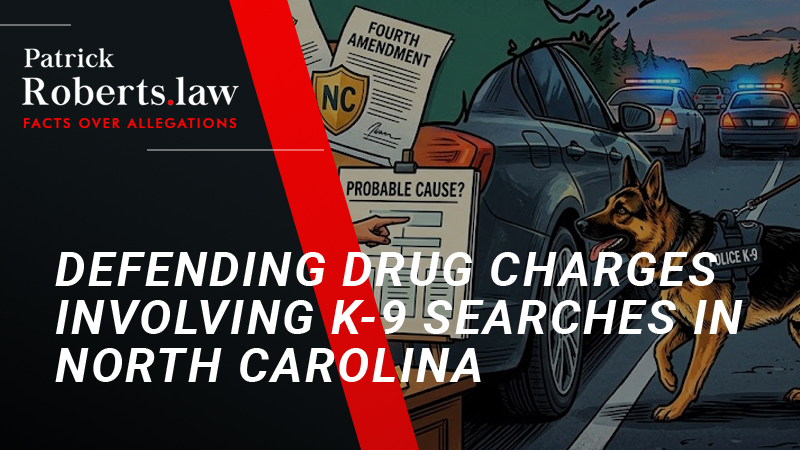
The use of narcotics-detection dogs, commonly referred to as K-9 units, is a staple of law enforcement activity across North Carolina. From the I-95 corridor to local traffic stops in Wake or Mecklenburg County, K-9 searches often serve as the bridge between a routine roadside interaction and a felony drug indictment. However, the presence of a K-9 does not grant law enforcement unfettered authority. The intersection of the Fourth Amendment and K-9 sniffs is governed by a complex web of United States Supreme Court precedents and North Carolina appellate rulings.
For individuals facing drug charges stemming from a K-9 alert, understanding the constitutional limits placed on police is the first step toward a successful defense. This guide examines the legal framework, the common pitfalls of K-9 deployments, and the strategic avenues available for challenging the evidence in court.
Read the rest of this entry »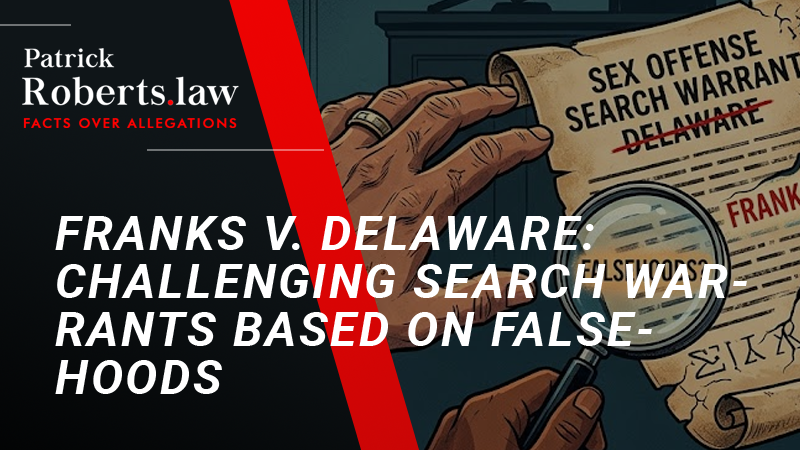
In the American legal system, the Fourth Amendment serves as the primary bulwark against government overreach, specifically protecting citizens against unreasonable searches and seizures. In North Carolina, when an individual is accused of a sex crime—such as possession of child exploitation material, sexual assault, or statutory offenses—the state’s primary evidence often originates from a search warrant. However, a warrant is only as valid as the information used to obtain it. The United States Supreme Court case Franks v. Delaware*, 438 U.S. 154 (1978), established a critical mechanism for defendants to challenge the veracity of sworn statements made by law enforcement to secure these warrants.
For those facing the life-altering consequences of a sex crime conviction, understanding the Franks doctrine is essential. If a detective or investigator provided false information or omitted material facts in their affidavit to the magistrate, the resulting evidence may be suppressed, often leading to a dismissal of all charges.
Read the rest of this entry »Former assistant district attorney
Contact Patrick Roberts
Facing criminal charges in North Carolina demands seasoned representation. Trust in the experience and dual perspective of Patrick Roberts. Reach out today for a confidential consultation.
-
Call Our Team
Calls answered 24/7






For more information on the selection criteria, go to www.martindale.com
*Each case is different and must be evaluated separately. Prior results achieved do not guarantee similar results can be achieved in future cases.