

Assault on a female in North Carolina is a Class A1 misdemeanor under N.C. Gen. Stat. § 14-33(c)(2) — the most serious misdemeanor classification the state has. It carries up to 150 days in jail, but the jail time is not the part of this charge that changes lives. The collateral consequences — what happens to your record, your firearms rights, your custody situation, and your employment — are what most people never see coming until it’s too late to get ahead of them.
Read the rest of this entry »
A false domestic violence accusation can lead to an arrest, a protective order, and criminal charges before you ever get to tell your side of the story. In North Carolina, the legal system is built to move quickly once an accusation is made. It often moves before any independent investigation takes place — and before you have any meaningful opportunity to respond.
Read the rest of this entry »
After a domestic violence arrest in North Carolina, you can be held in jail for up to 48 hours before a judge sets the conditions of your release. That hold is longer than what applies to most other criminal charges, and it is usually the first thing that catches people off guard. It is also only the beginning of a process that moves through pretrial conditions, possible protective orders, and eventual case resolution.
Read the rest of this entry »
Self-defense is a legally recognized defense to domestic violence charges in North Carolina. When it’s proven, it results in a complete acquittal. In fact, North Carolina law explicitly excludes acts of self-defense from the definition of domestic violence under N.C. Gen. Stat. § 50B-1. The legislature didn’t leave that to interpretation. It wrote self-defense out of the definition on purpose.
Read the rest of this entry »
Domestic violence charges can be dropped in North Carolina, but not the way most people expect. The person who files the complaint — the alleged victim — does not have the power to make the charges go away. Once the State brings charges, the decision to dismiss, reduce, or prosecute belongs to the district attorney’s office. That decision turns on the strength of the evidence, not on whether the other party wants to move forward.
Read the rest of this entry »Drug Charge Lawyer in Raleigh, NC: Drug Paraphernalia, Arrest Risks, and Your Defense Options

Legal Representation for Drug and Paraphernalia Charges in Raleigh, NC
Facing legal allegations involving controlled substances or drug paraphernalia in North Carolina requires a clear understanding of the state’s criminal statutes. Under North Carolina law, drug offenses span from misdemeanor possession to felony trafficking, and the legal consequences depend heavily on the classification of the substance and the specific facts of the arrest.
Read the rest of this entry »Drug Charges Lawyer in Raleigh, NC: What Drugs Can You Be Arrested For and How Cases Are Defended
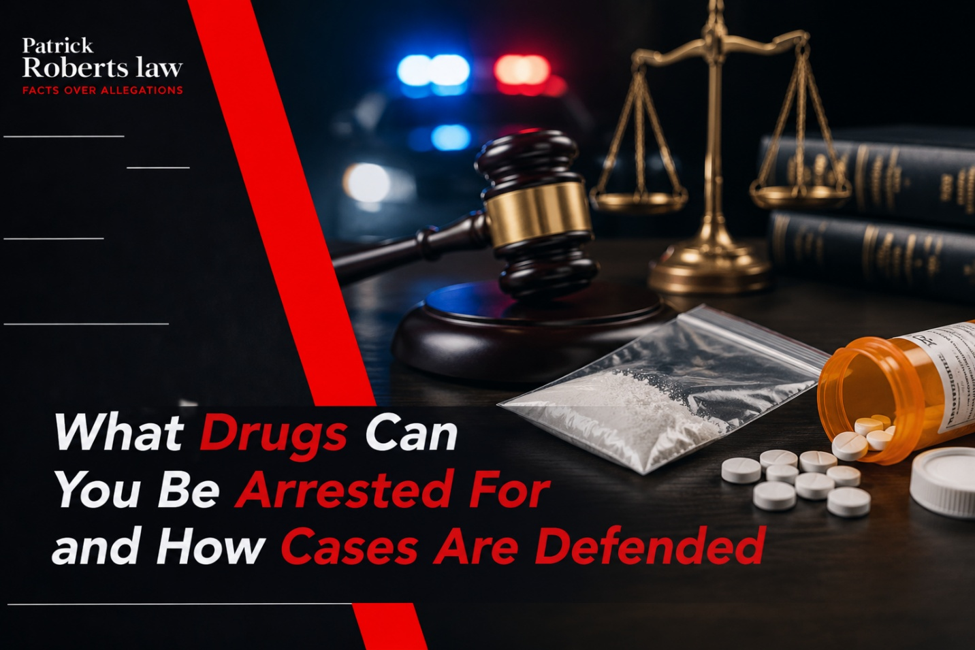
If you were arrested or are under investigation for drug-related offenses in Raleigh, NC, you need immediate legal protection. Call 919-746-7206 or submit a confidential request through our contact page to speak with a criminal defense attorney today. Early intervention can significantly change how your case is charged, prosecuted, and resolved.
Drug Charges Lawyer in Raleigh, NC: Understanding What You Are Facing
Drug arrests in Raleigh and across Wake County often happen quickly and escalate even faster. Many people are shocked to learn that simple possession, prescription medication issues, or paraphernalia allegations can lead to serious felony charges.
Read the rest of this entry »
Sexual exploitation of a minor is not a single charge in North Carolina. It is a three-tiered criminal offense defined under N.C.G.S. §§ 14-190.16, 14-190.17, and 14-190.17A. Each degree carries different elements, different felony classifications, and very different prison ranges — from a Class H felony for possession to a Class C felony for production. Below is a detailed breakdown of what each degree involves, what the prosecution must prove, what the penalties look like, where defense challenges exist, and what a conviction means for the rest of a person’s life.
Read the rest of this entry »
A false rape accusation can lead to a conviction in North Carolina even without physical evidence, forensic proof, or a single witness beyond the accuser. That is not an exaggeration. North Carolina law does not require supporting evidence for sex offense convictions. A jury can convict based on one person’s testimony alone if they find it credible.
Research consistently places the rate of false reports for sexual assault between 2% and 8%. Sexual assault accounts for roughly 10% of all exonerations nationally — the fourth most common category of wrongful convictions. False accusations happen, courts have recognized that reality, and North Carolina law provides specific tools to fight them. But those tools only work if you understand what you are facing and act early.
Read the rest of this entry »
Registered sex offenders in North Carolina face a specific set of legal restrictions that control where they can go, what they must report to law enforcement, and how they live for decades after their conviction. These restrictions are not optional guidelines — they are legal requirements under N.C.G.S. § 14-208 and related statutes, and violating them is a felony.
North Carolina currently has over 25,000 people on its Sex Offender Registry, making it one of the largest registries in the country. Whether you are facing registration for the first time or trying to understand what an existing registration actually requires, the restrictions below are what NC law imposes.
Read the rest of this entry »Former assistant district attorney
Contact Patrick Roberts
Facing criminal charges in North Carolina demands seasoned representation. Trust in the experience and dual perspective of Patrick Roberts. Reach out today for a confidential consultation.
-
Call Our Team
Calls answered 24/7








For more information on the selection criteria, go to www.martindale.com
*Each case is different and must be evaluated separately. Prior results achieved do not guarantee similar results can be achieved in future cases.