
A statutory rape accusation in Cary, North Carolina threatens everything you’ve built. In this Research Triangle community—where nearly 70% of adults hold college degrees and median household incomes exceed $129,000—the stakes extend far beyond the courtroom. Careers at SAS Institute, Epic Games, or defense contractors like Lockheed Martin can end before a case ever reaches trial. Security clearances evaporate. Professional licenses face suspension. The life you’ve established in one of North Carolina’s most successful communities hangs in the balance.
North Carolina prosecutes statutory rape under multiple statutes, each carrying severe felony penalties. Unlike forcible rape charges, these offenses do not require proof of force or lack of consent—the alleged victim’s age alone can establish criminal liability. This legal reality makes these cases uniquely challenging to defend and demands an attorney who understands both how prosecutors build these cases and how to dismantle them.
Mr. Patrick Roberts, a former prosecutor who handled sex offense cases throughout his prosecutorial career, now defends Cary residents facing these life-altering accusations. His experience on both sides of the courtroom provides critical insight into the strategies Wake County prosecutors employ—and the weaknesses in their cases that effective defense can exploit.
What Is Statutory Rape Under North Carolina Law?
How Does North Carolina Define Statutory Rape Differently From Other Sex Offenses?
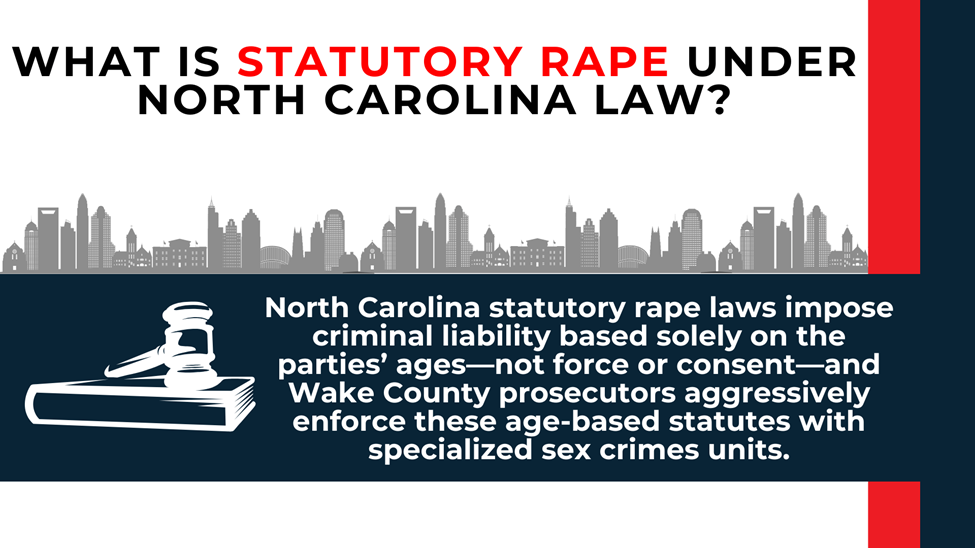
North Carolina’s statutory rape laws criminalize sexual conduct based primarily on the ages of the parties involved rather than on whether force or coercion occurred. Under these statutes, specific age combinations create criminal liability regardless of the circumstances surrounding the encounter. The Wake County District Attorney’s office prosecutes these cases aggressively, and their specialized sex crimes prosecutors understand every nuance of these statutes.
The term “statutory” refers to the fact that these offenses are defined entirely by statute—by the ages written into the law—rather than by the presence of force, threat, or lack of consent. This distinction matters enormously for defense strategy because it changes what the prosecution must prove and what arguments are available to the defense.
What Makes These Charges “Statutory” Rather Than Forcible?
Forcible rape requires the prosecution to prove that sexual conduct occurred through force, threat, or when the victim was physically helpless or mentally incapacitated. Statutory rape requires no such proof. Instead, the prosecution need only establish that the alleged sexual conduct occurred and that the parties fell within prohibited age categories.
This prosecutorial framework means that cases which might seem consensual can still result in serious felony charges. Patrick Roberts’ background prosecuting these exact cases gives him perspective that few defense attorneys possess—he knows the evidence standards prosecutors must meet and where their cases often fall short.
Does the Alleged Victim’s Consent Matter in These Cases?
Under North Carolina’s statutory rape laws, consent is not a legal defense. The statutes presume that individuals below certain ages cannot legally consent to sexual activity with older partners. This legal presumption exists regardless of what the alleged victim says occurred, regardless of who initiated contact, and regardless of any relationship between the parties.
This reality shapes how Wake County prosecutors approach these cases. They do not need to prove the alleged victim objected or resisted—they need only prove the conduct occurred and that the age requirements were met.
What Are the Different Types of Statutory Rape Charges in North Carolina?
What Is Statutory Rape of a Child by an Adult Under N.C. Gen. Stat. § 14-27.23?
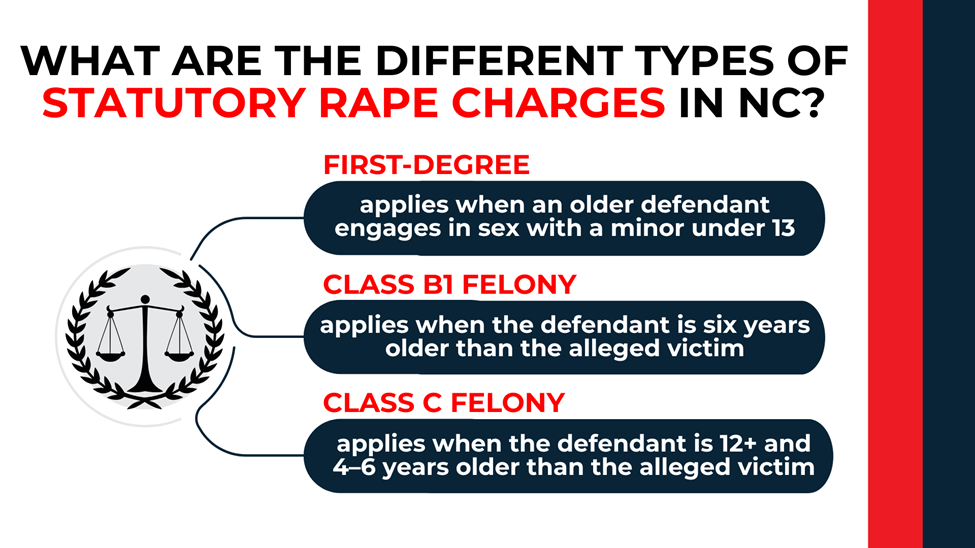
North Carolina’s most serious statutory rape charge applies when a defendant who is at least 18 years old engages in vaginal intercourse with a victim who is under 13 years old. Under N.C. Gen. Stat. § 14-27.23, this offense is classified as a Class B1 felony with a mandatory minimum active sentence of 300 months—25 years—in prison. Following release, the defendant faces mandatory enrollment in satellite-based monitoring.
The statute also permits enhanced sentencing up to and including life imprisonment without parole if the court finds egregious aggravating factors such as extraordinary brutality, the extraordinarily young age of the victim, or depraved conduct beyond what the basic offense contemplates.
Cary Police Department’s Special Victims Unit investigates these allegations with dedicated detectives trained specifically in child sex crimes. When CPD suspects this offense, they often coordinate with the North Carolina State Bureau of Investigation and federal task forces, bringing substantial investigative resources to bear.
How Is First-Degree Statutory Rape Defined Under N.C. Gen. Stat. § 14-27.24?
First-degree statutory rape under N.C. Gen. Stat. § 14-27.24 applies when the defendant is at least 12 years old, is at least four years older than the victim, and the victim is under 13 years old. This Class B1 felony carries severe consequences, though without the mandatory 300-month minimum that applies to adult defendants under § 14-27.23.
This statute functions as a lesser included offense of § 14-27.23, meaning prosecutors can charge under either statute depending on the defendant’s age and the evidence available. Understanding this relationship between statutes is essential for effective defense—Patrick Roberts’ lifetime membership in the National Association of Criminal Defense Lawyers and his advanced sex-crimes defense training through NACDL help him navigate these complex charging decisions.
When Does N.C. Gen. Stat. § 14-27.25 Apply to Victims 15 or Younger?
When the alleged victim is 15 years old or younger—but not under 13—North Carolina applies a tiered approach based on the age difference between the parties. The key statutory provisions include:
- A Class B1 felony applies when the defendant is at least 12 years old and at least six years older than the alleged victim, unless the parties are lawfully married.
- A Class C felony applies when the defendant is at least 12 years old and more than four but less than six years older than the alleged victim, unless covered by another statute providing greater punishment or the parties are lawfully married.
These age-gap calculations can become central to defense strategy. A one-year difference in ages can mean the difference between a Class B1 and Class C felony—or between criminal liability and no offense at all. The precision required in establishing exact ages and the dates of alleged conduct creates opportunities for experienced defense counsel to challenge the prosecution’s case.
What Are the Potential Consequences of a Statutory Rape Conviction?
What Prison Sentences Do These Charges Carry?
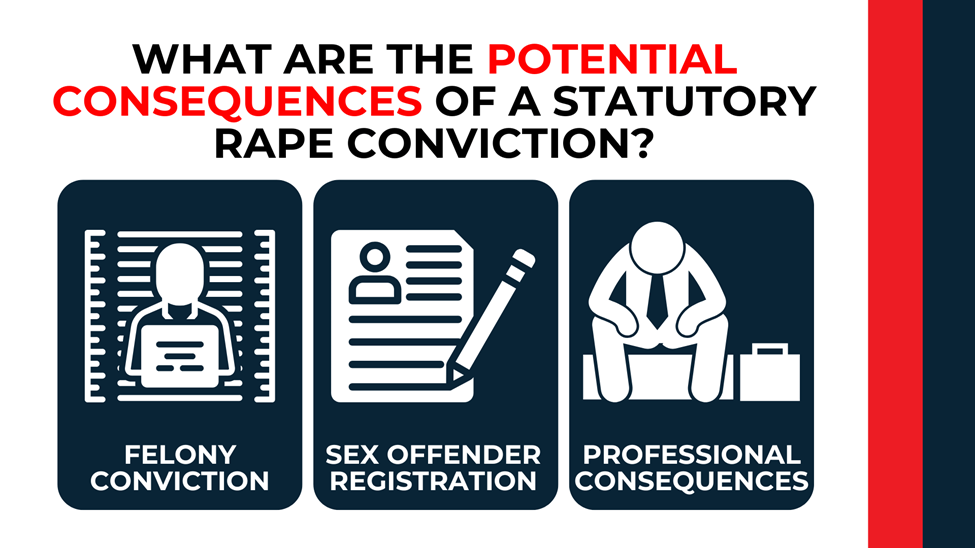
Statutory rape convictions carry substantial prison sentences under North Carolina’s structured sentencing guidelines. Class B1 felonies—which include the most serious statutory rape charges—place defendants in the most severe sentencing category for non-capital offenses. For charges under N.C. Gen. Stat. § 14-27.23 involving adult defendants and victims under 13, the mandatory minimum of 300 months means no defendant can receive less than 25 years of active imprisonment regardless of other factors.
Class C felonies under N.C. Gen. Stat. § 14-27.25(b) carry somewhat less severe but still substantial sentencing ranges under North Carolina’s guidelines.
Will a Conviction Require Sex Offender Registration?
A statutory rape conviction triggers mandatory sex offender registration in North Carolina. For the most serious offenses under N.C. Gen. Stat. § 14-27.23 and § 14-27.28, defendants also face mandatory satellite-based monitoring following release from prison—meaning GPS tracking for the remainder of their lives.
Sex offender registration affects where you can live, where you can work, and how you interact with your community. In Cary’s family-oriented neighborhoods—from Amberly to Preston to Lochmere—registration requirements can make finding suitable housing nearly impossible.
How Would a Conviction Affect Professional Licenses and Security Clearances?
For Cary residents, the professional consequences of a statutory rape conviction often prove as devastating as incarceration. Patrick Roberts has completed extensive training through the National Child Abuse Defense and Resource Center, and he is the only attorney in North Carolina listed on NCADRC’s website at falseallegation.org—training that emphasizes understanding the full scope of what defendants face.
The career consequences for professionals in the Research Triangle are severe and often permanent:
- Engineers and researchers at SAS Institute or Epic Games face immediate termination and industry blacklisting.
- Defense contractor employees at Lockheed Martin lose security clearances instantly upon arrest—not conviction—ending careers in the defense sector permanently.
- Financial services professionals at companies like MetLife face licensing revocation that extends nationwide.
- Healthcare workers, teachers, and licensed professionals lose the credentials they spent years obtaining.
- Government employees face termination and permanent bars on public sector employment.
For Cary’s substantial immigrant population—many working in the tech sector on employment visas—a conviction triggers deportation proceedings regardless of how long they’ve lived in the United States.
How Do Cary Police and Wake County Prosecutors Handle These Cases?
What Role Does Cary PD’s Special Victims Unit Play in Investigations?
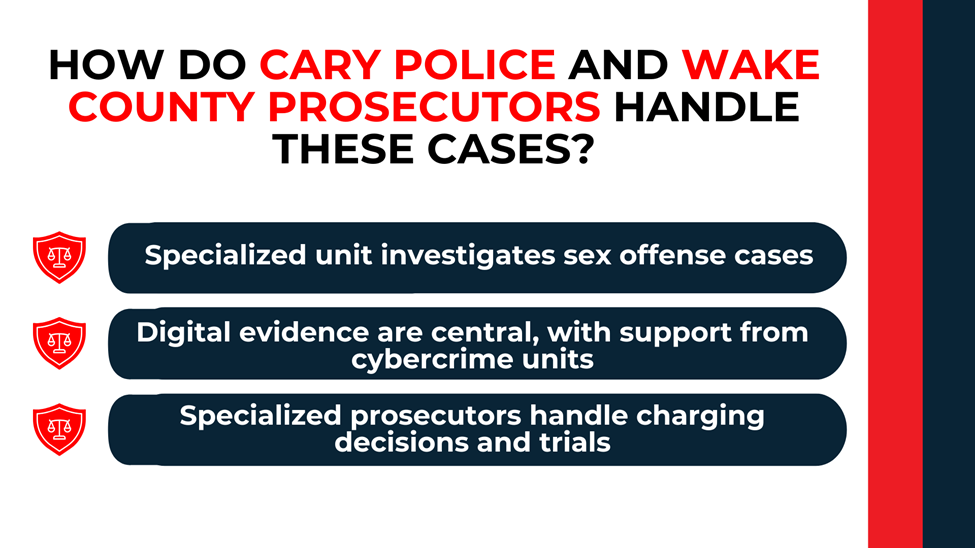
Cary Police Department maintains a Special Victims Unit within its Investigations Division specifically tasked with handling sexual assault, child exploitation, and domestic violence cases. SVU detectives receive specialized training in interviewing techniques, evidence collection, and the unique dynamics of sex offense investigations.
When allegations arise in Cary, SVU detectives typically conduct initial interviews, gather physical evidence, obtain electronic records, and coordinate with prosecutors before charges are filed. In Cary’s technology-driven environment, digital evidence from phones, computers, and cloud storage often plays a central role in these investigations.
How Does the Wake County District Attorney’s Office Approach Statutory Rape Prosecutions?
All criminal cases originating in Cary are prosecuted by the Wake County District Attorney’s office, which maintains prosecutors who focus specifically on sex offense cases. These experienced prosecutors handle cases from initial charging decisions through trial, and they coordinate closely with Cary PD during investigations.
Understanding how Wake County prosecutors build these cases is essential for effective defense. Patrick Roberts’ years prosecuting sex offenses in North Carolina give him direct insight into the evidence prosecutors prioritize, the weaknesses they try to hide, and the strategies they employ at trial. Having worked inside the prosecution, he now uses that knowledge to protect his clients.
What Evidence Do Investigators Typically Gather?
Statutory rape investigations in Wake County typically involve multiple evidence categories. Investigators seek physical evidence when available, electronic communications between the parties, witness statements, forensic interviews with the alleged victim, and any documentation of the relationship between the accused and the accuser.
For cases involving digital evidence, CPD’s Cyber Intelligence Unit—the only dedicated unit of its kind among the Triangle’s four major police departments—brings specialized expertise in extracting and analyzing electronic data. Multi-agency coordination with the SBI Cyber Crimes Unit and federal task forces often occurs in cases involving child exploitation.
What Defense Strategies Apply to Statutory Rape Cases?
Can Mistaken Age Ever Be a Defense in North Carolina?
North Carolina’s statutory rape laws are strict liability offenses regarding age—meaning the defendant’s belief about the alleged victim’s age is generally not a defense. Even if an alleged victim lied about their age, presented false identification, or appeared significantly older than their actual age, the defendant may still face conviction if the prohibited conduct occurred.
This harsh legal reality makes other defense strategies essential. Challenging whether the alleged conduct actually occurred, attacking the reliability of the evidence, and exposing weaknesses in witness testimony become central to effective defense.
How Can Defense Counsel Challenge the State’s Evidence?
Effective defense in statutory rape cases requires meticulous analysis of every piece of evidence the prosecution plans to use. Patrick Roberts’ training at the National Criminal Defense College, including advanced cross-examination techniques, proves essential when challenging witness credibility and exposing evidentiary weaknesses.
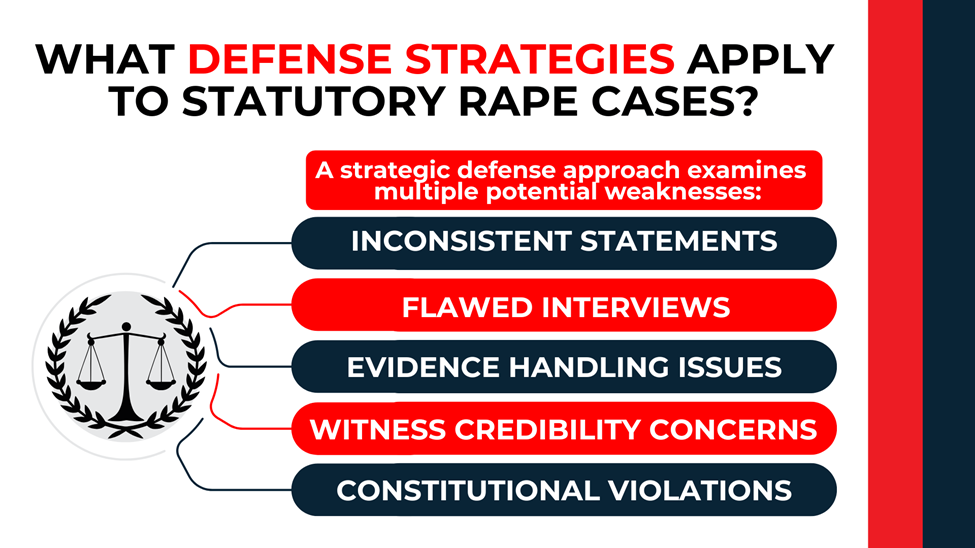
A strategic defense approach examines multiple potential weaknesses:
- Inconsistencies in the alleged victim’s statements across multiple interviews
- Problems with how forensic interviews were conducted
- Chain of custody issues with physical or digital evidence
- Witness credibility and potential motives for false allegations
- Constitutional violations during investigation that may require evidence suppression
What Role Does Forensic Interview Analysis Play in These Cases?
Many statutory rape cases rely heavily on the alleged victim’s account as provided in forensic interviews. These recorded interviews, typically conducted at child advocacy centers, often become the prosecution’s primary evidence.
Patrick Roberts’ extensive NCADRC training focuses specifically on analyzing forensic interviews for suggestive questioning, improper techniques, and signs that a child’s account may have been influenced by adults. As the only North Carolina attorney listed on falseallegation.org’s registry of NCADRC-trained defenders, he brings specialized knowledge to evaluating whether interview procedures met accepted standards or whether they may have contaminated the alleged victim’s account.
Why Does Your Choice of Defense Attorney Matter in Statutory Rape Cases?
What Should You Look for in a Statutory Rape Defense Attorney?
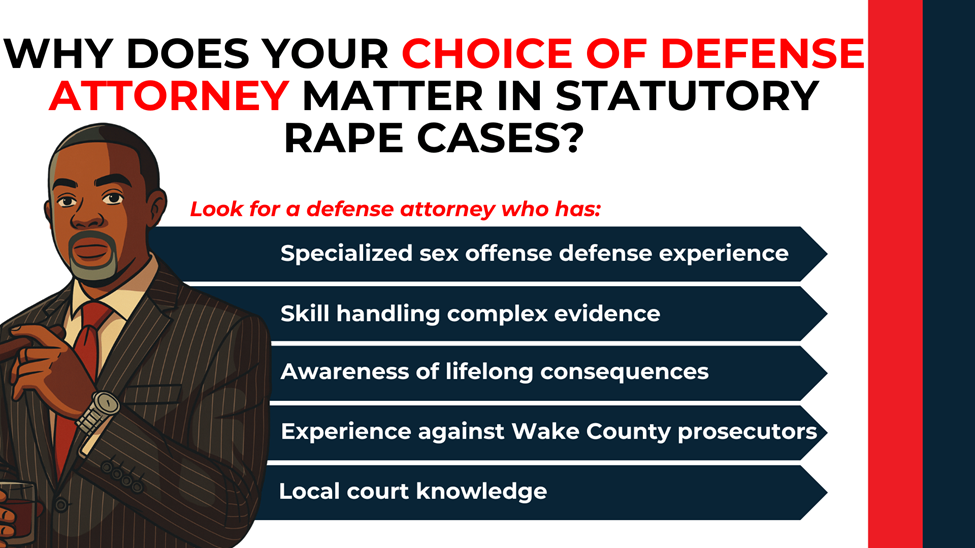
Statutory rape cases demand an attorney with specific experience and training in sex offense defense. These cases involve unique evidentiary issues, specialized forensic considerations, and consequences that extend far beyond incarceration. General criminal defense experience, while valuable, does not substitute for focused training in this complex area.
Wake County courts see these cases regularly, and the prosecutors handling them are experienced and well-resourced. Effective defense requires counsel who understands local procedures, knows how Wake County prosecutors approach these cases, and can match their preparation and expertise.
How Does a Former Prosecutor’s Perspective Help the Defense?
Attorney Patrick Roberts’ prosecutorial background provides a strategic advantage that few defense attorneys can offer. Having built these cases as a prosecutor, he understands how the State constructs its evidence, what arguments persuade judges and juries, and where prosecutorial cases typically show weakness.
His training at the Gerry Spence Trial Lawyers College—where he learned directly from one of America’s most accomplished trial attorneys—shapes how he connects with juries and humanizes his clients in the courtroom. In cases where the charges alone can prejudice jurors, this ability to tell a client’s story effectively often determines outcomes.
Frequently Asked Questions
Can statutory rape charges be reduced or dismissed in Wake County?
Outcomes depend on the specific facts of each case, the evidence available, and the defense strategy employed. Some cases result in dismissal when evidence proves insufficient. Others may be resolved through negotiation depending on circumstances. An experienced defense attorney can evaluate your case and explain realistic possibilities based on the evidence.
How long do statutory rape investigations typically take in Cary?
Investigation timelines vary significantly. Some cases move quickly from accusation to arrest, while others involve months of investigation before charges are filed. Cary PD’s Special Victims Unit conducts thorough investigations, and complex cases involving digital evidence or multiple agencies may extend investigation timelines considerably.
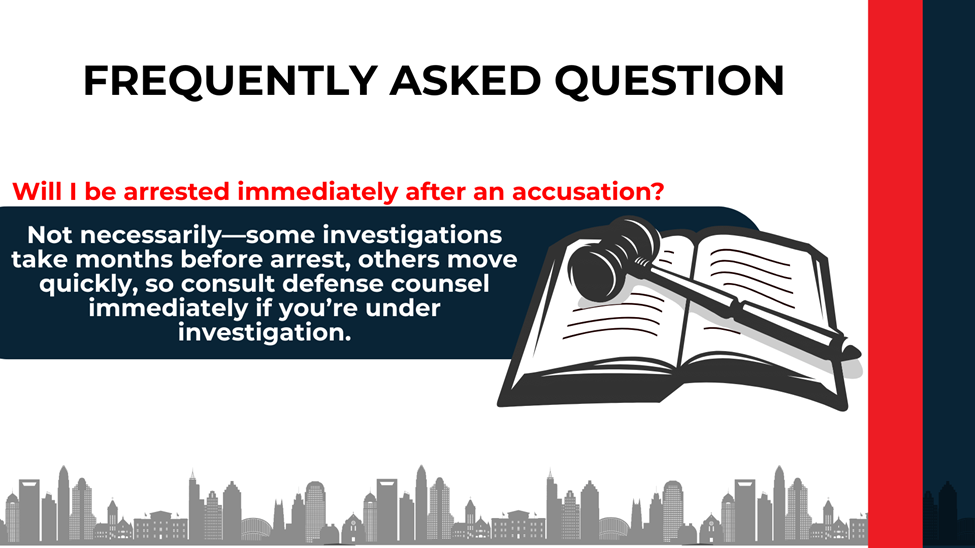
Will I be arrested immediately after an accusation?
Not necessarily. Many statutory rape investigations proceed for weeks or months before any arrest occurs. However, some cases—particularly those involving young children or perceived flight risks—result in rapid arrest. If you learn you’re under investigation, consulting defense counsel immediately is essential.
What should I do if Cary police want to question me about statutory rape allegations?
You have the constitutional right to remain silent and the right to have an attorney present during any questioning. Politely decline to answer questions and request to speak with an attorney. Statements made to police, even statements you believe are exculpatory, can be used against you and may damage your defense.
Are there immigration consequences for non-citizens convicted of statutory rape?
Yes. Statutory rape convictions constitute aggravated felonies under federal immigration law, triggering mandatory deportation for non-citizens regardless of how long they’ve resided in the United States or their family ties here. For Cary’s substantial immigrant community—many holding H-1B visas or green cards—these immigration consequences demand serious consideration.
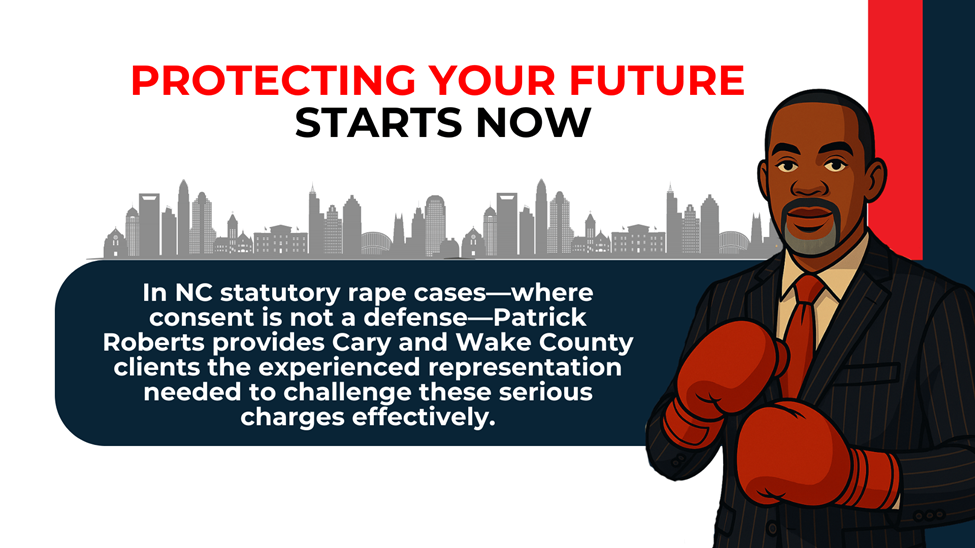
Protecting Your Future Starts Now
Statutory rape charges in North Carolina eliminate consent as a defense, placing enormous pressure on defendants from the moment accusations arise. In these cases, the prosecution doesn’t need to prove you acted against anyone’s will—they need only prove the conduct occurred and that the ages fit the statutory requirements. Fighting back requires an attorney who understands exactly how these cases are built and how to challenge them effectively.
Mr. Patrick Roberts brings the perspective of a former prosecutor who handled sex offense cases, combined with specialized training through NCADRC in defending against false accusations. For Cary residents and families throughout Wake County facing these devastating charges, his experience on both sides of the courtroom provides the insight needed to mount an effective defense.
Contact Patrick Roberts Law to discuss your case in a confidential consultation.
Disclaimer: The information on this website is for general information purposes only. Nothing on this site should be taken as legal advice for any individual case or situation. Case results depend upon a variety of factors unique to each case. Prior results do not guarantee a similar outcome.
Former assistant district attorney
Contact Patrick Roberts
Facing criminal charges in North Carolina demands seasoned representation. Trust in the experience and dual perspective of Patrick Roberts. Reach out today for a confidential consultation.
-
Call Our Team
Calls answered 24/7







For more information on the selection criteria, go to www.martindale.com
*Each case is different and must be evaluated separately. Prior results achieved do not guarantee similar results can be achieved in future cases.