
A third-degree sexual exploitation of a minor charge in North Carolina carries serious criminal penalties and life-altering consequences. For Cary residents—many of whom hold professional positions in Research Triangle Park’s technology sector or maintain security clearances for defense contractors—an arrest on these charges threatens far more than freedom. Careers built over decades, professional licenses, and family stability all hang in the balance.
Understanding exactly what the State must prove, how the Cary Police Department investigates these allegations, and what defense options exist is essential for anyone facing this charge. This article explains North Carolina’s third-degree sexual exploitation statute, the investigation and prosecution process in Wake County, and the defense strategies that may apply to your situation.
What Is Third-Degree Sexual Exploitation of a Minor Under North Carolina Law?
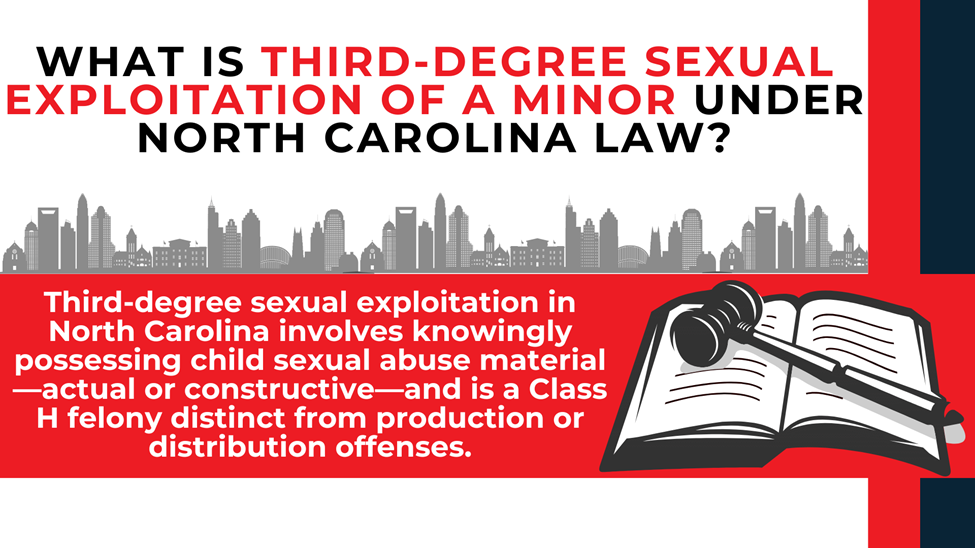
Third-degree sexual exploitation of a minor is defined under N.C. Gen. Stat. § 14-190.17A. Unlike first- and second-degree charges—which involve producing, distributing, or profiting from child sexual abuse material—third-degree charges focus specifically on possession. This distinction is critical because it affects both the severity of potential penalties and the defense strategies that apply.
What Does “Possession” Mean in These Cases?
Under North Carolina law, possession can be actual or constructive. Actual possession means the material is physically present on a device you control. Constructive possession means you have the ability to access and control material even if it’s stored elsewhere—such as in cloud storage or on a shared network.
Cary Police Department’s Cyber Intelligence Unit—the only dedicated cyber investigation unit among the Triangle’s four major police departments—focuses significant resources on identifying individuals who possess this material. Unlike Raleigh, Durham, or Chapel Hill, Cary maintains specialized investigators trained specifically in digital forensics and online offender identification. This means cases originating in Cary often involve sophisticated technical analysis from the outset.
What Types of Material Does This Statute Cover?
The statute covers two categories of prohibited material:
- Visual representations depicting a minor engaged in sexual activity
- Material that has been created, adapted, or modified to appear that an identifiable minor is engaging in sexual activity (including digitally altered images)
- Child sex dolls designed to represent minors
- Any digital files, physical photographs, or other media containing qualifying depictions
- Cached files, deleted files that remain recoverable, and cloud-stored material
The law specifically provides that the trier of fact—judge or jury—may infer that a depicted person is a minor based on the material’s title, text, visual representations, or other context.
How Does Third-Degree Differ from First- and Second-Degree Charges?
The degree of the charge depends primarily on the defendant’s conduct beyond mere possession. First-degree sexual exploitation under N.C. Gen. Stat. § 14-190.16 involves producing material, using minors in live performances, or creating material for sale or financial gain—these are Class C or D felonies depending on specific circumstances. Second-degree under N.C. Gen. Stat. § 14-190.17 covers distribution, receiving, selling, or exchanging material—a Class E felony.
Third-degree charges apply when the State alleges only knowing possession without evidence of production, distribution, or financial motive. This makes it a Class H felony—the least severe of the three classifications, but still carrying significant criminal penalties and mandatory sex offender registration.
What Must Prosecutors Prove to Secure a Conviction?
Wake County prosecutors handling third-degree sexual exploitation cases must prove specific elements beyond a reasonable doubt. The District Attorney’s office coordinates closely with Cary Police investigators to build these cases, and understanding what they must establish is the foundation of any defense strategy.
What Does “Knowing the Character or Content” Require?
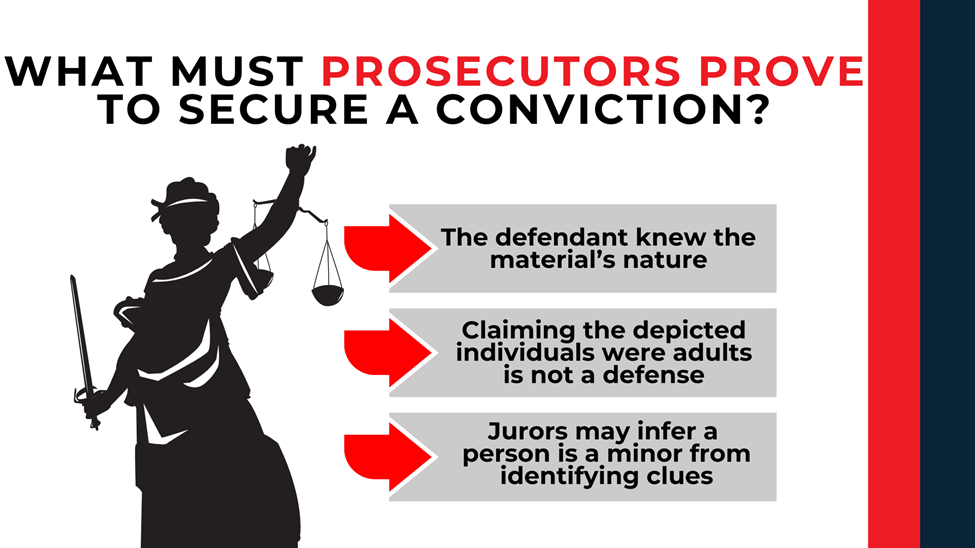
The prosecution must prove the defendant knew the character or content of the material. This means more than simply possessing a device where material exists—the State must establish that the defendant was aware of what the material depicted.
Patrick Roberts prosecuted exploitation cases earlier in his career. That experience provides direct insight into how the State builds its case around the knowledge element—and where weaknesses in that proof may exist.
The required elements include:
- Possession of qualifying material (visual depictions of minors in sexual activity) or a child sex doll
- Knowledge of the character or content of what was possessed
- The material depicts—or appears to depict—a minor engaged in sexual activity
Can Mistake About the Person’s Age Be a Defense?
No. The statute explicitly states that mistake of age is not a defense to prosecution. This means a defendant cannot avoid conviction by claiming they believed the depicted individuals were adults. This strict liability provision applies to all three degrees of sexual exploitation charges in North Carolina.
How Do Prosecutors Establish That Depicted Individuals Are Minors?
North Carolina law allows prosecutors to establish age through circumstantial evidence. The statute provides that jurors may infer a depicted person is a minor based on the material’s title, text, visual representations, or other identifying information. Prosecutors do not necessarily need to identify the specific victim or prove an exact age—the inference provision allows conviction based on how the material presents the depicted individual.
How Do Cary Police Investigate Sexual Exploitation Allegations?
Sexual exploitation investigations in Cary involve specialized units and multi-agency coordination that distinguish them from typical criminal investigations. Understanding this process helps defendants recognize where defense opportunities may exist.
What Role Does Cary’s Cyber Intelligence Unit Play?
Cary Police Department operates the only dedicated cyber intelligence unit among the Triangle’s four major police departments. This team focuses specifically on identifying and investigating online offenders, with particular expertise in child sexual abuse material cases. While Raleigh, Durham, and Chapel Hill handle similar investigations through general detective units, Cary’s specialized approach means these cases receive focused technical attention from investigators trained specifically in digital forensics.
The Cyber Intelligence Unit conducts proactive identification of potential offenders—not just reactive investigation of reported crimes. This may involve monitoring file-sharing networks, following up on tips from the National Center for Missing & Exploited Children, or coordinating with federal databases that track known illegal content.
Which Agencies Coordinate on These Investigations?
Third-degree exploitation cases in Cary frequently involve multiple agencies working together:
- Cary Police Department’s Special Victims Unit and Cyber Intelligence Unit
- North Carolina State Bureau of Investigation (SBI) Cyber Crimes Unit
- Federal agencies including the FBI and Department of Homeland Security
- Internet Crimes Against Children (ICAC) task force
- National Center for Missing & Exploited Children (NCMEC)
This multi-agency approach means significant resources are directed at these investigations. Task force operations like Operation Southern Impact and the Invictus Project bring federal investigative capabilities to local cases.
How Do These Investigations Typically Begin?
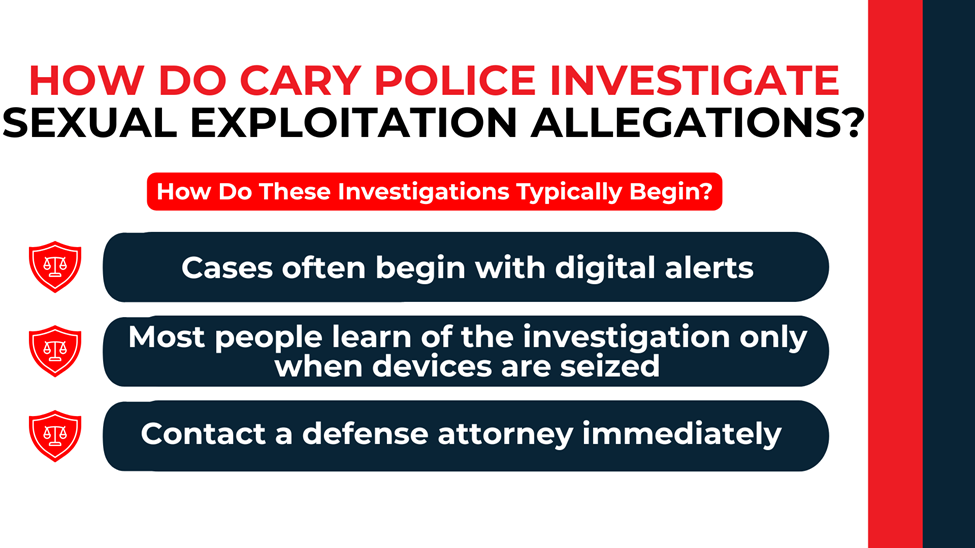
In Cary’s high-tech environment, these investigations often begin through digital trails rather than traditional tips or complaints. Common starting points include automated detection by internet service providers, employer IT departments discovering suspicious files on work devices, file-sharing network monitoring by law enforcement, and tips submitted to the NCMEC CyberTipline.
Many defendants first learn they’re under investigation when law enforcement arrives with a search warrant to seize devices. By that point, the investigation may have been ongoing for months.
If Cary Police or federal agents have contacted you about a sexual exploitation investigation—or seized your devices—speaking with a defense attorney immediately can make a significant difference in how your case proceeds.
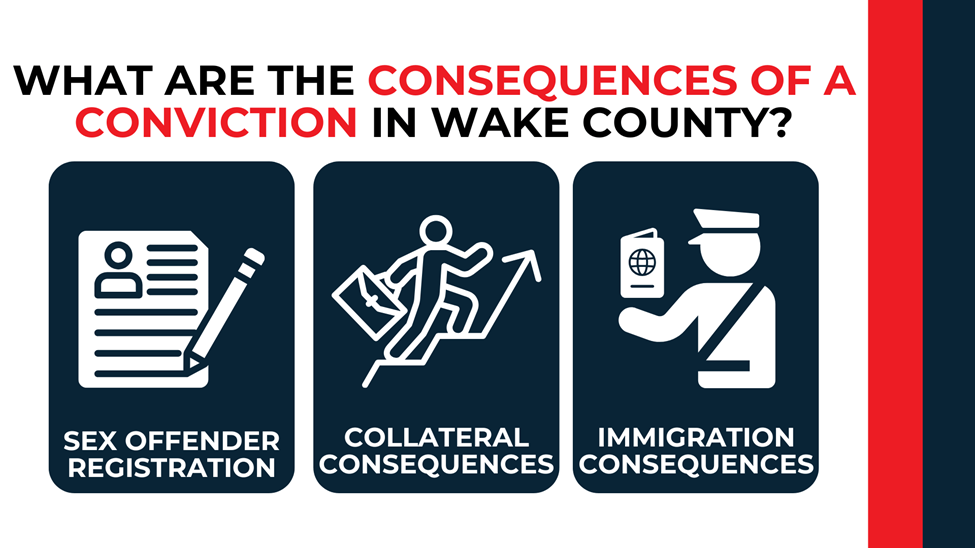
What Are the Consequences of a Conviction in Wake County?
A third-degree sexual exploitation conviction extends far beyond the criminal sentence. For Cary residents—particularly those in professional careers—the collateral consequences often prove more devastating than the court-imposed penalties.
What Does Sex Offender Registration Require?
Conviction for third-degree sexual exploitation of a minor requires registration as a sex offender in North Carolina. This registration is public, meaning employers, neighbors, and anyone conducting a background check will discover the conviction. Registration requirements include providing current address, employment information, and vehicle details to law enforcement, with strict compliance obligations that continue for years.
How Could a Conviction Affect Your Career in the Research Triangle?
For professionals working in the Research Triangle, these charges threaten careers in ways few other offenses can match. In a community where 68.4% of adults hold bachelor’s degrees and the median household income exceeds $129,000, the stakes are exceptionally high.
Collateral consequences include:
- Immediate termination from most professional positions
- Revocation of security clearances required for defense contractors like Lockheed Martin
- Loss of professional licenses in healthcare, education, finance, and law
- Ineligibility for positions at major employers including SAS Institute, Epic Games, and MetLife
- Permanent barriers to employment in any field involving children or vulnerable populations
- Housing restrictions limiting where registrants may live
For employees working under security clearances—common among Cary residents employed by defense contractors and government agencies—an arrest alone may trigger clearance suspension, effectively ending the career before trial.
What Immigration Consequences Apply to Non-Citizens?
For Cary’s substantial immigrant population—approximately 22% of residents are foreign-born, many working in the technology sector on employment visas—a conviction triggers severe immigration consequences. Sexual exploitation of a minor is considered an aggravated felony under federal immigration law, making deportation virtually certain for non-citizens convicted of this offense. Even lawful permanent residents face removal proceedings.
What Defense Strategies Apply to Third-Degree Charges?
Third-degree sexual exploitation charges require defense strategies tailored to digital evidence and the specific elements of this offense. Through the National Association of Criminal Defense Lawyers’ specialized sex-crimes defense training, Patrick Roberts has studied current approaches to challenging digital evidence and forensic analysis methods.
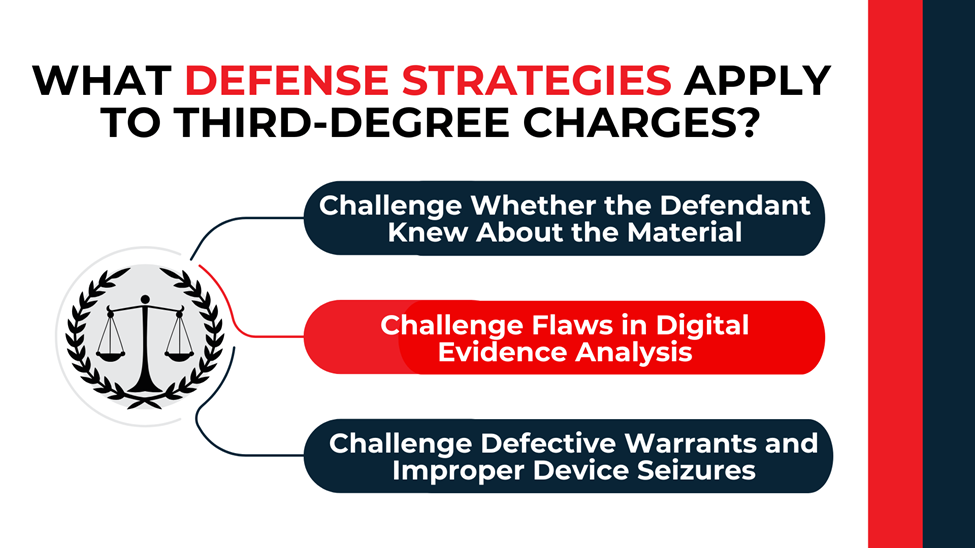
How Can the “Knowledge” Element Be Challenged?
The prosecution must prove the defendant knew the character or content of the material—mere presence on a device is not enough. Defense strategies challenging knowledge may include demonstrating that others had access to the device, that malware or remote access could have placed files without the owner’s knowledge, or that automatic downloads or cached files accumulated without active user involvement.
In Cary’s technology-centered community, work computers and employer-provided devices frequently appear in these cases. Multiple users may have accessed a shared device, and IT administrators often have remote access capabilities that complicate proving who placed material on a system.
As the only North Carolina attorney listed on the National Child Abuse Defense and Resource Center’s website (falseallegation.org), Patrick Roberts brings advanced training in evaluating and challenging these allegations—including close analysis of digital forensics evidence.
What Digital Forensics Issues Might Affect Your Case?
Digital evidence requires careful forensic analysis, and forensic conclusions are not always as definitive as prosecutors may suggest. Potential issues include incomplete forensic examination, failure to exclude alternative explanations for how files arrived on a device, improper handling of digital evidence affecting chain of custody, and reliance on metadata that may have been altered or corrupted.
Defense analysis may reveal that files were never actually accessed or viewed, that timestamps indicate activity inconsistent with the defendant’s known whereabouts, or that the forensic examiner failed to investigate exculpatory possibilities.
Are There Constitutional Challenges to How Evidence Was Obtained?
The Fourth Amendment protects against unreasonable searches and seizures—including searches of digital devices. If law enforcement obtained a search warrant based on insufficient probable cause, exceeded the scope of a valid warrant, or seized devices without proper legal authority, the resulting evidence may be subject to suppression.
Constitutional challenges require careful analysis of how the investigation unfolded, what information supported the warrant application, and whether officers followed proper procedures during the search and seizure process.
Third-degree sexual exploitation charges involve complex digital evidence that requires careful analysis. Patrick Roberts can evaluate the specific circumstances of your case and identify potential defense strategies.
Why Does Experienced Legal Representation Matter for These Charges?
Sexual exploitation cases involve technical evidence, specialized investigation methods, and consequences that extend far beyond typical criminal matters. The right defense attorney brings both legal knowledge and practical experience with how these cases unfold in Wake County courts.
What Should You Look for in a Defense Attorney for These Charges?
Defending third-degree exploitation charges requires understanding digital forensics, familiarity with how Wake County prosecutors build these cases, and the trial skills to challenge evidence effectively. As a graduate of the National Criminal Defense College—with current participation in their cross-examination training program—Attorney Patrick Roberts brings intensive trial preparation skills to every case.
An attorney’s background matters in these cases. Understanding how prosecutors think, what evidence they prioritize, and how they present technical material to juries provides strategic advantages that general criminal defense experience cannot match.
How Does Early Legal Involvement Affect Case Outcomes?
Early involvement by defense counsel can influence how a case develops before charges are even filed. During the investigation stage, an experienced attorney may be able to present mitigating information to prosecutors, challenge the legal sufficiency of the State’s evidence, or identify constitutional issues that affect what evidence can be used.
Once charges are filed, early preparation allows time for independent forensic analysis, thorough investigation of the circumstances, and development of a comprehensive defense strategy rather than reactive responses to prosecution moves.
Frequently Asked Questions
Is third-degree sexual exploitation of a minor a felony in North Carolina?
Yes. Third-degree sexual exploitation of a minor is classified as a Class H felony under N.C. Gen. Stat. § 14-190.17A. While this is the least severe of the three exploitation classifications, it remains a felony conviction with mandatory sex offender registration and significant collateral consequences for employment, housing, and professional licensing.
Can I be charged if someone else used my computer or device?
The prosecution must prove you knowingly possessed the material—not simply that it existed on a device you owned. If others had access to your computer, if the device was compromised by malware, or if files accumulated through automatic processes without your knowledge, these facts may form the basis of a defense. Forensic analysis can often determine when files were accessed and how they arrived on a device.
Will I have to register as a sex offender if convicted in Wake County?
Yes. A conviction for third-degree sexual exploitation of a minor requires sex offender registration in North Carolina. This registration is public information, includes residence and employment details, and carries strict compliance requirements. The registration follows you regardless of where you move within the United States.
How long do these investigations take before charges are filed?
Sexual exploitation investigations often proceed for months before the target becomes aware. Cary Police Department’s Cyber Intelligence Unit may conduct digital surveillance, coordinate with federal agencies, and build substantial evidence before executing a search warrant. Many defendants first learn of an investigation when officers arrive to seize devices—by which point significant investigative work has already occurred.
Can these charges be reduced or dismissed?
Every case depends on its specific facts and evidence. Some cases present opportunities for dismissal based on constitutional violations, insufficient evidence of knowledge, or other legal deficiencies. Others may be resolved through negotiation with Wake County prosecutors. No ethical attorney can guarantee any particular outcome, but experienced defense counsel can identify the strongest arguments available in your situation.
What happens to my devices after they’re seized by Cary Police?
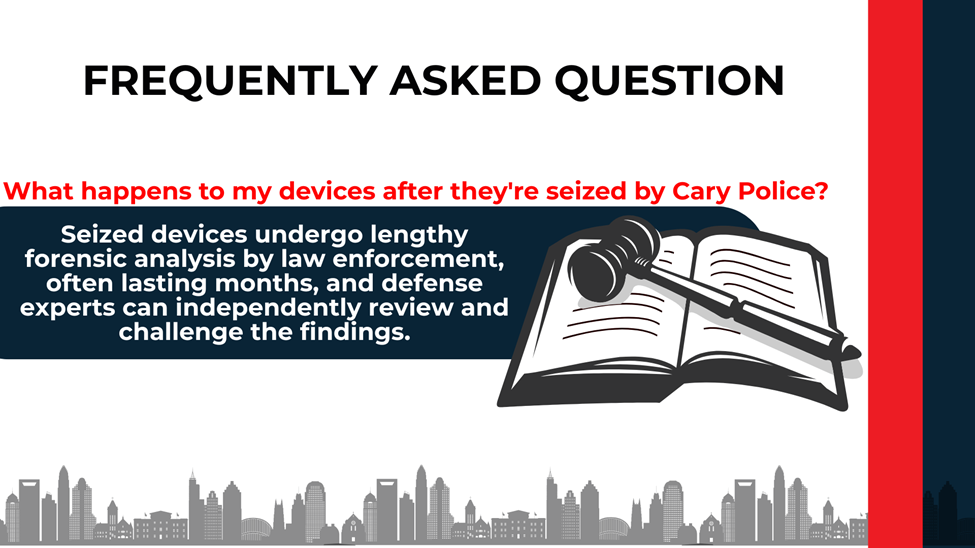
Seized devices undergo forensic examination by law enforcement analysts, often including specialists from the SBI Cyber Crimes Unit or federal agencies. This process involves creating forensic copies of all data, searching for prohibited material, and analyzing metadata to determine when files were accessed. The examination can take weeks or months, and devices may be held as evidence throughout the prosecution. An independent forensic analysis by defense experts can challenge or verify law enforcement conclusions.
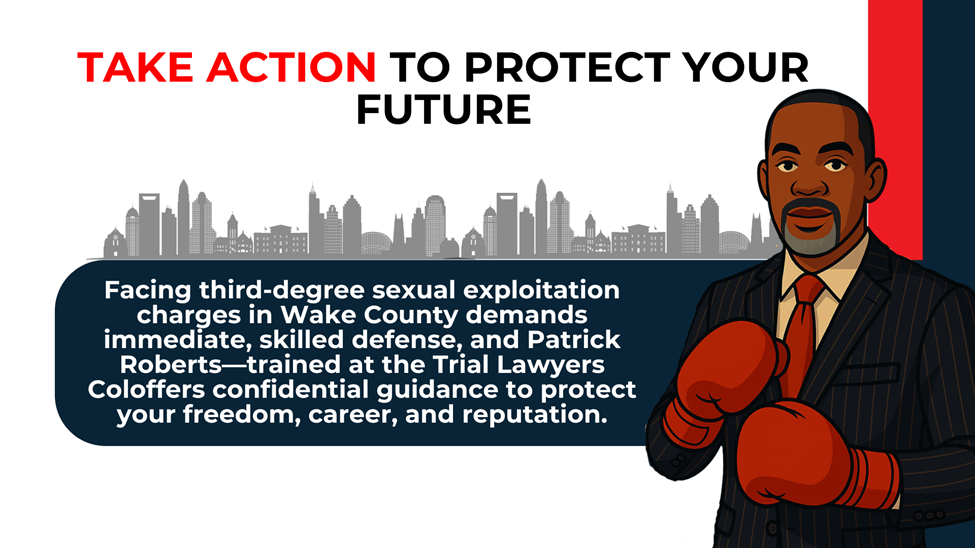
Take Action to Protect Your Future
Facing third-degree sexual exploitation charges in Wake County places your freedom, career, and reputation at risk. These cases require defense counsel who understands both the technical evidence involved and how Wake County prosecutors approach these matters.
Attorney Patrick Roberts trained directly with legendary trial attorney Gerry Spence at the Trial Lawyers College, where he learned that effective defense requires understanding the human being behind every case—not just the legal elements of the charge. Combined with his prosecutorial background and ongoing specialized training, this approach ensures every client receives a thorough, prepared, and committed defense.
If you’re facing third-degree sexual exploitation charges in Wake County, Patrick Roberts offers confidential consultations to discuss your situation and explain your options. Early involvement by experienced defense counsel can significantly affect how your case proceeds.
Disclaimer: The information on this website is for general information purposes only. Nothing on this site should be taken as legal advice for any individual case or situation. Case results depend upon a variety of factors unique to each case. Prior results do not guarantee a similar outcome.
Former assistant district attorney
Contact Patrick Roberts
Facing criminal charges in North Carolina demands seasoned representation. Trust in the experience and dual perspective of Patrick Roberts. Reach out today for a confidential consultation.
-
Call Our Team
Calls answered 24/7






For more information on the selection criteria, go to www.martindale.com
*Each case is different and must be evaluated separately. Prior results achieved do not guarantee similar results can be achieved in future cases.