
A domestic violence arrest in North Carolina has always carried serious consequences. But as of December 1, 2025, certain defendants now face something far more significant: a felony charge that can escalate with each subsequent conviction. North Carolina’s new habitual domestic violence statute transforms what would otherwise be misdemeanor charges into felony prosecutions for individuals with qualifying prior convictions.
This law creates a standalone enhancement mechanism that prosecutors can use to pursue felony charges against defendants whose records show a pattern of domestic violence offenses. Understanding how this new offense works—what the prosecution must prove, how prior convictions factor into the analysis, and what punishment exposure exists—is essential for anyone facing these charges or concerned about how past convictions might affect their future.
What Is the New Habitual Domestic Violence Offense in North Carolina?
How Does This Charge Differ from Misdemeanor Domestic Violence?
Traditional domestic violence charges in North Carolina are typically prosecuted as misdemeanors. The habitual domestic violence offense changes that framework entirely. When prosecutors can establish that a defendant has the required pattern of prior domestic violence convictions, they can pursue felony charges for conduct that would otherwise remain at the misdemeanor level.
This elevation from misdemeanor to felony status represents a fundamental shift in how repeat domestic violence offenders are prosecuted. Rather than facing the relatively limited consequences associated with misdemeanor convictions, defendants charged under this statute confront felony punishment classifications that carry substantially more severe consequences.
What Statute Governs This New Felony?
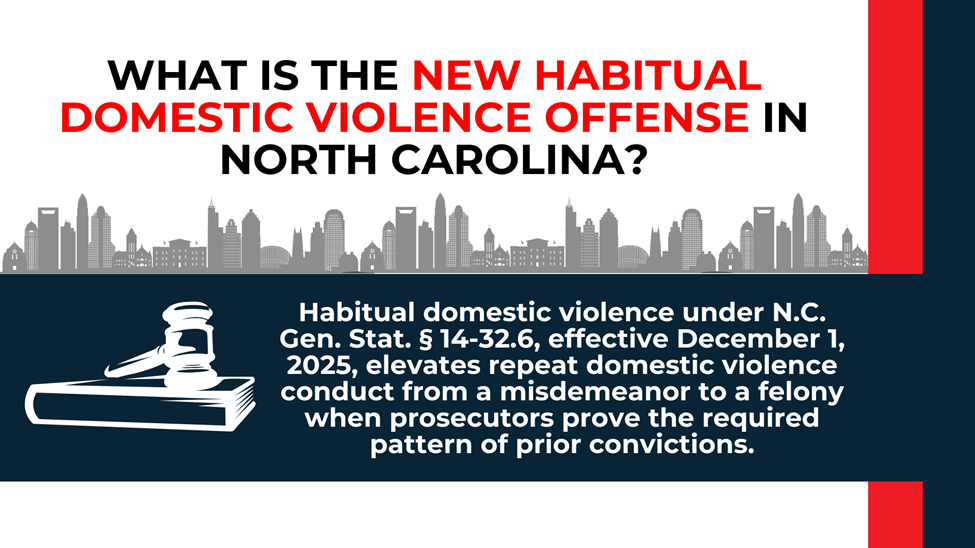
The habitual domestic violence offense is codified at N.C. Gen. Stat. § 14-32.6. This statute establishes the elements the prosecution must prove, defines which prior convictions qualify for enhancement purposes, and sets forth the punishment structure that applies to convictions under this section.
When Did This Law Take Effect?
The habitual domestic violence statute took effect on December 1, 2025. This effective date is critically important because the law applies only to offenses committed on or after that date. Conduct occurring before December 1, 2025, cannot form the basis of a habitual domestic violence charge, even if the defendant has the qualifying prior convictions. However, prior convictions from before the effective date can still count toward establishing habitual status for offenses committed after the law took effect.
What Must the Prosecution Prove to Convict Someone of Habitual Domestic Violence?
To secure a conviction under N.C. Gen. Stat. § 14-32.6, the prosecution must prove three distinct components: qualifying current conduct, the required prior conviction record, and compliance with the statutory lookback period.
What Current Conduct Qualifies Under This Statute?
The prosecution must first establish that the defendant committed either misdemeanor domestic violence under the existing statute or committed an assault against someone with whom they share a qualifying domestic relationship. This current offense forms the foundation of the habitual charge—without it, the enhancement cannot apply regardless of how many prior convictions exist.
How Many Prior Convictions Are Required?
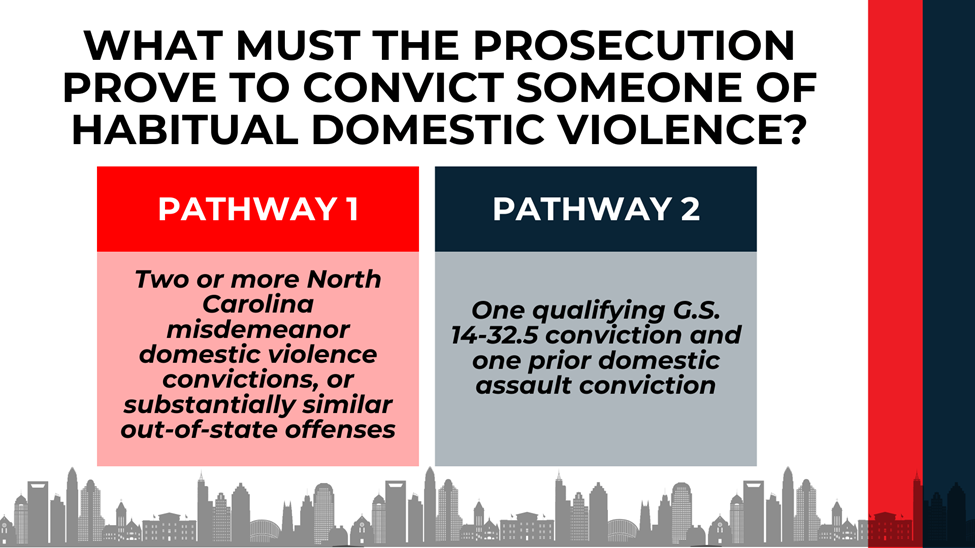
Beyond the current conduct, the prosecution must prove that the defendant has at least two prior convictions that qualify under the statute. The law establishes two pathways to meet this requirement:
- Pathway 1: Two or more convictions under North Carolina’s misdemeanor domestic violence statute (G.S. 14-32.5) or substantially similar offenses from other states.
- Pathway 2: One conviction under G.S. 14-32.5 (or a substantially similar out-of-state offense) plus at least one conviction for an assault involving a victim with whom the defendant shared a qualifying domestic relationship.
The critical distinction is that at least one prior must be an actual domestic violence statute conviction—two generic assault convictions involving domestic relationships are not sufficient on their own, even if both victims were intimate partners or family members.
What Is the 15-Year Lookback Period?
Not every prior conviction counts toward habitual status. The statute imposes a 15-year lookback period that limits which convictions the prosecution can use. Specifically, the earlier of the two required prior convictions must have occurred within 15 years of the current offense. Convictions that fall outside this window—meaning they occurred more than 15 years before the earliest qualifying prior—cannot be counted toward establishing habitual status.
This lookback calculation can become complex when a defendant has multiple prior convictions spanning many years. The timing of each conviction relative to both the current offense and the other priors matters significantly.
Do Out-of-State Convictions Count Toward Habitual Status?
Yes. The statute explicitly allows the prosecution to use “substantially similar convictions from other states” as qualifying priors. This means defendants who have domestic violence convictions from other jurisdictions remain exposed to felony enhancement in North Carolina, provided those out-of-state offenses are substantially similar to North Carolina’s domestic violence statutes.
Determining whether an out-of-state conviction is “substantially similar” often requires careful legal analysis of the elements of the foreign offense compared to North Carolina law.
What Are the Potential Punishments for a Habitual Domestic Violence Conviction?
The punishment structure for habitual domestic violence is designed to escalate with each subsequent conviction, reflecting the legislature’s intent to impose increasingly severe consequences for repeat offenders.
What Felony Class Applies to a First Habitual DV Conviction?
A first conviction under the habitual domestic violence statute is classified as a Class H felony. This represents a significant elevation from the misdemeanor classification that would otherwise apply to domestic violence charges without the habitual enhancement.
How Does Punishment Escalate with Subsequent Convictions?
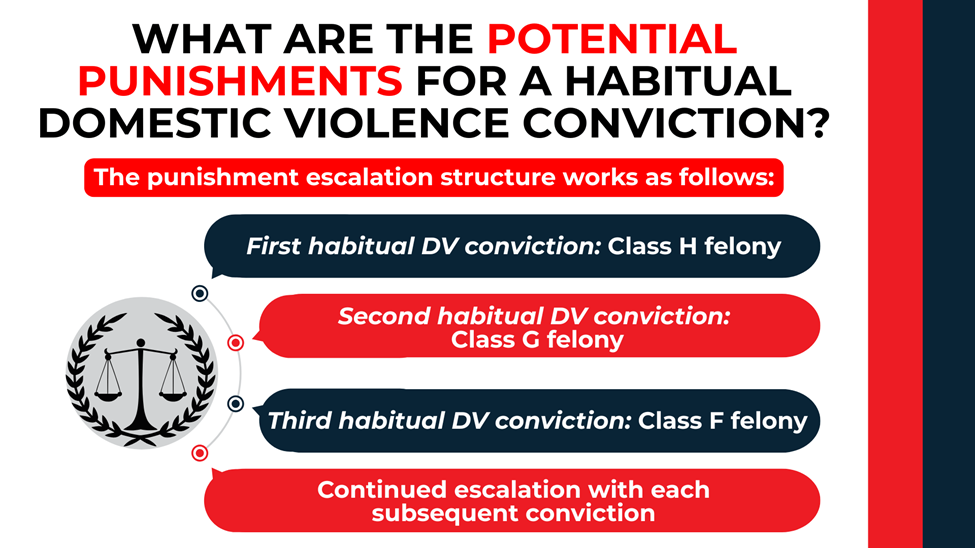
The statute creates an escalating punishment framework where each subsequent conviction under this section is punished one felony class higher than the defendant’s most recent habitual domestic violence conviction. The escalation structure works as follows:
- First habitual DV conviction: Class H felony
- Second habitual DV conviction: Class G felony
- Third habitual DV conviction: Class F felony
- Continued escalation with each subsequent conviction
This escalating structure means that defendants who continue to accumulate convictions under this statute face progressively more serious felony classifications.
What Is the Maximum Felony Classification?
The escalation caps at Class C felony status. Once a defendant reaches Class C classification, subsequent convictions remain at the Class C level rather than continuing to escalate. Class C felonies represent one of the more serious felony classifications in North Carolina’s structured sentencing system, carrying substantial prison exposure depending on the defendant’s prior record level.
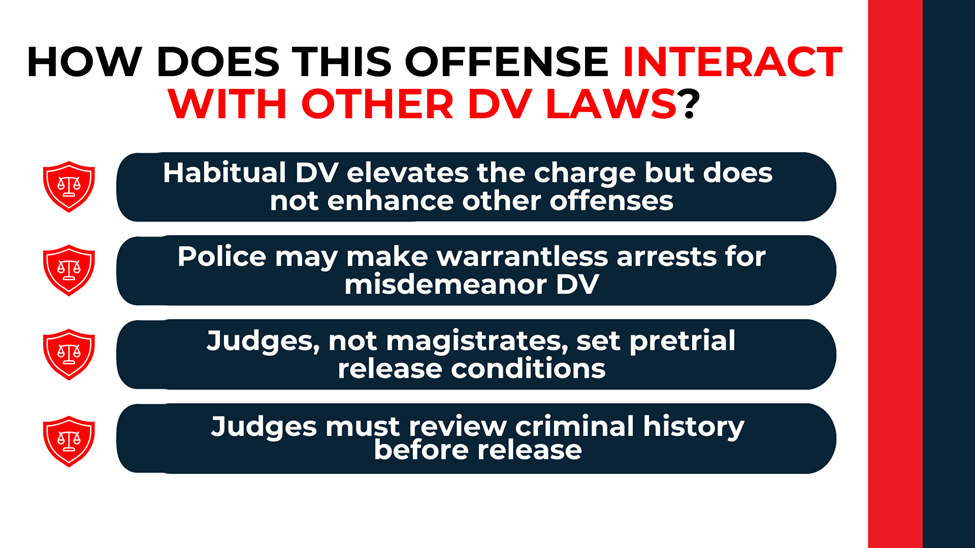
How Does This Offense Interact with Other Domestic Violence Laws?
The habitual domestic violence statute functions as part of a broader package of changes affecting how domestic violence cases are handled in North Carolina.
Can a Habitual DV Conviction Be Used to Enhance Other Charges?
No. The statute specifically provides that a conviction under the habitual domestic violence section cannot be used as a prior conviction to enhance punishment under other habitual offense laws. This makes the habitual domestic violence enhancement a standalone mechanism—it elevates the current offense to felony status but does not feed into other habitual offender statutes.
What Arrest Powers Do Police Have Under the New Law?
Related legislative changes have expanded police authority in domestic violence cases. Officers can now arrest without a warrant for misdemeanor domestic violence offenses, extending their powers beyond traditional assault charges. This means law enforcement has greater flexibility to make immediate arrests in domestic violence situations without first obtaining judicial authorization.
The following changes affect how domestic violence arrests and pretrial proceedings work:
- Police may now make warrantless arrests for misdemeanor domestic violence
- Defendants charged with misdemeanor domestic violence must have pretrial release conditions set by a judge rather than a magistrate
- Judges must review the defendant’s criminal history before setting pretrial release conditions
How Have Pretrial Release Procedures Changed for DV Cases?
Defendants charged with misdemeanor domestic violence now face modified pretrial release procedures. Instead of having a magistrate set conditions of release, these defendants must appear before a judge who will review their criminal history before establishing appropriate conditions. This change ensures that judicial officers making pretrial release decisions have access to information about the defendant’s prior record, which may be particularly relevant given the new habitual enhancement statute.
What Defense Strategies Apply to Habitual Domestic Violence Charges?
Defending against habitual domestic violence charges requires attention to both the current conduct allegations and the prior conviction record the prosecution intends to use for enhancement purposes.
Can the Validity of Prior Convictions Be Challenged?
The prosecution’s ability to prove habitual status depends entirely on establishing that the defendant has qualifying prior convictions. Defense strategies may focus on whether prior convictions were constitutionally obtained, whether proper procedures were followed in earlier cases, and whether documentation adequately establishes the convictions the prosecution claims. If the validity of prior convictions can be successfully challenged, the enhancement may fail even if the current conduct is proven.
What If Prior Convictions Fall Outside the Lookback Period?
The 15-year lookback requirement creates a potential defense avenue when prior convictions are aged. If the earlier of the two required priors occurred more than 15 years before the current offense, it cannot count toward habitual status. Careful analysis of conviction dates relative to the current offense date can reveal whether the prosecution’s theory of habitual status actually satisfies the statutory timing requirements.
This calculation becomes particularly important when defendants have multiple prior convictions from different time periods. Identifying which convictions fall within and outside the lookback window may determine whether felony enhancement applies.
How Does the Qualifying Relationship Requirement Affect the Case?
Both the current conduct and the prior convictions must involve victims with whom the defendant shared a qualifying domestic relationship. If the prosecution cannot establish the required relationship element—either for the current offense or for the priors being used for enhancement—the habitual charge may not stand. Defense strategies may focus on whether the relationships at issue actually qualify under the statutory definitions.

Why Does Legal Representation Matter When Facing This Felony Charge?
What’s at Stake with a Felony Domestic Violence Conviction?
A habitual domestic violence conviction creates a felony record with all the collateral consequences that follow. Employment opportunities, housing options, professional licensing, and firearm rights can all be affected by felony convictions. The escalating punishment structure means that defendants who face multiple prosecutions under this statute confront increasingly serious felony classifications, potentially reaching Class C status with its substantial prison exposure.
The complexity of the habitual enhancement analysis—including prior conviction validity, lookback period calculations, and relationship requirement issues—demands careful legal attention to every element the prosecution must prove.
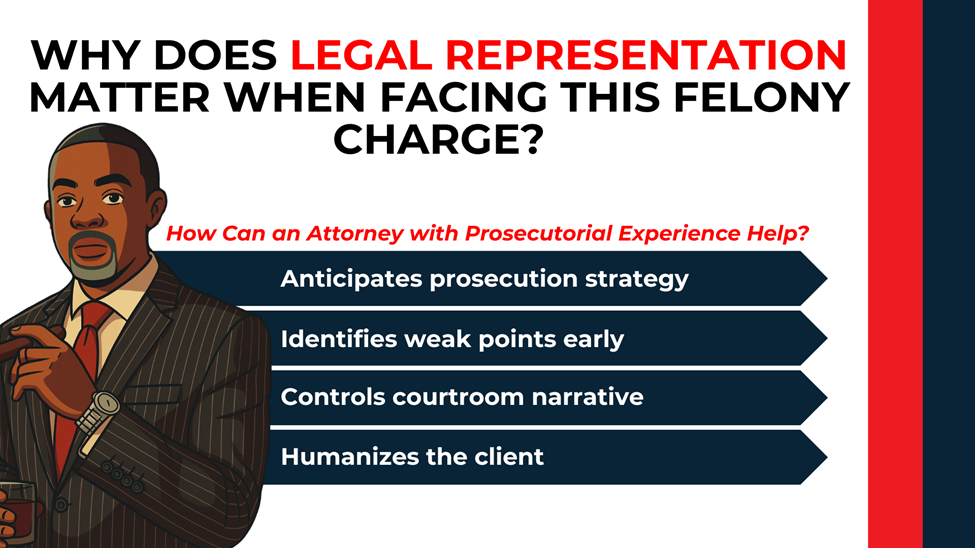
How Can an Attorney with Prosecutorial Experience Help?
Facing charges under a new statute requires understanding how prosecutors will interpret and apply the law in its early implementation. The habitual domestic violence offense creates multiple points of potential challenge, from the validity of prior convictions to the timing requirements of the lookback period.
Attorney Patrick Roberts brings the perspective of a former prosecutor who handled domestic violence cases, meaning he understands how the State approaches these matters from investigation through trial. His training at the National Criminal Defense College, including ongoing participation in advanced cross-examination programs, provides the technical courtroom skills these cases demand. As a graduate of Gerry Spence’s Trial Lawyers College—where he trained directly with one of the most accomplished trial lawyers in the country—he brings a methodology focused on connecting with juries and humanizing clients facing serious allegations. Contact Patrick Roberts Law to discuss your case and understand your options under this new law.
Frequently Asked Questions
When did habitual domestic violence become a crime in North Carolina? The habitual domestic violence statute took effect on December 1, 2025. Only offenses committed on or after that date can be charged under this law, though prior convictions from before the effective date can still count toward establishing habitual status.
Can I be charged with habitual domestic violence if my prior convictions are from another state? Yes. The statute allows the prosecution to count “substantially similar convictions from other states” toward the required two prior convictions. Whether an out-of-state conviction qualifies requires analysis of whether that offense is substantially similar to North Carolina’s domestic violence laws.
What happens if I’m convicted of habitual domestic violence more than once? Each subsequent conviction is punished one felony class higher than your most recent habitual domestic violence conviction, starting at Class H and escalating up to a maximum of Class C.
Does the new law apply to conduct that occurred before December 1, 2025? No. Conduct occurring before the effective date cannot form the basis of a habitual domestic violence charge. However, prior convictions from before December 1, 2025, can still count toward establishing habitual status for offenses committed after the law took effect.
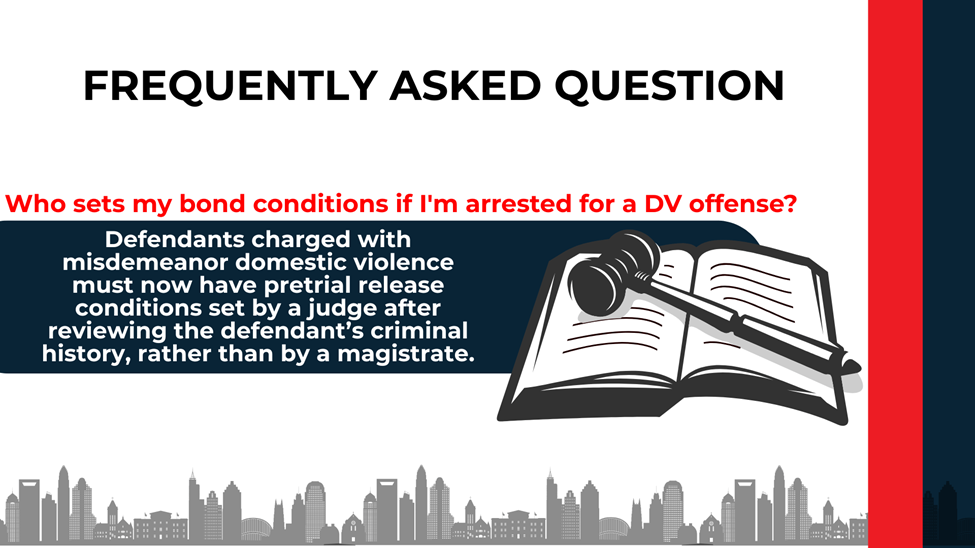
Who sets my bond conditions if I’m arrested for a domestic violence offense? Under related changes to domestic violence procedures, defendants charged with misdemeanor domestic violence must have pretrial release conditions set by a judge who reviews the defendant’s criminal history, rather than a magistrate.
Yoast SEO
Disclaimer: The information on this website is for general information purposes only. Nothing on this site should be taken as legal advice for any individual case or situation. Case results depend upon a variety of factors unique to each case. Prior results do not guarantee a similar outcome.
Former assistant district attorney
Contact Patrick Roberts
Facing criminal charges in North Carolina demands seasoned representation. Trust in the experience and dual perspective of Patrick Roberts. Reach out today for a confidential consultation.
-
Call Our Team
Calls answered 24/7









For more information on the selection criteria, go to www.martindale.com
*Each case is different and must be evaluated separately. Prior results achieved do not guarantee similar results can be achieved in future cases.