

Registered sex offenders in North Carolina face a specific set of legal restrictions that control where they can go, what they must report to law enforcement, and how they live for decades after their conviction. These restrictions are not optional guidelines — they are legal requirements under N.C.G.S. § 14-208 and related statutes, and violating them is a felony.
North Carolina currently has over 25,000 people on its Sex Offender Registry, making it one of the largest registries in the country. Whether you are facing registration for the first time or trying to understand what an existing registration actually requires, the restrictions below are what NC law imposes.
Where Are You Not Allowed to Go in North Carolina?
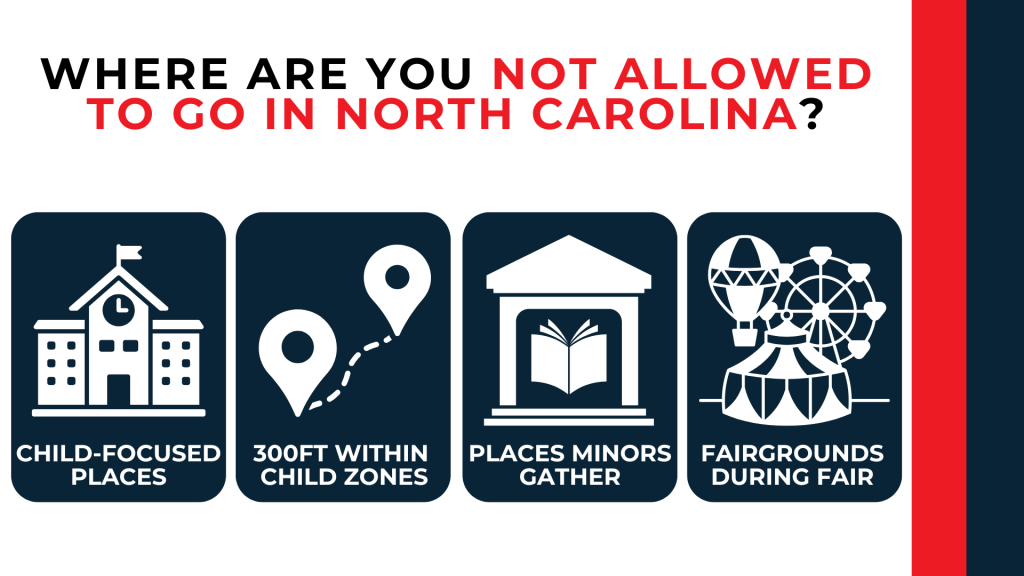
The most immediate restriction most people notice is where they are no longer allowed to be. N.C.G.S. § 14-208.18 prohibits you from knowingly being present at locations intended for the use, care, or supervision of children. The statute lists these categories specifically:
Schools, child care centers, nurseries, children’s museums, and playgrounds. These are off-limits entirely. You cannot be on the property of any of these locations, regardless of whether children happen to be there at the time.
Libraries, arcades, amusement parks, recreation parks, and swimming pools. These locations are restricted when minors are present. The statute describes them as places where minors “frequently congregate.”
The North Carolina State Fair, the Mountain State Fair, and any county agricultural fair during the period the fair is being conducted.
Locations within 300 feet of any child-focused facility that sits inside a larger property — for example, a daycare inside a shopping mall or a children’s play area inside a shopping center. This 300-foot buffer applies automatically when your offense involved a victim under 18. It also applies when the offense involved child sexual exploitation under §§ 14-190.16, 14-190.17, 14-190.17A, or 14-190.17C. For offenses under Article 7B (NC’s rape and sexual offense statutes), the 300-foot restriction applies only if a finding has been made in a criminal or civil proceeding. That finding must establish that the person presents, or may present, a danger to minors under the age of 18.
Not every registered offender is subject to every restriction in § 14-208.18. Which subsections apply depends on the type of the original offense. Offenses involving victims under 18, offenses under Article 7B, and child exploitation offenses each trigger specific restrictions. But for the majority of people on the registry — particularly anyone whose offense involved a minor — the full set of location restrictions applies.
There are narrow, carefully defined exceptions. If you are a parent or guardian, you may take your own child to a location for emergency medical care. If you are eligible to vote, you may enter a polling place located at a restricted site, but only for the purpose of voting. You must notify the school principal if the polling place is a school. If your child is enrolled, you may visit their school, but only for a scheduled conference or at the principal’s specific request. You must notify the principal of your registration status before the visit. At all times on school property, you must remain under the direct supervision of school personnel. Any permission for ongoing visits must be in writing.
If you are required to wear an electronic monitoring device, you must wear one that enforces exclusion zones around every elementary and secondary school in the state. As of the most recent reporting period, 581 sex offenders in North Carolina were enrolled in GPS electronic monitoring.
What Do You Have to Report in North Carolina?
Beyond location restrictions, NC law imposes a set of ongoing reporting requirements that effectively mean you cannot make routine life changes without notifying the sheriff’s office — in person, in writing, and within strict deadlines.
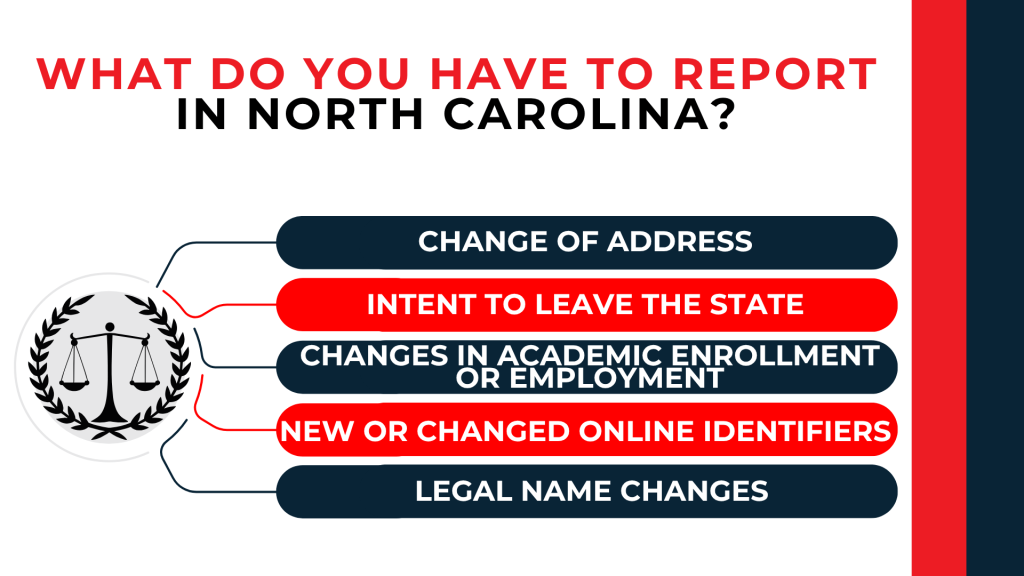
Under N.C.G.S. § 14-208.9, you must report the following:
Change of address. If you move within the same county, you must report in person to the sheriff within three business days. If you move to a different county, you must also report in person to the sheriff of the new county within ten days.
Intent to leave the state. If you plan to move out of North Carolina, you must report in person to the sheriff at least three business days before you intend to leave. The sheriff will tell you that you must comply with the registration requirements of your new state. The sheriff will also forward your information to that state’s registry. If you change your mind and decide to stay in NC, you must report that decision in person within three business days of the date you originally said you would leave.
Changes in academic enrollment or employment at a college or university. Enrolling, dropping out, getting a job at a higher education institution, or leaving that job — all must be reported in person within three business days.
New or changed online identifiers. Any new username, email address, or other online identifier must be reported in person within ten days.
Legal name changes. A name change by any method must be reported in person within three business days.
Separately, N.C.G.S. § 14-208.9A requires the NC Department of Public Safety to mail you a verification form every six months. This form is mailed on the anniversary of your initial registration and again six months after. The form is not forwardable. It goes to the last address on file and will not follow you if you have moved without reporting. You must return the form in person to the sheriff within three business days of receiving it. The form requires you to confirm your current address, online identifiers, and legal name. If the sheriff believes your photograph no longer reflects your current appearance, the sheriff may require a new photograph at any time.
Every one of these requirements must be completed in person. There is no option to report by phone, by mail, or online.
What Happens If You Violate Sex Offender Restrictions in NC?
The penalties for violating registration requirements in North Carolina are severe — and they are separate criminal charges on top of whatever conviction led to registration in the first place.
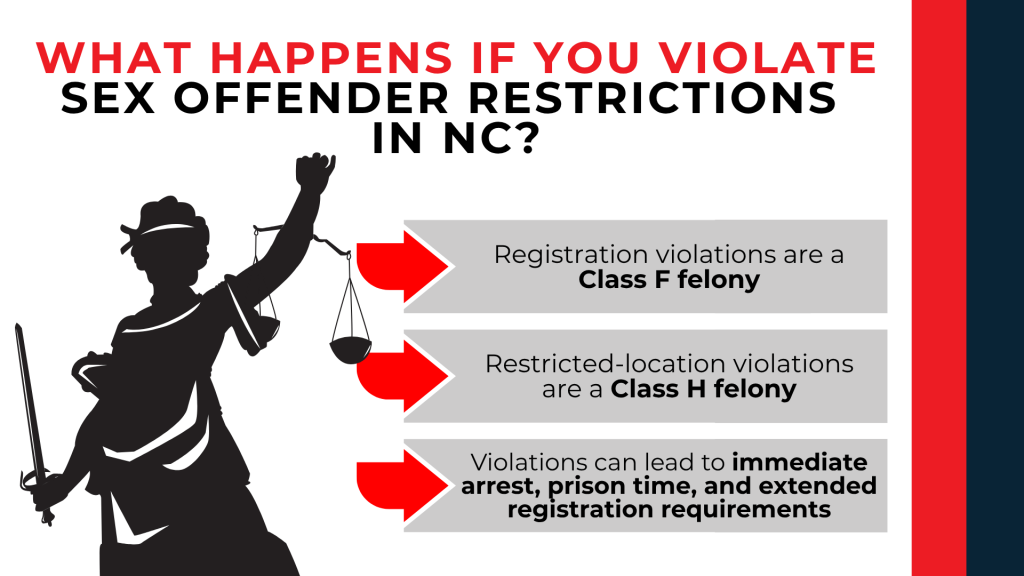
Under N.C.G.S. § 14-208.11, if you willfully fail to comply with any of the following, you commit a Class F felony:
Failing to register as required. Failing to notify the sheriff of a change of address. Failing to return the twice-a-year verification form. Submitting false information on any required form. Failing to report enrollment or employment changes at a higher education institution. Failing to report new or changed online identifiers. Failing to appear in person as required. Reporting an intent to move out of state but remaining in NC without notifying the sheriff.
A Class F felony in North Carolina carries a presumptive sentencing range that can mean years of active imprisonment depending on prior record level.
Being present at a restricted location in violation of § 14-208.18 is a separate offense — a Class H felony.
Under § 14-208.11(a1), when a probation officer, parole officer, or any law enforcement officer becomes aware of a registration violation, they are required to immediately arrest you or seek an arrest order. There is no warning, no grace period, and no discretion built into the statute.
A new felony conviction can also reset or extend registration requirements, creating a cycle that makes compliance even more critical.
Can an Attorney Help With Sex Offender Restrictions in North Carolina?
The restrictions described above are specific, statutory, and enforceable. But they are not all identical for every person on the registry.
Which location restrictions apply depends on the category of the original offense. Whether the 300-foot buffer zone applies depends on specific statutory findings. Reporting requirement deadlines are strict, and an alleged violation can result in a new felony charge and immediate arrest. Category disputes, verification compliance issues, and alleged violations all involve legal questions where the outcome depends on how the case is handled.
Patrick Roberts of Patrick Roberts Law in Raleigh, North Carolina, is a criminal defense attorney whose practice areas include sex offenses and who has handled thousands of criminal cases across the state. A former assistant district attorney in Wake, Johnston, and New Hanover counties, he understands how the state builds and evaluates cases from the inside. He has co-authored a legal book on defending internet sex crimes, has been recognized among the Top 100 Trial Lawyers by The National Trial Lawyers, and is admitted to practice before the NC state courts, all three federal district courts in North Carolina, the Fourth Circuit Court of Appeals, and the United States Supreme Court.
Education & Advanced Training
An alumnus of Johns Hopkins University (#7 National University) and Duke University School of Law (#7 National Law School; #9 Criminal Law Program), Mr. Roberts has dedicated his career to honing his trial craft. He is a graduate of the prestigious Gerry Spence’s Trial Lawyers College and the National Criminal Defense College (NCDC) Trial Practice Institute, including the 2025 Cross-Examination Intensive.
Accolades & Peer Review
• Martindale-Hubbell AV Preeminent Rating: 5+ Consecutive Years
• Martindale-Hubbell Client Champion Platinum: 5+ Consecutive Years
• AVVO 10/10 “Superb” Rating: 15+ Consecutive Years
• The National Trial Lawyers: Top 100 Trial Lawyers
Mr. Roberts is a published author of two legal books and a lifetime member of the National Association of Criminal Defense Lawyers.
Client Review
“Mr. Roberts was amazing! Had a very difficult case & the outcome didn’t look bright at all. I was looking at some serious time. But he was able to get me probation (which wasn’t on the table at all before he got involved) He was honest, to the point & laid out everything that could be a possibility. Never gave false hope, just the facts & logically what we could do to possibly get this in my favor. I would recommend Mr. Roberts to anyone seeking REAL guidance, honest & qualifications to back it up.” – Verified client review via Avvo.com
Peer Endorsement
“I knew Patrick when he was an assistant District Attorney, and was also impressed with his high ethical standards, and his reasoned and experienced approach in handling his cases. He is an exemplary attorney and I highly recommend him.” – Verified peer endorsement via Avvo.com
Disclaimer: Testimonials and peer reviews are for informational purposes only and do not guarantee or predict the outcome of your legal matter. Every case is unique and must be evaluated on its own merits. All endorsements featured on this site are actual comments from clients and peers.
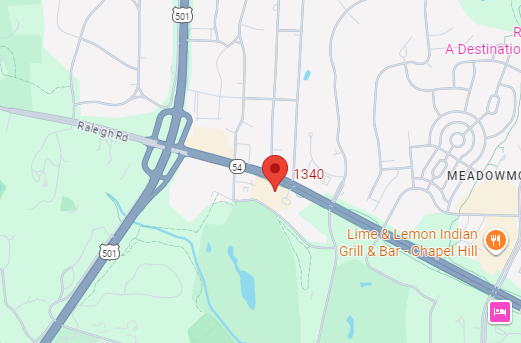
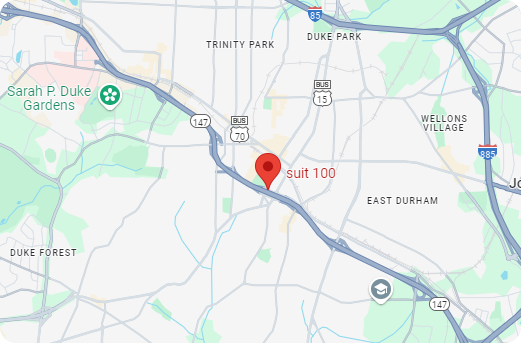
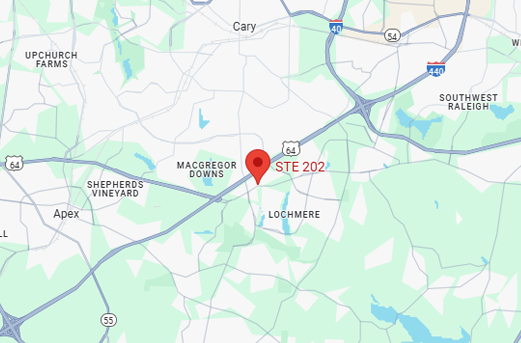
If you are facing sex offender registration in North Carolina or are currently on the registry and dealing with a compliance issue, contact Patrick Roberts Law to discuss your situation. The firm has offices in Raleigh, Durham, Chapel Hill, and Cary.
The firm limits the volume of active cases to ensure that their staff can provide consistent, comprehensive attention to every matter they handle.
Disclaimer: The information on this website is for general informational purposes only. Nothing herein should be taken as legal advice for any individual case or situation. Contacting us via this website, email, or contact form does not create an attorney-client relationship. Case results depend on a variety of factors unique to each case; prior results do not guarantee a similar outcome.
Former assistant district attorney
Contact Patrick Roberts
Facing criminal charges in North Carolina demands seasoned representation. Trust in the experience and dual perspective of Patrick Roberts. Reach out today for a confidential consultation.
-
Call Our Team
Calls answered 24/7






For more information on the selection criteria, go to www.martindale.com
*Each case is different and must be evaluated separately. Prior results achieved do not guarantee similar results can be achieved in future cases.