
A false rape accusation can lead to a conviction in North Carolina even without physical evidence, forensic proof, or a single witness beyond the accuser. That is not an exaggeration. North Carolina law does not require supporting evidence for sex offense convictions. A jury can convict based on one person’s testimony alone if they find it credible.
Research consistently places the rate of false reports for sexual assault between 2% and 8%. Sexual assault accounts for roughly 10% of all exonerations nationally — the fourth most common category of wrongful convictions. False accusations happen, courts have recognized that reality, and North Carolina law provides specific tools to fight them. But those tools only work if you understand what you are facing and act early.
This page covers how a jury can convict on an accusation alone. It explains the specific legal tools a defense attorney uses to fight a false accusation in North Carolina. And it lays out what you should do right now to protect yourself.
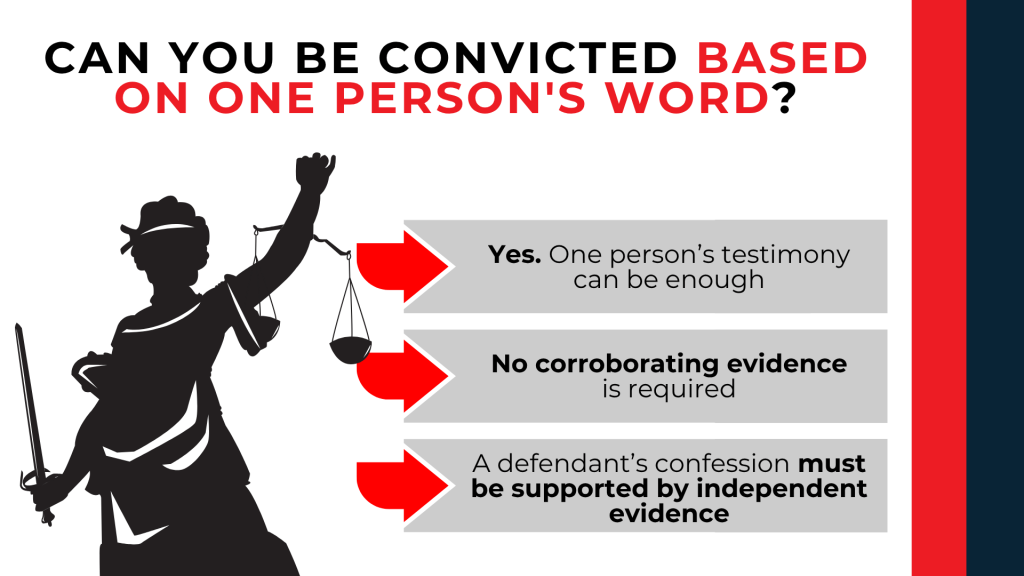
Can You Be Convicted Based on One Person’s Word?
Yes. In North Carolina, the testimony of the accuser alone — if believed by the jury — is legally sufficient to support a conviction. There is no statutory requirement that the State produce DNA evidence, medical records, eyewitnesses, or any other supporting evidence to support a rape charge.
This rule comes from the common law and has been affirmed repeatedly by North Carolina appellate courts. In State v. Parker, the North Carolina Supreme Court addressed the role of supporting evidence. The Court held that while corroborative evidence may be used to establish a confession’s trustworthiness, the absence of supporting evidence does not make a case legally insufficient. The practical consequence is straightforward: if the accuser takes the stand, tells a consistent story, and the jury believes it, that is enough.
The one exception works in the defendant’s favor. Under the corpus delicti rule, if the State’s case depends on the defendant’s own confession rather than the accuser’s testimony, North Carolina courts require substantial independent supporting evidence. This is especially true where the alleged victim denies the offense occurred. The North Carolina Supreme Court emphasized in State v. Smith that where proof of injury or loss is otherwise lacking, strong corroboration of an out-of-court confession is “essential.”
But in the typical false accusation scenario — where the accuser is the one driving the case — the legal system places enormous weight on credibility. That makes how you challenge credibility the central question of your defense.
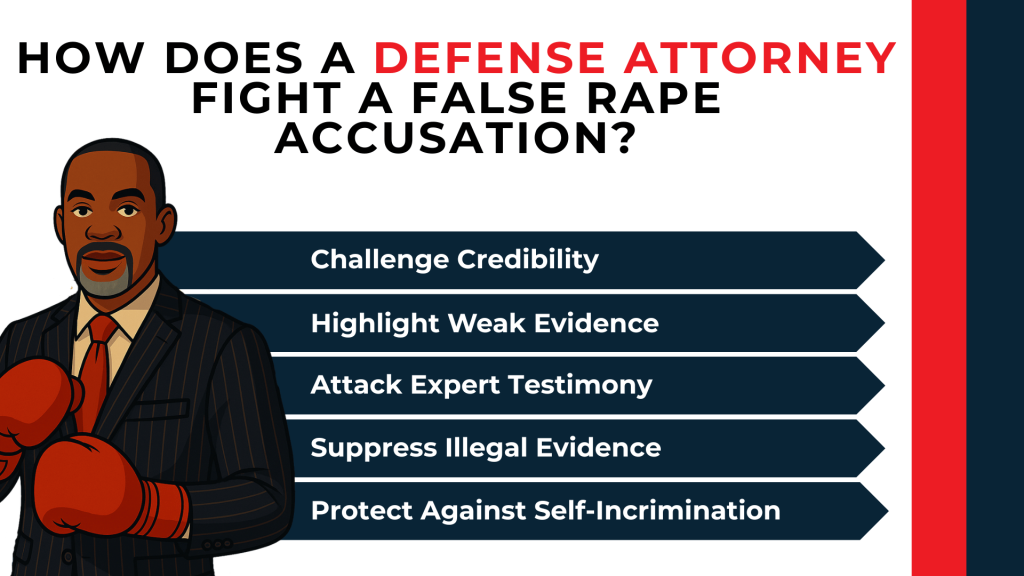
How Does a Defense Attorney Fight a False Rape Accusation?
A false accusation defense in North Carolina is not a single argument. It is a combination of legal tools applied to the specific weaknesses in the prosecution’s case. Here is how those tools work under current North Carolina law.
How Can You Challenge the Accuser’s Credibility and Motive?
North Carolina’s Rape Shield law — Rule 412 of the North Carolina Rules of Evidence — generally bars evidence of a complainant’s prior sexual behavior. But the law contains exceptions that are directly relevant in false accusation cases, and North Carolina courts have recognized additional grounds beyond the statute itself.
Rule 412(b) permits evidence of the complainant’s sexual behavior with the defendant, evidence of an alternative source of physical injury, evidence of a distinctive pattern tending to prove consent, and evidence forming the basis for an expert opinion that the complainant fantasized about the sexual act. Each of these can apply in cases where the accusation is fabricated.
Beyond the statutory exceptions, North Carolina appellate courts have held that evidence of bias or motive to fabricate is admissible even when it falls outside Rule 412’s categories. In State v. Martin, the Court of Appeals recognized that motive and bias evidence is admissible outside the Rape Shield framework. In State v. Goins, the Court held that bias evidence is admissible where the State’s case depends on the complainant’s credibility. These rulings mean that if the accuser has a reason to lie — a custody dispute, a relationship conflict, financial motivation, revenge — evidence of that motive can be presented to the jury.
Prior inconsistent statements by the accuser are also admissible for impeachment purposes. If the accuser told a different version of events to friends, family, or police before trial, those inconsistencies can be used to undermine their testimony.
What If There Is No Evidence of Force?
North Carolina law requires the State to prove both force and lack of consent as separate elements — each beyond a reasonable doubt. That means a defense attorney can challenge each independently. The North Carolina Supreme Court held in State v. Alston that force must be proven specific to the act, not inferred from the general nature of a relationship. The Court of Appeals reinforced this in State v. Henderson, confirming that a nonconsensual act alone, without proof of the distinct element of force, is insufficient to support a forcible rape conviction. In a false accusation case, this separation creates two separate ways the prosecution’s case can fail instead of one.
The absence of physical or forensic supporting evidence, while not legally required, is a factual argument that goes directly to reasonable doubt. When there are no injuries, no DNA evidence inconsistent with your account, and no independent witnesses, defense counsel argues that gap to the jury. It gives the jury a concrete reason to question whether the State has met its burden.
Can You Challenge the State’s Expert Witnesses?
The State frequently calls expert witnesses in sex offense cases to explain what it describes as unexpected victim behavior — delayed reporting, inconsistent accounts, continued contact with the defendant after the alleged assault. This testimony often relies on frameworks like Rape Trauma Syndrome or Child Sexual Abuse Accommodation Syndrome.
North Carolina law places real limits on this testimony. In 2011, the legislature adopted the federal Daubert reliability standard for expert testimony under N.C.G.S. § 8C-1, Rule 702(a). The Supreme Court confirmed in State v. McGrady that North Carolina “unequivocally” adopted Daubert. This means prosecution experts must demonstrate that their testimony is based on sufficient facts, reliable principles, and methods reliably applied to the case.
More specifically, the Supreme Court held in State v. Hammett that an expert may express an opinion on whether abuse occurred only if the opinion is based on sufficient physical evidence. An expert opinion based solely on the accuser’s statements or history — without independent physical evidence — is improper. In State v. Hall, the Court held that syndrome testimony may be admitted to explain behavior. But it cannot be used as substantive evidence to prove that a sexual assault actually occurred.
A defense attorney can file a Daubert motion to challenge prosecution experts before they ever testify. Defense experts on false memory, witness suggestibility, and flawed forensic interview techniques can present the jury with another way of evaluating the accuser’s account.
What If Evidence Was Obtained Through an Improper Search?
Digital evidence — text messages, photos, social media activity, call logs — plays an increasingly central role in sex offense cases. The Fourth Amendment and its North Carolina counterpart, N.C. Const. art. I, § 20, require a warrant for the search of cell phones and digital devices, as the U.S. Supreme Court held in Riley v. California.
A defense attorney can challenge whether the warrant was specific enough, whether the forensic examination exceeded the warrant’s scope, and whether cloud data was accessed without separate authorization. Consent to search a home does not automatically extend to digital devices found inside it. If law enforcement obtained evidence through an improper search, a motion to suppress can remove that evidence from the case entirely.
North Carolina courts require warrants to be executed within 48 hours of issuance under N.C.G.S. § 15A-248. Forensic examination procedures present additional grounds for challenge, including chain of custody and the qualifications of the examiner.
Protecting Your Own Statements
One of the most dangerous aspects of a false accusation is the risk of making statements that damage your own defense before you even know you need one.
Miranda warnings are required before custodial interrogation. North Carolina also mandates electronic recording of custodial interrogations for Class C sex offenses and above under N.C.G.S. § 15A-211. If law enforcement failed to record the interrogation, that failure is admissible to support a claim that any resulting confession was involuntary.
North Carolina is a one-party consent state under N.C.G.S. § 15A-287. This means law enforcement can legally arrange for the accuser — or another person — to call you and record the conversation without your knowledge. These pretext calls are designed to draw out admissions or apologies that can be used at trial. Anything you say in what you believe is a private conversation with the accuser may already be on tape.
Polygraph evidence is inadmissible in North Carolina under State v. Grier, so agreeing to take a polygraph will not help your case at trial and may generate statements that can be used against you.
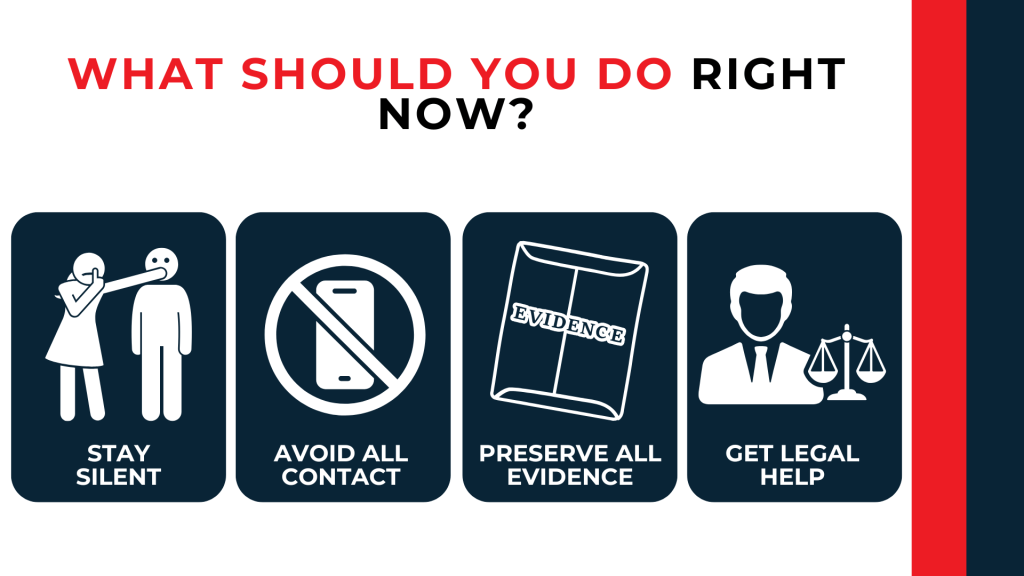
What Should You Do Right Now?
If you are facing a false rape accusation — whether charges have been filed or you have reason to believe an accusation is coming — the steps you take immediately will shape everything that follows.
Do not speak to law enforcement without an attorney. You have the right to remain silent, and exercising that right cannot be used against you. Anything you say in an interrogation, a phone call, or even a casual conversation with an officer can become evidence. The mandatory recording requirement under § 15A-211 only applies to formal custodial interrogations of certain felonies. Informal conversations, voluntary interviews, and pretext calls are not covered by the same protections.
Do not contact the accuser. Any communication — a phone call, a text message, a message through a friend — can be recorded under North Carolina’s one-party consent law and used against you. Even an attempt to “clear things up” or ask why they made the accusation can be reframed as consciousness of guilt or an attempt to intimidate a witness.
Preserve everything. Text messages, emails, social media posts, photographs with timestamps, location data, and any communications with the accuser before and after the alleged incident may be critical evidence. Do not delete anything. Do not alter anything. Instruct anyone who might have relevant communications to preserve them as well.
Contact a criminal defense attorney before charges are filed. What happens in the first days and weeks — whether evidence is preserved, whether statements are made, whether a defense investigation begins — determines the options available at every stage that follows. Early intervention is not a luxury. It is the difference between a defense that is built ahead of time and one that is playing catch-up from the start.
Talk to a North Carolina Criminal Defense Attorney
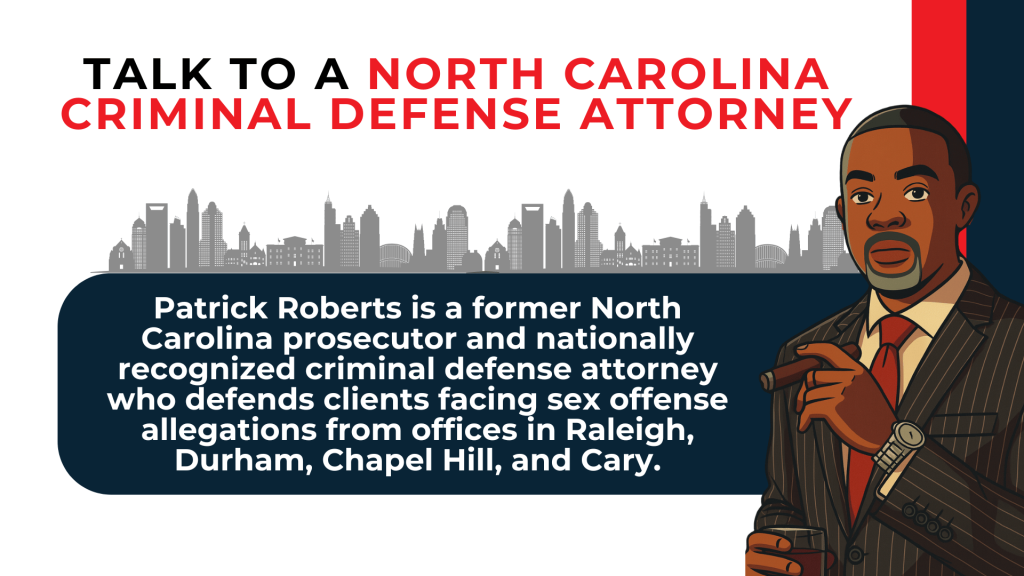
Patrick Roberts Patrick Roberts is a Raleigh criminal defense attorney and former prosecutor who has handled thousands of criminal cases across North Carolina, including sex offense charges. His background as a former Assistant District Attorney in Wake, Johnston, and New Hanover counties provides him with direct insight into the methods used to build a prosecution, the specific types of evidence relied upon, and the legal vulnerabilities within a state’s case.
Education & Advanced Training
An alumnus of Johns Hopkins University (#7 National University) and Duke University School of Law (#7 National Law School; #9 Criminal Law Program), Mr. Roberts has dedicated his career to honing his trial craft. He is a graduate of the prestigious Gerry Spence’s Trial Lawyers College and the National Criminal Defense College (NCDC) Trial Practice Institute, including the 2025 Cross-Examination Intensive.
He holds advanced procedural training as a graduate of the Trial Lawyers College, and the National Criminal Defense College.
His professional standing is recognized within the legal community. He is a Client Champion (Awarded by Martindale-Hubbell) since 2017 up to the present year 2026. He holds an AV Preeminent peer-review rating from Martindale-Hubbell and is listed among the Top 100 Trial Lawyers by The National Trial Lawyers. He has been selected as a member of the Nation’s Top One Percent by the National Association of Distinguished Counsel.
Case Review
- Charge: First-Degree Sexual Offense (N.C.G.S. § 14-27.4)
- Defense Counsel: Patrick Roberts
- Result: No Charges Filed (Investigation Closed)
Fact Summary and Allegations
The matter originated from an allegation made by a female complainant whom the client met at a bar. The complainant alleged that the client committed an act of non-consensual sexual assault (rape). Following the report, law enforcement initiated an active investigation to determine if probable cause existed to issue formal criminal charges.
Legal Framework
In North Carolina, a charge under N.C.G.S. § 14-27.4 (First-Degree Sexual Offense) is a Class B1 felony, which carries a mandatory minimum active prison sentence if convicted. Because the client was under active investigation but not yet formally arrested or indicted, defense counsel had a narrow window to intervene before the state committed to prosecution.
Defense Strategy and Action Plan
1. Pre-Arrest Intervention
Rather than waiting for an arrest warrant to be issued, Attorney Patrick Roberts engaged with the investigating detective during the initial inquiry stage. This phase is critical because the standard of proof required for law enforcement to secure an arrest warrant (probable cause) is significantly lower than the standard required to secure a conviction at trial (beyond a reasonable doubt).
2. Independent Defense Investigation
Counsel conducted an independent investigation parallel to the police inquiry. In cases involving acquaintances meeting in public venues, defense investigations typically focus on establishing a timeline, locating objective evidence, and identifying witness statements that may contradict the complainant’s narrative. This can include:
- Securing electronic evidence (text messages, social media interactions, or location data).
- Retrieving surveillance footage from the establishment or surrounding areas.
- Interviewing third-party witnesses regarding the demeanor and interactions of both parties.
3. Presentation of Exculpatory Evidence
Upon compiling the investigative findings, defense counsel presented the evidence directly to the lead detective. The objective was to demonstrate material inconsistencies, factual inaccuracies, or a lack of corroborating evidence within the complainant’s allegations, thereby undermining the legal basis for probable cause.
Disposition and Legal Analysis
The presentation of the defense’s investigative findings successfully demonstrated to law enforcement that the allegations lacked a credible foundation.
When a defense attorney provides objective, exculpatory evidence during the pre-charge phase, it allows law enforcement to re-evaluate the viability of the case. If the detective determines that the evidence fails to meet the threshold of probable cause—or that the state would be unable to sustain its burden of proof at trial—the police can exercise investigative discretion to close the file without making an arrest.
As a direct result of this intervention, the investigative authority declined to file formal charges, and the matter was resolved without criminal registration, arrest, or prosecution.
Disclaimer: Each case is different and must be evaluated separately. Prior results achieved do not guarantee similar results can be achieved in future cases.
Client Review
“I highly recommend this attorney to anyone needing experienced and knowledgeable legal representation. From the beginning, he clearly explained the steps necessary to address my situation and made sure I understood the process along the way. He kept me informed as progress was being made and was always professional, responsive, and prepared. Although the legal process can move slowly at times, I always felt confident that my case was being handled properly. When my court date finally arrived, he was exceptionally well prepared and navigated the courtroom procedures with confidence and skill. His experience and attention to detail ultimately helped lead to a very positive outcome in my case. I truly appreciated his guidance and representation throughout the entire process.” – Verified Client Review via Avvo.com
Peer Endorsement
“I endorse this lawyer. Patrick is a fantastic attorney who is dedicated to his clients’ interests and truly cares for his clients. He has the experience and trial skills necessary to achieve the results his clients need. I recommend anybody in need of a criminal defense attorney use him.” – Verified Peer Endorsement via Avvo.com
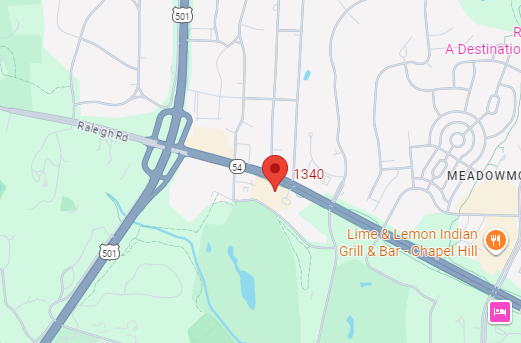
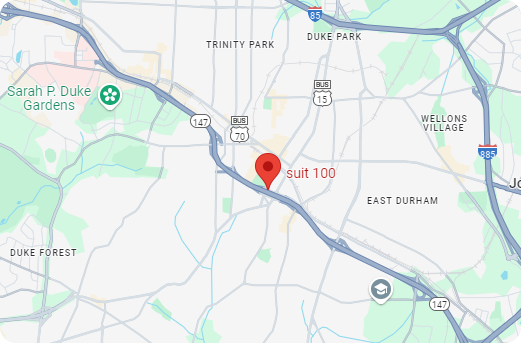
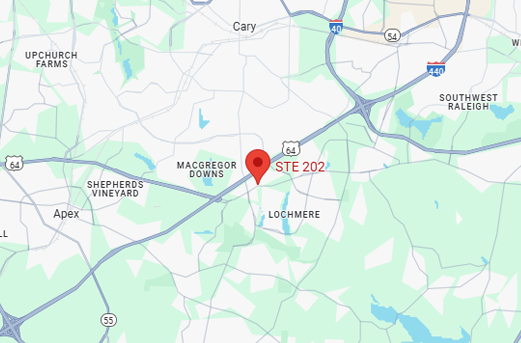
Patrick Roberts Law has offices in Raleigh, Durham, Chapel Hill, and Cary. If you are facing a false rape accusation in North Carolina, contact the firm for a confidential case evaluation.
Disclaimer: Testimonials and peer reviews are for informational purposes only and do not guarantee or predict the outcome of your legal matter. Every case is unique and must be evaluated on its own merits. All endorsements featured on this site are actual comments from clients and peers.
The information on this website is for general informational purposes only. Nothing herein should be taken as legal advice for any individual case or situation. Contacting us via this website, email, or contact form does not create an attorney-client relationship. Prior results do not guarantee a similar outcome.
Former assistant district attorney
Contact Patrick Roberts
Facing criminal charges in North Carolina demands seasoned representation. Trust in the experience and dual perspective of Patrick Roberts. Reach out today for a confidential consultation.
-
Call Our Team
Calls answered 24/7






For more information on the selection criteria, go to www.martindale.com
*Each case is different and must be evaluated separately. Prior results achieved do not guarantee similar results can be achieved in future cases.