

Taking another person’s life is among the most serious acts under North Carolina law. However, not every killing constitutes murder. When someone acts in genuine self-defense, North Carolina law recognizes that the use of deadly force may be justified. Understanding when a killing crosses from justified self-defense into criminal murder requires examining North Carolina’s specific statutes and the circumstances surrounding the incident.
If you or a loved one faces questions about a self-defense incident in North Carolina, the stakes couldn’t be higher. The difference between a justified act of self-defense and a murder charge can mean the difference between walking free and facing life in prison or even the death penalty.
What Makes a Killing Murder Under North Carolina Law?
Under N.C. Gen. Stat. § 14-17, North Carolina law defines two degrees of murder. First-degree murder includes killings that are willful, deliberate, and premeditated, or those committed during certain felonies. Second-degree murder encompasses other unlawful killings committed with malice.
The critical distinction for self-defense cases lies in whether the killing was “unlawful.” When someone lawfully uses deadly force in self-defense, the killing is not murder at all—it’s justified under the law. This justification removes the unlawful element required for any murder charge.

When Can You Legally Use Deadly Force in Self Defense?
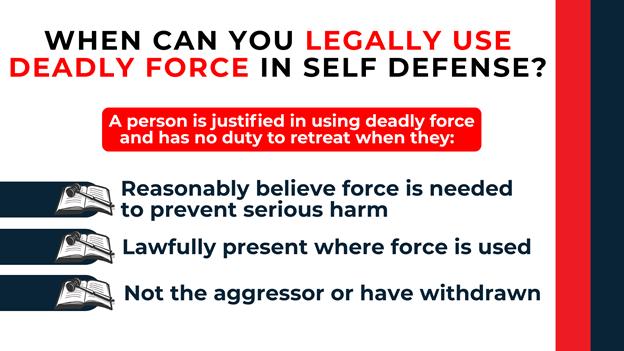
North Carolina’s self-defense laws, codified in N.C. Gen. Stat. § 14-51.3, establish clear parameters for using deadly force. A person is justified in using deadly force and has no duty to retreat when they:
- Reasonably believe such force is necessary to prevent imminent death or great bodily harm to themselves or another person
- Have the lawful right to be in the place where the force is used
- Are not the initial aggressor or have withdrawn from the conflict
The law provides that a person who uses force as permitted by this statute “is justified in using such force and is immune from civil or criminal liability for the use of such force.” This immunity applies unless the person against whom force was used was a law enforcement officer lawfully performing official duties.
What Is North Carolina’s Castle Doctrine and How Does It Apply?
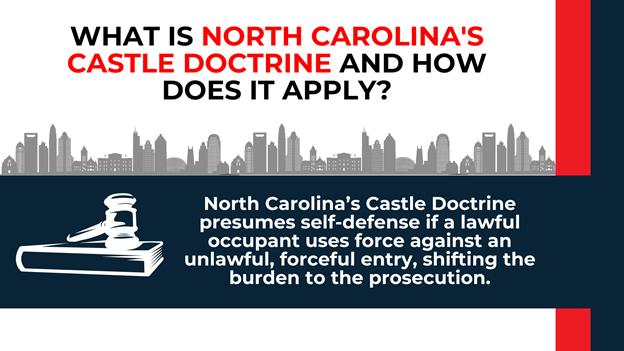
North Carolina’s Castle Doctrine, found in N.C. Gen. Stat. § 14-51.2, creates a powerful presumption for those defending their homes, vehicles, or workplaces. Under this law, the lawful occupant of these spaces is presumed to have held a reasonable fear of imminent death or serious bodily harm when using defensive force if:
- The person against whom defensive force was used was unlawfully and forcefully entering (or had entered) the home, motor vehicle, or workplace
- The person using defensive force knew or had reason to believe an unlawful and forcible entry was occurring
This presumption significantly strengthens a self-defense claim. Rather than requiring the defendant to prove they were reasonable in fearing for their life, the Castle Doctrine shifts the burden to the prosecution to rebut this presumption.
When Does Self Defense Not Apply to a Killing?
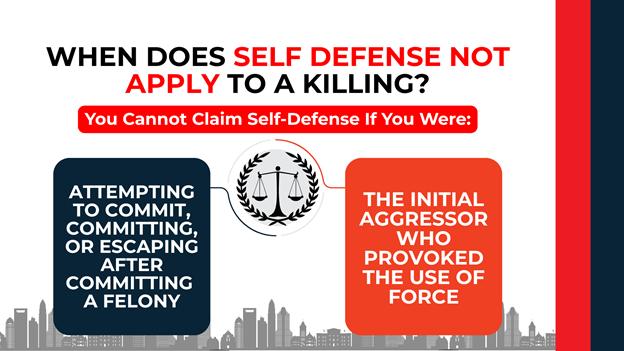
Not every claim of self-defense will shield someone from murder charges. N.C. Gen. Stat. § 14-51.4 specifically outlines when the justification for defensive force is not available:
You Cannot Claim Self-Defense If You Were:
- Attempting to commit, committing, or escaping after committing a felony
- The initial aggressor who provoked the use of force
However, even an initial aggressor may regain the right to self-defense in two specific situations:
- If the force used by the other person becomes so serious that the initial aggressor reasonably believes they face imminent death or serious bodily harm, has no reasonable means to retreat, and deadly force is the only way to escape
- If the initial aggressor withdraws in good faith and clearly indicates their desire to end the conflict, but the other person continues the attack
What If Someone Claims Self Defense After Leaving Their Home?
Recent North Carolina appellate decisions have addressed the boundaries of self-defense claims, particularly regarding the Castle Doctrine. The case law suggests that while the Castle Doctrine provides strong protections, these protections have limits.
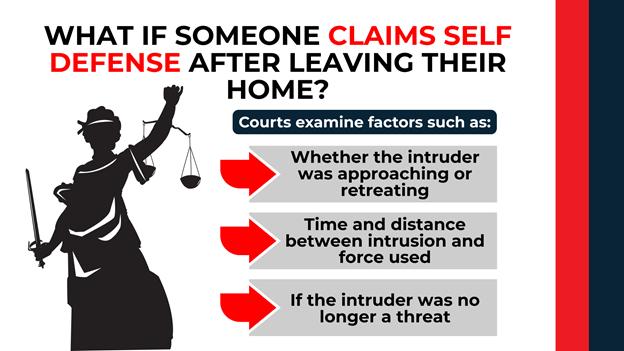
For instance, if an intruder has exited the home and discontinued all efforts to enter, the Castle Doctrine presumption no longer applies. Courts examine factors such as:
- Whether the alleged intruder was moving toward or away from the defendant
- The time and distance between the initial intrusion and the use of force
- Whether the alleged intruder had ceased being a threat
These cases highlight that self-defense claims require careful analysis of the specific circumstances surrounding each incident.
How Do Prosecutors Challenge Self Defense Claims?
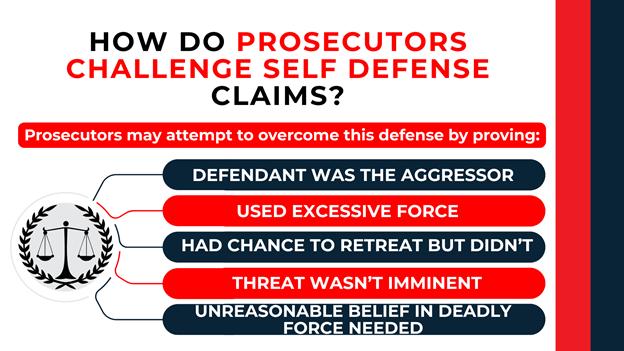
When someone claims self-defense in a homicide case, prosecutors may attempt to overcome this defense by proving:
- The defendant was the initial aggressor
- The defendant used excessive force beyond what was reasonably necessary
- The defendant had the opportunity to retreat but chose not to (in situations outside the Castle Doctrine)
- The threat was not actually imminent
- The defendant’s belief in the need for deadly force was unreasonable
The prosecution bears the burden of disproving self-defense beyond a reasonable doubt once the defendant presents evidence supporting the claim.
What Should You Do If You’re Involved in a Self Defense Incident?
If you’ve been involved in an incident where deadly force was used, whether you’re facing charges or concerned you might be, taking immediate action to protect your rights is crucial. Self-defense cases involve complex legal standards and factual determinations that can mean the difference between freedom and a murder conviction.
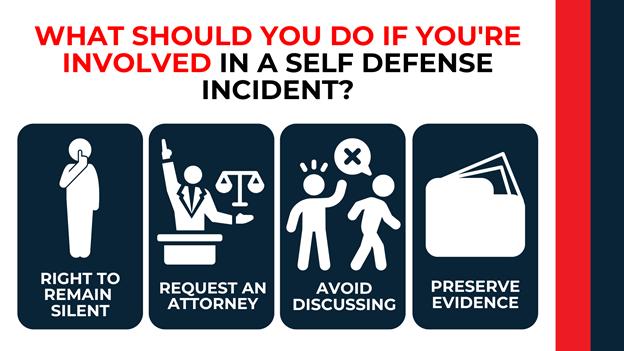
Key steps include:
- Exercising your right to remain silent beyond providing basic identifying information
- Requesting an attorney before answering any questions about the incident
- Preserving any evidence that supports your self-defense claim
- Avoiding discussions about the incident on social media or with others
Why Is Legal Representation Critical in Self Defense Cases?
Murder charges carry the most severe penalties in North Carolina’s criminal justice system, including potential life imprisonment without parole or even capital punishment for first-degree murder. Even when you believe your actions were justified, navigating the complexities of self-defense law requires skilled legal advocacy.
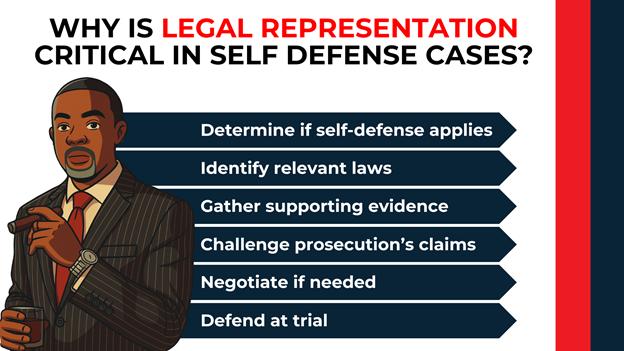
An attorney can help by:
- Analyzing whether your case fits within North Carolina’s self-defense statutes
- Identifying which defensive provisions apply to your situation
- Gathering and presenting evidence to support your justification defense
- Challenging the prosecution’s attempts to disprove self-defense
- Negotiating with prosecutors when appropriate
- Presenting your defense effectively at trial if necessary
Protecting Your Future After a Self Defense Incident
Understanding the line between murder and justified self-defense in North Carolina requires careful analysis of both the law and the specific facts of each case. While North Carolina law provides robust protections for those who lawfully defend themselves, these protections have limits and requirements that must be met.
If you’re facing questions about a self-defense incident in North Carolina, don’t wait to seek legal guidance. Attorney Patrick Roberts has extensive experience handling serious criminal cases throughout North Carolina and understands the complexities of self-defense law. Early intervention by skilled counsel can make a critical difference in protecting your rights and freedom.
Contact Patrick Roberts Law today to discuss your situation and learn how we can help protect your future. When your freedom is on the line, having an experienced criminal defense attorney on your side can make all the difference.

*Disclaimer: Each case is different and must be evaluated separately. Prior results achieved do not guarantee similar results can be achieved in future cases.
Former assistant district attorney
Contact Patrick Roberts
Facing criminal charges in North Carolina demands seasoned representation. Trust in the experience and dual perspective of Patrick Roberts. Reach out today for a confidential consultation.
-
Call Our Team
Calls answered 24/7











For more information on the selection criteria, go to www.martindale.com
*Each case is different and must be evaluated separately. Prior results achieved do not guarantee similar results can be achieved in future cases.