

If you or someone you care about faces murder charges in North Carolina, you need to understand the gravity of the situation and your legal options. Murder charges represent the most serious criminal allegations in our state’s justice system, carrying severe penalties that can forever alter the course of your life. This guide explains North Carolina’s murder laws, the different types of murder charges, potential defenses, and why immediate legal representation is crucial.
What Constitutes Murder Under North Carolina Law?
Under North Carolina law, murder involves the unlawful killing of another human being with malice. The state recognizes multiple degrees of murder, each with distinct elements and penalties. According to N.C. Gen. Stat. § 14-17, the law divides murder into first degree and second degree, based on the circumstances surrounding the killing and the defendant’s state of mind.
Murder charges require the prosecution to prove specific elements beyond a reasonable doubt. The state must demonstrate that the defendant caused the death of another person unlawfully and with the requisite mental state. The presence or absence of premeditation, deliberation, and the circumstances of the killing determine which degree of murder applies.

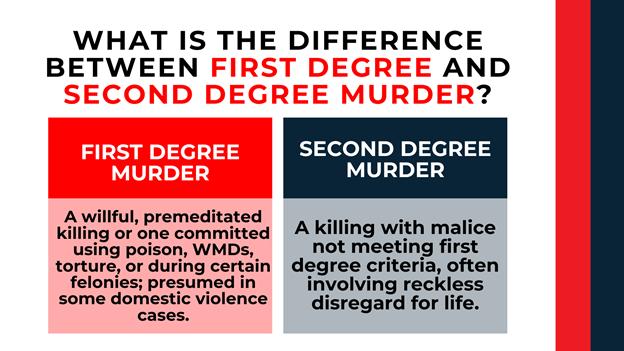
What Is the Difference Between First Degree and Second Degree Murder?
First Degree Murder
First degree murder represents the most serious homicide charge in North Carolina. Under N.C. Gen. Stat. § 14-17(a), first degree murder occurs when a killing is:
- Perpetrated by means of nuclear, biological, or chemical weapons of mass destruction
- Committed using poison
- Done by lying in wait
- Accomplished through imprisonment, starving, or torture
- Committed by any other kind of willful, deliberate, and premeditated killing
- Committed during the perpetration or attempted perpetration of certain felonies, including:
- Arson
- Rape or sex offense
- Robbery
- Kidnapping
- Burglary
- Any other felony committed with a deadly weapon
The statute also creates a rebuttable presumption of first-degree murder in certain domestic violence situations. According to N.C. Gen. Stat. § 14-17(a1), when someone kills a current or former spouse, dating partner, or co-parent after previously being convicted of specific domestic violence offenses against the same victim, the law presumes the killing was willful, deliberate, and premeditated.
Second Degree Murder
Second degree murder encompasses all murders that don’t qualify as first degree murder. N.C. Gen. Stat. § 14-17(b) defines second degree murder as any murder not described in the first degree murder statute or the murder of an unborn child statute.
The key distinction lies in the absence of premeditation and deliberation or the specific circumstances that elevate a killing to first degree. Second degree murder still requires malice, but this malice can manifest through acts done in a reckless and wanton manner showing utter disregard for human life and social duty.
How Does North Carolina Law Address the Murder of an Unborn Child?
North Carolina recognizes the murder of an unborn child as a separate offense under N.C. Gen. Stat. § 14-23.2. This statute creates criminal liability for causing the death of an unborn child through:
- Willfully and maliciously committing an act with intent to cause the death of the unborn child
- Causing the death during perpetration or attempted perpetration of crimes listed in the murder statute
- Committing an act causing death that is inherently dangerous to human life and done recklessly and wantonly
The punishment for murder of an unborn child mirrors that of traditional murder charges. Acts falling under the first two categories constitute Class A felonies, while the third category receives the same sentence as second degree murder.

What Happens After an Arrest for Murder Charges?
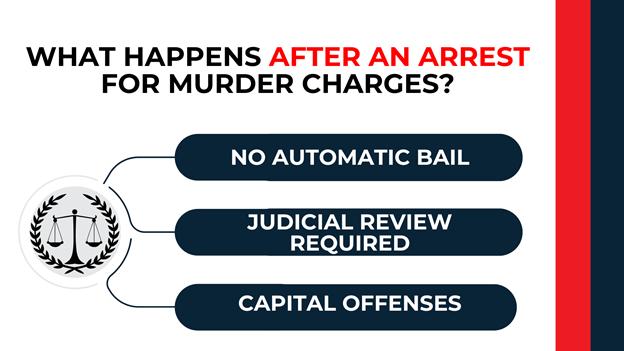
Following an arrest for murder charges, the judicial system imposes strict limitations on pretrial release. According to N.C. Gen. Stat. § 15A-533(b), a judge has discretion to determine whether someone charged with first or second degree murder may be released before trial. This means that unlike many other criminal charges, there is no automatic right to bail for murder defendants.
The statute lists murder among specific serious crimes where judges must carefully evaluate whether any conditions of release can ensure the defendant’s appearance at trial and protect community safety. If the judge determines release is warranted, they must set appropriate conditions according to state law.
For defendants charged with capital offenses (which can include first degree murder), the judge may determine release is appropriate under N.C. Gen. Stat. § 15A-533(c), but must authorize release conditions that ensure both court appearance and public safety.
Can Someone Act in Self-Defense Against Murder Charges?
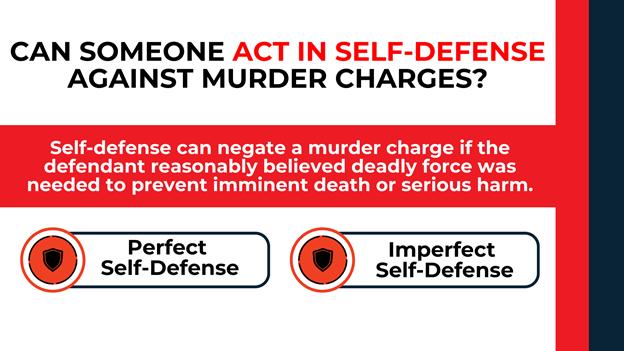
Self-defense represents one of the most significant defenses to murder charges in North Carolina. When the state cannot prove that a defendant acted with malice because they reasonably believed deadly force was necessary to protect themselves or others from imminent death or great bodily harm, the murder charge cannot stand.
The law recognizes both perfect and imperfect self-defense. Perfect self-defense, when proven, results in complete acquittal. Imperfect self-defense—where the defendant was the initial aggressor or used excessive force—can reduce murder charges to voluntary manslaughter, as noted in legal precedents discussing the relationship between murder and manslaughter charges.
What Other Defenses Might Apply to Murder Charges?
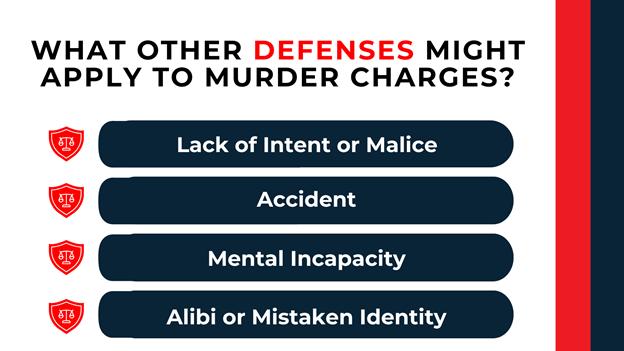
Several defenses may challenge the prosecution’s ability to prove murder charges:
Lack of Intent or Malice: If the state cannot establish that the defendant acted with the required mental state, the charge may fail or be reduced. This becomes particularly relevant when distinguishing between murder and manslaughter, where the absence of malice transforms the offense.
Accident: When a death results from a lawful act performed without criminal intent or negligence, and without the unlawful intent to cause death or serious injury, murder charges may not be sustainable.
Mental Incapacity: If mental illness or defect prevented the defendant from forming the specific intent required for murder, this defense may apply, though it requires careful legal and medical documentation.
Alibi or Mistaken Identity: Demonstrating that the defendant was elsewhere when the crime occurred or that witnesses misidentified them can defeat murder charges entirely.
How Do Murder Charges Differ from Manslaughter?
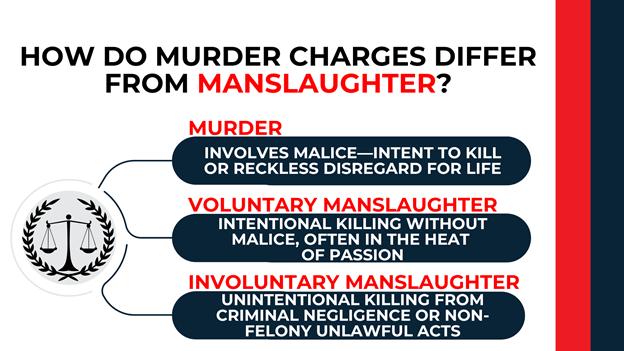
Understanding the distinction between murder and manslaughter is crucial, as manslaughter carries less severe penalties. The primary difference lies in the presence or absence of malice. Murder requires malice—a state of mind showing deliberate intent to cause death or conscious disregard for human life. Manslaughter, whether voluntary or involuntary, lacks this element of malice.
Voluntary manslaughter involves an intentional killing without malice, often occurring in the heat of passion or with imperfect self-defense. Involuntary manslaughter encompasses unintentional killings resulting from criminal negligence or unlawful acts not amounting to felonies.
These distinctions matter because they can mean the difference between facing life imprisonment and receiving a sentence that allows for eventual release and rehabilitation.
What Should You Do If You Face Murder Charges?
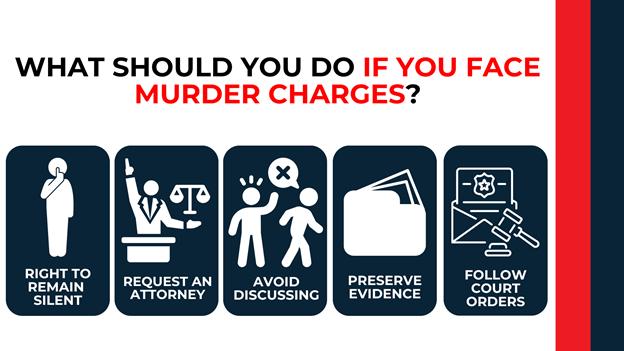
If you or a loved one faces murder charges in North Carolina, taking immediate action is essential:
- Exercise your right to remain silent: Anything you say can be used against you in court
- Request an attorney immediately: Legal representation is crucial from the earliest stages
- Avoid discussing the case: Don’t talk about the charges with anyone except your attorney
- Preserve evidence: If you have information that could help your defense, protect it and share it only with your lawyer
- Follow all court orders: Comply with any conditions of release or court appearances
Why Is Early Legal Representation Critical for Murder Charges?
Murder cases involve complex legal issues, extensive investigations, and severe consequences. The prosecution begins building its case immediately, and critical decisions made in the early stages can profoundly impact the outcome. An experienced criminal defense attorney can:
- Protect your constitutional rights during questioning and throughout the legal process
- Investigate the circumstances surrounding the alleged crime
- Identify and preserve crucial evidence
- Challenge the prosecution’s evidence and theories
- Negotiate with prosecutors when appropriate
- Develop comprehensive defense strategies
- Guide you through each stage of the criminal justice process
Contact Patrick Roberts Law for Experienced Criminal Defense
Facing murder charges is an overwhelming experience that requires immediate, skilled legal representation. Attorney Patrick Roberts brings extensive experience handling serious criminal cases throughout North Carolina.* Our firm understands the stakes involved in murder prosecutions and works tirelessly to protect our clients’ rights and futures.
Don’t wait to secure the defense you need. The prosecution is already building its case against you. Contact Patrick Roberts Law today to discuss your situation and learn how we can help defend against these serious charges. Your freedom, reputation, and future depend on the decisions you make now. Call our office to schedule a consultation and take the first step toward building your defense.
*Disclaimer: Each case is different and must be evaluated separately. Prior results achieved do not guarantee similar results can be achieved in future cases.
Former assistant district attorney
Contact Patrick Roberts
Facing criminal charges in North Carolina demands seasoned representation. Trust in the experience and dual perspective of Patrick Roberts. Reach out today for a confidential consultation.
-
Call Our Team
Calls answered 24/7









For more information on the selection criteria, go to www.martindale.com
*Each case is different and must be evaluated separately. Prior results achieved do not guarantee similar results can be achieved in future cases.