
Drug trafficking charges in North Carolina can turn your life upside down in an instant. These charges carry severe penalties. However, dismissal is possible through several legal pathways. Understanding these options and acting quickly can make the difference between a conviction and walking free. This comprehensive guide explores the specific grounds, procedures, and strategies under North Carolina law that could lead to getting your trafficking charges dismissed.
What Makes a Drug Charge “Trafficking” in North Carolina?
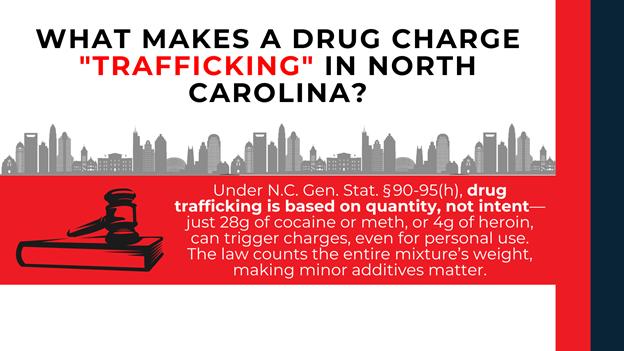
Under N.C. Gen. Stat. § 90-95(h), drug trafficking isn’t about selling drugs on street corners. It’s purely about quantity. The law automatically assumes that possessing certain amounts of controlled substances means you’re trafficking. This applies regardless of your actual intentions. You could face trafficking charges even if the drugs were only for personal use.
The threshold amounts vary significantly by substance:
- Marijuana trafficking begins at 10 pounds under N.C. Gen. Stat. § 90-95(h)(1)
- Cocaine trafficking starts at just 28 grams under N.C. Gen. Stat. § 90-95(h)(3)
- Methamphetamine trafficking also begins at 28 grams under N.C. Gen. Stat. § 90-95(h)(3b)
- Heroin and other opiates trigger trafficking at only 4 grams under N.C. Gen. Stat. § 90-95(h)(4)
These weight thresholds include the entire mixture containing the controlled substance. They don’t just count the pure drug. This means cutting agents, packaging materials with drug residue, and other substances mixed with the drug all count toward the total weight. Understanding this distinction is crucial. It affects whether you face trafficking charges or lesser possession charges.
Can Constitutional Violations Lead to Potential Dismissal of Trafficking Charges?
Absolutely. N.C. Gen. Stat. § 15A-954(a) provides multiple constitutional grounds that require courts to dismiss charges. This powerful statute serves as a shield against government overreach. It protects your fundamental rights throughout the criminal process.
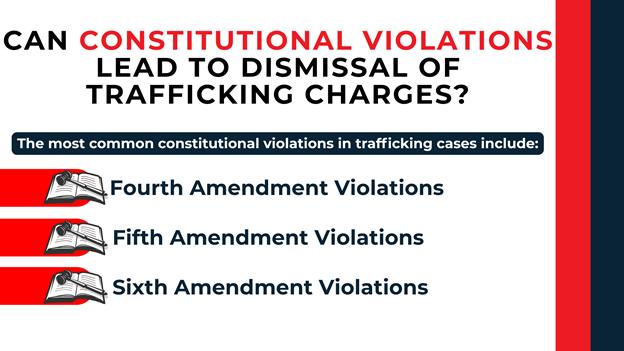
The most common constitutional violations in trafficking cases include:
- Fourth Amendment violations: Illegal searches and seizures remain the primary way to challenge drug cases. Police need proper justification to search your home, vehicle, or person. If they didn’t have it, any evidence they found may be thrown out.
- Fifth Amendment violations: Police must respect your right to remain silent. Coerced confessions don’t count. Neither do statements made after police failed to read Miranda warnings. The same goes for any interrogation that continued after you asked for silence.
- Sixth Amendment violations: You have the right to an attorney and a speedy trial. Denial of counsel counts as a violation. So do unreasonable delays in prosecution. Any interference with your ability to prepare a defense also provides grounds for potential dismissal.
Sometimes constitutional violations are “flagrant” and cause “irreparable prejudice” to your case preparation. When this happens, N.C. Gen. Stat. § 15A-954(a)(4) mandates dismissal as the only remedy. This might occur in extreme situations. For example, when police destroy evidence that could prove your innocence. Or when they intimidate your key witnesses. It also applies when their conduct is so outrageous that a fair trial becomes impossible.
How Does Suppression of Evidence Work in Trafficking Cases?
Evidence suppression often serves as the key to dismissal in trafficking prosecutions. N.C. Gen. Stat. § 15A-974 establishes two distinct paths for excluding illegally obtained evidence. The first covers constitutional violations. The second addresses substantial statutory violations.
Judges must consider several factors when evaluating whether to suppress evidence:
- The importance of the violated interest: Violations of core privacy rights carry more weight than minor procedural errors
- The extent of deviation from lawful conduct: How far did officers stray from proper procedures?
- Whether the violation was willful: Intentional misconduct weighs heavily toward suppression
- Deterrent effect: Will suppression discourage future police misconduct?
The statute includes an important exception. Evidence won’t be suppressed if officers acted under an “objectively reasonable, good faith belief that the actions were lawful.” However, this good faith exception has limits. Officers cannot rely on clearly invalid warrants. They can’t use false information. They also can’t claim good faith for obvious constitutional violations.
In trafficking cases, suppression of the drugs themselves typically destroys the prosecution’s case. Why? Because prosecutors need physical evidence of the controlled substance and its weight. Without it, they cannot prove the essential elements of trafficking under N.C. Gen. Stat. § 90-95(h).
When Can Prosecutors Voluntarily Dismiss Trafficking Charges?
N.C. Gen. Stat. § 15A-931 grants prosecutors broad discretion to dismiss charges. They can do this at any point before or during trial. This authority extends beyond mere weakness in the evidence. Prosecutors consider numerous factors when deciding whether to pursue or dismiss trafficking charges.
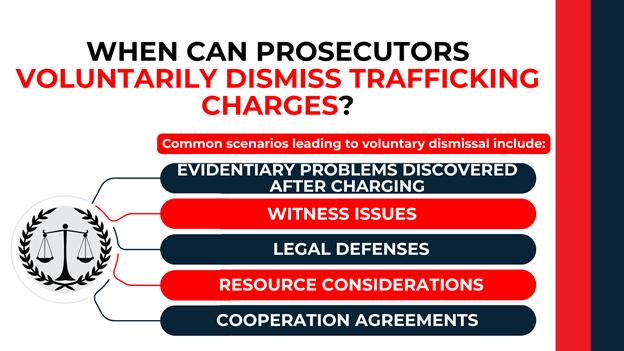
Common scenarios leading to voluntary dismissal include:
- Evidentiary problems discovered after charging: Sometimes lab tests reveal substances aren’t illegal drugs. Weight measurements might fall below trafficking thresholds. Chain of custody gaps can create reasonable doubt.
- Witness issues: Key witnesses may become unavailable. They might recant their statements. Or they could prove unreliable under scrutiny.
- Legal defenses: Investigation sometimes reveals strong defenses. These include lack of knowledge, entrapment, or constitutional violations.
- Resource considerations: Prosecutors manage heavy caseloads. They may dismiss weaker trafficking cases to focus on stronger prosecutions.
- Cooperation agreements: N.C. Gen. Stat. § 90-95(h)(5) specifically allows sentence reductions. This applies when defendants provide “substantial assistance in the identification, arrest, or conviction of any accomplices, accessories, co-conspirators, or principals.”
The dismissal process itself is straightforward. Prosecutors can announce dismissal orally in court. They can also file written notice with the clerk under N.C. Gen. Stat. § 15A-931(a). Once dismissed, the statute of limitations isn’t tolled. This means prosecutors must refile charges within the original time limits if they change their minds.
What If the State Cannot Prove All Elements of Trafficking?
Every criminal charge contains specific elements. Prosecutors must prove each one beyond a reasonable doubt. For trafficking under N.C. Gen. Stat. § 90-95(h), these elements include:
- The substance was actually a controlled substance covered by the statute
- You possessed, manufactured, sold, delivered, or transported it
- The quantity met or exceeded the statutory threshold
- You acted knowingly
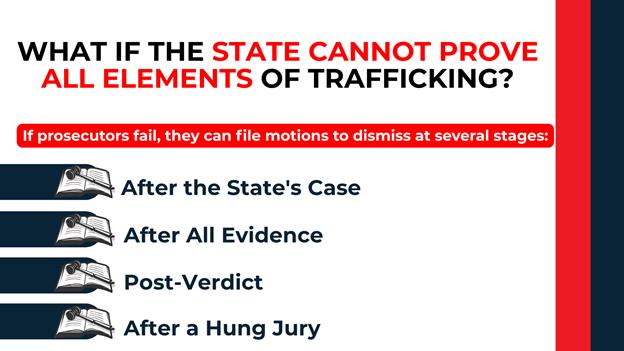
If prosecutors fail to prove any single element, the entire charge fails. N.C. Gen. Stat. § 15A-1227 gives defense attorneys multiple opportunities to challenge the evidence. They can file motions to dismiss at several stages:
- After the State’s case: Once prosecutors rest, defense counsel can argue insufficient evidence
- After all evidence: Another opportunity exists after the defense presents its case
- Post-verdict: Dismissal remains possible even after a guilty verdict, before the judge enters judgment
- After a hung jury: If jurors cannot reach a verdict, dismissal motions may succeed before retrial
These motions require judges to view evidence favorably toward the State. The judge must then determine whether any rational juror could find guilt beyond a reasonable doubt.
Trafficking cases often hinge on proving the “knowing” element. This becomes especially important when drugs are found in shared spaces. The same applies to vehicles where multiple people had access.
How Do Chain of Custody Issues Affect Trafficking Cases?
Scientific evidence forms the backbone of most trafficking prosecutions. This makes chain of custody critical. N.C. Gen. Stat. § 90-95(g) and (g1) establish specific procedures for introducing lab reports. They also set requirements for maintaining evidence integrity.
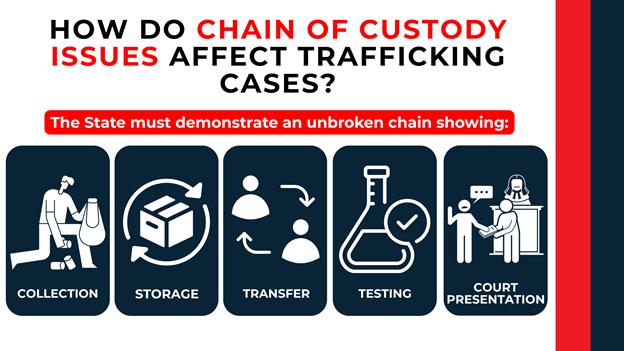
The State must demonstrate an unbroken chain showing:
- Collection: Who seized the suspected drugs, when, where, and how
- Storage: How evidence was packaged, labeled, and secured
- Transfer: Each person who handled the evidence and when
- Testing: How the lab received, tested, and stored samples
- Court presentation: That the evidence presented matches what was originally seized
Any missing link in this chain creates doubt. Specifically, it raises questions about whether the tested substances are the same ones allegedly possessed by the defendant.
Weight measurements prove especially crucial in trafficking cases. The State must establish accurate weights through proper procedures. If they cannot, they may fail to prove the threshold amounts required under N.C. Gen. Stat. § 90-95(h).
Modern practice under N.C. Gen. Stat. § 90-95(g1) allows written documentation to establish chain of custody. This means the State doesn’t need to call every person who handled evidence. However, defendants can object and force live testimony. They must file written objections at least five days before trial. This tactical decision often depends on identifying specific weaknesses in the chain documentation.
Can Lack of Knowledge Be a Defense Leading to Dismissal?
Knowledge remains an essential element of trafficking charges. Prosecutors must prove it. The State cannot simply show drugs were near you. They must establish you knew about their presence and nature. This requirement creates opportunities for dismissal when circumstances suggest innocent explanations.
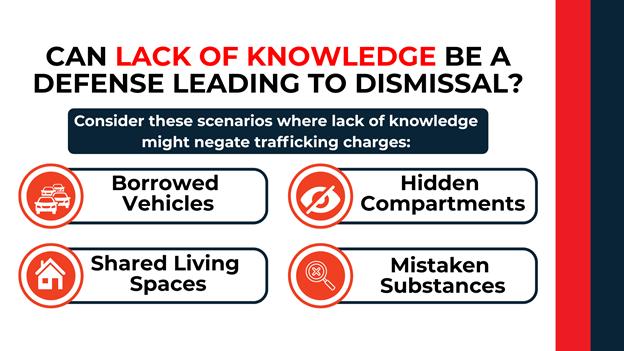
Consider these scenarios where lack of knowledge might negate trafficking charges:
- Borrowed vehicles: You borrowed a friend’s car. You had no idea drugs were hidden in a compartment.
- Shared living spaces: Roommates or family members possessed drugs without your knowledge.
- Hidden compartments: Drugs were concealed in areas you couldn’t reasonably know about.
- Mistaken substances: You believed you possessed legal substances, not controlled drugs.
Courts examine all circumstances when evaluating knowledge claims. Several factors suggest knowledge. These include drugs in plain view, evidence of drug use, large amounts of cash, drug paraphernalia, or surveillance showing drug activity.
Other factors support lack of knowledge. These include no fingerprints on drug packaging, no drug residue on your person, credible explanations for your presence, and witness testimony supporting your innocence.
The burden always remains on prosecutors to prove knowledge. Defendants need not prove ignorance. When reasonable doubt exists about whether you knew about the drugs, dismissal or acquittal should follow.
What Procedural Defects Can Result in Dismissal?
Beyond substantive defenses, procedural violations provide additional paths to dismissal. N.C. Gen. Stat. § 15A-954(a) lists these grounds. These technical requirements exist to ensure fair proceedings. They protect defendants’ rights throughout the criminal process.
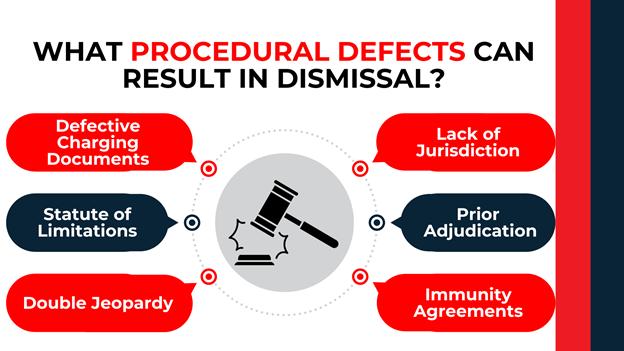
Key procedural grounds for dismissal include:
- Defective charging documents: Under N.C. Gen. Stat. § 15A-954(a)(10), indictments must properly allege all elements of trafficking. Missing elements can void charges. So can wrong statute citations or unclear allegations.
- Statute of limitations: N.C. Gen. Stat. § 15A-954(a)(2) requires dismissal when too much time passes before charging. Most drug crimes have lengthy limitation periods, though.
- Double jeopardy: You cannot be prosecuted twice for the same conduct. Prior prosecution bars subsequent charges under N.C. Gen. Stat. § 15A-954(a)(5). This applies whether the first case ended in acquittal or conviction.
- Lack of jurisdiction: Courts must have authority over both the crime and the defendant. Trafficking charges require a proper venue where the crime allegedly occurred.
- Prior adjudication: Courts may have previously ruled on the same legal or factual issues in your favor. If so, N.C. Gen. Stat. § 15A-954(a)(7) may bar re-litigation.
- Immunity agreements: Prosecutors must honor immunity deals. N.C. Gen. Stat. § 15A-954(a)(9) requires this, whether the agreements were formal or informal.
These procedural protections work alongside substantive defenses. Together, they ensure fair treatment throughout the criminal process. Experienced attorneys know to examine every aspect of a case. They look for potential procedural violations that could lead to dismissal.
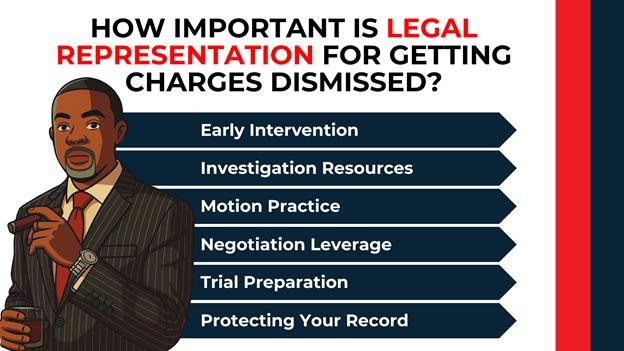
How Important Is Legal Representation for Getting Charges Dismissed?
The difference between conviction and dismissal often comes down to skilled legal representation. You need it from the start. Trafficking cases involve complex statutory schemes. They include scientific evidence, constitutional protections, and procedural requirements. Most defendants cannot navigate these alone.
An experienced attorney provides crucial advantages:
- Early intervention: Your attorney can preserve evidence, interview witnesses, and file necessary motions. These opportunities disappear quickly without prompt action.
- Investigation resources: Attorneys can hire experts to retest substances. These professionals can also investigate police procedures or reconstruct events.
- Motion practice: Proper legal representation ensures constitutional violations get raised correctly. This includes motions under N.C. Gen. Stat. § 15A-954 and § 15A-974.
- Negotiation leverage: Experienced attorneys understand when prosecutors face evidentiary weaknesses. They use that knowledge to secure dismissals.
- Trial preparation: Being ready for trial often leads prosecutors to dismiss questionable charges.
- Protecting your record: Attorneys ensure dismissals are properly entered. They also make sure records get cleared to minimize long-term consequences.
Many dismissals result from issues prosecutors would never discover on their own. Defense counsel must push for discovery, file motions, and conduct independent investigations. The earlier you secure representation, the more options remain available.
Protect Your Rights with Experienced Legal Help
Drug trafficking charges in North Carolina threaten your freedom, finances, and future. But these charges can be beaten. Success requires careful analysis, strategic motion practice, and aggressive defense of your constitutional rights.
Attorney Patrick Roberts brings extensive experience handling criminal cases throughout North Carolina courts. He understands the complexities of trafficking statutes. He also knows the practical realities of defending against these serious charges.
Time is your enemy when facing trafficking accusations. Evidence disappears quickly. Witnesses forget important details. Legal deadlines pass before you know it. The sooner you have qualified representation examining your case, the better your chances become. Your attorney can identify grounds for dismissal that you might miss on your own.
Contact Patrick Roberts Law immediately to discuss your situation. Begin building your defense today. Your future depends on the decisions you make right now. Make the right choice by securing experienced legal counsel who will fight for dismissal of your charges.*
*Disclaimer: Each case is different and must be evaluated separately. Prior results achieved do not guarantee similar results can be achieved in future cases.
Former assistant district attorney
Contact Patrick Roberts
Facing criminal charges in North Carolina demands seasoned representation. Trust in the experience and dual perspective of Patrick Roberts. Reach out today for a confidential consultation.
-
Call Our Team
Calls answered 24/7







For more information on the selection criteria, go to www.martindale.com
*Each case is different and must be evaluated separately. Prior results achieved do not guarantee similar results can be achieved in future cases.