
Statutory sex offense charges represent some of the most serious criminal allegations under North Carolina law. According to the NC Sentencing and Policy Advisory Commission FY 2024 Statistical Report, North Carolina courts convicted 431 defendants of Class B1 felonies, the classification covering the most serious statutory sex offenses during the 2023-2024 fiscal year. If you’re facing these charges in Apex or anywhere in Wake County, understanding what you’re up against is the first step toward protecting your rights and building a defense.
These charges carry mandatory prison sentences, lifetime consequences including sex offender registration, and a prosecution process that can keep you detained for years before trial. This guide explains what statutory sex offense charges mean, the penalties you face, how Wake County handles these cases, and what defense options may be available.
What Is a Statutory Sex Offense Under North Carolina Law?
North Carolina criminalizes sexual conduct with minors through a graduated statutory scheme that distinguishes between different types of sexual acts and different victim age categories. Statutory sex offenses specifically involve what the law defines as “sexual acts” with persons below the age of consent regardless of whether the minor appeared to consent or initiated contact.
How Does North Carolina Define a “Sexual Act”?
Under North Carolina law, a “sexual act” includes cunnilingus, fellatio, analingus, or anal intercourse but not vaginal intercourse. This distinction matters because vaginal intercourse with a minor falls under the separate “statutory rape” statutes. Statutory sex offense charges apply when the alleged conduct involves oral or anal sexual contact.
The National Children’s Alliance Statistics Report (2023) documented 3,127 children reported for sexual abuse at North Carolina Children’s Advocacy Centers during just a six-month period demonstrating the significant resources law enforcement dedicates to investigating these allegations.
What Age Thresholds Trigger These Charges?
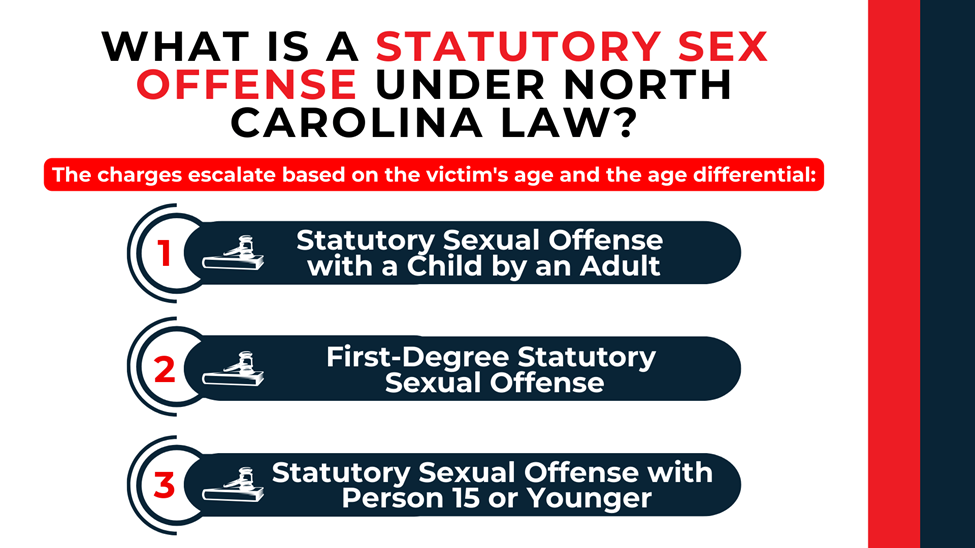
North Carolina’s age of consent is 16 years old. However, statutory sex offense charges apply based on specific age combinations between defendant and alleged victim. The charges escalate based on the victim’s age and the age differential:
- Statutory sexual offense with a child by an adult (N.C.G.S. § 14-27.28): Defendant is 18 or older, alleged victim is under 13 Class B1 felony with a mandatory minimum of 300 months (25 years)
- First-degree statutory sexual offense (N.C.G.S. § 14-27.29): Defendant is 12 or older and at least 4 years older than alleged victim who is under 13 Class B1 felony
- Statutory sexual offense with person 15 or younger (N.C.G.S. § 14-27.30): Defendant is at least 12 years old and at least 6 years older than alleged victim 15 or younger Class B1 felony; if victim is 15 and defendant is more than 4 but less than 6 years older Class C felony
Understanding which specific statute applies to your situation directly determines the potential sentence range and whether mandatory minimums apply.
Why Doesn’t Consent Matter in These Cases?
Unlike forcible sexual offense charges, statutory sex offenses are strict liability crimes based on age. The alleged victim’s apparent willingness, initiation of contact, or stated consent provides no legal defense. North Carolina law conclusively presumes that persons below certain ages cannot legally consent to sexual activity. Equally important: mistake of age is NOT a defense. As established in State v. Breathette, 202 N.C. App. 697, 690 S.E.2d 1 (N.C. App. 2010), even a reasonable belief that the alleged victim was of legal age does not provide a defense to these charges
What Are the Penalties for Statutory Sex Offense Convictions?
North Carolina imposes severe penalties for statutory sex offense convictions, with sentences determined by the felony classification and the defendant’s prior record level under the Structured Sentencing Act.
What Sentence Could You Face for a Class B1 Conviction?
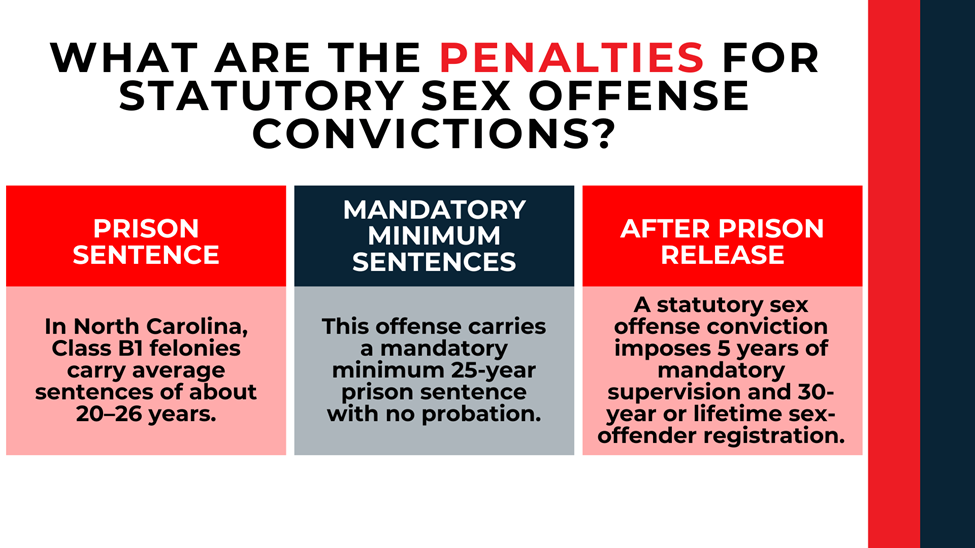
Class B1 felonies carry the most severe sentences in North Carolina’s felony classification system (excluding Class A felonies, which apply only to first-degree murder). According to the NC Sentencing and Policy Advisory Commission FY 2024 Report, Class B1 convictions resulted in average sentences of 236 months minimum to 315 months maximum approximately 19.7 to 26.25 years.
Sentencing ranges vary based on prior record level:
- Prior Record Level I (no or minimal criminal history): 144-192 months minimum in presumptive range
- Prior Record Level II: 157-208 months minimum in presumptive range
- Prior Record Level III: 171-225 months minimum in presumptive range
- Prior Record Level IV: 186-243 months minimum in presumptive range
- Prior Record Level V: 201-261 months minimum in presumptive range
- Prior Record Level VI (extensive criminal history): 216-279 months minimum in presumptive range
For sex offenses classified as Class B1 through Class E, North Carolina applies an enhanced maximum sentence formula: the maximum equals 120% of the minimum plus 60 additional months under N.C.G.S. § 15A-1340.17(f).
Are There Mandatory Minimum Sentences?
Yes. The most serious statutory sex offense charge is statutory sexual offense with a child by an adult under N.C.G.S. § 14-27.28 carries a mandatory minimum sentence of 300 months (25 years) when the defendant is 18 or older and the alleged victim is under 13.
The NC Sentencing Commission FY 2024 data confirms that 100% of defendants convicted of Class B1 through Class D felony sex offenses received active imprisonment sentences. There is no probation option for these convictions. Prison time is mandatory.
What Happens After Release from Prison?
A statutory sex offense conviction triggers 60 months (5 years) of mandatory post-release supervision following the prison sentence, significantly longer than the 9-12 months applied to other felony offenses. During this period, you remain under correctional supervision with conditions that can result in return to prison for violations.
Additionally, you will be subject to sex offender registration requirements for 30 years or potentially lifetime, as discussed below.
How Are Statutory Sex Offense Cases Prosecuted in Wake County?
Defendants charged with statutory sex offenses in Apex will have their cases prosecuted in Wake County Superior Court in Raleigh, handled by the Wake County District Attorney’s Office. Understanding the prosecution timeline and procedures helps set realistic expectations.
How Long Could You Remain in Jail Before Trial?
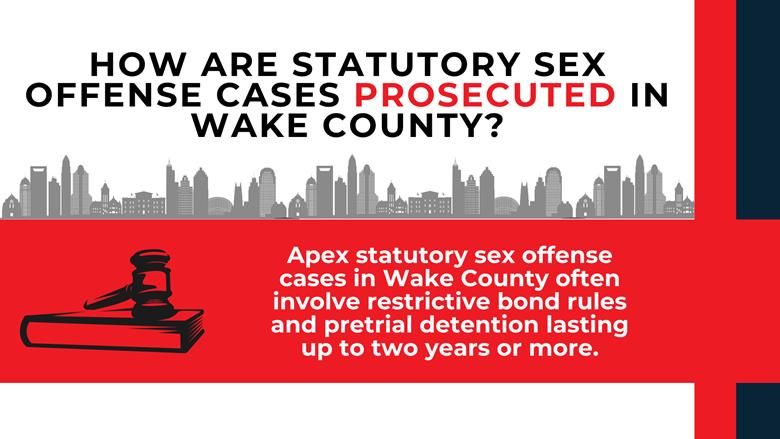
Class B1 sex offense cases take significantly longer to resolve than other felonies. According to the NC Sentencing Commission FY 2024 Report, the median time from charge filing to sentencing for Class B1 felonies is 30 months compared to just 10 months for all felonies combined.
Defendants who cannot secure pretrial release spend this entire period in custody. The same report shows defendants convicted of Class B1 felonies received an average of 27 months credit for time served, indicating that many defendants remained incarcerated for over two years awaiting trial or resolution.
For person offenses including sex crimes, 93% of convicted defendants received credit for pretrial detention, with an average credit of 15 months the highest of any crime category.
What Are Your Options for Pretrial Release?
Pretrial release in sex offense cases faces significant restrictions. Under N.C.G.S. § 15A-533(b), magistrates cannot grant pretrial release for defendants charged with rape, sexual offenses, or kidnapping. Only a district or superior court judge can set bond conditions, and release is discretionary rather than mandatory.
This means defendants must wait for a judicial hearing often while detained before any possibility of release. When release is granted, conditions typically include GPS monitoring, no contact with the alleged victim, and surrender of passport.
Do Most Cases Go to Trial or End in Plea Agreements?
The NC Sentencing Commission FY 2024 data reveals that 85% of Class B1 felony convictions resulted from guilty pleas, while 15% went to jury trial. This 15% jury trial rate is the highest of any felony class the overall felony guilty plea rate is 98%.
The elevated trial rate for Class B1 offenses reflects both the severity of consequences (making defendants less willing to accept pleas) and the complexity of cases (often involving credibility disputes without physical evidence). However, a jury trial carries significant risks, and the decision requires careful analysis with experienced defense counsel.
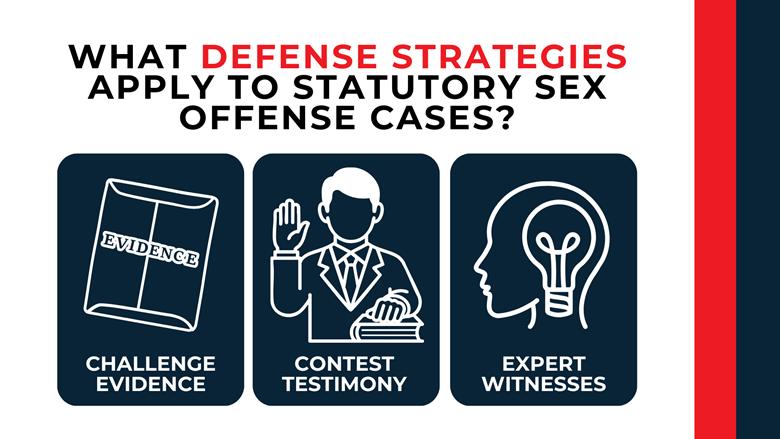
What Defense Strategies Apply to Statutory Sex Offense Cases?
Because consent is not a defense to statutory sex offenses, defense strategies must focus on other elements and considerations. Effective defense requires challenging the prosecution’s evidence, protecting constitutional rights, and identifying weaknesses in the State’s case.
Can You Challenge How Evidence Was Obtained?
The Fourth Amendment provides critical protections against unlawful searches and seizures. Following Riley v. California, 573 U.S. 373 (2014), police generally cannot search cell phones or digital devices without a warrant, even incident to arrest. Given that many statutory sex offense investigations involve text messages, photos, or social media communications, challenging the legality of device searches can be pivotal.
Defense strategies include challenging warrant particularity (whether the warrant specifically authorized forensic examination), scope limitations (whether the search exceeded what the warrant allowed), and cloud storage access (whether a device warrant properly authorized accessing connected cloud accounts).
NC magistrates generally cannot issue Stored Communications Act orders for cell phone records only district or superior court judges have this authority, creating potential procedural challenges.
How Can You Contest the Alleged Victim’s Testimony?
Statutory sex offense cases often depend heavily on the alleged victim’s testimony, sometimes without physical evidence or other witnesses. North Carolina law does not require corroboration of victim testimony alone, if believed by the jury, can sustain a conviction. However, this creates opportunities to challenge credibility.
Defense counsel may investigate and challenge:
- Competency issues for young child witnesses under N.C.G.S. § 8C-1, Rule 601 courts assess ability to express matters clearly and understanding of the duty to tell truth
- Hearsay statements under the State v. Hinnant, 351 N.C. 277 (2000) two-prong test for medical diagnosis exceptions
- Forensic interview techniques for suggestibility or leading questions
- Bias or motive to fabricate in custody disputes, family conflicts, or other contexts
- Prior inconsistent statements that undermine credibility
- Confrontation Clause violations under Crawford v. Washington, 541 U.S. 36 (2004), if testimonial hearsay is admitted without opportunity for cross-examination
Research supports these concerns. According to End Violence Against Women International, methodologically rigorous studies establish a 2-8% false reporting rate for sexual assault allegations. The National Registry of Exonerations (2024) reports that 10% of all exonerations involve sexual assault convictions and 9% involve child sex abuse convictions the fourth most common category of wrongful convictions after homicide.
Evidentiary Integrity and the Defense of the Accused
In the high-stakes environment of North Carolina criminal litigation, the application of the Daubert standard and the nuances of the McGrady ruling require more than a theoretical understanding of the law—they require a practical ability to hold the prosecution to its evidentiary burden.
Attorney Patrick Roberts approaches these cases with a perspective shaped by more than two decades of experience and the insights gained from handling thousands of cases. Navigating the intersection of behavioral science and legal admissibility is a core component of his practice, ensuring that the limitations placed on expert testimony are strictly observed.
Expert Witnesses and the “Accommodation Syndrome”
In these proceedings, the role of expert testimony is often a central point of contention. Prosecutors frequently call experts to testify about Child Sexual Abuse Accommodation Syndrome (CSAAS) or similar concepts to explain why alleged victims delayed reporting, gave inconsistent accounts, or continued contact with the defendant.
Under North Carolina’s adoption of the Daubert standard in State v. McGrady, 368 N.C. 880 (2016), such testimony must meet strict reliability requirements. It is the responsibility of the defense to ensure these “syndromes” are not used to circumvent the rules of evidence.
A Career-Long Commitment to Trial Advocacy
Mr. Roberts’ ability to dissect complex testimony is rooted in elite, hands-on training through the National Criminal Defense College (NCDC), an institution recognized for its intensive focus on defense strategy:
- 2025 NCDC Cross-Examination Training: He recently completed a 3-day intensive, hands-on program dedicated exclusively to advanced cross-examination. This training provides the technical skill set necessary to challenge witnesses who may attempt to overstep the boundaries of their expertise.
- 2011 Graduate of NCDC Trial Practice Institute: Mr. Roberts completed this 2-week intensive program, which covers every aspect of defending those accused of criminal offenses. This foundational training ensures that every stage of a case—from pre-trial motions to final arguments—is handled with precision
What Are the Long-Term Consequences Beyond Prison?
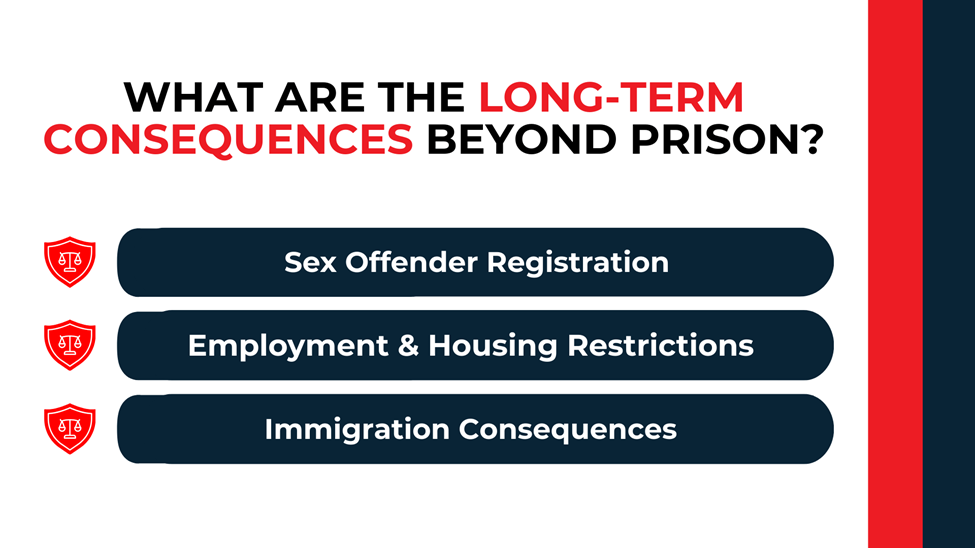
A statutory sex offense conviction triggers collateral consequences that persist long after any prison sentence ends. These consequences affect employment, housing, family relationships, and for non-citizens immigration status.
How Long Will You Be on the Sex Offender Registry?
North Carolina requires sex offender registration under Article 27A (N.C.G.S. § 14-208 et seq.). Standard registration lasts 30 years, with eligibility to petition for removal after 10 years under N.C.G.S. § 14-208.12A but only if not classified as a recidivist, sexually violent predator, or aggravated offender.
For defendants convicted of offenses against children under 13, or those with prior sex offense convictions, lifetime registration applies with no removal petition available.
According to the NC SBI Sex Offender Registry, North Carolina currently has approximately 28,200+ registered sex offenders as of early 2026. Wake County specifically has 839 registered sex offenders among the highest county totals in the state alongside Mecklenburg (1,150) and Guilford (1,008).
Registration requirements include periodic in-person verification, address reporting, and compliance with residential and employment restrictions under N.C.G.S. § 14-208.18.
How Will a Conviction Affect Employment and Housing?
Collateral consequences extend throughout every aspect of life:
- Employment restrictions: Many employers conduct background checks; sex offense convictions disqualify candidates from positions involving children, vulnerable adults, healthcare, education, and government work
- Professional licensing: Convictions may bar or revoke licenses requiring “good moral character” determinations affecting careers in law, medicine, nursing, teaching, real estate, and many other fields
- Housing limitations: Sex offender residence restrictions prohibit living within certain distances of schools, daycare centers, playgrounds, and other locations where children gather
- Custody and family law: Courts must consider sex offense convictions in custody determinations, potentially limiting or eliminating parental rights
- Educational opportunities: Convictions can affect college admissions, financial aid eligibility, and campus housing
Are There Immigration Consequences for Non-Citizens?
For non-citizens, statutory sex offense convictions trigger severe immigration consequences. Sexual abuse of a minor qualifies as an “aggravated felony” under federal immigration law, resulting in mandatory deportation regardless of lawful permanent resident status, length of residence, or family ties in the United States.
Most sex offenses also qualify as crimes involving moral turpitude, creating additional grounds for removal and bars to future immigration benefits.
Under Padilla v. Kentucky, 559 U.S. 356 (2010), defense counsel has a constitutional obligation to advise non-citizen clients of immigration consequences before any guilty plea. Non-citizen defendants should consult with both criminal defense counsel and an immigration attorney before making any case decisions.
What Should You Do If You’re Under Investigation or Arrested?
The decisions you make immediately after learning of an investigation or arrest significantly impact case outcomes. Understanding your constitutional rights and exercising them is critical.
Should You Talk to Police Without an Attorney?
No. The Fifth Amendment protects your right against self-incrimination. Miranda warnings inform you that anything you say can be used against you and police are trained to obtain incriminating statements.
Under State v. Jackson, 308 N.C. 549 (1983), police deception during interrogation does not automatically render a confession involuntary. Investigators may use false claims about evidence, witness statements, or DNA results to pressure confessions.
For serious felony sex offenses, N.C.G.S. § 15A-211 requires mandatory recording of custodial interrogations. If police fail to record your interrogation as required, this can support involuntariness claims but the best protection is invoking your right to remain silent and requesting an attorney before any questioning.
What If Someone Calls, Asking You to Discuss the Allegations?
Be aware that North Carolina is a one-party consent state for recording communications under N.C.G.S. § 15A-287. Law enforcement routinely conducts pretext phone calls where the alleged victim or a family member calls the defendant while police record the conversation.
These calls are designed to elicit admissions or statements that can be used at trial. Any call from someone connected to the allegations even if it seems casual or sympathetic should be treated with extreme caution.
What Steps Should You Take Immediately After an Arrest?
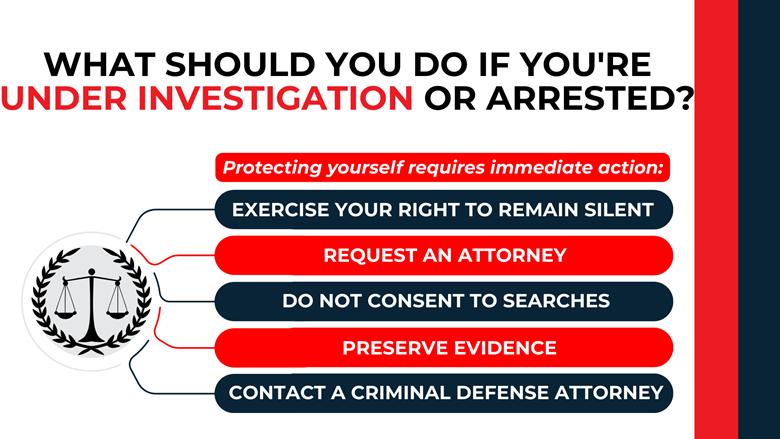
Protecting yourself requires immediate action:
- Exercise your right to remain silent do not discuss the allegations with police, jail staff, or other inmates
- Request an attorney clearly and unambiguously before any questioning
- Do not consent to searches of your home, vehicle, or electronic devices without a warrant
- Preserve evidence that may support your defense, including communications, alibis, and witness information
- Contact a criminal defense attorney experienced in sex offense cases as soon as possible
Early intervention allows defense counsel to preserve evidence, investigate allegations, protect against additional charges, and begin building a defense strategy before the prosecution solidifies its case.
Frequently Asked Questions About Statutory Sex Offenses in North Carolina
Is a mistake about the alleged victim’s age a defense to statutory sex offense charges in North Carolina?
No. North Carolina treats statutory sex offenses as strict liability crimes with respect to the victim’s age. Even if you reasonably believed the alleged victim was 16 or older based on their appearance, statements, or false identification, this provides no legal defense. The Court of Appeals affirmed this principle in State v. Breathette, holding that mistake of age is not a defense to age-based sex offenses.
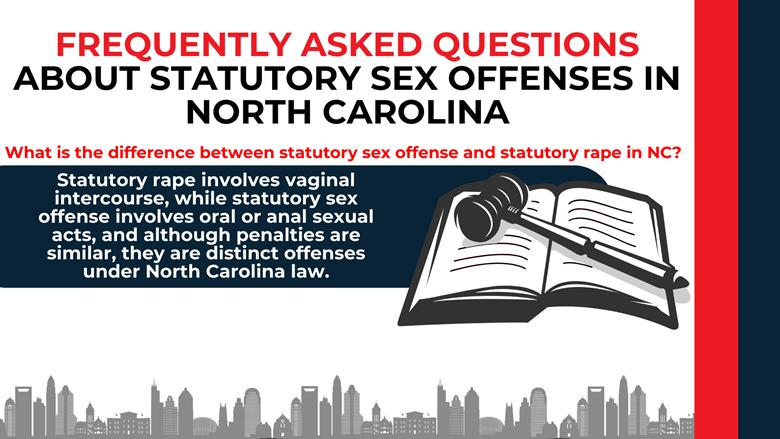
What is the difference between statutory sex offense and statutory rape in NC?
The distinction lies in the type of sexual conduct alleged. Statutory rape involves vaginal intercourse with a person below the age of consent, charged under N.C.G.S. § 14-27.23 through § 14-27.25. Statutory sex offense involves “sexual acts” defined as oral or anal sexual contact charged under N.C.G.S. § 14-27.28 through § 14-27.30. Both carry similar penalties and classifications, but they are separate offenses under North Carolina law.
Can statutory sex offense charges be reduced to a lesser offense through plea bargaining?
Potentially, depending on case circumstances. While the NC Sentencing Commission data shows 85% of Class B1 convictions result from guilty pleas, this does not necessarily mean charges were reduced. Plea negotiations depend on factors including evidence strength, victim cooperation, defendant’s criminal history, and prosecutorial discretion. Any plea agreement for these charges requires careful analysis of the specific terms and consequences.
Will a statutory sex offense conviction require lifetime sex offender registration?
It depends on the offense and circumstances. Standard registration under North Carolina law is 30 years, with eligibility to petition for removal after 10 years. However, lifetime registration with no removal option applies if: (1) the victim was under 13; (2) you have a prior sex offense conviction; or (3) you are classified as a sexually violent predator or aggravated offender. The specific registration period should be confirmed based on the exact charges and any prior record.
How does North Carolina’s “Romeo and Juliet” provision affect statutory sex offense charges?
North Carolina provides limited close-in-age protections, but they are narrower than some states. For statutory sex offense with a person 15 or younger under N.C.G.S. § 14-27.30, if the victim is 15 and the defendant is more than 4 but less than 6 years older, the charge is reduced from Class B1 to Class C felony. Additionally, the five-year age differential requirement in indecent liberties statutes provides some protection. However, no close-in-age exception applies when the alleged victim is under 13, these remain Class B1 felonies regardless of the defendant’s age.
Conclusion
Statutory sex offense charges carry some of the most severe consequences in North Carolina’s criminal justice system. With mandatory prison sentences measured in decades, 30-year or lifetime sex offender registration, and collateral consequences affecting every aspect of life, these cases demand serious attention from the moment you learn of an investigation.
The statistics reflect this severity: defendants spend an average of 27 months in pretrial detention, face average sentences of 19.7 to 26.25 years, and receive active imprisonment in 100% of cases. Yet the 15% jury trial rate for Class B1 offenses—the highest of any felony class—demonstrates that defendants do contest these charges, and the 10% exoneration rate for sexual assault convictions shows that not every accusation leads to a just outcome.
Understanding the charges, penalties, and procedural realities is essential, but it’s only the beginning. Building an effective defense requires investigating the allegations, challenging evidence, protecting constitutional rights, and navigating a prosecution process designed to secure convictions.
A Proven Advocate for the Accused
When the stakes are this high, your choice of representation is the most critical decision you will make. Attorney Patrick Roberts brings a rare level of distinction to every case, backed by a reputation recognized across the legal industry.
- Martindale-Hubbell Client Champion Platinum: This prestigious honor is awarded based on verified client reviews, reflecting Mr. Robert’s unwavering commitment to communication, responsiveness, and service.
- The National Trial Lawyers: Top 100: Named to the “Top 100 Trial Lawyers” in 2013, Mr. Roberts is recognized among the most premier trial advocates in the state of North Carolina.
- Top 40 Under 40: Also honored in 2013 by The National Trial Lawyers, this award highlighted Patrick’s exceptional skill and leadership early in his career, establishing a foundation of excellence that continues today.
“Mr. Roberts demonstrates a high level of expertise, competence and professionalism. He is well prepared for trial and represents all clients well. Mr. Roberts is dependable and he represents the legal profession well. I am confident in his ability to represent his clients.” – Peer review via Martindale-Hubbell on October 30, 2018
Disclaimer: The testimonials and peer reviews on this site are for informational purposes. They do not constitute a guarantee, warranty, or prediction regarding the outcome of your legal matter. Every case is different and must be evaluated on its own merits.
*Testimonials and peer endorsements found on this website are actual comments.
As a former prosecutor with over 20 years of experience, Attorney Patrick Roberts doesn’t just react to the state’s case—he anticipates it. He leverages his deep understanding of “the other side” to dismantle evidence and fight for the best possible outcome*
*Disclaimer: Each case is unique, and prior results do not guarantee a similar outcome in any future matter.
Don’t Wait to Protect Your Future
The window to influence the outcome of your case is often narrowest during the investigation phase. If you’re facing statutory sex offense charges in Apex or Wake County, you need a defense that is as aggressive as the prosecution.
Contact Patrick Roberts Law today for a confidential consultation.
Disclaimer: The information on this website is for general information purposes only. Nothing on this site should be taken as legal advice for any individual case or situation. Case results depend upon a variety of factors unique to each case. Prior results do not guarantee a similar outcome.
Former assistant district attorney
Contact Patrick Roberts
Facing criminal charges in North Carolina demands seasoned representation. Trust in the experience and dual perspective of Patrick Roberts. Reach out today for a confidential consultation.
-
Call Our Team
Calls answered 24/7






For more information on the selection criteria, go to www.martindale.com
*Each case is different and must be evaluated separately. Prior results achieved do not guarantee similar results can be achieved in future cases.