
If you searched “sexual assault vs. rape,” you’re probably trying to figure out whether these are two different crimes, how the law draws the line between them, and what the consequences look like for each. The short answer is that North Carolina doesn’t actually have a crime called “sexual assault.” The state uses a different set of terms — and the distinctions between them carry significant differences in charges, felony classifications, and sentencing ranges.
This page explains how North Carolina’s sex offense statutes actually categorize the conduct that most people refer to as “sexual assault” or “rape.” It covers why the legal label attached to a case matters as much as the facts themselves — and what to do if you or someone close to you is facing charges.
Does North Carolina Law Use the Term “Sexual Assault”?
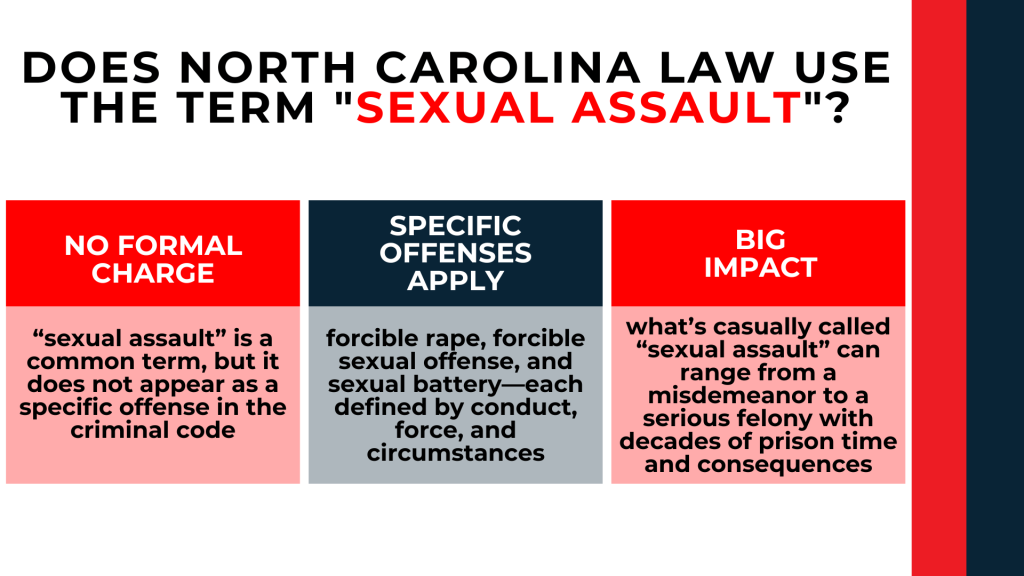
“Sexual assault” is not a formal criminal charge in North Carolina. While the term is used in everyday conversation, news coverage, and the laws of other states, you will not find an offense titled “sexual assault” in the North Carolina criminal code.
Instead, the state utilizes a specific set of statutes that categorize offenses based on the conduct involved, the use of force, and the age or capacity of the individuals. These categories determine the severity of the legal consequences.
What Are the Primary Categories for Sex Offenses in NC?
What the public casually calls “sexual assault” typically falls into one of three distinct legal categories under North Carolina law:
- Forcible Rape: Defined under N.C.G.S. § 14-27.21 and N.C.G.S. § 14-27.22.
- Forcible Sexual Offense: Defined under N.C.G.S. § 14-27.26 and N.C.G.S. § 14-27.27.
- Sexual Battery: Defined under N.C.G.S. § 14-27.33.
The legal label assigned to an act is critical. It determines whether a defendant faces a Class B1 felony with a mandatory prison sentence measured in decades or a Class A1 misdemeanor.
How Are Rape and Sexual Offenses Classified?
Both forcible rape and forcible sexual offense are divided into two degrees. The distinction between the two degrees generally depends on the presence of aggravating factors rather than the nature of the underlying act.
- First-Degree: Classified as Class B1 felonies. These are the most serious felony classifications in North Carolina and carry mandatory active prison sentences.
- Second-Degree: Classified as Class C felonies. While less severe than Class B1, these still require active imprisonment under North Carolina sentencing guidelines.
In contrast, Sexual Battery is a Class A1 misdemeanor. This charge is often what the public imagines when using the term “sexual assault,” as it covers non-consensual sexual contact that does not involve the penetration or specific sexual acts required for felony-level charges.
What Are the Long-Term Consequences Beyond Sentencing?
The specific charge also dictates the intensity of supervision and registration requirements following a sentence:
- Post-Release Supervision: Felony sex offense convictions carry an enhanced supervision period of 60 months, significantly longer than the 9 to 12 months standard for other felonies.
- Sex Offender Registration: All convictions in these categories—both felony and misdemeanor—trigger North Carolina Sex Offender Registry requirements, which can last for 30 years or even a lifetime.
Because North Carolina defines these legal lines so precisely, two cases described by the media as “sexual assault” can result in vastly different outcomes based on which statutory elements the prosecution can prove.
Comparison of Offense Classifications
| Legal Charge | Statute | Classification | Primary Requirement |
| 1st Degree Rape/Sex Offense | § 14-27.21 / .26 | Class B1 Felony | Force + Aggravating Factor (e.g., weapon) |
| 2nd Degree Rape/Sex Offense | § 14-27.22 / .27 | Class C Felony | Force or victim incapacity |
| Sexual Battery | § 14-27.33 | Class A1 Misdemeanor | Non-consensual sexual contact |
What Can a Defense Lawyer Do if You’re Facing a Sex Offense Charge?
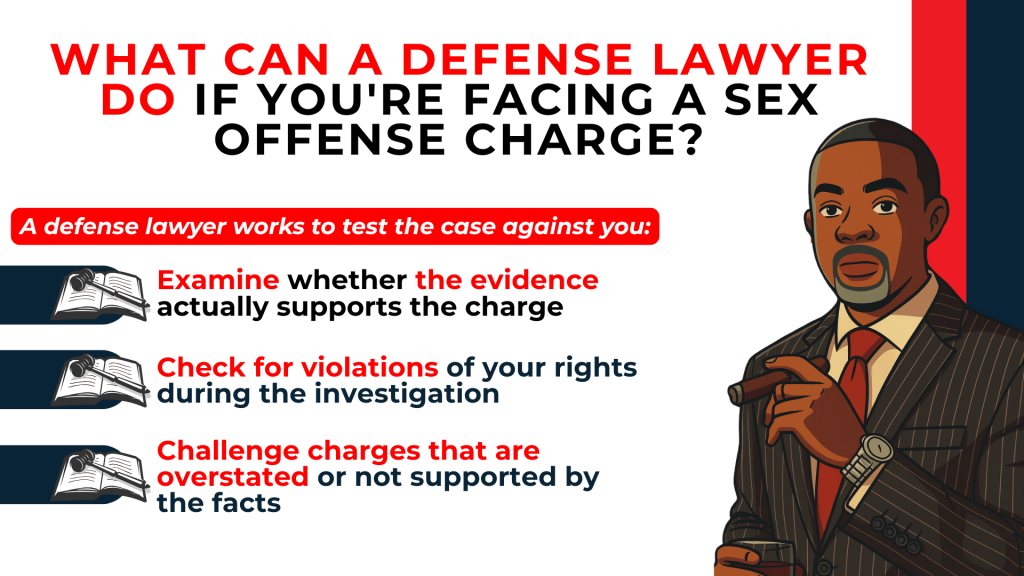
Because North Carolina’s sex offense system is built on these precise legal distinctions — the type of conduct, the degree classification, the specific elements attached to each charge — the facts of every case determine which charges the evidence can actually support. A defense attorney’s job is to examine those details against the law. That means looking at whether the conduct alleged matches the charge filed, whether the evidence meets every element the prosecution must prove, and whether constitutional protections were respected during the investigation. It also means identifying whether the case as charged reflects what actually happened — or an overcharging that the facts don’t support.
Decades of Experience in Criminal Defense in North Carolina
Attorney Patrick Roberts has defended clients facing the full range of sex offense charges for more than two decades. A graduate of Duke University School of Law (Top 9 best criminal law program) and The Johns Hopkins University (Top 7 rank in National Universities), he has completed Gerry Spence’s Trial Lawyers College, a selective and intensive training program. He is also a graduate of the National Criminal Defense College (NCDC) Trial Practice Institute and the 2025 NCDC Cross-Examination Intensive, which provide advanced training in high-stakes witness questioning.
Peer-Reviewed Legal Standing and Client Service Recognition
Mr. Roberts holds the highest possible peer rating from Martindale-Hubbell — AV Preeminent (2026) — and has been recognized among the Top 100 Trial Lawyers by The National Trial Lawyers. He has maintained a 10/10 “Superb” rating on Avvo for more than 15 years. We utilize a selective intake process to ensure that we can fully commit the necessary time and resources to the complex legal challenges our clients face.
Defense Strategy Informed by Former Prosecution Experience
Before founding Patrick Roberts Law PLLC, he served as an Assistant District Attorney in Wake, Johnston, and New Hanover counties. This background provides direct insight into how prosecutors build and evaluate sex offense cases from the inside. This perspective is vital when navigating the North Carolina Court System to identify weaknesses in the state’s evidence.
Admissions to the U.S. Supreme Court and National Defense Resources
Mr. Roberts is admitted to practice before the United States Supreme Court, the Fourth Circuit Court of Appeals, and all federal district courts in North Carolina. He is currently the only North Carolina attorney listed on the National Child Abuse Defense & Resource Center as of 2026.
Case Review
Charges
Second Degree Sexual Offense ($N.C.G.S. \S 14-27.5(a)$).
Description
In this North Carolina case, a client represented by Attorney Patrick Roberts was accused of coercive sexual activity involving oral sex. The prosecution’s case relied on the testimony of an accuser regarding an alleged non-consensual encounter.
Strategy
The defense strategy was built on an intensive investigative process. Attorney Roberts conducted thorough interviews with multiple witnesses who were present during the alleged incident to establish a clear timeline and context. The defense gathered and presented evidence regarding the accuser’s substance abuse history and explored potential ulterior motives for the allegations. By highlighting these credibility issues and factual inconsistencies to the Assistant District Attorney, the defense illustrated the significant evidentiary hurdles the state would face at trial.
Outcome
The prosecution’s review of the evidence presented by the defense led to a complete dismissal of the Second Degree Sexual Offense charge.
Client Review
“Patrick and his team are truly top notch. They are professional and committed to understanding you and your case and doing everything possible to reach the best outcome. My son was charged with 3 felonies and the outcome was 1 misdemeanor charge… He always took the time to explain to us what was going on which I appreciated. Patrick is able to see many different angles for a case and determine the best argument.” — Verified Client Review on Avvo
Peer Endorsement
“I have always found Patrick to be well prepared and effective. He is intelligent, proactive, and thinks outside the box. He has a lot of experience in many different areas and this enables him to be particularly effective for his clients.” — Martindale-Hubbell verified Peer Endorsement
Disclaimer: The testimonials are actual comments from clients. Every case is different and depends on its own unique facts and legal circumstances. These results are illustrative of the matters the firm handles but do not guarantee, warrant, or predict a similar outcome in your legal matter.
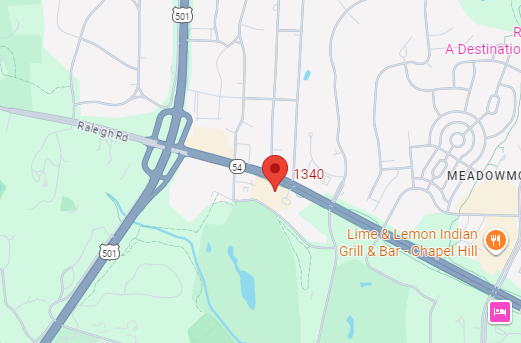
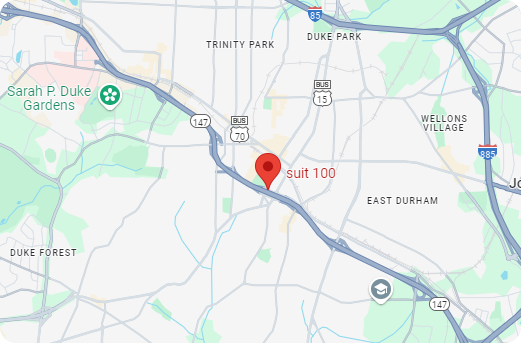
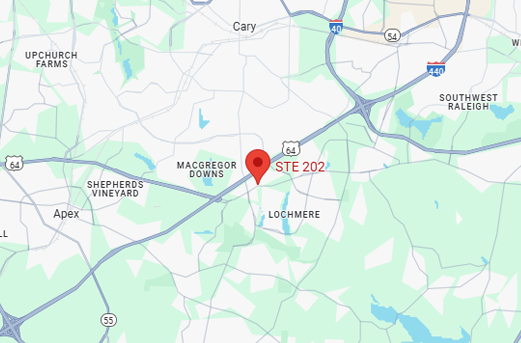
If you or someone you care about is facing sexual assault, rape, or any sex offense charge in North Carolina, the legal distinctions explained on this page aren’t abstract. They’re the rules that will shape what happens next. Patrick Roberts Law represents clients throughout Wake County and across North Carolina from offices in Raleigh, Durham, Chapel Hill, and Cary. Contact the firm to discuss your case.
To maintain the quality of its defense and provide each client with individualized attention, the firm limits the number of cases it accepts at any given time.
Disclaimer: The information on this website is for general informational purposes only and does not constitute legal advice for any individual case or situation. Contacting us via this website, email, or contact form does not create an attorney-client relationship. Each case is different and must be evaluated separately; prior results do not guarantee a similar outcome.
Former assistant district attorney
Contact Patrick Roberts
Facing criminal charges in North Carolina demands seasoned representation. Trust in the experience and dual perspective of Patrick Roberts. Reach out today for a confidential consultation.
-
Call Our Team
Calls answered 24/7






For more information on the selection criteria, go to www.martindale.com
*Each case is different and must be evaluated separately. Prior results achieved do not guarantee similar results can be achieved in future cases.