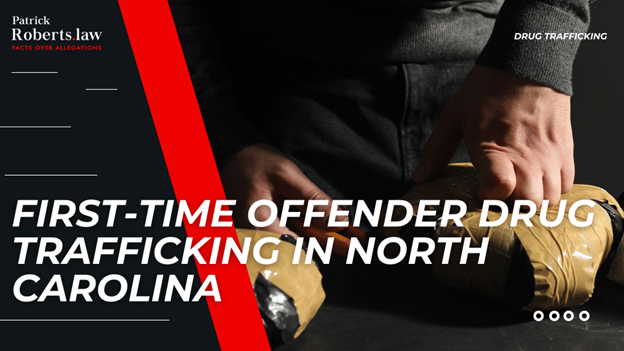
Facing drug charges in North Carolina can be a daunting experience due to the state’s stringent drug laws and severe penalties. Whether you’re a first-time offender or have prior convictions, understanding the nature of these charges and their potential consequences is crucial. Additionally, securing a competent drug trafficking lawyer in North Carolina can significantly influence the outcome of your case by providing legal guidance and representation.

Classification of Controlled Substances

North Carolina categorizes controlled substances into six schedules based on their potential for abuse, accepted medical use, and safety under medical supervision:

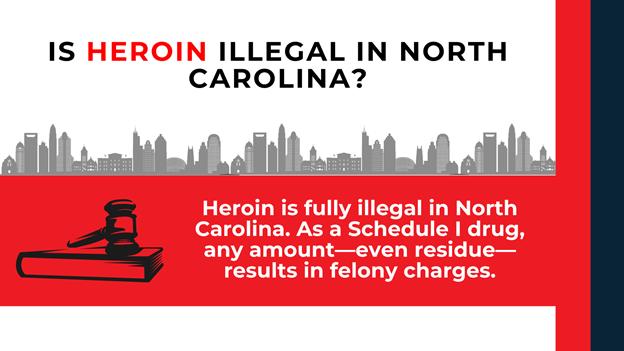
  • Schedule I: These substances have a high potential for abuse and no accepted medical use. Examples include heroin, MDMA (ecstasy), and LSD.
  • Schedule II: Drugs in this category have a high potential for abuse but have some accepted medical uses. Examples include cocaine, methamphetamine, and oxycodone.
  • Schedule III: These drugs have a lower potential for abuse than Schedule I and II substances and have accepted medical uses. Examples include anabolic steroids and certain barbiturates.
  • Schedule IV: These substances have a low potential for abuse and accepted medical uses. Examples include alprazolam (Xanax) and diazepam (Valium).
  • Schedule V: These drugs have a lower potential for abuse relative to Schedule IV substances and include medications like cough preparations with less than 200 milligrams of codeine per 100 milliliters.
  • Schedule VI: This category is specific to North Carolina and includes marijuana and synthetic cannabinoids, with a low potential for physical dependence but still significant due to widespread use.

Types of Drug Charges

Drug charges in North Carolina can be categorized into several types, each carrying different levels of severity and penalties:

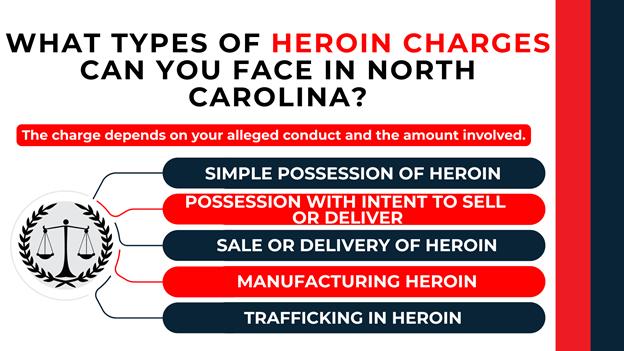
  1. Possession: This is the most common drug charge and can be either a misdemeanor or felony depending on the type and amount of the substance. For example, possession of small amounts of marijuana may be a misdemeanor, whereas possession of cocaine is a felony.
  2. Possession with Intent to Distribute: If you are found with a quantity of drugs that suggests intent to distribute or sell, the charges and penalties increase. Factors such as packaging materials and large amounts of cash can also indicate intent to distribute.
  3. Trafficking: Drug trafficking involves the manufacturing, transporting, or selling of large quantities of controlled substances. Trafficking charges carry the most severe penalties, including lengthy prison sentences and substantial fines.
  4. Manufacturing: This charge applies to individuals involved in producing illegal substances. It can also include growing marijuana plants or producing synthetic drugs.
  5. Paraphernalia: Possession of drug paraphernalia, such as pipes, bongs, or needles, is typically a misdemeanor but can add to other drug charges.

Penalties for Drug Charges

The penalties for drug charges in North Carolina vary based on the type of drug, the amount in possession, and the specific circumstances of the case. Here are some general guidelines:

  • Misdemeanor Possession: Simple possession of small amounts of marijuana or other Schedule VI substances can result in fines, community service, and possible jail time.
  • Felony Possession: Possession of Schedule I or II substances is typically a felony, leading to potential prison time and fines.
  • Possession with Intent to Distribute: Penalties are more severe than simple possession and can include substantial prison sentences and higher fines.
  • Trafficking: This carries the harshest penalties, including mandatory minimum prison sentences ranging from several years to decades, along with significant fines. For example, trafficking in heroin (28 grams or more) can result in a prison sentence of up to 225 months.
  • Manufacturing: Penalties include lengthy prison sentences, especially if children were present or the manufacturing process posed a significant danger to the community.

How a Drug Trafficking Lawyer Can Help

Facing drug charges, particularly trafficking charges, is a serious matter that requires legal assistance. A skilled drug trafficking lawyer in North Carolina can provide invaluable help in several ways:

  1. Perfect Legal Guidance: An experienced lawyer understands the intricacies of North Carolina’s drug laws and can provide you with the knowledge and guidance needed to navigate the legal system effectively.
  2. Case Evaluation: Your lawyer will thoroughly evaluate the specifics of your case, including the circumstances of your arrest, the evidence against you, and any potential violations of your rights.
  3. Defense Strategy: A drug trafficking lawyer will develop a tailored defense strategy aimed at achieving the best possible outcome. This might involve challenging the legality of the search and seizure, questioning the chain of custody of the evidence, or demonstrating a lack of intent to distribute.
  4. Negotiation: Your lawyer can negotiate with prosecutors to potentially reduce charges or secure a plea deal that minimizes the penalties you face.
  5. Court Representation: If your case goes to trial, having a seasoned lawyer by your side ensures that you are effectively represented in court. Your lawyer will present your defense, cross-examine witnesses, and advocate for your rights.
  6. Mitigating Penalties: Even if a conviction is unavoidable, a lawyer can argue for reduced sentences or alternative sentencing options, such as drug diversion programs or probation, especially for first-time offenders.

Potential Defenses Against Felony Drug Charges

A skilled drug trafficking lawyer in North Carolina will explore various defense strategies based on the specifics of your case. Some common defenses include:

  1. Unlawful Search and Seizure: If the police conducted an illegal search without a warrant or probable cause, the evidence obtained might be inadmissible in court.
  2. Lack of Possession: Demonstrating that the drugs did not belong to you or that you were unaware of their presence can be a viable defense.
  3. Entrapment: If law enforcement officers coerced or enticed you into committing a drug offense that you would not have otherwise committed, entrapment could be a defense.
  4. Insufficient Evidence: Challenging the prosecution’s evidence and demonstrating that it does not meet the burden of proof required for a conviction can lead to a dismissal of charges.

Alternative Sentencing Options

For first-time offenders, North Carolina offers alternative sentencing options that focus on rehabilitation rather than punishment. These options may include:

  • Drug Diversion Programs: These programs involve education, treatment, and regular drug testing. Successful completion can result in the dismissal of charges.
  • Probation: Instead of serving time in prison, offenders may be placed on probation, requiring them to meet certain conditions and report regularly to a probation officer.
  • Community Service: Offenders may be required to complete a certain number of community service hours as part of their sentence.

Conclusion

Understanding the landscape of drug charges and penalties in North Carolina is crucial for anyone facing such charges. The state’s laws are strict, and the penalties can be severe, particularly for drug trafficking. However, with the help of a skilled drug trafficking lawyer in North Carolina, you can navigate the legal system more effectively, build a robust defense, and work towards the best possible outcome.

If you or someone you know is facing drug charges, seeking professional legal assistance immediately is essential. An experienced lawyer can make a significant difference in the trajectory of your case and help protect your rights throughout the legal process.

A Comprehensive Guide to Choosing the Best Criminal Defense Lawyer in North Carolina

Facing criminal charges in North Carolina is a serious matter that requires legal representation. The right criminal defense lawyer can significantly impact the outcome of your case, providing you with the best chance of a favorable result. Finding the right lawyer, however, can be a daunting task. This blog will guide you through the steps to help you find the right criminal defense lawyer in North Carolina for your case.

Step 1: Identify Your Needs

Before starting your search, it’s crucial to understand the specifics of your case and your legal needs. Consider the following:

  • Type of Charge: Are you facing a misdemeanor or felony? Is it a drug-related charge, a violent crime, a white-collar crime, or another type of offense?
  • Complexity: How complex is your case? Does it involve multiple charges, co-defendants, or substantial evidence?
  • Urgency: Do you need immediate legal representation, or do you have some time to make a decision?

Understanding these factors will help you narrow down your search and find a lawyer with the appropriate knowledge and availability.

Step 2: Research Potential Lawyers

Start by researching potential criminal defense lawyers in North Carolina. There are several resources you can use:

  • Online Directories: Websites like Avvo, Martindale-Hubbell, and the North Carolina State Bar Association provide directories of licensed attorneys, along with reviews and ratings.
  • Personal Referrals: Ask friends, family members, or colleagues if they have any recommendations. Personal referrals can provide valuable insights into a lawyer’s capabilities and professionalism.
  • Local Bar Associations: Contact local bar associations for recommendations. They often have referral services that can help you find qualified lawyers in your area.

Step 3: Evaluate Experience and Expertise

Once you have a list of potential lawyers, evaluate their experience and skilled knowledge. Look for the following:

  • Competence: Ensure the lawyer concentrates in criminal defense and has experience with cases similar to yours.
  • Track Record: Research the lawyer’s track record. Have they successfully defended clients with charges similar to yours? What is their success rate?
  • Reputation: Check online reviews, testimonials, and any disciplinary records. A lawyer’s reputation can provide insights into their professionalism and effectiveness.

Step 4: Schedule Consultations

Many Top criminal defense lawyer in North Carolina offer free initial consultations. Use this opportunity to meet with potential lawyers and discuss your case. During the consultation, consider the following:

  • Communication: Does the lawyer listen to you and understand your concerns? Are they able to explain complex legal concepts in a way that you can understand?
  • Strategy: Ask about their approach to defending cases like yours. What strategies do they propose? How confident are they in achieving a favorable outcome?
  • Fees: Discuss their fee structure. Do they charge a flat fee or hourly rate? Are there any additional costs you should be aware of? Make sure you understand the financial commitment involved.

Step 5: Assess Compatibility

Your relationship with your lawyer is crucial. You need to feel comfortable and confident in their ability to represent you. Consider the following:

  • Trust: Do you trust the lawyer to handle your case effectively? Do they seem honest and transparent?
  • Availability: Will the lawyer be accessible when you need them? How quickly do they respond to emails or phone calls?
  • Personality: Do you feel comfortable working with the lawyer? It’s important to have a good rapport and feel that they are genuinely invested in your case.

Step 6: Verify Credentials

Before making your final decision, verify the lawyer’s credentials:

  • Licensing: Ensure the lawyer is licensed to practice in North Carolina. You can check this through the North Carolina State Bar Association.
  • Disciplinary Record: Verify that the lawyer has no history of disciplinary actions or complaints. This information is also available through the state bar association.

Step 7: Make Your Decision

After conducting thorough research, evaluating experience and skilled knowledge, and meeting with potential lawyers, it’s time to make your decision. Choose the lawyer who you believe has the right skills, experience, and approach to best represent you.

Conclusion

Finding the right criminal defense lawyer in North Carolina is a critical step in ensuring the best possible outcome for your case. By following these steps, you can make an informed decision and choose a lawyer who will provide the skilled legal representation you need. Remember, the right lawyer can make all the difference in the trajectory of your case, so take the time to choose wisely.

Facing felony drug charges can be a daunting experience, especially for first-time offenders. In North Carolina, drug laws are stringent, and the penalties for drug-related offenses can be severe. If you find yourself in this situation, securing a competent drug trafficking lawyer in Durham is crucial to navigating the complex legal landscape and potentially mitigating the consequences.

Overview of Drug Laws in North Carolina

North Carolina classifies drugs into schedules based on abuse potential and medical use, similar to federal guidelines. These schedules range from Schedule I (most severe) to Schedule VI (least severe). The classification determines the severity of the charges and the penalties involved.

Schedule I drugs, such as heroin and MDMA, have a high potential for abuse and no accepted medical use, resulting in the most severe penalties for possession or distribution.

Schedule II drugs, like cocaine and methamphetamine, carry heavy penalties but may have limited medical uses.

Felony Drug Charges for First-Time Offenders

For first-time offenders, the consequences of felony drug charges can be life-altering. The severity of the charge depends on various factors, including the type and amount of the drug, intent to distribute, and the offender’s prior criminal record.

Possession Charges: Simple possession of a controlled substance can range from a misdemeanor to a felony, depending on the drug’s schedule and quantity. For instance, possession of more than one gram of heroin or cocaine is a Class I felony, even for first-time offenders.

Possession with Intent to Distribute: If the quantity of the drug suggests an intent to distribute, the charges escalate significantly. Possession with intent to distribute is usually a felony, with penalties varying by drug and amount.

Drug Trafficking: Drug trafficking charges are among the most severe and can result in substantial prison time and hefty fines. North Carolina defines drug trafficking based on the quantity of drugs involved. For example, trafficking in marijuana involves possessing, selling, or transporting 10 pounds or more, while trafficking in cocaine involves 28 grams or more.

Legal Penalties

The penalties for felony drug charges in North Carolina can include imprisonment, fines, probation, and a permanent criminal record. For first-time offenders, the court may consider mitigating factors, but the penalties remain severe.

  • Class I Felony: Up to 24 months in prison.
  • Class H Felony: 4 to 39 months in prison.
  • Class G Felony: 8 to 47 months in prison.
  • Class F Felony: 10 to 59 months in prison.
  • Class C Felony (for serious trafficking charges): 25 to 229 months in prison.

In addition to prison time, fines for felony drug charges can range from $50,000 to $250,000 or more, depending on the specifics of the case.

Importance of Legal Representation

Given the complexities and severity of felony drug charges, securing competent legal representation is crucial. A skilled lawyer can help navigate the legal system, build a strong defense, and work towards the best possible outcome. In Durham, North Carolina, finding a competent drug trafficking lawyer is essential for anyone facing these charges.

Drug Trafficking Lawyer in Durham

Durham, a vibrant city in North Carolina, is not immune to drug-related issues. Facing felony drug charges? A seasoned Durham drug lawyer can significantly impact your case.

Why Hire a Drug Trafficking Lawyer?

  1. Knowledge of Drug Laws: A lawyer competent in drug trafficking cases will have in-depth knowledge of North Carolina’s drug laws and the legal nuances involved in such cases.
  2. Experience with the Legal System: An experienced attorney will understand the local court system, including the tendencies of judges and prosecutors, which can be beneficial in negotiating plea deals or arguing your case.
  3. Defense Strategies: A drug trafficking lawyer will assess the details of your case and develop a tailored defense strategy. This might include challenging search legality, questioning evidence handling, or proving no intent to distribute.
  4. Mitigating Penalties: For first-time offenders, a lawyer can argue for reduced charges or alternative sentencing options, such as drug diversion programs or probation, which can mitigate the long-term impact on your life.

Choosing the Right Lawyer

When looking for a drug trafficking lawyer in Durham, consider the following:

  • Experience: Ensure the lawyer has a proven track record in handling drug trafficking cases, particularly in North Carolina.
  • Reputation: Look for reviews, testimonials, and case results that demonstrate the lawyer’s effectiveness and client satisfaction.
  • Personal Connection: It’s important to feel comfortable with your lawyer. A good lawyer-client relationship can enhance communication and trust, which are critical during a legal battle.

Potential Defenses Against Felony Drug Charges

A skilled drug trafficking lawyer in Durham will explore various defense strategies based on the specifics of your case. Some common defenses include:

  1. Unlawful Search and Seizure: If the police conducted an illegal search without a warrant or probable cause, the evidence obtained might be inadmissible in court.
  2. Lack of Possession: Demonstrating that the drugs did not belong to you or that you were unaware of their presence can be a viable defense.
  3. Entrapment: Entrapment may be a defense if law enforcement coerced you into committing the drug offense.
  4. Insufficient Evidence: Challenging the evidence and proving it fails to meet the burden of proof can lead to a dismissal.

Alternative Sentencing Options

For first-time offenders, North Carolina offers alternative sentencing options that focus on rehabilitation rather than punishment. These options may include:

  • Drug Diversion Programs: These programs involve education, treatment, and regular drug testing. Successful completion can result in the dismissal of charges.
  • Probation: Offenders might be placed on probation, requiring them to meet conditions and report to a probation officer instead of going to prison.
  • Community Service: Offenders may be required to complete a certain number of community service hours as part of their sentence.

Conclusion

Facing felony drug charges as a first-time offender in North Carolina is a serious matter that requires immediate and skilled legal assistance. Understanding the laws, potential penalties, and the importance of a skilled drug trafficking lawyer in Durham can significantly impact the outcome of your case. If you or someone you know is dealing with such charges, don’t hesitate to seek professional legal help to navigate this challenging situation.

An experienced attorney can craft a defense that significantly improves your case and reduces long-term impact.

Facing a criminal charge can feel like being lost in a maze. The legalese, potential penalties, and court procedures can be overwhelming. This blog post aims to be your flashlight, guiding you through the different types of criminal charges and the invaluable role a skilled criminal lawyer in North Carolina can play in your defense.

Unraveling the Web of Criminal Charges:

Unraveling the Web of Criminal Charges

Criminal charges are categorized by the severity of the offense, ranging from misdemeanors (punishable by fines and/or jail time) to felonies (carrying more severe penalties, including prison sentences). Let’s explore some common types:

  • Property Crimes: These involve theft, vandalism, or damage to another person’s property (e.g., burglary, larceny, arson).
  • Violent Crimes: These encompass offenses involving physical harm or threats of violence against another person (e.g., assault, robbery, homicide).
  • Drug Crimes: Possession, distribution, or manufacturing of illegal controlled substances fall under this category. The severity depends on the type and quantity of the drug.
  • White-Collar Crimes: These involve non-violent offenses that often involve financial deception or fraud (e.g., embezzlement, forgery, insider trading).
  • Traffic Violations: Driving under the influence (DUI), speeding, or reckless driving are examples of traffic offenses that can carry significant consequences.

Beyond the Label: Understanding the Nuances

The specific details of your case can significantly impact the charges you face and their potential consequences. Factors like intent, prior offenses, and the value of stolen property can all play a role.

Here’s where a skilled lawyer becomes your compass:

Your Legal Champion: How a Lawyer Can Help

Your Legal Champion: How a Lawyer can Help

Facing a criminal charge can be daunting, but you don’t have to navigate this alone. A criminal defense lawyer can be your strongest advocate throughout the entire process:

  • Understanding Your Charges: Your lawyer will meticulously analyze your case, explain the charges you face, and explore potential defense strategies.
  • Negotiating with the Prosecution: They can negotiate with the prosecutor to potentially seek a plea bargain with reduced charges or alternative sentencing options.
  • Challenging the Evidence: Your lawyer will identify any weaknesses in the prosecution’s case, such as illegal search and seizure or flawed forensics. They can file motions to suppress evidence or challenge the charges themselves.
  • Courtroom Representation: If your case goes to trial, your lawyer will represent you in court, present your defense, and argue for the best possible outcome.
  • Mitigating Penalties: Even if you are convicted, your lawyer can work to minimize the impact of potential penalties, exploring options such as probation or drug rehabilitation programs.

The Power of Knowledge and Advocacy

Understanding the different types of criminal charges and the role of a lawyer empowers you to make informed decisions about your defense strategy.

Here’s the bottom line:

Criminal charges are serious, but you don’t have to face them alone. A skilled criminal defense lawyer can be your guide, advocate, and champion throughout the legal process, increasing your chances of a favorable outcome.

Don’t hesitate to seek legal counsel if you are facing a criminal charge. Remember, knowledge and a strong legal team are your most valuable assets in navigating the complexities of the criminal justice system.

An Officer at Your Door: A Guide to Your Rights and How to Respond Calmly

An unexpected knock on the door from a police officer can be unnerving. Before you answer, it’s important to understand your rights, contact criminal defense lawyer and how to respond calmly in this situation. This blog post will equip you with the knowledge and steps to navigate this scenario while protecting your legal rights.

Why Might an Officer Come to Your Door?

There are various reasons why an officer might visit your residence. Here are some common possibilities:

  • Investigating a Crime: The officer might be investigating a crime that occurred in your neighborhood and may be looking for witnesses or suspects.
  • Serving a Warrant: The officer might have a warrant to arrest someone residing in your home or to search the premises.
  • Conducting a Welfare Check: The officer might be responding to a request to check on the well-being of someone inside your home.

Your Rights During a Police Encounter at Your Door

Your rights during a police encounter at your door

Knowing your rights is crucial during an interaction with law enforcement. Here’s a breakdown of key points to remember:

  • You Do Not Have to Open the Door: In most cases, you are not legally obligated to open the door for a police officer unless they have a warrant.
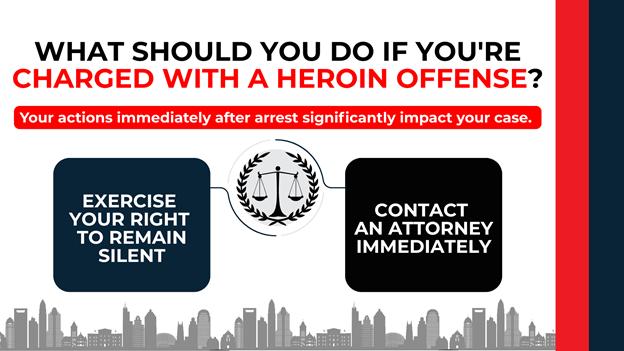
  • Right to Remain Silent: You have the right to remain silent and do not have to answer any questions the officer asks.
  • Right to an Attorney: If you are arrested, you have the right to request a criminal defense attorney immediately.

Responding to the Officer:

Here’s how to handle the situation if an officer arrives at your door:

  1. Stay Calm: Take a deep breath and avoid opening the door immediately.
  2. Identify Yourself: Speak through the door and identify yourself.
  3. Ask Why They Are There: Politely inquire why the officer is at your door.
  4. Do Not Consent to Searches: Unless you fully understand the situation and your rights, politely decline any requests to search your home or belongings.
  5. Request a Warrant: If the officer mentions a warrant, politely ask to see it. Do not attempt to grab the warrant or block the officer from leaving it under the door.
  6. Right to Remain Silent: If you are questioned, politely state that you are exercising your right to remain silent and would like to speak with an attorney before answering any questions.
  7. Record the Interaction (with Caution): In some states, you may be legally allowed to record the interaction with your phone. However, be aware of your state’s laws regarding recording conversations.
When to Open the Door:

There are limited situations where opening the door might be advisable:

  • You Know the Officer: If you know the officer and feel comfortable, you can open the door and have a conversation.
  • Emergency Situation: If the officer expresses concern about an emergency situation inside your home, you might choose to open the door.
If You Are Arrested:

If you are arrested, immediately request to speak with an attorney. Do not resist arrest or answer any questions until you have spoken to your lawyer.

Contacting a Criminal Defense Lawyer:

Contacting a Criminal Defense Lawyer

If you are unsure about your rights or have been questioned by the police, it’s essential to contact a criminal defense lawyer in Raleigh as soon as possible. A lawyer can advise you of your rights, review the details of your situation, and represent you in court if necessary.

Remember:

  • Knowing your rights and staying calm are critical during police interactions at your door.
  • You are not obligated to open the door or answer questions unless you feel comfortable doing so.
  • If you are unsure about your rights or have been questioned by the police, contact a criminal defense lawyer

Police interactions can be stressful and confusing. Knowing the difference between a detainment and an arrest can be crucial for protecting your rights. If you’ve been detained or arrested, it’s essential to contact a criminal defense lawyer as soon as possible to understand between detainment Vs. arrest.. A lawyer can advise you of your rights, represent you in court, and help you navigate the legal complexities of your situation.

This blog post will delve into the key distinctions between detentions and arrests in the USA, empowering you to understand these encounters and your rights during them.

Understanding Detentions

A detention, also known as an “investigatory stop,” is a brief and temporary restriction of your freedom by law enforcement. It allows officers to investigate a potential crime or gather information about a suspicious person or activity. Here are some key aspects of detentions:

  • Reason for Detention: Law enforcement must have reasonable suspicion to detain you. This means they must have a specific and articulable reason to believe you are involved in criminal activity. Hunch or mere suspicion is not enough.
  • Duration: Detentions are intended to be brief, typically lasting only for the time it takes to complete the investigation. This could be a few minutes or up to 20-30 minutes in some cases, depending on the complexity of the situation.
  • Your Rights During Detention: You have the right to remain silent and the right to an attorney. However, you are generally not free to leave during a detention. It’s important to be polite and cooperative, but you don’t have to answer any questions that might incriminate yourself.

Examples of Detentions:

  • Being stopped for a minor traffic violation (e.g., a broken taillight)
  • Being questioned about a suspicious person or activity in the neighborhood
  • Being patted down for weapons if the officer has reasonable suspicion you might be armed and dangerous

Understanding Arrests

An arrest is a more formal and significant event than a detention. It signifies that the officer has probable cause to believe you have committed a crime and intends to take you into custody.

  • Probable Cause: Probable cause is a higher standard than reasonable suspicion. It requires the officer to have facts and circumstances that would lead a reasonable person to believe you committed a crime.
  • Duration: An arrest can last for several hours, depending on the booking process and potential bail proceedings.
  • Your Rights During Arrest: You have the same rights you do during a detention (right to remain silent and right to an attorney) but they are even more crucial. You should immediately state that you are not answering questions and request an attorney.

Examples of Arrests:

  • Being caught in the act of committing a crime
  • Having a warrant out for your arrest
  • Witness testimony placing you at the scene of a crime

Important Considerations:

  • Do Not Resist: If you are being detained or arrested, do not resist. Resisting arrest is a separate crime and could escalate the situation.
  • Know Your Rights: While remaining silent is recommended, it’s important to understand your rights in these situations.

What to Do if You’re Detained or Arrested:

What to do if you're Detained or Arrested
  • Stay Calm: Take a deep breath and try to stay calm.
  • Be Polite and Cooperative: Maintain a respectful demeanor with the officer. However, don’t consent to searches unless you are absolutely comfortable doing so.
  • Know Your Rights: Politely but firmly state that you are not answering questions and request an attorney.
  • Do Not Resist: Resisting arrest is a crime and could worsen the situation.

Contact a Criminal Defense Lawyer:

If you are detained or arrested, even if you believe you are innocent, it’s always best to contact a criminal defense lawyer as soon as possible. An attorney can advise you of your rights, represent you in court, and help you navigate the legal process. A skilled lawyer can analyze the details of your situation, explore potential defenses, and work towards the best possible outcome.

Remember:

Understanding the difference between detentions and arrests is crucial for protecting your rights during police interactions. Knowing your rights and staying calm can help ensure a smoother interaction. While remaining silent and seeking legal representation are important, it’s always best to cooperate with law enforcement within the bounds of your rights.

Disclaimer: This blog post is for informational purposes only and does not constitute legal advice. The laws and procedures surrounding detentions and arrests can vary by state. It is always best to consult with a qualified criminal defense lawyer in your area for specific advice regarding your situation.

Getting caught with illegal drugs in North Carolina can have life-altering consequences. Penalties range from fines and probation to lengthy prison sentences, impacting your employment, housing, and future opportunities. This blog post dives deep into understanding drug charges in North Carolina, including the different types of offenses, potential penalties, and the crucial role a skilled drug defense lawyer can play in navigating the legal system.

The Landscape of Drug Offenses in North Carolina

North Carolina categorizes controlled substances into five schedules based on their potential for abuse and accepted medical use. Schedule I drugs pose the highest risk for abuse and have no recognized medical use (e.g., heroin, LSD, ecstasy). Conversely, Schedule V and VI drugs have a low potential for abuse and accepted medical uses (e.g., some prescribed anxiety medications).

There are two main drug offenses in North Carolina:

  1. Simple Possession: This applies when you’re found with a controlled substance, with the severity depending on the drug type and quantity.
  2. Possession with Intent to Manufacture, Sell, or Deliver (PWIMSD): This is a more serious charge indicating the drugs were not just for personal use but intended for sale or distribution.

Understanding Penalties for Drug Charges

Understanding Penalties for Drug Charges

Penalties for drug possession charges vary significantly based on the specifics of your case, including:

  • Drug Type: Schedule I and II drugs carry the harshest penalties, while Schedule V and VI offenses are typically misdemeanors.
  • Drug Quantity: Possessing larger quantities elevates the charge’s severity. North Carolina has specific weight thresholds for each schedule that turn simple possession into a felony.
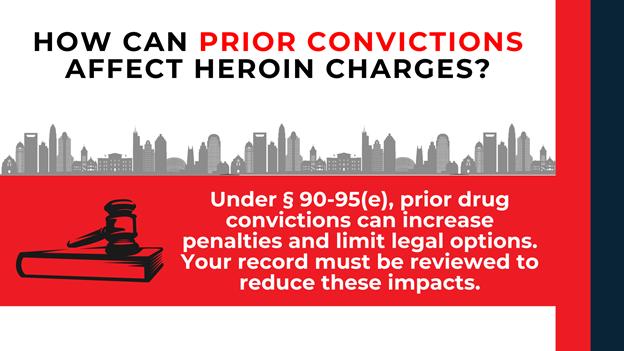
  • Prior Offenses: A history of drug convictions can significantly increase the severity of your current charge.

Here’s a general breakdown of potential penalties by classification (consult an attorney for specific details):

  • Schedule I & II: Simple possession can be a misdemeanor or felony, with prison sentences ranging from months to years. PWIMSD is typically a felony with significant prison time.
  • Schedule III & IV: Simple possession is usually a misdemeanor with potential jail time and fines. PWIMSD can be a felony with varying prison terms.
  • Schedule V: Possession is generally a Class 2 misdemeanor with potential jail time and fines.
  • Schedule VI: Possession is typically a Class 3 misdemeanor with potential fines.

Important Considerations:

  • Constructive Possession: You can be charged with possession even if the drugs aren’t directly on your person, but you have control over them (e.g., drugs found in your car).
  • Search and Seizure: Law enforcement must have probable cause to search you or your belongings. An illegal search can lead to the suppression of evidence, and potential dismissal of the charges.
  • Drug Paraphernalia: Possessing items used to consume or distribute drugs can be a separate charge.

How a Drug Defense Lawyer Can Help

How a Drug Defense Lawyer Can Help

Facing drug charges in North Carolina can be overwhelming. A skilled drug defense lawyer in North Carolina can be your strongest advocate throughout the legal process. Here’s how they can assist you:

  1. Case Evaluation and Guidance: Your lawyer will thoroughly review your case details, analyze the evidence against you, and explain your legal options.
  2. Negotiating with Prosecutors: Your lawyer can negotiate with the prosecutor to potentially seek a plea bargain with reduced charges or alternative sentencing options like probation or drug treatment programs.
  3. Challenging the Charges: Your lawyer may identify flaws in the prosecution’s case, such as illegal search and seizure or insufficient evidence. They can file motions to suppress evidence or challenge the charges themselves.
  4. Representation in Court: If your case goes to trial, your lawyer will represent you in court, present your defense, and argue for the best possible outcome.
  5. Understanding Sentencing Options: Your lawyer can explain potential sentencing options and explore strategies to minimize any penalties you might face.

Benefits of Hiring a Drug Defense Lawyer

Benefits of Hiring a Drug Defense Lawyer
  • Increased Chance of a Favorable Outcome: Statistics show that individuals with legal representation receive more favorable outcomes than those who represent themselves.
  • Knowledge of the Legal System: Drug defense lawyers have a deep understanding of North Carolina’s drug laws, sentencing guidelines, and court procedures.
  • Negotiation Skills: Experienced lawyers have honed negotiation skills that can help achieve a more favorable plea bargain.
  • Protecting Your Rights: Your lawyer ensures your legal rights are protected throughout the process and helps avoid potential missteps.
  • Reduced Stress and Anxiety: Legal proceedings can be stressful. Having a qualified lawyer handle your case allows you to focus on moving forward with your life.

Getting Help

A drug charge can be a frightening experience. If you are facing drug charges in North Carolina, it is crucial to consult with an experienced criminal defense attorney as soon as possible. An attorney can advise you of your rights, explore potential defenses, and help you navigate the legal process.

Disclaimer: This blog post is for informational purposes only and does not constitute legal advice. The laws regarding controlled substances are complex and constantly evolving. You should always consult with a qualified attorney to discuss your specific situation.

Share:

In today’s interconnected world, social media platforms like Facebook, Instagram, Twitter, and TikTok have become integral to our daily lives. They serve as spaces where we share our thoughts, experiences, and even whereabouts. However, this digital footprint can significantly impact criminal cases. For criminal defense lawyers in North Carolina, understanding the role and implications of social media evidence in criminal cases is crucial in providing effective representation.

The Growing Importance of Social Media Evidence

The Growing Importance of Social Media Evidence

Social media evidence can include posts, messages, photos, videos, and even location tags. This type of evidence can play a pivotal role in criminal investigations and court proceedings for several reasons:

  1. Establishing Timelines and Locations: Social media posts can help establish a timeline of events and confirm the presence or absence of individuals at certain locations. For instance, a post tagged with a specific location can corroborate an alibi or place a suspect at the scene of a crime.
  2. Demonstrating Intent or State of Mind: Posts or messages can provide insights into a person’s intent or state of mind before, during, or after an alleged crime. For example, a series of threatening messages sent before an assault could indicate premeditation.
  3. Identifying Relationships and Interactions: Social media interactions can reveal relationships between suspects, victims, and witnesses, helping to establish motives or connections relevant to the case.

Collecting Social Media Evidence

Collecting Social Media Evidence

The collection of social media evidence involves several critical steps to ensure it is admissible in court. For criminal defense lawyers in North Carolina, understanding this process is essential:

  1. Identification: Identifying relevant social media accounts and content that may pertain to the case. This includes public posts and, in some cases, private messages obtained through legal channels.
  2. Preservation: Ensuring the evidence is preserved in its original form to prevent tampering. This typically involves capturing screenshots, downloading content, and using digital forensic tools to maintain the integrity of the data.
  3. Authentication: Verifying the authenticity of the social media evidence. This may involve linking the content to the accused through IP addresses, device information, and other identifying data.
  4. Analysis: Analyzing the content to understand its context and relevance to the case. This step includes interpreting the evidence in light of other facts and testimony.

Admissibility of Social Media Evidence in Criminal Cases

Admissibility of Social Media Evidence

For social media evidence to be admissible in court, it must meet specific legal standards. Criminal defense lawyers in North Carolina must be adept at challenging the admissibility of such evidence:

  1. Relevance: The evidence must directly relate to the case. Irrelevant information, which could be damaging to your case, should be excluded.
  2. Authentication: The evidence must be proven to be genuine. The prosecution must demonstrate that the defendant created the post or message and that it has not been altered.
  3. Hearsay: Social media posts can sometimes be considered hearsay and may be inadmissible unless they fall under an exception to the hearsay rule.

By questioning the relevance, authenticity, and hearsay status of social media evidence, a skilled criminal defense lawyer in North Carolina can significantly impact the case’s outcome.

Defense Strategies Using Social Media Evidence

Defense Strategies Using Social Media Evidence

Social media evidence can be a double-edged sword in criminal defense. While it can provide incriminating evidence, it can also be used to the defendant’s advantage. Here are some strategies:

  1. Establishing Alibis: Social media posts can provide crucial alibis. For example, geotagged posts or live videos can place a defendant at a different location at the time of the crime.
  2. Highlighting Inconsistencies: Social media evidence can be used to point out inconsistencies in the prosecution’s case. For instance, if a witness’s statement conflicts with their social media activity, this discrepancy can be used to challenge their credibility.
  3. Humanizing the Defendant: Social media profiles can portray positive aspects of the defendant’s character and life, helping to humanize them to the jury.
  4. Uncovering Bias or Misconduct: Social media activity can reveal potential bias or misconduct by witnesses, law enforcement officers, or even jurors, which can be critical in building a defense.

Ethical and Legal Considerations

Ethical and Legal Considerations

While social media evidence can be a powerful tool, it also raises significant ethical and legal issues. Criminal defense attorney in North Carolina must navigate these carefully to protect their clients’ rights:

  1. Privacy: Accessing private social media accounts without proper authorization can lead to legal and ethical violations. Lawyers must use lawful methods, such as subpoenas, to obtain private information.
  2. Ethics: Attorneys must adhere to ethical guidelines when collecting and presenting social media evidence. This includes not misleading the court or tampering with evidence.
  3. Client Education: Lawyers should educate their clients about the potential implications of their social media activity. Clients should be advised to avoid posting anything that could be detrimental to their case.

Practical Tips for Clients

Clients need to be aware of how their social media activity can impact their case. Here are some practical tips for those involved in criminal cases:

  1. Think Before You Post: Avoid posting anything that could be interpreted negatively or that could contradict your defense.
  2. Review Privacy Settings: Ensure your social media accounts have strict privacy settings to limit who can see your posts.
  3. Consult Your Lawyer: Before making any posts, consult with your lawyer to understand how it might affect your case.
  4. Preserve Evidence: Do not delete any social media content without consulting your lawyer, as this could be seen as tampering with evidence.

Conclusion

Social media evidence is an increasingly important aspect of criminal cases, offering both opportunities and challenges for criminal defense lawyers in North Carolina. By understanding how to collect, authenticate, and challenge social media evidence, defense attorneys can effectively leverage this information to benefit their clients.

As social media continues to evolve, its role in the legal system will undoubtedly expand. Criminal defense lawyers must stay abreast of these changes to protect their clients’ rights and ensure a fair trial. Whether establishing an alibi, challenging the prosecution’s narrative, or humanizing the defendant, social media evidence can be a pivotal element in criminal defense strategies.

Share:

One of the most significant breakthroughs in the fields of investigation and genetics was demonstrated in 2018 with the capture of the notorious Golden State Killer. A genetic genealogist and retired patent attorney helped investigators catch the infamous serial killer who was a former police officer who committed a slew of crimes from burglary to rape to serial murder across multiple jurisdictions and has managed to evade law enforcement for 40 years. It was this pioneering technology that ultimately led to his capture, and the term Investigative Genetic Genealogy (IGG) was born. This technology is crucial for criminal defense lawyers in North Carolina, enhancing their ability to navigate cases involving notorious criminals through investigative genetic genealogy.

This technology works by taking the genetic profile of the unknown subject from samples found in the crime scene and comparing it to the millions of DNA profiles stored in large databases. And if they found a match, there is a high likelihood that the unsub is related to the matching person, bringing law enforcement a step closer to finding their target.

The database used in this particular case is GEDMatch, a free and open-source online platform for DNA matching. The investigators used a technique called long-range familial search, in which they identified individuals who are genetic relatives of the then-unknown suspect based on their genetic profiles. From that point, the investigators narrowed down their list of suspects by utilizing the physical descriptions provided by eyewitnesses. Consequently, they were able to identify the perpetrator, as he was the only individual among the suspects with blue eyes.

DNA Technology and CODIS

DNA was first presented as evidence in the United States criminal court system in 1986. A few years later, DNA technology had become an irreplaceable tool in identifying or excluding suspected offenders.

One such project initiated by the government is a central database of DNA profiles called the Combined DNA Index System (CODIS), where DNA from convicted individuals and arrestees is archived and profiled. CODIS has added value to the investigative process since it was first used in 1998.

According to the North Carolina Department of Justice, the DNA database of the state of North Carolina currently includes over 380,000 DNA profiles. It consists of approximately 300,000 profiles from convicted offenders and around 50,000 profiles from individuals who have been arrested.

Understanding the Distinctions Between Investigative Genetic Genealogy and CODIS

The two methods of investigation work similarly, as both use DNA evidence from a crime scene that is then analyzed and profiled by a laboratory. However, in investigative genetic genealogy, the DNA profile is entered into a third-party DNA database, originally intended for tracing blood-related relatives and identifying health concerns, such as one’s predisposition to certain illnesses.

Privacy Concerns

The high-profile case of the Golden State Killer has sparked debates as to whether there is reason to fear for the safety of DNA information that people have given these commercial DNA testing companies.  They have been in existence for several years and have a huge amount of genotyped individuals in their database, notably exceeding the 24 million individuals in the National Database (CODIS-NDIS).

And the numbers are quite significant. A database of 1 million in the open-source GEDMatch has already yielded results that led to the resolution of a high profile case. Imagine the power it could give law enforcement if they could access the extensive collection of AncestryDNA, established in 2012 with about 25 million people in their database and 23andMe, established in 2006 that has DNA samples of more than 14 million people.

Aside from possible genetic relatives, commercial DNA companies can also provide health data and other personally identifiable information. In contrast, forensic database information is limited to identifying parents, children, kin, and are highly regulated.  Additionally, these commercial companies have a messaging system that provides a way to reach individuals who may be linked to a suspected perpetrator outside of traditional communications carried out by law enforcement. This may be viewed as an invasion of privacy by everyday users.

Fourth Amendment Concerns with Investigative Genetic Genealogy

Investigative genetic genealogy has been used in hundreds of cases in the US, as well as to solve cases all over the world, but there is a question as to how valid and legal these searches are. Individuals who paid and signed up for these services did not give consent to allow the government to access and search through their profile and there may exist an issue concerning the Fourth Amendment that protects people from unreasonable searches and seizures by the government.

Long-range familial searching is raising concerns about potential violations of the Fourth Amendment, which protects against unreasonable searches and seizures. This is also concerning as a search of an individual’s DNA records may also implicate a much larger group of people, including the extended family of a suspect.

Proponents of genetic genealogy argue it does not violate the Fourth Amendment. When individuals voluntarily disclose their personal information online, for instance through public DNA databases, they may unintentionally relinquish certain protections afforded by the Fourth Amendment. This is a consequence of the third-party doctrine, which assumes that information willingly provided to third parties does not receive Fourth Amendment safeguards.

In November 2019, a Florida detective was granted full access to the DNA information of nearly one million people on the consumer DNA site GEDMatch, regardless of whether users had opted out of appearing in search results. Legal scholars say this could set a precedent that might open up all consumer DNA sites to the police. Law enforcement may potentially feel emboldened to request access to more than 20 million records on other consumer DNA sites such as AncestryDNA and 23andMe.

Protecting the Integrity of Genetic Information

The main question on the safety of people’s genetic information is if the courts have the authority to override corporate privacy policies, then what guarantee can be given to customers that genetic information is not used in any activity that they did not intend it for or authorized? Even if guardrails are put in place, nothing is stopping investigators from circumventing barriers by registering as ordinary users.

In response to the growing concerns of their customers regarding privacy, DNA-testing companies such as 23andMe and AncestryDNA have stated that they will protect their customers’ genetic information from law enforcement unless compelled to disclose it by a legitimate government order. If the government is allowed access to all of these DNA databases, especially those of 23andMe and AncestryDNA, which have a combined database of 39 million, there may be enough information to map out the rest of America, including those who have not provided their DNA to these companies.

A Need for Closer Examination

When you see this method aiding the police in capturing serial killers who’ve caused immense devastation to families and communities, it’s easy to overlook the legality of it. However, to ensure justice for all parties involved, a closer examination is necessary to establish clear guidelines for using this investigative method.

This approach, while groundbreaking, must be scrutinized from both legal and ethical perspectives to avoid potential abuses of power. Establishing protocols for obtaining and using data, ensuring transparency in the process, and guaranteeing the protection of innocent individuals’ privacy rights are critical steps. Without these safeguards, there is a risk of eroding public trust in law enforcement and the justice system. Therefore, it is important to develop comprehensive policies that outline the responsible use of such techniques, promoting both effective crime-solving and the preservation of civil liberties.

If you or your loved one is accused of a crime, don’t hesitate to call Patrick Roberts Law. Attorney Roberts is an experienced violent crime lawyer and sexual offense attorney, and he can help you fight your case. Payment options are available.

Share:

A latest news update from criminal defense lawyer in North Carolina on RJA case. A Racial Justice Act case involving a man sentenced to death in 2009 is nearing its conclusion, following the latest hearing in March 2024. This case brings renewed hope to approximately 120 individuals on North Carolina’s death row, giving them the chance to have their death sentences reconsidered and potentially converted to life imprisonment.

Racial Justice Act Appeals and Landmark Case of Hasson Bacote

These 120 individuals have filed appeals under the Racial Justice Act (RJA). Enacted in 2009, the RJA allowed individuals sentenced to death to seek resentencing to life imprisonment without parole if they could demonstrate that racial bias influenced their sentencing or jury selection. Although the law was repealed in 2013, more than 120 inmates had already applied for relief under its provisions, and they now await their opportunity for resentencing.

The focal point of this landmark case is Mr. Hasson Bacote, who was just 21 years old when he was sentenced to death in a Johnston County courtroom in April 2009 for First Degree murder. Mr. Bacote contends that racial discrimination played a significant role in both his sentencing and jury selection. His case highlights systemic issues in North Carolina’s capital punishment framework, marking the first instance in the state where a trial court mandated the disclosure of prosecution notes from jury selection in all capital trials.

Legal Team’s Extensive Evidence and Arguments in Bacote Case

Mr. Bacote’s legal team, which includes the American Civil Liberties Union’s (ACLU) Capital Punishment Project, the Center for Death Penalty Litigation (CDPL), and the NAACP’s Legal Defense Fund, has compiled a substantial body of evidence. They have amassed 680,000 documents related to capital punishment since 1980, including court transcripts and handwritten notes from jury selection in 70 counties. The data reveals that potential Black jurors in Johnston County were four times more likely to be excluded from jury pools and ten times more likely to be removed by a specific former District Attorney, who prosecuted Mr. Bacote’s case.

The legal team argues that racial bias has historically excluded people of color from serving on capital juries, resulting in disproportionately severe sentences for Black men, including Mr. Bacote. To support their case, they have enlisted historians, a statistician, and a social psychologist to discuss how implicit racial biases can be measured and how these biases influence several aspects of the judicial process, including jury selection.

Mr. Bacote’s case not only represents a significant legal battle but also sheds light on the effects of racial discrimination within the judicial system. It serves as a reminder of the importance of pursuing justice without prejudice, ensuring that everyone receives a fair trial regardless of race.

As the court prepares to deliver its final verdict, the outcome of this case could set a precedent for the remaining individuals on death row in North Carolina, offering them a renewed chance at justice and potentially transforming the landscape of capital punishment in the state.

Conclusion

If your loved one has been accused of First Degree murder, it is of utmost importance to hire a skilled murder defense attorney. Patrick Roberts Law provides sound legal advice to individuals battling the harsh penalties of murder charges. Call 919-746-7206 immediately. Same day and evening appointments are available.

Share: