

When accusations of family domestic violence arise in Cary, the consequences extend far beyond the courtroom. North Carolina law defines domestic violence broadly and prosecutes these cases aggressively. Residents of this highly educated, affluent community face unique challenges when charged—accusations here can threaten professional reputations, security clearances at Research Triangle Park employers, and family stability in ways that demand immediate, strategic legal intervention.
What Qualifies as Domestic Violence Under North Carolina Law?
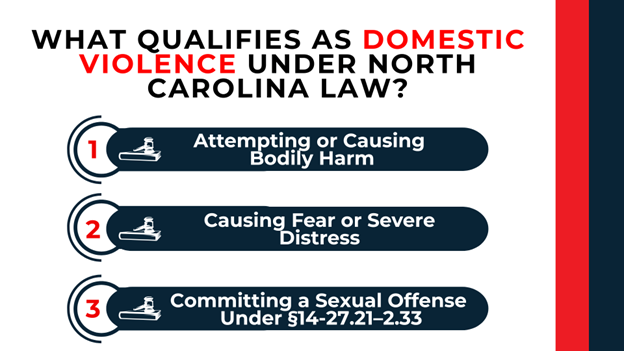
North Carolina General Statutes Chapter 50B establishes what constitutes domestic violence. The law defines it as committing one or more specific acts against someone with whom you share a personal relationship. These acts include:
- Attempting to cause bodily injury or intentionally causing bodily injury
- Placing someone in fear of imminent serious bodily injury or continued harassment that inflicts substantial emotional distress
- Committing any sexual offense defined in N.C. Gen. Stat. § 14-27.21 through § 14-27.33
The “personal relationship” requirement under N.C. Gen. Stat. § 50B-1(b) covers current or former spouses, people of opposite sex who live together or have lived together, parents and children, people who have a child in common, current or former household members, and people of opposite sex in a dating relationship.
What Criminal Charges Can Result from Domestic Violence Accusations?
Family domestic violence charges in North Carolina range from misdemeanors to serious felonies. The specific charge depends on the nature of the alleged conduct and the defendant’s criminal history.
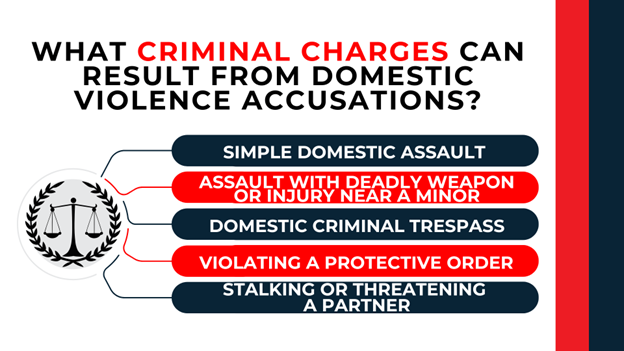
Common charges include:
- Simple assault in a domestic context
- Assault with a deadly weapon or inflicting serious injury in the presence of a minor (N.C. Gen. Stat. § 14-33(d))
- Domestic criminal trespass (N.C. Gen. Stat. § 14-134.3)
- Violation of a domestic violence protective order (N.C. Gen. Stat. § 50B-4.1)
- Stalking or communicating threats against someone in a personal relationship
More serious charges can include assault by strangulation and domestic violence homicide under N.C. Gen. Stat. § 14-17(a1). This statute creates a rebuttable presumption of first-degree murder when someone kills a spouse, former spouse, romantic partner, or co-parent with malice if they were previously convicted of domestic violence offenses against the same victim.
How Does the Cary Police Department Investigate Domestic Violence Cases?
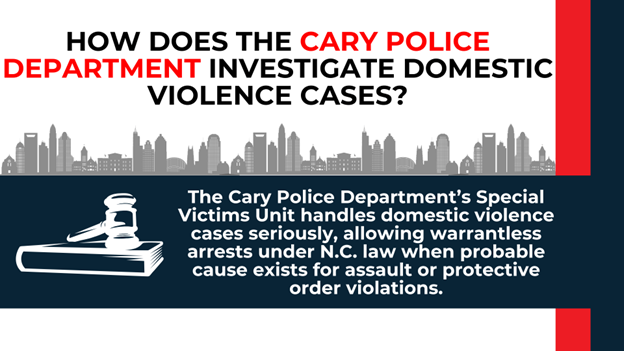
The Cary Police Department takes domestic violence investigations seriously. The department’s Special Victims Unit specifically handles follow-up investigations for domestic violence cases. Officers from the Field Operations Bureau respond to initial calls and make arrest decisions based on North Carolina’s domestic violence arrest statutes.
Under N.C. Gen. Stat. § 15A-401(b)(2), law enforcement officers can make warrantless arrests for domestic criminal trespass and domestic assault offenses even if they did not witness the offense. Officers must arrest when they have probable cause that someone violated a domestic violence protective order by being excluded from a residence or threatening a victim under N.C. Gen. Stat. § 50B-4.1(b).
When the Cary Police Department arrests someone for domestic violence, officers must fingerprint defendants for specific offenses under N.C. Gen. Stat. § 15A-502(a2). Officers provide magistrates with information about the relationship between the defendant and alleged victim. This information enters the court system immediately.
What Happens During the First 48 Hours After Arrest?
North Carolina law imposes special pretrial release procedures for domestic violence cases. Under N.C. Gen. Stat. § 15A-534.1, a judge—not a magistrate—must set pretrial release conditions within 48 hours of arrest in Wake County. The judge reviews the defendant’s criminal history before making release decisions.
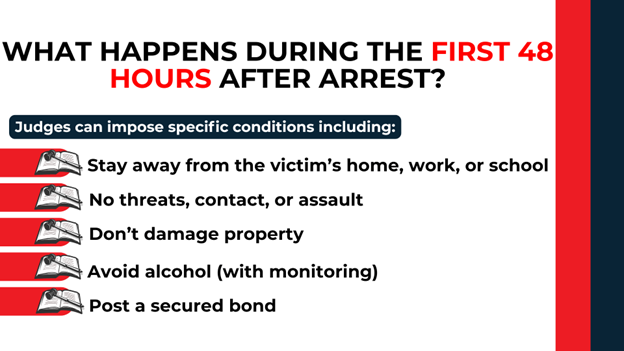
Judges can impose specific conditions including:
- Staying away from the alleged victim’s home, workplace, or school
- Refraining from assaulting, threatening, or contacting the alleged victim
- Avoiding damage to specific property
- Abstaining from alcohol consumption verified by continuous monitoring
- Executing a secured appearance bond
A judge may hold a defendant in custody for a reasonable time if immediate release would pose a danger to the alleged victim or likely result in intimidation. These hearings occur at the Wake County courthouse where Patrick Roberts Law regularly appears on behalf of clients.
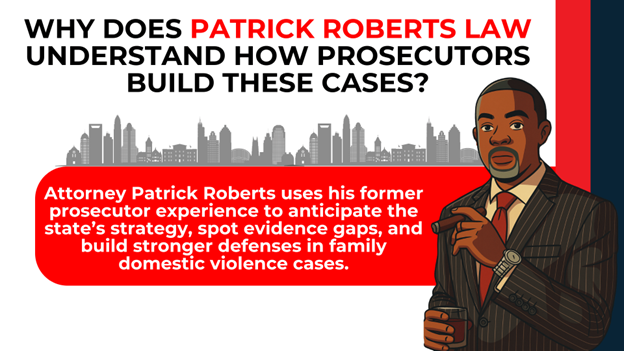
Why Does Patrick Roberts Law Understand How Prosecutors Build These Cases?
Attorney Patrick Roberts brings a unique advantage to defending family domestic violence charges: he previously prosecuted and defended domestic violence cases. This experience provides insight into how the Wake County District Attorney’s Office builds cases and what evidence prosecutors prioritize.
Former prosecutors understand the pressures victims face to cooperate with investigations. They recognize when evidence gaps exist in the state’s case. They know how prosecutors evaluate which charges to pursue and which cases may warrant dismissal or reduction. This internal knowledge shapes defense strategies from the first client meeting through trial.
How Do Protective Orders Impact Criminal Cases?
Domestic violence cases frequently involve both criminal charges and civil protective orders under Chapter 50B. These proceedings run on parallel tracks but affect each other significantly.
A victim can file for a domestic violence protective order in Wake County District Court. Judges can issue temporary ex parte orders before holding full hearings. Under N.C. Gen. Stat. § 50B-2(c), courts may grant emergency relief if danger of domestic violence exists.
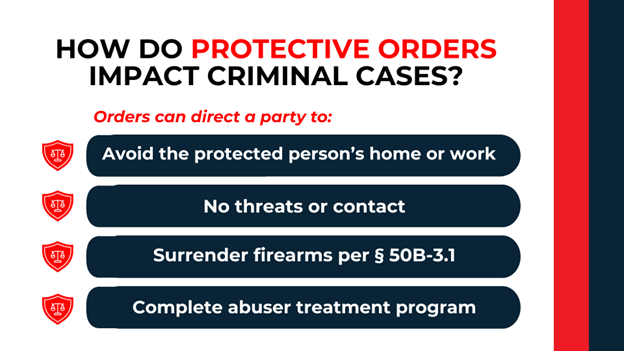
Full protective orders can last up to one year initially and may be renewed under N.C. Gen. Stat. § 50B-3(b). Orders can direct a party to:
- Stay away from the protected person’s residence or workplace
- Refrain from threats or contact
- Surrender firearms and ammunition under N.C. Gen. Stat. § 50B-3.1
- Attend abuser treatment programs
Violating a protective order constitutes a separate crime. A first violation is a Class A1 misdemeanor. A third violation becomes a Class H felony under N.C. Gen. Stat. § 50B-4.1(f). Committing a felony while a protective order prohibits the conduct elevates the charge by one class under N.C. Gen. Stat. § 50B-4.1(d).
What Makes Domestic Violence Accusations Particularly Serious in Cary?
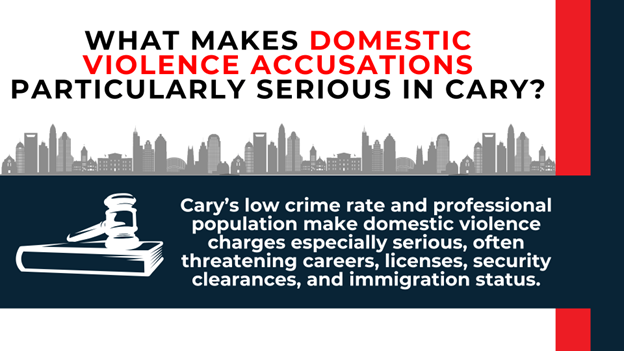
Cary consistently ranks among the safest communities in the United States. The town’s overall crime rate sits well below national averages. Violent crime occurs at exceptionally low rates compared to other municipalities.
This safety record means domestic violence accusations carry additional weight. Prosecutors and judges in Wake County view these cases as serious departures from community norms. The allegations can seem especially out of character for defendants who are professionals at SAS Institute, Epic Games, or other Research Triangle employers.
Cary’s educated population means many defendants hold security clearances, professional licenses, or positions of responsibility. A domestic violence conviction creates federal firearms disabilities under 18 U.S.C. § 922. It appears on background checks. It can end careers that require government contracts or security access.
The town’s diversity also matters. With nearly 25% of Cary residents born outside the United States representing over 60 nationalities, cultural differences in family dynamics sometimes lead to misunderstandings that escalate into accusations. Language barriers can complicate initial police interviews. Immigration consequences may attach to convictions.
How Do Courts Handle Sentencing in Domestic Violence Cases?
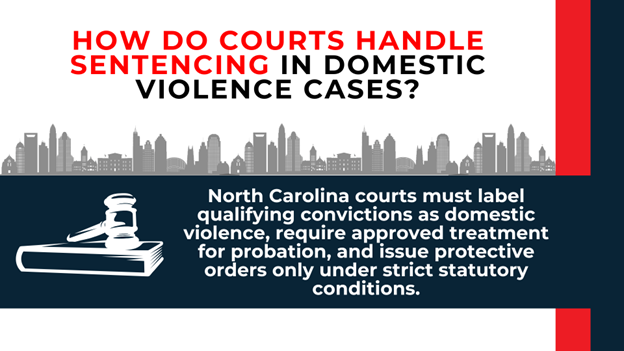
North Carolina courts must follow specific procedures when sentencing defendants in domestic violence cases. Under N.C. Gen. Stat. § 15A-1382.1(a), when a conviction involves assault, communicating a threat, or any act defined in Chapter 50B, and the parties had a personal relationship, the court must indicate in the judgment that the offense involved domestic violence.
If a court finds a defendant responsible for domestic violence and imposes probation, a regular condition requires attending and completing an abuser treatment program approved by the Domestic Violence Commission under N.C. Gen. Stat. § 15A-1343(b)(12).
Courts cannot order mutual protective orders unless both parties filed claims, neither acted primarily in self-defense, and the court makes detailed findings that both parties acted as aggressors. Protective orders expire at 11:59 P.M. on the indicated expiration date under N.C. Gen. Stat. § 50B-3(b).
What Should You Do If You Face Family Domestic Violence Charges?
The hours immediately following an accusation are critical. Statements made to police without counsel present can damage your defense irreparably. Evidence preservation matters. Witness identification cannot wait.
Early intervention by experienced defense counsel can shape the case trajectory before formal charges are filed. An attorney who understands domestic violence prosecution strategies from both sides knows when cases can be resolved through dismissal, when alternative resolutions protect your interests, and when trial becomes necessary.
Patrick Roberts Law represents clients throughout Wake County in family domestic violence cases. Attorney Roberts’ background as a prosecutor handling domestic violence cases informs every defense strategy. He understands the pressure prosecutors face to pursue charges even when evidence is weak or victims want to dismiss complaints. He recognizes when police reports contain inconsistencies that undermine the state’s narrative.
If you are facing family domestic violence charges in Cary or anywhere in Wake County, contact Patrick Roberts Law immediately. Your defense begins now—before statements are given, before evidence is lost, and before prosecutors lock into positions that become harder to negotiate. The firm offers confidential consultations where you can discuss your situation candidly and learn how former prosecution experience translates into aggressive, knowledgeable defense representation.
Disclaimer: Each case is different and must be evaluated separately. Prior results achieved do not guarantee similar results can be achieved in future cases.

Former assistant district attorney
Contact Patrick Roberts
Facing criminal charges in North Carolina demands seasoned representation. Trust in the experience and dual perspective of Patrick Roberts. Reach out today for a confidential consultation.
-
Call Our Team
Calls answered 24/7









For more information on the selection criteria, go to www.martindale.com
*Each case is different and must be evaluated separately. Prior results achieved do not guarantee similar results can be achieved in future cases.