

Assault on a female in North Carolina is a Class A1 misdemeanor under N.C. Gen. Stat. § 14-33(c)(2) — the most serious misdemeanor classification the state has. It carries up to 150 days in jail, but the jail time is not the part of this charge that changes lives. The collateral consequences — what happens to your record, your firearms rights, your custody situation, and your employment — are what most people never see coming until it’s too late to get ahead of them.
This page covers what the charge actually means under NC law and what the realistic penalties and long-term consequences look like. It also explains what a criminal defense attorney can do to affect the direction of a case.
What Is “Assault on a Female” Under North Carolina Law?
North Carolina does not have a single “domestic violence” crime on the books. Instead, prosecutors charge domestic-violence-related conduct through a patchwork of general assault statutes. Assault on a female is the one they reach for most often. In 2015 alone, North Carolina district courts reported 29,483 assault-on-a-female and assault-by-strangulation charges filed statewide.
The statute is narrow in who it covers and broad in what conduct qualifies. Under § 14-33(c)(2), the charge requires three things: the defendant is male, the defendant is 18 years of age or older, and the alleged victim is female. That’s it. There is no requirement that the parties have a romantic or domestic relationship. There is no requirement that the alleged victim suffered an injury. NC assault is a common-law offense that can be committed without the use of physical force — including through culpable negligence. Because of that, the range of conduct that can support a charge is broader than most people expect.
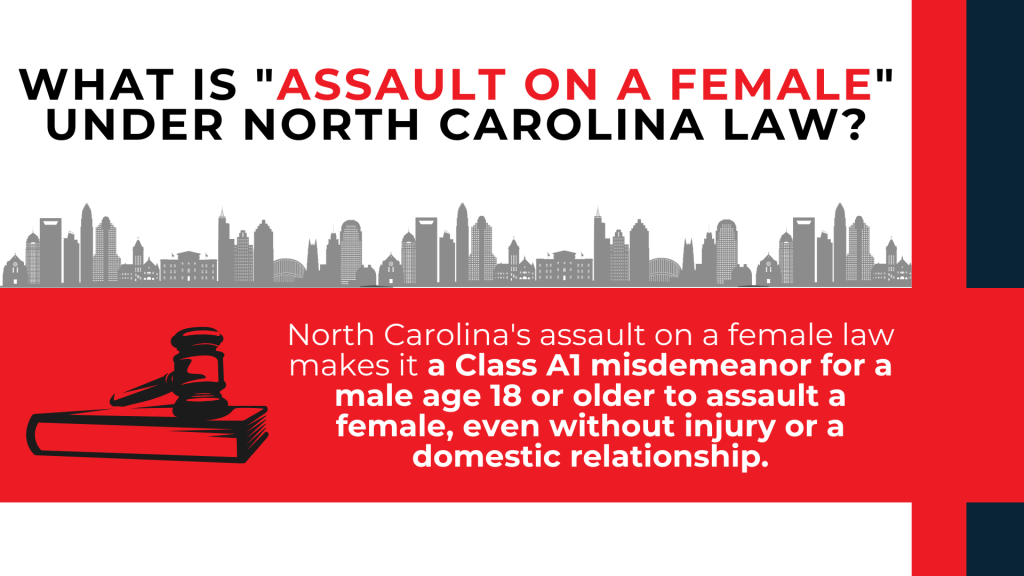
This is not a simple assault charge with a different label. Simple assault under § 14-33(a) is a Class 2 misdemeanor. Assault on a female is a Class A1 misdemeanor. That single classification difference has serious effects on sentencing exposure, the permanent record it creates, and the federal consequences it can trigger.
How Is This Charge Different From Simple Assault?
The difference between simple assault and assault on a female is not about what happened. It is about the statutory classification that attaches based on who the parties are, and that classification determines everything downstream.
Simple assault is a Class 2 misdemeanor. The maximum sentence is 60 days. Assault on a female is a Class A1 misdemeanor — two full classification levels higher — with a maximum sentence of 150 days. Under North Carolina’s structured sentencing system, the gap between these two classifications is not just a matter of days in jail. It changes the type of punishment a judge can impose and the prior-record points the conviction adds to any future charges. It also changes how the conviction interacts with federal law.
A Class A1 misdemeanor is the only misdemeanor class in North Carolina for which a judge can impose an active jail sentence regardless of whether you have any prior criminal record. For a Class 2 simple assault, if you’re a first-time offender, you’re generally looking at community punishment — supervised or unsupervised probation. For a Class A1 assault on a female, active time is on the table from the start.
What Kind of Sentence Could I Get?
North Carolina uses a structured sentencing system. That means punishment for any offense is determined by the combination of the offense class and your prior criminal record. For a Class A1 misdemeanor, the sentencing grid works across three prior-conviction levels.
If you have no prior convictions, you face a sentencing range of 1 to 60 days. If you have five or more prior convictions, you face a range of 1 to 150 days. The middle tier falls between those two endpoints. Within each range, the judge chooses between community punishment (probation), intermediate punishment (probation with more restrictive conditions like supervised probation or electronic monitoring), or active punishment (jail time).
The data shows that most misdemeanor defendants in North Carolina do not go to jail. According to the NC Sentencing and Policy Advisory Commission, 68% of misdemeanor sentences statewide in FY2024 were community punishment, meaning probation rather than active jail time. Only 29% received active jail time. For those who did receive active time on a Class A1 misdemeanor, the average sentence was 66 days.
But probation in a domestic violence case is not the same as probation for a shoplifting charge. Under N.C. Gen. Stat. § 15A-1343(b)(12), if you are found responsible for acts of domestic violence, you must attend and complete an approved abuser-treatment program as a condition of probation. The only exception is if the court specifically finds it is not in the interests of justice. These are not anger management classes. Approved programs require 39 hours of group treatment, completed over 26 to 30 weeks, in groups of no more than 16 participants. As of 2026, only 34 programs operate across 65 North Carolina counties. That means 35 counties have no program at all, which can create practical burdens that follow you for months.
What Are the Consequences Beyond the Sentence?
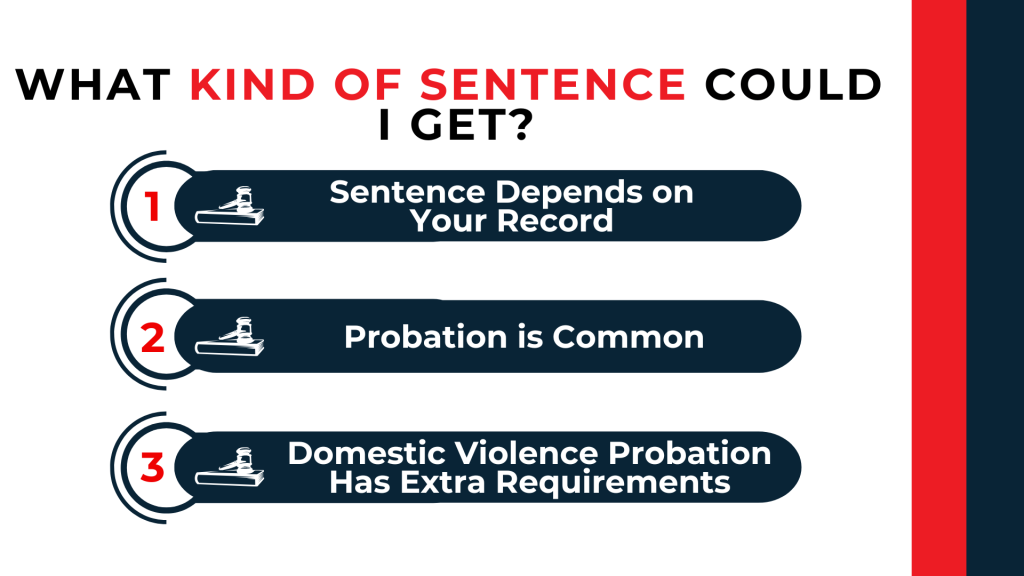
The sentence a judge hands down is only one layer of what an assault on a female conviction does to your life. The collateral consequences — the ones that operate outside the courtroom — are often more severe and longer-lasting than any jail time.
Firearms. This is the area where North Carolina’s assault statutes interact with federal law in ways that are both serious and legally complex. Under 18 U.S.C. § 922(g)(9), a person convicted of a “misdemeanor crime of domestic violence” as defined by federal law faces a generally permanent ban on possessing firearms or ammunition. However, the Fourth Circuit held in United States v. Vinson, 805 F.3d 120 (4th Cir. 2015), that ordinary North Carolina assault — including assault on a female under § 14-33(c)(2) — does not categorically qualify as a federal misdemeanor crime of domestic violence. The reason is that NC assault can be committed through culpable negligence rather than the intentional use of physical force that the federal definition requires.
That does not mean firearms consequences disappear. A Domestic Violence Protective Order is often issued alongside the case, since the DVPO runs on a separate civil track from the criminal charge. If one is issued, 18 U.S.C. § 922(g)(8) bars firearm possession for as long as the qualifying order remains in effect. North Carolina law under § 50B-3.1 separately requires you to surrender firearms, ammunition, and permits to the sheriff when the court makes certain findings in the DVPO, such as a finding that you used or threatened to use a deadly weapon. Possessing a firearm in violation of the order is a Class H felony under § 14-269.8.
It is also worth noting that the General Assembly passed N.C. Gen. Stat. § 14-32.5 — the misdemeanor crime of domestic violence statute, effective December 1, 2023 — specifically to close the gap that Vinson created. Convictions under that newer statute are designed to categorically trigger the federal firearms ban. How the charging decision is made between § 14-33(c)(2) and § 14-32.5 can have lasting consequences for firearms rights. That is one reason the early involvement of a defense attorney matters.
Child custody. Under N.C. Gen. Stat. § 50-13.2, courts are required to consider acts of domestic violence between the parties when making custody decisions. The court must also issue written findings on this factor. A conviction for assault on a female does not automatically result in a loss of custody. But it gives the other parent a powerful piece of evidence in any current or future custody proceeding, and courts take it seriously. The North Carolina Court of Appeals confirmed in Jordao v. Jordao, 273 N.C. App. 543 (2020), that trial courts must evaluate all relevant factors, including domestic violence, with written findings supporting the best-interest-of-the-child decision.
Immigration. For anyone who is not a U.S. citizen, the immigration consequences of a domestic-violence-related conviction can be more severe than the criminal sentence itself. Under INA § 237(a)(2)(E), a noncitizen is deportable for a conviction of a crime of domestic violence, stalking, or child abuse. Separately, a judicial finding of a protective-order violation can trigger deportability even without a criminal conviction at all. Immigration courts use categorical and circumstance-specific approaches to evaluate these convictions, and those approaches involve their own body of case law. A criminal defense strategy that ignores immigration consequences can produce a result that technically resolves the state charge but devastates your ability to remain in the country.
Employment. A Class A1 misdemeanor conviction appears on criminal background checks. If you work in a regulated profession, the impact of a visible conviction on your professional standing can be serious. This is something to evaluate with an attorney before any plea is entered.
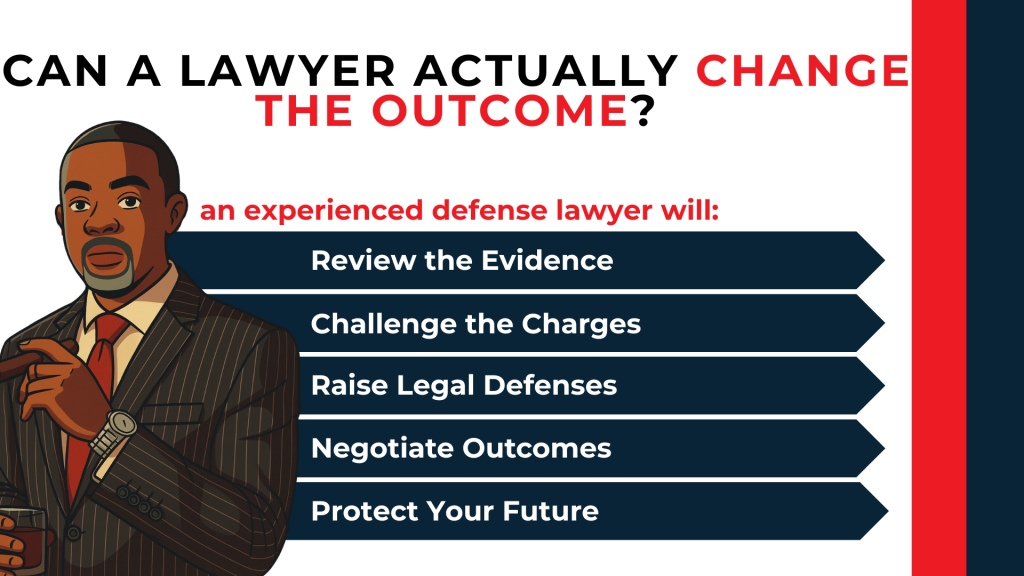
Can a Lawyer Actually Change the Outcome?*
A criminal defense attorney does not make a charge disappear by showing up. What an attorney does is identify the specific weaknesses in the state’s case and develop a strategy that accounts for the full range of consequences — criminal, civil, and collateral. The goal is to make sure you are not making decisions in the dark.
In assault on a female cases, the state’s evidence often hinges on the testimony of a single witness — the alleged victim. There may be no independent witnesses, no physical evidence of injury, and no video. The circumstances leading to the arrest may involve a mutual argument where the question of who was the aggressor is genuinely in dispute. North Carolina law recognizes self-defense as a justification for the use of force, and where the facts support it, that defense can be raised.
Beyond the facts of the incident itself, a defense attorney evaluates whether the elements of the charge are actually met and whether the arrest and charging decisions were handled properly. The attorney also looks at whether there is room to negotiate a resolution that avoids the most damaging consequences. Assault on a female is a misdemeanor that moves on a faster timeline than felony cases. The median time to sentencing for felonies in superior court was 11 months in FY2024, while district court cases resolve much sooner. That shorter window means the opportunity for early intervention is limited. But it also means that an attorney who gets involved early can influence the case before it picks up momentum.
The distinction between a conviction and a dismissal, or between a plea to the original charge and a negotiated reduction, is not academic. It determines whether the firearms consequences attach, whether a custody court sees a domestic violence conviction in the record, and whether an immigration court treats the disposition as a deportable offense.
How Quickly Do I Need to Act?
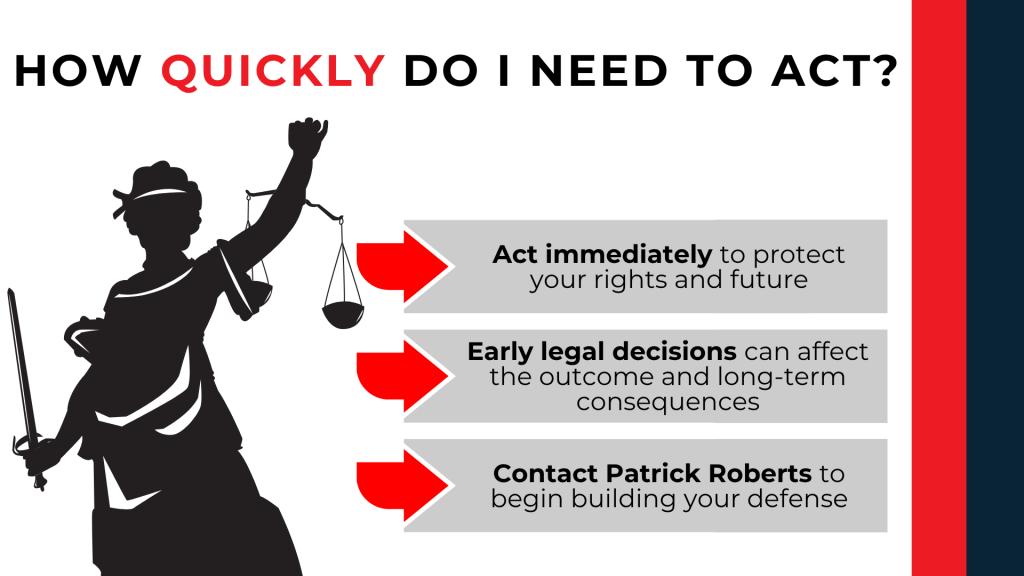
The consequences described on this page — a permanent criminal record, potential firearms restrictions, custody implications, immigration exposure — do not wait for a trial date to start taking shape. They are determined by decisions made early: how the charge is challenged, whether a plea is entered and to what, and whether the collateral consequences are accounted for before a disposition goes on the record.
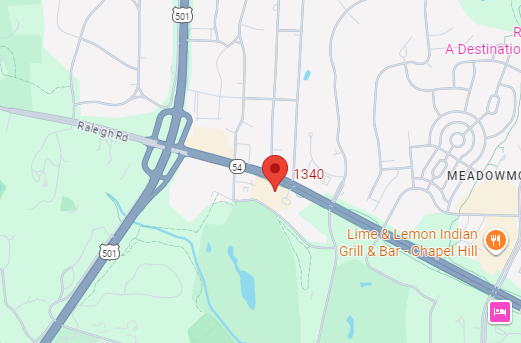
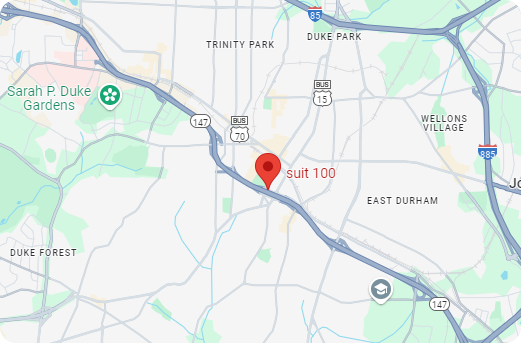
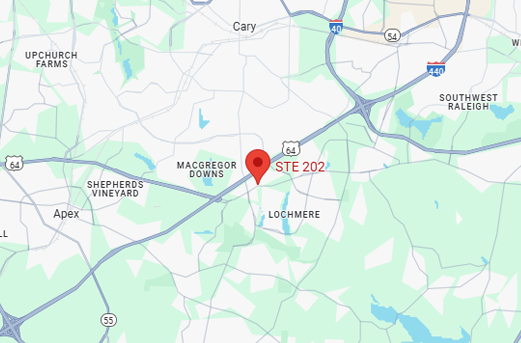
Patrick Roberts is a Raleigh criminal defense attorney and former Assistant District Attorney who has handled thousands of criminal cases across North Carolina. His practice at Patrick Roberts Law is based in Raleigh, with additional offices in Durham, Chapel Hill, and Cary. He offers comprehensive legal representation across every county in North Carolina for high-stakes cases, maintaining a core geographic focus on Wake County communities like Raleigh, Cary, Apex, Holly Springs, Garner, and Fuquay-Varina. If you are facing this charge, the consultation is where the defense begins.
Client Review
“Mr. Roberts was amazing! Had a very difficult case & the outcome didn’t look bright at all. I was looking at some serious time. But he was able to get me probation (which wasn’t on the table at all before he got involved) He was honest, to the point & laid out everything that could be a possibility. Never gave false hope, just the facts & logically what we could do to possibly get this in my favor. I would recommend Mr. Roberts to anyone seeking REAL guidance, honesty & qualifications to back it up.” – Verified client review via Avvo.com
Peer Endorsement
“I have known Patrick for years and have always been struck by his knowledge and dedication. I endorse him without hesitation or qualification.” – Verified peer endorsement via Avvo.com
Disclaimer: Testimonials and peer reviews are actual comments from clients and peers. They are for informational purposes only and do not guarantee or predict the outcome of your legal matter. Every case is unique and must be evaluated on its own merits.
Through a selective intake process, the firm caps its active case volume to protect the quality and pace of its legal oversight.
Disclaimer: The information on this website is for general informational purposes only. Nothing herein should be taken as legal advice for any individual case or situation. Contacting us via this website, email, or contact form does not create an attorney-client relationship. Case results depend on a variety of factors unique to each case; prior results do not guarantee a similar outcome.
Former assistant district attorney
Contact Patrick Roberts
Facing criminal charges in North Carolina demands seasoned representation. Trust in the experience and dual perspective of Patrick Roberts. Reach out today for a confidential consultation.
-
Call Our Team
Calls answered 24/7







For more information on the selection criteria, go to www.martindale.com
*Each case is different and must be evaluated separately. Prior results achieved do not guarantee similar results can be achieved in future cases.