

Sexual exploitation of a minor is not a single charge in North Carolina. It is a three-tiered criminal offense defined under N.C.G.S. §§ 14-190.16, 14-190.17, and 14-190.17A. Each degree carries different elements, different felony classifications, and very different prison ranges — from a Class H felony for possession to a Class C felony for production. Below is a detailed breakdown of what each degree involves, what the prosecution must prove, what the penalties look like, where defense challenges exist, and what a conviction means for the rest of a person’s life.
What Does “Sexual Exploitation of a Minor” Mean Under North Carolina Law?
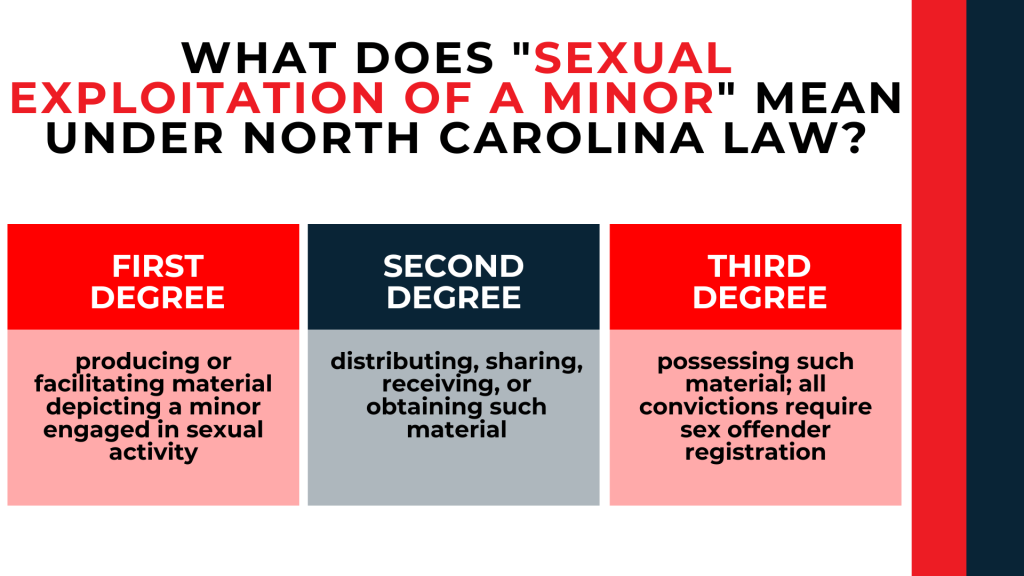
North Carolina criminalizes sexual exploitation of minors through a three-level system that separates the offense into three degrees based on the type of conduct involved.
First-degree sexual exploitation of a minor under N.C.G.S. § 14-190.16 involves the production or facilitation of material depicting a minor engaged in sexual activity. This is the most serious tier, classified as a Class C or Class D felony. Courts distinguish production — direct involvement with a minor — from facilitation of the creation of such material.
Second-degree sexual exploitation of a minor under N.C.G.S. § 14-190.17 covers the distribution or receipt of that material. This is a Class E felony. Distribution covers the transfer of material to others. Receipt means knowingly obtaining it.
Third-degree sexual exploitation of a minor under N.C.G.S. § 14-190.17A is a possession offense. This is a Class H felony.
All three degrees require mandatory sex offender registration upon conviction. There is no tier of this offense that avoids registration.
One critical feature of North Carolina’s system: the state has no teen-specific sexting statute. This means minors aged sixteen and older — who are tried as adults under NC law — can be prosecuted for sexually exploiting themselves through consensual sexting. This creates issues with how prosecutors choose to bring charges and means the statute reaches further than many people assume.
What Does the Prosecution Have to Prove?
Each degree of sexual exploitation requires the state to prove specific elements beyond a reasonable doubt. Understanding those elements matters because each one represents a point where the prosecution’s case can succeed or fail.
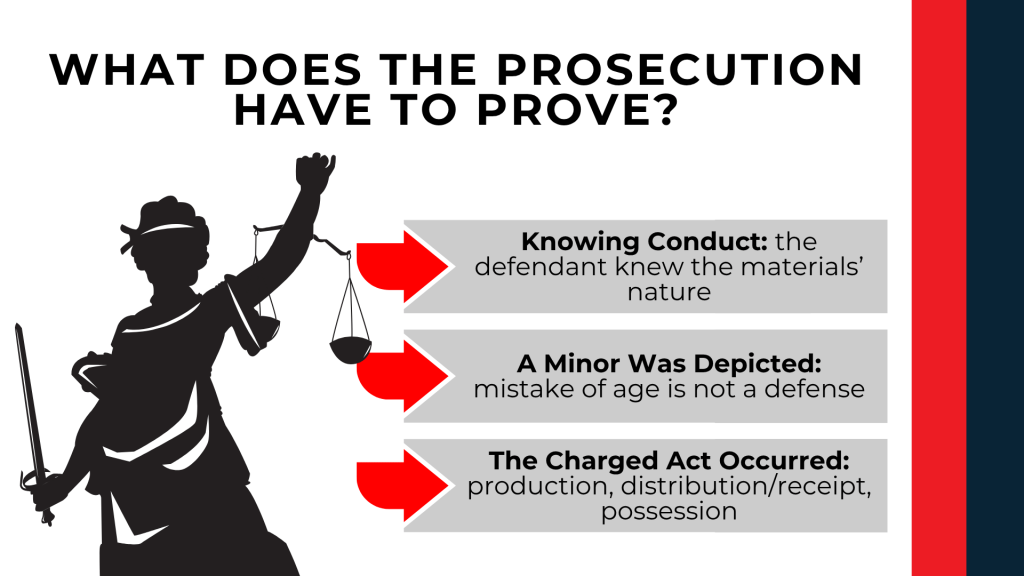
Across all three degrees, the state must prove the defendant acted knowingly. Under NC case law, the “knowing” element requires knowledge of the material’s character or content — not necessarily knowledge of the victim’s actual age. In other words, the prosecution does not need to prove the defendant knew how old the person depicted was. It needs to prove the defendant knew what the material contained.
This connects to a second rule that applies at every level: mistake of age is explicitly not a defense to any degree of sexual exploitation of a minor in North Carolina. You cannot argue you believed the person in the material was an adult.
North Carolina courts also permit the trier of fact — the jury or judge — to infer that a person depicted as a minor is in fact a minor based on the title, text, or visual representation of the material itself. The state does not always need to independently identify the minor depicted.
Beyond these shared elements, the degrees differ. For first-degree, the state must connect the defendant to the production or facilitation of the material — direct involvement with a minor or active assistance in the creation process. For second-degree, the state must prove a distribution or receipt act — an intentional transfer or knowing acquisition. For third-degree, the state must establish knowing possession.
What Are the Penalties for a Conviction?
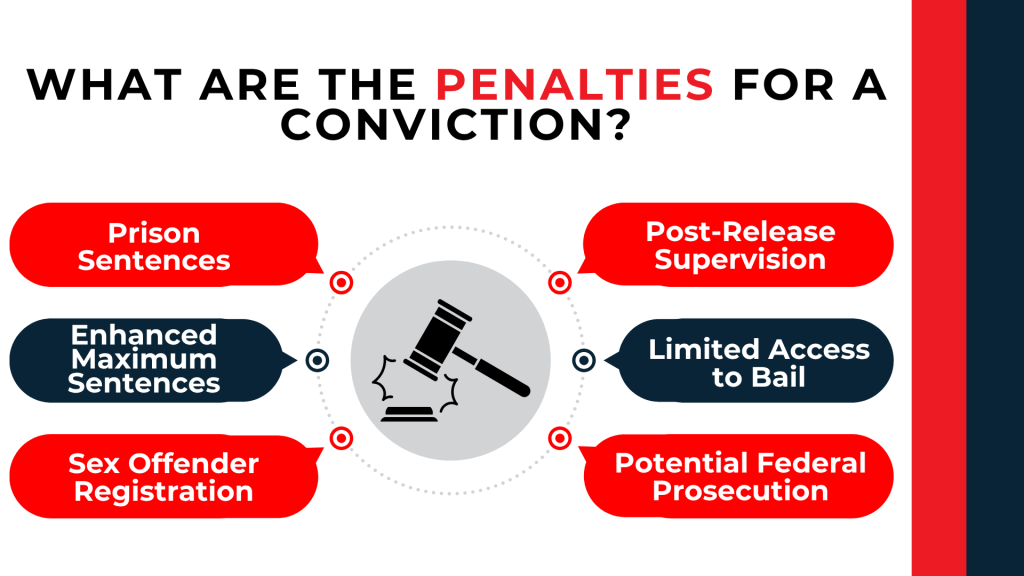
North Carolina sentences these offenses under the Structured Sentencing Act, which assigns a standard sentencing range based on the offense classification and the defendant’s prior record level.
The sentencing ranges by degree are:
- First-degree (Class C felony): 44 to 182 months
- First-degree (Class D felony): 38 to 160 months
- Second-degree (Class E felony): 15 to 63+ months
- Third-degree (Class H felony): 5 to 29 months, depending on prior record level
These ranges carry a critical enhancement. Under N.C.G.S. § 15A-1340.17(f), Class B1 through E felonies requiring sex offender registration are subject to an enhanced maximum sentence calculated at 120% of the minimum plus 60 additional months. This means the gap between the minimum and maximum sentence for sexual exploitation convictions at those felony classes is much wider than for comparable non-sex felonies.
The data on how courts actually sentence these cases leaves no doubt about how serious these cases are. According to the NC Sentencing and Policy Advisory Commission’s FY 2024 report, 100% of Class B1 through D felony sex offense convictions received active imprisonment — not probation, not intermediate punishment. Person offenses as a category carry the highest active punishment rate of any crime type in North Carolina, with 62% receiving active sentences, 28% intermediate, and 10% community punishment.
Sex offenses also carry 60 months of post-release supervision upon release from prison, compared to 9 to 12 months for other felony offenses. For defendants awaiting trial, the timeline is long. The median time from charge to sentencing for Class B1 felonies is 30 months. The average time spent in pretrial detention is 27 months. NC law requires a district or superior court judge — not a magistrate — to set pretrial release conditions for sex offense defendants, making bail harder to obtain from the start.
Federal prosecution raises the stakes further. If the case is picked up at the federal level, 99.2% of federal sexual abuse offense convictions result in prison, with an average sentence of 273 months — nearly 23 years — for child pornography production.
How Can a Defense Attorney Challenge These Charges?
Sexual exploitation cases are built on digital evidence and constitutional procedures, which means they create specific, well-defined ways to fight the charges. None of this guarantees a particular outcome, but each one addresses an element the prosecution must prove or a procedure the government must follow.
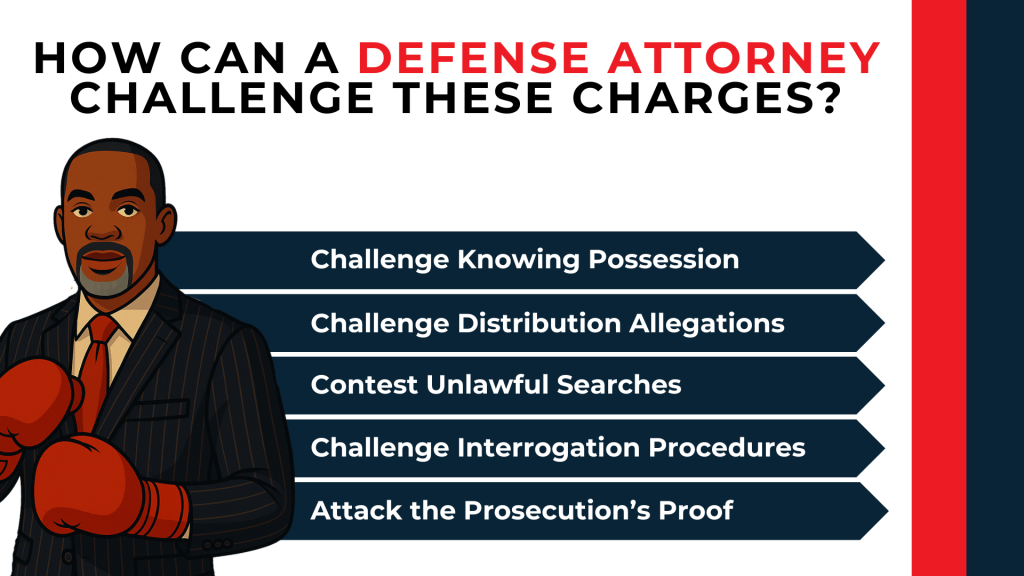
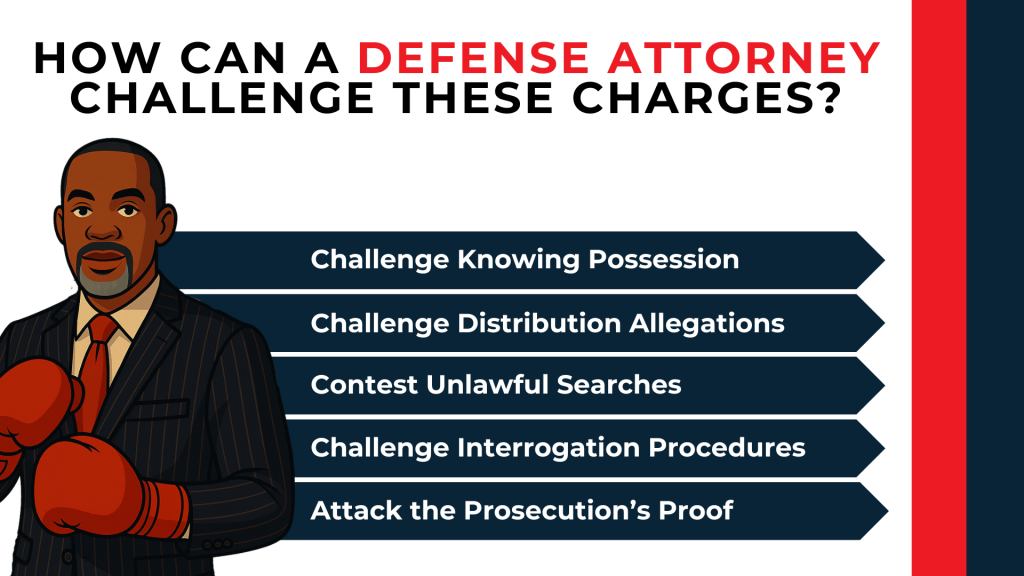
Challenging “knowing” possession. The state must prove the defendant knowingly possessed the material. A defense investigation examines whether material was automatically downloaded, cached, or planted on a device without the defendant’s knowledge or intent. A forensic expert can analyze metadata, timestamps, and user access patterns to determine whether you actually accessed or controlled the material.
Challenging distribution evidence. In second-degree cases, the state must prove intentional distribution. One key approach is distinguishing intentional sharing from automatic backup or peer-to-peer software default sharing. Forensic analysis can establish whether files were transferred through deliberate user action or through automatic software behavior.
Can the Police Search Your Phone or Computer Without a Warrant?
The U.S. Supreme Court held in Riley v. California, 573 U.S. 373 (2014), that police generally cannot search cell phones or digital devices incident to arrest without a warrant. North Carolina courts require particularized warrants for electronic device searches. Consent to search a home does not automatically include consent to search digital devices found inside. Defense challenges in this area focus on whether a valid warrant existed, whether the warrant specifically authorized forensic examination, and whether the search exceeded the scope of what the warrant permitted.
Cloud storage searches present additional issues. There is no controlling North Carolina authority on whether a warrant for a physical device extends to connected cloud services. Suppression motions may apply when cloud data is accessed without separate authorization.
What Protections Do You Have During Interrogation?
Miranda warnings are required before custodial interrogation. North Carolina law under N.C.G.S. § 15A-211 mandates recording of custodial interrogations for Class C sex offenses, which includes first-degree sexual exploitation. Failure to comply with this recording requirement is admissible evidence to support a claim that a confession was involuntary.
North Carolina is also a one-party consent state for recorded communications under N.C.G.S. § 15A-287. This means pretext phone calls arranged by law enforcement are lawful. However, the procedures used in those calls can be challenged for compliance with recording requirements.
These are not abstract legal theories. They map directly to the elements from the previous section: if the state cannot prove knowing possession, knowing distribution, or that evidence was lawfully obtained, the case weakens at its foundation.
What Happens After the Sentence Ends?
A conviction for any degree of sexual exploitation of a minor triggers consequences that extend far beyond the prison sentence. These long-term restrictions are what can most seriously reshape your daily life.
Sex offender registration. North Carolina requires 30 years of sex offender registration under N.C.G.S. § 14-208 et seq. Registration is not passive. It requires reporting in person to the county sheriff, with ongoing obligations: reporting any change of address within three business days, reporting changes to online identifiers within ten days, reporting changes in academic enrollment or employment at institutions of higher education, and reporting any legal name change.
Under N.C.G.S. § 14-208.9A, the NC Department of Public Safety mails a verification form to your last known address every six months. You must return it in person within three business days. Failure to comply with any registration or verification requirement is a Class F felony under N.C.G.S. § 14-208.11.
After ten years, you may petition the superior court to terminate the registration requirement under N.C.G.S. § 14-208.12A, but only if you have not been convicted of a subsequent registrable offense. The court must find that you have not been arrested for any registrable crime since completing the sentence, that termination complies with applicable federal standards, and that you are not a current or potential threat to public safety. The district attorney is entitled to notice and may oppose the petition. Victims may appear and be heard.
Location restrictions. Under N.C.G.S. § 14-208.18, registered sex offenders convicted of offenses under §§ 14-190.16, 14-190.17, or 14-190.17A are prohibited from knowingly being on the premises of places intended primarily for the use, care, or supervision of minors — schools, childcare centers, playgrounds, children’s museums. They are also restricted from places where minors frequently congregate, including libraries, arcades, amusement parks, recreation parks, and swimming pools, when minors are present. A separate provision creates a 300-foot restriction from certain locations intended for minors. Violations are a Class H felony. Limited exceptions exist for parents or guardians attending school conferences under strict supervision and notification protocols.
Immigration consequences. For non-citizens, the consequences can be immediate and irreversible. Under federal immigration law, sexual abuse of a minor is classified as an aggravated felony, which triggers mandatory deportation. The U.S. Supreme Court held in Padilla v. Kentucky, 559 U.S. 356 (2010), that defense counsel has a constitutional obligation to advise clients of the immigration consequences of a guilty plea. If you are not a U.S. citizen, your defense strategy must account for immigration exposure from the outset.
Employment, housing, and licensing. Sex offense convictions create barriers to employment and housing that persist for decades. Professional licensing boards may deny or revoke licenses based on the conviction. Public registry listings are accessible to employers, landlords, and the general public.
The scope of these consequences is why early intervention by a defense attorney matters. Decisions made at the investigation and charging stage — before trial, before plea negotiations — shape not just the criminal case but the decades that follow it.
Why the Defense Attorney You Choose for This Charge Matters
Sexual exploitation of a minor cases combine digital forensics, constitutional law, and some of the most severe sentencing and registration consequences in the North Carolina criminal code. The attorney handling this type of case needs to understand how digital evidence is collected, preserved, and challenged; how Fourth and Fifth Amendment protections apply to electronic searches and interrogations; how North Carolina’s structured sentencing and enhanced maximums work for sex offenses; and how to navigate the collateral consequences — registration, location restrictions, immigration exposure — that follow a conviction.
Patrick Roberts of Patrick Roberts Law in Raleigh, North Carolina brings experience to these cases. As a former Assistant District Attorney in Wake, Johnston, and New Hanover counties, he understands how the state builds and evaluates sex crime prosecutions from the inside. He is the co-author of a legal book on defending internet sex crimes — the category that includes sexual exploitation charges. He is a graduate of Gerry Spence’s Trial Lawyers College, the National Criminal Defense College Trial Practice Institute, and the White Collar Criminal Defense College.
A graduate of Gerry Spence’s Trial Lawyers College and the NCDC Trial Practice Institute, Mr. Roberts holds an AV Preeminent rating and is a Top 100 Trial Lawyer. As a former prosecutor in Wake, Johnston, and New Hanover Counties, he leverages internal government insights to defend complex sex crime allegations.
Education & Advanced Training
An alumnus of Johns Hopkins University (#7 National University) and Duke University School of Law (#7 National Law School; #9 Criminal Law Program), Mr. Roberts has dedicated his career to honing his trial craft. He is a graduate of the prestigious Gerry Spence’s Trial Lawyers College and the National Criminal Defense College (NCDC) Trial Practice Institute, including the 2025 Cross-Examination Intensive.
Accolades & Peer Review
• Martindale-Hubbell AV Preeminent Rating: 5+ Consecutive Years
• Martindale-Hubbell Client Champion Platinum: 5+ Consecutive Years
• AVVO 10/10 “Superb” Rating: 15+ Consecutive Years
• The National Trial Lawyers: Top 100 Trial Lawyers
Mr. Roberts is a published author of two legal books and a lifetime member of the National Association of Criminal Defense Lawyers.
A Former Prosecutor’s Insight
Mr. Roberts’ defense strategy is informed by his tenure as an Assistant District Attorney in the Wake, Johnston, and New Hanover offices. This experience allows him to anticipate the tactics used by the state in complex sex crime litigation.
Jurisdictional Admissions
Qualified to handle cases at the highest levels, he is admitted to the U.S. Supreme Court, the Fourth Circuit Court of Appeals, and all North Carolina federal districts. He remains the sole North Carolina representative listed by the National Child Abuse Defense & Resource Center as of 2026.
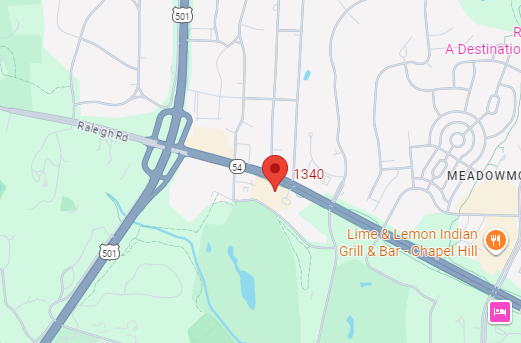
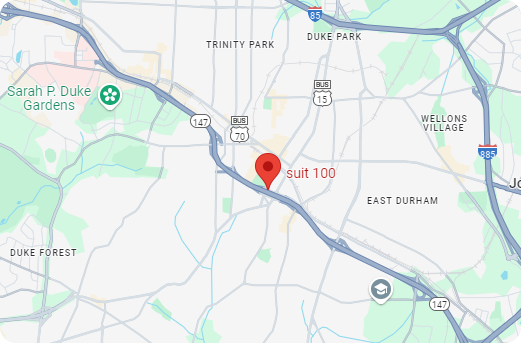
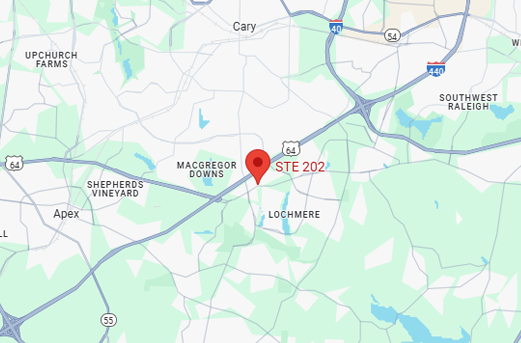
He is admitted to practice before the NC State Bar, all three federal district courts in North Carolina, the Fourth Circuit Court of Appeals, and the United States Supreme Court — which matters because sexual exploitation cases can be prosecuted at both the state and federal level. With more than 24 years of practice and thousands of criminal cases handled across North Carolina, he serves clients from offices in Raleigh, Durham, Chapel Hill, and Cary.
Case Review
- Charges: Two Counts of Second-Degree Exploitation of a Child (N.C.G.S. § 14-190.17)
- Defense Counsel: Attorney Patrick Roberts
- Facing: Up to 136 months of active prison time per count; Mandatory Lifetime Sex Offender Registration
- Final Disposition: Plea to two non-sex offense misdemeanors with probation
- Result*: No active prison time, no felony convictions, and no sex offender registration requirements
*Disclaimer: Each case is different and must be evaluated separately. Prior results achieved do not guarantee similar results can be achieved in future cases.
Summary and Allegations
The State initiated criminal proceedings against the client based on allegations of online misconduct involving a minor. Specifically, the state alleged that the client utilized online communication platforms to engage in sexually explicit conversations and exchange sexually explicit photographs with an individual under the age of majority.
Defense Strategy and Action Plan
1. Identification of Mitigating Psychological Factors
Upon reviewing the case file, the defense counsel identified that the alleged digital misconduct correlated with a pre-existing, documented psychological diagnosis. Rather than focusing solely on factual disputes regarding the online transmissions, the defense strategy integrated a clinical approach to address the underlying behavioral catalysts.
2. Medical Records and Expert Evaluation
The counsel executed a two-step clinical evaluation process:
- Records Retrieval: Counsel compiled and audited the client’s historical psychiatric and mental health records to establish a clear medical history.
- Expert Engagement: Counsel retained a qualified independent mental health professional well-experienced in evaluating individuals accused of sexual misconduct. This professional conducted a comprehensive diagnostic assessment of the client to establish a nexus between the psychological condition and the alleged behavior.
3. Mitigated Plea Negotiation
Armed with the clinical evaluation and verified medical history, defense counsel initiated formal negotiations with the prosecution. The objective was to shift the prosecutor’s perspective from a standard punitive approach to one focused on managed treatment and rehabilitation, demonstrating that the behavior was a manifestation of a clinical condition rather than predatory intent.
Disposition and Legal Analysis
The presentation of documented mitigating mental health factors fundamentally altered the trajectory of the state’s prosecution strategy.
In criminal defense, presenting a verified psychological profile allows the prosecution to exercise structured discretion. By demonstrating that the client was actively engaged in addressing the clinical roots of the behavior, defense counsel provided the state with a viable alternative to long-term incarceration.
Disclaimer: Each case is different and must be evaluated separately. Prior results achieved do not guarantee similar results can be achieved in future cases.
Client Review
“Mr.Roberts was a great attorney to work with. From the start he was confident and transparent with us. He told us he had other strategies as back up in case his main one didn’t go as planned. That showed us that he was prepared for any obstacle that was coming his way. We went to the first court hearing and waited, we then saw Mr. Roberts walk in with confidence and his head up high. He looked fearless and ready. That day we were the first ones out, we were in there for probably 10 minutes. The one thing that stuck with me that he said was “don’t be scared because I’m not scared.” He was good at communicating with us and keeping us informed with what was going on and when the next court dates would be. Overall he was a good attorney to work with, he dedicates and puts his time into your case and will work on it for however long he will need to whether it’s lengthy or not.” – Verified client review via Avvo.com
Peer Endorsement
“I knew Patrick when he was an assistant District Attorney, and was also impressed with his high ethical standards, and his reasoned and experienced approach in handling his cases. He is an exemplary attorney and I highly recommend him.” – Verified peer endorsement via Avvo.com
Disclaimer: Testimonials and peer reviews are for informational purposes only and do not guarantee or predict the outcome of your legal matter. Every case is unique and must be evaluated on its own merits. All endorsements featured on this site are actual comments from clients and peers.
If you or someone close to you is facing a sexual exploitation of a minor charge or investigation in North Carolina, the consultation is confidential. Contact Patrick Roberts Law to discuss the facts of the case and understand the options available.
To maintain the quality of the defense and provide each client with individualized attention, the law firm limits the number of cases we accept at any given time.
Disclaimer: The information on this website is for general informational purposes only. Nothing herein should be taken as legal advice for any individual case or situation. Contacting us via this website, email, or contact form does not create an attorney-client relationship. Case results depend on a variety of factors unique to each case; prior results do not guarantee a similar outcome.
Former assistant district attorney
Contact Patrick Roberts
Facing criminal charges in North Carolina demands seasoned representation. Trust in the experience and dual perspective of Patrick Roberts. Reach out today for a confidential consultation.
-
Call Our Team
Calls answered 24/7






For more information on the selection criteria, go to www.martindale.com
*Each case is different and must be evaluated separately. Prior results achieved do not guarantee similar results can be achieved in future cases.