
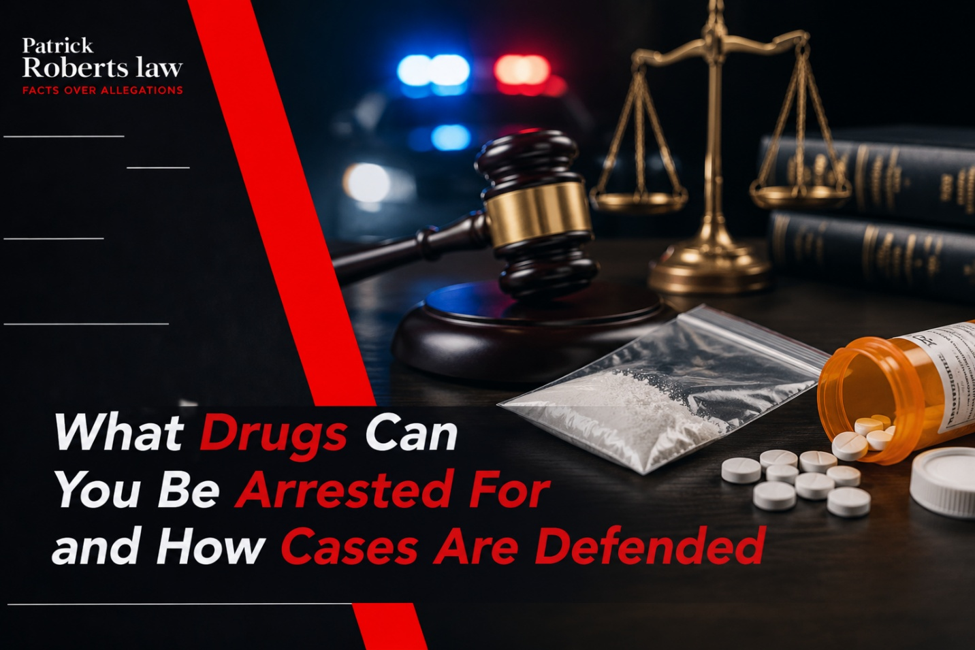
If you were arrested or are under investigation for drug-related offenses in Raleigh, NC, you need immediate legal protection. Call 919-746-7206 or submit a confidential request through our contact page to speak with a criminal defense attorney today. Early intervention can significantly change how your case is charged, prosecuted, and resolved.
Drug Charges Lawyer in Raleigh, NC: Understanding What You Are Facing
Drug arrests in Raleigh and across Wake County often happen quickly and escalate even faster. Many people are shocked to learn that simple possession, prescription medication issues, or paraphernalia allegations can lead to serious felony charges.
A skilled criminal defense strategy is critical because drug cases are often built on:
- Traffic stops
- Search warrants
- Informant tips
- Surveillance
- Lab testing assumptions
- Constructive possession allegations
Without immediate legal intervention, prosecutors gain leverage early in the process.
What Drugs Can You Be Arrested For in Raleigh, NC? (Controlled Substances Guide)
North Carolina classifies controlled substances into schedules based on medical use and abuse potential. Arrests can occur for possession, distribution, trafficking, or intent to distribute—even without physical sale evidence.
Below is a clear breakdown of commonly charged substances in Raleigh drug cases.
Schedule I Controlled Substances (High Restriction / No Accepted Medical Use)
Commonly prosecuted substances include:
- Heroin
- LSD
- Ecstasy (MDMA)
- Peyote
- Psilocybin (mushrooms)
Typical charges:
- Simple possession
- Possession with intent to distribute
- Drug trafficking attorney level allegations (based on weight thresholds)
- Manufacturing or cultivation
Common penalties:
- Felony conviction
- Mandatory prison exposure for trafficking quantities
- Permanent criminal record impact
Schedule II Controlled Substances (High Abuse Potential, Limited Medical Use)
Common substances include:
- Cocaine
- Methamphetamine
- Oxycodone (OxyContin, Percocet)
- Fentanyl
- Adderall (non-prescribed)
- Morphine
Arrestable offenses:
- Possession
- Possession with intent to sell or distribute
- Trafficking (based on weight)
- Prescription fraud or forged prescriptions
Penalty exposure:
- Felony sentencing ranges
- Mandatory minimum prison terms in trafficking cases
- Enhanced penalties near schools or protected zones
Learn more about how these cases are defended through our drug charges defense resources.
Schedule III–V Substances (Prescription-Based Controlled Drugs)
Common examples include:
- Ketamine (Schedule III)
- Anabolic steroids
- Xanax (Alprazolam)
- Valium (Diazepam)
- Codeine-based medications
Arrest scenarios:
- Possession without valid prescription
- Prescription fraud or doctor shopping
- Intent to distribute prescription medication
- Illegal pharmacy diversion cases
Even prescription-related arrests can result in felony charges depending on quantity and intent.
Common Drug-Related Offenses in Raleigh, NC
Drug arrests in Wake County typically fall into one or more of the following categories:
- Possession: Simple possession of a controlled substance without intent to sell.
- Possession With Intent to Distribute: Often based on circumstantial evidence such as packaging materials, scales, cash, or text messages.
- Drug Trafficking: Charges based primarily on weight thresholds, not intent.
- Transport or Distribution: Allegations involving movement or sale of controlled substances.
- Prescription Fraud: Forgery, unauthorized use, or doctor shopping.
- Drug Paraphernalia: Items allegedly associated with drug use or distribution.
Even everyday objects can be classified as paraphernalia depending on context.
Why Drug Cases in Raleigh Require Immediate Legal Action
Drug cases are highly evidence-driven and often depend on:
- Whether the search was legal
- Whether probable cause existed
- Chain of custody of evidence
- Lab testing accuracy
- Witness credibility
A strong defense may involve suppression of evidence, dismissal motions, or reduction of charges. A knowledgeable criminal defense attorney will evaluate every detail of the stop, search, and arrest process.
What Happens After a Drug Arrest in Raleigh, NC?
If you are arrested, your case may involve:
- Booking and bond hearing
- Evidence review by prosecutors
- Discovery process
- Plea negotiations or trial preparation
However, early legal intervention can sometimes prevent charges from being filed, reduce felony exposure, suppress illegally obtained evidence, and improve negotiation leverage.
Why Clients Choose Patrick Roberts for Drug Defense
Patrick Roberts represents clients across Raleigh and North Carolina facing serious drug allegations and felony-level exposure. His defense strategy is built on trial preparation, constitutional challenge, and thorough case analysis.
Legal Education
- Duke University School of Law (#9 in criminal law program)
- The Johns Hopkins University (Top 7 in nationwide ranking)
Advanced Trial Training
- Gerry Spence Trial Lawyers College graduate
- National Criminal Defense College (NCDC) Trial Practice Institute graduate
- 2025 NCDC Cross-Examination Intensive
Professional Recognition
- AV Preeminent® Rating (2026) — highest peer-reviewed distinction
- AVVO 10/10 “Superb” rating for over 15 years
- Client Champion Platinum (5+ consecutive years)
- Lifetime member of the National Association of Criminal Defense Lawyers (NACDL)
- Only North Carolina attorney listed on the National Child Abuse Defense & Resource Center (2026)
Federal Court Authority
- United States Supreme Court admission
- Fourth Circuit Court of Appeals admission
Peer Endorsements and Legal Reputation
“I have always found Patrick to be well prepared and effective. He is intelligent, proactive, and thinks outside the box. He has a lot of experience in many different areas and this enables him to be particularly effective for his clients.” — Verified Peer endorsement via Martindale Hubbell
View additional peer endorsements through Martindale-Hubbell attorney reviews.
Client Experience and Real Case Feedback
“I highly recommend this attorney to anyone needing experienced and knowledgeable legal representation. From the beginning, he clearly explained the steps necessary to address my situation and made sure I understood the process along the way… His experience and attention to detail ultimately helped lead to a very positive outcome in my case.” — Verified client feedback via AVVO Client Review (2026)
Disclaimer: Testimonials and peer reviews are for informational purposes only and do not guarantee or predict the outcome of your legal matter. Every case is unique and must be evaluated on its own merits.
Proactive Strategies in Criminal Defense
A drug arrest initiates a specific legal timeline, but the final outcome is heavily influenced by the defense strategy deployed. Utilizing a structured legal defense allows an individual to systematically challenge the state’s evidence, negotiate for reduced charges, explore alternative sentencing, or seek a dismissal where law enforcement protocols were compromised.
Establish Your Defense with Patrick Roberts Law
Navigating drug allegations in Raleigh, NC, requires prompt evaluation of police reports, witness statements, and physical evidence. Initiating a legal review early in the judicial process provides defense counsel with the maximum opportunity to identify evidentiary weaknesses and preserve vital procedural options.
To discuss the specific details of your case, you can connect directly with a defense attorney:
- Phone: 919-746-7206
- Case Review: Submit a confidential inquiry through our contact page to schedule a professional consultation.
The law firm maintains a selective caseload to ensure the integrity of their defense strategies and the thoroughness of their trial preparation.
Disclaimer: The information on this website is for general informational purposes only. Nothing herein should be taken as legal advice for any individual case or situation. Contacting us via this website, email, or contact form does not create an attorney-client relationship. Case results depend on a variety of factors unique to each case; prior results do not guarantee a similar outcome.
Former assistant district attorney
Contact Patrick Roberts
Facing criminal charges in North Carolina demands seasoned representation. Trust in the experience and dual perspective of Patrick Roberts. Reach out today for a confidential consultation.
-
Call Our Team
Calls answered 24/7






For more information on the selection criteria, go to www.martindale.com
*Each case is different and must be evaluated separately. Prior results achieved do not guarantee similar results can be achieved in future cases.