
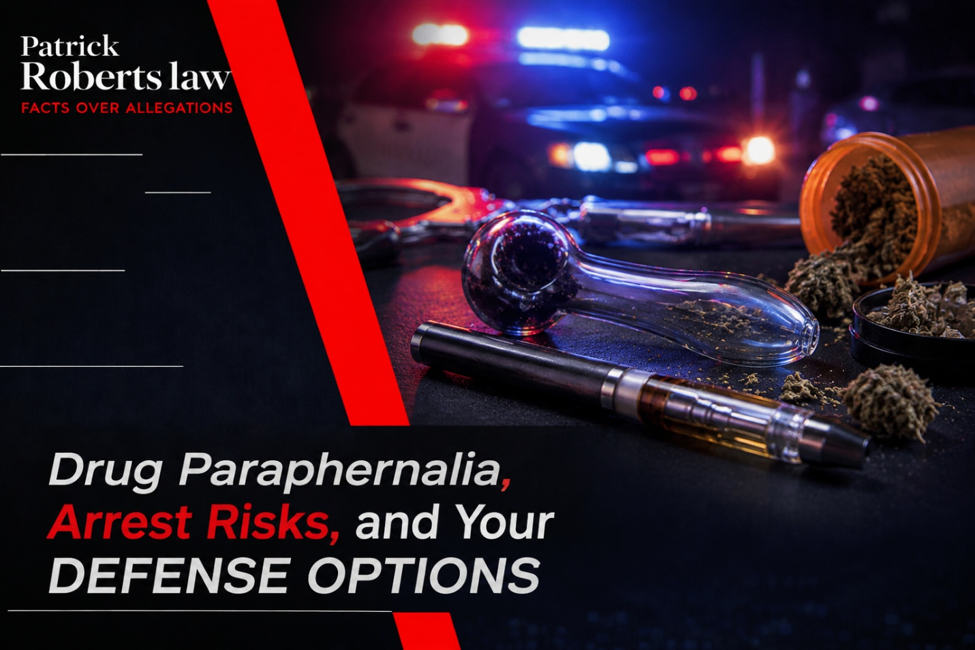
Legal Representation for Drug and Paraphernalia Charges in Raleigh, NC
Facing legal allegations involving controlled substances or drug paraphernalia in North Carolina requires a clear understanding of the state’s criminal statutes. Under North Carolina law, drug offenses span from misdemeanor possession to felony trafficking, and the legal consequences depend heavily on the classification of the substance and the specific facts of the arrest.
Legal cases involving drug allegations can affect professional licensing, background checks, and long-term legal records. Preparing an organized defense early in the judicial process is crucial to addressing these allegations effectively.
If you are navigating charges for drug possession, paraphernalia, or drug trafficking, you can consult with a criminal defense attorney to evaluate the state’s evidence and discuss your legal options.
Contact our Raleigh office to review your case:
- Phone: 919-746-7206
- Consultation: Schedule a case evaluation with a drug defense attorney in Raleigh, NC.
Drug Paraphernalia Charges under North Carolina Law
In North Carolina, individuals can face criminal charges for the possession or distribution of drug paraphernalia even if no controlled substances are seized at the time of the arrest.
Because North Carolina statutes define paraphernalia broadly, law enforcement officers frequently rely on circumstantial evidence and the context of the seizure to determine if an object violates the law. This subjective evaluation can sometimes result in exaggerated or inaccurate charges.
Items Regularly Classified as Paraphernalia:
- Ingestion Devices: Pipes, bongs, vaporizers, or rolling papers.
- Storage and Packaging: Small plastic baggies, vials, or specialized containers.
- Measurement Tools: Digital scales or balances used for weighing substances.
- Delivery Systems: Syringes, needles, or compounding equipment.
- Residue: Any object containing traceable amounts or suspected residue of a controlled substance.
Because these cases are highly fact-dependent, a thorough defense typically involves examining whether the state meets its burden of proof regarding the intended use of the item.
How Does Drug Paraphernalia Lead to Arrest in Raleigh?
In Raleigh and Wake County, paraphernalia-related arrests often arise from traffic stops, searches, or investigations where no actual drugs are found.
Police may rely on:
- Alleged residue or field testing
- Statements made during questioning
- Packaging materials
- Proximity to suspected substances
- Officer interpretation of intent
Common real-world scenarios:
- A vehicle stop where a pipe is discovered in the glove compartment
- A shared residence where items are found in common areas
- A traffic stop where packaging materials are interpreted as distribution tools
These situations can quickly escalate into drug possession cases or felony investigations.
When Does Paraphernalia Become Felony Drug Charges?
What begins as a minor allegation can escalate into:
- Simple possession
- Possession with intent to sell or distribute
- Drug trafficking offenses
- Federal drug investigations
Trafficking charges are often based on quantity thresholds and can carry mandatory minimum sentences.
A skilled drug trafficking lawyer can challenge:
- Search and seizure violations
- Chain of custody issues
- Lack of intent evidence
- Improper police procedures
Learn more about how Patrick Roberts defends against drug trafficking offenses in North Carolina.
What Do Prosecutors Use in Raleigh Drug Cases?
In Raleigh drug prosecutions, the state often builds its case using:
- Quantity of alleged substances
- Alleged paraphernalia
- Digital communications (texts, messages)
- Arrest location (school zones or high-enforcement areas)
- Prior criminal history
Even without drugs physically present, prosecutors may still pursue drug distribution attorney level charges.
Defense Strategies for Drug Paraphernalia and Drug Charges
Common defense strategies include:
- Illegal search and seizure under the Fourth Amendment
- Lack of ownership or knowledge
- No controlled substance present
- Misidentification of everyday objects
- Constitutional violations during arrest
Learn more about constitutional protections under the Fourth Amendment (U.S. Constitution).
Legal Considerations and Potential Outcomes After a Drug Arrest
Navigating a drug arrest involves addressing complex legal procedures and statutory requirements. Individuals facing these charges typically need to resolve specific operational and legal challenges, including:
- Understanding Judicial Procedures: Navigating the timelines, hearings, and formal requirements of the North Carolina court system.
- Assessing Collateral Consequences: Evaluating how potential outcomes might affect current employment, background checks, and professional licensing.
- Protecting Constitutional Rights: Identifying whether law enforcement adhered strictly to constitutional standards regarding searches, seizures, and interrogations.
- Determining Offense Classification: Analyzing whether the allegations carry misdemeanor or felony exposure based on the weight and schedule of the substance involved.
What are Potential Legal Outcomes in Criminal Defense?
Every case relies heavily on its unique factual and evidentiary circumstances. Depending on the state’s evidence and the defense strategy employed, potential resolutions to drug charges may include:
- Reduction of Charges*: Negotiating to lower the severity or classification of the offense.
- Case Dismissal*: Securing a dismissal if the state’s evidence is insufficient or if constitutional rights were violated during the investigation.
- Diversion Programs*: Utilizing alternative sentencing options, such as first-offender programs or drug courts, which can lead to a clean record upon successful completion.
- Mitigation of Long-Term Records*: Taking proactive steps to limit the impact of the arrest on an individual’s public background check.
*Disclaimer: Each case is different and must be evaluated separately. Prior results achieved do not guarantee similar results can be achieved in future cases.
The Advantage of Dedicated Criminal Defense Experience
Successfully challenging narcotics charges requires an in-depth understanding of both state and federal judicial procedures. Attorney Patrick Roberts has spent his career building targeted defense strategies for individuals facing complex drug prosecutions, state-level offenses, and federal investigations across North Carolina.
A sophisticated defense requires more than a standard courtroom appearance; it demands an analytical review of police conduct, independent evaluation of evidence, and skilled negotiation with prosecutors. Relying on dedicated criminal defense experience ensures that every procedural asset is utilized in your defense.
An alumnus of Johns Hopkins University and Duke University School of Law, Attorney Roberts applies his background as a former drug trafficking prosecutor in Wake and Johnston Counties to protect clients facing high-stakes felony charges. Having collaborated with interdiction teams to build complex conspiracy cases, he possesses a deep understanding of how the government assembles evidence, enabling him to strategically deconstruct the prosecution’s narrative. His trial history includes multi-week federal conspiracy litigation across the Eastern, Middle, and Western Districts of North Carolina. Admitted to the 4th Circuit Court of Appeals and the U.S. Supreme Court, he delivers a commanding defense in Wake County—covering Raleigh, Cary, Apex, Holly Springs, Garner, and Fuquay-Varina—and manages “bet the house” cases statewide.
Attorney Patrick Roberts’ List of Other Credentials:
- A lifetime member of the National Association of Criminal Defense Lawyers (NACDL)
- Trained in advanced cross-examination through a 2025 intensive with the National Criminal Defense College (NCDC)
- A graduate of the NCDC Trial Practice Institute, a rigorous two-week criminal defense program
- A graduate of the Gerry Spence Trial Lawyer College, a nationally recognized trial advocacy program
He is also:
- A Client Champion Platinum Attorney (2026) with more than five consecutive years of recognition
- AV Preeminent Peer Rated Attorney (2026) for over five years
- Rated 10/10 “Superb” by AVVO for more than 15 years
This combination of training and recognition reflects advanced courtroom strategy and high-level criminal defense capability.
Learn more About Patrick Roberts and his background and credentials.
Peer Endorsements and Client Trust
Attorney Patrick Roberts is highly regarded by fellow attorneys for his preparation, courtroom skill, and strategic defense work in complex criminal cases.
Client Review
“I highly recommend this attorney to anyone needing experienced and knowledgeable legal representation. From the beginning, he clearly explained the steps necessary to address my situation and made sure I understood the process along the way. He kept me informed as progress was being made and was always professional, responsive, and prepared. Although the legal process can move slowly at times, I always felt confident that my case was being handled properly. When my court date finally arrived, he was exceptionally well prepared and navigated the courtroom procedures with confidence and skill. His experience and attention to detail ultimately helped lead to a very positive outcome in my case. I truly appreciated his guidance and representation throughout the entire process.” – verified client review via Avvo.com
Peer Endorsement
“Patrick is one of the best defense attorneys in the area. He works very hard for his clients and he gets fantastic results.” – verified peer endorsement via Avvo.com
These evaluations reflect consistent respect within the legal community.
Disclaimer: Testimonials and peer reviews are for informational purposes only and do not guarantee or predict the outcome of your legal matter. Every case is unique and must be evaluated on its own merits. All endorsements featured on this site are actual comments from clients and peers.
About Patrick Roberts
Learn more About Patrick Roberts, his experience, and his criminal defense approach.
Areas Served in Raleigh and Across North Carolina
We represent clients throughout Raleigh and surrounding regions.
View all Areas served, Locations, and service regions.
Frequently Asked Questions
Can I be charged with drug paraphernalia without drugs present?
Yes. North Carolina law allows paraphernalia charges even without controlled substances if intent or use is alleged.
What should I do after a drug arrest in Raleigh?
You should contact a drug possession lawyer immediately and avoid speaking to law enforcement without representation.
Can drug paraphernalia charges be dismissed?
Yes, depending on evidence strength, legality of the search, and case circumstances.
What is the difference between possession and drug trafficking offenses?
Possession involves control of a substance, while trafficking is based on quantity thresholds and carries significantly harsher penalties.
Do I need a drug trafficking lawyer for a first-time charge?
Yes. First-time cases can still escalate into felony prosecutions without proper legal defense.
Consult with a Raleigh Defense Attorney
Early legal intervention provides the necessary time to preserve critical evidence, interview witnesses, and review police body-camera footage. If you are facing drug-related allegations charge in Raleigh, NC, you can initiate your defense by contacting our office directly.
- Phone: 919-746-7206
- Online Intake: Contact our firm to schedule a comprehensive, professional case evaluation.
Disclaimer: The information on this website is for general informational purposes only. Nothing herein should be taken as legal advice for any individual case or situation. Contacting us via this website, email, or contact form does not create an attorney-client relationship. Case results depend on a variety of factors unique to each case; prior results do not guarantee a similar outcome.
Former assistant district attorney
Contact Patrick Roberts
Facing criminal charges in North Carolina demands seasoned representation. Trust in the experience and dual perspective of Patrick Roberts. Reach out today for a confidential consultation.
-
Call Our Team
Calls answered 24/7






For more information on the selection criteria, go to www.martindale.com
*Each case is different and must be evaluated separately. Prior results achieved do not guarantee similar results can be achieved in future cases.