

Yes. In North Carolina, sharing someone’s intimate images without their consent is a felony for anyone 18 or older. The state classifies this offense — formally called “disclosure of private images” — as a Class H felony under N.C.G.S. § 14-190.5A. But the severity of the charge depends on the specific circumstances, including the defendant’s age and criminal history. Below is what you need to know about how North Carolina classifies these cases, what the penalties actually look like, and what to do next.
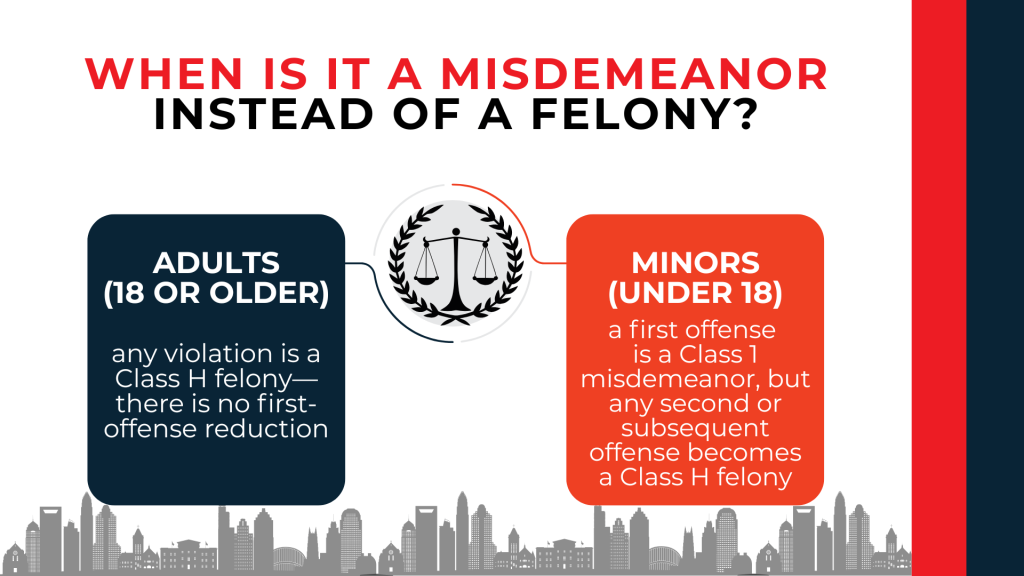
When is it a misdemeanor instead of a felony?
The distinction between a misdemeanor and a felony under this specific statute (§ 14-190.5A(c)) is determined strictly by two factors: age at the time of the offense and prior offense history.
Charge Classification Under § 14-190.5A(c)
| Offender Age at Time of Offense | Offense History | Charge Classification | Penalty Level |
| 18 Years or Older | First Offense | Felony | Class H Felony |
| 18 Years or Older | Second or Subsequent Offense | Felony | Class H Felony |
| Under 18 Years | First Offense | Misdemeanor | Class 1 Misdemeanor |
| Under 18 Years | Second or Subsequent Offense | Felony | Class H Felony |
Key Legal Takeaways
- The Age Cutoff: Reaching age 18 eliminates any possibility of a misdemeanor classification under this statute. Adults (18 and older) face an automatic Class H felony, even for a first-time offense.
- The “One-Time” Juvenile Exception: While minors (under 18) are granted leniency with a Class 1 misdemeanor for an initial violation, this mitigation disappears immediately upon a second offense, elevating subsequent charges to the same Class H felony faced by adults.
What are the penalties for a Class H felony conviction?
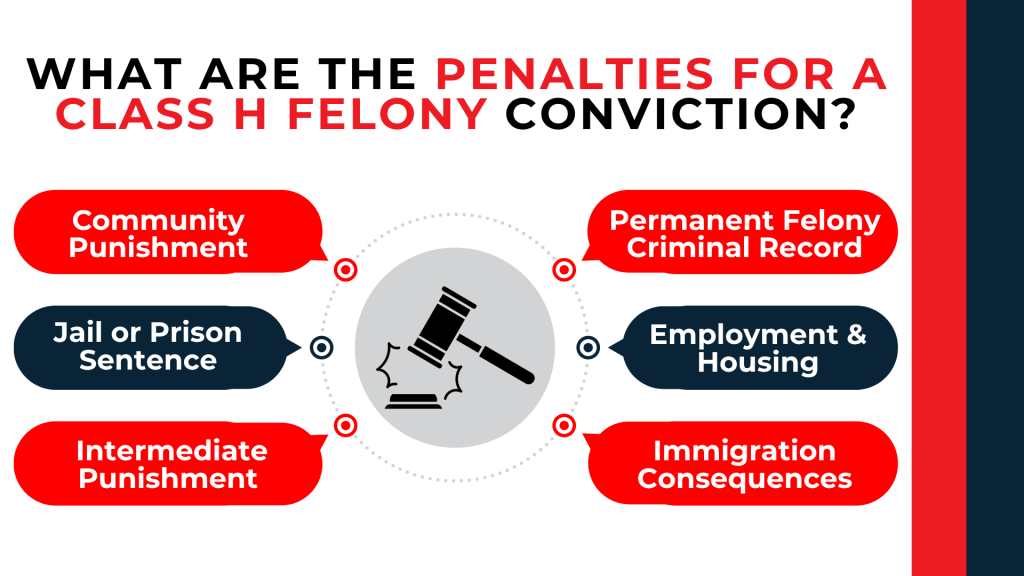
North Carolina uses a structured sentencing system where the actual punishment for any felony depends on two things: the offense class and the defendant’s prior record level. The state’s Structured Sentencing Act under N.C.G.S. § 15A-1340.10 et seq. sets default sentencing ranges for each combination of offense class and prior record.
For a Class H felony, a person with no criminal history will face a much different sentencing range than someone with prior convictions. At the lower end of the prior record scale, community or intermediate punishment — meaning probation with conditions — may be available. At higher prior record levels, prison time becomes the expected sentence.
Beyond the immediate sentence, the conviction itself is a felony on a permanent criminal record. In North Carolina, that carries lasting consequences for employment, housing, professional licensing, and — for non-citizens — potential immigration consequences including deportation. Sex offense convictions can trigger mandatory deportation when classified as an aggravated felony or a crime involving moral turpitude. Defense counsel has a constitutional obligation under Padilla v. Kentucky to advise non-citizen clients of these immigration consequences before any plea.
The question people often fail to ask at this stage is not just “how long could I go to prison” but “what does my life look like after this conviction follows me?”
What should I do right now?
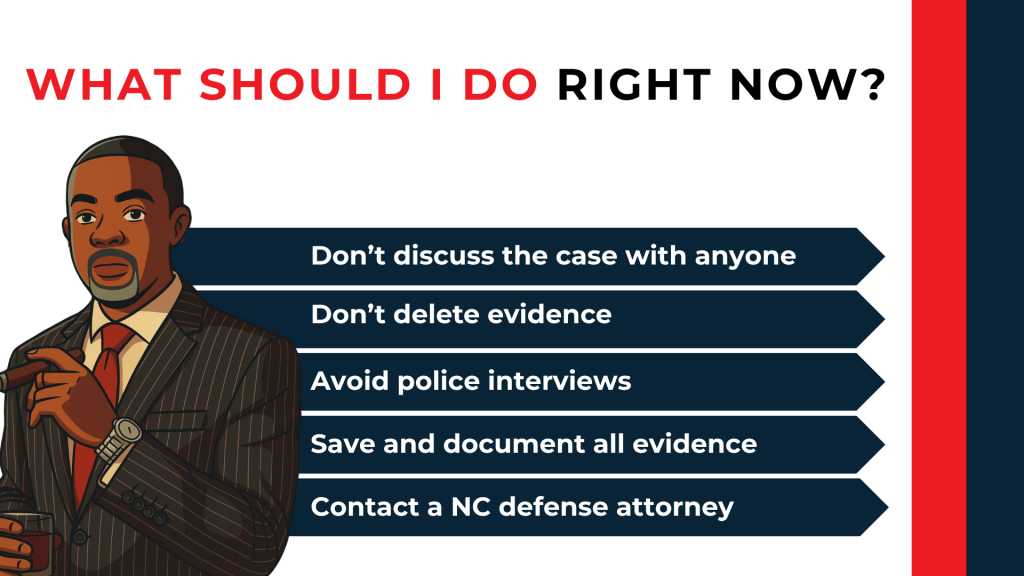
If you are facing a revenge porn accusation in North Carolina — or believe charges may be coming — stop communicating about the images with anyone other than an attorney. Do not delete messages, images, or posts, because destroying evidence can create additional legal problems. Do not speak to law enforcement without an attorney present.
If someone has shared your intimate images without your consent, document everything: screenshots, URLs, timestamps, and any communications from the person who shared them.
Either way, the next step is the same: talk to a criminal defense attorney who understands how these cases are charged and sentenced in North Carolina.
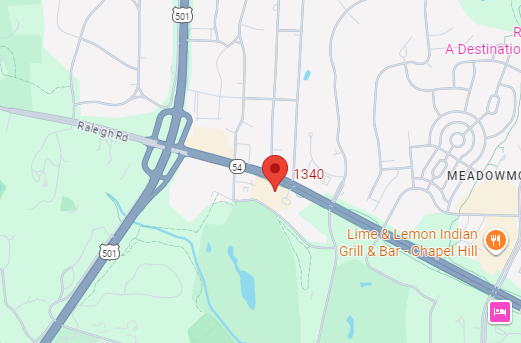
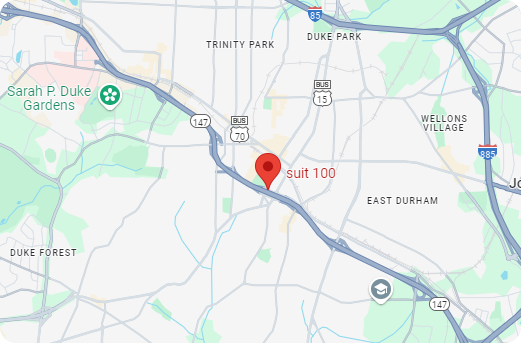
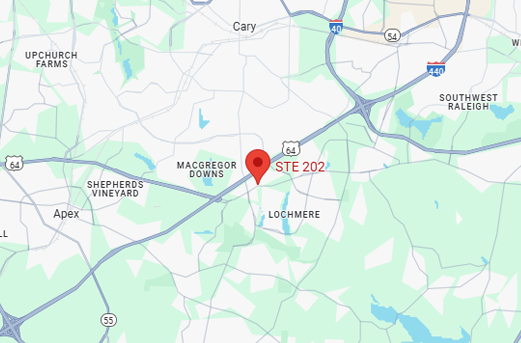
Attorney Patrick Roberts provides statewide defense for sex crimes from his offices in Raleigh, Durham, Chapel Hill, and Cary. He defends clients facing sex offense charges across North Carolina’s Triangle region. Backed by 24 years of practice and an education from the nation’s top-ranked institutions—Johns Hopkins and Duke University School of Law—he focuses on high-stakes litigation. Mr. Roberts is a graduate of the NCDC Trial Practice Institute and Gerry Spence’s Trial Lawyers College, contributing to his AV Preeminent status. Having served as a prosecutor in three North Carolina districts, he possesses a unique vantage point on how sex offense cases are built.
Education & Advanced Training
An alumnus of Johns Hopkins University (#7 National University) and Duke University School of Law (#7 National Law School; #9 Criminal Law Program), Mr. Roberts has dedicated his career to honing his trial craft. He is a graduate of the prestigious Gerry Spence’s Trial Lawyers College and the National Criminal Defense College (NCDC) Trial Practice Institute, including the 2025 Cross-Examination Intensive.
Accolades & Peer Review
• Martindale-Hubbell AV Preeminent Rating: 5+ Consecutive Years
• Martindale-Hubbell Client Champion Platinum: 5+ Consecutive Years
• AVVO 10/10 “Superb” Rating: 15+ Consecutive Years
• The National Trial Lawyers: Top 100 Trial Lawyers
Mr. Roberts is a published author of two legal books and a lifetime member of the National Association of Criminal Defense Lawyers.
Jurisdictional Admissions
Qualified to handle cases at the highest levels, he is admitted to the U.S. Supreme Court, the Fourth Circuit Court of Appeals, and all North Carolina federal districts. He remains the sole North Carolina representative listed by the National Child Abuse Defense & Resource Center as of 2026.
Client Review
“Mr. Roberts handled my son’s case with such care and concern for my son’s future. The outcome was positive, and we are grateful for all the hard work he did. Thank you so much, Mr. Roberts.” – verified client review via Avvo.com
Peer Endorsement
“I have known Patrick for years and have always been struck by his knowledge and dedication. I endorse him without hesitation or qualification.” – verified peer endorsement via Avvo.com
Disclaimer: Testimonials and peer reviews are for informational purposes only and do not guarantee or predict the outcome of your legal matter. Every case is unique and must be evaluated on its own merits. All endorsements featured on this site are actual comments from clients and peers.
Experienced Defense Against North Carolina Disclosure of Private Images Allegations
Navigating the complexities of North Carolina’s disclosure of private images laws requires an informed legal strategy. With strict sentencing guidelines and the potential for long-term collateral consequences, securing experienced counsel is a critical step in addressing these allegations.
Patrick Roberts brings over two decades of legal experience to your case, including a background as a former prosecutor in Wake, Johnston, and New Hanover counties. This dual perspective allows our firm to provide comprehensive representation based on a thorough understanding of how the state builds sex offense cases.
If you are seeking legal guidance, contact Patrick Roberts Law at 919-746-7206 or complete our online contact form to schedule a confidential consultation. Our office serves clients throughout Raleigh, Durham, Chapel Hill, and the surrounding North Carolina communities.
Disclaimer: The information on this website is for general informational purposes only. Nothing herein should be taken as legal advice for any individual case or situation. Contacting us via this website, email, or contact form does not create an attorney-client relationship. Case results depend on a variety of factors unique to each case; prior results do not guarantee a similar outcome.
Former assistant district attorney
Contact Patrick Roberts
Facing criminal charges in North Carolina demands seasoned representation. Trust in the experience and dual perspective of Patrick Roberts. Reach out today for a confidential consultation.
-
Call Our Team
Calls answered 24/7






For more information on the selection criteria, go to www.martindale.com
*Each case is different and must be evaluated separately. Prior results achieved do not guarantee similar results can be achieved in future cases.