Blog

All Criminal Defense Criminal Defense Lawyer Sex Defense Felony Charges Lawyer Drug Charges Sex Defense Lawyer Murder Charges Rape Case Statutory Rape Charges Drug Crimes & Violations Drug Trafficking Violent Crime Domestic Violence Child Exploitation Charges Indecent Liberties North Carolina Criminal Law Sexual Assault North Carolina Law Fentanyl Crimes indecent liberties with a minor Sex Crimes Sex Crimes Defense Sex Offender Registry Sexual exploitantion of minors Meth Trafficking Age of Consent Aggravated Sexual Assault Artificial Intelligence Child Enticement Charges child grooming Child Rape Constitutional Rights & Warrants Criminal Defense & Travel Law Criminal Justice Criminal Law Cybercrime Defense Data Privacy Digital Evidence Entrapment defense False Accusations Family Law Federal Offenses Indecent Exposure Legal Defense Strategies Legal Resources Legal Updates Possession with intent to sell Sex Crimes & Registry Sex Crimes Defense Strategies Sex Offender Registration Requirements Sex Offender Registry Compliance Sex Offense Defense Sexting Laws solicitation of a child by computer Solicitation of a Minor Charge State vs. Federal Laws Statute of Limitations Statutory Sex Offense
image

How to Beat an Indecent Exposure Charge in North Carolina

An indecent exposure charge can be beaten by attacking the specific elements the prosecution is required to prove — willfulness, public setting, presence of another person, and in some cases, sexual intent. If any one of those elements falls apart, the charge does not hold. Below, we break down exactly what the state must prove under North Carolina law, the defense strategies that challenge each element, and what is realistically at stake if you are convicted. more What Does North Carolina Have to Prove to Convict You of Indecent Exposure? North Carolina's indecent exposure law, N.C.G.S. § 14-190.9, is a tiered statute. Because it contains multiple subsections, the specific elements the prosecution must prove depend entirely on which version of the offense is charged. The common thread across all levels of this offense is the requirement that the act was done willfully, drawing a sharp legal line between intentional conduct and accidental exposure. What Are the Elements of a Standard Indecent Exposure Charge? Under subsection (a), which is the most common charge, the state must prove three specific elements beyond a reasonable doubt: Willful Exposure: You intentionally exposed the "private parts" of your person. Public Place: The exposure occurred in a location accessible to the public. Presence of Others: The act occurred in the presence of at least one other person. This is classified as a Class 2 misdemeanor. Notably, for this specific subsection, the state does not have to prove sexual intent—only that the act itself was willful and not accidental. When Does Indecent Exposure Become a Felony? The charge becomes significantly more severe under subsection (a1). The state can elevate the offense to a Class H felony if they can prove: The defendant is at least 18 years old. The exposure occurred in a public place in the presence of a minor under 16. The act was committed for the purpose of sexual arousal or gratification. This additional element of sexual purpose is a critical legal distinction. Furthermore, the statute specifies that this is not a "lesser included offense" of N.C.G.S. § 14-202.1 (Indecent Liberties). This means a defendant could potentially face both charges for the same underlying conduct. Other Specific Scenarios Under the Statute The law also covers exposure in non-public settings, typically classified as Class 2 misdemeanors: Private Premises (a2): Exposure on someone else's private property in the presence of a non-consenting adult for a sexual purpose. Non-Resident in a Private Home (a4): Exposure by an adult (18+) in a private residence where they do not live, while a minor resident is present. Intent to be Seen (a5): Exposure from a private place (such as a window) with the knowing intent to be seen by someone in a public place. What Defenses Actually Work Against an Indecent Exposure Charge? The "Willful" Defense Across every subsection, the prosecution's heaviest burden is proving that the act was willful. Because the statute excludes accidental exposure, the defense often centers on the lack of intent, which is a foundational element required for any conviction under N.C.G.S. § 14-190.9. The right strategy depends on the facts of your case, but these are the legal arguments that a skilled sex crime defense attorney evaluates first. The exposure was not willful. This is the most common and often the strongest defense. If the exposure was accidental — a clothing malfunction, a medical episode, being caught mid-change in a situation where privacy was reasonably expected — the willfulness element may not be met. The statute requires that the act be willful, and an attorney can present evidence that the exposure was unintentional to challenge that element directly. The location was not public. The statute requires that the exposure occur in a "public place" for most subsections. If the incident happened in a private home, a locked vehicle, a bathroom, or another location where you had a reasonable expectation of privacy, the prosecution may not be able to satisfy this element. The line between public and private is not always obvious, and challenging the state's description of the location is a recognized defense. No one was actually present. The statute requires exposure "in the presence of" another person. If the state cannot prove that another person was present at the time of the alleged exposure — or that the exposure was visible to anyone — this element fails. Witness testimony is often the only evidence in indecent exposure cases. If that testimony is inconsistent, unreliable, or unsupported, the prosecution's case has a serious gap. The act lacked sexual purpose. For the felony charge under subsection (a1) and the private-premises misdemeanor under (a2), the state must prove the exposure was done "for the purpose of arousing or gratifying sexual desire." This is a state of mind that prosecutors must prove beyond a reasonable doubt. If there is no evidence of sexual motivation — no sexually suggestive conduct, no statements indicating sexual intent — the prosecution may be unable to establish this element. Nudity alone, without evidence of sexual purpose, may not satisfy the felony standard. Mistaken identity. In cases based on witness reports rather than physical evidence, identification errors occur. Lighting conditions, distance, brief observation, and the stress of the situation can all contribute to misidentification. If you were not the person involved, your attorney can challenge the reliability of the identification through cross-examination and, where applicable, independent evidence of your whereabouts. The statutory exception applies. The statute itself carves out an explicit exception: exposure in places "designated for a public purpose where the same sex exposure is incidental to a permitted activity." Locker rooms, shared changing areas, and similar facilities fall under this exception. North Carolina law also explicitly protects breastfeeding under subsection (b), providing that a woman may breastfeed in any public or private location where she is otherwise authorized to be. What Are You Facing if Convicted? Will You Have to Register as a Sex Offender? This is the question behind most searches for how to beat an indecent exposure charge. The answer depends entirely on which subsection you are charged and convicted under. Misdemeanor indecent exposure under subsection (a) is a Class 2 misdemeanor. Penalties are determined under North Carolina's Structured Sentencing Act and depend on your prior record level. Even without a lengthy sentence, a misdemeanor conviction still creates a permanent criminal record, which can affect employment, housing, professional licensing, and personal relationships. Felony indecent exposure under subsection (a1) is a Class H felony. This carries potential prison time and much more severe long-term consequences. Subsection (a1) involves exposure to a minor for the purpose of sexual gratification. Because of that, it may be classified as a sexually violent offense under N.C.G.S. § 14-208.6, which can trigger mandatory sex offender registration. Under the NC Sex Offender Registry (Article 27A), standard registration lasts 30 years. You may be able to petition for termination after 10 years if you are not classified as a repeat offender, aggravated offender, or sexually violent predator. North Carolina currently has approximately 25,000 or more registered sex offenders. The consequences of being on the registry are severe: your address becomes publicly searchable, you face restrictions on where you can live and work, and you must comply with ongoing verification requirements. Whether registration applies to your specific charge depends on the subsection, the circumstances, and the date of the offense. This is one of the most important questions to discuss with your attorney early in the process. The additional consequences of any sex offense conviction extend further. As documented in the research, sex offense convictions can trigger immigration deportation — often mandatory for non-citizens. Padilla v. Kentucky, 559 U.S. 356 (2010), requires defense counsel to advise clients of immigration consequences before any guilty plea. Professional licensing boards may revoke or deny licenses based on a conviction. Housing and employment restrictions can follow a conviction for years. The gap between a misdemeanor and a felony conviction in an indecent exposure case is not just a matter of degree — it is the difference between a criminal record and a permanently altered life. That gap is exactly why the quality of your defense matters. Why Does Who You Hire Matter for These Charges? Indecent exposure cases in North Carolina depend on statutory elements that are far more technical than most realize. A conviction or a dismissal often hinges on an attorney’s ability to systematically dismantle the state's proof regarding willfulness, the legal definition of a "public place," and the specific presence requirements. In felony cases, the challenge is even greater, as the prosecution must prove a specific sexual purpose. Furthermore, the long-term consequences—including potential Sex Offender Registry requirements—vary drastically depending on which specific subsection is charged. The Advantage of Prosecutor-Side Experience Attorney Patrick Roberts has defended clients facing sex offense allegations at every level, from misdemeanors to high-level felonies. As a former Assistant District Attorney in Wake, Johnston, and New Hanover counties, he understands the internal mechanics of how these cases are built. Prosecutorial Insight: He knows which evidence prosecutors prioritize and where the structural gaps in their arguments typically lie. Trial Record: Since 2007, he has tried hundreds of bench and jury trials in both state and federal courts. National Credentials and Local Knowledge Attorney Roberts' credentials reflect a career dedicated to trial advocacy and ethical practice: Academic Background: Graduate of Duke University School of Law ( Top 9 best criminal law program) and The Johns Hopkins University ( Top 7 rank in National Universities). Advanced Training: Completed intensive training programs, including Gerry Spence’s Trial Lawyers College and the NCDC Cross-Examination Intensive (2025). Peer-Recognized: AV Preeminent Peer Rated by Martindale-Hubbell (2026)—the highest rating for legal ability and ethics, held for over five consecutive years. Client Commitment: Client Champion Platinum (2026) award recipient and maintains a 10/10 "Superb" Avvo rating for over 15 years. Targeted Resources: He is the only North Carolina lawyer listed on the National Child Abuse Defense & Resource Center (as of 2026). Attorney Roberts is admitted to practice before the United States Supreme Court, the Fourth Circuit Court of Appeals, and all Federal District Courts in North Carolina. Client Review "Mr. Roberts was a great attorney to work with. From the start he was confident and transparent with us. He told us he had other strategies as back up in case his main one didn't go as planned. That showed us that he was prepared for any obstacle that was coming his way. We went to the first court hearing and waited, we then saw Mr. Roberts walk in with confidence and his head up high. He looked fearless and ready. That day we were the first ones out, we were in there for probably 10 minutes. The one thing that stuck with me that he said was 'don't be scared because I'm not scared.' He was good at communicating with us and keeping us informed with what was going on and when the next court dates would be. Overall he dedicates and puts his time into your case and will work on it for however long he needs to." — Verified client review on Avvo.com Peer Endorsement "Very talented and intuitive criminal lawyer." — Martindale-Hubbell verified Peer Endorsement Disclaimer: The testimonials are actual comments. Every case is different and depends on its own unique facts and legal circumstances. These results are illustrative of the matters the firm handles but do not guarantee, warrant, or predict a similar outcome in your legal matter. Indecent Exposure Defense in North Carolina Those facing an indecent exposure charge in Raleigh, Durham, Chapel Hill, or Cary can receive a strictly confidential consultation at Patrick Roberts Law. The firm provides a professional, judgment-free environment centered on a technical analysis of the elements the state must prove under N.C.G.S. § 14-190.9. Attorney Patrick Roberts offers a clear-eyed assessment of the defenses available and the specific legal consequences involved in both misdemeanor and felony-level accusations. Targeted Case Management To maintain a rigorous focus on evidence review and complex litigation, the firm limits the number of active cases the firm handles. This selective approach ensures that each defense receives the comprehensive preparation required to challenge the state’s narrative effectively. Schedule a Private Case Evaluation Navigating the tiered nature of North Carolina sex offense statutes requires a precise understanding of Structured Sentencing and the specific criteria for the NC Sex Offender Registry. Contact Patrick Roberts Law today to request a private evaluation. Disclaimer: The information on this website is for general informational purposes only and does not constitute legal advice for any individual case or situation. Contacting us via this website, email, or contact form does not create an attorney-client relationship. Each case is different and must be evaluated separately; prior results do not guarantee a similar outcome.

image

Statute of Limitations on Sexual Assault in North Carolina

Most felony sexual assault charges in North Carolina have no statute of limitations. That means the state can bring charges five, ten, or twenty years after the alleged offense — there is no deadline. Because nearly every sexual assault offense in North Carolina is classified as a felony, this rule applies to the vast majority of cases. That single fact shapes everything that follows. It matters whether you are trying to understand your legal options after an assault, whether you have just learned of an allegation against you from years ago, or whether you are a family member trying to make sense of the process for someone you care about. But the full picture has layers. One category of sexual offense — misdemeanor sexual battery — does carry a time limit. Civil lawsuits operate on an entirely separate timeline from criminal charges. And recent changes to North Carolina law have shifted several of these deadlines significantly. Below is what you need to know, organized around the questions people in this situation are actually asking. more Is There a Statute of Limitations on Sexual Assault in North Carolina? For felony sexual assault, the answer is no. North Carolina is unique in that it does not impose a statute of limitations on any felony. Because rape, sexual offenses, statutory rape, and indecent liberties are all classified as felonies under North Carolina law, prosecutors are not restricted by a filing deadline. While many states impose windows of three, ten, or twenty years for serious offenses, North Carolina allows a prosecutor to file felony charges at any point, regardless of how much time has passed since the alleged incident.The only sexual assault offense in North Carolina that carries a time limit is misdemeanor sexual battery. Under N.C.G.S. § 14-27.33, this charge involves non-consensual sexual contact for the purpose of arousal, gratification, or abuse. Because it is a misdemeanor, it is the only offense of this nature subject to a filing deadline. What Is the Time Limit for Misdemeanor Sexual Battery Charges? The filing deadline for misdemeanor sexual battery depends entirely on when the alleged offense occurred, due to significant legislative changes. How Did the SAFE Child Act Change the Deadline? Before December 1, 2019, misdemeanor sexual battery generally carried a two-year statute of limitations. However, the SAFE Child Act (Session Law 2019-245) extended this period significantly. For offenses committed on or after December 1, 2019, the statute of limitations is now 10 years. Which Deadline Applies to Your Case? Generally, the statute of limitations in effect at the time of the alleged offense is the one that applies: Offenses before Dec. 1, 2019: Typically subject to the two-year deadline. Offenses on or after Dec. 1, 2019: Generally subject to the 10-year deadline. Example: If an allegation of unwanted sexual touching involves conduct from March 2021, prosecutors generally have until March 2031 to file charges. However, if the same conduct allegedly occurred in 2017, the two-year window would have closed in 2019, potentially barring a misdemeanor charge. What are the Consequences of a Misdemeanor Conviction? Beyond the statute of limitations, a conviction for sexual battery carries serious weight under the North Carolina Structured Sentencing guidelines: Classification: Class A1 Misdemeanor. Sentence: Up to 150 days in custody. Long-term Restrictions: A conviction may trigger additional registration requirements or long-term legal restrictions. North Carolina Sexual Assault Time Limits Summary Offense Type Classification Statute of Limitations Forcible Rape / Sex Offense Felony None (No Deadline) Indecent Liberties Felony None (No Deadline) Statutory Rape Felony None (No Deadline) Sexual Battery (Pre-2019) Misdemeanor 2 Years Sexual Battery (Post-2019) Misdemeanor 10 Years What if the Victim Was a Child? On the criminal side, the answer largely follows the felony-misdemeanor difference above. Most sexual offenses against children — statutory rape, indecent liberties, first- and second-degree sexual offense — are felonies with no statute of limitations. The SAFE Child Act's 10-year extension for misdemeanor charges specifically targets offenses involving abuse against children. That means misdemeanor sexual battery involving a child now carries that longer window for offenses committed on or after December 1, 2019. Where the timeline changes significantly is on the civil side, which many people confuse with criminal charges. These are two separate legal tracks. Criminal charges are filed by the State of North Carolina through a prosecutor. Civil lawsuits are filed by the individual seeking financial compensation. Different rules govern each. For civil claims, the SAFE Child Act changed the timeline for survivors of childhood sexual abuse. Previously, if you were sexually abused as a child, you had a much shorter window after turning 18 to file a civil lawsuit against your abuser. Under the amended law, that window was extended significantly. The Act also created a temporary revival window — from January 2020 through December 31, 2021 — during which survivors could file civil lawsuits that were previously time-barred. That window has closed. If you experienced sexual assault as an adult, the general civil statute of limitations is typically shorter than the criminal timeline. The specific deadline depends on the nature of the claim and when you became aware of the harm. The distinction between criminal and civil timelines is one of the most misunderstood areas of this topic. Someone can be criminally charged for a felony sexual offense at any time regardless of when it occurred. But the window to file a civil lawsuit for the same conduct may have already closed — or vice versa. If you are trying to evaluate your options, understanding which track you are on is essential. An attorney can help clarify which deadlines apply to your specific situation. Can Someone Be Charged With Sexual Assault Years or Even Decades Later? Yes. For any felony sexual assault in North Carolina, there is no time limit. Because there is no statute of limitations on felonies, charges can be filed years or even decades after the alleged conduct. This reality shapes both sides of these cases in significant ways. Data from the North Carolina Sentencing and Policy Advisory Commission shows that Class B1 felony cases — which include first-degree rape and statutory rape of a child — take a median of 30 months from charge to sentencing. Defendants in these cases spend an average of 27 months in pretrial detention. These are among the longest processing times in the North Carolina court system. When charges arise years after the alleged conduct, the passage of time creates challenges that affect both the prosecution and the defense. Physical evidence may no longer exist. Witnesses may be unavailable or may have inconsistent recollections. Locations may have changed. None of this prevents the state from filing charges, but it does affect how those charges are investigated, challenged, and ultimately resolved. For the defense, the passage of time is not a legal barrier but it can be a significant factual one. An experienced defense attorney will evaluate what evidence still exists, what has been lost, and how the timeline affects the strength of the state's case. In North Carolina, a sex offense conviction does not require corroboration — victim testimony alone, if believed by the jury, can support a conviction. This makes the quality of the defense investigation and preparation especially critical in cases with a long gap between the alleged conduct and the charges.Among all Class B1 felony convictions in North Carolina in FY 2024, 15% went to jury trial — the highest trial rate of any felony class in the state. These cases are contested more aggressively than almost any other category of criminal charge. The stakes explain why. 100% of Class B1 through Class D felony sex offense convictions resulted in active imprisonment. Average sentences for Class B1 offenses ranged from 236 to 315 months. What Should You Do if You Are Facing Sexual Assault Charges — or Considering Reporting? The absence of a statute of limitations for felony sexual assault in North Carolina means that charges can arrive without warning, sometimes based on allegations from years or decades ago. It also means that survivors are not prevented from pursuing criminal accountability regardless of how much time has passed. Either way, the specifics matter enormously. Whether the criminal or civil timeline is at issue, which deadline applies, and what evidence exists all depend on facts that cannot be evaluated without knowing the specific facts. If you are facing allegations or charges, the earliest possible involvement of a defense attorney can make a meaningful difference. Preserving evidence, understanding the exact charges, and protecting your rights during the investigation phase are steps that cannot be undone later if they are missed. If you are considering reporting sexual assault, there is no criminal deadline for felony charges — but prompt reporting can strengthen the investigation. Highly Qualified Raleigh Sexual Assault Defense Attorney Attorney Patrick Roberts has defended clients facing sexual assault charges for more than two decades. A graduate of Duke University School of Law ( Top 9 best criminal law program) and Johns Hopkins University ( Top 7 rank in National Universities), he has completed Gerry Spence's Trial Lawyers College, a selective and intensive training program. He has also graduated from the National Criminal Defense College Trial Practice Institute and the 2025 NCDC Cross-Examination Intensive, which provide advanced, hands-on training in high-stakes witness questioning. Peer-Reviewed Legal Standing and Client Service Recognition He holds the highest possible peer rating from Martindale-Hubbell — AV Preeminent (2026) — and has been recognized as a Client Champion Platinum (2026) by Martindale-Hubbell for client service for over five consecutive years. He has maintained a 10/10 "Superb" rating on Avvo for more than 15 years and has been featured in Super Lawyers Magazine and on the cover of Attorney at Law Magazine as Attorney of the Month. Defense Strategy Informed by Former Prosecution Experience Before becoming a defense attorney, he served as an Assistant District Attorney in Wake, Johnston, and New Hanover counties, giving him direct insight into how prosecutors build and evaluate sexual assault cases. His firm has handled sexual assault defense at every stage, including cases that resulted in charges being closed or reduced.* Case Review Investigation of Sexual Allegations Involving a Minor Summary of Allegations In 2025, Attorney Patrick Roberts’ client was the subject of a criminal investigation involving accusations of sexual molestation by his teenage stepdaughter. Due to the nature of the allegations, the client was facing the threat of a Class B1 felony charge, which carries a mandatory sentence of 25 years to life imprisonment under North Carolina law. Defense Strategy and Legal Execution To protect the client's rights and counter the threat of permanent incarceration, Attorney Patrick Roberts focused on the following strategic actions: Pre-Indictment Intervention: Attorney Roberts engaged with law enforcement during the early investigative phase to prevent a formal arrest. This critical window allowed the defense to challenge the state's narrative before a warrant was issued. Independent Fact-Finding: The defense conducted a targeted review of the allegations to identify inconsistencies. Attorney Roberts gathered objective evidence to demonstrate that the events as described were not feasible. Evidentiary Proffer to Detectives: Rather than waiting for the case to reach a courtroom, Attorney Roberts provided a formal presentation of findings directly to the lead Detective. This presentation challenged the "probable cause" necessary to move forward with the case. Credibility Impeachment: By highlighting documented inconsistencies, the defense demonstrated to local law enforcement that the evidence was legally insufficient to sustain a conviction. Case Result: No Charges Filed As a direct result of the strategic interventions by Attorney Patrick Roberts, the detective opted not to pursue the case. *Disclaimer: Each case is different and must be evaluated separately. Prior results achieved do not guarantee similar results can be achieved in future cases. Admissions to the U.S. Supreme Court and National Defense Resources Mr. Roberts is admitted to practice before the United States Supreme Court, the Fourth Circuit Court of Appeals, and all federal district courts in North Carolina. He is a lifetime member of the National Association of Criminal Defense Lawyers and the only North Carolina lawyer listed on the National Child Abuse Defense & Resource Center as of 2026. He has co-authored two legal books, including one on defending internet sex crimes. Client Review "I hired Patrick and his firm to represent me in a very sensitive and frightening case. I was able to come in for a meeting immediately and had one of the most honest conversations of my life. He was honest, direct, and kind. There was no hint of judgement from a single person on their staff. They fought for my rights in a way I've never seen. Not only did he fight for me, he also pointed me in the direction of people who could actually help me. His confidence, knowledge, and support led to my charges being dismissed. I will forever keep their business cards on hand, and plan to use them for any legal matters, within their purview, going forward. If you've never done this before, feel hopeless, and don't know what the next step is — no matter the outcome, you can rest assured your case was handled in the best of ways with Patrick Roberts." — Verified client review on Avvo.com Peer Endorsement "I have known him as both an assistant district attorney and a private attorney. He's one of the best I know." — Martindale-Hubbell verified Peer Endorsement Disclaimer: The testimonials are actual comments. Every case is different and depends on its own unique facts and legal circumstances. These results are illustrative of the matters the firm handles but do not guarantee, warrant, or predict a similar outcome in your legal matter. Patrick Roberts Law serves clients throughout the Raleigh area with additional offices in Durham, Chapel Hill, and Cary. If you have questions about the statute of limitations on a sexual assault matter in North Carolina — whether you are facing charges, under investigation, or trying to understand your options — contact the firm for a confidential consultation. The firm utilizes a selective intake process to ensure that it can fully commit the necessary time and resources to the complex legal challenges its clients face. Disclaimer: The information on this website is for general informational purposes only and does not constitute legal advice for any individual case or situation. Contacting us via this website, email, or contact form does not create an attorney-client relationship. Each case is different and must be evaluated separately; prior results do not guarantee a similar outcome.

image

Age of Consent in North Carolina: What the Law Actually Says

The age of consent in North Carolina is 16 years old. But that single number doesn't tell you what you actually need to know — because North Carolina does not treat all situations the same. The charges you could face, and how severe those charges are, depend on the specific ages of both people involved and the age gap between them. This page breaks down the specific statutes and the age brackets that trigger different felony classes under North Carolina law. If any part of this applies to your situation or someone you care about, the specifics matter more than most people realize. Attorney Patrick Roberts in Raleigh, North Carolina has defended clients against sex crime charges across the state for over two decades. more What Charges Could You Face Based on the Ages Involved? North Carolina categorizes sexual activity with minors under a tiered system of statutes. These are strict liability offenses, meaning the prosecution does not have to prove force or a lack of consent. Instead, the state only needs to prove that the act occurred and that the ages of both parties fall within the specific statutory brackets. The severity of the charge increases based on two primary factors: the age of the minor and the age gap between the minor and the defendant. What Happens When the Minor is Under 13? North Carolina applies its most severe penalties when a child is under the age of 13. Statutory Rape of a Child by an Adult: Under N.C.G.S. § 14-27.23, if the defendant is 18 or older and the child is under 13, the charge is a Class B1 felony. This carries a mandatory minimum sentence of 300 months (25 years). First-Degree Statutory Rape: Under N.C.G.S. § 14-27.24, if the defendant is at least 12 years old and at least 4 years older than a victim under 13, the charge is also a Class B1 felony. What are the Brackets When the Minor is 15 or Younger? For victims aged 15 or younger, N.C.G.S. § 14-27.25 creates two distinct tiers based on the age differential: Large Age Gap (6+ Years): If the defendant is at least 12 years old and 6 or more years older than the victim, it is a Class B1 felony. Small Age Gap (4–6 Years): If the victim is 15 and the defendant is more than 4 but less than 6 years older, it is a Class C felony. How Does the Law Define Indecent Liberties With Children? When a minor is under 16 and the conduct involves sexual touching or indecent behavior, N.C.G.S. § 14-202.1 applies. This charge is a Class F felony and requires the defendant to be 16 or older and at least 5 years older than the child. North Carolina courts interpret "indecent liberties" broadly. In State v. Every, 157 N.C. App. 200 (2003), the Court of Appeals held that physical contact is not strictly required. Exposing a child to sexual activity or engaging in sexually explicit conversations can constitute a violation if the purpose was sexual arousal or gratification. Why is Precision in Age Calculation Critical? In these cases, exact dates of birth are the determining factor for which statute applies and the subsequent felony classification. Because the difference between a Class B1 felony (25-year minimum) and a lower-class felony often rests on a single year of age difference, charging errors based on miscalculations are a significant concern. Statutory Age Brackets Summary Victim Age Defendant Age/Gap Statute Felony Class Under 13 18+ years old § 14-27.23 Class B1 Under 13 12+ (4+ yrs older) § 14-27.24 Class B1 Under 16 12+ (6+ yrs older) § 14-27.25 Class B1 15 Years Old 4 to 6 yrs older § 14-27.25 Class C Under 16 16+ (5+ yrs older) § 14-202.1 Class F What Should You Do If You're Facing an Accusation? If you are trying to understand how North Carolina's age-of-consent laws apply to a specific situation, the statutes above should make one thing clear. The difference between "not chargeable" and "Class B1 felony" can come down to a matter of months in the age gap between two people. These statutes are strict liability — the state does not have to prove intent, and the lines are drawn by the ages alone. That precision is exactly why early involvement of an experienced defense attorney matters. The median time from charging to sentencing for a Class B1 felony in North Carolina is 30 months. Defendants in this category spend an average of 27 months in pretrial detention. Under N.C.G.S. § 15A-533(b), sex offense charges require a district or superior court judge — not a magistrate — to authorize pretrial release. The window to shape how a case is investigated and charged is narrow, and it begins closing immediately. Decades of Experience in North Carolina Sex Crimes Defense Attorney Patrick Roberts has defended clients against sex crime charges across North Carolina for over 24 years. He is a graduate of Duke University School of Law ( Top 9 best criminal law program) and Johns Hopkins University ( Top 7 rank in National Universities) who completed Gerry Spence's Trial Lawyers College, the National Criminal Defense College Trial Practice Institute, and the 2025 NCDC Cross-Examination Intensive. He is a former Assistant District Attorney in Wake, Johnston, and New Hanover counties — experience that gives him direct insight into how prosecutors build and evaluate these cases. He is the co-author of a legal book on defending internet sex crimes and is the only North Carolina lawyer listed on the National Child Abuse Defense & Resource Center as of 2026. Mr. Roberts holds an AV Preeminent peer rating from Martindale-Hubbell, a 10/10 "Superb" rating on Avvo, and has been recognized as a Client Champion Platinum by Martindale-Hubbell for over five consecutive years. He is admitted to practice before the U.S. Supreme Court, the Fourth Circuit Court of Appeals, and all federal district courts in North Carolina, and is a lifetime member of the National Association of Criminal Defense Lawyers. Case Review Charge: Statutory Rape Description In this North Carolina case, Attorney Patrick Roberts represented a client accused of having sexual relations with a minor. The state's evidence was primarily based on the accuser identifying the client during a police interview. Strategy Mr. Roberts’ defense strategy involved a critical analysis of the accuser's statements and the identification of specific trial issues that could undermine the prosecution’s case. By highlighting these credibility concerns and procedural weaknesses to the Assistant District Attorney, the defense demonstrated the risks of pursuing the original charges in court. Outcome As a result of these negotiations, the prosecution dismissed the statutory rape charge. The client entered a plea to a misdemeanor and received a sentence of probation, which successfully prevented the requirement for sex offender registration. Disclaimer: Each case is different and must be evaluated separately. Prior results achieved do not guarantee similar results can be achieved in future cases. Client Review "We hired Patrick to defend our son against very serious felony charges that we knew to be false. It was the scariest thing to put our trust in someone to help us, especially living out of state, but we were so fortunate that we found Patrick. He showed a tremendous attention to detail, hired experts to examine and refute the evidence, and used brilliant strategies to poke holes in the case. After four long years, and many highs and lows, Patrick did what he promised: he took care of our son. Felony charges were reduced to a misdemeanor with no jail time. We will always be grateful to Patrick and his firm for giving our son his life back." — Verified client review on Avvo.com Peer Endorsement "Patrick is an extremely talented lawyer who has the highest ethical standards. He works extremely hard for his clients and is a very skilled adversary in court." — Martindale-Hubbell verified Peer Endorsement Disclaimer: The testimonials are actual comments. Every case is different and depends on its own unique facts and legal circumstances. These results are illustrative of the matters the firm handles but do not guarantee, warrant, or predict a similar outcome in your legal matter. If you or someone you care about is facing accusations involving North Carolina's age-of-consent laws, contact Patrick Roberts Law in Raleigh for a confidential consultation. The earlier an experienced defense attorney is involved, the more options remain available. By accepting only a select number of cases, the firm ensures the caliber of defense that complex criminal litigation demands. Disclaimer: The information on this website is for general informational purposes only and does not constitute legal advice for any individual case or situation. Contacting us via this website, email, or contact form does not create an attorney-client relationship. Each case is different and must be evaluated separately; prior results do not guarantee a similar outcome.

image

Aggravated Sexual Assault Charges in North Carolina

Aggravated sexual assault in North Carolina is a first-degree forcible sex offense — a Class B1 felony that carries a mandatory active prison sentence averaging nearly 20 years. North Carolina's criminal code does not use the exact phrase "aggravated sexual assault." That creates immediate confusion for anyone trying to understand what they or someone they care about is actually facing. The state classifies these offenses under specific statutes with precise legal elements. The distinction between a first-degree charge and a lesser offense often comes down to a single aggravating factor. This article explains what aggravated sexual assault means under North Carolina law, what penalties a conviction carries, what the prosecution must prove, and how these cases are defended. more What Does "Aggravated Sexual Assault" Mean in North Carolina? North Carolina criminalizes sexual offenses through a tiered system of statutes that distinguishes between degrees based on the presence or absence of aggravating factors. What most people call "aggravated sexual assault" corresponds to two statutes: First-degree forcible rape under N.C.G.S. § 14-27.21 requires proof of vaginal intercourse, by force and against the will of the victim, plus an aggravating factor. First-degree forcible sexual offense under N.C.G.S. § 14-27.26 covers sexual acts other than vaginal intercourse under the same force-plus-aggravation requirements. Both are Class B1 felonies — the most serious sex offense classification in the state. The aggravating factor is what elevates a second-degree charge to first-degree. Without an aggravating factor recognized under the statute, the same underlying conduct would be charged as a second-degree offense — a Class C felony. A Class C felony still carries severe consequences, but the sentencing range is meaningfully different. This distinction matters because it is not unusual for a charge to be filed at first-degree when the facts supporting the aggravating factor are contested. Whether the aggravating factor can actually be proven is one of the central battlegrounds in defending these cases. What Are the Penalties If I'm Convicted? A Class B1 felony conviction for a first-degree sex offense results in mandatory active imprisonment. There is no probation. There is no suspended sentence. According to the North Carolina Sentencing and Policy Advisory Commission, 100% of Class B1 through Class D felony sex offense convictions in FY 2024 received active prison sentences. The average sentence for a Class B1 felony conviction during that same period was 236 months minimum to 315 months maximum — roughly 20 to 26 years. North Carolina's Structured Sentencing Act calculates the exact range based on offense class and prior record level. Sex offenses receive an enhanced maximum. For Class B1 through E felonies requiring sex offender registration, the maximum sentence is calculated at 120% of the minimum plus an additional 60 months under N.C.G.S. § 15A-1340.17(f). Beyond the sentence itself, if you are convicted of a first-degree sex offense, you face 60 months of post-release supervision — five full years of monitoring after leaving prison. By comparison, most other felony offenses carry only 9 to 12 months. These numbers are not hypothetical. In FY 2024, North Carolina courts entered 431 Class B1 felony convictions. The data also shows that Class B1 cases carry the longest pretrial timeline in the system: a median of 30 months from charge filing to sentencing. Defendants spend an average of 27 months in pretrial detention. What Has to Be Proven for a Conviction? The prosecution must prove every element of the charge beyond a reasonable doubt. For a first-degree forcible rape or sexual offense conviction, that means proving three things: the sexual act itself, force and lack of consent, and at least one statutory aggravating factor. Force and lack of consent are separate elements. This is a critical distinction in North Carolina law. The North Carolina Supreme Court held in State v. Alston, 310 N.C. 399 (1984), that force must be specific to the charged act — a general atmosphere of fear or intimidation from a prior relationship is not enough. The NC Court of Appeals reinforced in State v. Henderson, 233 N.C. App. 538 (2014), that a nonconsensual act alone is insufficient to establish force. The State must independently prove both. North Carolina courts recognize two ways to prove force: actual physical force overcoming resistance, and constructive force through fear, coercion, or threats forcing submission. In State v. Etheridge, 319 N.C. 34 (1987), the court recognized constructive force in the context of a parent-child power imbalance. But the State must prove force under one of these approaches — it cannot simply rely on the absence of consent. For cases involving incapacity — where the victim was mentally incapacitated or physically helpless — the prosecution proceeds under N.C.G.S. § 14-27.22(a)(2) and must prove that the defendant knew or reasonably should have known of the victim's condition. Following 2019 amendments under the SAFE Child Act (Session Law 2019-245), voluntary intoxication that left the victim "substantially incapable" of appraising the nature of the conduct or resisting can now prove incapacity. These amendments apply only to offenses committed after December 1, 2019. The aggravating factor must also be proven independently. If the State cannot prove the statutory aggravating factor, the charge cannot stand at the first-degree level — regardless of whether the underlying sexual act is proven. Each of these elements represents a point where the State's case can fail. What Defenses Are Used in Aggravated Sexual Assault Cases? Defense strategies in these cases are built around the specific elements the prosecution must prove. No two cases present the same facts, but the legal rules that apply are well established. Challenging the Force Element Because North Carolina requires proof of force as a distinct element — separate from lack of consent — a defense attorney examines whether the State can actually meet this burden. If the prosecution's evidence establishes a nonconsensual encounter but does not independently prove force or constructive force, the evidence is legally insufficient for a forcible offense conviction. Consent Consent is a complete defense to forcible sex offenses under North Carolina law. The NC Court of Appeals affirmed in State v. Yelverton, 274 N.C. App. 348 (2020), that consent is a complete defense to forcible rape. For cases involving a prior consensual relationship, the North Carolina Supreme Court in Alston requires evidence of statements or actions clearly communicated to the defendant that clearly and unmistakably indicated withdrawal of consent. Physical resistance is not required, but the communication must be clear. Withdrawal of consent during an act became legally recognized after December 1, 2019. For those cases, the defense may challenge whether withdrawal was communicated in a manner that a reasonable person would understand. For pre-December 2019 offenses, the prior standard under State v. Way, 297 N.C. 293 (1979), which held that consent could not be withdrawn mid-act, may still apply. Challenging the Aggravating Factor Even when the underlying conduct is disputed, the aggravating factor that elevates the charge from second-degree to first-degree is a separate element the State must prove. If the evidence supporting the aggravating factor is weak or open to challenge, the defense can focus on reducing the degree of the offense — which changes the felony classification and significantly changes the sentencing range. Suppressing Improperly Obtained Evidence The U.S. Supreme Court held in Riley v. California, 573 U.S. 373 (2014), that police cannot search cell phones or digital devices incident to arrest without a warrant. In sex offense cases, phones and digital devices are often central to the State's evidence. A defense attorney examines whether the warrant authorizing a device search was sufficiently particular, whether the forensic examination went beyond what the warrant allowed, and whether any cloud data was accessed without separate authorization. North Carolina courts require particularized warrants for electronic device searches. Consent to search a home does not automatically extend to digital devices found inside. Suppressing Statements North Carolina requires mandatory recording of custodial interrogations for Class B1 felonies and Class C sex offenses under N.C.G.S. § 15A-211. If a recorded interrogation does not exist where one was required, that failure is admissible to support claims that the confession was involuntary. Beyond recording issues, a defense attorney evaluates whether Miranda warnings were properly administered before custodial interrogation and whether custody was properly established. The attorney also examines whether any police deception during questioning — while not automatically disqualifying under State v. Jackson, 308 N.C. 549 (1983) — made the overall circumstances coercive. Why Should You Consider Patrick Roberts? Patrick Roberts defends aggravated sexual assault and sex offense cases from his offices in Raleigh, Durham, Chapel Hill, and Cary, North Carolina. is a graduate of Duke University School of Law ( Top 9 best criminal law program) and Johns Hopkins University ( Top 7 rank in National Universities). He has completed rigorous trial advocacy programs, including Gerry Spence's Trial Lawyers College, the National Criminal Defense College Trial Practice Institute, and the 2025 NCDC Cross-Examination Intensive. Before founding Patrick Roberts Law PLLC, he served as an Assistant District Attorney in Wake, Johnston, and New Hanover counties — experience that gives him direct insight into how the State builds, evaluates, and prosecutes sexual assault cases. He has tried hundreds of bench and jury trials in state and federal courts since 2007 and is admitted to practice before the U.S. Supreme Court, the Fourth Circuit Court of Appeals, and all federal district courts in North Carolina. Attorney Patrick Roberts holds an AV Preeminent peer rating from Martindale-Hubbell — the highest possible rating for legal ability and ethical standards — which he has maintained for over five consecutive years. He has been recognized as a Client Champion Platinum by Martindale-Hubbell for over five consecutive years, carries a 10/10 "Superb" rating on Avvo for more than 15 years, and has been named among the Top 100 Trial Lawyers by The National Trial Lawyers. He is the only North Carolina attorney listed on the National Child Abuse Defense & Resource Center as of 2026, and is the co-author of two legal books, including one on defending internet sex crimes. Case Review Investigation Type Child Protective Services (CPS) Investigation – Alleged Felony Sexual Assault Description In this sensitive matter, Attorney Patrick Roberts’ client was accused of sexual assault by his teenage stepdaughter. Given the nature of the allegations, the client faced the potential of criminal charges carrying a mandatory minimum sentence of 12 years in prison. Recognizing the high stakes, Attorney Patrick Roberts was retained during the earliest stages of the investigation, prior to any formal arrests or indictments. Strategy Attorney Roberts focused on proactive representation during the CPS investigation phase. By engaging with investigators early, the defense was able to monitor the progression of the case and ensure the client’s rights were protected during interviews and evidence gathering. The defense centered on challenging the credibility of the allegations and providing context that investigators might otherwise have overlooked. This early intervention was designed to prevent the case from escalating to the District Attorney’s office for prosecution. Outcome* As a result of the defense’s involvement and the presentation of key facts, CPS declined to substantiate the allegations. Because the investigation was resolved at the administrative level, no criminal charges were brought against the client, successfully* avoiding the threat of a multi-year prison sentence. *Disclaimer The case reviews provided are for informational purposes only and represent actual case results handled by Attorney Patrick Roberts. However, every legal matter is unique, and these outcomes do not guarantee or predict a similar result in any future case. Client Review "When our son was arrested on sexual assault and rape charges, I was lost. I searched and found Patrick Roberts. I was impressed with his resume so we met with him and hired him. Now our son's case is over. It has taken a long time to get to the end of this experience, but I thank God for sending Patrick Roberts our way!" — Verified client review on Avvo.com Peer Endorsement "Patrick is an experienced and knowledgeable criminal attorney. I highly recommend him if you're seeking competent and professional representation in a state or federal criminal matter." — Martindale-Hubbell verified Peer Endorsement Disclaimer: The testimonials are actual comments. Every case is different and depends on its own unique facts and legal circumstances. These results are illustrative of the matters the firm handles but do not guarantee, warrant, or predict a similar outcome in your legal matter. If you are facing an aggravated sexual assault charge in North Carolina or believe you are under investigation, contact Patrick Roberts Law PLLC to speak with a defense attorney who has handled these cases at every stage — from investigation through trial. The firm accepts a limited number of engagements to allow for the rigorous, case-specific scrutiny necessary to defend high-stakes cases. Disclaimer: The information on this website is for general informational purposes only and does not constitute legal advice for any individual case or situation. Contacting us via this website, email, or contact form does not create an attorney-client relationship. Each case is different and must be evaluated separately; prior results do not guarantee a similar outcome.

image

What Is Considered Sexual Assault in North Carolina?

North Carolina law does not use the phrase "sexual assault" as a single criminal charge. Instead, what most people mean when they search this question — non-consensual sexual contact or intercourse — is prosecuted under a set of specific, graduated offenses. These range from a Class A1 misdemeanor to a Class B1 felony. Each is defined by different elements, different levels of force, and different consequences. The distinction between these charges can mean the difference between a misdemeanor conviction and decades in prison. more This article covers what conduct North Carolina criminalizes as sexual assault, how consent works under the law, and what to do if you or someone you know is facing an accusation. It draws on current North Carolina statutes and case law. What Does North Carolina Law Actually Consider "Sexual Assault"? North Carolina's criminal code splits what the public calls "sexual assault" into three categories of offenses: forcible rape, forcible sexual offense, and sexual battery. Each one is a separate charge with its own statutory elements, and the differences matter enormously. Forcible rape under N.C.G.S. § 14-27.21 and § 14-27.22 involves vaginal intercourse by force and against the will of the victim. Forcible sexual offense under N.C.G.S. § 14-27.26 and § 14-27.27 covers sexual acts other than vaginal intercourse — committed by the same means. Sexual battery under N.C.G.S. § 14-27.33 covers non-consensual sexual contact carried out for the purpose of sexual arousal, gratification, or abuse. These are not interchangeable charges. They carry different felony or misdemeanor classifications, different sentencing ranges, and different collateral consequences. Whether a particular act falls under one statute or another depends on the specific conduct alleged, the relationship between the parties, and the circumstances surrounding the encounter. One important technical point: under N.C.G.S. § 14-27.36, penetration in North Carolina requires only the slightest entry into the vulva or labia. Ejaculation is not required. What’s the Difference Between Sexual Battery, a Sexual Offense, and Rape? In North Carolina, the distinction between these offenses is determined by the type of contact, the degree of force involved, and the presence of specific aggravating factors. What is Sexual Battery? Sexual battery is a Class A1 misdemeanor. Under N.C.G.S. § 14-27.33, the state must prove that the defendant engaged in sexual contact with the victim without consent and that the contact was for the purpose of sexual arousal, gratification, or abuse. The North Carolina Supreme Court held in In re J.U., 384 N.C. 618 (2023) that nonconsensual sexual contact by its nature involves some degree of force. What are Second-Degree Forcible Rape and Sexual Offense? Second-degree forcible rape ( N.C.G.S. § 14-27.22) and second-degree forcible sexual offense ( N.C.G.S. § 14-27.27) are Class C felonies. These charges require proof that the act was committed either: By force and against the victim's will, or Against a victim who was incapable of consenting due to mental incapacity, physical helplessness, or intoxication. For incapacity-based charges, the state must also prove the defendant knew or reasonably should have known of the victim's condition. What are First-Degree Forcible Rape and Sexual Offense? First-degree forcible rape ( N.C.G.S. § 14-27.21) and first-degree forcible sexual offense ( N.C.G.S. § 14-27.26) are Class B1 felonies. These require the same elements as second-degree charges, plus an additional aggravating factor, such as: The use or display of a dangerous weapon. The infliction of serious personal injury. Acting with the aid of one or more other persons. How is "Force" Defined in These Crimes? North Carolina courts analyze force through two approaches: actual physical force overcoming resistance, or constructive force through fear, coercion, or threats forcing submission. The North Carolina Supreme Court recognized in State v. Etheridge, 319 N.C. 34 (1987) that constructive force can exist in relationships involving a significant power imbalance. However, the state must prove both force and lack of consent as separate elements for forcible offenses; a nonconsensual act alone is insufficient, as confirmed by the Court of Appeals in State v. Henderson, 233 N.C. App. 538 (2014). Charge Statute Class Key Difference Sexual Battery § 14-27.33 Class A1 Misdemeanor Sexual contact without consent. 2nd Degree Rape/Sex Offense § 14-27.22 / .27 Class C Felony Use of force or victim incapacity. 1st Degree Rape/Sex Offense § 14-27.21 / .26 Class B1 Felony Use of weapon, serious injury, or multiple participants. How Does North Carolina Define Consent — and When Does the Law Say Someone Can't Consent? Consent is the central issue in most sexual assault cases, and North Carolina law treats it with more nuance than many expect. Consent removes the "against the will" element for forcible sex offenses, and the state bears the burden of proving a lack of consent beyond a reasonable doubt. Notably, physical resistance is not required to prove a lack of consent. How Did the 2019 SAFE Child Act Change Consent Laws? In 2019, North Carolina significantly updated its consent laws through the SAFE Child Act (Session Law 2019-245). Two specific changes are critical for understanding modern sexual assault definitions: Can Consent Be Withdrawn Mid-Act? Yes. Under the amended N.C.G.S. § 14-27.20(1a), "against the will" includes situations where consent was initially given but then withdrawn in a manner that would cause a reasonable person to believe consent had been revoked. This replaced the prior rule from State v. Way (1979), which held that consent could not be withdrawn once an act began. For offenses occurring before December 1, 2019, the old standard may still apply. Does Voluntary Intoxication Impact Consent? Yes. Under the amended N.C.G.S. § 14-27.20(2), a person is considered "mentally incapacitated" if they are rendered substantially incapable of appraising the nature of their conduct or of resisting the act. Previously, State v. Haddock (2008) held that voluntary intoxication was insufficient to establish incapacity, but that is no longer the law. What Other Categories of Incapacity Exist? North Carolina recognizes additional categories where consent is legally impossible: Physically Helpless: Under N.C.G.S. § 14-27.20(3), a person who is unconscious, asleep, or otherwise physically unable to communicate unwillingness cannot consent. In State v. Moorman, 320 N.C. 387 (1987), the North Carolina Supreme Court held that both force and lack of consent are implied by law when a victim is incapacitated or sleeping. How Do Courts Handle Consent in Prior Relationships? Where a prior consensual relationship exists, courts require particularly clear evidence of a lack of consent. In State v. Alston, 310 N.C. 399 (1984), the Supreme Court held that the state must show statements or actions by the victim that expressly and unequivocally indicated a withdrawal of consent for the specific act in question. The Court also determined that general fear stemming from a prior relationship is insufficient to establish the "force" element; force must be specific to the charged act. When is Consent Never a Defense? There are several scenarios where the law dictates that consent is legally irrelevant: Statutory Age: Consent is not a defense when the victim is under the statutory age of consent. Position of Authority: It is not a defense when the defendant is a substitute parent or custodian ( N.C.G.S. § 14-27.31(c)) or school personnel where the victim is a student ( N.C.G.S. § 14-27.32(d)). Marital Status: Marriage is explicitly not a defense to any sexual offense under N.C.G.S. § 14-27.34. What Should You Do If You've Been Accused of Sexual Assault? If you are facing a sexual assault accusation in North Carolina, it is very important to speak with an experienced criminal defense attorney before you speak with anyone else — especially law enforcement. These cases are investigated aggressively. North Carolina is a one-party consent state for recordings under N.C.G.S. § 15A-287. That means pretext phone calls — where an accuser or witness records a conversation with you at law enforcement's direction — are lawful. What you say during those conversations can become evidence in your case. Anything you say to investigators before consulting with a lawyer can shape the direction of your case. As the sections above make clear, whether specific conduct qualifies as sexual assault under North Carolina law turns on the interaction between several factors. These include the type of contact alleged, how the state defines and proves force, and evolving consent standards that have changed as recently as 2019. These are fact-intensive distinctions that require experienced legal analysis. Get an Experienced Raleigh Criminal Defense Attorney Attorney Patrick Roberts has defended clients against sexual assault and sex offense allegations across North Carolina for over two decades. A former Assistant District Attorney in Wake, Johnston, and New Hanover counties, he understands how prosecutors build these cases because he once built them himself. That dual perspective — knowing what the state looks for and where its cases are vulnerable — shapes how he prepares every defense. Mr. Roberts is a graduate of Duke University School of Law ( Top 9 best criminal law program) and Johns Hopkins University ( Top 7 rank in National Universities).  He has completed rigorous trial advocacy programs, including Gerry Spence's Trial Lawyers College, the National Criminal Defense College Trial Practice Institute, and the 2025 NCDC Cross-Examination Intensive. He has tried hundreds of bench and jury trials in both state and federal courts since 2007. He is admitted to practice before the U.S. Supreme Court, the Fourth Circuit Court of Appeals, and all federal district courts in North Carolina, and is a lifetime member of the National Association of Criminal Defense Lawyers. He is the only North Carolina attorney listed on the National Child Abuse Defense & Resource Center as of 2026. Mr. Roberts served as a Commissioner of the North Carolina State Ethics Commission and as a member of the North Carolina Juvenile Justice Planning Committee. He is the co-author of two legal books and has been frequently quoted by national media outlets, including USA Today and Fox News. His professional recognition includes an AV Preeminent peer rating from Martindale-Hubbell (held for over five consecutive years), Client Champion Platinum designation from Martindale-Hubbell (over five consecutive years), and a 10/10 "Superb" AVVO rating maintained for more than 15 years. He has been featured in Super Lawyers Magazine and on the cover of Attorney at Law Magazine. Case Review In 2025, Attorney Roberts’ client faced allegations of sexual assault involving a teenage stepdaughter. Under North Carolina’s strict sentencing guidelines for offenses involving minors, a conviction would have triggered a mandatory minimum of 144 months (12 years) in prison and lifetime registration on the North Carolina Sex Offender Registry. Strategic Execution: Pre-Charge Intervention The client acted early, securing the services of Attorney Patrick Roberts at the onset of the investigation. This allowed the defense to engage during the critical "pre-charge" window, managing the parallel pressures of a criminal inquiry and a NCDHHS Child Protective Services (CPS) assessment. Administrative Advocacy: By intervening before a formal indictment, the defense maintained oversight of the CPS investigation, ensuring the client’s constitutional rights were protected during sensitive agency inquiries. Evidentiary Deconstruction: Utilizing his background as a former Assistant District Attorney, Patrick Roberts performed a technical audit of the claims. He identified significant inconsistencies and a lack of corroborating evidence, which were presented to investigators to challenge the "substantiation" of the allegations. Procedural Resolution: The defense demonstrated that the State's evidence did not meet the rigorous burden of proof required for a criminal prosecution. This proactive disclosure of evidentiary gaps influenced the State's decision-making process before charges were ever filed. The Outcome*: Case Closed Without Prosecution* As a result of this comprehensive defense presentation, CPS declined to substantiate the allegations. The State subsequently closed the file without bringing formal criminal charges. The client avoided the life-altering consequences of a felony trial and maintained a clean criminal record. Result: No Charges Filed.* *Disclaimer: Each case is different and must be evaluated separately. Prior results achieved do not guarantee similar results can be achieved in future cases. Client Review "Our teenage son was recently accused of sexual assault in a dorm on a college campus. We believed in his innocence, did our research and hired A. Patrick Roberts and we were not disappointed. We knew from the consultation that we were in good hands. Mr. Roberts wasted no time obtaining the report and jumping into action. I will never forget the joy I felt in my heart when I received the call informing me that there would be no charges made against our son. His practice is very efficient and receptive in every way. He is the REAL DEAL!" — Verified client review on Avvo.com Peer Endorsement "I have known Patrick Roberts my entire legal career. He is a great representation of how a lawyer should be an advocate for justice and truth. He has great relationships with attorneys and judges alike across countless cities and counties." — Martindale-Hubbell verified Peer Endorsement Disclaimer: The testimonials are actual comments. Every case is different and depends on its own unique facts and legal circumstances. These results are illustrative of the matters the firm handles but do not guarantee, warrant, or predict a similar outcome in your legal matter. Talk to a North Carolina Sexual Assault Defense Attorney Today If you are facing an accusation or investigation related to sexual assault in North Carolina, Patrick Roberts Law is available for a confidential consultation. With offices in Raleigh, Durham, Chapel Hill, and Cary, the firm represents clients in state and federal courts throughout North Carolina. Contact Patrick Roberts Law at https://www.patrickroberts.law/ or call the firm directly to discuss your situation. To maintain the focus necessary for complex criminal matters, the law firm is currently accepting a restricted number of new cases. Disclaimer: The information on this website is for general informational purposes only and does not constitute legal advice for any individual case or situation. Contacting us via this website, email, or contact form does not create an attorney-client relationship. Each case is different and must be evaluated separately; prior results do not guarantee a similar outcome.

image

Voyeurism Charges in North Carolina: What You Need to Know

Voyeurism charges in North Carolina fall under N.C.G.S. § 14-202, the state's "secret peeping" statute. Depending on the specific conduct alleged, a charge can range from a Class 1 misdemeanor to a Class H felony. Certain convictions can also result in court-ordered sex offender registration. This page covers what the statute actually criminalizes, how North Carolina classifies and penalizes each tier of the offense, when sex offender registration becomes a possibility, and what defenses may be available. more What Counts as Voyeurism Under North Carolina Law? North Carolina does not use the word "voyeurism" in its criminal code. The charge appears on court documents as "secretly peeping into room occupied by another person" under N.C.G.S. § 14-202. If you search your name in court records or read your charging paperwork, that is the language you will see. The statute covers a broad range of conduct built around a few key terms. "Secretly" means the person being observed did not know they were being watched or recorded. If the person was aware of the observation, the secret peeping statute does not apply — though other statutes like harassment or stalking could. "Room" is defined broadly. It includes bedrooms, bathrooms, restrooms, showers, dressing rooms, dressing stalls, cubicles, and any similar area designed to provide privacy. The statute also reaches situations outside of a traditional room. It covers any circumstances in which a reasonable person would believe they could disrobe in privacy or that a private area of their body would not be visible to the public. This applies whether the person is in a public or private place. "Photographic image" covers any photograph, video, digital image, live transmission, or motion picture of any individual person. "Private area" means the naked or genitals, pubic area, buttocks, or female breast covered by undergarments. These definitions matter because the specific facts of what allegedly happened determine whether a charge is filed as a misdemeanor or a felony. The gap between those two outcomes is significant. Is Voyeurism a Misdemeanor or a Felony in North Carolina? It can be either. N.C.G.S. § 14-202 creates a tiered system of offenses that escalates based on what the person allegedly did and whether recording technology was involved. Basic secret peeping — looking secretly into a room occupied by another person — is a Class 1 misdemeanor under subsection (a). No camera or sexual motive needs to be proven. A first offense at this level carries the lowest penalties in the statute. Upskirting or similar secret viewing — secretly peeping underneath or through another person's clothing using a mirror or device without consent — is also a Class 1 misdemeanor under subsection (a1). Peeping while possessing a camera — secretly peeping into a room while in possession of any device capable of creating a photographic image, with the intent to create an image — is a Class A1 misdemeanor under subsection (c). The state does not have to prove a photo was actually taken. Possession of the device plus intent is enough. Recording for sexual gratification — using any device to create a photographic image of another person while secretly peeping, for the purpose of arousing or gratifying the sexual desire of any person — is a Class I felony under subsection (d). This is where the statute crosses from misdemeanor to felony territory. It is also the point at which sex offender registration enters the conversation. Capturing images of private areas without consent — knowingly creating a photographic image of a private area of an individual without their consent, under circumstances where they had a reasonable expectation of privacy — is a Class I felony under subsection (e1). Installing a secret recording device — secretly or surreptitiously using or installing a device in a room that can create a photographic image, with the intent to capture someone's image without consent and for the purpose of sexual arousal or gratification — is a Class I felony under subsection (f). Possessing secretly obtained images — knowingly possessing a photographic image that the person knows or has reason to believe was obtained through secret peeping — is a Class I felony under subsection (g). Disseminating secretly obtained images — distributing or allowing the distribution of images the person knows or should have known were obtained through secret peeping, without the consent of the person depicted — is a Class H felony under subsection (h). This is the most severely classified offense in the statute. The statute also includes a repeat-offense rule under subsection (i): a second or subsequent felony conviction is punished as though it were one class higher. A second misdemeanor conviction at the Class 1 level becomes a Class A1 misdemeanor. A second Class A1 misdemeanor becomes a Class I felony. What Are the Penalties for a Voyeurism Conviction in North Carolina? North Carolina uses a Structured Sentencing system under N.C.G.S. § 15A-1340.10 that calculates punishment based on two variables: the offense classification and your prior record level. The specific sentence range for any given conviction depends on where those two variables meet on the state's sentencing grid. For the misdemeanor tiers of secret peeping, penalties increase with the classification — a Class A1 misdemeanor (peeping with a camera in possession, or a second basic peeping offense) carries a higher sentencing range than a Class 1 misdemeanor. For the felony tiers, the ranges are much higher. Class I felonies (recording for sexual gratification, capturing private images without consent, installing a device, or possessing secretly obtained images) carry sentences that depend on prior record level and can include active imprisonment. A Class H felony conviction for disseminating secretly obtained images carries a higher sentencing range still. North Carolina sentencing data provides context for how courts handle person offenses — the category that includes sex-related crimes. In fiscal year 2024, 62% of person offense convictions resulted in active imprisonment, the highest rate of any crime type. Person offenses also carried the longest average active sentences compared to property, drug, and other categories, with an average minimum of 69 months and average maximum of 100 months. Eight percent of person offense sentences fell in the aggravated range — also the highest of any crime type. If a voyeurism conviction results in probation rather than active time, the statute includes specific conditions. For a first conviction, the judge may require a psychological evaluation and following any recommended treatment. For a second or subsequent conviction, that evaluation and treatment are mandatory. Will I Have to Register as a Sex Offender for a Voyeurism Charge? Sex offender registration is not automatic for every voyeurism conviction in North Carolina, but it is a real possibility — and for many people facing these charges, it is the consequence that concerns them most. Under N.C.G.S. § 14-202(l), registration becomes a question the court must address whenever you are convicted of any felony-level secret peeping offense — subsections (d), (e1), (f), (g), or (h) — or are convicted of a second or subsequent misdemeanor-level offense under subsections (a), (a1), or (c). When that trigger is met, the sentencing court is required to consider two things. First, whether you are a danger to the community. Second, whether requiring registration would further the purposes of North Carolina's Sex Offender Registry as stated in N.C.G.S. § 14-208.5 — which are to assist law enforcement in protecting communities and to facilitate the exchange of relevant information about convicted offenders. If the court finds both, it enters an order requiring registration. The standard registration period in North Carolina is 30 years. You may petition to end the registration requirement after 10 years, provided you are not classified as a recidivist, sexually violent predator, or aggravated offender under the registry statutes. What makes this determination so serious is the weight of what follows. North Carolina currently has approximately 25,000 or more registered sex offenders. Registrants face ongoing obligations including verification requirements, location restrictions, and GPS electronic monitoring in some cases — with 581 sex offenders enrolled in GPS monitoring as of fiscal year 2022–2023. Whether registration is ordered depends heavily on the facts presented to the sentencing judge. That makes both the quality of the defense and the preparation for sentencing critical. How Can You Defend Against a Voyeurism Charge? Every voyeurism case turns on its specific facts, but the structure of N.C.G.S. § 14-202 creates several categories of defense that a criminal defense attorney will evaluate. The "secretly" element. The statute requires that the peeping was done without the knowledge or consent of the person being observed. If the person knew they were being watched or recorded — or consented to it — the secret peeping statute does not apply. Evidence of the other person's knowledge or consent directly eliminates a required element of the offense. The "room" element and reasonable expectation of privacy. The prosecution must prove that the observation occurred in a room as defined by the statute or under circumstances where the individual had a reasonable expectation of privacy. If the alleged conduct occurred in a setting where no reasonable expectation of privacy existed, that element fails. Intent and purpose. The felony tiers of the statute require proof of specific intent — either intent to create a photographic image (subsection c), purpose of sexual arousal or gratification (subsections d and f), or knowing possession or dissemination (subsections g and h). The state must prove the specific mental state required for the charged offense. For the Class A1 misdemeanor under subsection (c), for example, the prosecution must prove not just that you had a camera-capable device, but that you intended to use it to create an image. Fourth Amendment suppression. If evidence was obtained through an unlawful search — a device examined without a proper warrant, a search that exceeded the warrant's scope, or cloud data accessed without separate authorization — a motion to suppress can remove that evidence from the case entirely. In voyeurism prosecutions, where the state's case frequently depends on digital evidence, successful suppression may seriously weaken the prosecution's ability to proceed. Fifth Amendment suppression. Statements obtained during custodial interrogation without proper Miranda warnings, or through coercive circumstances, may be suppressed. If a required recording of the interrogation was not made, that failure is itself admissible evidence about whether any resulting statement was voluntary. Chain of custody and forensic methodology. Digital evidence must be collected, preserved, and analyzed under proper forensic procedures. Challenging whether material was automatically downloaded, cached by software without the user's knowledge, or accessed by someone other than you can undermine the state's proof of knowing possession or intentional creation. No defense strategy can be evaluated in the abstract. What matters is how the facts of a particular case interact with the elements the prosecution is required to prove. Why Does Your Choice of Attorney Matter in a Voyeurism Case? Voyeurism cases involve sensitive factual circumstances and high-stakes sentencing decisions. The difference between a misdemeanor and a felony — or between registration and no registration — often comes down to how the defense is prepared and presented. Attorney Patrick Roberts has defended clients facing sex offense charges from the firm's offices in Raleigh, Durham, Chapel Hill, and Cary for more than two decades. He is a graduate of Duke University School of Law (Top 7 in best law schools and Top 9 in their criminal law program) and finished his bachelor’s degree from Johns Hopkins University, top 7 in National Universities. He is a graduate of Gerry Spence's Trial Lawyers College and the National Criminal Defense College Trial Practice Institute, and completed the 2025 NCDC Cross-Examination Intensive — advanced training in high-stakes witness examination. He has been rated AV Preeminent by Martindale-Hubbell for over five consecutive years, holds a 10/10 "Superb" AVVO rating maintained for more than 15 years, and has been recognized as a Client Champion Platinum by Martindale-Hubbell for over five consecutive years. Before founding Patrick Roberts Law PLLC, Mr. Roberts served as an Assistant District Attorney in Wake, Johnston, and New Hanover counties — experience that gives him a firsthand understanding of how prosecutors build, evaluate, and prioritize sex offense cases. He is admitted to practice before the U.S. Supreme Court, the Fourth Circuit Court of Appeals, and all federal district courts in North Carolina. He is a lifetime member of the National Association of Criminal Defense Lawyers and the only North Carolina attorney listed on the National Child Abuse Defense & Resource Center as of 2026. He has co-authored two legal books, including one on defending internet sex crimes. Attorney Patrick Roberts has successfully* resolved serious sex offense allegations, including: 2025 — Closed allegation of sexual assault by a child under 13 claiming molestation by stepfather. Result: No charges filed 2025 — Closed allegation of sexual assault by a 15-year-old teenager claiming sexual touching. Result: No charges filed 2026 — Closed allegation of rape after client met a woman at a bar who claimed he raped her. Result: No charges filed Disclaimer: Each case is different and must be evaluated separately. Prior results achieved do not guarantee similar results can be achieved in future cases. Click here to see more case results. Client Review What clients consistently describe is the experience of working with someone who is prepared, direct, and present when it counts: "I was lost, frustrated, and scared after my arrest. I was falsely accused of first degree rape. After speaking with Patrick I was put at ease. He asked questions, was engaged, and very straight to the point. I was blown away and hired him. He worked long hours and weekends on my case, while running his practice. If I ever need anyone again in the area he would be the only person I would go with." — Verified client review on Avvo.com Peer Endorsement His peers in the legal profession share that assessment: "Mr. Roberts demonstrates a high level of expertise, competence and professionalism. He is well prepared for trial and represents all clients well. Mr. Roberts is dependable and he represents the legal profession well. I am confident in his ability to represent his clients." — Martindale-Hubbell verified Peer Review Disclaimer: The testimonials are actual comments. Every case is different and depends on its own unique facts and legal circumstances. These results are illustrative of the matters the firm handles but do not guarantee, warrant, or predict a similar outcome in your legal matter. If you are facing voyeurism or secret peeping charges in North Carolina, contact Patrick Roberts Law PLLC to discuss your case. The law firm is currently accepting a limited number of new consultations to ensure each potential matter receives a thorough, high-level evaluation. Disclaimer: The information on this website is for general informational purposes only and does not constitute legal advice for any individual case or situation. Contacting us via this website, email, or contact form does not create an attorney-client relationship. Each case is different and must be evaluated separately; prior results do not guarantee a similar outcome.

Person using calculator at desk with bold headline about cost of a sex crimes lawyer in North Carolina

How Much Does a Sex Crimes Lawyer Cost in North Carolina?

Researching the costs associated with a sex crimes defense in North Carolina is a necessary step in navigating a high-stakes legal matter. Because these cases are among the most resource intensive areas of criminal law, the cost of representation is a direct reflection of the analytical precision and exhaustive investigation required. While fees are a primary consideration, a more critical factor is the valuation of the advocacy being provided. This article outlines the professional standards that drive the cost of a defense and examines how the long-term consequences of a conviction compare to the requirements of a sophisticated legal strategy. more What Factors Determine the Cost of a Sex Crimes Defense Attorney? There is no single price for sex crime defense. Fees vary based on the complexity of the case, the severity of the charges, and the work required to mount an effective defense. Several factors consistently drive cost. Charge severity. North Carolina's sex offense framework ranges from Class A1 misdemeanors (sexual battery under N.C.G.S. § 14-27.33) to Class B1 felonies (first-degree forcible rape under N.C.G.S. § 14-27.21, statutory rape of a child by an adult under N.C.G.S. § 14-27.23). The more serious the charge, the more preparation, investigation, and court time the defense requires. According to the NC Sentencing Commission, the median time from charge to sentencing for Class B1 felonies is 30 months — significantly longer than the 10-month median for all felonies. Cases that stretch over years require sustained legal work. Investigation and expert witnesses. Sex crime defense frequently requires independent investigation: forensic analysis of digital devices, expert witnesses on memory suggestibility or forensic interview technique, and sometimes private investigators to locate witnesses or develop alibi evidence. Under State v. McGrady, 368 N.C. 880, 787 S.E.2d 1 (2016), North Carolina applies the Daubert reliability standard to expert testimony — meaning both prosecution and defense experts must meet rigorous evidentiary thresholds. Retaining qualified defense experts is a significant component of case cost. Pretrial motions and hearings. Effective defense in sex crime cases involves extensive pretrial work. Suppression motions challenging evidence obtained in violation of Riley v. California, 573 U.S. 373 (2014), Daubert motions to exclude unreliable expert testimony, Rule 412 motions for in camera hearings on complainant bias or motive evidence under State v. Goins, 244 N.C. App. 499, 781 S.E.2d 45 (2015), and confrontation challenges under Crawford v. Washington, 541 U.S. 36 (2004) — each requires legal research, briefing, and court argument. This pretrial work is often what creates the leverage for dismissal or charge reduction. Trial preparation and trial itself. Only 15% of Class B1 felony convictions in FY 2024 went to jury trial, but that number is the highest trial rate of any felony class. Sex crime cases that go to trial require jury selection strategy — NC permits extensive attorney-led voir dire under N.C.G.S. § 15A-1214 — witness preparation, cross-examination, opening and closing arguments, and often multi-day courtroom presence. Trial-level representation is the most resource-intensive phase of any criminal case. Why is Experienced Representation Worth the Investment? Convictions for serious sex offenses carry severe legal and personal consequences, including substantial prison terms. In North Carolina, sex offender registration under N.C.G.S. § 14-208 et seq. is mandatory for virtually all convictions, with a standard registration period of 30 years and lifetime registration for aggravated offenses. Beyond the mandatory public listing, registrants face restrictive GPS monitoring and permanent residency limitations. With approximately 25,000 individuals currently listed on the NC SBI registry, the ongoing restrictions on housing, career trajectory, and private life are both predictable and permanent. For non-citizens, the Supreme Court ruling in Padilla v. Kentucky, 559 U.S. 356 (2010), mandates that defense counsel provide specific advice regarding immigration consequences prior to any plea. Under federal law, most sex offense convictions are classified as aggravated felonies, triggering mandatory deportation. Furthermore, data from the North Carolina Sentencing Commission indicates that defendants facing Class B1 felonies often spend an average of 27 months in pretrial detention. Given these permanent legal and personal stakes, securing a defense grounded in elite analytical rigor is a structural necessity. What Should You Look for When Evaluating a Sex Crimes Defense Attorney? Cost is one factor — but it should not be the only factor. The following considerations help distinguish attorneys who are equipped for these cases. Former prosecution experience. An attorney who has prosecuted sex crimes understands the State's approach — how cases are built, which evidence prosecutors prioritize, and where the weaknesses in their method tend to appear. Advanced trial training. Sex crime cases that go to trial are won or lost on cross-examination and witness credibility. Attorney Roberts completed training at Gerry Spence's Trial Lawyers College — a three-week intensive covering every phase of trial — the NCDC Trial Practice Institute, and the 2025 NCDC Cross-Examination Intensive. These programs develop the specific skills that matter in high-stakes courtroom proceedings. Peer recognition and sustained track record. Attorney Roberts maintains a 10/10 "Superb" Avvo rating held for over 15 years and is the only North Carolina lawyer listed on the National Child Abuse Defense & Resource Center (as of 2026). He is admitted to practice before the U.S. Supreme Court, the Fourth Circuit Court of Appeals, and all Federal District Courts in North Carolina. Published authority and professional leadership. Mr. Roberts is the co-author of two legal books, has been featured in Super Lawyers Magazine and on the cover of Attorney-at-Law Magazine, and has been quoted by national media outlets including USA Today and Fox News. He is a lifetime member of the National Association of Criminal Defense Lawyers, a Former Commissioner of the North Carolina State Ethics Commission, and has served on the North Carolina Juvenile Justice Planning Committee. Academic Precision & Trial Advocacy Attorney Patrick Roberts applies the rigorous standards of a Duke University School of Law education (Class of 2000) to the defense of the accused. Ranked tied for #6 in the nation alongside Harvard Law ( U.S. News & World Report, 2025–2026), Duke Law serves as a global pillar for criminal law scholarship and intellectual precision. A graduate of both The Johns Hopkins University and Duke Law, Patrick Roberts brings nearly two decades of high-level litigation experience to the defense of the accused. His practice is built on the principle that a robust constitutional defense is an essential safeguard against the weight of government prosecution. Having served as an Assistant District Attorney in Wake, Johnston, and New Hanover counties, he understands the mechanics of the state and utilizes that insight to direct hundreds of bench and jury trials in both state and federal courts. Verified Professional Standing The quality of this advocacy is reflected in sustained peer and client recognition. Patrick Roberts holds the AV Preeminent Peer Rating from Martindale-Hubbell—the highest possible mark for legal ability and ethical standards—maintained for over five consecutive years. Additionally, he has earned the Client Champion Platinum recognition for consistent excellence in client service. What Do Clients and Peers Say About Attorney Patrick Roberts? "Patrick and his team double check their own knowledge of the law so that their courtroom presentation is well organized and flawless. Someone from the office always calls the morning of a court appearance to verify your attendance as well as tell you who will be present from their office. Patrick is VERY upfront and honest." — Review originally posted by a verified client on Avvo.com. "Patrick is an excellent lawyer and I trust him to handle my important legal matters." — Martindale-Hubbell Peer Review Disclaimer: The testimonials and peer reviews on this site are for informational purposes. They do not constitute a guarantee, warranty, or prediction regarding the outcome of your legal matter. Every case is different and must be evaluated on its own merits. Testimonials and peer endorsements found on this website are actual comments. How Do You Take the Next Step? While the cost of a sex crimes defense in North Carolina varies based on the complexity of the allegations, the cost of an inadequate defense is predictable and severe. At Patrick Roberts Law, we provide the elite analytical rigor of a Top 6 national law program (Duke Law, '00) to every matter we accept. We strictly limit our active caseload to ensure that every client receives the exhaustive research and deep-tier strategic focus required in North Carolina criminal litigation. This focused model allows Patrick Roberts to ensure all your constitutional rights are defended. Request a Confidential Initial Evaluation We provide private evaluations to review the specific facts of your case, analyze the statutory charges, and provide a strategic roadmap for your defense. Contact Patrick Roberts Law to secure the dedicated professional direction your future requires. Disclaimer: The information on this website is for general informational purposes only. Nothing herein should be taken as legal advice for any individual case or situation. Contacting us via this website, email, or contact form does not create an attorney-client relationship. Case results depend on a variety of factors unique to each case; prior results do not guarantee a similar outcome.


Person testifying in courtroom with bold headline about reducing or dropping sex crime charges in North Carolina

Can a Lawyer Get Sex Crime Charges Dropped or Reduced in NC?

If you are facing sex crime charges in North Carolina, one of the first questions on your mind is whether a lawyer can get those charges dropped or reduced. The answer depends on the facts, the evidence, and the specific legal vulnerabilities in the State's case. North Carolina law provides multiple pathways where defense counsel can challenge the prosecution's case at every stage — from pre-indictment investigation through trial — and secure outcomes that range from outright dismissal to significant charge reductions. Understanding how those pathways work is the first step toward protecting yourself. more How Can a Sex Crime Lawyer Challenge the Evidence Before Trial? The most effective defense work in sex crime cases often happens before the case reaches a courtroom. North Carolina's procedural and constitutional framework gives defense counsel several tools to challenge the State's evidence at the pretrial stage. Suppression of illegally obtained evidence. Following Riley v. California, 573 U.S. 373 (2014), law enforcement needs a warrant to search cell phones and digital devices — even during an arrest. In sex crime cases, digital evidence is often the prosecution's foundation. Under N.C.G.S. § 15A-248, search warrants must be executed within 48 hours. Defense counsel files suppression motions challenging warrant particularity (did the warrant specifically authorize forensic examination?), scope (did the search go beyond what was authorized?), and chain of custody. If the court suppresses key evidence, the prosecution may lack sufficient evidence to proceed. Challenging statements and confessions. North Carolina mandates recording of custodial interrogations for serious sex offenses under N.C.G.S. § 15A-211. An unrecorded interrogation is admissible evidence supporting involuntariness claims. Where a defendant made statements under pressure, defense counsel moves to suppress under the voluntariness doctrine. Polygraph evidence is inadmissible in North Carolina under State v. Grier, 307 N.C. 628, 300 S.E.2d 351 (1983), preventing prosecutors from introducing failed polygraph results. Confrontation challenges. Under Crawford v. Washington, 541 U.S. 36 (2004), testimonial hearsay — statements made primarily to establish past events for prosecution — requires the declarant's availability for cross-examination. State v. Locklear, 363 N.C. 438, 681 S.E.2d 293 (2009), found a Confrontation Clause violation where a non-testifying expert's opinions were admitted through another witness. If the complainant is unavailable or refuses to testify, and their prior statements are testimonial, the prosecution's case may collapse. What Legal Defenses Can Lead to Charges Being Dropped? The specific defense depends on the charge. North Carolina's sex offense statutes each require distinct elements — and if the prosecution cannot prove every element beyond a reasonable doubt, the charge fails. Consent. For forcible sex offenses, consent is a complete defense. State v. Yelverton, 274 N.C. App. 348, 851 S.E.2d 434 (2020), affirmed this principle. The prosecution must prove both force and lack of consent as separate elements. State v. Henderson, 233 N.C. App. 538, 756 S.E.2d 860 (2014), confirmed that a nonconsensual act alone — without independent proof of force — is insufficient for a forcible rape conviction. Defense counsel documents text messages, witness accounts, and prior relationship evidence to establish that the encounter was consensual. Challenging the force element. In State v. Alston, 310 N.C. 399, 312 S.E.2d 470 (1984), the NC Supreme Court held that force must be specific to the charged act. Generalized fear from a prior relationship does not satisfy the force requirement. This distinction is critical in cases involving former partners or ongoing relationships. Motive to fabricate. NC Rule 412 (the Rape Shield law) generally excludes evidence of a complainant's prior sexual behavior, but courts have carved important exceptions. State v. Martin, 241 N.C. App. 602, 774 S.E.2d 330 (2015), held that motive and bias evidence is admissible outside Rule 412's scope. State v. Goins, 244 N.C. App. 499, 781 S.E.2d 45 (2015), held that bias evidence is admissible when the State's case depends on complainant credibility. Where the accusation is driven by a custody dispute, relationship breakdown, or other motive, defense counsel files a motion for in camera hearing with a specific offer of proof. Expert testimony challenges. State v. Hall, 330 N.C. 808, 412 S.E.2d 883 (1992), permits prosecution expert testimony about victim behavior (delayed reporting, recantation) — but not to prove abuse actually occurred. State v. Hammett, 361 N.C. 92, 637 S.E.2d 518 (2006), requires that expert opinions on whether abuse occurred rest on physical evidence, not solely on a complainant's statements. Daubert motions under State v. McGrady, 368 N.C. 880, 787 S.E.2d 1 (2016), can exclude prosecution experts who exceed these boundaries. Can Sex Crime Charges Be Reduced to Lesser Offenses? Yes — and this is one of the most important functions of a sex crime lawyer. North Carolina's graduated statutory scheme means the difference between charge classifications can be significant in terms of consequences. Charge reduction negotiations happen at multiple points: before indictment, during pretrial conferences, and even during trial through lesser-included offense instructions. The leverage for these negotiations comes from the strength of the defense — the weaker the State's evidence, the stronger the position for a reduced charge. According to the NC Sentencing Commission, 85% of Class B1 felony convictions in FY 2024 resulted from guilty pleas, while 15% went to jury trial — the highest trial rate of any felony class. The 98% guilty plea rate across all NC felony convictions includes cases where plea agreements resulted in reduced charges. Defense counsel's role is to identify the specific weaknesses in the State's case and use them to negotiate the best possible resolution — whether that is a dismissal, a reduction, or a plea to a charge that avoids the most severe collateral consequences. Recent Case Result: In 2025, Attorney Roberts closed an allegation of sexual assault by a child under 13 claiming a stepfather was molesting her. Result: No Charges Filed. Disclaimer: Each case is different and must be evaluated separately. Prior results achieved do not guarantee similar results can be achieved in future cases. See more case results here. "After speaking with Patrick I was put at ease. He asked questions, was engaged, and very straight to the point." — Review originally posted by a verified client on Avvo.com. "Patrick is an extremely talented lawyer who has the highest ethical standards. He works extremely hard for his clients and is a very skilled adversary in court." — Martindale-Hubbell Peer Review Disclaimer: The testimonials and peer reviews on this site are for informational purposes. They do not constitute a guarantee, warranty, or prediction regarding the outcome of your legal matter. Every case is different and must be evaluated on its own merits. Testimonials and peer endorsements found on this website are actual comments. How Do You Evaluate Whether a Lawyer Can Help With Your Case? The resolution of a high-stakes criminal matter depends on a rigorous analysis of the specific evidence, the credibility of witnesses, and the underlying constitutional issues. Securing a defense grounded in academic precision early in the process ensures that all potential legal avenues are preserved. Academic Credentials & Trial Experience Attorney Patrick Roberts is a graduate of Duke University School of Law and The Johns Hopkins University. Duke University School of Law is currently tied for #6 in the 2025–2026 U.S. News & World Report rankings, placing it alongside institutions such as Harvard and the University of Pennsylvania as a premier center for legal scholarship. Direct Prosecutorial Insight Since 2007, Patrick Roberts has directed hundreds of bench and jury trials across both state and federal courts. Before transitioning to defense, he served as an Assistant District Attorney in Wake, Johnston, and New Hanover counties. This background provides a technical advantage in analyzing how the State evaluates evidence, determines charging priorities, and responds to complex pretrial challenges. Advanced Litigation & Trial Training To maintain the highest standards of courtroom advocacy, Patrick Roberts has completed intensive, specialized training at the nation’s most recognized trial institutes: The NCDC Trial Practice Institute and the 2025 NCDC Cross-Examination Intensive ( National Criminal Defense College) Gerry Spence’s Trial Lawyers College This commitment to ongoing professional development ensures that every case is managed with the analytical depth and strategic precision required in North Carolina criminal litigation. National Recognition & Federal Admissions Patrick Roberts is currently the only North Carolina practitioner listed by the National Child Abuse Defense & Resource Center (as of 2026). His professional standing is further evidenced by a 10/10 "Superb" Avvo rating maintained for over 15 years and the AV Preeminent® Peer Rating from Martindale-Hubbell—a mark of the highest level of ethical standards and legal ability, held for over five consecutive years. To provide a comprehensive defense in both state and federal jurisdictions, Patrick Roberts is admitted to practice before: The Supreme Court of the United States The U.S. Court of Appeals for the Fourth Circuit All Federal District Courts in North Carolina ( EDNC, MDNC, WDNC) Leadership in Legal Ethics and Scholarship Beyond the courtroom, Patrick Roberts has contributed to the structural integrity of the North Carolina legal system. He is a former Commissioner of the North Carolina State Ethics Commission and has served on the North Carolina Juvenile Justice Planning Committee. A lifetime member of the National Association of Criminal Defense Lawyers (NACDL) and co-author of two legal texts, his insights on complex litigation have been featured in Super Lawyers Magazine, Attorney-at-Law Magazine, and national outlets including USA Today and Fox News. Request a Confidential Case Evaluation To maintain a high standard of intellectual thoroughness and dedicated oversight for every client, Patrick Roberts Law manages a strictly restricted caseload. Contact our office to schedule a confidential evaluation of your situation and available legal options. Disclaimer: The information on this website is for general informational purposes only. Nothing herein should be taken as legal advice for any individual case or situation. Contacting us via this website, email, or contact form does not create an attorney-client relationship. Case results depend on a variety of factors unique to each case; prior results do not guarantee a similar outcome.
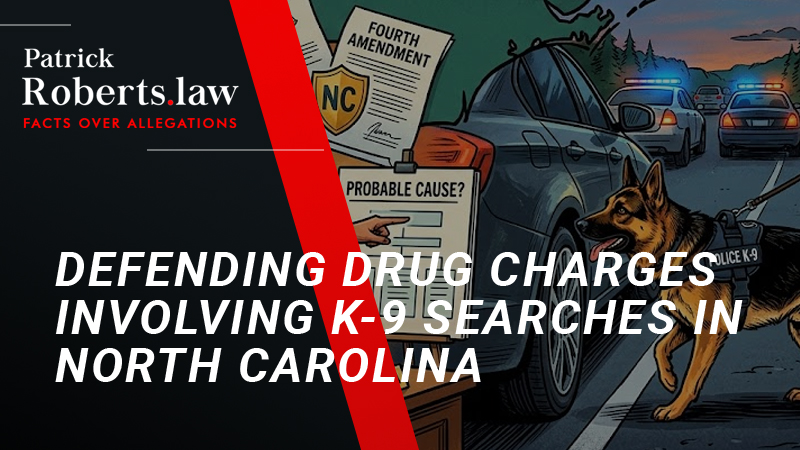
Courtroom scene with judge and defendant, headline about first offense sex crime charges in North Carolina

What Happens on a First Offense Sex Crime Charge in NC?

If you or someone in your family is facing a first offense sex crime charge in North Carolina, you may assume that having no prior criminal record will provide meaningful protection. In some areas of criminal law, that assumption holds. In sex crime cases, it largely does not. North Carolina treats sex offenses with a severity that applies regardless of whether the defendant has ever been in trouble before — and the consequences of even a first conviction extend well beyond the sentence itself. This article explains what a first-time defendant actually faces under North Carolina law and where the legal opportunities for defense exist. more Does Having No Criminal Record Help in a Sex Crime Case? It helps at sentencing — but less than most people expect. North Carolina's Structured Sentencing Act under N.C.G.S. § 15A-1340.10 et seq. calculates punishment based on two variables: the offense class and the defendant's prior record level. A defendant with no criminal history starts at Prior Record Level I, which produces the lowest sentencing range within each offense class. But for serious sex offenses, even the lowest range carries significant consequences. The NC Sentencing Commission reported that 100% of Class B1 through D felony sex offense convictions in FY 2024 received active imprisonment — meaning every defendant in those categories went to prison, regardless of prior record. For person offenses generally, 62% received active imprisonment, 28% intermediate punishment, and only 10% community punishment. Under N.C.G.S. § 15A-1340.17(f), defendants convicted of Class B1 through E sex offenses face an enhanced maximum sentence. Post-release supervision for sex offenses is also longer than for other felony classes. A first offense does not exempt a defendant from any of these enhanced provisions. What Sex Crime Charges Can a First-Time Defendant Face? The charge depends on the alleged conduct, not the defendant's criminal history. North Carolina's sex offense statutes apply identically to first-time and repeat offenders. Forcible offenses. First-degree forcible rape under N.C.G.S. § 14-27.21 is a Class B1 felony. Second-degree forcible rape under N.C.G.S. § 14-27.22 is a Class C felony. The State must prove force and lack of consent as separate elements. In State v. Alston, 310 N.C. 399, 312 S.E.2d 470 (1984), the NC Supreme Court held that force must be specific to the charged sexual act. Age-based offenses. Statutory rape charges under N.C.G.S. §§ 14-27.23 through 14-27.25 range from Class C to Class B1 felony depending on the ages involved. These are strict liability offenses — State v. Breathette, 202 N.C. App. 697, 690 S.E.2d 1 (2010), holds that mistake of age is not a defense. Indecent liberties with children under N.C.G.S. § 14-202.1 is a Class F felony. Sexual battery. N.C.G.S. § 14-27.33 defines sexual battery as a Class A1 misdemeanor — the least severe sex offense classification. Even this charge triggers mandatory sex offender registration. Internet solicitation. N.C.G.S. § 14-202.3 criminalizes solicitation of a child by computer — a Class H felony that escalates to Class G if either party appears at a meeting location. In State v. Keller, 265 N.C. App. 526, 828 S.E.2d 578 (2019), the Court of Appeals held that continued engagement after learning a "child's" age demonstrated predisposition, defeating an entrapment defense. What Are the Collateral Consequences of a First Sex Crime Conviction? The collateral consequences are where first-time defendants face the most significant and unexpected impact. Sex offender registration under N.C.G.S. § 14-208 et seq. is mandatory for virtually all sex offense convictions. The standard registration period is 30 years. Lifetime registration applies to aggravated offenders and sexually violent predators. There are currently approximately 25,000 registered sex offenders in North Carolina, and registrants face residential restrictions under N.C.G.S. § 14-208.18, GPS monitoring in many cases, and public listing on the state registry. Immigration consequences. For non-citizen defendants, Padilla v. Kentucky, 559 U.S. 356 (2010), requires defense counsel to advise of deportation risks before any plea. Sexual abuse of a minor is classified as an aggravated felony triggering mandatory removal. Federal firearms prohibition, professional licensing bars, housing restrictions, and employment limitations persist long after a sentence is served. A first offense sex crime conviction creates a permanent record that affects every dimension of a person's life. What Defense Strategies Are Available to a First-Time Defendant? The same defense tools available to any defendant apply with full force to first-time offenders — and in some cases, the absence of a criminal record strengthens the defense narrative. Consent. State v. Yelverton, 274 N.C. App. 348, 851 S.E.2d 434 (2020), affirmed consent as a complete defense to forcible offenses. Defense counsel investigates every communication and witness account to demonstrate consensual contact. Constitutional challenges. Digital evidence obtained without a proper warrant is subject to suppression under Riley v. California, 573 U.S. 373 (2014). Statements obtained in violation of Miranda protections are challengeable. North Carolina's mandatory recording requirement under N.C.G.S. § 15A-211 for serious sex offenses means unrecorded interrogations can be attacked as involuntary. Expert testimony challenges. Under State v. Hall, 330 N.C. 808, 412 S.E.2d 883 (1992), prosecution expert testimony about victim behavior cannot be used to prove that abuse occurred. State v. Hammett, 361 N.C. 92, 637 S.E.2d 518 (2006), requires a physical evidence basis for any expert opinion that abuse occurred. Defense counsel files Daubert motions under State v. McGrady, 368 N.C. 880, 787 S.E.2d 1 (2016), and retains defense experts on suggestibility and false memory. Credibility and corroboration. North Carolina does not require corroboration to convict on victim testimony alone — but the absence of corroboration is a powerful argument for reasonable doubt when presented to a jury. What Do Clients and Peers Say About Attorney Patrick Roberts? "From the first meeting until present, Mr. Roberts has been transparent and thorough about every possible outcome." — Review originally posted by a verified client on Avvo.com. "Very talented and intuitive criminal lawyer." — Martindale-Hubbell Peer Review Disclaimer: The testimonials and peer reviews on this site are for informational purposes. They do not constitute a guarantee, warranty, or prediction regarding the outcome of your legal matter. Every case is different and must be evaluated on its own merits. Testimonials and peer endorsements found on this website are actual comments. Case Review Case Filed: Investigation into Alleged Indecent Liberties with a Child Attorney: Patrick Roberts Case Description: A client was under investigation for serious allegations involving child molestation and the suspected inappropriate photographing of a minor. Facing potential sex crime charges, the client required a strategic defense to navigate the complexities of both the legal system and the Department of Social Services (DSS). As an experienced sex crimes defense attorney, Patrick Roberts conducted an exhaustive independent investigation to challenge the state's claims. By focusing on evidentiary inconsistencies and due process, the defense aimed to prevent the filing of formal criminal charges for sexual offenses and mitigate the devastating impact of such accusations on the client's reputation. Outcome: Dismissal. Furthermore, the State declined to file charges, ensuring the client faced no criminal prosecution. *Disclaimer: Each case is different and must be evaluated separately. Prior results achieved do not guarantee similar results can be achieved in future cases What Should a First-Time Defendant Consider? A first offense sex crime charge in North Carolina is prosecuted with the same statutory framework and the same potential consequences as any other sex crime case. The system does not provide automatic leniency for a clean record. What it does provide is constitutional protections, evidentiary standards, and procedural requirements that the State must satisfy — and experienced defense counsel ensures those standards are enforced. Experienced Criminal Defense Attorney in NC Attorney Patrick Roberts is a graduate of the Duke University School of Law (#6 National Rank; #7 Criminal Law Specialty) and provides a defense methodology rooted in the rigorous training of a B.A. in Engineering from The Johns Hopkins University (#7 National University). He served as an Assistant District Attorney, where he managed the prosecution of sex crimes, drug trafficking, and violent felonies. His trial advocacy is supported by the Gerry Spence Trial Lawyers College, the NCDC Trial Practice Institute, and the 2025 NCDC Cross-Examination Intensive. Admitted to the Supreme Court of the United States and the U.S. Court of Appeals for the Fourth Circuit, Mr. Roberts is a Lifetime Member of the NACDL and a Former Commissioner of the North Carolina State Ethics Commission. A co-author of two legal books, he has earned the AV Preeminent® Peer Rating and the Martindale-Hubbell Platinum Client Champion recognition for over five consecutive years, with a 10/10 Avvo rating maintained for over 15 years. His work has been featured in Super Lawyers Magazine and on the cover of Attorney-at-Law Magazine, and he has been quoted by national media outlets including USA Today and Fox News. Contact Patrick Roberts Law and request an initial case evaluation. To ensure the exhaustive research and strategic precision required for a sophisticated defense, the firm accepts a limited number of cases each month. This selective approach allows Patrick Roberts to personally direct the deep-tier analysis and courtroom advocacy required to protect your constitutional rights. Disclaimer: The information on this website is for general informational purposes only. Nothing herein should be taken as legal advice for any individual case or situation. Contacting us via this website, email, or contact form does not create an attorney-client relationship. Case results depend on a variety of factors unique to each case; prior results do not guarantee a similar outcome.
PR blog 3-1

What Are Indecent Liberties With a Minor Under NC Law?

An indecent liberties with a minor charge under North Carolina law is a felony that carries serious penalties, mandatory sex offender registration, and a range of collateral consequences that can affect every part of a person's life for decades. It is also one of the most broadly interpreted sex offense statutes in the state — covering conduct that many people would not expect to meet the threshold of a criminal offense. If you are facing this charge or researching what it means, understanding the statute, the case law, and the available defenses is an essential first step. more What Does the Indecent Liberties Statute Actually Say? The core statute is N.C.G.S. § 14-202.1. It makes it a Class F felony for any person who is 16 years of age or older and at least five years older than the alleged victim to willfully take or attempt to take any immoral, improper, or indecent liberty with a child under 16 for the purpose of arousing or gratifying sexual desire — or to willfully commit or attempt to commit any lewd or lascivious act upon or with the body of a child under 16. The prosecution must establish three threshold requirements: the defendant was 16 or older, the child was under 16, and the defendant was at least five years older than the child. That five-year age differential is a built-in close-in-age protection. If the defendant and the alleged victim are fewer than five years apart in age, this statute does not apply — though other sex offense statutes with different age gap thresholds may. Defense counsel verifies these calculations with precision. Charging errors in age differential calculations happen more often than the system would like to admit, and they can be dispositive. For defendants under 16, North Carolina provides a separate, less severe provision. N.C.G.S. § 14-202.2 creates a Class 1 misdemeanor for defendants under 16 who take indecent liberties with children at least three years younger. This distinction recognizes that minor-on-minor situations warrant different treatment than adult-on-child offenses. How Broadly Do Courts Interpret "Indecent Liberties"? Very broadly — and this is where many defendants and their families are caught off guard. In State v. Every, 157 N.C. App. 200, 578 S.E.2d 642 (2003), the NC Court of Appeals held that physical touching is not required for an indecent liberties conviction. Exposing a child to sexual activity, engaging in sexually explicit conversations with a child, or performing sexual acts in a child's presence can all constitute indecent liberties under North Carolina law. The critical element in most contested cases is purpose: the State must prove the conduct was "for the purpose of arousing or gratifying sexual desire." This is a subjective element that prosecutors typically prove through circumstantial evidence — the nature and context of the conduct, the relationship between the parties, the setting, and statements made before or after the alleged act. Defense counsel challenges this element by demonstrating alternative explanations, questioning the reliability of the evidence used to infer purpose, and exposing weaknesses in how the allegation was investigated. State v. Laney, 178 N.C. App. 337, 631 S.E.2d 522 (2006), established an important limiting principle: multiple acts of touching during a single encounter support only one conviction for indecent liberties. This prevents the State from stacking charges based on what was, in legal terms, a single continuous episode. Mistake of age is not a defense. State v. Breathette, 202 N.C. App. 697, 690 S.E.2d 1 (2010), held that a defendant's belief about the alleged victim's age provides no legal defense — regardless of the victim's appearance, statements, or behavior. According to the NC Department of Adult Correction's FY 2023–2024 Annual Statistical Report, "other sexual offenses" accounted for 29% of all Class F felony probation entries — making it the most common Class F felony category on probation in North Carolina. What Constitutional and Evidentiary Protections Apply? Indecent liberties cases frequently involve child witnesses, forensic interviews, and digital evidence — each raising distinct constitutional issues. Digital evidence. Following Riley v. California, 573 U.S. 373 (2014), warrants are required for cell phone and device searches. Under N.C.G.S. § 15A-248, warrants must be executed within 48 hours. Defense counsel challenges warrant scope, particularity, and chain of custody — especially where text messages or social media communications are central to the prosecution's case. Child witness testimony. There is no minimum age for witness competency in North Carolina under N.C.G.S. § 8C-1, Rule 601. Defense counsel requests competency voir dire to test the child's ability to express matters clearly and their understanding of the duty to tell the truth. Closed-circuit testimony under N.C.G.S. § 15A-1225.1 requires specific judicial findings that testifying in the defendant's presence would cause serious emotional distress. Hearsay. Child statements are often admitted under the medical diagnosis exception, Rule 803(4). The NC Supreme Court's State v. Hinnant, 351 N.C. 277, 523 S.E.2d 663 (2000), two-prong test requires that the statement was made for the purpose of obtaining medical treatment and was reasonably pertinent to that purpose. State v. Corbett, 376 N.C. 799, 855 S.E.2d 228 (2021), allowed child advocacy center statements under this exception — but statements taken primarily for investigative purposes may fail the test. Expert testimony. State v. Hall, 330 N.C. 808, 412 S.E.2d 883 (1992), permits CSAAS testimony to explain victim behavior but not to prove abuse occurred. State v. Hammett, 361 N.C. 92, 637 S.E.2d 518 (2006), requires physical evidence to support an expert opinion that abuse occurred. Daubert motions under State v. McGrady, 368 N.C. 880, 787 S.E.2d 1 (2016), are the mechanism for excluding prosecution experts who exceed these boundaries. Confrontation. Under Crawford v. Washington, 541 U.S. 36 (2004), testimonial hearsay requires the declarant's availability for cross-examination. State v. Locklear, 363 N.C. 438, 681 S.E.2d 293 (2009), found a Confrontation Clause violation where non-testifying expert opinions were admitted through a substitute witness. What Are the Consequences of an Indecent Liberties Conviction? Mandatory sex offender registration under N.C.G.S. § 14-208 et seq. follows every indecent liberties conviction. Standard registration lasts 30 years. Registrants face residential restrictions under N.C.G.S. § 14-208.18, potential GPS monitoring, and public listing. A petition for removal under N.C.G.S. § 14-208.12A may be filed after 10 years for those not classified as aggravated offenders. For non-citizens, Padilla v. Kentucky, 559 U.S. 356 (2010), requires defense counsel to advise of immigration consequences. Sexual abuse of a minor triggers mandatory deportation under federal law. Additional consequences include federal firearms prohibitions, professional licensing bars, housing restrictions, and employment limitations. What Do Clients and Peers Say About Attorney Patrick Roberts? "We knew from the consultation that we were in good hands. Mr. Roberts wasted no time obtaining the report and jumping into action. His practice is very efficient and receptive in every way." — Review originally posted by a verified client on Avvo.com. "Mr. Roberts demonstrates a high level of competence and professionalism. He is well prepared for trial and represents all clients well. Mr. Roberts is dependable and he represents the legal profession well. I am confident in his ability to represent his clients." — Martindale-Hubbell Peer Review Disclaimer: The testimonials and peer reviews on this site are for informational purposes. They do not constitute a guarantee, warranty, or prediction regarding the outcome of your legal matter. Every case is different and must be evaluated on its own merits. Testimonials and peer endorsements found on this website are actual comments. Where Do You Go From Here? An indecent liberties charge is a serious matter that benefits from experienced defense counsel. Having an attorney involved early preserves options and allows for a thorough review of the evidence and the investigation before the case progresses further. Case Review The Legal Challenge Attorney Patrick Roberts’ client was the subject of an investigation involving several high-level felonies, including Indecent Liberties with a Minor ( N.C.G.S. § 14-202.1), Statutory Sex Offense ( N.C.G.S. § 14-27.25), and Statutory Rape ( N.C.G.S. § 14-27.30). In North Carolina, these charges carry mandatory prison sentences and permanent registration requirements. The allegations arose within the context of a domestic dispute involving the client’s spouse and stepchild. The client was falsely accused by his wife of sexually abusing his stepdaughter. The Strategy: Pre-Charge Advocacy and Constitutional Protection The critical turning point in this matter occurred during the "pre-charge" phase, before a formal arrest or indictment took place. Attorney Patrick Roberts utilized a strategic approach to prevent the case from entering the criminal court system: Constitutional Safeguards: Attorney Roberts ensured the client’s Fifth Amendment rights were strictly protected throughout the investigative process. By managing all communication with law enforcement, the defense prevented the creation of self-incriminating statements that are often used to justify a formal charge. Evidentiary Scrutiny: Leveraging his experience as a former prosecutor of sex crimes, Roberts conducted a technical audit of the claims. He identified a lack of concrete, corroborating evidence and highlighted significant inconsistencies within the accuser's narrative. Analytical Case Deconstruction: Applying the precision of his Johns Hopkins Engineering background, Roberts presented a logical analysis to the State that undermined the feasibility of the allegations. The Result: No Prosecution and Case Closure Following the presentation of the defense's preliminary findings and the demonstration of evidentiary gaps, the State of North Carolina determined there was insufficient cause to proceed. The District Attorney’s office chose not to file charges, effectively clearing the client’s name and allowing him to avoid the prolonged uncertainty and public nature of courtroom litigation. Result: No Charges Filed. *Disclaimer: Each case is different and must be evaluated separately. Prior results achieved do not guarantee similar results can be achieved in future cases Decades of High-Stakes Litigation and Prosecution Experience Effective criminal defense of indecent liberties charges is built on an intimate understanding of State evidentiary priorities. Patrick Roberts served as an Assistant District Attorney across three North Carolina counties before transitioning to defense in 2007. His professional standing is reflected in the Client Champion Platinum recognition and the AV Preeminent® Peer Rating for over five consecutive years. Educated at Duke Law (#6 National Rank) and Johns Hopkins (#7 National Rank), he utilizes an evidence-based approach to challenge State allegations. Patrick has served on the North Carolina Juvenile Justice Planning Committee and the State Ethics Commission. A graduate of the NACDL White Collar Crimes College and the NCDC, he is admitted to practice in all Federal District Courts in North Carolina ( EDNC, MDNC, WDNC). His work has been featured in Super Lawyers Magazine and he has been quoted by national media outlets including USA Today and Fox News. Contact Patrick Roberts Law and Request a Private Case Evaluation. We prioritize quality over volume. To ensure every client receives the necessary strategic focus, our firm maintains a limited number of cases. This allows for the meticulous discovery and stringent application of North Carolina statutes required for your defense. Disclaimer: The information on this website is for general informational purposes only. Nothing herein should be taken as legal advice for any individual case or situation. Contacting us via this website, email, or contact form does not create an attorney-client relationship. Case results depend on a variety of factors unique to each case; prior results do not guarantee a similar outcome.
Gavel and blurred defendant scene with headline about what to do after sex crime accusation in North Carolina

What to Do If You're Accused of a Sex Crime in North Carolina

The first 48 hours after a sex crime accusation are often the most consequential of the entire case. What you say, who you talk to, and whether you have legal counsel guiding those decisions can determine whether the investigation leads to charges, whether evidence is preserved or lost, and whether your constitutional rights are protected or waived before you fully understand what is happening. If you are wondering what to do if accused of a sex crime in North Carolina, this article walks through the legal framework you are dealing with and the steps that matter most. more Should You Talk to the Police If Accused of a Sex Crime? No — not without an attorney present. This is the single most important step, and it is the one most people get wrong. The Fifth Amendment and N.C. Const. art. I, § 23 protect against compelled self-incrimination, but these protections only activate when you invoke them. Miranda warnings are required before custodial interrogation, and under N.C.G.S. § 15A-211, North Carolina mandates recording of custodial interrogations for Class A, B1, B2 felonies and Class C sex offenses. Failure to record is admissible evidence supporting a claim that any resulting statement was involuntary. But here is what catches people off guard: you do not have to be formally arrested to make a damaging statement. Detectives often conduct interviews in non-custodial settings — at your home, at the station under the guise of "just a conversation" — where Miranda does not technically apply. In State v. Jackson, 308 N.C. 549 (1983), the NC Supreme Court held that police deception during interrogation does not automatically render a confession involuntary, meaning investigators can and do use misleading tactics during questioning. North Carolina is also a one-party consent state under N.C.G.S. § 15A-287. That means pretext phone calls — where the complainant calls the accused while law enforcement records the conversation — are perfectly legal. If you receive a call from the accuser after an allegation has been made, assume it is being recorded. Do not discuss the allegations with anyone except your attorney. What Constitutional Protections Apply During a Sex Crime Investigation? Understanding your rights during the investigation phase is critical because this is where evidence is gathered, preserved, or destroyed — and where constitutional violations by law enforcement can provide the basis for suppression motions that weaken or eliminate the State's case. Following Riley v. California, 573 U.S. 373 (2014), police cannot search your cell phone or digital devices without a warrant, even if you are under arrest. This is significant in sex crime cases because digital evidence — texts, photographs, social media messages — is often central to the prosecution's theory. Under N.C.G.S. § 15A-248, search warrants must be executed within 48 hours of issuance. Consent to search your home does not extend to digital devices found inside. For juvenile defendants or young adults, J.D.B. v. North Carolina, 564 U.S. 261 (2011) — a case from our state — established that a child's age is relevant to the Miranda custody analysis. If you are under 18, law enforcement must consider your age when determining whether you were effectively "in custody" during questioning. What Charges Could You Face? North Carolina's sex offense framework is graduated and complex. The specific charge depends on the nature of the alleged conduct, the age of the parties, and the relationship between them. Forcible offenses include first-degree forcible rape under N.C.G.S. § 14-27.21 (Class B1 felony) and second-degree forcible rape under N.C.G.S. § 14-27.22 (Class C felony). The State must prove both force AND lack of consent as separate elements. State v. Alston, 310 N.C. 399, 312 S.E.2d 470 (1984), held that force must be specific to the charged act — general fear from a prior relationship is insufficient. Age-based offenses are strict liability. Statutory rape charges under N.C.G.S. §§ 14-27.23 through 14-27.25 carry classifications from Class C to Class B1 felony depending on victim age and age differential. Indecent liberties under N.C.G.S. § 14-202.1 is a Class F felony. Mistake of age is not a defense — State v. Breathette, 202 N.C. App. 697, 690 S.E.2d 1 (2010). North Carolina reported 2,944 rapes in 2024 according to the NC SBI, and the NC Sentencing Commission reported 431 Class B1 felony convictions in FY 2024 — the most serious sex offense classification. These cases carry severe consequences including mandatory sex offender registration under N.C.G.S. § 14-208 et seq. for a minimum of 30 years. What Should You Do After an Accusation? Beyond exercising your right to remain silent, the practical steps in the first days after an accusation are: Preserve evidence. Do not delete text messages, social media conversations, photographs, or any digital communication with the accuser. This evidence may prove consensual contact, establish a motive to fabricate, or contradict the complainant's account. Your attorney needs access to everything. Do not contact the accuser. Any communication — direct, through friends, or through social media — can be characterized as witness intimidation or obstruction. Even an attempt to "clear things up" can be used against you. Document your whereabouts. If you have receipts, GPS data, surveillance footage access, or witnesses who can establish where you were at the time of the alleged offense, preserve that information immediately. Time-stamped evidence degrades quickly. Hire defense counsel before the first interview. If police have contacted you requesting an interview, you have the right to have an attorney present. An experienced defense attorney can advise you on what to say, what not to say, and whether to participate at all. Recent Case Result: In 2026, Attorney Roberts closed an allegation of rape after a client met a woman at a bar who claimed he raped her. Result: No charges filed. Disclaimer: Each case is different and must be evaluated separately. Prior results achieved do not guarantee similar results can be achieved in future cases. What Do Clients and Peers Say About Attorney Patrick Roberts? "I recently hired A. Patrick Roberts as my lawyer. He not only provided clear and practical legal advice but also employed smart strategies that were beyond my expectations. His attention to detail and dedication to my defense made all the difference." — Review originally posted by a verified client on Avvo.com. "I have known Patrick Roberts my entire legal career. He is a great representation of how a lawyer should be an advocate for justice and truth. He has great relationships with attorneys and judges alike across countless cities and counties." — Martindale-Hubbell Peer Review Disclaimer: The testimonials and peer reviews on this site are for informational purposes. They do not constitute a guarantee, warranty, or prediction regarding the outcome of your legal matter. Every case is different and must be evaluated on its own merits. Testimonials and peer endorsements found on this website are actual comments. Case Review Case Filed: First Degree Statutory Sex Offense Attorney: Patrick Roberts Case Description: The client faced a high-stakes felony investigation involving allegations of a First Degree Statutory Sex Offense brought by a minor. Given the severity of these sex crime charges, the defense required a comprehensive approach to challenge the prosecution's narrative. Patrick Roberts, acting as a criminal defense lawyer for sex crimes, coordinated an extensive defense team that included a polygraph examiner, a child psychologist, a forensic expert, and a private investigator. This multi-disciplinary strategy allowed the defense to conduct a deep analysis of the allegations and provide the Assistant District Attorney with a compelling, evidence-based argument for why the case should not proceed to trial. Outcome: Charges Dismissed As a criminal defense attorney for sexual offenses, Mr. Roberts utilized a comprehensive defense team, including a polygraph examiner, a child psychologist, a forensic specialist, and a private investigator. By presenting evidence-based arguments and a detailed factual analysis, he demonstrated to the Assistant District Attorney that a dismissal was the appropriate course of action. This result ensured the client did not face a criminal trial, demonstrating the importance of a thorough defense in sex crime cases. *Disclaimer: Each case is different and must be evaluated separately. Prior results achieved do not guarantee similar results can be achieved in future cases Why Early Legal Representation Changes the Outcome The decisions made in the early stages of a sex crime investigation — whether to give a statement, how to handle digital evidence, whether to consent to a search — shape the trajectory of the case. Having defense counsel involved from the beginning preserves options that may not be available later. Attorney Patrick Roberts is a graduate of the Duke University School of Law (#6 National Rank; #7 Criminal Law Specialty). He provides a defense methodology rooted in the analytical precision of a B.A. in Engineering from The Johns Hopkins University (#7 National University). This evidence-based approach is informed by his tenure as an Assistant District Attorney in Wake, Johnston, and New Hanover counties. Having managed the prosecution of sex crimes, drug trafficking, and violent felonies, he possesses a technical understanding of the State’s evidentiary and charging priorities. Trial Advocacy and National Recognition Since transitioning to defense in 2007, Patrick has directed hundreds of bench and jury trials in both state and federal courts. His trial advocacy is supported by extensive training at the Gerry Spence Trial Lawyers College, the NCDC Trial Practice Institute, the 2025 NCDC Cross-Examination Intensive, and the NACDL White Collar Crimes College. Attorney Patrick Roberts is currently the only North Carolina lawyer listed on the National Child Abuse Defense & Resource Center (as of 2026). He is a Lifetime Member of the National Association of Criminal Defense Lawyers (NACDL) and has served as a Former Commissioner of the North Carolina State Ethics Commission and as a member of the North Carolina Juvenile Justice Planning Committee. Federally Admitted and Peer-Verified Attorney Patrick Roberts leads a practice defined by broad jurisdictional authority, with admissions to the Supreme Court of the United States, the Fourth Circuit Court of Appeals, and all U.S. Federal District Courts in North Carolina. His professional standing is reflected in the AV Preeminent® Peer Rating and the Martindale-Hubbell Platinum Client Champion recognition, both maintained for over five consecutive years. Additionally, he has held a 10/10 "Superb" Avvo rating for more than 15 years. As a co-author of two legal books, his work has been featured in Super Lawyers Magazine and on the cover of Attorney-at-Law Magazine. His legal analysis has been cited by national media outlets, including USA Today and Fox News, for his experience in high-stakes litigation. Contact Patrick Roberts Law to Request a Case Evaluation Contact Attorney Patrick Roberts for a case evaluation. The firm manages a limited number of cases to ensure each matter receives focused attention. This approach allows for a thorough discovery process and a precise application of North Carolina statutes to the specific facts of your defense. Disclaimer: The information on this website is for general informational purposes only. Nothing herein should be taken as legal advice for any individual case or situation. Contacting us via this website, email, or contact form does not create an attorney-client relationship. Case results depend on a variety of factors unique to each case; prior results do not guarantee a similar outcome.

Courtroom scene with witness raising hand and headline about fighting statutory rape charges in North Carolina

How to Fight Statutory Rape Charges in North Carolina

Statutory rape charges in North Carolina carry some of the most severe penalties in the state's criminal code — and they are among the most difficult to defend because the law eliminates what many defendants assume is their strongest argument. Consent is not a defense. Mistake of age is not a defense. The statutory framework is built on strict liability principles that focus almost entirely on the ages of the parties involved. But that does not mean these charges are indefensible. North Carolina law still requires the prosecution to prove every element of the offense beyond a reasonable doubt, and experienced defense counsel can challenge those elements at every stage. If you are researching how to fight statutory rape charges, this article explains the legal framework and the defense strategies that apply. more What Does the Prosecution Have to Prove? North Carolina's statutory rape laws are organized in a graduated scheme where the charge classification depends on the victim's age, the defendant's age, and the age differential between them. N.C.G.S. § 14-27.23 — statutory rape of a child by an adult — applies when the defendant is 18 or older and the victim is under 13. This is a Class B1 felony. N.C.G.S. § 14-27.24 — first-degree statutory rape — applies when the defendant is at least 12 and at least four years older than a victim under 13. Also a Class B1 felony. N.C.G.S. § 14-27.25 — statutory rape of a person 15 or younger — classifies as either Class B1 or Class C felony depending on the age gap. When the defendant is at least 12 and six or more years older, it is Class B1. When the victim is 15 and the defendant is more than four but less than six years older, it is Class C. Each of these statutes requires the State to prove the specific ages and age differentials with precision. Defense counsel verifies exact birth dates through documentary evidence because charging errors in age differential calculations occur — and they can be case-dispositive. The NC Sentencing Commission reported 431 Class B1 felony convictions in FY 2024. These cases carry severe consequences: 100% of Class B1 through D sex offense convictions received active imprisonment, and enhanced sentencing provisions under N.C.G.S. § 15A-1340.17(f) apply to Class B1 through E sex offenses. Why Can't Consent or Mistake of Age Be Used as a Defense? Statutory rape is a strict liability offense in North Carolina. State v. Breathette, 202 N.C. App. 697, 690 S.E.2d 1 (2010), explicitly held that mistake of age is not a defense — even to the related charge of indecent liberties under N.C.G.S. § 14-202.1. The same principle applies to all statutory rape charges. The defendant's subjective belief about the alleged victim's age is legally irrelevant, regardless of the victim's appearance, statements, or presentation of identification. Consent is also not a defense because the law treats persons below the age of consent — 16 in North Carolina — as legally incapable of consenting to sexual activity. Whether the encounter was "consensual" in the everyday sense has no legal significance in a statutory rape prosecution. This reality is precisely why experienced defense counsel is critical. When the most intuitive defenses are foreclosed by statute, the attorney's work shifts to the remaining elements, the quality of the evidence, the reliability of the investigation, and the constitutional protections that still apply. What Defense Strategies Are Effective in Statutory Rape Cases? Age verification and differential challenges. The prosecution must prove exact ages and the precise age gap. Defense counsel obtains and cross-references birth certificates, hospital records, and identification documents. Where the age differential falls near a statutory threshold — the difference between four and six years, for example — the defense may challenge whether the correct charge was filed. Challenging the investigation. Under Riley v. California, 573 U.S. 373 (2014), digital device searches require a warrant. In statutory rape cases, text messages and social media conversations are often key evidence. Defense counsel challenges warrant particularity, scope, and execution timing under N.C.G.S. § 15A-248. Any evidence obtained in violation of these protections is subject to suppression. Interrogation challenges. North Carolina's mandatory recording requirement under N.C.G.S. § 15A-211 applies to interrogations for serious sex offenses. Failure to record is admissible as evidence of involuntariness. For juvenile defendants, J.D.B. v. North Carolina, 564 U.S. 261 (2011), requires that the defendant's age be considered in the Miranda custody analysis. Confrontation and hearsay challenges. Under Crawford v. Washington, 541 U.S. 36 (2004), testimonial statements require the declarant's availability for cross-examination. Forensic interview recordings of alleged victims are often testimonial. State v. Locklear, 363 N.C. 438, 681 S.E.2d 293 (2009), found a Confrontation Clause violation where substitute testimony was used. For child hearsay admitted under the medical diagnosis exception (N.C.G.S. § 8C-1, Rule 803(4)), State v. Hinnant, 351 N.C. 277, 523 S.E.2d 663 (2000), requires the statement to have been made for the purpose of obtaining medical treatment. Expert testimony. State v. Hall, 330 N.C. 808, 412 S.E.2d 883 (1992), permits prosecution expert testimony about victim behavior patterns but not to prove that abuse occurred. Defense counsel files Daubert motions under State v. McGrady, 368 N.C. 880, 787 S.E.2d 1 (2016), and retains defense experts on suggestibility, false memory, and forensic interview technique flaws. What Do Clients and Peers Say About Attorney Patrick Roberts? "He always took the time to explain to us what was going on which I appreciated. Patrick is able to see many different angles for a case and determine the best argument." — Review originally posted by a verified client on Avvo.com. "Awesome attorney. Great litigator." — Martindale-Hubbell Peer Review Disclaimer: The testimonials and peer reviews on this site are for informational purposes. They do not constitute a guarantee, warranty, or prediction regarding the outcome of your legal matter. Every case is different and must be evaluated on its own merits. Testimonials and peer endorsements found on this website are actual comments. Case Review Lead Attorney: Patrick Roberts Primary Charge: Statutory Rape Result: Charge Dismissed; Negotiated Plea to Misdemeanor Assault on a Female; No Sex Offender Registration Case Summary The client was accused of statutory rape after being discovered with a fifteen-year-old girl following an episode of heavy consumption of alcohol. The case was initiated when the girl’s sister discovered them together, and the State’s file included numerous eyewitnesses whose testimony supported the girl's accusations. Legal Challenge and Defense The presence of multiple eyewitnesses and the sensitive nature of the allegations created a high-risk environment for the client. A conviction for statutory rape would have carried mandatory prison time and lifelong registration as a sex offender. Attorney Patrick Roberts focused the defense on the technical requirements of the statute. While the State’s witnesses provided testimony regarding the circumstances of the encounter, Roberts focused the litigation on the specific legal element of penetration. By effectively contesting the evidence regarding this element, the defense demonstrated that the State could not meet its evidentiary burden for the felony charge. The Outcome As a result of this focused contest of the evidence, the prosecution agreed to a significant reduction in the case: The Statutory Rape charge was dismissed.* The client was permitted to plead to a misdemeanor charge of Assault on a Female. The client avoided the requirement to register as a sex offender, effectively preserving his professional future and personal liberty. *Disclaimer: Each case is different and must be evaluated separately. Prior results achieved do not guarantee similar results can be achieved in future cases What Is the Value of Getting Defense Counsel Involved Early? Having defense counsel involved early preserves options that may not be available later — from challenging the investigation in real time to identifying weaknesses in the State's theory before the case is locked in. Advanced Scholarship in Criminal Law Attorney Patrick Roberts provides a defense built on the foundations of a Duke University School of Law education, an institution currently ranked #7 in the nation for Criminal Law ( U.S. News & World Report, 2025–2026). This ranking, combined with Duke’s overall Top 6 national standing (tied with Harvard Law), positions the firm’s advocacy within the highest tier of the American legal profession. As a graduate of both The Johns Hopkins University and Duke Law, Patrick Roberts operates within the academic lineage of the Duke Center for Criminal Justice and Professional Responsibility. This background ensures that every statutory rape defense is managed with a sophisticated understanding of Constitutional law, specifically the Fourth, Fifth, and Sixth Amendment protections that often serve as the technical turning point in high-stakes criminal litigation. To provide a comprehensive defense in both state and federal jurisdictions, Patrick Roberts is admitted to practice before the nation’s highest judicial bodies: The Supreme Court of the United States The U.S. Court of Appeals for the Fourth Circuit All Federal District Courts in North Carolina ( EDNC, MDNC, WDNC) Prosecutorial Insight & Trial Advocacy Since 2007, Patrick Roberts has directed hundreds of bench and jury trials in both state and federal courts. Before transitioning to defense, he served as an Assistant District Attorney in Wake, Johnston, and New Hanover counties. Having managed the prosecution of the same categories of offenses he now defends, he possesses a technical understanding of the State’s charging priorities and evidentiary thresholds. To maintain the exacting standards required for complex sex offense litigation, Patrick Roberts has completed advanced training at the nation’s most recognized trial institutes: The NCDC Trial Practice Institute (2011) and the 2025 NCDC Cross-Examination Intensive Training Gerry Spence’s Trial Lawyers College. These programs are specifically designed to sharpen cross-examination and witness credibility analysis essential to challenging the State’s narrative in statutory allegations. Secure a Strategic Evaluation of Your Case The resolution of a high-stakes statutory allegation depends on the analytical depth applied to the State’s evidence and the constitutional precision of the defense motions. Because every case involves unique evidentiary challenges and permanent legal consequences, securing a defense grounded in high-level academic and trial standards is a necessary step in navigating the North Carolina justice system. To ensure that every client benefits from the analytical precision and dedicated oversight their defense requires, Patrick Roberts Law maintains a limited case volume. By prioritizing quality over high-volume intake, the firm preserves the capacity to conduct the deep-tier legal research and constitutional analysis essential to a sophisticated criminal defense. Contact our office to schedule a confidential evaluation of your case and to discuss your available legal options. Disclaimer: The information on this website is for general informational purposes only. Nothing herein should be taken as legal advice for any individual case or situation. Contacting us via this website, email, or contact form does not create an attorney-client relationship. Case results depend on a variety of factors unique to each case; prior results do not guarantee a similar outcome.

Contact Us

Fill out this form below and we'll contact you shortly
*Required Fields