Blog / Sex Crimes

Blog

All Sex Crimes Criminal Defense Criminal Defense Lawyer Sex Defense Felony Charges Lawyer Drug Charges Sex Defense Lawyer Murder Charges Rape Case Statutory Rape Charges Drug Crimes & Violations Drug Trafficking Violent Crime Domestic Violence Child Exploitation Charges Indecent Liberties North Carolina Criminal Law Sexual Assault North Carolina Law Fentanyl Crimes indecent liberties with a minor Sex Crimes Defense Sex Offender Registry Sexual exploitantion of minors Meth Trafficking Age of Consent Aggravated Sexual Assault Artificial Intelligence Child Enticement Charges child grooming Child Rape Constitutional Rights & Warrants Criminal Defense & Travel Law Criminal Justice Criminal Law Cybercrime Defense Data Privacy Digital Evidence Entrapment defense False Accusations Family Law Federal Offenses Indecent Exposure Legal Defense Strategies Legal Resources Legal Updates Possession with intent to sell Sex Crimes & Registry Sex Crimes Defense Strategies Sex Offender Registration Requirements Sex Offender Registry Compliance Sex Offense Defense Sexting Laws solicitation of a child by computer Solicitation of a Minor Charge State vs. Federal Laws Statute of Limitations Statutory Sex Offense
Hand typing on laptop keyboard introduces child pornography charges and legal consequences in North Carolina.

What Happens If You're Charged with Child Pornography in North Carolina?

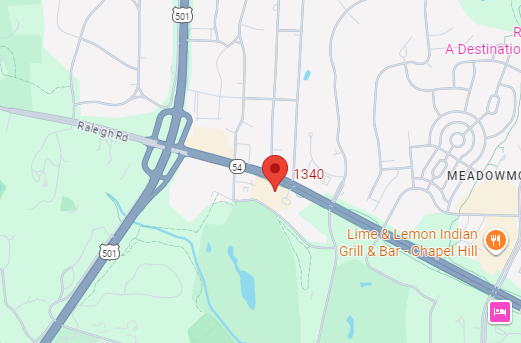
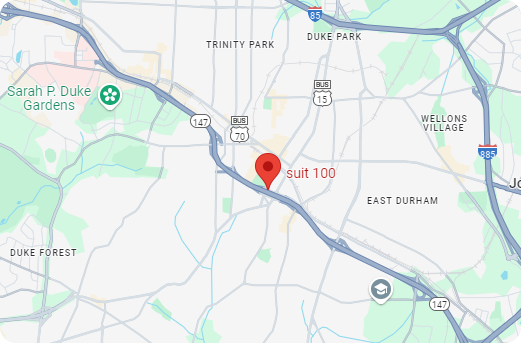
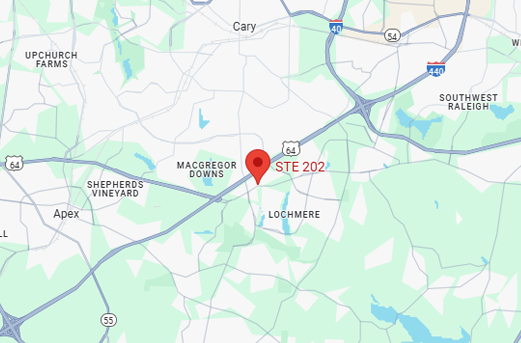
Child pornography charges in North Carolina are prosecuted under a three-tiered felony structure that distinguishes between production, distribution, and possession. The penalties, consequences, and long-term effects differ substantially depending on which tier applies. Whether you are facing charges, expect to be charged, or are trying to understand what someone close to you is up against, this page covers how North Carolina defines and classifies these offenses. It explains what you are facing at each sentencing level and what a conviction means for registration, immigration, employment, and daily life going forward. more What Do Child Pornography Charges Actually Mean in North Carolina? North Carolina prosecutes child pornography offenses under the label "sexual exploitation of a minor," and the law divides these charges into three degrees based on the nature of the alleged conduct. First-degree sexual exploitation of a minor under N.C.G.S. § 14-190.16 covers production and facilitation — using, employing, inducing, or coercing a minor to engage in sexual activity for the purpose of producing material, or producing, directing, or financing such material. This is a Class C or Class D felony, carrying a sentencing range of 44 to 182 months for Class C and 38 to 160 months for Class D. Second-degree sexual exploitation under N.C.G.S. § 14-190.17 covers distribution and receipt — recording, photographing, reproducing, or sharing material depicting a minor engaged in sexual activity. This is a Class E felony with a sentencing range of 15 to 63 or more months. Third-degree sexual exploitation under N.C.G.S. § 14-190.17A covers possession — knowingly possessing material depicting a minor engaged in sexual activity. This is a Class H felony, with sentences ranging from 5 to 29 months depending on prior record level. Two things about these statutes catch people off guard. First, mistake of age is explicitly not a defense at any level. The prosecution does not need to prove that you knew the person depicted was a minor. Courts allow the jury or judge to infer that a person depicted as a minor is in fact a minor based on the title, text, or visual representation of the material. Second, North Carolina has no teen-specific sexting statute. That means minors — beginning at age 16, when they can be tried as adults — can technically be prosecuted for sexually exploiting themselves through consensual sexting. This creates significant prosecutorial discretion issues that a defense attorney needs to navigate carefully. These cases can also be prosecuted federally, particularly when the material crossed state lines, involved the internet, or was identified through a federal investigation. The distinction between state and federal prosecution matters enormously for sentencing, as discussed below. What Penalties Am I Facing? Your potential sentences depend on the degree of the charge, your prior record, and whether the case is prosecuted in state or federal court. North Carolina uses a Structured Sentencing system that calculates punishment ranges based on the offense class and your prior record level. For sexual exploitation charges specifically, the law imposes an enhanced maximum sentence: for Class B1 through Class E felonies requiring sex offender registration, the maximum sentence is calculated at 120% of the minimum plus an additional 60 months, under N.C.G.S. § 15A-1340.17(f). At the state level, all Class B1 through D felony sex offense convictions result in mandatory active imprisonment — 100% of convictions in those classes received active prison time in FY 2024. For Class E and H felonies, the court has more discretion, and intermediate or community punishments are possible depending on the circumstances and prior record. Federal prosecution changes the picture dramatically. The average federal sentence for child pornography production is 273 months — nearly 23 years. Federal sexual abuse offenses carry a 99.2% imprisonment rate, and many of these offenses carry mandatory minimum sentences. These cases also move slowly. The median time from charge filing to sentencing for Class B1 felonies in North Carolina is 30 months — two and a half years — which is three times the overall felony median. Defendants convicted of serious sex offenses spent an average of 27 months in pretrial detention. The weight of the process itself is part of what makes early legal representation critical. Will I Have to Register as a Sex Offender? Yes. All three degrees of sexual exploitation of a minor require mandatory sex offender registration in North Carolina. There is no exception, no judicial discretion on this point, and no version of a conviction at any tier that avoids the registry. The standard registration period under North Carolina's Sex Offender Registry (N.C.G.S. § 14-208 et seq.) is 30 years. After 10 years, if you are not classified as a repeat offender, sexually violent predator, or aggravated offender, you may ask the court to end the registration requirement under N.C.G.S. § 14-208.12A. But that request is discretionary — it is not guaranteed to be granted. North Carolina currently has approximately 25,000 or more registered sex offenders, and the registry carries real daily consequences. If you are registered, you face residential restrictions, periodic in-person verification requirements, and potential GPS electronic monitoring. 581 sex offenders were enrolled in active GPS monitoring during FY 2022–2023. Registration status is publicly searchable, which affects housing, employment, and community life in ways that persist long after any sentence is served. What Are the Consequences Beyond Prison and the Registry? The consequences beyond your sentence extend into areas that many people do not consider until it is too late to address them. For non-citizens, the consequences can be immediate and permanent. Sexual abuse of a minor is classified as an aggravated felony under federal immigration law, which triggers mandatory deportation. Most sex offenses also qualify as crimes involving moral turpitude. Under Padilla v. Kentucky, 559 U.S. 356 (2010), defense counsel has a constitutional obligation to advise you of the immigration consequences of a guilty plea. That means any plea negotiation must account for these effects from the start. Beyond immigration, a conviction creates barriers to employment and professional licensing. Many licensing boards treat sex offense convictions as disqualifying under "good moral character" requirements. Housing options narrow significantly due to both registry restrictions and landlord screening practices. Military service and law enforcement careers are no longer an option. These consequences matter for defense strategy because they affect how a case should be negotiated. An outcome that looks acceptable when measured only in months of prison time may be devastating when its full long-term consequences are understood. This is one of the reasons that working with an attorney who regularly handles these cases — and who understands the full picture, not just the sentencing grid — matters. Talk to a North Carolina Criminal Defense Attorney Who Handles These Cases Patrick Roberts is a Raleigh criminal defense attorney who has handled sex crime cases across North Carolina for more than 24 years, including internet-based exploitation offenses. He is a former assistant district attorney in Wake, Johnston, and New Hanover counties, which means he understands how prosecutors classify and pursue these charges. He has co-authored a legal book on defending internet sex crimes and is admitted to practice before all three U.S. District Courts in North Carolina, the Fourth Circuit Court of Appeals, and the United States Supreme Court. Education & Advanced Training An alumnus of Johns Hopkins University (#7 National University) and Duke University School of Law (#7 National Law School; #9 Criminal Law Program), Mr. Roberts has dedicated his career to honing his trial craft. He is a graduate of the Gerry Spence’s Trial Lawyers College and the National Criminal Defense College (NCDC) Trial Practice Institute, including the 2025 Cross-Examination Intensive. Accolades & Peer Review • Martindale-Hubbell AV Preeminent Rating: 5+ Consecutive Years • Martindale-Hubbell Client Champion Platinum: 5+ Consecutive Years • AVVO 10/10 “Superb” Rating: 15+ Consecutive Years • The National Trial Lawyers: Top 100 Trial Lawyers Mr. Roberts is a published author of two legal books and a lifetime member of the National Association of Criminal Defense Lawyers. Client Review “Patrick was professional, honest, and the best lawyer I could have asked for during a very tough situation. Throughout the process, he remained a constant calm and reassuring presence during a challenging time in my life. His guidance and dedication made a difficult experience much more manageable.” - verified Client Review via Avvo.com Peer Endorsement " I endorse this lawyer. Patrick is a great trial lawyer and a person who I go to for legal advice in my own practice. Patrick is dedicated to his clients and a master at criminal defense. I would not hesitate to hire him if I was in trouble and needed a lawyer." - verified Peer Review via Avvo.com DISCLAIMER: Testimonials and peer reviews are for informational purposes only and do not guarantee or predict the outcome of your legal matter. Every case is unique and must be evaluated on its own merits. All endorsements featured on this site are actual comments from clients and peers. Case Review Case Summary: The State Bureau of Investigation (SBI) and local law enforcement traced illegal online activity to the client's IP address, leading to accusations of downloading child pornography. Following the execution of a search warrant at the residence, authorities seized multiple items suspected of containing illicit material, and the client provided a confession. Attorney Patrick Roberts intervened to present mitigating factors directly to the district attorney's office, countering the evidence gathered by law enforcement. Result: The state offered a favorable resolution, resulting in a strictly probationary sentence with no jail or prison time imposed. *Disclaimer: Each case is different and must be evaluated separately. Prior results achieved do not guarantee similar results can be achieved in future cases. View more case results Patrick Roberts Law serves clients from offices in Raleigh, Durham, Chapel Hill, and Cary. If you are facing child pornography charges or expect to be charged, contact the firm to discuss your case. The law firm limits the volume of active cases to ensure that their staff can provide consistent, comprehensive attention to every matter they handle. Disclaimer: The information on this website is for general informational purposes only. Nothing herein should be taken as legal advice for any individual case or situation. Contacting us via this website, email, or contact form does not create an attorney-client relationship. Case results depend on a variety of factors unique to each case; prior results do not guarantee a similar outcome.


Hand holding a U.S. passport introduces passport eligibility questions for registered sex offenders.

Can a Sex Offender Get a Passport?

A sex offense conviction does not automatically prevent you from obtaining a U.S. passport. In most cases, a registered sex offender can apply for and receive one. But whether you can get a passport and what that passport will look like when it arrives are two different questions. The distinction matters more than most people realize. Under the International Megan's Law, signed into law in 2016, the U.S. State Department is required to print a unique identifier inside the passports of certain registered sex offenders. That identifier and the immigration policies of your destination country create layers of restriction that go well beyond the passport application itself. Below is what you need to know about each of those layers if you are on the sex offender registry in North Carolina or anywhere else in the United States. more Does a Sex Offense Conviction Prevent You From Getting a Passport? No. Being a registered sex offender does not automatically prevent the issuing of a U.S. passport. The State Department follows its standard application procedures, and there is no blanket federal law that bars registered sex offenders from holding a passport. What changes is how the passport is issued and what it contains. If you are a covered sex offender, you may apply for a U.S. passport as long as you meet the conditions of International Megan's Law. The passport will be valid. It will allow you to leave the United States. But if your conviction involved a minor, the passport will carry a marking that has real consequences at foreign borders. You will also not be eligible for the smaller, less expensive passport card. What Is the International Megan's Law Passport Identifier? The International Megan's Law to Prevent Child Exploitation and Other Sexual Crimes Through Advanced Notification of Traveling Sex Offenders is a federal law that Congress passed in 2016. It requires a visual "unique identifier" to be placed on the passports of people convicted of sex offenses involving a minor. It also requires covered offenders to notify law enforcement 21 days before traveling abroad. The identifier is a statement printed inside the passport book which reads: "The bearer was convicted of a sex offense against a minor and is a covered sex offender pursuant to 22 USC 212b(c)(1)." This is not a subtle notation. It is a full printed statement inside your passport. The identifier immediately alerts foreign immigration officials upon scanning, though it does not automatically deny entry. It does, however, trigger additional screening that can result in being turned away at the border, detained, or deported. The message is too long to fit on the smaller passport card. As a result, covered sex offenders can only apply for and carry the more detailed, and more expensive, passport book. The State Department can revoke passports issued to covered sex offenders that do not contain the identifier. Which Offenses Trigger the Passport Identifier? Not every sex offense conviction triggers the identifier. International Megan's Law applies to anyone who is required to register under the sex offender registration program of any jurisdiction for a sex offense against a child. The key factor is whether the original offense involved a minor. The Angel Watch Center in the U.S. Department of Homeland Security determines whether a person qualifies as a covered sex offender under the law. This determination drives whether the State Department prints the identifier. In North Carolina, offenses that require sex offender registration and involve a minor include statutory rape under N.C.G.S. § 14-27.23 through § 14-27.25, indecent liberties with children under N.C.G.S. § 14-202.1, sexual exploitation of a minor under N.C.G.S. § 14-190.16, § 14-190.17, and § 14-190.17A, and solicitation of a child by computer under N.C.G.S. § 14-202.3. Convictions for offenses against adults — such as second-degree forcible rape under N.C.G.S. § 14-27.22 or sexual battery under N.C.G.S. § 14-27.33 — generally would not trigger the passport identifier. However, they still carry registration obligations under the NC Sex Offender Registry (N.C.G.S. § 14-208 et seq.). If your conviction involved an adult victim, you may be able to obtain a passport without the identifier. But you would still be subject to other travel requirements depending on your registration status and the terms of your supervision. If you believe you received an identifier in your passport by mistake, you can contact DHS at dhsintermeganslaw@ice.dhs.gov. Can You Travel Internationally With a Marked Passport? Having the identifier in your passport does not make the passport itself invalid. You can still board a flight out of the United States. The problem arises on the other end. Individual countries have their own policies on allowing registered sex offenders into their borders. Some enforce near-total bans. Countries such as Canada and New Zealand deny entry to most people with criminal convictions, while others, such as Costa Rica, deny entry to all registered sex offenders. Some countries review applicants with a criminal background on a case-by-case basis. Those subject to sex offender registration are frequently denied. There is no single, reliable list of countries that will or will not admit you. Immigration policies change frequently, and enforcement varies between different ports of entry within the same country. What worked for one traveler last year may not apply to your situation today. The only way to get a current, accurate answer for a specific destination is to contact that country's consulate or embassy directly, or to work with an attorney who can help you assess the risk before you book a flight. Beyond the destination country's policies, the United States itself operates a notification system. Under the International Megan's Law, when a covered sex offender provides the required advance travel notice, the Angel Watch Center can send that information to the destination country's government. That notification may prompt the foreign country to deny entry before you even arrive. Can You Get a Passport Without the Identifier? If the identifier was placed in your passport because you were on the sex offender registry for a qualifying offense against a minor, the identifier will remain as long as you are required to register. In North Carolina, the standard sex offender registration period is 30 years. But under N.C.G.S. § 14-208.12A, you may petition the superior court to end your registration requirement after 10 years from the date of initial county registration. To be eligible, you must not have been convicted of a later offense requiring registration. The court may grant relief if you show three things: you have not been arrested for any offense requiring registration since completing your sentence, the requested relief complies with the federal Jacob Wetterling Act and other applicable federal standards, and the court is satisfied that you do not pose a current or potential threat to public safety. If the court grants the petition, the clerk forwards a certified copy of the order to the Department of Public Safety. Your name is then removed from the registry. If the court denies the petition, you may petition again one year later. Removal from the registry could change your passport status because the International Megan's Law identifier is tied to being required to register. If you are no longer required to register for a qualifying offense, the reason for the identifier may no longer apply. However, this is not automatic — you would need to go through the passport reissue process with the State Department after successfully ending your registration. This is one of the areas where working with an experienced criminal defense attorney is important. The petition process under § 14-208.12A involves a hearing in superior court, and the district attorney has the right to present evidence against it. The victim of the original offense also has the right to appear and be heard by the court. A successful petition requires preparation and a clear record of evidence. How Can a Criminal Defense Attorney Help? Passport eligibility, the identifier, destination country policies, and the possibility of petitioning for registry removal — these are all separate legal questions with separate answers. They also interact with each other in ways that depend on your conviction, your registration status, and your individual circumstances. A criminal defense attorney can help you in several ways. They can assess whether your offense triggers the International Megan's Law identifier. They can petition the court under N.C.G.S. § 14-208.12A to end your registration requirement if you are eligible. And they can challenge the underlying conviction through post-conviction relief if grounds exist. Patrick Roberts is a Raleigh criminal defense attorney who handles sex offense cases across North Carolina, with additional offices in Durham, Chapel Hill, and Cary. He has handled thousands of criminal cases and has over two decades of experience. Education & Advanced Training An alumnus of Johns Hopkins University (#7 National University) and Duke University School of Law (#7 National Law School; #9 Criminal Law Program), Mr. Roberts has dedicated his career to honing his trial craft. He is a graduate of the prestigious Gerry Spence’s Trial Lawyers College and the National Criminal Defense College (NCDC) Trial Practice Institute, including the 2025 Cross-Examination Intensive. Accolades & Peer Review • Martindale-Hubbell AV Preeminent Rating: 5+ Consecutive Years • Martindale-Hubbell Client Champion Platinum: 5+ Consecutive Years • AVVO 10/10 “Superb” Rating: 15+ Consecutive Years • The National Trial Lawyers: Top 100 Trial Lawyers Mr. Roberts is a published author of two legal books and a lifetime member of the National Association of Criminal Defense Lawyers. A Former Prosecutor’s Insight Mr. Roberts’ defense strategy is informed by his tenure as an Assistant District Attorney in the Wake, Johnston, and New Hanover offices. This experience allows him to anticipate the tactics used by the state in complex sex crime litigation. Jurisdictional Admissions Qualified to handle cases at the highest levels, he is admitted to the U.S. Supreme Court, the Fourth Circuit Court of Appeals, and all North Carolina federal districts. He remains the sole North Carolina representative listed by the National Child Abuse Defense & Resource Center as of 2026. Client Review “Mr. Roberts was a great attorney to work with. From the start he was confident and transparent with us. He told us he had other strategies as back up in case his main one didn't go as planned. That showed us that he was prepared for any obstacle that was coming his way. We went to the first court hearing and waited, we then saw Mr. Roberts walk in with confidence and his head up high. He looked fearless and ready. That day we were the first ones out, we were in there for probably 10 minutes. The one thing that stuck with me that he said was "don't be scared because I'm not scared." He was good at communicating with us and keeping us informed with what was going on and when the next court dates would be. Overall he was a good attorney to work with, he dedicates and puts his time into your case and will work on it for however long he will need to whether it's lengthy or not. “ - Verified Client Review via Avvo.com * Peer Endorsement “I knew Patrick when he was an assistant District Attorney, and was also impressed with his high ethical standards, and his reasoned and experienced approach in handling his cases. He is an exemplary attorney and I highly recommend him.” - Verified Peer Endorsement via Avvo.com* If you have questions about how your conviction affects your ability to travel, contact Patrick Roberts Law to discuss your situation. To maintain a high standard of service and thorough oversight for each client, the firm manages a restricted caseload. *Disclaimer: Testimonials and peer reviews are for informational purposes only and do not guarantee or predict the outcome of your legal matter. Every case is unique and must be evaluated on its own merits. All endorsements featured on this site are actual comments from clients and peers. The information on this website is for general informational purposes only. Nothing herein should be taken as legal advice for any individual case or situation. Contacting us via this website, email, or contact form does not create an attorney-client relationship. Case results depend on a variety of factors unique to each case; prior results do not guarantee a similar outcome.
Attorney reviewing documents beside courtroom scene introduces North Carolina sex offender registration penalties.

What Happens If You Don't Register as a Sex Offender in North Carolina?

Failure to register as a sex offender in North Carolina is a criminal offense under the state's Sex Offender Registry statute (Article 27A, N.C.G.S. § 14-208 et seq.). It carries the possibility of active prison time, and it is prosecuted regardless of whether the underlying conviction was years or even decades ago. This page covers what the state considers a registration violation, what the sentencing range looks like, what defenses may apply, and what to do if you are facing this charge in Wake County or anywhere in North Carolina. more What Counts as a "Failure to Register" Under North Carolina Law? North Carolina's sex offender registration system imposes several ongoing obligations, and a violation of any one of them can result in a separate criminal charge. The registration system under N.C.G.S. § 14-208 et seq. requires compliance across multiple categories — not just the initial registration after conviction or release. The obligations that most commonly lead to charges include failing to complete initial registration with the county sheriff's office. You can also be charged for failing to report an address change within the required timeframe, failing to appear for mandatory in-person verification, or failing to notify authorities of changes to employment or enrollment status. North Carolina requires registration for 30 years under the standard period. Lifetime registration applies if you are classified as a recidivist, aggravated offender, or sexually violent predator. Location restrictions under N.C.G.S. § 14-208.18 create additional compliance requirements that, if violated, can generate separate charges. With approximately 25,000 registered sex offenders in North Carolina — including 839 in Wake County alone — the registry system leads to a large number of charges. Many of the people charged with a registration violation did not commit a new sex offense. They missed a deadline, moved without updating paperwork, or misunderstood what their specific obligations required. What Are the Penalties for Failing to Register as a Sex Offender in NC? North Carolina sentences felony offenses under the Structured Sentencing Act (N.C.G.S. § 15A-1340.10 et seq.). The Act calculates a sentencing range based on two variables: the offense class and your prior record level. That means the penalty for a registration violation is not a single fixed number — it shifts depending on your criminal history. The sentencing grid determines whether a judge can impose active imprisonment, intermediate punishment (such as supervised probation with conditions), or community punishment. If you have minimal prior criminal history, you may fall in a range where intermediate or community punishment is available. If you have a longer record, you may face a presumptive range that requires active time. The punishment for a failure to register charge can range from structured probation to years in prison. The difference often comes down to prior record level, the circumstances of the violation, and the quality of the defense presented. Can You Be Charged If You Didn't Know You Had to Register? This is the question at the center of most failure-to-register defenses. The registration obligations under Article 27A are complex. They vary by classification and depend on information the state is supposed to provide to you. That complexity creates room for a criminal defense attorney to examine how the charge was built. When defending registration cases under § 14-208 et seq., attorneys focus on the following areas: Challenging the accuracy of the initial classification. You may not have been correctly classified when you were placed on the registry. If your underlying conviction did not legally require registration, or if you were assigned a more restrictive tier than the offense warranted, the classification itself can be challenged. A charge built on obligations that should never have applied is a charge with a built-in problem. Challenging location restriction and verification requirements. The registration system imposes location restrictions under N.C.G.S. § 14-208.18 and periodic verification obligations that vary depending on your classification. An experienced defense attorney will examine whether the specific requirements the state claims were violated actually applied to your situation. The attorney will also examine whether those requirements were communicated to you accurately. Petition for termination of registration. Under N.C.G.S. § 14-208.12A, a person who is not classified as a recidivist, sexually violent predator, or aggravated offender may petition for removal from the registry after 10 years. If you have been charged with a registration violation, you may also have grounds to argue that you are eligible for removal. That fact can change your defense strategy and plea negotiations. None of these defenses are automatic. They require investigation, documentation, and an attorney who understands how the registration system works from the inside — including how classification and enforcement decisions are made in practice. What Should You Do If You've Been Charged With Failure to Register? If you are facing a failure to register charge in North Carolina, two things are true at the same time: the charge is serious, and defenses may be available. Prosecutors do not treat these cases casually. But a registration violation is not the same as being charged with a new sex offense, and the defenses available are specific, practical, and based on how the registration system actually functions. What matters now is how quickly the defense gets started. The circumstances of the alleged violation need to be documented while records are fresh — what your understanding was, whether the classification was correct, and whether the specific obligations the state says were violated actually applied. The structured sentencing calculation needs to be run accurately so the actual sentencing range is clear, not assumed. Hire an Experienced Sex Crime Lawyer Attorney Patrick Roberts in Raleigh has handled criminal defense cases across Wake, Durham, and the surrounding North Carolina counties for over two decades. Patrick Roberts is a former assistant district attorney in Wake, Johnston, and New Hanover counties — experience that means he understands how the state builds and evaluates cases from the inside, including how registration enforcement decisions are made at the prosecutorial level. He has co-authored a book on defending internet sex crimes and has handled thousands of criminal cases across the state. Education & Trial Advocacy Mr. Roberts holds a bachelor’s degree from Johns Hopkins University ( ranked #7 nationally) and a Juris Doctor from Duke University School of Law, which ranks #7 overall and #9 for its criminal law program. His commitment to courtroom excellence is evidenced by his completion of the industry's rigorous trial programs, including Gerry Spence’s Trial Lawyers College, the National Criminal Defense College (NCDC) Trial Practice Institute, and the 2025 NCDC Cross-Examination Intensive. Professional Recognition & Memberships With a career spanning decades, Mr. Roberts has maintained the highest possible peer and client ratings. He has held an AV Preeminent Peer Rating and the Client Champion Platinum award from Martindale-Hubbell for over five consecutive years. Additionally, he has sustained a perfect 10/10 "Superb" rating on AVVO for more than 15 years and is recognized as a Top 100 Trial Lawyer by The National Trial Lawyers. A lifetime member of the National Association of Criminal Defense Lawyers, he has also co-authored two legal texts, including a specialized guide on defending internet sex crimes. Admissions & National Listings He is admitted to practice before the U.S. Supreme Court, the Fourth Circuit Court of Appeals, and every federal district court in North Carolina. Furthermore, he is currently the only North Carolina attorney listed on the National Child Abuse Defense & Resource Center for 2026. Client Review “I highly recommend this attorney to anyone needing experienced and knowledgeable legal representation. From the beginning, he clearly explained the steps necessary to address my situation and made sure I understood the process along the way. He kept me informed as progress was being made and was always professional, responsive, and prepared. Although the legal process can move slowly at times, I always felt confident that my case was being handled properly. When my court date finally arrived, he was exceptionally well prepared and navigated the courtroom procedures with confidence and skill. His experience and attention to detail ultimately helped lead to a very positive outcome in my case. I truly appreciated his guidance and representation throughout the entire process.” - Verified client review via Avvo.com Peer Endorsement “I have known Patrick for years and have always been struck by his knowledge and dedication. I endorse him without hesitation or qualification.” - Verified peer endorsement via Avvo.com Disclaimer: Testimonials and peer reviews are for informational purposes only and do not guarantee or predict the outcome of your legal matter. Every case is unique and must be evaluated on its own merits. All endorsements featured on this site are actual comments from clients and peers. If you have been charged with failing to register or believe a charge may be coming, contact Patrick Roberts Law for a case evaluation. The earlier the defense investigation begins, the more options remain available. The firm maintains a selective intake process to ensure that each client receives the focused professional attention their case requires. Disclaimer: The information on this website is for general informational purposes only. Nothing herein should be taken as legal advice for any individual case or situation. Contacting us via this website, email, or contact form does not create an attorney-client relationship. Case results depend on a variety of factors unique to each case; prior results do not guarantee a similar outcome.

Contact Us

Fill out this form below and we'll contact you shortly
*Required Fields