
Misdemeanor larceny is a type of theft crime in North Carolina that’s less serious than felony larceny. Both involve taking someone else’s property, but it’s important to know the difference if you’re facing theft charges in North Carolina.
What Is Misdemeanor Larceny in North Carolina?
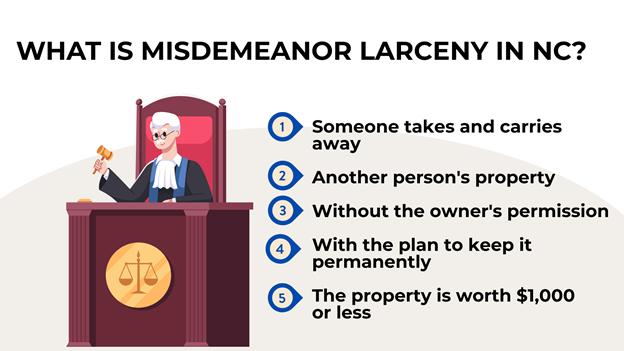
According to North Carolina law (General Statute § 14-72), misdemeanor larceny happens when:
- Someone takes and carries away
- Another person’s property
- Without the owner’s permission
- With the plan to keep it permanently
- And the property is worth $1,000 or less
The law clearly states: “Except as provided in subsections (b) and (c) of this section, larceny of property, or the receiving or possession of stolen goods knowing or having reasonable grounds to believe them to be stolen, where the value of the property or goods is not more than one thousand dollars ($1,000), is a Class 1 misdemeanor.”
How Does the $1,000 Line Determine Misdemeanor vs. Felony?
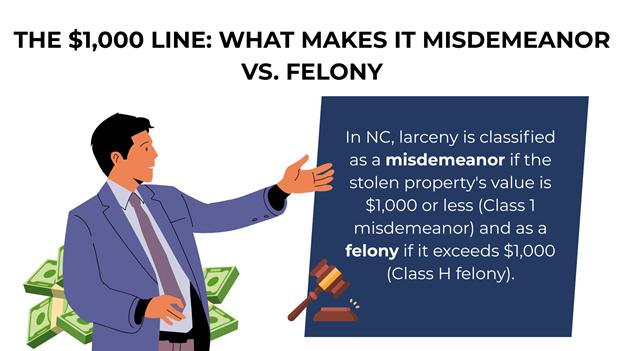
The main difference between misdemeanor larceny and felony larceny in North Carolina is how much the stolen property is worth. Under § 14-72(a), if the property value is $1,000 or less, it’s a Class 1 misdemeanor. If it’s worth more than $1,000, it becomes a Class H felony.
Possible Defense: Questioning the value of the property is a common strategy. If you can show the property was actually worth less than $1,000, a felony charge might be reduced to a misdemeanor.
When Can Stealing $1,000 or Less Still Be a Felony?
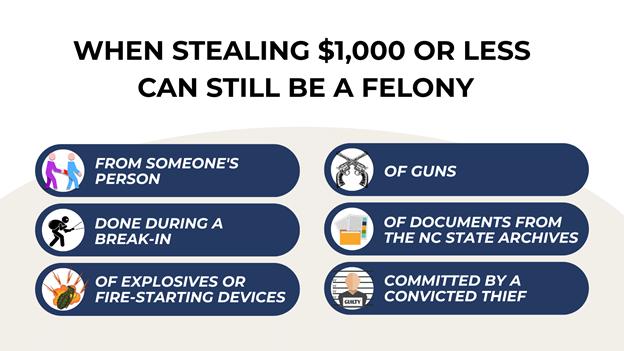
Even if what you took is worth $1,000 or less, certain situations will automatically make it a felony in North Carolina. According to § 14-72(b), these include when the theft is:
- From someone’s person (like pickpocketing) (§ 14-72(b)(1))
- Done during a break-in (§ 14-72(b)(2), referencing §§ 14-51, 14-53, 14-54, 14-54.1, or 14-57)
- Of explosives or fire-starting devices (§ 14-72(b)(3))
- Of guns (§ 14-72(b)(4))
- Of documents from the NC State Archives (§ 14-72(b)(5))
- Committed by someone who has been convicted of theft four or more times before (§ 14-72(b)(6))
Possible Defense: If you’re charged with felony larceny because of past convictions, your lawyer might challenge whether those prior cases really count or if there’s proper proof of them.
How Is Shoplifting Treated (a Related Crime) Treated?
North Carolina law also covers shoplifting under § 14-72.1 as “concealment of merchandise.” This makes it a misdemeanor to hide store merchandise without paying for it. Just the act of hiding the item can be seen as proof you intended to steal it.
Possible Defense: Showing you didn’t mean to steal, like if you got distracted and forgot about the item, or proving you didn’t have a chance to pay before security approached you.
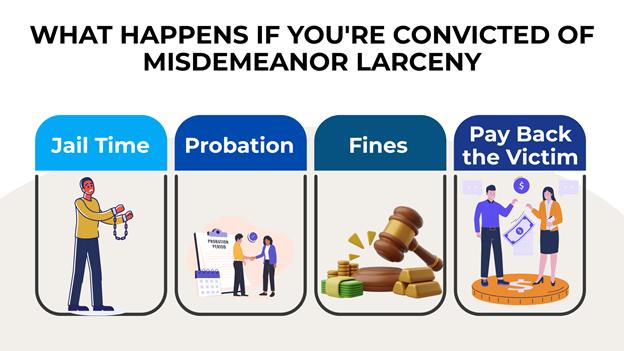
What Happens If You’re Convicted of Misdemeanor Larceny?
As a Class 1 misdemeanor in North Carolina, misdemeanor larceny can lead to:
- Jail time, as specified in § 15A-1340.23
- Probation
- Fines (amount decided by the judge)
- Possibly having to pay back the victim
For first-time offenders, courts often choose probation instead of jail time, especially if you pay back what was taken.
Possible Defense: Even with strong evidence against you, a lawyer might be able to negotiate a deal where charges are dismissed after you complete community service and pay restitution.
How Do Shoplifting Penalties Increase with Multiple Offenses?
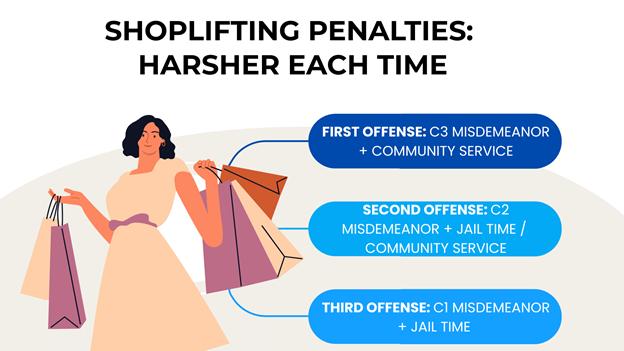
For shoplifting specifically, North Carolina has created a system of increasing punishments under § 14-72.1(e):
- First offense: Class 3 misdemeanor with potential for community service
- Second offense within a few years of the first: Class 2 misdemeanor with potential jail time or community service
- Third or later offense within a few years of the first: Class 1 misdemeanor with potential jail time
Possible Defense: For repeat shoplifting charges, if you can prove you have mental or physical health problems that prevent you from doing community service, the court might allow a different punishment.
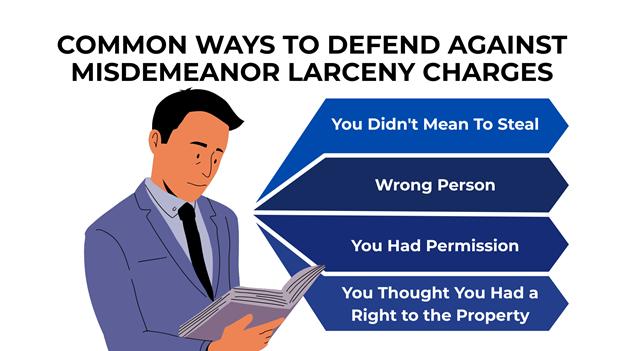
What Are Common Ways to Defend Against Misdemeanor Larceny Charges?
You Didn’t Mean To Steal
One of the most common defenses is showing you didn’t intend to steal. If you thought the property was yours, believed you had permission to take it, or planned to return it, this could fight against the “intent to permanently deprive” part of larceny.
Wrong Person
Especially in shoplifting cases where security camera footage might be unclear, proving you were mistakenly identified can be an effective defense.
You Had Permission
If you can show the owner gave you permission to take the property (even if there was a misunderstanding about the details), this contradicts a key part of what makes something larceny.
You Thought You Had a Right to the Property
If you honestly believed you had a legal right to the property, even if that belief was wrong, this can serve as a defense to larceny charges.
What Are the Long-Term Problems from a Misdemeanor Larceny Conviction?
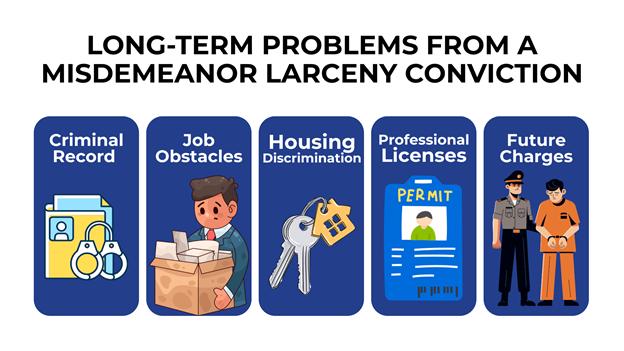
Beyond the immediate penalties, having a misdemeanor larceny conviction in North Carolina can affect your life in lasting ways:
- Creating a criminal record
- Making it harder to get jobs, especially ones where you handle money or merchandise
- Possible discrimination when trying to rent housing
- Impact on professional licenses or certifications
- Being considered if you face new charges in the future
Why Should You Talk to a North Carolina Criminal Defense Lawyer?
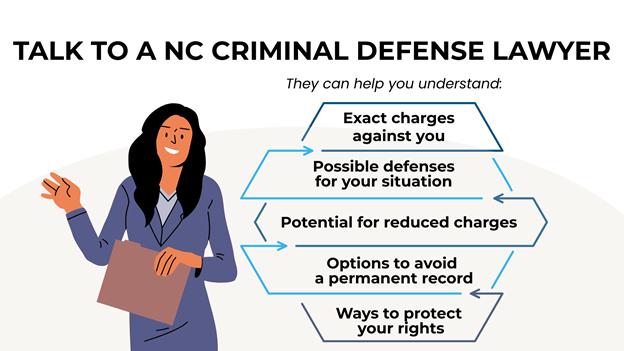
If you’re facing misdemeanor larceny charges in North Carolina, it’s important to speak with an experienced criminal defense lawyer. They can help you understand:
- The exact charges against you
- Possible defenses based on your specific situation
- Whether prosecutors might agree to reduce the charges
- Options for avoiding a permanent criminal record, such as special programs
- How to protect your rights throughout the court process
A good lawyer can make a big difference in how your case turns out, potentially helping you avoid conviction altogether or reducing the consequences you face.
Remember, each case is different, and the specific facts of your situation will determine the best approach to your defense. Don’t delay in seeking legal help if you’re facing theft charges in North Carolina.
A misdemeanor larceny charge may seem minor, but a conviction can still leave a lasting mark on your record. If you or someone close to you has been accused, having a knowledgeable defense attorney can make all the difference. Patrick Roberts has helped clients avoid convictions* and move forward with confidence. Schedule a confidential consultation today to discuss your options.
*While Attorney Roberts works hard to secure results for his clients, every case is unique and must be evaluated on its individual facts. Past results do not guarantee future success. Each client’s case requires a unique strategy based on the facts of that case.
Former assistant district attorney
Contact Patrick Roberts
Facing criminal charges in North Carolina demands seasoned representation. Trust in the experience and dual perspective of Patrick Roberts. Reach out today for a confidential consultation.
-
Call Our Team
Calls answered 24/7






For more information on the selection criteria, go to www.martindale.com
*Each case is different and must be evaluated separately. Prior results achieved do not guarantee similar results can be achieved in future cases.