
Being accused of first-degree statutory sexual offense in North Carolina places everything you’ve built at risk—your freedom, your career, your family, and your reputation in the community. In Cary and throughout the Research Triangle, where professionals often hold positions requiring security clearances, professional licenses, or public trust, these accusations carry consequences that extend far beyond the courtroom. The charge itself is among the most serious in North Carolina’s criminal code, classified as a Class B1 felony with mandatory minimum sentencing requirements that can result in decades in prison.
North Carolina law treats sexual offenses involving children with maximum severity, and prosecutors in Wake County pursue these cases aggressively. Understanding exactly what the State must prove—and where the evidence may fall short—requires an attorney who has handled these cases from both sides. Patrick Roberts’ years as a prosecutor handling sex-offense cases gives him direct insight into how the State builds its case, what evidence it prioritizes, and where strategic weaknesses may exist.
What Is First-Degree Statutory Sexual Offense Under North Carolina Law?
First-degree statutory sexual offense is defined under N.C. Gen. Stat. § 14-27.29 and represents one of the most serious sexual offense charges in the state. The statute establishes specific elements that Wake County prosecutors must prove beyond a reasonable doubt to secure a conviction.
What Are the Specific Elements Prosecutors Must Prove?
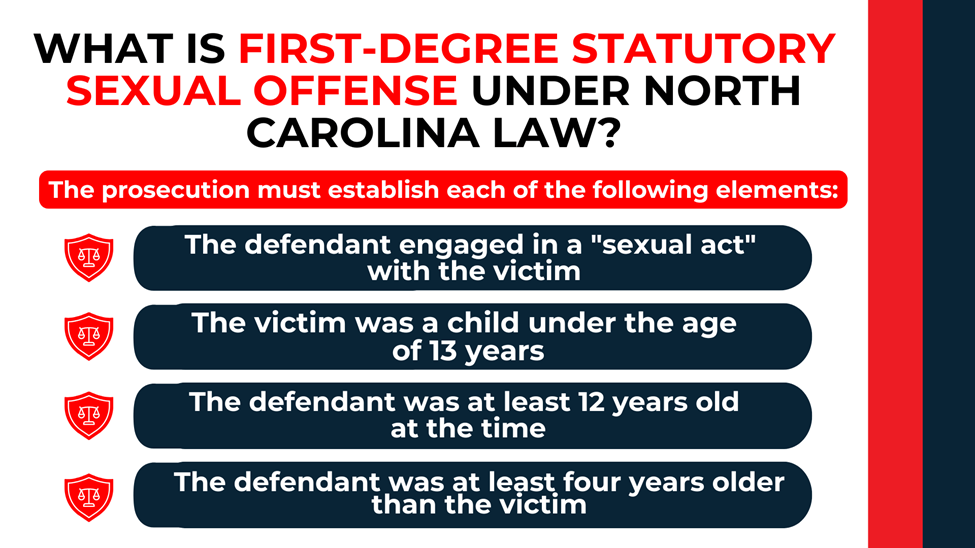
Under the statute, the prosecution must establish each of the following elements:
- The defendant engaged in a “sexual act” with the victim
- The victim was a child under the age of 13 years
- The defendant was at least 12 years old at the time
- The defendant was at least four years older than the victim
Each element must be proven independently, and the failure to establish any single element should result in acquittal. Having prosecuted these cases, Patrick Roberts understands how district attorneys construct their evidence to address each element—and he knows how to identify gaps in that construction.
What Qualifies as a “Sexual Act” Under the Statute?
North Carolina law distinguishes between “sexual act” and “vaginal intercourse” when defining sexual offenses. A sexual act includes cunnilingus, fellatio, analingus, anal intercourse, or the penetration by any object into the genital or anal opening of another person’s body. This distinction matters because statutory sexual offense charges apply to sexual acts, while statutory rape charges apply to vaginal intercourse. The Wake County District Attorney’s office carefully evaluates alleged conduct to determine which charges apply.
How Does This Charge Differ From Statutory Rape?
The key distinction lies in the type of sexual conduct alleged. Statutory rape under North Carolina law involves vaginal intercourse, while statutory sexual offense involves other sexual acts as defined above. Both carry Class B1 felony classifications when the victim is under 13 and the age-gap requirements are met, but they are separate offenses. Prosecutors may charge both offenses if the alleged conduct includes both types of sexual contact.
What Makes This a Class B1 Felony and What Does That Mean?
A Class B1 felony represents the second-most-serious felony classification in North Carolina’s structured sentencing system. For Cary residents—many of whom have built careers at companies like SAS Institute, Epic Games, or defense contractors requiring security clearances—a conviction at this level means more than prison time.
How Severe Are the Potential Penalties for a Class B1 Felony?
North Carolina’s structured sentencing guidelines determine the presumptive range based on the defendant’s prior record level. However, the consequences of a Class B1 felony conviction extend well beyond the sentence itself, particularly for professionals in the Research Triangle’s competitive employment market.
What Additional Consequences Come With a Conviction?
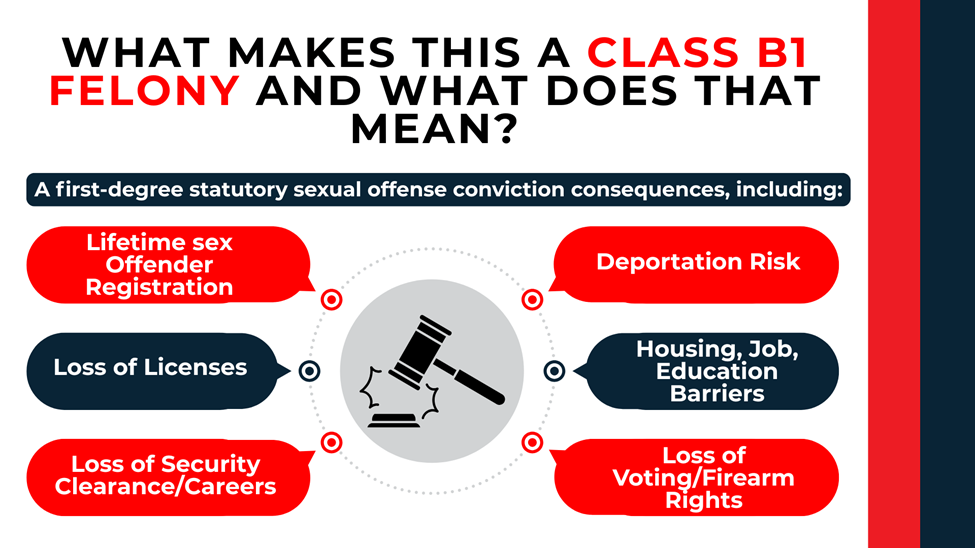
The collateral consequences of a first-degree statutory sexual offense conviction are severe and lasting. They include:
- Mandatory sex offender registration, often for life
- Loss of professional licenses in fields including healthcare, education, law, and finance
- Revocation of security clearances, ending careers at defense contractors like Lockheed Martin
- Immigration consequences including deportation for non-citizens (affecting Cary’s substantial immigrant population in the tech sector)
- Permanent barriers to housing, employment, and educational opportunities
- Loss of civil rights including voting and firearm ownership
Strategic Defense Against Complex Charges
For cases involving sensitive allegations, the stakes extend far beyond the courtroom. Attorney Patrick Roberts’ specialized training through the National Association of Criminal Defense Lawyers (NACDL)—where he is a lifetime member and has attended recent sex-crimes defense seminars—includes a deep understanding of how legal and collateral consequences interact.
By utilizing creative defense techniques, his defense strategy accounts for these complexities from the outset. The intensive trial advocacy training he completed at Gerry Spence’s Trial Lawyers College—methods focused on connecting with juries and presenting compelling narratives—ensures that trial preparation is both thorough and effective.
How Does Sentencing Work Under North Carolina’s Structured System?
North Carolina uses a structured sentencing grid that considers both the offense class and the defendant’s prior record level. For Class B1 felonies, the presumptive sentences are substantial even for defendants with no prior criminal history. The system provides ranges rather than fixed sentences, and factors including the circumstances of the offense and the defendant’s background influence where within the range the court sentences.
How Do Related Statutory Sexual Offense Charges Compare?
North Carolina’s statutory scheme includes several related offenses that may apply depending on the specific facts. Understanding how these charges relate helps defendants and their families grasp what they’re facing—and helps defense counsel anticipate how the Wake County District Attorney may approach charging decisions.
What Is Statutory Sexual Offense with a Child by an Adult?
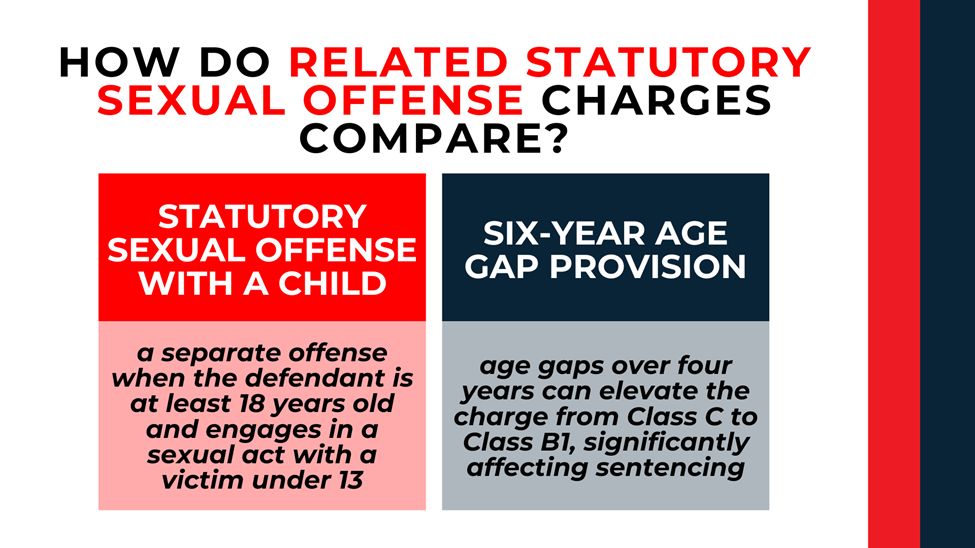
N.C. Gen. Stat. § 14-27.28 creates a separate offense when the defendant is at least 18 years old and engages in a sexual act with a victim under 13. This offense is also a Class B1 felony but carries a mandatory minimum active sentence of 300 months—25 years—regardless of prior record. The statute also permits sentences up to life imprisonment without parole in cases involving egregious aggravation. First-degree statutory sexual offense under § 14-27.29 is specifically identified as a lesser included offense of this charge.
When Does the Six-Year Age Gap Provision Apply?
N.C. Gen. Stat. § 14-27.30 addresses statutory sexual offenses with victims who are 15 years old or younger. When the defendant is at least six years older than the victim, it’s a Class B1 felony. When the age gap is more than four years but less than six years, the offense is classified as a Class C felony—still serious, but with different sentencing implications. This distinction can significantly impact case outcomes.
Can Prosecutors Charge Multiple Offenses From the Same Conduct?
Prosecutors have discretion in charging decisions, and Wake County’s District Attorney’s office may charge multiple related offenses arising from the same alleged conduct. Patrick Roberts’ NCADRC training—he is the only North Carolina attorney listed on falseallegation.org’s registry of NCADRC-trained defenders—provides specialized insight into how charging decisions in child-victim cases are made and how to challenge prosecutorial overreach.
How Do Cary Police and Wake County Authorities Investigate These Cases?
Investigations into first-degree statutory sexual offense allegations in Cary involve specialized law enforcement units with training specific to these sensitive cases. Understanding how these investigations unfold is essential to mounting an effective defense.
What Role Does Cary PD’s Special Victims Unit Play?
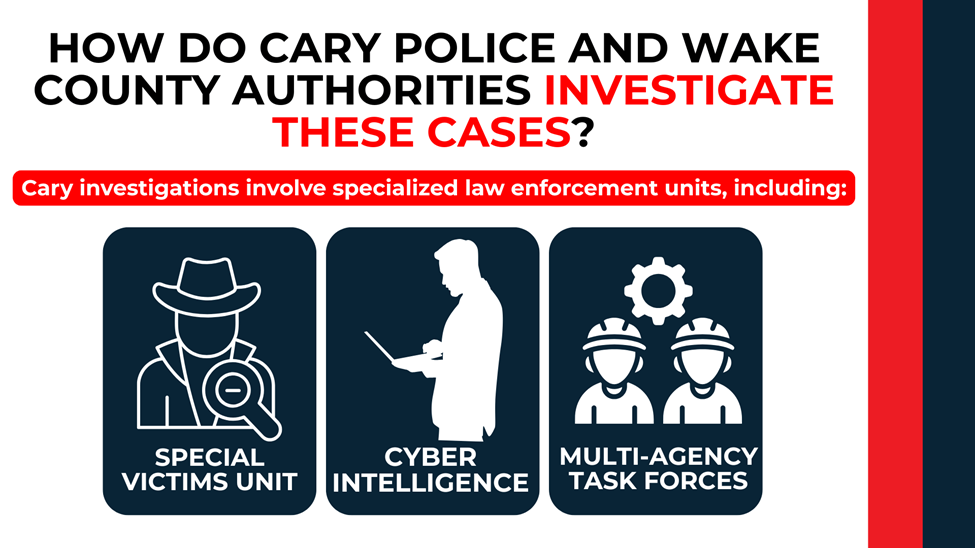
Cary Police Department maintains a dedicated Special Victims Unit within its Investigations Division. SVU detectives handle sexual assault investigations, child exploitation cases, and domestic violence matters. These detectives receive specialized training in interviewing techniques, evidence collection, and working with child victims. When an allegation arises in Cary, SVU typically leads the investigation before the case is referred to the Wake County District Attorney for prosecution.
How Does Digital Evidence Factor Into These Investigations?
In Cary’s tech-driven community, digital evidence frequently plays a central role in these investigations. Cary Police Department operates the only dedicated Cyber Intelligence Unit among the Triangle’s four major police departments—a specialized team that Raleigh, Durham, and Chapel Hill lack. This unit focuses on identifying online offenders and investigating cases involving digital evidence, including communications, images, and device forensics. Work computers, personal devices, and cloud storage are commonly examined.
What Multi-Agency Task Forces May Be Involved?
Serious allegations may involve coordination between multiple agencies. CPD’s Special Victims Unit works with the North Carolina State Bureau of Investigation’s Cyber Crimes Unit, federal agencies, and task forces including Operation Southern Impact and the Internet Crimes Against Children task force. Patrick Roberts’ prosecutorial background means he understands how these multi-agency investigations operate—knowledge that proves valuable when challenging evidence collection procedures or identifying constitutional issues.
What Defense Strategies Apply to First-Degree Statutory Sexual Offense Cases?
Defending against first-degree statutory sexual offense charges requires a strategic approach tailored to the specific facts and evidence in each case. No two cases are identical, and effective defense begins with thorough investigation and analysis.
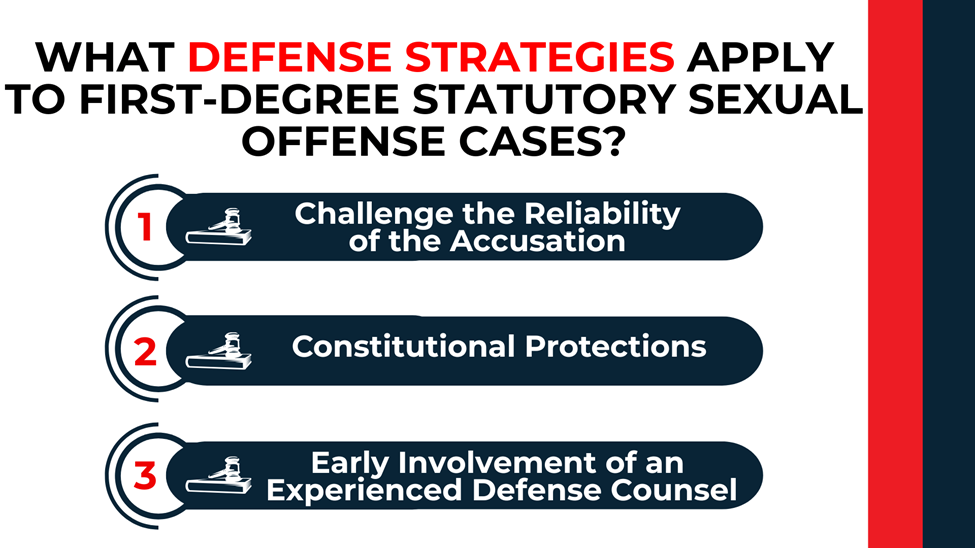
Can the Reliability of the Accusation Be Challenged?
Many of these cases rest heavily on the statements of the alleged victim, sometimes obtained through forensic interviews. Defense strategies may focus on:
- Analyzing forensic interview techniques for suggestibility or leading questions
- Examining the circumstances under which the allegation emerged
- Investigating potential motives for false accusations (custody disputes, family conflict, coaching)
- Challenging the reliability of child witness testimony based on developmental factors
- Identifying inconsistencies between statements made at different times
As the only North Carolina attorney listed on falseallegation.org’s registry of NCADRC-trained defenders, Patrick Roberts brings specialized training in identifying and challenging unreliable allegations involving children.
What Constitutional Issues May Affect the Case?
Constitutional protections apply with full force in these cases. The advanced cross-examination training Patrick Roberts received as a graduate of the National Criminal Defense College proves essential when challenging:
- Fourth Amendment issues related to searches of homes, devices, or digital accounts
- Fifth Amendment concerns about statements made during investigation
- Sixth Amendment confrontation rights when the State relies on hearsay
- Due process violations in investigation or prosecution
Defending Your Future Against Serious Allegations
When facing sensitive legal charges, the consequences reach far beyond the courtroom. Attorney Patrick Roberts provides a defense built on high-level training and a deep understanding of how these cases affect your life.
How Attorney Patrick Roberts Protects You:
- Extensive Training: As a lifetime member of the National Association of Criminal Defense Lawyers (NACDL), Patrick has completed advanced seminars on sex-crimes defense. This allows him to navigate the most complex legal and personal challenges of your case.
- Persuasive Advocacy: Patrick is a graduate of Gerry Spence’s Trial Lawyers College. He uses proven methods to tell your story in a way that truly resonates with a jury, ensuring your voice is heard.
- A Proactive Strategy: Rather than using a standard approach, Patrick develops a custom defense from day one. He focuses on both winning at trial and minimizing the long-term impact on your reputation.
Why Does Your Choice of Defense Attorney Matter in These Cases?
The attorney you choose to defend against first-degree statutory sexual offense charges will shape every aspect of your case—from initial investigation through potential trial.
What Should You Look for in a Defense Attorney?
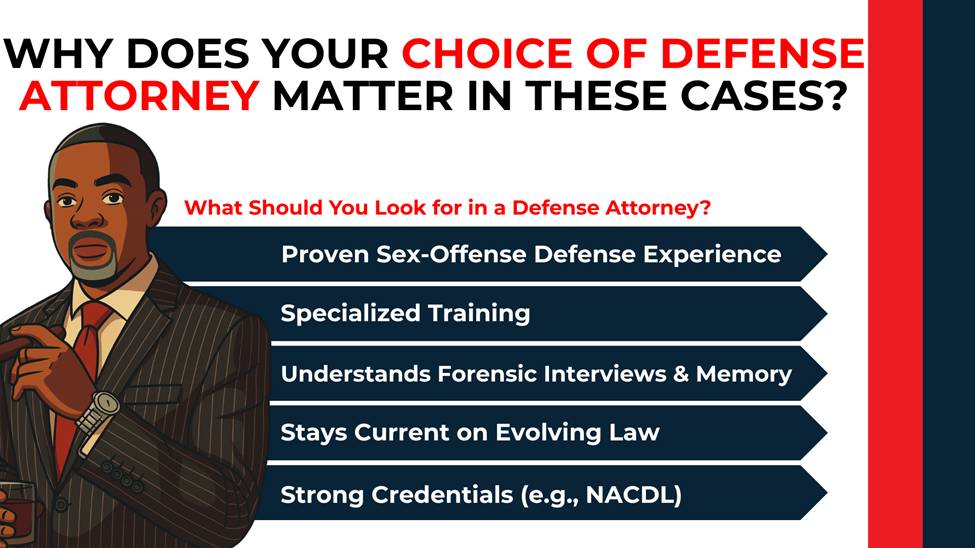
These cases demand an attorney with specific experience and training. The National Association of Criminal Defense Lawyers—where Attorney Patrick Roberts holds lifetime membership—recognizes the specialized knowledge required for sex-offense defense. Look for an attorney who has handled these cases extensively, understands the science behind forensic interviews and memory, and maintains current training in this evolving area of law.
Highly Recommended by His Peers
Mr. Robert’s work has earned him the trust of the legal community. A fellow attorney shared the following via Martindale-Hubbell on October 29, 2018:
“Patrick Roberts is my #1 referral for my own clients facing criminal issues (State and Federal) and for people that call my office requesting consultation on criminal matters. Patrick’s expertise in the field, experience in the courtroom and professionalism are the reasons he is my top recommendation. He is trustworthy, reliable and highly esteemed by his peers, employees and friends. If I were ever facing charges of a criminal nature, I would want Patrick to go to bat for me.”
How Does Trial Experience Impact Case Outcomes?
While many cases resolve through negotiation, the willingness and ability to take a case to trial strengthens every aspect of defense—including negotiation leverage. Attorney Patrick Roberts’ training at Gerry Spence’s Trial Lawyers College—where he was trained directly by one of America’s most successful trial lawyers—shapes his approach to jury selection, witness examination, and courtroom presentation. Combined with his experience trying cases in Wake County courts, this preparation serves clients whether their case goes to trial or resolves beforehand.
Frequently Asked Questions
What is the difference between statutory sexual offense and statutory rape in NC?
The primary distinction is the type of sexual conduct involved. Statutory rape involves vaginal intercourse, while statutory sexual offense involves other sexual acts including oral sex and anal intercourse. Both are Class B1 felonies when the victim is under 13 and the age requirements are met, but they are charged as separate offenses under different statutes.
Can I be required to register as a sex offender if convicted?
Yes. A conviction for first-degree statutory sexual offense requires sex offender registration. The duration and terms of registration depend on the specific offense and other factors, but registration requirements are substantial and may be lifelong.
Where will my case be heard if I’m arrested in Cary?
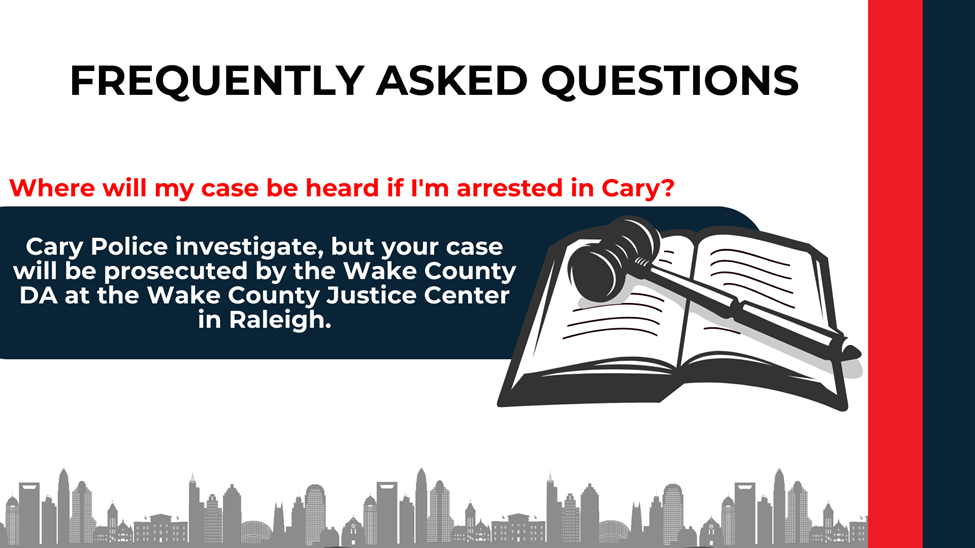
Although Cary Police Department handles the investigation, all criminal prosecutions proceed through Wake County courts. Your case will be heard at the Wake County Justice Center in Raleigh, with the Wake County District Attorney’s office handling prosecution.
How long do these cases typically take in Wake County?
Felony cases, particularly serious sex offense charges, often take many months to resolve. The timeline depends on factors including the complexity of evidence, the court’s calendar, and whether the case proceeds to trial. Having defense counsel familiar with Wake County procedures helps navigate this process efficiently.
What should I do if I’m being investigated but haven’t been charged?
Contact an experienced defense attorney immediately. The investigation phase presents both risks and opportunities. An attorney can protect your rights during any police contact, preserve evidence that may help your defense, and potentially influence whether charges are filed at all.
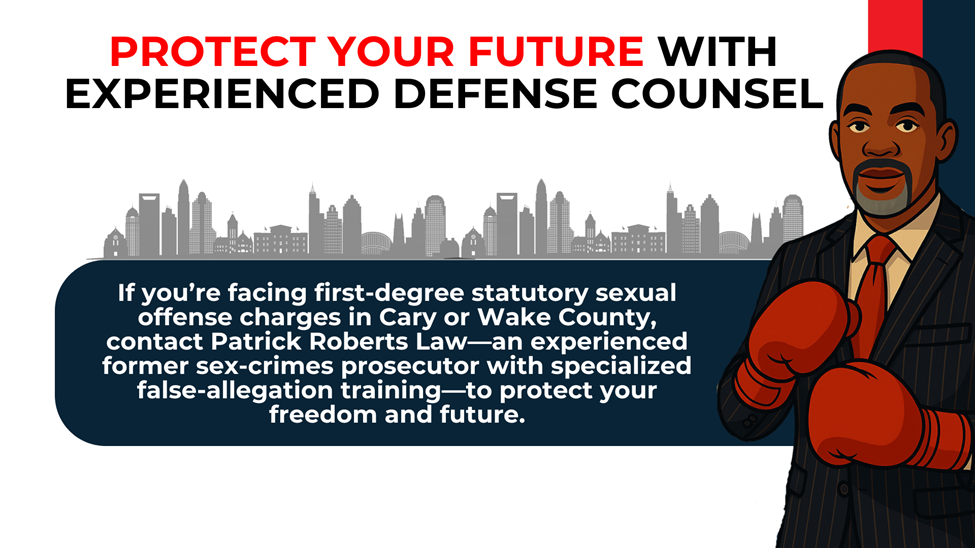
Protect Your Future With Experienced Defense Counsel
If you’re facing first-degree statutory sexual offense charges in Cary or anywhere in Wake County, the stakes couldn’t be higher. Your career, your freedom, and your future depend on the defense you mount today.
Mr. Patrick Roberts brings a combination of experience that few defense attorneys can match: years prosecuting sex-offense cases that taught him exactly how the State builds these cases, combined with specialized training through NCADRC that makes him the only North Carolina attorney listed on falseallegation.org’s registry as of December 2025. This dual perspective—understanding both how prosecutors think and how to effectively challenge their cases—serves clients facing the most serious charges.
Contact Patrick Roberts Law today to discuss your case and understand your options.
Disclaimer: The information on this website is for general information purposes only. Nothing on this site should be taken as legal advice for any individual case or situation. Case results depend upon a variety of factors unique to each case. Prior results do not guarantee a similar outcome.
Former assistant district attorney
Contact Patrick Roberts
Facing criminal charges in North Carolina demands seasoned representation. Trust in the experience and dual perspective of Patrick Roberts. Reach out today for a confidential consultation.
-
Call Our Team
Calls answered 24/7






For more information on the selection criteria, go to www.martindale.com
*Each case is different and must be evaluated separately. Prior results achieved do not guarantee similar results can be achieved in future cases.