
When facing allegations involving sexual offenses in Cary, North Carolina, understanding the precise legal distinctions between different charges can mean the difference between decades behind bars and a viable defense strategy. The terms “rape” and “statutory rape” carry fundamentally different legal meanings under North Carolina law, despite both falling under serious felony classifications.
For residents of Cary—a community where violent crime occurs at exceptionally low rates compared to national averages—accusations of sexual offenses carry particularly severe social and legal consequences. The Wake County District Attorney’s Office prosecutes these cases aggressively, and the Cary Police Department’s Special Victims Unit conducts thorough investigations that often involve multi-agency coordination.
What Is the Fundamental Difference Between Rape and Statutory Rape?
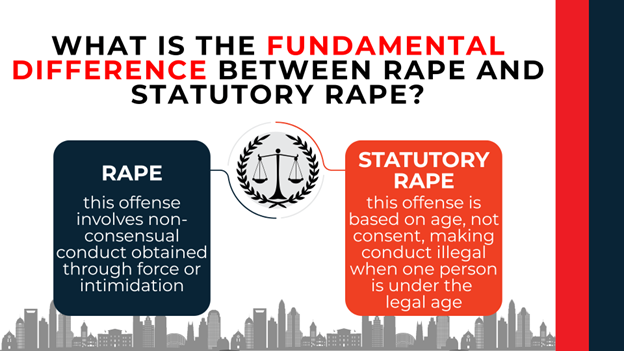
The core distinction centers on consent and the use of force.
Rape involves sexual intercourse accomplished through force and against the will of another person. Under North Carolina General Statutes Article 7B, forcible rape requires the prosecution to prove that the defendant engaged in vaginal intercourse by force and without the victim’s consent.
Statutory rape, by contrast, does not require proof of force or lack of consent. Instead, it criminalizes sexual intercourse based solely on the age of the participants, regardless of whether the younger person agreed to the sexual activity. North Carolina law establishes specific age thresholds that make certain sexual conduct illegal even when all parties believed the encounter was consensual.
This age-based prohibition reflects the legal principle that minors below certain ages cannot legally consent to sexual activity, regardless of their actual willingness or the circumstances surrounding the encounter.
How Does North Carolina Define First-Degree Forcible Rape?
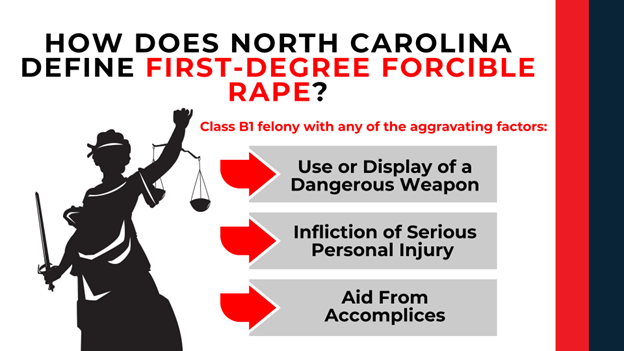
First-degree forcible rape represents the most serious rape charge under North Carolina law. According to N.C. Gen. Stat. § 14-27.21, a person commits this Class B1 felony when they engage in vaginal intercourse with another person by force and against that person’s will, combined with any of the following aggravating factors:
- Use or display of a dangerous weapon – The defendant uses, threatens to use, or displays a weapon that the victim reasonably believes could cause serious harm
- Infliction of serious personal injury – The defendant causes significant physical injury to the victim or another person during the commission of the offense
- Aid from accomplices – The defendant commits the rape with the assistance of one or more other people
Cases handled in Wake County courts often involve detailed forensic evidence, witness testimony, and electronic communications. For professionals working in the Research Triangle Park area or residents of Cary’s tech-oriented community, digital evidence including text messages, social media interactions, and location data frequently becomes central to both prosecution and defense strategies.
Attorney Patrick Roberts brings critical insight to these cases through his experience prosecuting sex crimes. This background allows him to anticipate how the state builds forcible rape cases and identify weaknesses in the prosecution’s theory before charges proceed to trial.
What Constitutes Second-Degree Forcible Rape in North Carolina?
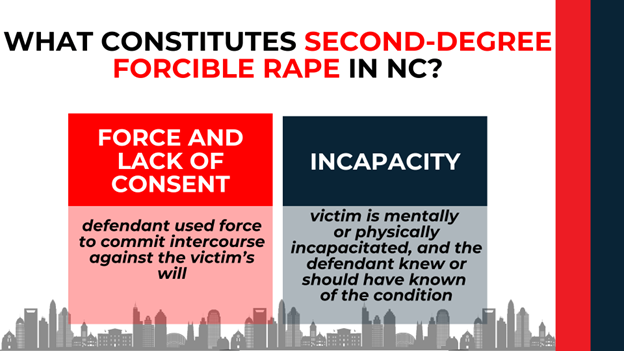
Second-degree forcible rape, defined in N.C. Gen. Stat. § 14-27.22, applies when a person engages in vaginal intercourse with another person under either of two circumstances:
Force and lack of consent scenario:
- The defendant uses force to accomplish intercourse
- The sexual act occurs against the will of the other person
Incapacity scenario:
- The victim has a mental disability, is mentally incapacitated, or is physically helpless
- The defendant knows or should reasonably know about the victim’s condition
This Class C felony charge frequently arises in situations involving:
- Alcohol or drug intoxication that renders a person incapable of consenting
- Unconsciousness at the time of the sexual encounter
- Mental disabilities that affect a person’s ability to understand or resist sexual activity
- Physical conditions that prevent someone from communicating unwillingness to participate
In Cary’s highly educated community, cases sometimes involve complex questions about what a defendant “should reasonably know” regarding another person’s level of intoxication or capacity to consent. These factual disputes often require careful examination of witness testimony, video footage from local establishments, and expert testimony regarding impairment levels.
How Is Statutory Rape of a Child by an Adult Different?
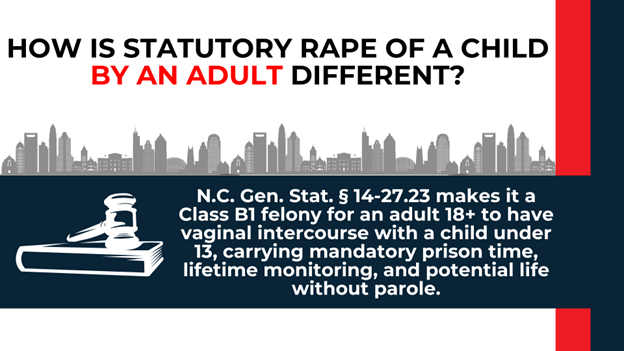
N.C. Gen. Stat. § 14-27.23 creates an exceptionally severe offense when an adult engages in sexual activity with a young child. Under this statute, a person commits statutory rape of a child by an adult when:
- The defendant is at least 18 years of age
- The defendant engages in vaginal intercourse with a victim
- The victim is under 13 years of age
This Class B1 felony carries mandatory minimum active punishment, and conviction subjects the defendant to satellite-based monitoring for life following release. The statute contains provisions allowing courts to impose sentences beyond standard guidelines—up to and including life without parole—when the circumstances involve extraordinary brutality, duration, or harm to the victim.
The Cary Police Department’s participation in multi-agency task forces means that investigations into allegations involving young children often draw resources from state and federal law enforcement. For defendants facing these charges, the stakes could not be higher, and early intervention by experienced defense counsel becomes essential.
What Are the Age-Based Distinctions in Statutory Rape Cases?
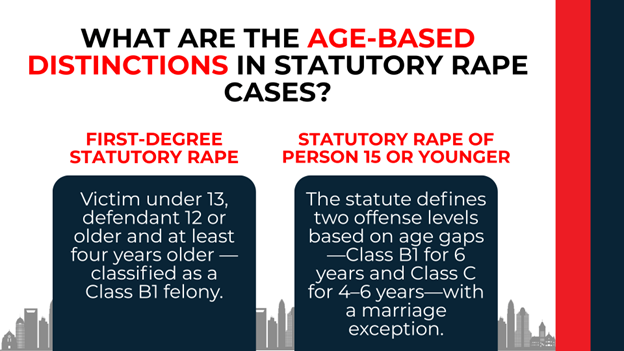
North Carolina’s statutory rape laws establish multiple offense levels based on the ages of both parties and the age difference between them.
First-degree statutory rape (N.C. Gen. Stat. § 14-27.24):
- Victim is under 13 years old
- Defendant is at least 12 years old
- Defendant is at least four years older than the victim
- Class B1 felony
Statutory rape of person 15 or younger (N.C. Gen. Stat. § 14-27.25): This statute creates two levels of offenses:
Class B1 felony level:
- Victim is 15 years old or younger
- Defendant is at least 12 years old
- Defendant is at least six years older than the victim
- Marriage exception applies
Class C felony level:
- Victim is 15 years old or younger
- Defendant is at least 12 years old
- Defendant is more than four but less than six years older than the victim
- Marriage exception applies
These age-based distinctions mean that the specific birthdays of both parties become critical facts in any statutory rape case. In Cary’s diverse community, which includes significant immigrant populations representing over 60 different nationalities, cultural misunderstandings about age-of-consent laws sometimes contribute to charges that may not reflect criminal intent.
Can a Defendant Be Charged With Both Rape and Statutory Rape?
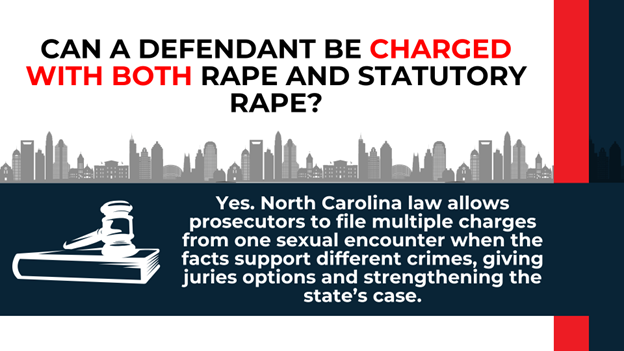
Yes. North Carolina law allows prosecutors to charge a defendant with multiple offenses arising from the same sexual encounter when the evidence supports distinct legal violations.
For example, if an adult uses force to have intercourse with a 14-year-old victim, the Wake County District Attorney’s Office could potentially pursue charges for:
- Second-degree forcible rape (based on force and lack of consent)
- First-degree statutory rape (based on the victim’s age and the age difference)
The prosecutor might proceed this way to:
- Provide the jury with alternative theories for conviction
- Ensure that a conviction occurs even if the state cannot prove every element of the more serious charge
- Strengthen their negotiating position in plea discussions
From a defense perspective, facing multiple charges requires strategic decisions about which allegations to contest most vigorously and whether any charges contain legal deficiencies that warrant pre-trial dismissal motions.
What Does “Against the Will” Mean in Forcible Rape Cases?
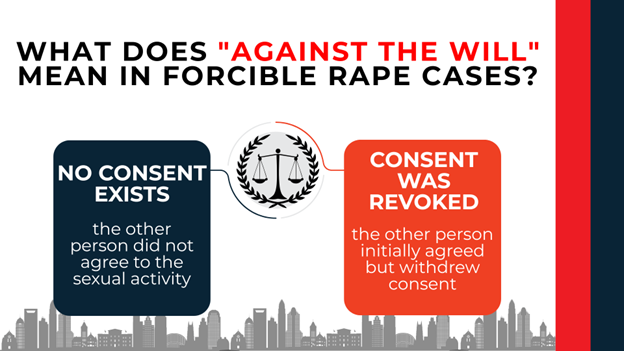
Under N.C. Gen. Stat. § 14-27.20, the phrase “against the will of the other person” carries specific legal meaning. The statute defines this element as occurring when either:
- No consent exists – The other person did not agree to the sexual activity
- Consent was revoked – The other person initially agreed but withdrew consent in a manner that would cause a reasonable person to recognize the revocation
This definition means that consent can be withdrawn during sexual activity. If a reasonable person in the defendant’s position would understand that the other party has revoked consent, continuing the sexual encounter after that point constitutes acting “against the will” of that person.
Disputes about consent frequently involve:
- Conflicting accounts of what was said or not said during the encounter
- Questions about whether certain conduct or statements constituted clear revocation of consent
- Evidence of the defendant’s state of mind and awareness at the time
- Text messages or other communications before or after the alleged offense
Cases in Wake County courts increasingly involve forensic analysis of cell phone records, social media messages, and other electronic evidence that may shed light on the issue of consent.
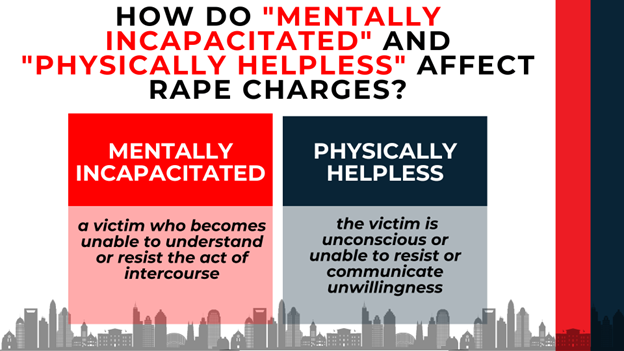
How Do “Mentally Incapacitated” and “Physically Helpless” Affect Rape Charges?
North Carolina’s rape statutes specifically address situations where a victim cannot consent due to their physical or mental condition.
Mentally incapacitated means a victim who, due to any act, becomes substantially incapable of either:
- Appraising the nature of their conduct, or
- Resisting the act of vaginal intercourse
Common scenarios include:
- Alcohol intoxication rendering someone unable to understand what is happening
- Administration of drugs (whether voluntary or involuntary) that impair cognitive function
- Effects of anesthetic or sedative medications
Physically helpless includes situations where a victim is:
- Unconscious
- Physically unable to resist intercourse or communicate unwillingness to submit
For second-degree forcible rape charges based on incapacity, the prosecution must prove that the defendant knew or should reasonably have known about the victim’s incapacitated or helpless condition. This “knew or should have known” standard creates a critical defense point in many cases.
In Cary’s community—where social gatherings at local venues, downtown establishments, and private residences are common—allegations sometimes arise from situations involving voluntary alcohol consumption by both parties. Attorney Patrick Roberts’ prosecutorial experience with sex crimes provides valuable perspective on how the state attempts to prove the defendant’s knowledge of the victim’s level of impairment.
What Role Does Age Play When Both Parties Are Minors?
North Carolina’s statutory rape laws acknowledge that sexual conduct between minors requires different treatment than adult-child sexual contact. The statutes incorporate age-difference requirements that prevent criminalization of sexual activity between similarly aged adolescents.
Key protections include:
Close-in-age considerations:
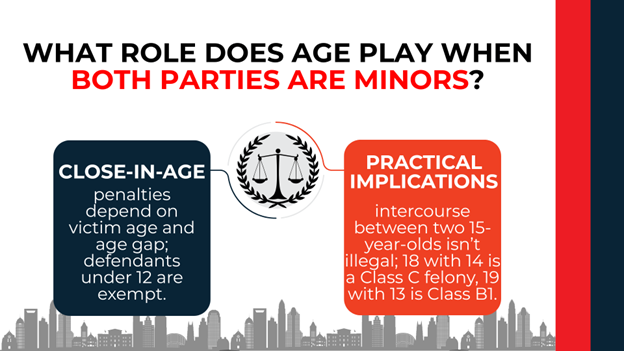
- For victims under 13, the defendant must be at least 12 years old and at least four years older
- For victims 15 or younger, different felony classes apply based on whether the age gap is more or less than six years
- Defendants less than 12 years old fall outside the statutory framework
Practical implications:
- Sexual activity between two 15-year-olds typically does not violate statutory rape laws
- An 18-year-old having intercourse with a 14-year-old could face Class C felony charges
- A 19-year-old having intercourse with a 13-year-old faces Class B1 felony charges
These distinctions matter tremendously in Cary’s community, where multiple high schools serve the area and social interactions between teenagers of various ages occur at school events, sports activities, and community gatherings. Cases involving adolescents attending Cary High School, Green Hope High School, or other local schools require sensitive handling that considers both legal requirements and the developmental realities of teenage relationships.
Are There Defenses Available to Statutory Rape Charges?
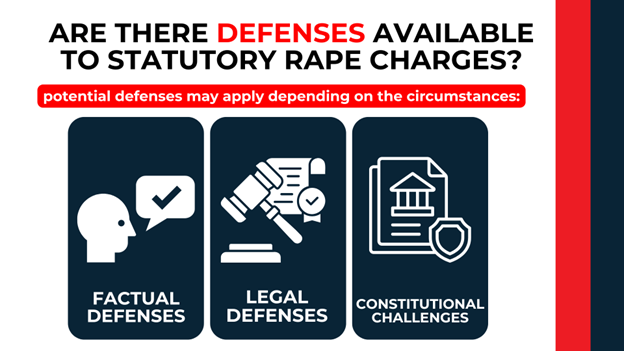
Statutory rape presents unique defense challenges because consent is not a defense to age-based charges. However, several potential defenses may apply depending on the specific circumstances:
Factual defenses:
- Identity challenges (defendant was not the person who committed the act)
- False accusations motivated by family conflicts, custody disputes, or other external factors
Legal defenses:
- Age difference does not meet the statutory requirements for the charged offense
- Defendant’s age falls outside the applicable range
- Marriage exception applies (for certain statutory rape offenses)
Constitutional challenges:
- Selective prosecution based on discriminatory factors
- Violations of due process in the investigation or charging decisions
For residents of Cary working in high-tech industries—where logical analysis and attention to detail are professional necessities—the inability to raise a “reasonable mistake” defense to statutory rape charges often seems counterintuitive. Nevertheless, North Carolina courts have consistently held that statutory rape laws do not require proof that the defendant knew the victim’s age or that the defendant intended to violate the law.
This strict liability aspect makes early consultation with experienced defense counsel crucial. Attorney Patrick Roberts understands how prosecutors evaluate statutory rape cases and can identify whether the state’s evidence actually supports the age-related elements of the charged offense.
How Does the Cary Police Department Investigate Sex Crime Allegations?
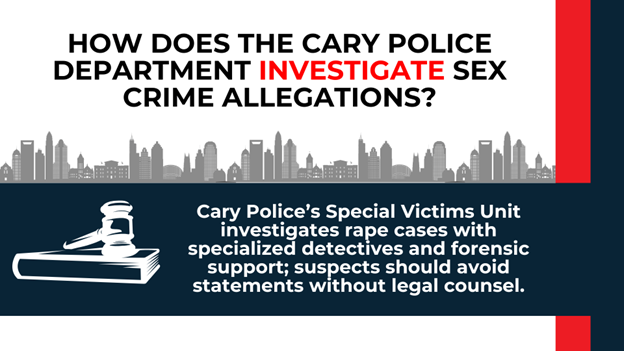
The Cary Police Department maintains a specialized approach to investigating allegations of rape and statutory rape. The department’s Special Victims Unit handles follow-up investigations for sex crimes, providing victims with dedicated investigators who understand the sensitive nature of these cases.
Investigation components typically include:
- Initial patrol officer response and evidence preservation
- Transfer of the case to Special Victims Unit detectives
- Forensic evidence collection through sexual assault nurse examiners
- Detailed interviews with the complainant, witnesses, and the accused (if accessible)
- Electronic evidence analysis of phones, computers, and social media accounts
- Coordination with the Wake County District Attorney’s Office regarding charges
Cary’s reputation as one of the safest communities in the nation—ranking among the top three safest cities nationally—means that violent crime investigations receive substantial resources and attention. When sexual assault allegations arise in a community where such crimes occur rarely, the investigation often proceeds with heightened urgency. For individuals accused of rape or statutory rape, understanding that declining to provide statements to law enforcement is a constitutional right becomes essential. The investigative process often moves forward based primarily on the complainant’s allegations, and providing statements without legal counsel present can severely undermine future defense options.
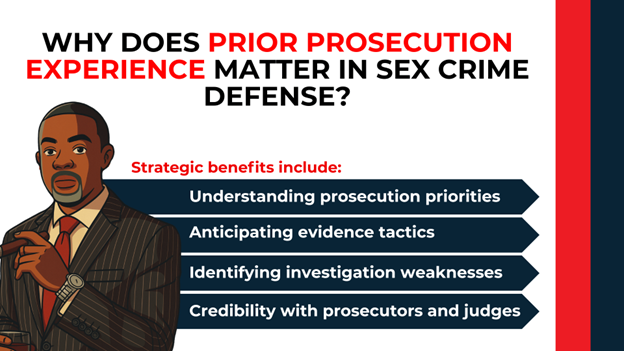
Why Does Prior Prosecution Experience Matter in Sex Crime Defense?
Attorney Patrick Roberts, a former prosecutor with extensive experience prosecuting and defending sex crimes, possesses unique insight into how these cases are prepared and tried in Cary and throughout Wake County.
Benefits Include:
Understanding prosecution priorities – Knowing which case factors make prosecutors more or less willing to negotiate allows for realistic assessment of options and better strategic planning
Anticipating evidence tactics – Recognizing how prosecutors will present forensic evidence, victim testimony, and expert witnesses enables preparation of effective counter-arguments
Identifying investigation weaknesses – Spotting procedural shortcuts, evidence gaps, or constitutional violations that may undermine the state’s case
Navigating the courtroom – Attorney Roberts’ professional reputation for meticulous preparation and integrity facilitates focused and productive negotiations in court proceedings.
In communities like Cary—where residents typically have advanced education and work in fields requiring sophisticated problem-solving—clients often appreciate an attorney who can explain the prosecution’s likely strategy and develop proactive responses to anticipated arguments.
Sex crime allegations carry consequences that extend far beyond potential incarceration. Convictions result in sex offender registration, employment barriers, housing restrictions, and profound damage to personal and professional reputations. The stakes demand legal representation from someone who understands both sides of the courtroom and can navigate the complexities of these cases effectively.
If you or someone you know faces allegations of rape or statutory rape in Cary, Wake County, or anywhere in North Carolina, taking immediate action to protect your rights is important. Attorney Patrick Roberts combines his prosecutorial background in sex crimes with dedicated criminal defense advocacy to provide clients with sophisticated, strategic representation during the most difficult time of their lives. Contact Patrick Roberts Law today to discuss your case in a confidential consultation and learn how experienced legal counsel may make a difference in the outcome* of your case.
*Disclaimer: Each case is different and must be evaluated separately. Prior results achieved do not guarantee similar results can be achieved in future cases.
Former assistant district attorney
Contact Patrick Roberts
Facing criminal charges in North Carolina demands seasoned representation. Trust in the experience and dual perspective of Patrick Roberts. Reach out today for a confidential consultation.
-
Call Our Team
Calls answered 24/7








For more information on the selection criteria, go to www.martindale.com
*Each case is different and must be evaluated separately. Prior results achieved do not guarantee similar results can be achieved in future cases.