

An indecent liberties with a minor charge in Garner, NC, carries serious consequences under North Carolina law including felony classification, potential imprisonment, and mandatory sex offender registration lasting 30 years. These cases are aggressively investigated and prosecuted throughout Wake County. According to the NC Division of Social Services (State Fiscal Year 2022-2023), 116,566 children were subjects of investigated abuse and neglect reports statewide. If you or someone you know is facing this charge, understanding the elements of the offense, the penalties involved, and the defense options available is the first step toward protecting your rights and your future.
What Is an Indecent Liberties With a Minor Charge in North Carolina?
North Carolina prosecutes indecent liberties with children under N.C.G.S. § 14-202.1, classifying it as a Class F felony. This charge falls within NC’s graduated statutory scheme for age-based sex offenses, where the victim’s age and not consent determines the offense. The statute is intentionally broad, covering a wider range of conduct than many defendants expect.
What Does The State Have to Prove for an Indecent Liberties Conviction?
The prosecution must establish three elements beyond a reasonable doubt. First, the defendant must have been at least 16 years old at the time of the alleged conduct. Second, the defendant must have been at least 5 years older than the child. Third, the defendant must have willfully taken or attempted to take an indecent liberty with a child under 16 for the purpose of arousing or gratifying sexual desire. According to the National Children’s Alliance Statistics Report (2023), 65% of alleged offenders in NC child abuse cases were parents, stepparents, or other relatives a pattern that frequently shapes how these charges arise.
Does the Charge Require Physical Contact With the Child?
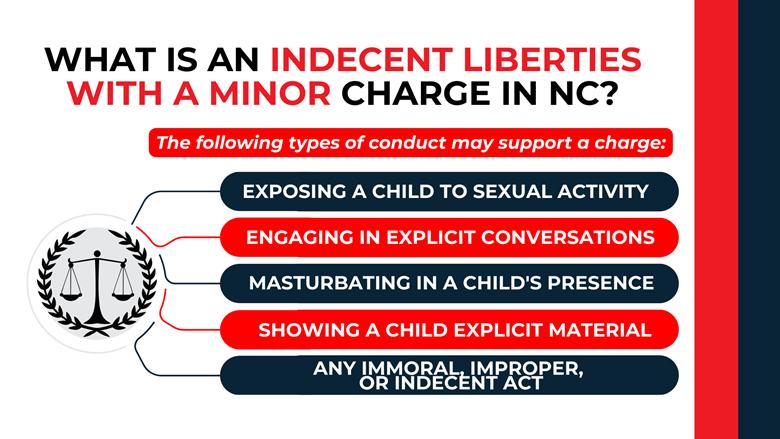
No. North Carolina courts interpret indecent liberties broadly, and physical touching is not required for a conviction. In State v. Every, 157 N.C. App. 200, 578 S.E.2d 642 (N.C. App. 2003), the Court of Appeals held that conduct qualifying as indecent liberties extends well beyond physical contact. The following types of conduct may support a charge:
- Exposing a child to sexual activity or nudity for purposes of sexual gratification
- Engaging in sexually explicit conversations with a child
- Masturbating in a child’s presence
- Showing a child pornographic or sexually explicit material
- Any immoral, improper, or indecent act performed for sexual arousal involving a child under 16
Each of these situations can result in a Class F felony charge even without any physical touching of the child.
Who Can Be Charged With Indecent Liberties in North Carolina?
Any person who is at least 16 years old and at least 5 years older than the child can be charged. The five-year age differential is a strict statutory requirement if the defendant does not meet both thresholds, the charge is not properly brought under § 14-202.1. Critically, the NC Court of Appeals held in State v. Breathette, 202 N.C. App. 697, 690 S.E.2d 1 (N.C. App. 2010), that mistake of age is not a defense. Even if the defendant genuinely believed the child was older, that belief has no legal effect. Additionally, data from the National Children’s Alliance (2023) shows that 68.7% of child victims at NC advocacy centers were age 12 or younger, reflecting the age range most commonly involved in these cases.
How Does Wake County Prosecute Indecent Liberties Cases?
Garner falls within Wake County’s jurisdiction for felony prosecutions. Indecent liberties cases typically involve a coordinated investigation between law enforcement and child welfare agencies before formal charges are filed. Understanding this process helps defendants recognize how early the investigation may have begun often weeks or months before an arrest.
How do Indecent Liberties Investigations Typically Begin?
Most cases originate from a report to the NC Division of Social Services, a report to local police, or a disclosure made by the child to a teacher, counselor, or family member. Law enforcement may conduct interviews, obtain search warrants for electronic devices, and coordinate with specialized units before making an arrest. Garner Police Department handles initial reports, but Wake County courts manage all felony proceedings.
What Role do Children’s Advocacy Centers Play?
Children’s Advocacy Centers (CACs) conduct forensic interviews with child victims and coordinate with prosecutors and investigators. According to the National Children’s Alliance Statistics Report (2023), 3,127 children were reported for sexual abuse at NC CACs during a six-month period alone. These forensic interviews are frequently used as evidence in prosecution, though they may also raise hearsay and confrontation issues that defense attorneys can challenge.
Do Most Cases Result in Plea Agreements or Go to Trial?
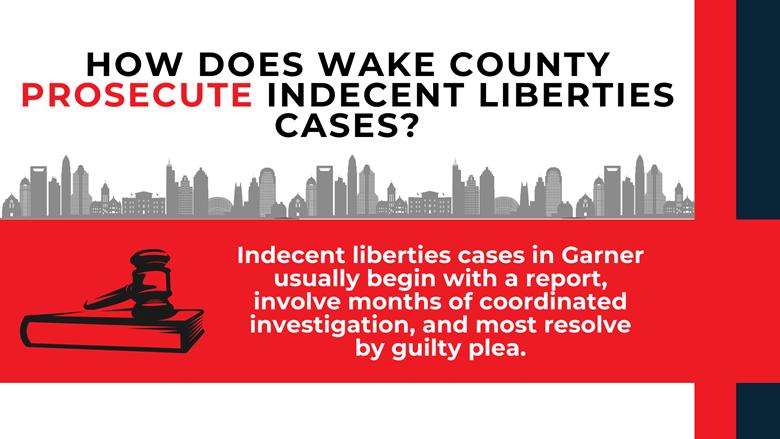
The overwhelming majority of North Carolina felony cases resolve through guilty pleas. According to the NC Sentencing and Policy Advisory Commission FY 2024 Statistical Report, 98% of all felony convictions resulted from guilty pleas, with only 2% going to jury trial. For the most serious sex offenses classified as Class B1 felonies, the trial rate is higher at 15%, but the vast majority still resolve through negotiated pleas. Plea negotiations in indecent liberties cases may involve charge reductions, sentencing recommendations, or agreements regarding registration requirements.
What Penalties Does a Class F Felony Conviction Carry?
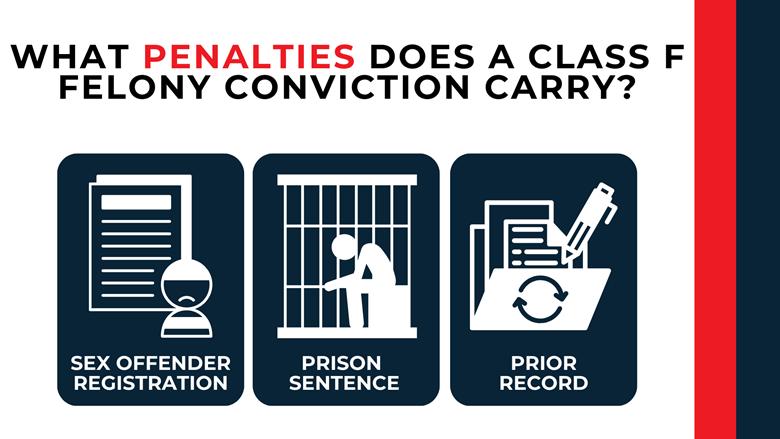
Indecent liberties with a minor is a Class F felony under NC’s Structured Sentencing Act (N.C.G.S. § 15A-1340.10 et seq.). The penalties depend on the defendant’s prior record level, the sentencing range the court selects, and whether sex offender registration applies.
What Prison Sentences Apply Under Structured Sentencing?
North Carolina’s structured sentencing grid determines penalties based on offense class and prior record level. For person offenses including sex crimes, the NC Sentencing and Policy Advisory Commission (FY 2024) reports that 62% received active imprisonment, 28% received intermediate punishment, and 10% received community punishment. Active imprisonment means the defendant serves time in state prison. The same report shows that 29% of Class F felony probation entries were for “other sexual offenses,” according to the NC Department of Adult Correction (FY 2023-2024) indicating that while some defendants receive probation, the consequences remain severe.
How Does A Prior Record Affect The Sentence?
Under structured sentencing, a defendant’s prior record level directly affects the available sentencing range. North Carolina calculates prior record points based on previous convictions, with higher levels producing longer potential sentences. A defendant with no criminal history faces a significantly different sentencing range than someone with prior felony convictions. Each prior record point can shift the range upward, making precise calculation critical to defense preparation.
Is Sex Offender Registration Mandatory?
Yes. A conviction for indecent liberties with a minor triggers mandatory sex offender registration under N.C.G.S. § 14-208 et seq. The standard registration period is 30 years, though defendants may petition for removal after 10 years if they are not classified as a recidivist, sexually violent predator, or aggravated offender. According to the NC SBI Sex Offender Registry Statistics (January 2026), Wake County currently has 839 registered sex offenders. Registration involves the following obligations:
- Verification of address with local law enforcement at least annually
- In-person reporting for any address changes within specific timeframes
- Compliance with location restrictions near schools, daycare centers, and parks under N.C.G.S. § 14-208.18
- Possible GPS electronic monitoring (the NC Department of Adult Correction (FY 2022-2023) reported 581 sex offenders enrolled in active GPS monitoring)
- Public listing on the NC SBI Sex Offender Registry website accessible by employers, landlords, and the public
- Potential lifetime registration if classified as an aggravated offender under N.C.G.S. § 14-208.23
What Happens After an Arrest for Indecent Liberties in Garner?
An arrest for indecent liberties in Garner initiates a process that moves through Wake County’s court system. Because felony sex offense cases involve special pretrial restrictions and extended timelines, understanding what to expect is essential.
How is Bail Handled for Sex Offense Charges?
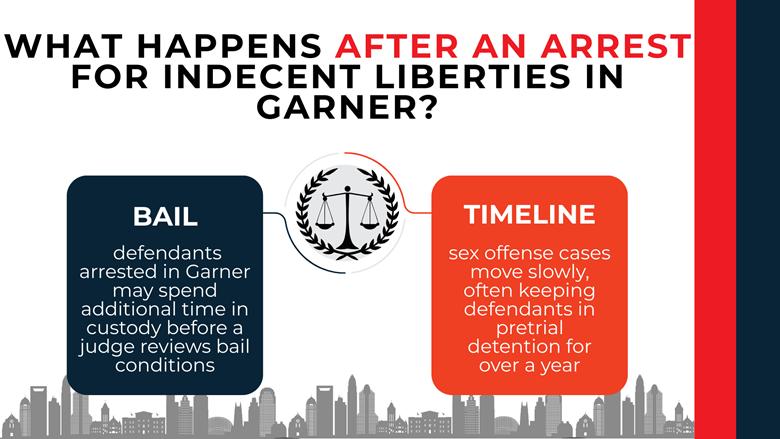
Unlike many other charges, sex offenses require a district or superior court judge not a magistrate to grant pretrial release, under N.C.G.S. § 15A-533(b), effective October 1, 2023. This means defendants arrested in Garner may spend additional time in custody before a judge reviews bail conditions. Pretrial release for sex offense defendants is discretionary, not mandatory, and judges may impose conditions including GPS monitoring, no-contact orders, and travel restrictions.
How Long Do These Cases Take to Resolve in Wake County?
Sex offense cases take significantly longer to resolve than other felonies. The NC Sentencing and Policy Advisory Commission (FY 2024) reports that 93% of person offense convictions received credit for pretrial detention, with an average of 15 months of pretrial credit for person offenses overall. This means most defendants spend over a year awaiting resolution. Felony case processing in Wake County involves indictment by a grand jury, multiple pretrial hearings, discovery and motion practice, and potential trial scheduling a timeline that reinforces the importance of having defense counsel engaged from the earliest possible stage.
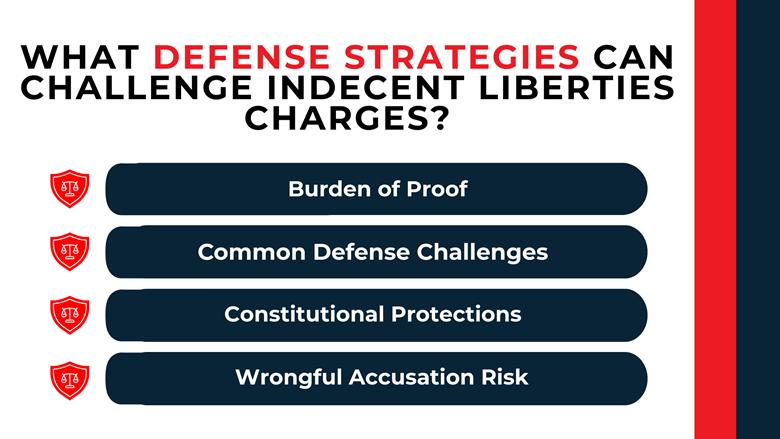
What Defense Strategies Can Challenge Indecent Liberties Charges?
While indecent liberties charges are serious, the State still bears the burden of proving every element beyond a reasonable doubt. Several defense strategies may apply depending on the facts of a particular case.
Can the State’s Evidence of Sexual Purpose Be Challenged?
The State must prove the defendant acted “for the purpose of arousing or gratifying sexual desire.” This purpose element is the most commonly contested aspect of the charge. Conduct that may appear suspicious in isolation may have an innocent explanation. Defense strategies that may apply include:
- Challenging the State’s proof that conduct was motivated by sexual purpose rather than a legitimate, non-sexual reason
- Contesting the accuracy of the child’s account through analysis of forensic interview techniques and potential suggestibility
- Verifying the exact ages and age differential of the defendant and the alleged victim charging errors on the five-year gap requirement do occur
- Raising Fourth Amendment challenges to any warrantless searches of electronic devices, citing Riley v. California, 573 U.S. 373 (2014), which requires a warrant for cell phone searches
- Filing suppression motions for statements obtained in violation of Miranda requirements or NC’s mandatory recording law (N.C.G.S. § 15A-211) for serious felonies
- Challenging expert testimony under the Daubert standard (State v. McGrady, 368 N.C. 880, 787 S.E.2d 1 (N.C. 2016)) if the State introduces Child Sexual Abuse Accommodation Syndrome (CSAAS) testimony beyond permissible scope
- Noting that State v. Laney, 178 N.C. App. 337, 631 S.E.2d 522 (N.C. App. 2006), held that multiple touches during a single encounter support only one conviction, not multiple counts
What Constitutional Protections Apply to the Investigation?
The Fourth and Fifth Amendments provide critical protections. Law enforcement must obtain a warrant to search electronic devices found during an arrest or in a home. Consent to search a residence does not automatically extend to digital devices found inside. Under N.C.G.S. § 15A-211, custodial interrogations for serious felonies must be electronically recorded, and failure to comply is admissible evidence supporting involuntariness claims. NC is a one-party consent state (N.C.G.S. § 15A-287), meaning pretext phone calls arranged by investigators are lawful but the recordings may still be challenged on other grounds.
How Common Are False Accusations in These Cases?
Wrongful accusations are a documented concern in sex offense cases. According to End Violence Against Women International (EVAWI), methodologically rigorous research places the false reporting rate for sexual assault at 2-8%. The National Registry of Exonerations (2024) reports that 10% of all exonerations nationally are for sexual assault and 9% for child sex abuse making these offenses among the most common categories for wrongful convictions. Family disputes, custody battles, and misunderstood situations can all contribute to accusations that do not accurately reflect what occurred.
How Does an Indecent Liberties Conviction Affect Your Future?
A conviction for indecent liberties produces consequences that extend far beyond prison time. The collateral effects touch nearly every area of life for decades.
What Does 30 Years On the Sex Offender Registry Involve?
North Carolina maintains one of the nation’s larger registries, with approximately 25,000 or more registered sex offenders statewide according to NC SBI data (2021-2024). Registration lasts 30 years and requires ongoing compliance with law enforcement, address verification, and location restrictions. Defendants may petition for removal after 10 years under N.C.G.S. § 14-208.12A, but only if they are not classified as a recidivist, sexually violent predator, or aggravated offender.
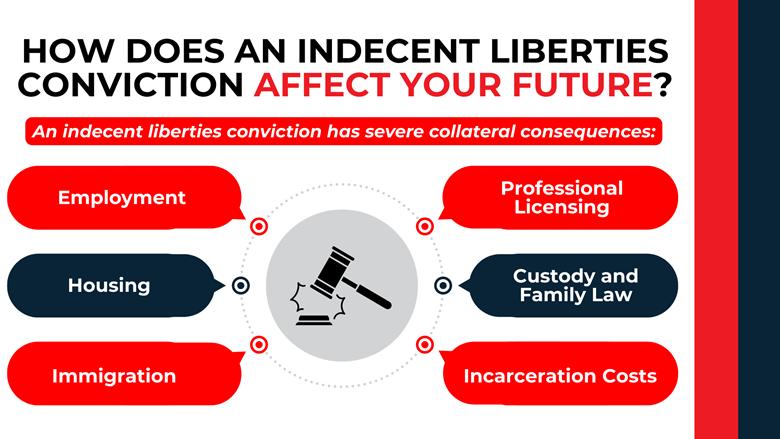
How Does a Conviction Impact Employment, Housing, and Immigration?
The collateral consequences of an indecent liberties conviction affect multiple areas of daily life:
- Employment: Many employers conduct background checks, and sex offense convictions create significant barriers to hiring, particularly in education, healthcare, childcare, and any position involving minors
- Housing: Registered sex offenders face restrictions on where they can live, and many landlords refuse to rent to individuals on the registry
- Immigration: For non-citizen defendants, sexual abuse of a minor is classified as an aggravated felony under federal immigration law, triggering mandatory deportation. Padilla v. Kentucky, 559 U.S. 356 (2010), requires defense counsel to advise clients of immigration consequences before any plea
- Professional licensing: Convictions may bar individuals from obtaining or maintaining professional licenses requiring “good moral character” determinations
- Custody and family law: Courts must consider sex offense convictions in custody determinations, potentially limiting or terminating parental rights
- Incarceration costs: The NC Department of Adult Correction (FY 2023-2024) reports a daily average cost of $151.34 per incarcerated offender approximately $55,239 annually representing the personal and public financial burden of imprisonment
Post-conviction options exist, including a Motion for Appropriate Relief (MAR) under N.C.G.S. § 15A-1411 through 15A-1422 for constitutional violations or newly discovered evidence, and registry removal petitions after the eligible waiting period.
Frequently Asked Questions About Indecent Liberties Charges in North Carolina
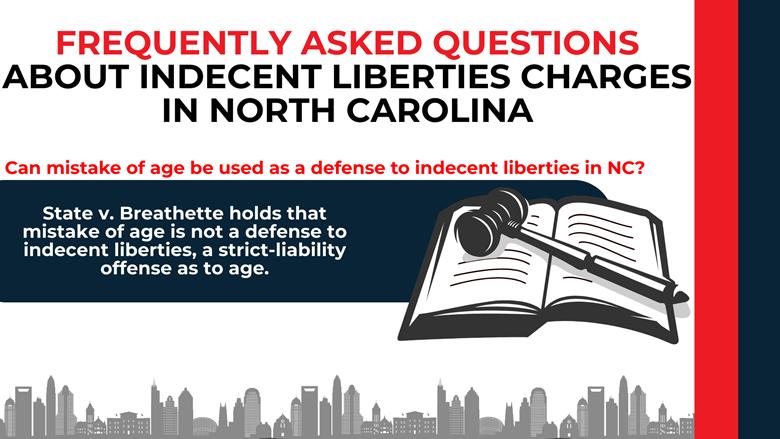
Can mistake of age be used as a defense to indecent liberties in NC?
No. The NC Court of Appeals held in State v. Breathette, 202 N.C. App. 697, 690 S.E.2d 1 (N.C. App. 2010), that mistake of age is not a defense to indecent liberties charges. Even if the defendant genuinely believed the child was 16 or older, this belief does not negate criminal liability. The offense is a strict liability crime with respect to the victim’s age.
Is indecent liberties a felony or a misdemeanor in North Carolina?
Indecent liberties with a child under N.C.G.S. § 14-202.1 is a Class F felony. However, for defendants under 16 years old, N.C.G.S. § 14-202.2 creates a separate Class 1 misdemeanor offense for indecent liberties with children at least 3 years younger. The felony charge applies to defendants who are 16 or older and at least 5 years older than the victim.
Can I be charged with indecent liberties if there was no physical touching?
Yes. The NC Court of Appeals confirmed in State v. Every, 157 N.C. App. 200, 578 S.E.2d 642 (N.C. App. 2003), that physical contact is not required. Exposing a child to sexual activity, engaging in sexually explicit conversations with a child, or masturbating in a child’s presence can all support a conviction.
How long will I have to register as a sex offender if convicted?
The standard registration period under NC law is 30 years. Defendants may petition for removal after 10 years under N.C.G.S. § 14-208.12A if they are not classified as a recidivist, sexually violent predator, or aggravated offender. Aggravated offenders face lifetime registration under N.C.G.S. § 14-208.23.
Can an indecent liberties charge be reduced to a lesser offense?
Charge reductions are possible through plea negotiations, though they depend on the specific facts, the strength of the State’s evidence, and the prosecutor’s discretion. The NC Sentencing and Policy Advisory Commission reports that 98% of felony convictions result from guilty pleas, suggesting that negotiated resolutions are common. However, any plea to a registrable offense still triggers sex offender registration requirements.
Advanced Courtroom Strategy Dedicated to Protecting Your Rights
A legal challenge can feel like an uphill battle, but you don’t have to face it alone. The quality of your defense can make a profound difference in how your case is navigated and how your rights are protected throughout the process.
Attorney Patrick Roberts approaches every case with the rigorous preparation and aggressive advocacy that high-stakes litigation demands. As a Lifetime Member of the National Association of Criminal Defense Lawyers (NACDL), he is part of a select group of professionals dedicated to protecting the rights of the accused at the highest level.
Patrick’s commitment to his craft is evidenced by his continuous pursuit of elite-level skill sets, including his recent completion of the 2025 Cross-Examination Training with the National Criminal Defense College (NCDC)—a rigorous, three-day intensive hands-on program. This advanced training ensures that when he steps into a courtroom, he does so with the most sharp and effective strategies for challenging the prosecution’s evidence.
Patrick is an extremely talented lawyer who maintains the highest ethical standards. He works tirelessly for his clients and is a highly skilled, respected adversary in the courtroom.” — Peer Endorsement via Martindale-Hubbell on October 29, 2018
Disclaimer: The testimonials and peer reviews on this site are for informational purposes. They do not constitute a guarantee, warranty, or prediction regarding the outcome of your legal matter. Every case is different and must be evaluated on its own merits.
*Testimonials and peer endorsements found on this website are actual comments.
Secure your defense team today. Contact Patrick Roberts Law to schedule a consultation and see how Attorney Patrick Roberts’ experience and training can be put to work for your case.
Disclaimer: The information on this website is for general information purposes only. Nothing on this site should be taken as legal advice for any individual case or situation. Case results depend upon a variety of factors unique to each case. Prior results do not guarantee a similar outcome.
Former assistant district attorney
Contact Patrick Roberts
Facing criminal charges in North Carolina demands seasoned representation. Trust in the experience and dual perspective of Patrick Roberts. Reach out today for a confidential consultation.
-
Call Our Team
Calls answered 24/7






For more information on the selection criteria, go to www.martindale.com
*Each case is different and must be evaluated separately. Prior results achieved do not guarantee similar results can be achieved in future cases.