

Facing criminal charges for the first time in North Carolina can be scary and stressful. Many people worry about how these charges will affect their future, job chances, and family life. The good news is that North Carolina has several programs just for first-time offenders. These programs help you deal with mistakes in a responsible way while reducing long-term harm to your personal and work life. These options can offer you a path to positive change and new opportunities.
Who Qualifies as a “First-Time Offender”?
A first-time offender is someone who has never been found guilty of any crime before. North Carolina courts understand that good people can make bad choices, especially if they are young, inexperienced, or going through tough times. The state’s legal system believes in second chances that can help people learn important lessons, gain new life skills, and avoid making the same mistakes again. Being seen as a first-time offender can greatly improve the outcome of your case.
Why First-Time Offender Status Matters
First-time offender status is valuable because:
- Courts often go easier on people with no prior record
- You can get into programs not open to repeat offenders
- Judges have more options when it comes to sentencing
- There’s more focus on helping you improve rather than punishment
- You have a better chance at a fresh start

Common Charges First-Time Offenders Face in North Carolina
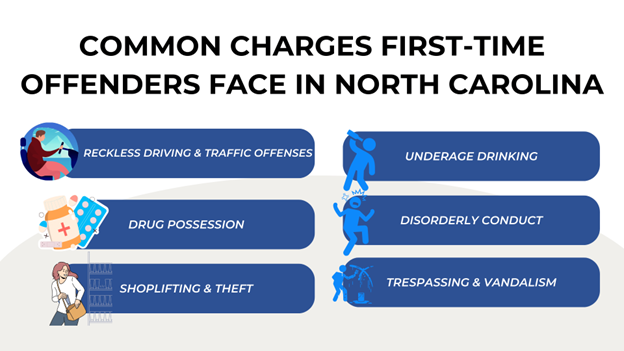
First-time offenders in North Carolina often face charges such as:
- Small amounts of drug possession, including marijuana
- Theft or shoplifting of cheaper items
- Underage drinking and alcohol possession
- Disorderly conduct, fighting, or causing public disturbances
- Trespassing
- Vandalism or minor property damage
- Reckless driving and other minor traffic offenses
- Writing bad checks or minor money-related offenses
- Online scams and small-scale fraud
- Having illegal items like fireworks
- Misuse of prescription medications
- Disturbing the peace
- Traffic violations, like driving without a valid license
Each of these charges, even though they’re considered minor, can still hurt your record and future if not handled properly.
North Carolina’s First-Time Offender Programs and Benefits
North Carolina offers several helpful programs made just for first-time offenders. These programs aim to encourage rehabilitation, reduce repeat offenses, and give alternatives to regular punishments like jail or permanent criminal records.
Deferred Prosecution
Deferred prosecution lets first-time offenders avoid conviction by meeting certain conditions set by the court. These often include doing community service, taking educational courses, or going to counseling. If you complete everything successfully, your charges can be dismissed.
How Deferred Prosecution Works
- You make an agreement with the prosecutor
- The court puts your case on hold for a set time (usually 6-12 months)
- You complete all required conditions during this time
- If successful, the prosecutor dismisses the charges
- Your record stays clean, as if the offense never happened
Conditional Discharge
A conditional discharge is often offered for first-time drug offenses. You must complete court requirements, such as attending drug treatment programs. Completing these conditions can result in dismissed charges, giving you a clean record.
North Carolina General Statutes § 90-96 specifically allows first-time drug offenders to receive a conditional discharge for certain drug possession charges, giving these individuals an important second chance.
Probation Instead of Jail Time
Probation is an alternative to jail. It allows first-time offenders to stay out of jail while following specific court conditions, like regular check-ins, community service, and counseling sessions. Probation helps you maintain your daily responsibilities and avoid jail.
Types of Probation for First-Time Offenders
- Supervised probation: Regular meetings with a probation officer
- Unsupervised probation: Less monitoring, but still requires following court rules
- Community punishment: Focused on community service and local involvement
- Intensive supervision: More frequent check-ins and stricter monitoring
Clearing Your Record (Expungement)
Expungement allows first-time offenders to clear their criminal records after completing court-required programs. Removing charges from your record greatly helps with future jobs, housing, and education, giving you the chance to start fresh.
North Carolina recently expanded expungement eligibility for first-time offenders through the Second Chance Act, making it easier to get a fresh start after a minor offense.
Youth Programs
These programs target younger individuals. They provide mentoring, education, and counseling aimed at helping minors and young adults avoid future offenses and build better decision-making skills.
Community Service Opportunities
Community service programs give offenders a chance to give back to their communities instead of facing jail or fines. This option helps develop responsibility, empathy, and a stronger connection to your community.
First-time offenders can often do community service at:
- Local food banks
- Public parks
- Animal shelters
- Senior centers
- Public libraries
- Non-profit organizations
Educational and Counseling Opportunities
Educational courses cover topics like anger management, drug abuse prevention, money management, and life skills. Counseling provides emotional support and strategies for positive behavioral changes. These resources teach you how to handle stress and avoid future offenses.
Restorative Justice
Restorative justice programs focus on fixing the harm caused by the offense. Offenders often meet with victims or community members to understand the impact of their actions and make things right. This process encourages taking responsibility and understanding others.
Home Monitoring
For certain minor offenses, electronic monitoring allows offenders to serve their sentence at home. This lets you continue working, going to school, or taking part in important family activities while still following court requirements.

Qualifying for First-Time Offender Programs
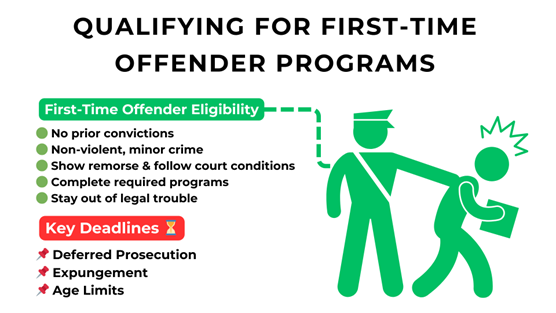
To be eligible for these helpful programs, you generally must meet these criteria:
- No prior criminal convictions
- Charged with a non-violent, minor crime
- Show genuine remorse and take responsibility
- Follow all court conditions strictly
- Maintain good behavior throughout the probation period
- Regularly communicate with assigned probation officers or counselors
- Fully participate in recommended treatments, classes, or therapies
- Avoid any new legal issues during the probation period
Benefits of Participating in First-Time Offender Programs
Joining these programs has several clear advantages:
- Avoiding jail time, protecting your well-being and safety
- Preventing long-lasting damage to your criminal record
- Improving future job, education, and housing prospects
- Showing responsibility and commitment to personal improvement
- Keeping essential rights, such as voting or owning firearms
- Developing important life skills to prevent future legal issues
- Gaining confidence by successfully completing program requirements
- Reducing stigma related to criminal charges
- Building a positive reputation within your community and family
Success Rates for First-Time Offenders
Research shows that first-time offenders who complete these programs are much less likely to commit new crimes compared to those who go through regular court sentencing. An analysis of a diversion program in Johnston County, North Carolina, found that individuals who completed the program had a 68% lower recidivism rate over two years compared to those who did not participate.

The Importance of Having a Lawyer
While not required, hiring a criminal defense attorney is strongly recommended for first-time offenders. A knowledgeable lawyer can:
- Clearly explain your legal options and court procedures
- Argue for reduced charges or better outcomes
- Help you access beneficial court programs
- Protect your legal rights throughout your case
- Provide guidance and emotional support
- Handle talks with prosecutors effectively
- Ensure on-time submission of all required paperwork
- Represent you confidently in court
Finding Legal Help as a First-Time Offender
If you cannot afford an attorney, North Carolina offers resources:
- Public defender’s office
- Legal Aid of North Carolina
- Free services from local law firms
- Law school legal clinics
- Court-appointed lawyers

Taking Action: Your Next Steps
If you’ve been charged as a first-time offender, taking quick and proactive steps can greatly influence the outcome:
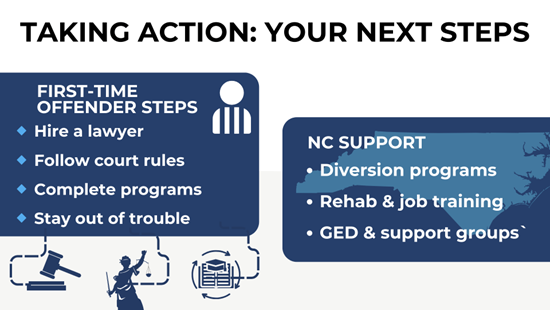
- Contact an experienced attorney quickly to discuss your case
- Actively take part in recommended court programs
- Follow all court conditions closely and consistently
- Keep detailed records of your progress
- Avoid any further legal issues
- Seek additional emotional or community support as needed
Community Resources for First-Time Offenders
North Carolina offers several support services designed for first-time offenders:
- County-based diversion programs
- Substance abuse treatment centers
- Mental health resources
- Job training and employment help
- Educational opportunities and GED programs
- Support groups for those in similar situations
Final Thoughts
Facing criminal charges for the first time is tough, but North Carolina provides supportive options designed to help first-time offenders fix their mistakes and build better futures. Understanding these programs, seeking professional legal help, and following court guidelines closely can significantly reduce the long-term impacts of a criminal charge, helping you regain confidence and control over your life.
Remember that being a first-time offender means this is your chance for a fresh start. The programs available in North Carolina specifically recognize that everyone deserves a second chance, especially those who show a commitment to positive change and personal growth.
If you or a loved one are facing criminal charges as a first-time offender, you deserve a legal advocate with the experience and dedication to secure the best possible outcome. Attorney Patrick Roberts of Patrick Roberts Law has successfully defended numerous clients facing first-time offenses. Contact our firm today for a confidential consultation.
Former assistant district attorney
Contact Patrick Roberts
Facing criminal charges in North Carolina demands seasoned representation. Trust in the experience and dual perspective of Patrick Roberts. Reach out today for a confidential consultation.
-
Call Our Team
Calls answered 24/7






For more information on the selection criteria, go to www.martindale.com
*Each case is different and must be evaluated separately. Prior results achieved do not guarantee similar results can be achieved in future cases.