
Understanding Drug Paraphernalia Charges in North Carolina
In North Carolina, getting charged with drug paraphernalia can seriously affect your future, making it harder to find jobs, housing, and maintain relationships. North Carolina takes drug-related offenses seriously, including items classified as drug paraphernalia under the North Carolina Controlled Substances Act (N.C. Gen. Stat. § 90-113.20 through § 90-113.24).
How Serious is a Drug Paraphernalia Charge in North Carolina?
Many people wonder, how serious is a drug paraphernalia charge in North Carolina? The answer: more serious than you might think. While not as severe as charges for actual drug possession, paraphernalia charges can still lead to jail time, fines, and a permanent criminal record.
The Legal Weight of Drug Paraphernalia Charges
A drug paraphernalia charge in North Carolina is typically classified as a Class 1 misdemeanor under N.C. Gen. Stat. § 90-113.22(b). This is the highest level of misdemeanor in the state, just one step below a felony. This classification shows how seriously North Carolina treats these offenses compared to other states.
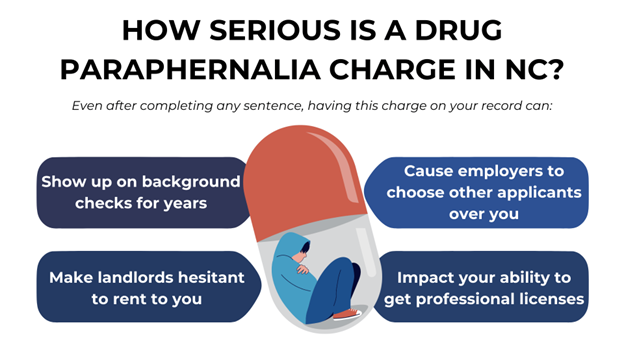
How serious is a drug paraphernalia charge for your daily life? Even after completing any sentence, having this charge on your record can:
- Show up on background checks for years
- Make landlords hesitant to rent to you
- Cause employers to choose other applicants over you
- Impact your ability to get professional licenses
What Counts as Drug Paraphernalia in North Carolina?
Under North Carolina law (N.C. Gen. Stat. § 90-113.21), drug paraphernalia includes any items mainly designed or intended for making, using, storing, or hiding controlled substances.
Common items that can lead to a drug paraphernalia charge include:
- Pipes, bongs, and water pipes
- Scales used for weighing drugs
- Small baggies and containers used for packaging drugs
- Needles and syringes (when not used for medical reasons)
- Rolling papers and cigarette wrappers
- Cocaine spoons and vials
The Context Matters
It’s important to understand that many of these items have legitimate uses. What makes them illegal is the intent behind their possession. According to N.C. Gen. Stat. § 90-113.21(b), courts consider several factors when determining if an item is paraphernalia, including statements by the owner, proximity to controlled substances, and the existence of residue on the item.
Penalties for Drug Paraphernalia Charges in North Carolina
Types and Severity of Charges
In North Carolina, most drug paraphernalia charges are Class 1 misdemeanors, which carry tougher penalties than in many other states. Some situations can make these charges worse:
- Basic possession of drug paraphernalia: Class 1 misdemeanor (N.C. Gen. Stat. § 90-113.22(a))
- Making or selling drug paraphernalia: Class 1 misdemeanor (N.C. Gen. Stat. § 90-113.23(a))
- Giving drug paraphernalia to a minor: Class I felony (N.C. Gen. Stat. § 90-113.23(c))
- Paraphernalia related to making meth: Possible felony charges under N.C. Gen. Stat. § 90-95(d1)
Possible Consequences
If you’re found guilty of a drug paraphernalia charge in North Carolina, you might face:
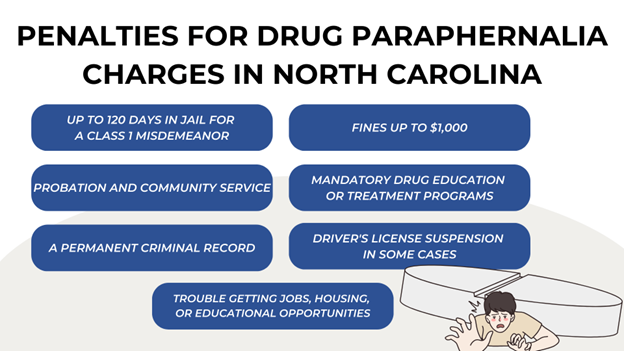
- Up to 120 days in jail for a Class 1 misdemeanor (N.C. Gen. Stat. § 15A-1340.23)
- Fines up to $1,000 (at the court’s discretion under N.C. Gen. Stat. § 15A-1340.23(b))
- Probation and community service
- Mandatory drug education or treatment programs
- A permanent criminal record
- Driver’s license suspension in some cases (N.C. Gen. Stat. § 20-17(a)(12))
- Trouble getting jobs, housing, or educational opportunities
First-Time Offenders vs. Repeat Offenders
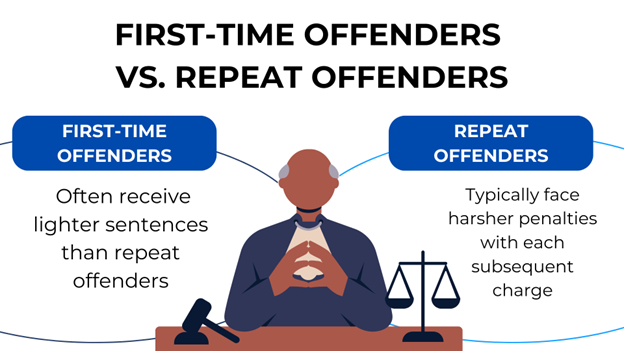
First-time offenders often receive lighter sentences than repeat offenders. North Carolina courts may show more leniency to someone with a clean record, especially young adults or those who demonstrate genuine remorse.
Repeat offenders typically face harsher penalties with each subsequent charge, including longer jail sentences and fewer options for alternative sentencing (under structured sentencing guidelines in N.C. Gen. Stat. § 15A-1340.14).
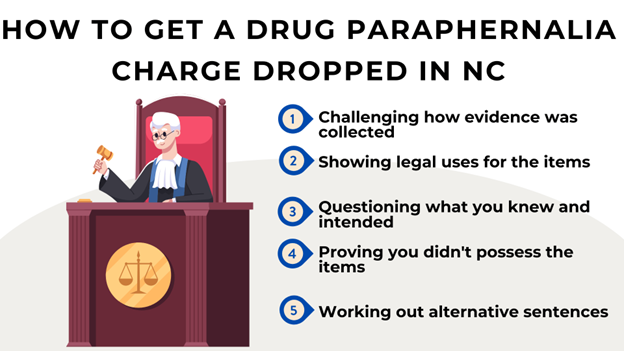
How to Get a Drug Paraphernalia Charge Dropped in North Carolina
Many people facing these charges want to know how to get a drug paraphernalia charge dropped. Here are some potential ways:
Legal Defenses and Strategies
A good North Carolina criminal defense lawyer may use several approaches to help get your drug paraphernalia charge dropped:
- Challenging how evidence was collected: If police conducted an illegal search (violating the Fourth Amendment and N.C. Const. art. I, § 20), the evidence might not be allowed in court. For example, if officers searched your car without proper consent or a valid warrant, your lawyer might file a motion to suppress evidence under N.C. Gen. Stat. § 15A-974.
- Showing legal uses for the items: Many things labeled as drug paraphernalia have legitimate uses. Your lawyer can argue the items were meant for legal purposes, challenging the “intent” element required by N.C. Gen. Stat. § 90-113.21.
- Questioning what you knew and intended: Prosecutors must prove you knowingly had items intended for drug use. If you borrowed someone’s bag or car without knowing what was inside, this could be a valid defense addressing the “knowing” element of possession.
- Proving you didn’t possess the items: Establishing that the paraphernalia wasn’t yours or in your control. This is especially relevant if multiple people had access to where the items were found, challenging the “possession” element under N.C. Gen. Stat. § 90-113.22.
- Working out alternative sentences: First-time offenders might qualify for drug education programs or deferred prosecution that can lead to charges being dropped after program completion.
Diversion Programs and Alternatives
North Carolina offers several programs that can help with how to get a drug paraphernalia charge dropped:
- Deferred Prosecution: This program (authorized under N.C. Gen. Stat. § 15A-1341(a1)) allows you to complete certain requirements (like community service, drug education, and staying out of trouble) in exchange for having charges dismissed.
- Conditional Discharge Programs: Similar to deferred prosecution, these programs (under N.C. Gen. Stat. § 90-96) give first-time offenders a chance to keep their records clean by meeting specific requirements.
- Drug Treatment Courts: Some counties offer specialized courts (established under N.C. Gen. Stat. § 7A-790) that focus on treatment rather than punishment for drug-related offenses.
North Carolina’s Drug Paraphernalia Laws Compared to Other States
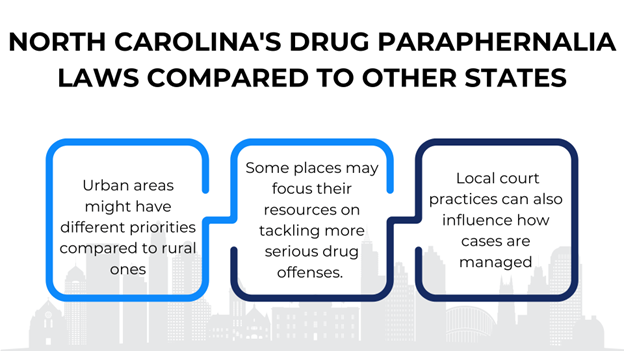
North Carolina enforces drug paraphernalia laws more strictly than states with more relaxed drug policies. While some states have moved toward decriminalizing certain items, North Carolina continues to prosecute these offenses seriously.
Regional Differences Within North Carolina
It’s worth noting that enforcement can vary widely across different counties and cities in North Carolina:
- Urban areas may have different priorities than rural areas
- Some jurisdictions focus resources on more serious drug crimes
- Local court practices can affect how cases are handled
How a North Carolina Defense Lawyer Can Help
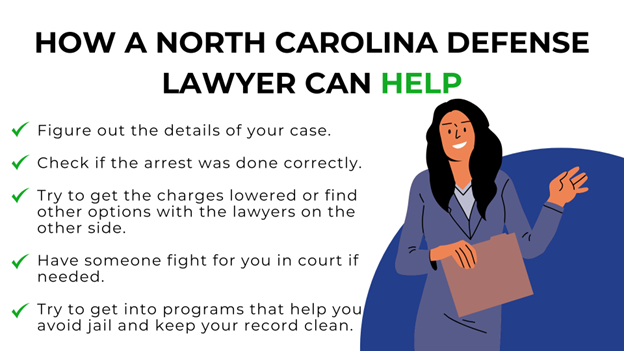
When facing a drug paraphernalia charge in North Carolina, having an experienced criminal defense lawyer is crucial. A knowledgeable lawyer can:
- Look at your specific situation
- Find potential violations in how you were arrested
- Talk with prosecutors about reducing charges or alternative sentences
- Represent you strongly in court if needed
- Help you get into diversion programs if you qualify (like those under N.C. Gen. Stat. § 90-96)
- Work to minimize the long-term impact on your record
- Handle complicated legal paperwork and court deadlines
First Steps After Being Charged
If you’ve been charged with possessing drug paraphernalia in North Carolina:
- Use your right to remain silent (protected by the Fifth Amendment and Miranda v. Arizona)
- Don’t agree to more searches
- Ask for a lawyer right away (Sixth Amendment right to counsel)
- Write down everything you remember about your interaction with police
- Contact a North Carolina criminal defense lawyer as soon as possible
- Follow all court requirements for appearances
- Avoid discussing your case with anyone except your attorney
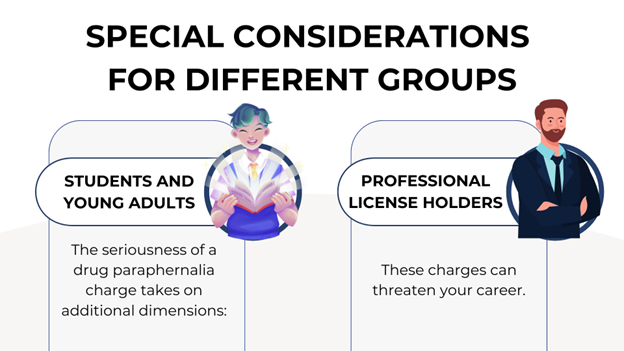
Special Considerations for Different Groups
Students and Young Adults
For college students and young adults, the seriousness of a drug paraphernalia charge takes on additional dimensions:
- Potential loss of financial aid (under the Higher Education Act, 20 U.S.C. § 1091(r))
- University disciplinary proceedings separate from criminal charges
- Impact on future career opportunities
Professional License Holders
For those with professional licenses (nurses, teachers, etc.), these charges can threaten your career. Many licensing boards have special reporting requirements and disciplinary procedures for criminal charges (e.g., for nurses under N.C. Gen. Stat. § 90-171.37).
Protecting Your Future
A drug paraphernalia charge in North Carolina should be taken seriously. Even as a misdemeanor, this charge can create lasting problems for your personal and work life. With proper legal help from an experienced North Carolina criminal defense lawyer, you can explore all options to fight these charges and work toward the best possible outcome.
Getting legal help early often leads to better results, potentially including getting charges reduced or dropped, case dismissal, or alternative sentencing options that minimize the impact on your future. In some cases, you may even be eligible for expungement under N.C. Gen. Stat. § 15A-145.5 after a waiting period.
If you or a loved one are facing drug paraphernalia charges, you deserve a legal advocate with the experience and dedication to secure the best possible outcome. Attorney Patrick Roberts of Patrick Roberts Law has successfully defended numerous clients facing drug crimes. Contact our firm today for a confidential consultation.
Former assistant district attorney
Contact Patrick Roberts
Facing criminal charges in North Carolina demands seasoned representation. Trust in the experience and dual perspective of Patrick Roberts. Reach out today for a confidential consultation.
-
Call Our Team
Calls answered 24/7






For more information on the selection criteria, go to www.martindale.com
*Each case is different and must be evaluated separately. Prior results achieved do not guarantee similar results can be achieved in future cases.