

If you or a loved one is facing drug charges in North Carolina, understanding whether drug charges are a felony is critical to protecting your rights and future. At Patrick Roberts Law, our experienced North Carolina criminal defense firm is committed to providing clear, actionable information to help you navigate this stressful situation. Below, we dive deeper into state drug laws, penalties, and defense strategies to ensure you have the knowledge you need to make informed decisions.
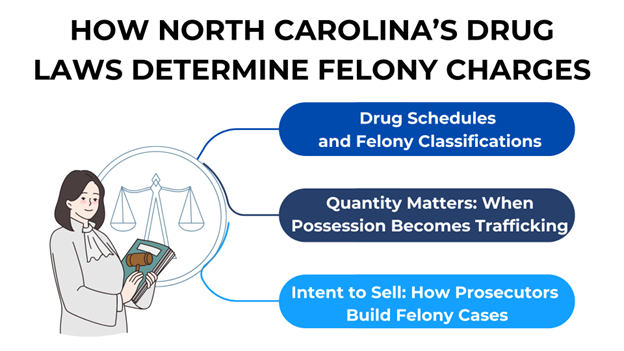
How North Carolina’s Drug Laws Determine Felony Charges
North Carolina’s drug laws are among the strictest in the country, and even minor offenses can escalate to felonies depending on the circumstances. Here’s a detailed breakdown of how charges are classified:
1. Drug Schedules and Felony Classifications
The state categorizes drugs into five schedules under the North Carolina Controlled Substances Act. Higher schedules mean stricter penalties:
- Schedule I (Heroin, LSD, MDMA): No accepted medical use. Possession of any amount is a felony.
- Schedule II (Cocaine, Methamphetamine, Oxycodone): High potential for abuse. Possession is typically a felony, even for small amounts.
- Schedule III-IV (Anabolic Steroids, Xanax): Lower risk but still illegal without a prescription. Possession may start as a misdemeanor but can become a felony for large quantities or intent to sell.
- Schedule V (Cough Syrups with Codeine): Least restrictive. Charges are often misdemeanors unless linked to distribution.
2. Quantity Matters: When Possession Becomes Trafficking
North Carolina enforces strict drug trafficking thresholds. Exceeding these amounts automatically triggers felony charges with mandatory prison sentences, regardless of intent:
- Marijuana: 10+ pounds
- Cocaine: 28+ grams
- Heroin/Fentanyl: 4+ grams
- Methamphetamine: 28+ grams
For example, if you’re caught with 30 grams of cocaine, you’ll face a trafficking charge—a felony with a minimum 35-month prison sentence.
3. Intent to Sell: How Prosecutors Build Felony Cases
Law enforcement often uses circumstantial evidence to argue intent to sell, including:
- Packaging Materials: Small baggies, scales, or ledgers.
- Large Cash Amounts: Unexplained money bundled in small denominations.
- Location: Drugs found in a car trunk or near a school.
- Digital Evidence: Texts or social media messages discussing sales.
Even if the drugs were for personal use, these factors can lead to felony distribution or trafficking charges.
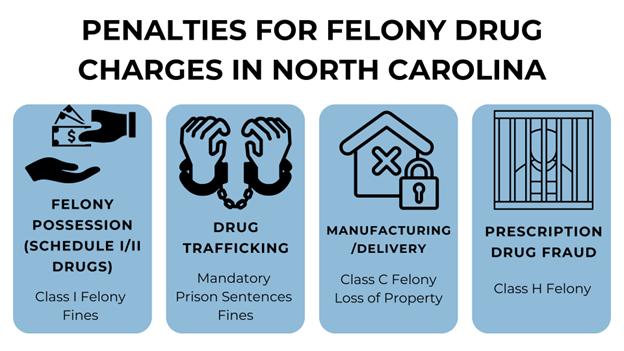
Penalties for Felony Drug Charges in North Carolina
A felony conviction can upend your life. Below are potential consequences based on the charge:
1. Felony Possession (Schedule I/II Drugs)
- Class I Felony: Up to 24 months in jail (e.g., possession of heroin).
- Fines: Up to $1,000, plus court costs.
2. Drug Trafficking
- Mandatory Prison Sentences:
- Marijuana Trafficking (10–49 lbs): 25–39 months.
- Cocaine Trafficking (28–199 grams): 35–51 months.
- Heroin Trafficking (4–13 grams): 70–93 months.
- Fines: Up to $500,000, depending on the drug and quantity.
3. Manufacturing/Delivery
- Class C Felony: Up to 231 months (19+ years) for manufacturing methamphetamine.
- Loss of Property: Vehicles or homes used in drug operations may be seized.
4. Prescription Drug Fraud
- Class H Felony: 5–39 months in prison for forging prescriptions or “doctor shopping.”
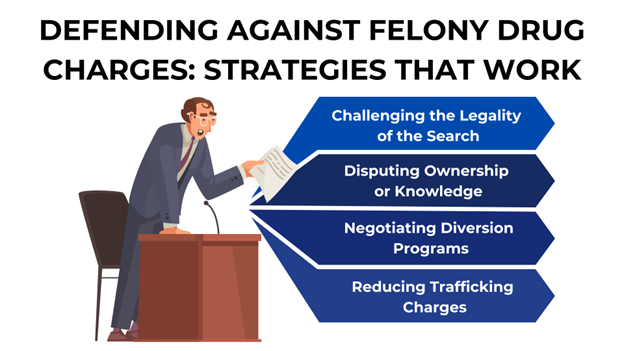
Defending Against Felony Drug Charges: Strategies That Work
At Patrick Roberts Law, we tailor defenses to the specifics of your case. Here are strategies we use to protect clients:
- Challenging the Legality of the Search
The Fourth Amendment protects you from unlawful searches. If police lacked a warrant or probable cause to search your home, car, or phone, the evidence may be suppressed. For example, an officer cannot search your trunk without a warrant unless drugs were in “plain view.”
- Disputing Ownership or Knowledge
Prosecutors must prove you knowingly possessed the drugs. We might argue:
● The drugs belonged to a roommate or passenger.
● You were unaware the substance was illegal (e.g., a friend’s prescription pill).
- Negotiating Diversion Programs
First-time offenders may qualify for:
● Drug Treatment Court: Complete rehab and probation to have charges dismissed.
● Conditional Discharge: Charges dropped after meeting court requirements.
- Reducing Trafficking Charges
Trafficking penalties are based on weight. If we can prove the amount was below the threshold (e.g., 27 grams of cocaine instead of 28), charges may be reduced to possession.
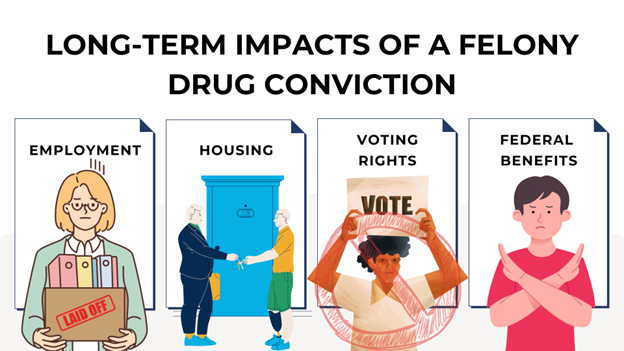
Long-Term Impacts of a Felony Drug Conviction
Beyond jail time, a felony record in North Carolina can haunt you for years:
- Employment: Many employers reject applicants with felony drug convictions.
- Housing: Landlords often deny rentals to felons.
- Voting Rights: Lost until your sentence (including probation) is fully completed.
- Federal Benefits: Banned from receiving student loans, food stamps, or public housing.
North Carolina-Specific Legal Insights
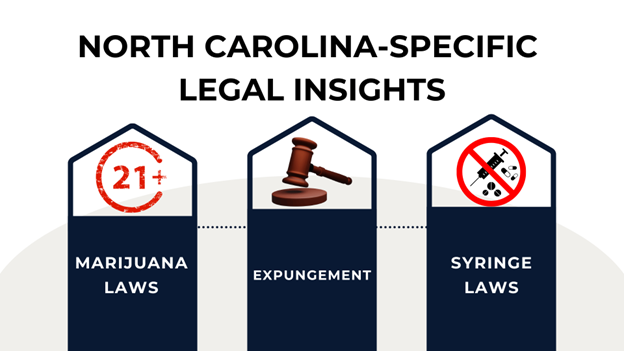
● Marijuana Laws: While 21+ states have legalized recreational marijuana, North Carolina still imposes felony charges for possession over 1.5 ounces. However, some counties (e.g., Durham, Buncombe) prioritize low-level offenses for dismissal.
● Expungement: Misdemeanor convictions may be expunged after 5 years, but felonies are rarely eligible unless charges are dismissed.
● Syringe Laws: Needle possession is a misdemeanor, but residue of illegal drugs can lead to felony charges.
Why Immediate Action Is Critical
North Carolina prosecutors move quickly, and delays can hurt your case. Early steps to take:
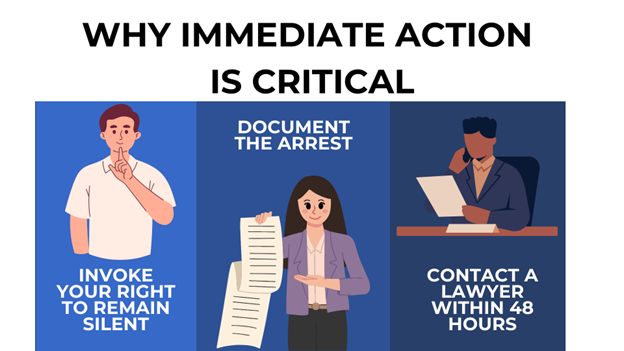
- Invoke Your Right to Remain Silent: Don’t discuss the case without an attorney.
- Document the Arrest: Write down officer names, witnesses, and what was said.
- Contact a Lawyer Within 48 Hours: Early intervention can lead to evidence suppression or reduced charges.
Final Answer: Are Drug Charges a Felony in North Carolina?
In most cases, yes—drug charges in North Carolina are felonies if they involve trafficking, Schedule I/II substances, or repeat offenses. However, a skilled defense attorney can often negotiate reduced charges, challenge evidence, or secure alternatives to jail. At Patrick Roberts Law, we’ve helped clients in North Carolina fight felony drug charges for over 15 years. Don’t let one mistake define your future—call us today for a free, confidential consultation.
Former assistant district attorney
Contact Patrick Roberts
Facing criminal charges in North Carolina demands seasoned representation. Trust in the experience and dual perspective of Patrick Roberts. Reach out today for a confidential consultation.
-
Call Our Team
Calls answered 24/7






For more information on the selection criteria, go to www.martindale.com
*Each case is different and must be evaluated separately. Prior results achieved do not guarantee similar results can be achieved in future cases.