
Aggravated sexual assault in North Carolina is a first-degree forcible sex offense — a Class B1 felony that carries a mandatory active prison sentence averaging nearly 20 years. North Carolina’s criminal code does not use the exact phrase “aggravated sexual assault.” That creates immediate confusion for anyone trying to understand what they or someone they care about is actually facing. The state classifies these offenses under specific statutes with precise legal elements. The distinction between a first-degree charge and a lesser offense often comes down to a single aggravating factor.
This article explains what aggravated sexual assault means under North Carolina law, what penalties a conviction carries, what the prosecution must prove, and how these cases are defended.
What Does “Aggravated Sexual Assault” Mean in North Carolina?
North Carolina criminalizes sexual offenses through a tiered system of statutes that distinguishes between degrees based on the presence or absence of aggravating factors. What most people call “aggravated sexual assault” corresponds to two statutes:
First-degree forcible rape under N.C.G.S. § 14-27.21 requires proof of vaginal intercourse, by force and against the will of the victim, plus an aggravating factor. First-degree forcible sexual offense under N.C.G.S. § 14-27.26 covers sexual acts other than vaginal intercourse under the same force-plus-aggravation requirements. Both are Class B1 felonies — the most serious sex offense classification in the state.
The aggravating factor is what elevates a second-degree charge to first-degree. Without an aggravating factor recognized under the statute, the same underlying conduct would be charged as a second-degree offense — a Class C felony. A Class C felony still carries severe consequences, but the sentencing range is meaningfully different.
This distinction matters because it is not unusual for a charge to be filed at first-degree when the facts supporting the aggravating factor are contested. Whether the aggravating factor can actually be proven is one of the central battlegrounds in defending these cases.
What Are the Penalties If I’m Convicted?
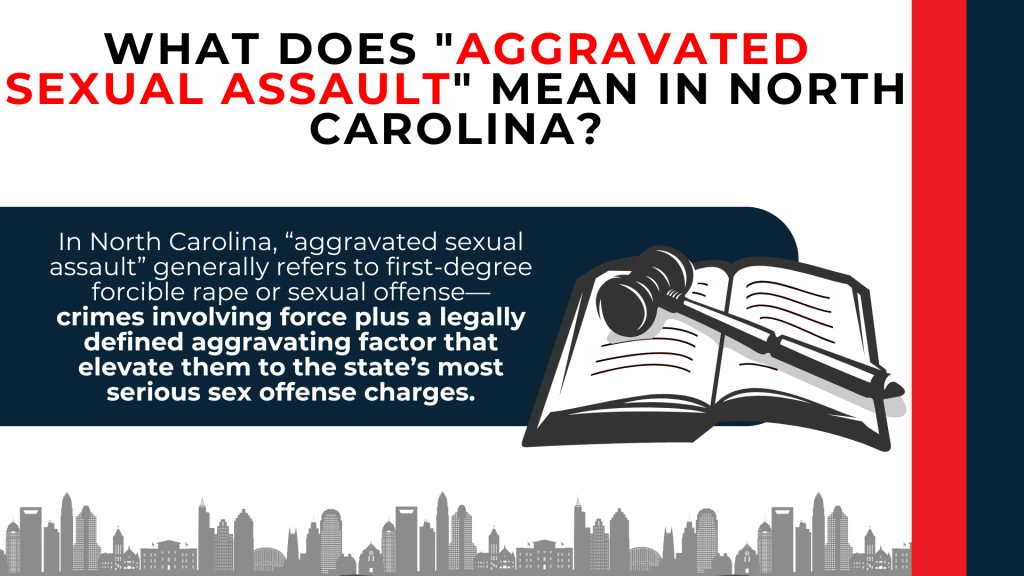
A Class B1 felony conviction for a first-degree sex offense results in mandatory active imprisonment. There is no probation. There is no suspended sentence. According to the North Carolina Sentencing and Policy Advisory Commission, 100% of Class B1 through Class D felony sex offense convictions in FY 2024 received active prison sentences.
The average sentence for a Class B1 felony conviction during that same period was 236 months minimum to 315 months maximum — roughly 20 to 26 years. North Carolina’s Structured Sentencing Act calculates the exact range based on offense class and prior record level. Sex offenses receive an enhanced maximum. For Class B1 through E felonies requiring sex offender registration, the maximum sentence is calculated at 120% of the minimum plus an additional 60 months under N.C.G.S. § 15A-1340.17(f).
Beyond the sentence itself, if you are convicted of a first-degree sex offense, you face 60 months of post-release supervision — five full years of monitoring after leaving prison. By comparison, most other felony offenses carry only 9 to 12 months.
These numbers are not hypothetical. In FY 2024, North Carolina courts entered 431 Class B1 felony convictions. The data also shows that Class B1 cases carry the longest pretrial timeline in the system: a median of 30 months from charge filing to sentencing. Defendants spend an average of 27 months in pretrial detention.
What Has to Be Proven for a Conviction?
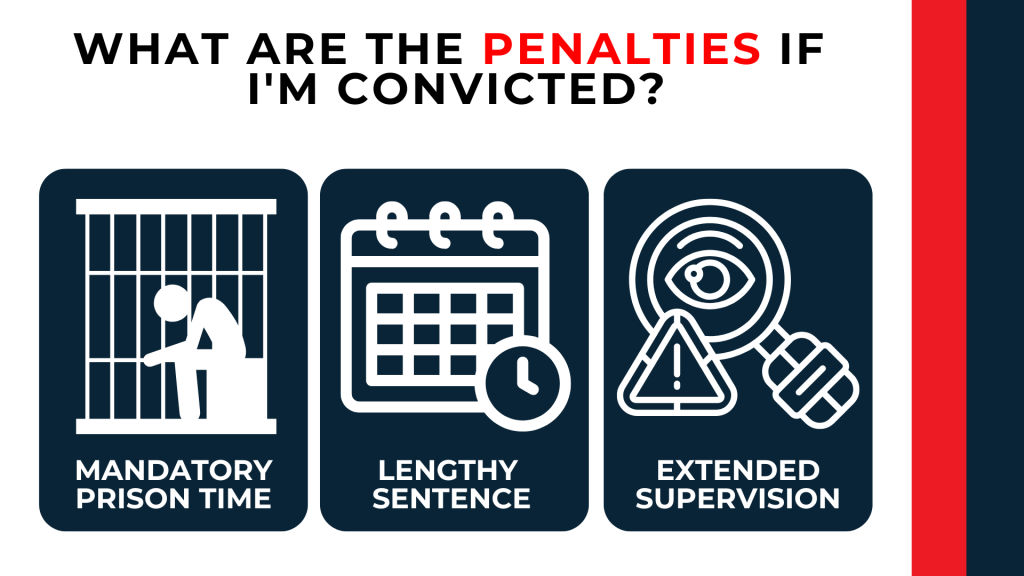
The prosecution must prove every element of the charge beyond a reasonable doubt. For a first-degree forcible rape or sexual offense conviction, that means proving three things: the sexual act itself, force and lack of consent, and at least one statutory aggravating factor.
Force and lack of consent are separate elements. This is a critical distinction in North Carolina law. The North Carolina Supreme Court held in State v. Alston, 310 N.C. 399 (1984), that force must be specific to the charged act — a general atmosphere of fear or intimidation from a prior relationship is not enough. The NC Court of Appeals reinforced in State v. Henderson, 233 N.C. App. 538 (2014), that a nonconsensual act alone is insufficient to establish force. The State must independently prove both.
North Carolina courts recognize two ways to prove force: actual physical force overcoming resistance, and constructive force through fear, coercion, or threats forcing submission. In State v. Etheridge, 319 N.C. 34 (1987), the court recognized constructive force in the context of a parent-child power imbalance. But the State must prove force under one of these approaches — it cannot simply rely on the absence of consent.
For cases involving incapacity — where the victim was mentally incapacitated or physically helpless — the prosecution proceeds under N.C.G.S. § 14-27.22(a)(2) and must prove that the defendant knew or reasonably should have known of the victim’s condition. Following 2019 amendments under the SAFE Child Act (Session Law 2019-245), voluntary intoxication that left the victim “substantially incapable” of appraising the nature of the conduct or resisting can now prove incapacity. These amendments apply only to offenses committed after December 1, 2019.
The aggravating factor must also be proven independently. If the State cannot prove the statutory aggravating factor, the charge cannot stand at the first-degree level — regardless of whether the underlying sexual act is proven.
Each of these elements represents a point where the State’s case can fail.
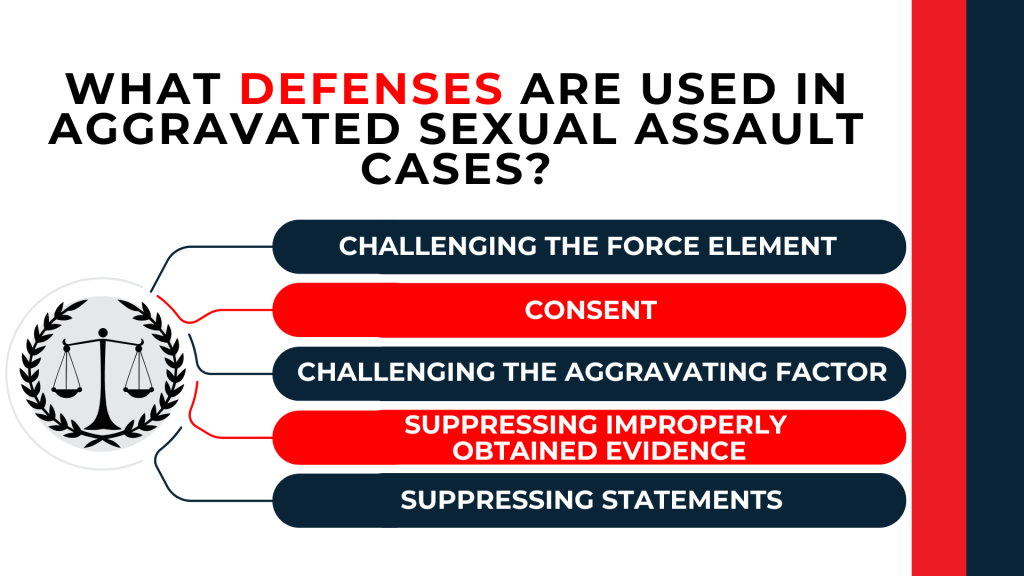
What Defenses Are Used in Aggravated Sexual Assault Cases?
Defense strategies in these cases are built around the specific elements the prosecution must prove. No two cases present the same facts, but the legal rules that apply are well established.
Challenging the Force Element
Because North Carolina requires proof of force as a distinct element — separate from lack of consent — a defense attorney examines whether the State can actually meet this burden. If the prosecution’s evidence establishes a nonconsensual encounter but does not independently prove force or constructive force, the evidence is legally insufficient for a forcible offense conviction.
Consent
Consent is a complete defense to forcible sex offenses under North Carolina law. The NC Court of Appeals affirmed in State v. Yelverton, 274 N.C. App. 348 (2020), that consent is a complete defense to forcible rape. For cases involving a prior consensual relationship, the North Carolina Supreme Court in Alston requires evidence of statements or actions clearly communicated to the defendant that clearly and unmistakably indicated withdrawal of consent. Physical resistance is not required, but the communication must be clear.
Withdrawal of consent during an act became legally recognized after December 1, 2019. For those cases, the defense may challenge whether withdrawal was communicated in a manner that a reasonable person would understand. For pre-December 2019 offenses, the prior standard under State v. Way, 297 N.C. 293 (1979), which held that consent could not be withdrawn mid-act, may still apply.
Challenging the Aggravating Factor
Even when the underlying conduct is disputed, the aggravating factor that elevates the charge from second-degree to first-degree is a separate element the State must prove. If the evidence supporting the aggravating factor is weak or open to challenge, the defense can focus on reducing the degree of the offense — which changes the felony classification and significantly changes the sentencing range.
Suppressing Improperly Obtained Evidence
The U.S. Supreme Court held in Riley v. California, 573 U.S. 373 (2014), that police cannot search cell phones or digital devices incident to arrest without a warrant. In sex offense cases, phones and digital devices are often central to the State’s evidence. A defense attorney examines whether the warrant authorizing a device search was sufficiently particular, whether the forensic examination went beyond what the warrant allowed, and whether any cloud data was accessed without separate authorization. North Carolina courts require particularized warrants for electronic device searches. Consent to search a home does not automatically extend to digital devices found inside.
Suppressing Statements
North Carolina requires mandatory recording of custodial interrogations for Class B1 felonies and Class C sex offenses under N.C.G.S. § 15A-211. If a recorded interrogation does not exist where one was required, that failure is admissible to support claims that the confession was involuntary. Beyond recording issues, a defense attorney evaluates whether Miranda warnings were properly administered before custodial interrogation and whether custody was properly established. The attorney also examines whether any police deception during questioning — while not automatically disqualifying under State v. Jackson, 308 N.C. 549 (1983) — made the overall circumstances coercive.
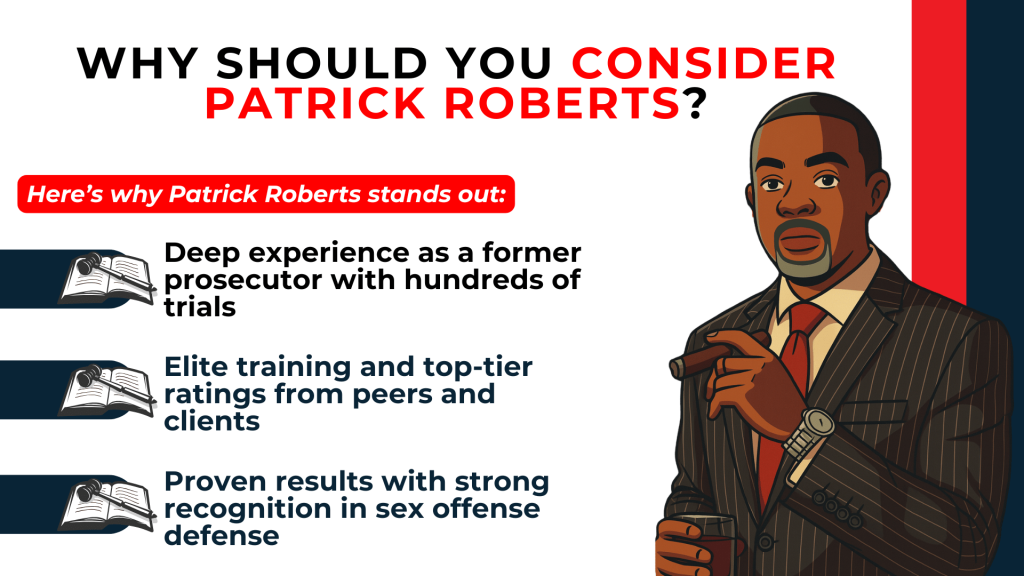
Why Should You Consider Patrick Roberts?
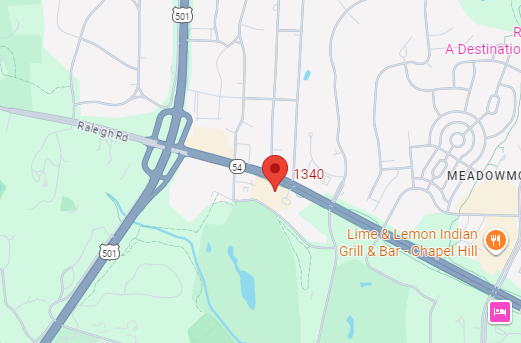
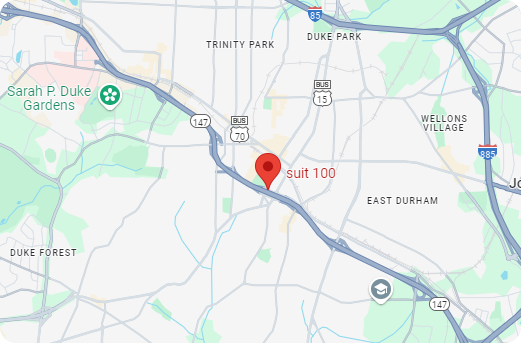
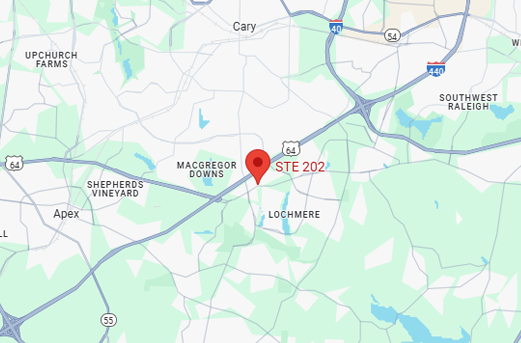
Patrick Roberts defends aggravated sexual assault and sex offense cases from his offices in Raleigh, Durham, Chapel Hill, and Cary, North Carolina. is a graduate of Duke University School of Law (Top 9 best criminal law program) and Johns Hopkins University (Top 7 rank in National Universities). He has completed rigorous trial advocacy programs, including Gerry Spence’s Trial Lawyers College, the National Criminal Defense College Trial Practice Institute, and the 2025 NCDC Cross-Examination Intensive.
Before founding Patrick Roberts Law PLLC, he served as an Assistant District Attorney in Wake, Johnston, and New Hanover counties — experience that gives him direct insight into how the State builds, evaluates, and prosecutes sexual assault cases. He has tried hundreds of bench and jury trials in state and federal courts since 2007 and is admitted to practice before the U.S. Supreme Court, the Fourth Circuit Court of Appeals, and all federal district courts in North Carolina.
Attorney Patrick Roberts holds an AV Preeminent peer rating from Martindale-Hubbell — the highest possible rating for legal ability and ethical standards — which he has maintained for over five consecutive years. He has been recognized as a Client Champion Platinum by Martindale-Hubbell for over five consecutive years, carries a 10/10 “Superb” rating on Avvo for more than 15 years, and has been named among the Top 100 Trial Lawyers by The National Trial Lawyers. He is the only North Carolina attorney listed on the National Child Abuse Defense & Resource Center as of 2026, and is the co-author of two legal books, including one on defending internet sex crimes.
Case Review
Investigation Type Child Protective Services (CPS) Investigation – Alleged Felony Sexual Assault
Description In this sensitive matter, Attorney Patrick Roberts’ client was accused of sexual assault by his teenage stepdaughter. Given the nature of the allegations, the client faced the potential of criminal charges carrying a mandatory minimum sentence of 12 years in prison. Recognizing the high stakes, Attorney Patrick Roberts was retained during the earliest stages of the investigation, prior to any formal arrests or indictments.
Strategy Attorney Roberts focused on proactive representation during the CPS investigation phase. By engaging with investigators early, the defense was able to monitor the progression of the case and ensure the client’s rights were protected during interviews and evidence gathering. The defense centered on challenging the credibility of the allegations and providing context that investigators might otherwise have overlooked. This early intervention was designed to prevent the case from escalating to the District Attorney’s office for prosecution.
Outcome* As a result of the defense’s involvement and the presentation of key facts, CPS declined to substantiate the allegations. Because the investigation was resolved at the administrative level, no criminal charges were brought against the client, successfully* avoiding the threat of a multi-year prison sentence.
*Disclaimer The case reviews provided are for informational purposes only and represent actual case results handled by Attorney Patrick Roberts. However, every legal matter is unique, and these outcomes do not guarantee or predict a similar result in any future case.
Client Review
“When our son was arrested on sexual assault and rape charges, I was lost. I searched and found Patrick Roberts. I was impressed with his resume so we met with him and hired him. Now our son’s case is over. It has taken a long time to get to the end of this experience, but I thank God for sending Patrick Roberts our way!” — Verified client review on Avvo.com
Peer Endorsement
“Patrick is an experienced and knowledgeable criminal attorney. I highly recommend him if you’re seeking competent and professional representation in a state or federal criminal matter.” — Martindale-Hubbell verified Peer Endorsement
Disclaimer: The testimonials are actual comments. Every case is different and depends on its own unique facts and legal circumstances. These results are illustrative of the matters the firm handles but do not guarantee, warrant, or predict a similar outcome in your legal matter.
If you are facing an aggravated sexual assault charge in North Carolina or believe you are under investigation, contact Patrick Roberts Law PLLC to speak with a defense attorney who has handled these cases at every stage — from investigation through trial.
The firm accepts a limited number of engagements to allow for the rigorous, case-specific scrutiny necessary to defend high-stakes cases.
Disclaimer: The information on this website is for general informational purposes only and does not constitute legal advice for any individual case or situation. Contacting us via this website, email, or contact form does not create an attorney-client relationship. Each case is different and must be evaluated separately; prior results do not guarantee a similar outcome.
Former assistant district attorney
Contact Patrick Roberts
Facing criminal charges in North Carolina demands seasoned representation. Trust in the experience and dual perspective of Patrick Roberts. Reach out today for a confidential consultation.
-
Call Our Team
Calls answered 24/7








For more information on the selection criteria, go to www.martindale.com
*Each case is different and must be evaluated separately. Prior results achieved do not guarantee similar results can be achieved in future cases.