
A drug trafficking charge in North Carolina represents one of the most serious criminal accusations you can face. Under N.C. Gen. Stat. § 90-95(h), trafficking occurs when someone sells, manufactures, delivers, transports, or possesses specific quantities of controlled substances. Unlike simple possession charges, trafficking charges are based primarily on the amount of drugs involved, regardless of whether you intended to sell them.
The law presumes that possession of certain quantities indicates an intent to distribute, making these charges particularly challenging to defend against. North Carolina’s trafficking statutes establish specific weight thresholds that transform what might otherwise be a possession charge into a trafficking offense.
How Does North Carolina Define Drug Trafficking?
North Carolina law defines drug trafficking through quantity-based thresholds established in N.C. Gen. Stat. § 90-95(h). The statute creates a legal presumption that possession of certain amounts of controlled substances constitutes trafficking, even without evidence of actual sales or distribution.
The trafficking statute applies to several categories of controlled substances:
- Marijuana: More than 10 pounds
- Cocaine: 28 grams or more
- Methamphetamine: 28 grams or more
- Amphetamine: 28 grams or more
- Opium, opiates, or opioids (including heroin, fentanyl, and carfentanil): 4 grams or more
- MDMA/MDA: 100 tablets or 28 grams or more
- LSD: 100 dosage units or more
- Synthetic cannabinoids: More than 50 dosage units (3 grams per unit)
- Substituted cathinones: 28 grams or more
Each substance has multiple quantity tiers, with penalties increasing as the amounts increase. The prosecution need only prove you possessed, transported, manufactured, sold, or delivered the requisite amount to secure a conviction under N.C. Gen. Stat. § 90-95(h).
What Activities Constitute Drug Trafficking Under North Carolina Law?
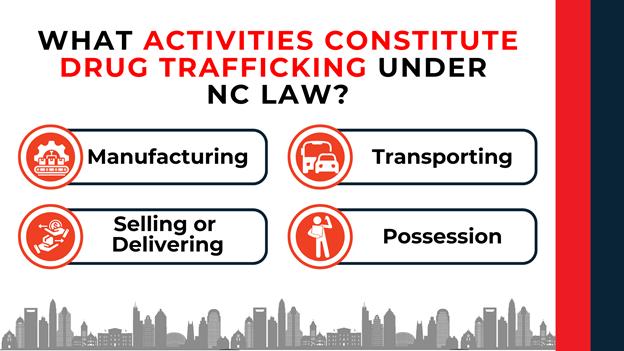
According to N.C. Gen. Stat. § 90-95(h), trafficking charges can arise from several different activities:
Manufacturing includes any process of creating, producing, or preparing controlled substances. This encompasses everything from operating a methamphetamine lab to packaging drugs for distribution.
Selling or delivering involves transferring controlled substances to another person. The statute specifically notes that transferring less than 5 grams of marijuana without payment does not constitute delivery under N.C. Gen. Stat. § 90-95(b)(2).
Transporting means moving drugs from one location to another, regardless of distance. You can face trafficking charges for driving across town with trafficking quantities in your vehicle.
Possession alone suffices for trafficking charges if the quantity meets statutory thresholds. The state doesn’t need to prove you intended to sell the drugs—possession of trafficking amounts creates a presumption of trafficking activity.
Can You Be Charged With Trafficking for Someone Else’s Drugs?
North Carolina law allows trafficking charges even when the drugs belong to someone else. If you knowingly transport, possess, or participate in trafficking activities, you face the same penalties as the actual owner of the drugs.
Under the conspiracy provisions in N.C. Gen. Stat. § 90-98, anyone who conspires to commit trafficking faces the same penalties as if they completed the offense. This means agreeing to help someone transport drugs or allowing them to store trafficking quantities in your home could result in trafficking charges.
The law doesn’t require you to personally own the drugs. Knowledge of their presence and participation in the trafficking activity suffices. However, if you genuinely didn’t know about the drugs—such as when someone hides them in your vehicle without your knowledge—this lack of knowledge provides a potential defense.
What Are the Penalties for Drug Trafficking in North Carolina?
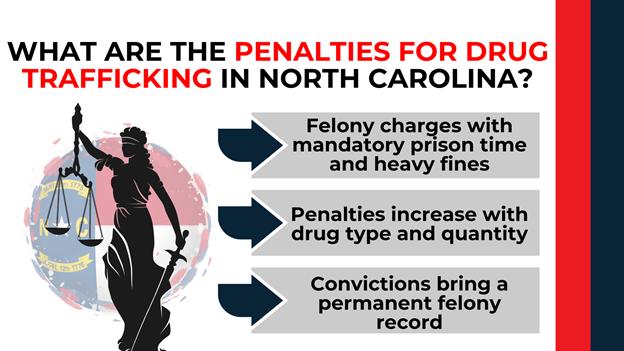
Drug trafficking charges in North Carolina carry serious felony penalties that vary based on the type and quantity of drugs involved. Under N.C. Gen. Stat. § 90-95(h), these offenses are classified as felonies ranging from Class D to Class H, with mandatory minimum sentences and substantial fines.
The severity of punishment increases with larger quantities. Each controlled substance has multiple weight tiers, and crossing into a higher tier results in more severe penalties. Trafficking convictions also carry mandatory minimum sentences that judges cannot suspend or reduce except under specific circumstances outlined in N.C. Gen. Stat. § 90-95(h)(5) and (5a).
Beyond incarceration and fines, a trafficking conviction creates a permanent felony record affecting employment, housing, voting rights, and professional licenses. The consecutive sentencing provision in N.C. Gen. Stat. § 90-95(h)(6) means trafficking sentences must run consecutively to any other sentence you’re currently serving.
How Can Substantial Assistance Reduce Trafficking Sentences?
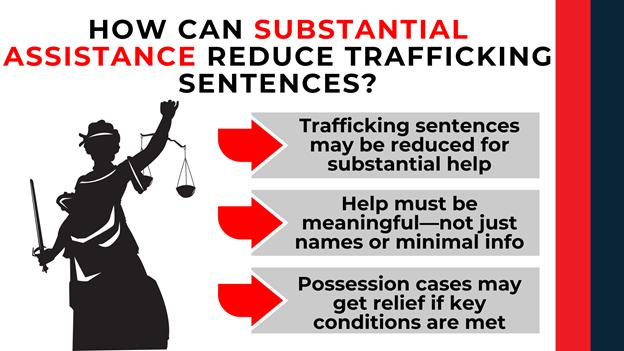
North Carolina law provides limited opportunities to reduce trafficking sentences through “substantial assistance” to law enforcement. Under N.C. Gen. Stat. § 90-95(h)(5), a judge may reduce the fine or impose a prison term below the mandatory minimum if you provide substantial assistance in identifying, arresting, or convicting accomplices, accessories, co-conspirators, or principals.
The assistance must be genuine and helpful to law enforcement. Simply providing names or minimal information typically doesn’t qualify. The sentencing judge must enter specific findings that you rendered substantial assistance, and this determination remains within the judge’s discretion.
For certain trafficking offenses involving possession only, N.C. Gen. Stat. § 90-95(h)(5a) provides additional sentencing relief if specific conditions are met, including accepting responsibility, completing substance abuse treatment, and having no prior felony drug convictions.
What Defenses Apply to Drug Trafficking Charges?
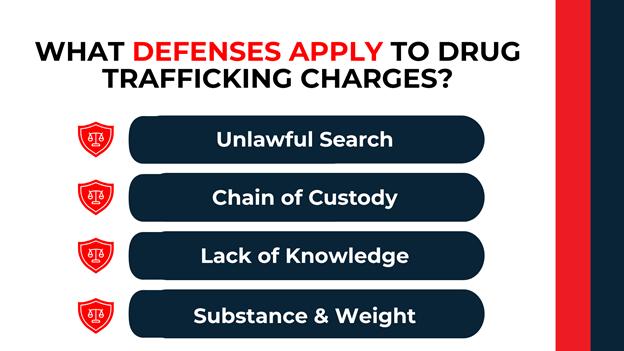
Challenging the legality of the search often provides the strongest defense to trafficking charges. Under N.C. Gen. Stat. § 15A-974, evidence obtained through unlawful searches must be suppressed. If police violated your Fourth Amendment rights during the stop, search, or seizure, the court must exclude the drugs from evidence, potentially forcing dismissal of the charges.
Lack of knowledge presents another critical defense. The state must prove you knowingly possessed or participated in trafficking the controlled substances. If someone placed drugs in your vehicle or property without your knowledge, you cannot be convicted of trafficking.
Chain of custody issues can undermine the prosecution’s case. Under N.C. Gen. Stat. § 90-95(g) and (g1), the state must establish proper handling and testing of the alleged drugs. Gaps in the chain of custody or problems with laboratory analysis may create reasonable doubt.
Challenging the substance identification or weight measurements can defeat trafficking charges. The state must prove both the identity of the substance and that it meets the statutory weight threshold. Improper testing procedures or calibration errors could result in acquittal.
How Long Does the State Have to File Drug Trafficking Charges?
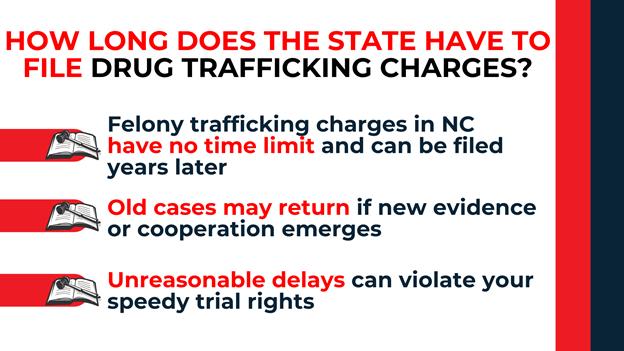
Unlike misdemeanors, which have a two-year statute of limitations under N.C. Gen. Stat. § 15-1, felony drug trafficking charges have no statute of limitations in North Carolina. The state can file trafficking charges years after the alleged offense occurred.
This unlimited timeframe means old cases can resurface when new evidence emerges or when co-defendants decide to cooperate with authorities. The lack of a limitation period makes it crucial to preserve any evidence that might support your defense, as memories fade and witnesses become unavailable over time.
However, constitutional speedy trial rights still apply. Under N.C. Gen. Stat. § 15A-954(a)(3), you can move to dismiss charges if the delay in prosecution violates your right to a speedy trial, though proving such violations requires showing actual prejudice to your defense.
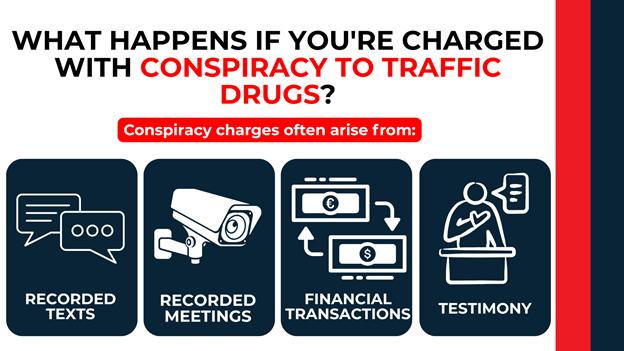
What Happens If You’re Charged With Conspiracy to Traffic Drugs?
Conspiracy to commit drug trafficking carries the same penalties as completed trafficking under N.C. Gen. Stat. § 90-98 and § 90-95(i). The state doesn’t need to prove you actually possessed or transported drugs—only that you agreed with another person to commit trafficking and took some action toward that goal.
Conspiracy charges often arise from:
- Text messages or recorded conversations discussing drug deals
- Surveillance showing meetings with known traffickers
- Financial transactions suggesting drug activity
- Testimony from co-conspirators
The agreement itself constitutes the crime, even if the planned trafficking never occurs. Withdrawal from the conspiracy requires taking affirmative steps to communicate your withdrawal to co-conspirators and cease all participation.
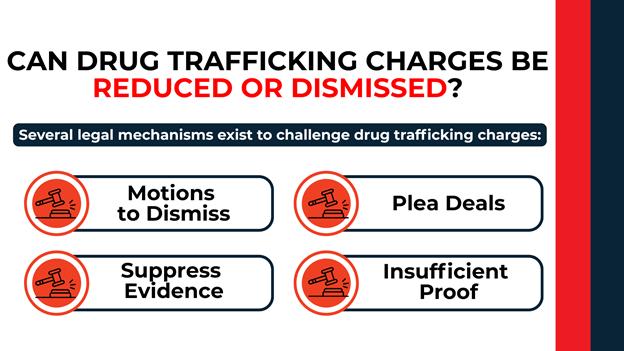
Can Drug Trafficking Charges Be Reduced or Dismissed?
Several legal mechanisms exist for challenging drug trafficking charges. Under N.C. Gen. Stat. § 15A-954, you can file motions to dismiss based on constitutional violations, statute of limitations (for related misdemeanors), speedy trial violations, or insufficient evidence.
Pretrial motions to suppress evidence under N.C. Gen. Stat. § 15A-974 can exclude unlawfully obtained evidence. If the drugs resulted from an illegal search or seizure, their suppression often forces dismissal of trafficking charges.
Plea negotiations may result in reduced charges, particularly when evidence issues exist or when quantities fall near threshold amounts. Prosecutors might agree to possession charges instead of trafficking if mitigating factors exist.
Under N.C. Gen. Stat. § 15A-1227, you can move to dismiss for insufficient evidence at various trial stages. If the state cannot prove each element beyond a reasonable doubt—including drug weight and your knowledge—the court must dismiss the charges.
Contact Patrick Roberts Law About Your Drug Trafficking Charge
Facing a drug trafficking charge in North Carolina requires immediate legal representation. The serious nature of these charges, with their mandatory sentences and lasting consequences, demands thorough preparation and strategic defense planning.
Attorney Patrick Roberts has substantial experience handling criminal cases throughout North Carolina.* His understanding of trafficking laws, constitutional protections, and local court procedures provides the foundation for building strong defenses against these serious charges.
Time is critical when facing trafficking charges. Evidence must be preserved, witnesses interviewed, and constitutional challenges raised promptly. Contact Patrick Roberts Law today to discuss your case and begin developing your defense strategy. Early intervention often makes the difference between a conviction and a favorable resolution.
*Disclaimer: Each case is different and must be evaluated separately. Prior results achieved do not guarantee similar results can be achieved in future cases.
Former assistant district attorney
Contact Patrick Roberts
Facing criminal charges in North Carolina demands seasoned representation. Trust in the experience and dual perspective of Patrick Roberts. Reach out today for a confidential consultation.
-
Call Our Team
Calls answered 24/7






For more information on the selection criteria, go to www.martindale.com
*Each case is different and must be evaluated separately. Prior results achieved do not guarantee similar results can be achieved in future cases.