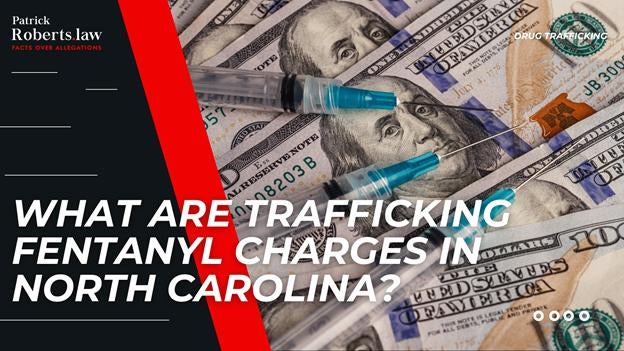
Facing trafficking fentanyl charges in North Carolina represents one of the most serious drug offenses in the state's criminal justice system. Under N.C. Gen. Stat. § 90-95(h)(4), trafficking in fentanyl occurs when someone sells, manufactures, delivers, transports, or possesses four grams or more of fentanyl or any mixture containing fentanyl. This offense carries severe penalties and requires immediate legal attention.
The law treats fentanyl trafficking differently from simple possession due to the quantity involved and the presumption that larger amounts indicate distribution rather than personal use. Understanding the elements of this charge and potential defenses can make a critical difference in the outcome of your case.
What Does the State Need to Prove for Trafficking Fentanyl Charges?
To secure a conviction under N.C. Gen. Stat. § 90-95(h)(4), prosecutors must establish several key elements beyond a reasonable doubt:
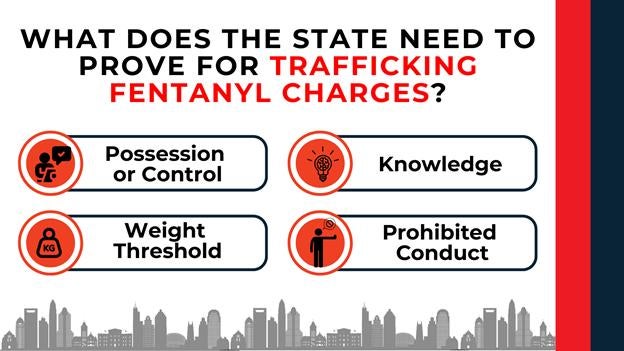
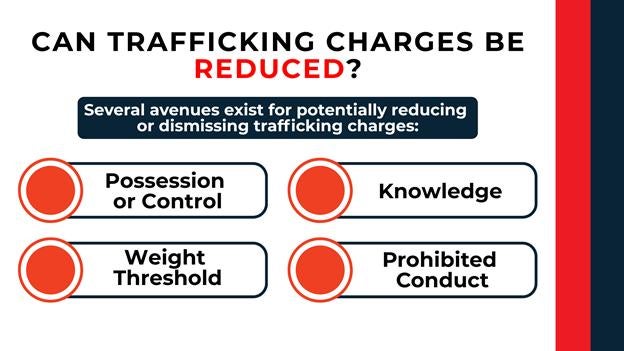
Possession or Control: The state must prove you actually possessed or had control over the substance. This includes:
- Actual possession (on your person)
- Constructive possession (in an area under your control)
- Joint possession with others
Weight Threshold: The substance must weigh four grams or more. The weight includes any mixture containing fentanyl, not just pure fentanyl. Laboratory analysis certified under N.C. Gen. Stat. § 90-95(g) typically establishes this element.
Knowledge: While not explicitly stated in the statute, courts generally require proof that you knew about the presence and nature of the substance. If you genuinely had no knowledge that fentanyl was present—such as when borrowing someone else's vehicle—this element may be challenged.
Prohibited Conduct: The statute covers multiple actions:
- Selling
- Manufacturing
- Delivering
- Transporting
- Possessing
Any one of these actions with the requisite amount triggers trafficking charges.
How Are Different Amounts of Fentanyl Charged?
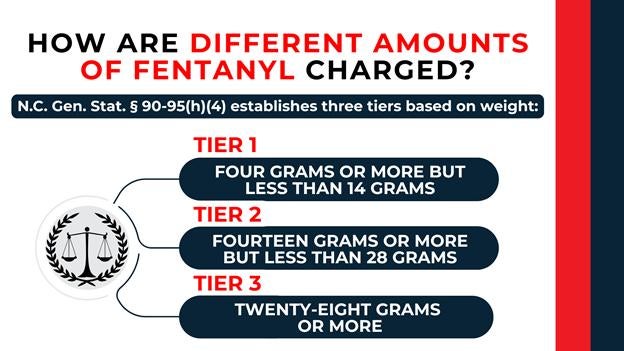
N.C. Gen. Stat. § 90-95(h)(4) establishes three tiers based on weight:
- Tier 1: Four grams or more but less than 14 grams
- Tier 2: Fourteen grams or more but less than 28 grams
- Tier 3: Twenty-eight grams or more
Each tier carries increasingly severe penalties, including mandatory minimum sentences and substantial fines. The weight determination includes the entire mixture, meaning even heavily diluted fentanyl counts toward the total weight if fentanyl is present in any amount.
What if Multiple People Were Present When Fentanyl Was Found?
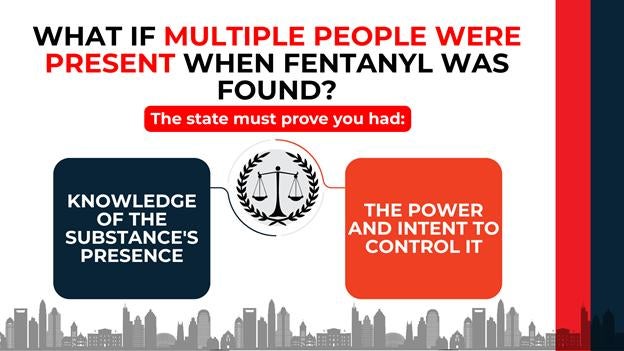
Constructive possession cases often arise when fentanyl is discovered in shared spaces like vehicles or homes. Under North Carolina law, mere proximity to drugs does not establish possession. The state must prove you had:
- Knowledge of the substance's presence
- The power and intent to control it
If fentanyl was found in a car with multiple occupants, factors courts consider include:
- Who owned or drove the vehicle
- Where the drugs were located
- Whether anyone made incriminating statements
- Physical evidence linking individuals to the drugs
Without additional evidence connecting you to the fentanyl, mere presence in the same location typically cannot support a trafficking conviction.
Can Evidence Be Thrown Out in Trafficking Fentanyl Cases?
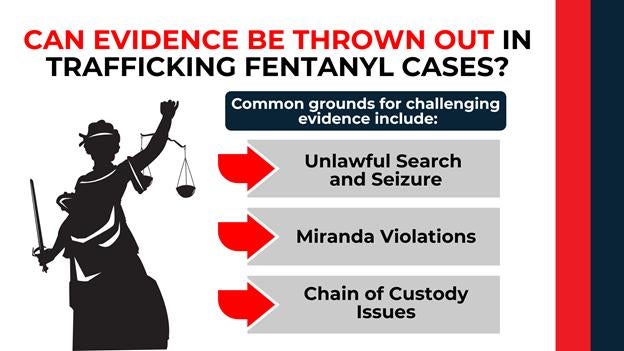
Constitutional violations during the investigation can lead to evidence suppression under N.C. Gen. Stat. § 15A-974. Common grounds for challenging evidence include:
Unlawful Search and Seizure: The Fourth Amendment protects against unreasonable searches. If police lacked:
- Valid consent
- A proper warrant
- Probable cause
- Applicable exceptions to the warrant requirement
The evidence may be excluded, often resulting in dismissal.
Miranda Violations: Statements made during custodial interrogation without proper warnings may be suppressed.
Chain of Custody Issues: Under N.C. Gen. Stat. § 90-95(g1), the state must establish proper handling of evidence. Breaks in the chain of custody can undermine the reliability of lab results.
Your attorney can file pretrial motions challenging the admissibility of evidence obtained through constitutional violations.
What About Conspiracy to Traffic Fentanyl?
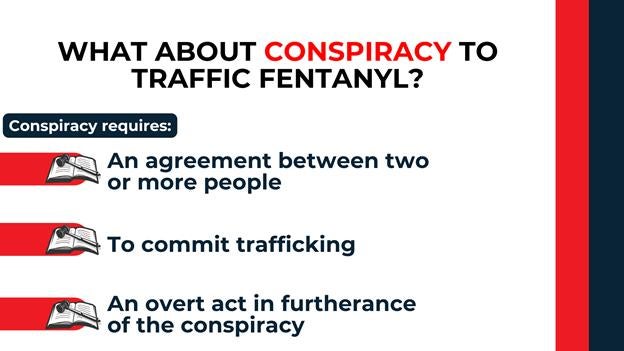
N.C. Gen. Stat. § 90-95(i) makes conspiracy to traffic fentanyl a separate offense carrying the same penalties as actual trafficking. Conspiracy requires:
- An agreement between two or more people
- To commit trafficking
- An overt act in furtherance of the conspiracy
Importantly, you can be convicted of conspiracy even if the planned trafficking never occurs. The agreement itself, combined with any step toward completion, suffices for conviction.
Can Trafficking Charges Be Reduced?
Several avenues exist for potentially reducing or dismissing trafficking charges:
Insufficient Evidence: Under N.C. Gen. Stat. § 15A-1227, defense counsel can move to dismiss if the state's evidence cannot sustain a conviction. This motion can be made at various stages of trial.
Substantial Assistance: N.C. Gen. Stat. § 90-95(h)(5) allows judges to reduce sentences if you provide substantial assistance in identifying, arresting, or convicting accomplices. This requires:
- Truthful cooperation
- Information leading to concrete results
- A finding by the court that assistance was substantial
Constitutional Defenses: Violations of your rights under the Fourth, Fifth, or Sixth Amendments may result in evidence exclusion or case dismissal under N.C. Gen. Stat. § 15A-954.
Lab Testing Challenges: Questioning the accuracy of drug weight measurements or substance identification through independent testing or cross-examination of state analysts.
What if the Fentanyl Was for Personal Use?
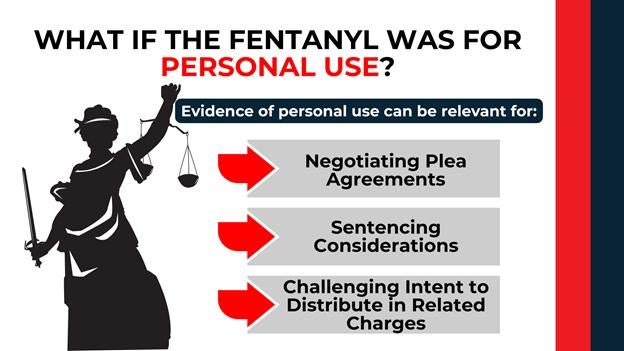
While the trafficking statute does not explicitly distinguish between personal use and distribution, the weight thresholds create a legal presumption of trafficking. However, evidence of personal use can be relevant for:
- Negotiating plea agreements
- Sentencing considerations
- Challenging intent to distribute in related charges
Four grams of fentanyl far exceeds typical personal use amounts, making this defense challenging but not impossible in certain circumstances.
How Does Entrapment Apply to Fentanyl Trafficking Cases?
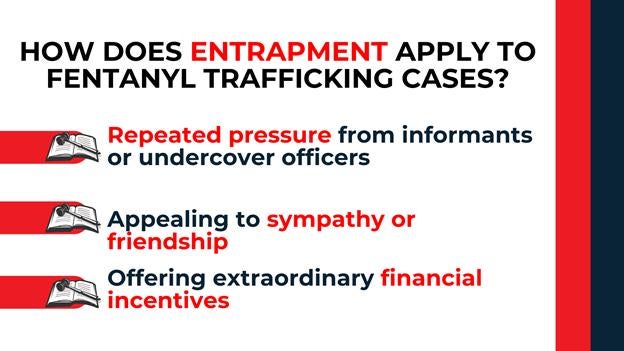
Entrapment occurs when law enforcement induces someone to commit a crime they were not predisposed to commit. In trafficking cases, this might involve:
- Repeated pressure from informants or undercover officers
- Appealing to sympathy or friendship
- Offering extraordinary financial incentives
The defense must show both improper government inducement and lack of predisposition to traffic fentanyl. Given the serious nature of fentanyl trafficking, courts carefully scrutinize entrapment claims.
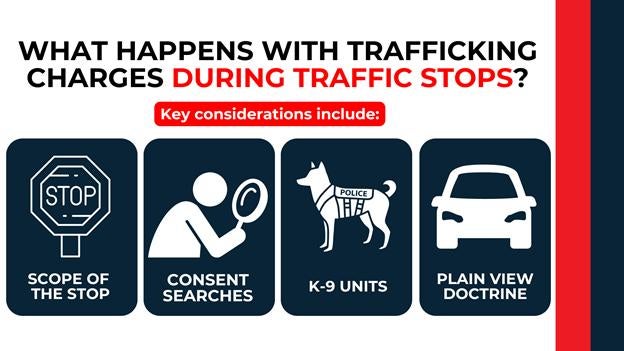
What Happens with Trafficking Charges During Traffic Stops?
Many trafficking cases begin with routine traffic stops. Key considerations include:
Scope of the Stop: Officers must have reasonable suspicion for the initial stop and probable cause to extend it beyond its original purpose.
Consent Searches: You have the right to refuse consent to search your vehicle. Any consent must be voluntary and not coerced.
K-9 Units: Police cannot unreasonably prolong a traffic stop to wait for drug dogs without reasonable suspicion of criminal activity.
Plain View Doctrine: Items visible from outside the vehicle may provide probable cause for further investigation.
Understanding your rights during traffic stops can prevent evidence collection that leads to trafficking charges.
Moving Forward with Your Defense
Trafficking fentanyl charges under N.C. Gen. Stat. § 90-95(h)(4) carry severe consequences including mandatory prison time and substantial fines. The complexity of these cases demands thorough investigation of all potential defenses, from constitutional challenges to evidentiary issues.
Attorney Patrick Roberts brings extensive experience handling serious drug charges throughout North Carolina.* Early intervention in your case allows for comprehensive evidence review, witness interviews, and strategic planning before critical decisions must be made. Contact Patrick Roberts Law immediately to discuss your situation and protect your rights. Time-sensitive defenses and evidence preservation make prompt action essential in trafficking cases.
*Disclaimer: Each case is different and must be evaluated separately. Prior results achieved do not guarantee similar results can be achieved in future cases.