

After a domestic violence arrest in North Carolina, you can be held in jail for up to 48 hours before a judge sets the conditions of your release. That hold is longer than what applies to most other criminal charges, and it is usually the first thing that catches people off guard. It is also only the beginning of a process that moves through pretrial conditions, possible protective orders, and eventual case resolution.
This page walks through that process in order, from the jail cell to the courtroom. Whether you are facing a DV arrest in North Carolina or standing beside someone who is, it will help you understand what comes next and where the key decisions fall.
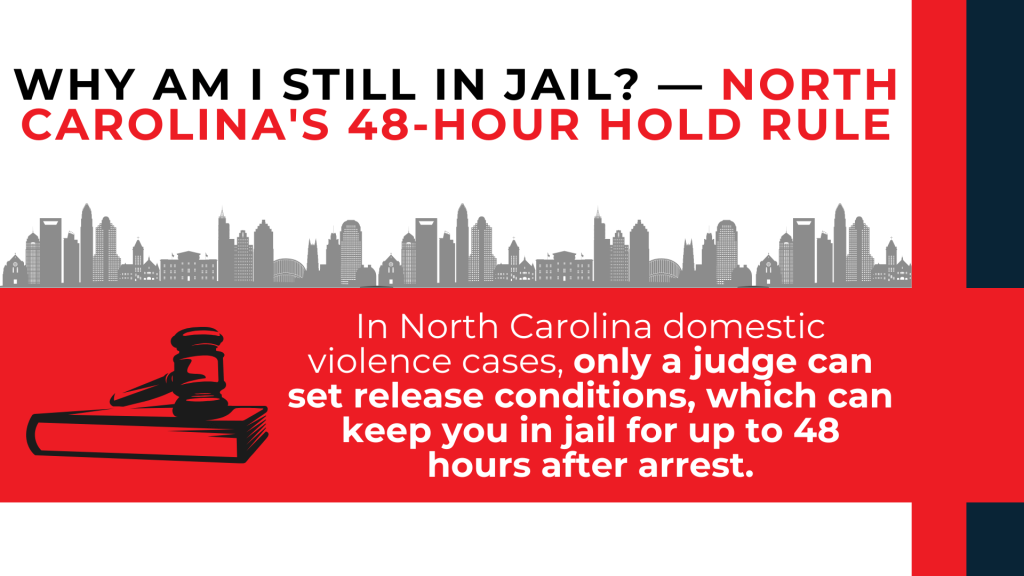
Why Am I Still in Jail? — North Carolina’s 48-Hour Hold Rule
Most criminal charges in North Carolina allow a magistrate to set bond and release conditions shortly after booking. Domestic violence cases work differently.
Under N.C. Gen. Stat. § 15A-534.1, when someone is charged with a crime of domestic violence, only a judge — not a magistrate — can decide the conditions of pretrial release. That judge has up to 48 hours from the time of arrest to act. If no judge sets conditions within that window, a magistrate must then set them.
In practice, this means that if you are arrested on a Friday evening for a domestic violence offense, you may not see a judge until Sunday or even Monday. The hold is not a punishment and does not mean a finding of guilt. It exists because lawmakers decided that DV cases require a judge’s review before the accused returns to the community. But if you are sitting in a holding cell with no information, it can feel no different from punishment. That is one reason having an attorney involved early matters.
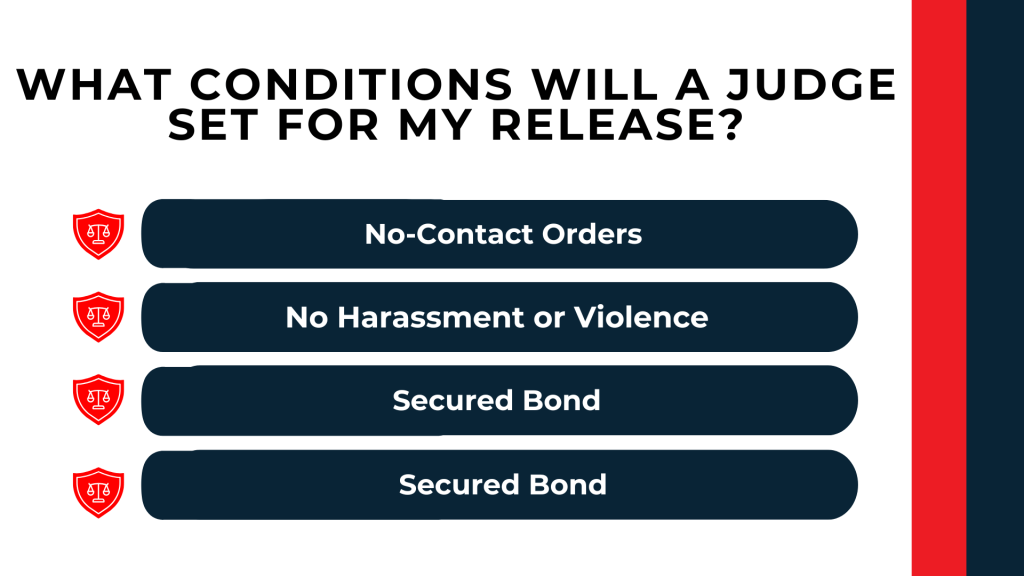
What Conditions Will a Judge Set for My Release?
Release after a domestic violence arrest is rarely unconditional. Under § 15A-534.1(a)(2), a judge can set conditions that include staying away from the alleged victim’s home, school, and workplace, not assaulting or harassing the alleged victim, and posting a secured appearance bond.
These conditions take effect immediately. Violating them — even unintentionally, even by sending a single text message — can lead to a new criminal charge and send you back to jail.
The most disruptive condition for many people is the stay-away order. If you and the alleged victim live in the same home, you may be not allowed to return. That means finding somewhere else to stay, often on short notice and with limited access to your belongings. This is not a permanent arrangement, but it controls daily life until the case is resolved or the conditions are changed. Any attempt to work around it creates serious legal risk.
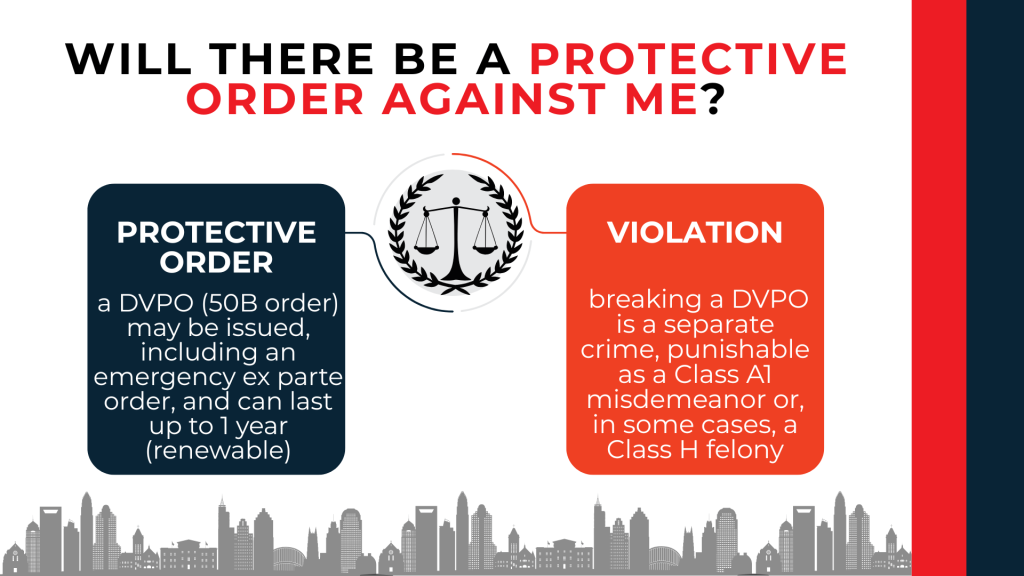
Will There Be a Protective Order Against Me?
Separately from the criminal case, the alleged victim can seek a Domestic Violence Protective Order — commonly called a DVPO or “50B order” — through the civil courts under N.C. Gen. Stat. Chapter 50B. Pursuing both a criminal prosecution and a civil protective order for the same actions is permitted and does not count as double jeopardy.
Under § 50B-2, a court can issue an emergency ex parte DVPO without advance notice to you if the alleged victim shows a danger of further acts of domestic violence. A final DVPO can then be entered after notice and a hearing, lasting up to one year under § 50B-3. It is renewable for periods of up to two years.
The DVPO can require you to stay away from the alleged victim, move out of a shared home, surrender firearms, and follow other conditions the court finds necessary. This is important to understand early: a knowing violation of a DVPO is itself a Class A1 misdemeanor under § 50B-4.1. It can escalate to a Class H felony if the violation involves a deadly weapon, follows two prior Chapter 50B convictions, or involves entering a domestic violence safe house.
You can find yourself bound by both criminal pretrial conditions and a civil protective order at the same time. Each carries its own restrictions and its own penalties for violation. Keeping track of what each order requires is not optional.
How Long Will This Case Take?
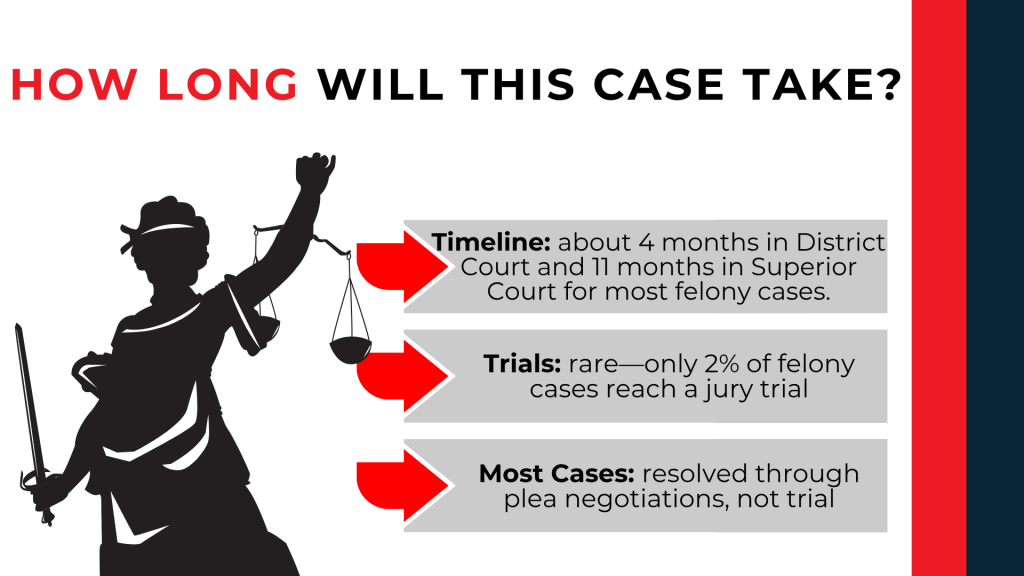
The timeline depends on the seriousness of the charge and the court where the case is resolved. According to data from the NC Sentencing and Policy Advisory Commission’s FY2024 Statistical Report, the median time from charge to sentencing for felonies resolved in district court was about 4 months, compared to roughly 11 months for felonies resolved in Superior Court. Misdemeanor cases generally move faster than felonies, though court backlogs can stretch any timeline.
Most cases do not go to trial. In FY2024, only about 2% of all NC felony convictions resulted from a jury trial — 498 out of 26,577. The remaining convictions were almost always the result of negotiated plea agreements. For Class H and Class I felonies, the category that includes assault by strangulation, the jury trial rate drops to roughly 1%.
None of this means a trial is impossible or a bad idea in a given case. It means that for the vast majority of people moving through this system, the outcome will be shaped by what happens in negotiations between the defense attorney and the prosecutor. That makes the quality of your representation the most important thing you can control.
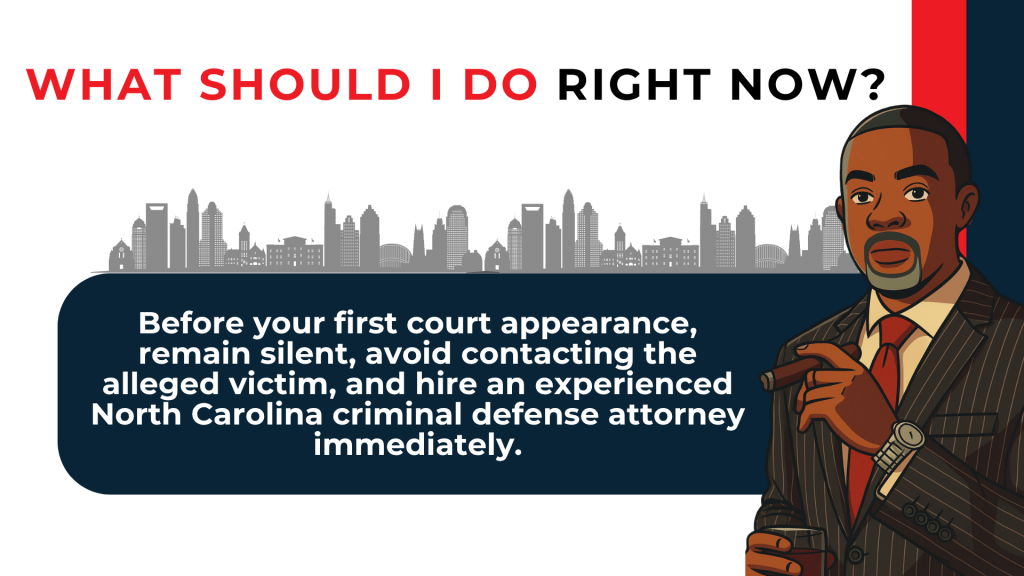
What Should I Do Right Now?
Two things matter more than anything else in the hours and days after a domestic violence arrest.
First, do not make statements — to law enforcement, to the alleged victim, or to anyone whose account could later become evidence. North Carolina law does not require you to explain your side of the story at the scene or at the jail. What you say during and after an arrest becomes part of the record. In DV cases, where the facts are often disputed and the context is deeply personal, prosecutors routinely use early statements to build their case.
Second, get a criminal defense attorney involved before the first court appearance. The bond hearing, the response to a protective order petition, and the earliest conversations with the prosecutor are not just formalities. They are the moments where the direction of your case is set — and they happen fast.
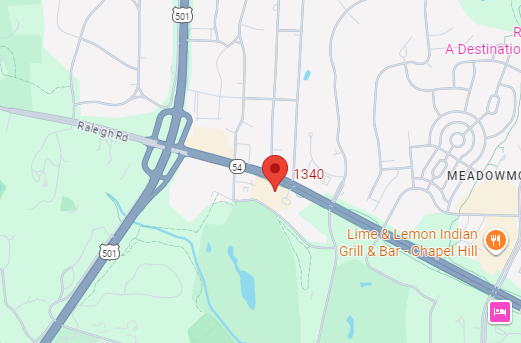
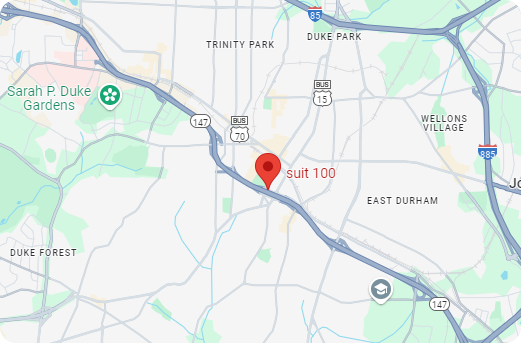
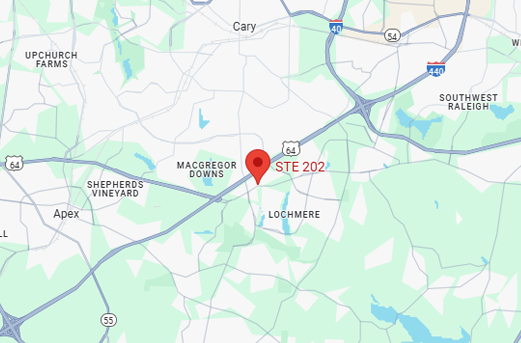
Patrick Roberts is a former Assistant District Attorney who spent years prosecuting cases in Wake, Johnston, and New Hanover counties before shifting to criminal defense. That background means he understands how the state builds and evaluates cases from the inside — how charging decisions are made, what prosecutors look for in the evidence, and where the weaknesses in a case are most likely to exist. With offices in Raleigh, Durham, Chapel Hill, and Cary, and more than two decades of experience handling criminal matters across North Carolina, his practice is built around the kind of case where the consequences extend far beyond the courtroom. He provides legal representation for high-stakes cases across North Carolina, focusing locally on Wake County areas such as Raleigh, Cary, Apex, Holly Springs, Garner, and Fuquay-Varina.
Client Review
“Mr. Roberts was a great attorney to work with. From the start he was confident and transparent with us. He told us he had other strategies as back up in case his main one didn’t go as planned. That showed us that he was prepared for any obstacle that was coming his way. We went to the first court hearing and waited, we then saw Mr. Roberts walk in with confidence and his head up high. He looked fearless and ready. That day we were the first ones out, we were in there for probably 10 minutes. The one thing that stuck with me that he said was “don’t be scared because I’m not scared.” He was good at communicating with us and keeping us informed with what was going on and when the next court dates would be. Overall he was a good attorney to work with, he dedicates and puts his time into your case and will work on it for however long he will need to whether it’s lengthy or not.” – Verified client review via Avvo.com
Peer Endorsement
I knew Patrick when he was an assistant District Attorney, and was also impressed with his high ethical standards, and his reasoned and experienced approach in handling his cases. He is an exemplary attorney and I highly recommend him.” – Verified peer endorsement via Avvo.com
Disclaimer: Testimonials and peer reviews are actual comments from clients and peers. They are for informational purposes only and do not guarantee or predict the outcome of your legal matter. Every case is unique and must be evaluated on its own merits.
If you or someone you know is facing a domestic violence charge in North Carolina, securing qualified legal counsel early in the process is critical. Taking immediate, informed steps—such as exercising the right to remain silent before giving a statement and preparing thoroughly for the initial hearing—can significantly impact the trajectory and outcome of a legal case. Contact Patrick Roberts Law to discuss your legal options.
The firm maintains a selective intake process to ensure that each client receives the focused professional attention their case requires.
Disclaimer: The information on this website is for general informational purposes only. Nothing herein should be taken as legal advice for any individual case or situation. Contacting us via this website, email, or contact form does not create an attorney-client relationship. Case results depend on a variety of factors unique to each case; prior results do not guarantee a similar outcome.
Former assistant district attorney
Contact Patrick Roberts
Facing criminal charges in North Carolina demands seasoned representation. Trust in the experience and dual perspective of Patrick Roberts. Reach out today for a confidential consultation.
-
Call Our Team
Calls answered 24/7









For more information on the selection criteria, go to www.martindale.com
*Each case is different and must be evaluated separately. Prior results achieved do not guarantee similar results can be achieved in future cases.