

A sex offense conviction does not automatically prevent you from obtaining a U.S. passport. In most cases, a registered sex offender can apply for and receive one. But whether you can get a passport and what that passport will look like when it arrives are two different questions. The distinction matters more than most people realize.
Under the International Megan’s Law, signed into law in 2016, the U.S. State Department is required to print a unique identifier inside the passports of certain registered sex offenders. That identifier and the immigration policies of your destination country create layers of restriction that go well beyond the passport application itself. Below is what you need to know about each of those layers if you are on the sex offender registry in North Carolina or anywhere else in the United States.
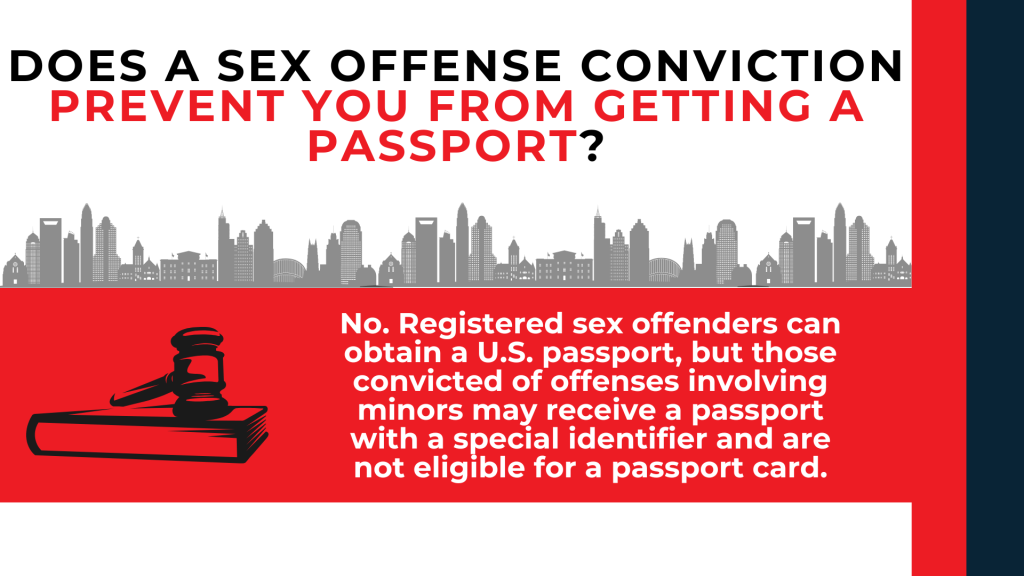
Does a Sex Offense Conviction Prevent You From Getting a Passport?
No. Being a registered sex offender does not automatically prevent the issuing of a U.S. passport. The State Department follows its standard application procedures, and there is no blanket federal law that bars registered sex offenders from holding a passport.
What changes is how the passport is issued and what it contains. If you are a covered sex offender, you may apply for a U.S. passport as long as you meet the conditions of International Megan’s Law. The passport will be valid. It will allow you to leave the United States. But if your conviction involved a minor, the passport will carry a marking that has real consequences at foreign borders. You will also not be eligible for the smaller, less expensive passport card.
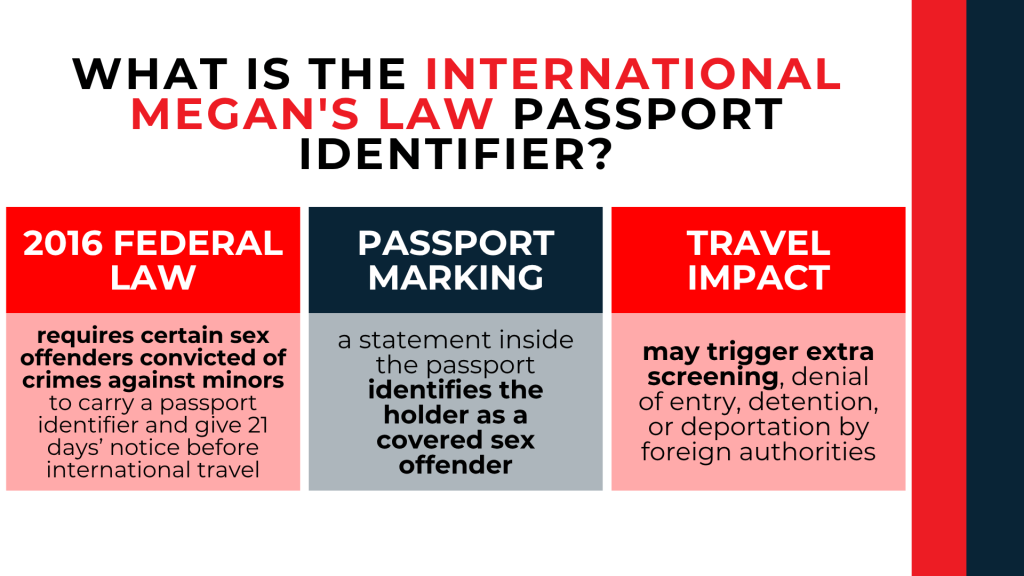
What Is the International Megan’s Law Passport Identifier?
The International Megan’s Law to Prevent Child Exploitation and Other Sexual Crimes Through Advanced Notification of Traveling Sex Offenders is a federal law that Congress passed in 2016. It requires a visual “unique identifier” to be placed on the passports of people convicted of sex offenses involving a minor. It also requires covered offenders to notify law enforcement 21 days before traveling abroad.
The identifier is a statement printed inside the passport book which reads: “The bearer was convicted of a sex offense against a minor and is a covered sex offender pursuant to 22 USC 212b(c)(1).”
This is not a subtle notation. It is a full printed statement inside your passport. The identifier immediately alerts foreign immigration officials upon scanning, though it does not automatically deny entry. It does, however, trigger additional screening that can result in being turned away at the border, detained, or deported.
The message is too long to fit on the smaller passport card. As a result, covered sex offenders can only apply for and carry the more detailed, and more expensive, passport book. The State Department can revoke passports issued to covered sex offenders that do not contain the identifier.
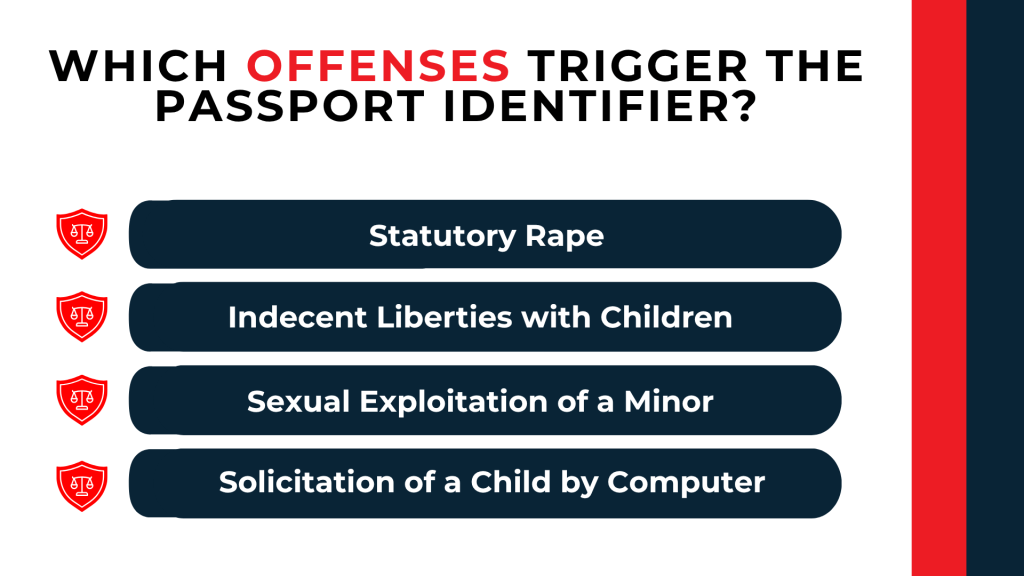
Which Offenses Trigger the Passport Identifier?
Not every sex offense conviction triggers the identifier. International Megan’s Law applies to anyone who is required to register under the sex offender registration program of any jurisdiction for a sex offense against a child. The key factor is whether the original offense involved a minor.
The Angel Watch Center in the U.S. Department of Homeland Security determines whether a person qualifies as a covered sex offender under the law. This determination drives whether the State Department prints the identifier.
In North Carolina, offenses that require sex offender registration and involve a minor include statutory rape under N.C.G.S. § 14-27.23 through § 14-27.25, indecent liberties with children under N.C.G.S. § 14-202.1, sexual exploitation of a minor under N.C.G.S. § 14-190.16, § 14-190.17, and § 14-190.17A, and solicitation of a child by computer under N.C.G.S. § 14-202.3. Convictions for offenses against adults — such as second-degree forcible rape under N.C.G.S. § 14-27.22 or sexual battery under N.C.G.S. § 14-27.33 — generally would not trigger the passport identifier. However, they still carry registration obligations under the NC Sex Offender Registry (N.C.G.S. § 14-208 et seq.).
If your conviction involved an adult victim, you may be able to obtain a passport without the identifier. But you would still be subject to other travel requirements depending on your registration status and the terms of your supervision.
If you believe you received an identifier in your passport by mistake, you can contact DHS at dhsintermeganslaw@ice.dhs.gov.
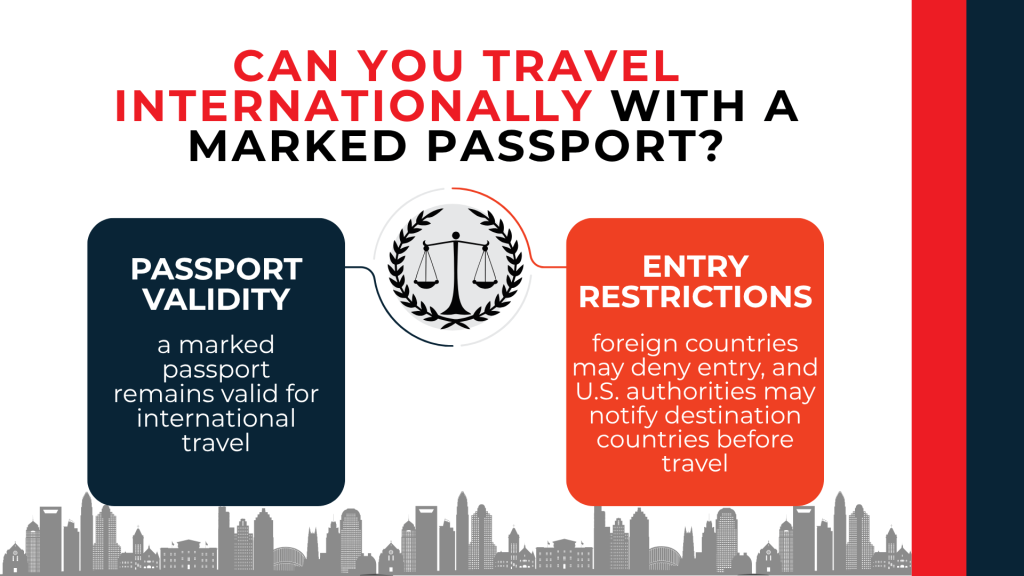
Can You Travel Internationally With a Marked Passport?
Having the identifier in your passport does not make the passport itself invalid. You can still board a flight out of the United States. The problem arises on the other end.
Individual countries have their own policies on allowing registered sex offenders into their borders. Some enforce near-total bans. Countries such as Canada and New Zealand deny entry to most people with criminal convictions, while others, such as Costa Rica, deny entry to all registered sex offenders. Some countries review applicants with a criminal background on a case-by-case basis. Those subject to sex offender registration are frequently denied.
There is no single, reliable list of countries that will or will not admit you. Immigration policies change frequently, and enforcement varies between different ports of entry within the same country. What worked for one traveler last year may not apply to your situation today. The only way to get a current, accurate answer for a specific destination is to contact that country’s consulate or embassy directly, or to work with an attorney who can help you assess the risk before you book a flight.
Beyond the destination country’s policies, the United States itself operates a notification system. Under the International Megan’s Law, when a covered sex offender provides the required advance travel notice, the Angel Watch Center can send that information to the destination country’s government. That notification may prompt the foreign country to deny entry before you even arrive.
Can You Get a Passport Without the Identifier?
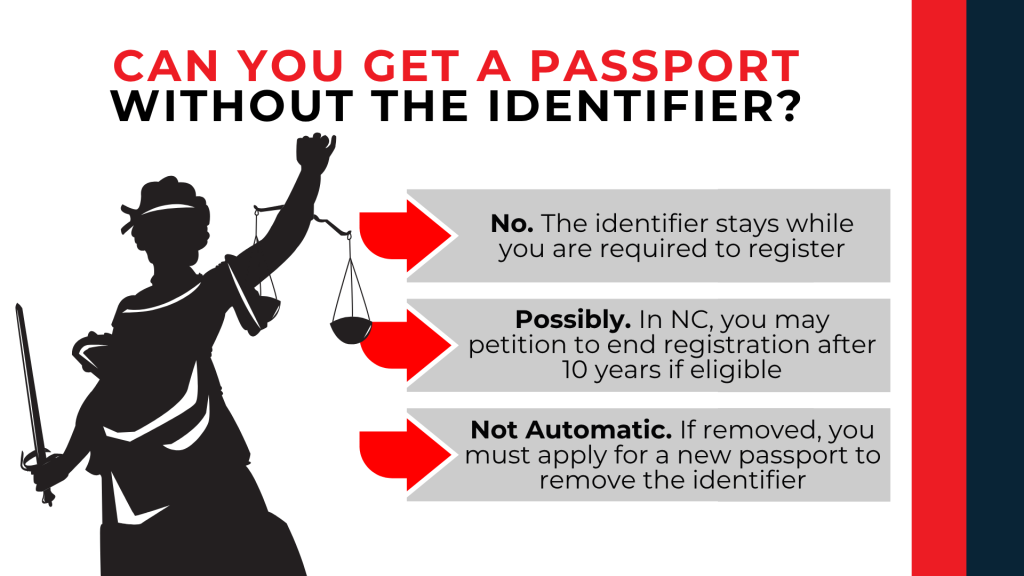
If the identifier was placed in your passport because you were on the sex offender registry for a qualifying offense against a minor, the identifier will remain as long as you are required to register.
In North Carolina, the standard sex offender registration period is 30 years. But under N.C.G.S. § 14-208.12A, you may petition the superior court to end your registration requirement after 10 years from the date of initial county registration. To be eligible, you must not have been convicted of a later offense requiring registration. The court may grant relief if you show three things: you have not been arrested for any offense requiring registration since completing your sentence, the requested relief complies with the federal Jacob Wetterling Act and other applicable federal standards, and the court is satisfied that you do not pose a current or potential threat to public safety.
If the court grants the petition, the clerk forwards a certified copy of the order to the Department of Public Safety. Your name is then removed from the registry. If the court denies the petition, you may petition again one year later.
Removal from the registry could change your passport status because the International Megan’s Law identifier is tied to being required to register. If you are no longer required to register for a qualifying offense, the reason for the identifier may no longer apply. However, this is not automatic — you would need to go through the passport reissue process with the State Department after successfully ending your registration.
This is one of the areas where working with an experienced criminal defense attorney is important. The petition process under § 14-208.12A involves a hearing in superior court, and the district attorney has the right to present evidence against it. The victim of the original offense also has the right to appear and be heard by the court. A successful petition requires preparation and a clear record of evidence.
How Can a Criminal Defense Attorney Help?
Passport eligibility, the identifier, destination country policies, and the possibility of petitioning for registry removal — these are all separate legal questions with separate answers. They also interact with each other in ways that depend on your conviction, your registration status, and your individual circumstances.
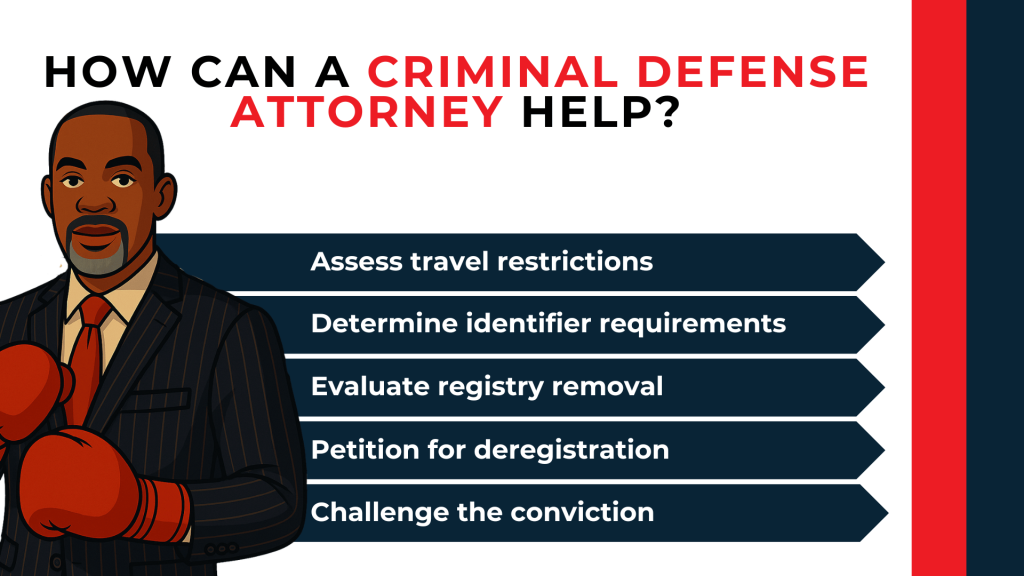
A criminal defense attorney can help you in several ways. They can assess whether your offense triggers the International Megan’s Law identifier. They can petition the court under N.C.G.S. § 14-208.12A to end your registration requirement if you are eligible. And they can challenge the underlying conviction through post-conviction relief if grounds exist.
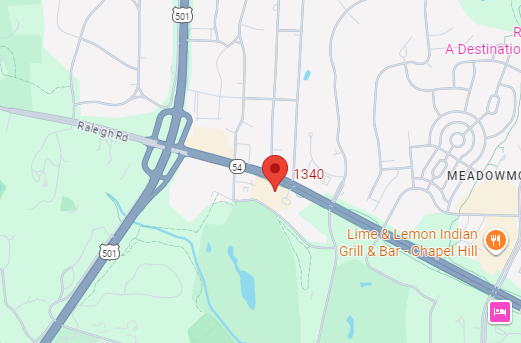
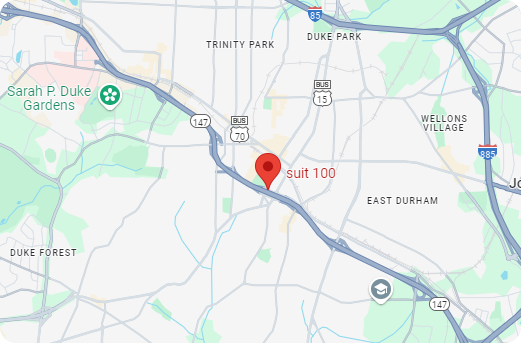
Patrick Roberts is a Raleigh criminal defense attorney who handles sex offense cases across North Carolina, with additional offices in Durham, Chapel Hill, and Cary. He has handled thousands of criminal cases and has over two decades of experience.
Education & Advanced Training
An alumnus of Johns Hopkins University (#7 National University) and Duke University School of Law (#7 National Law School; #9 Criminal Law Program), Mr. Roberts has dedicated his career to honing his trial craft. He is a graduate of the prestigious Gerry Spence’s Trial Lawyers College and the National Criminal Defense College (NCDC) Trial Practice Institute, including the 2025 Cross-Examination Intensive.
Accolades & Peer Review
• Martindale-Hubbell AV Preeminent Rating: 5+ Consecutive Years
• Martindale-Hubbell Client Champion Platinum: 5+ Consecutive Years
• AVVO 10/10 “Superb” Rating: 15+ Consecutive Years
• The National Trial Lawyers: Top 100 Trial Lawyers
Mr. Roberts is a published author of two legal books and a lifetime member of the National Association of Criminal Defense Lawyers.
A Former Prosecutor’s Insight
Mr. Roberts’ defense strategy is informed by his tenure as an Assistant District Attorney in the Wake, Johnston, and New Hanover offices. This experience allows him to anticipate the tactics used by the state in complex sex crime litigation.
Jurisdictional Admissions
Qualified to handle cases at the highest levels, he is admitted to the U.S. Supreme Court, the Fourth Circuit Court of Appeals, and all North Carolina federal districts. He remains the sole North Carolina representative listed by the National Child Abuse Defense & Resource Center as of 2026.
Client Review
“Mr. Roberts was a great attorney to work with. From the start he was confident and transparent with us. He told us he had other strategies as back up in case his main one didn’t go as planned. That showed us that he was prepared for any obstacle that was coming his way. We went to the first court hearing and waited, we then saw Mr. Roberts walk in with confidence and his head up high. He looked fearless and ready. That day we were the first ones out, we were in there for probably 10 minutes. The one thing that stuck with me that he said was “don’t be scared because I’m not scared.” He was good at communicating with us and keeping us informed with what was going on and when the next court dates would be. Overall he was a good attorney to work with, he dedicates and puts his time into your case and will work on it for however long he will need to whether it’s lengthy or not. “ – Verified Client Review via Avvo.com*
Peer Endorsement
“I knew Patrick when he was an assistant District Attorney, and was also impressed with his high ethical standards, and his reasoned and experienced approach in handling his cases. He is an exemplary attorney and I highly recommend him.” – Verified Peer Endorsement via Avvo.com*
If you have questions about how your conviction affects your ability to travel, contact Patrick Roberts Law to discuss your situation.
To maintain a high standard of service and thorough oversight for each client, the firm manages a restricted caseload.
*Disclaimer: Testimonials and peer reviews are for informational purposes only and do not guarantee or predict the outcome of your legal matter. Every case is unique and must be evaluated on its own merits. All endorsements featured on this site are actual comments from clients and peers.The information on this website is for general informational purposes only. Nothing herein should be taken as legal advice for any individual case or situation. Contacting us via this website, email, or contact form does not create an attorney-client relationship. Case results depend on a variety of factors unique to each case; prior results do not guarantee a similar outcome.
Former assistant district attorney
Contact Patrick Roberts
Facing criminal charges in North Carolina demands seasoned representation. Trust in the experience and dual perspective of Patrick Roberts. Reach out today for a confidential consultation.
-
Call Our Team
Calls answered 24/7






For more information on the selection criteria, go to www.martindale.com
*Each case is different and must be evaluated separately. Prior results achieved do not guarantee similar results can be achieved in future cases.