

Being accused of indecent liberties with a minor turns your life upside down. According to the NC Division of Social Services (2022-2023), 116,566 children had investigated reports of abuse or neglect in North Carolina in a single fiscal year—and law enforcement agencies across Wake County actively pursued these allegations. If you’re facing charges in Apex, understanding what the State must prove, what penalties you face, and how to build a defense is essential. This guide explains North Carolina’s indecent liberties statute, the prosecution process in Wake County courts, and the defense strategies that may apply to your case.
What Are Indecent Liberties Charges Under North Carolina Law?
North Carolina criminalizes sexual conduct with minors through multiple statutes, but indecent liberties with children under N.C.G.S. § 14-202.1 is among the most broadly interpreted. The charge is a Class F felony, carrying significant prison time and mandatory sex offender registration upon conviction.
What Conduct Qualifies as “Indecent Liberties” in North Carolina?
The statute defines the offense broadly. Courts interpret “indecent liberties” to include any immoral, improper, or indecent conduct committed for purposes of sexual gratification. This interpretation gives prosecutors wide latitude in charging decisions.
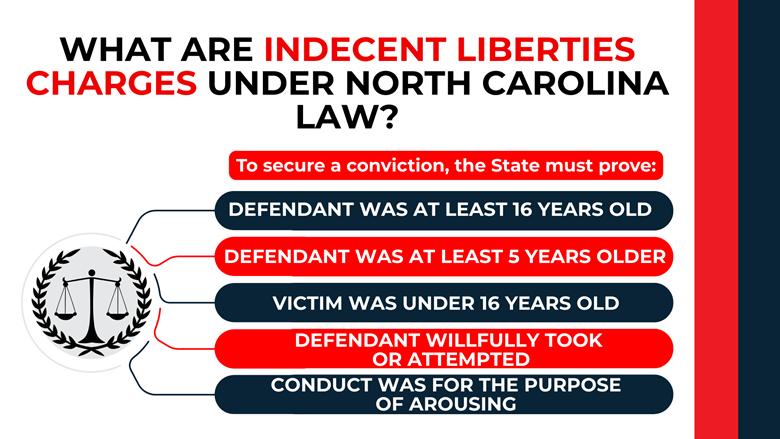
To secure a conviction, the State must prove each of the following elements beyond a reasonable doubt:
- The defendant was at least 16 years old at the time of the alleged offense
- The defendant was at least 5 years older than the victim
- The victim was under 16 years old
- The defendant willfully took or attempted to take an indecent liberty with the child
- The conduct was for the purpose of arousing or gratifying sexual desire
The “purpose” element requires the State to prove the defendant’s intent. This is often where defense strategies focus, since intent must be inferred from circumstances rather than directly observed.
Does Physical Contact Have to Occur for a Conviction?
No. In State v. Every, 157 N.C. App. 200, 578 S.E.2d 642 (N.C. App. 2003), the North Carolina Court of Appeals confirmed that physical touching is not required for an indecent liberties conviction. Conduct such as exposing a child to sexual activity, engaging in sexually explicit conversations with a child, or masturbating in a child’s presence can support charges under this statute.
This broad interpretation means conduct that might seem less serious than direct contact can still result in felony charges and sex offender registration. Many defendants are surprised to learn the scope of this statute.
What Is the Age Requirement for This Charge?
The statute creates a five-year age differential requirement. The defendant must be at least 16 years old AND at least 5 years older than the victim. This provides limited protection for close-in-age situations, but defendants who meet the age threshold face serious consequences regardless of any prior relationship with the alleged victim.
Critically, State v. Breathette, 202 N.C. App. 697, 690 S.E.2d 1 (N.C. App. 2010), established that mistake of age is NOT a defense. Even if the defendant genuinely believed the child was 16 or older, this belief provides no legal protection.
How Does Wake County Prosecute Indecent Liberties Cases From Apex
Wake County prosecutors take child sex offense allegations seriously, and cases originating in Apex go through the Wake County court system in Raleigh. Understanding how these cases develop helps defendants prepare for what lies ahead.
How Common Are Child Sex Offense Investigations in North Carolina?
Child abuse investigations are substantial in North Carolina. According to the National Children’s Alliance, In 2023, NC Children’s Advocacy Centers saw 3,127 children reported for sexual abuse during just a six-month period—the largest category of abuse reported. These centers coordinate investigations between law enforcement, child protective services, and prosecutors.
The NC Sentencing and Policy Advisory Commission FY 2024 Report shows that 98% of all NC felony convictions result from guilty pleas rather than trials. However, serious sex offenses have the highest jury trial rate—15% of Class B1 felonies go to trial compared to just 2% for felonies overall.
What Evidence Do Prosecutors Typically Use?
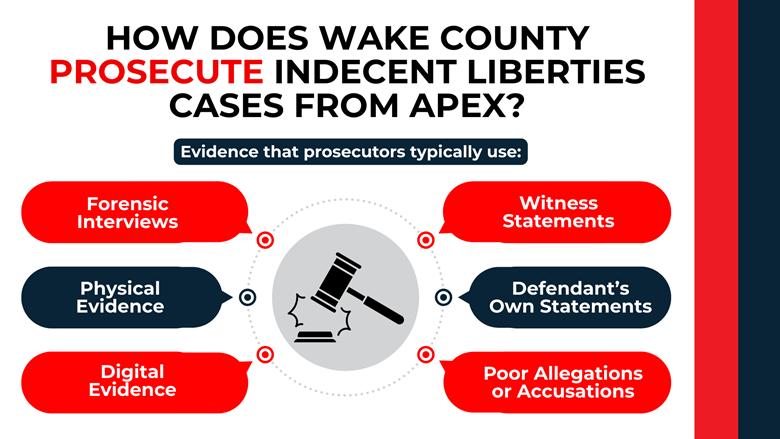
Prosecutors build indecent liberties cases using multiple evidence sources. An experienced defense attorney will examine each category for weaknesses:
- Forensic interviews conducted at Children’s Advocacy Centers, which are video recorded and may contain suggestive questioning
- Physical evidence including medical examination findings, though many indecent liberties cases involve no physical contact
- Digital evidence from phones, computers, and social media, which requires proper warrant authorization under Riley v. California, 573 U.S. 373 (2014)
- Witness statements from family members, teachers, or others who may have motives to fabricate or exaggerate
- Defendant’s own statements made during police questioning, which may have been obtained without proper Miranda warnings or recording
- Prior allegations or accusations, which prosecutors may attempt to introduce under Rule 404(b)
The strength of this evidence varies significantly from case to case. Not all investigations follow proper protocols.
How Long Do These Cases Take to Resolve?
Sex offense cases move slowly through the court system. According to the NC Sentencing Commission’s FY 2024 data, the median time to sentencing for Class B1 felonies is 30 months—compared to just 10 months for felonies overall. While indecent liberties is a Class F felony (less serious than B1), complex evidentiary issues and pretrial motions often extend case timelines.
This extended timeline has implications for defendants who remain in custody and for those released on bond who must comply with restrictive conditions while their case is pending.
What Penalties Do Indecent Liberties Convictions Carry?
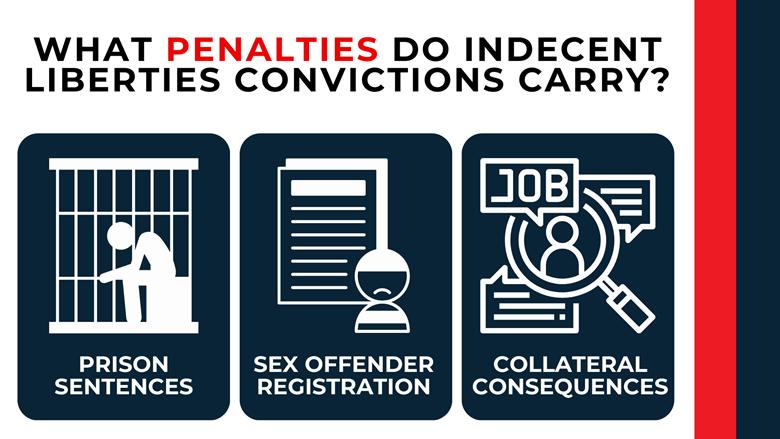
North Carolina’s Structured Sentencing Act determines penalties based on offense class and the defendant’s prior record level. A Class F felony conviction for indecent liberties carries prison time, mandatory registration, and lasting collateral consequences.
What Prison Sentence Could I Face?
Under North Carolina’s sentencing grid, Class F felony sentences depend on prior record level. For a defendant with no prior criminal history (Prior Record Level I), the presumptive range is 13-16 months imprisonment. Higher prior record levels increase these ranges substantially.
The NC Sentencing Commission FY 2024 Report indicates that 62% of person offense convictions result in active imprisonment, the highest rate among all crime categories. Additionally, 8% of person offenses are sentenced in the aggravated range—also the highest percentage for any crime type.
For sex offenses requiring registration (including indecent liberties), N.C.G.S. § 15A-1340.17(f) provides an enhanced maximum sentence formula: the maximum equals 120% of the minimum plus 60 additional months. This significantly extends potential incarceration compared to non-sex offenses of the same class.
Will I Have to Register as a Sex Offender?
Yes. An indecent liberties conviction requires mandatory sex offender registration under N.C.G.S. § 14-208 et seq. The standard registration period is 30 years, though defendants may petition for termination after 10 years if they are not classified as recidivists, sexually violent predators, or aggravated offenders.
According to the NC SBI Sex Offender Registry, North Carolina has more than 28,200 registered sex offenders as of early 2026. Wake County—which includes Apex—maintains one of the state’s largest populations, with 839 registered offenders. Statutory requirements include periodic verification, address restrictions, and mandatory inclusion in the public database.
What Other Consequences Follow a Conviction?
Beyond prison and registration, an indecent liberties conviction triggers severe collateral consequences that affect virtually every area of life:
- Housing restrictions prohibiting residence near schools, daycares, and parks under N.C.G.S. § 14-208.18
- Employment barriers for any position involving children, including teaching, coaching, healthcare, and many others
- Professional licensing revocations or denials affecting careers in law, medicine, nursing, accounting, and other regulated professions
- Immigration consequences that may include mandatory deportation for non-citizens, as sexual abuse of a minor is classified as an aggravated felony under federal law
- Child custody implications affecting current or future parental rights
- Firearm disabilities restricting Second Amendment rights
Under Padilla v. Kentucky, 559 U.S. 356 (2010), defense counsel must advise non-citizen clients of immigration consequences before any plea. The stakes extend far beyond the criminal sentence itself.
What Defenses Apply to Indecent Liberties Charges?
Despite the serious nature of these charges, defendants have constitutional rights and potential defenses. An effective defense strategy examines every element the State must prove and every piece of evidence the prosecution intends to use.
Can I Argue I Didn’t Know the Child’s Age?
No. As established in State v. Breathette, mistake of age is not a valid defense to indecent liberties charges in North Carolina. Even if the defendant genuinely and reasonably believed the child was 16 or older, this belief does not negate criminal liability.
However, defense attorneys should still verify the alleged victim’s actual age through birth certificate evidence. Charging errors do occur, and the five-year age differential must be calculated precisely. If the defendant was not actually 5+ years older than the victim, the charge may be inappropriate.
How Can the Defense Challenge the Alleged Victim’s Testimony?
Since these cases often rely on the alleged victim’s statements, the defense focuses on ensuring the reliability and accuracy of those statements:
- Forensic interview techniques are reviewed to ensure they weren’t suggestive or leading, which can inadvertently influence a young child’s memory.
- Child witness competency is assessed through voir dire to confirm the child understands the duty to tell the truth.
- Motive and bias evidence is used to explore if there are external reasons or pressures that might lead to inaccurate or exaggerated allegations.
- Hearsay limitations under State v. Hinnant require a strict two-prong test to ensure that statements made for medical diagnosis are actually reliable.
- Expert testimony restrictions under State v. Hammett prevent experts from simply “vouching” for a report; they cannot say abuse occurred based solely on a child’s statement without physical evidence.
- Confrontation issues arise under the Crawford ruling if the state tries to use interview recordings instead of live testimony, which limits the right to cross-examine.
- North Carolina’s corroboration rule (State v. Parker) allows a conviction based on testimony alone. Because no physical evidence is required, the law places a high priority on testing the credibility of that testimony.
To navigate these complex legal standards, Attorney Patrick Roberts incorporates over 20 years of experience and ongoing training, such as the 2025 Cross-Examination Training with the National Criminal Defense College (NCDC)—a 3-day intensive, hands-on program focused on the rigorous questioning of witnesses in criminal trials.
What Constitutional Protections Apply to My Case?
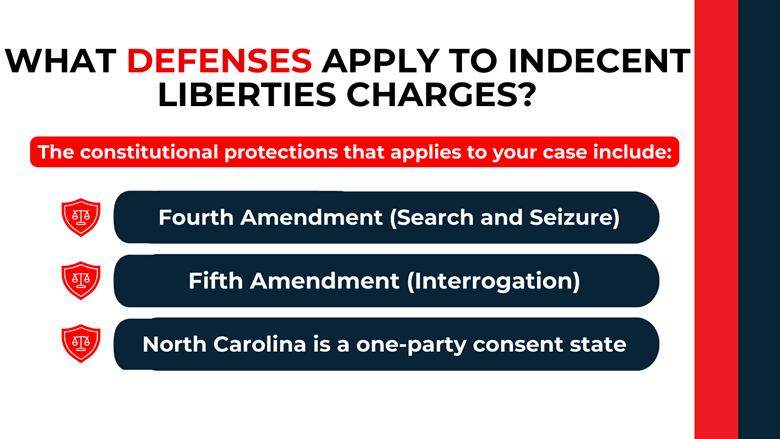
The Fourth and Fifth Amendments provide significant protections that may result in evidence suppression:
Fourth Amendment (Search and Seizure): Following Riley v. California, police generally cannot search cell phones or digital devices without a warrant. If officers seized your phone during arrest and searched it without proper authorization, that evidence may be suppressible. Warrant particularity matters—a warrant must specifically authorize forensic examination, and searches cannot exceed the warrant’s scope.
Fifth Amendment (Interrogation): N.C.G.S. § 15A-211 requires mandatory recording of custodial interrogations for Class C sex offenses and above. If officers questioned you in custody without proper warnings or recording, statements may be challenged. J.D.B. v. North Carolina, 564 U.S. 261 (2011), established that a child’s age is relevant to Miranda custody analysis—important if the defendant is a minor.
North Carolina is a one-party consent state under N.C.G.S. § 15A-287, meaning pretext phone calls where the alleged victim or family member records the defendant are lawful. Defense attorneys should anticipate this evidence and prepare to address it.
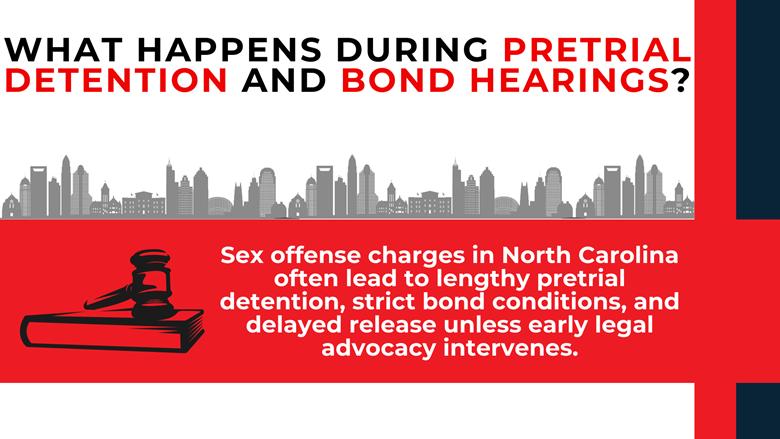
What Happens During Pretrial Detention and Bond Hearings?
Defendants arrested for sex offenses face significant hurdles in securing pretrial release. Understanding these procedures helps families prepare for what comes next.
Who Decides Whether I Get Released Before Trial?
For sex offenses including indecent liberties, N.C.G.S. § 15A-533(b) requires that only a district or superior court judge—not a magistrate—can grant pretrial release. This means defendants arrested over a weekend may remain in custody until a judge is available.
Bond conditions for sex offense defendants typically include no contact with the alleged victim, GPS monitoring, and restrictions on contact with minors. Violations can result in bond revocation and continued detention.
How Long Might I Stay in Jail Awaiting Trial?
Pretrial detention is common in sex offense cases. The NC Sentencing Commission’s FY 2024 data shows that 93% of person offense convictions received credit for time served—indicating substantial pretrial detention. The average pretrial credit for person offenses was 15 months.
For the most serious sex offenses (Class B1), defendants spent an average of 27 months in pretrial detention. While Class F felonies generally resolve faster, delays are common, and defendants unable to post bond may spend many months incarcerated before any conviction.
Early legal intervention can make a significant difference in pretrial release decisions. Presenting evidence of community ties, employment stability, and low flight risk may help secure release under appropriate conditions.
How Do False Accusations Affect Indecent Liberties Cases?
In the legal system, an accusation is a starting point, not a conclusion. Protecting the rights of the accused requires an objective analysis of the facts and a commitment to testing the reliability of all testimony.
The Statistical Context of Child Sex Abuse Cases
Data from forensic and legal research indicates that while most reports are made in good faith, a measurable percentage are found to be inaccurate:
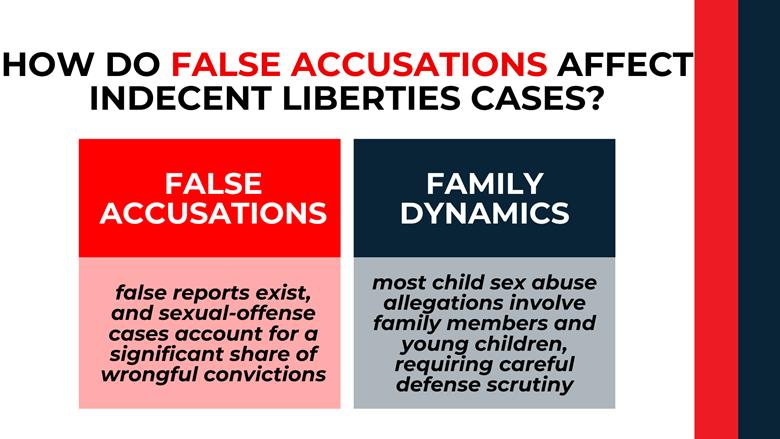
Research synthesized by End Violence Against Women International (EVAWI) indicates that false reporting rates for sexual assault generally fall between 2% and 8%. These figures are derived from peer-reviewed studies using methodologies that distinguish between fabricated reports and those with insufficient evidence.
The National Registry of Exonerations (2024) reports that 9% of all exonerations involve child sexual abuse, making it one of the most common categories for wrongful convictions after homicide.
What Role Do Family Dynamics Play in These Allegations?
Family relationships are at the heart of many child sex abuse cases. According to the National Children’s Alliance Statistics Report (2023), 65% of people accused in North Carolina Children’s Advocacy Center cases were parents, stepparents, or other relatives. This shows that these situations usually involve people close to the child. However, it also means these allegations often come up during stressful times like divorce or custody battles. In these high-conflict situations, it is essential to investigate whether family tension or outside pressure might have influenced the report.
The data also shows that nearly 69% of these children were age 12 or younger. Younger children are more likely to be influenced by the way they are questioned. If an investigator uses “leading questions”—essentially suggesting an answer to the child—it can change the child’s memory of what happened. This is why a defense lawyer must carefully check the recorded interviews to make sure the child’s words were truly their own and not the result of how the interview was handled.
To handle these sensitive issues, Attorney Patrick Roberts uses methods from advanced trial training. He completed a 3-week program at the Gerry Spence Trial Lawyer College and a 2-week institute at the National Criminal Defense College (NCDC). He also attended a 2025 NCDC 3-day intensive session on the ethical questioning of witnesses. Additionally, as of December 2025, he is the only North Carolina lawyer listed by the National Child Abuse Defense & Resource Center (https://www.falseallegation.org), a group dedicated to defending those facing these specific types of allegations.
Frequently Asked Questions
Can I be convicted of indecent liberties without any physical contact with the child?
Yes. North Carolina courts have confirmed in State v. Every that physical touching is not required for an indecent liberties conviction. Conduct such as exposing a child to sexual activity, engaging in sexually explicit conversations, or masturbating in a child’s presence can support charges. The statute focuses on whether the defendant took an “indecent liberty” for purposes of sexual gratification, not whether direct contact occurred.
Is “I thought they were older” a valid defense to indecent liberties charges?
No. State v. Breathette established that mistake of age is not a defense in North Carolina. Even a genuine, reasonable belief that the child was 16 or older does not provide legal protection. This strict liability approach means the defense must focus on other elements, such as whether the conduct occurred at all or whether it was for purposes of sexual gratification.
How long will I have to register as a sex offender if convicted?
The standard registration period under North Carolina law is 30 years. After 10 years of compliance, defendants who are not classified as recidivists, sexually violent predators, or aggravated offenders may petition for termination under N.C.G.S. § 14-208.12A. Registration involves periodic verification, address restrictions, and listing on the public database maintained by the NC SBI.
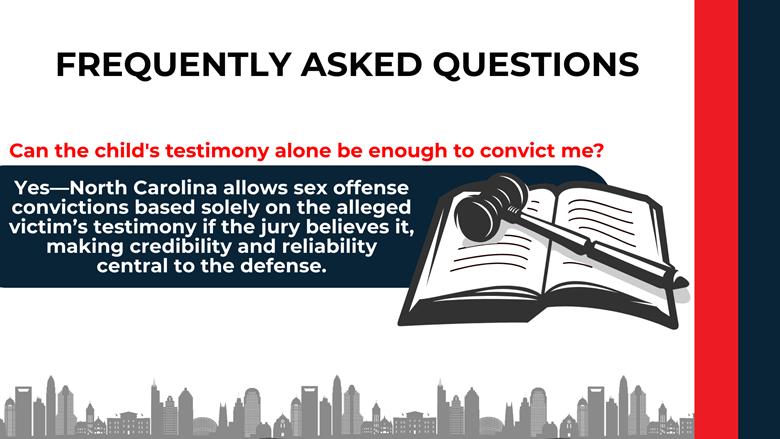
Can the child’s testimony alone be enough to convict me?
Yes. North Carolina does not require corroboration for sex offense convictions. Under State v. Parker, victim testimony alone, if believed by the jury, can sustain a conviction. This makes challenging the credibility and reliability of the alleged victim’s account essential to the defense strategy.
What should I do if the police want to question me about indecent liberties allegations?
Exercise your right to remain silent and request an attorney immediately. Anything you say can be used against you, and police are permitted to use deception during interrogations. Under N.C.G.S. § 15A-211, custodial interrogations for serious sex offenses must be recorded, but statements made before you’re in custody may not be covered by this protection. Do not discuss the allegations with anyone except your attorney.
Strategic Defense Against Indecent Liberties Charges
Indecent liberties charges carry consequences that extend far beyond the courtroom. A conviction can result in years of imprisonment, decades on the sex offender registry, and permanent barriers to employment, housing, and family relationships. Because the prosecution possesses substantial resources, defendants require an advocate who understands how to challenge evidence and protect constitutional rights.
Time is a critical factor in these cases. The longer a defendant waits, the more evidence may be gathered and the more difficult securing pretrial release becomes. Early intervention allows a defense attorney to preserve vital evidence, investigate allegations thoroughly, and position the case for the best possible outcome.*
* Disclaimer: Please note that every case is unique and the “best possible outcome” depends on the specific facts and legal circumstances of an individual matter. Prior results do not guarantee a similar outcome in future cases.
The legal community recognizes Patrick Roberts for his commitment to high-stakes defense. He has been named an AV Preeminent Peer Rated Attorney 2026 (more than 5 straight years) by Martindale-Hubbell, the highest possible rating for both legal ability and ethical standards.
“Patrick Roberts is my #1 referral for my own clients facing criminal issues (State and Federal)… Patrick’s expertise in the field, experience in the courtroom and professionalism are the reasons he is my top recommendation. He is trustworthy, reliable and highly esteemed by his peers.” — Counsel Review, Martindale-Hubbell (October 29, 2018)
Disclaimer: The testimonials and peer reviews on this site are for informational purposes. They do not constitute a guarantee, warranty, or prediction regarding the outcome of your legal matter. Every case is different and must be evaluated on its own merits.
*Testimonials and peer endorsements found on this website are actual comments.

Disclaimer: The information on this website is for general information purposes only. Nothing on this site should be taken as legal advice for any individual case or situation. Case results depend upon a variety of factors unique to each case. Prior results do not guarantee a similar outcome.
Former assistant district attorney
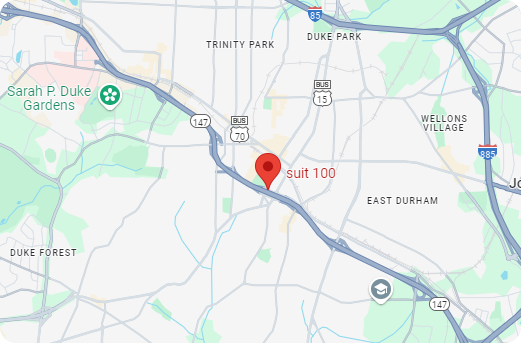
Contact Patrick Roberts
Facing criminal charges in North Carolina demands seasoned representation. Trust in the experience and dual perspective of Patrick Roberts. Reach out today for a confidential consultation.
-
Call Our Team
Calls answered 24/7







For more information on the selection criteria, go to www.martindale.com
*Each case is different and must be evaluated separately. Prior results achieved do not guarantee similar results can be achieved in future cases.