
A solicitation of a child by computer charge can upend your life in an instant. According to the NC State Bureau of Investigation (2025), more than 200 law enforcement agencies participate in North Carolina’s Internet Crimes Against Children (ICAC) Task Force, actively conducting undercover operations throughout the state including in Garner and Wake County. If you’ve been arrested or learned you’re under investigation for online solicitation, understanding exactly what you’re facing is the first step toward protecting your rights and building a defense.
North Carolina prosecutes these cases aggressively, often using sting operations where undercover officers pose as minors online. The charge carries serious felony penalties and mandatory sex offender registration for decades. But the State still must prove every element beyond a reasonable doubt, and defenses including entrapment may apply depending on the circumstances of your case.
What Is Solicitation of a Child by Computer Under North Carolina Law?
North Carolina criminalizes online solicitation of minors under N.C.G.S. § 14-202.3. The statute makes it a felony to use a computer or electronic device to solicit a child for the purpose of committing an unlawful sex act. Understanding how the law defines this offense is essential for anyone facing these charges in Garner or elsewhere in Wake County.
What Does “Solicitation” Mean Under This Statute?
The statute uses broad language to define prohibited conduct. Courts interpret the terms expansively to cover virtually any effort to arrange sexual contact with someone believed to be underage. Under State v. Fraley, 202 N.C. App. 457, 688 S.E.2d 778 (N.C. App. 2010), North Carolina courts apply a broad interpretation of what constitutes solicitation.
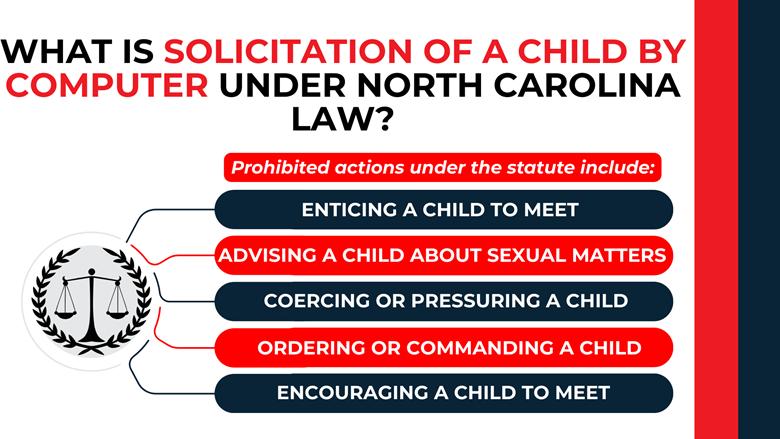
Prohibited actions under the statute include:
- Enticing a child to meet for sexual purposes through online communication
- Advising a child about sexual matters with intent to engage in sexual activity
- Coercing or pressuring a child toward sexual contact
- Ordering or commanding a child to engage in sexual acts
- Encouraging a child to meet at any location for unlawful sexual purposes
Any effort to arrange a sexual encounter with someone the defendant believes to be underage falls within the statute’s scope regardless of whether explicit sexual language was used.
Does There Need to Be an Actual Child Victim for These Charges?
No. This is one of the most important aspects of N.C.G.S. § 14-202.3 for defendants to understand. The statute expressly covers persons the defendant “believes to be” under 16 years old. Law enforcement sting operations using fictitious minors are legally valid under North Carolina law.
If an undercover officer posed as a 14-year-old online and you believed you were communicating with an actual child, that belief is sufficient for prosecution. The State does not need to prove an actual minor was involved only that you believed the person was underage and solicited them for sexual purposes.
What Is The Difference Between A Class H And Class G Felony?
The severity of the charge depends on whether either party appeared at a meeting location. A basic solicitation charge under § 14-202.3 is a Class H felony. However, if either the defendant or the person believed to be a minor appears at the location discussed for the meeting, the offense becomes a Class G felony with enhanced penalties.
This distinction matters significantly for sentencing. Class H felonies carry presumptive sentences of 4-25 months depending on prior record, while Class G felonies carry 8-31 months. Both require mandatory sex offender registration upon conviction.
How Do Garner and Wake County Police Investigate These Cases?
Understanding how law enforcement conducts these investigations helps defendants recognize potential defense issues related to evidence collection, entrapment, and constitutional violations. The NC ICAC Task Force coordinates efforts across multiple agencies to investigate internet crimes against children.
What is the NC ICAC Task Force?
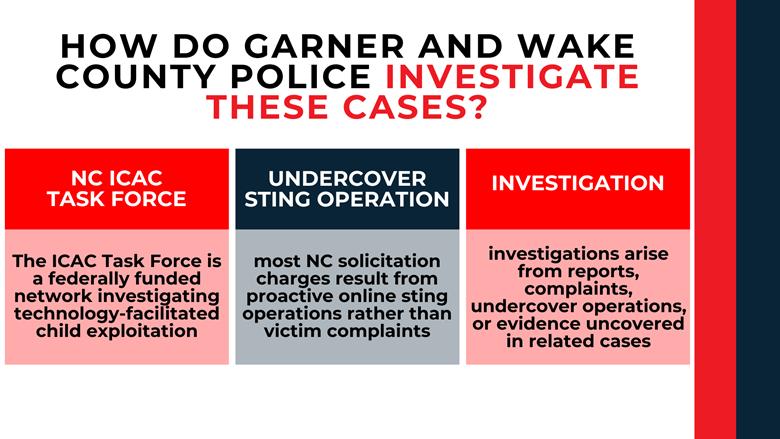
The Internet Crimes Against Children Task Force is a federally-funded, state-coordinated network of law enforcement agencies dedicated to investigating technology-facilitated child exploitation. According to the NC State Bureau of Investigation (2025), 17 full-time SBI special agents are stationed across eight field districts specifically investigating these offenses.
The Task Force includes local police departments, sheriff’s offices, and state investigators working together on undercover operations. Garner Police Department and Wake County Sheriff’s Office both participate in coordinated enforcement efforts, meaning charges can originate from local, state, or multi-jurisdictional investigations.
How Do Undercover Sting Operations Work?
Most solicitation charges in North Carolina arise from proactive sting operations rather than complaints from actual victims. According to the National Center for Missing & Exploited Children (2024), the CyberTipline received 20.5 million reports of suspected child sexual exploitation nationally demonstrating the scale of enforcement activity in this area.
A typical sting operation follows a predictable pattern:
- Officers create profiles on dating apps, social media platforms, or chat rooms posing as minors (usually 13-15 years old)
- The undercover officer engages in conversation with adults who initiate contact or respond to the profile
- At some point, the “minor’s” age is disclosed or implied in the conversation
- Officers document all communications and preserve chat logs as evidence
- If the conversation turns sexual and a meeting is proposed, officers may arrange a location
- Arrest typically occurs when the defendant appears at the meeting location or based solely on the online communications
Officers are trained to let conversations develop naturally and to document whether the defendant initiated sexual topics or continued engagement after learning the purported age.
What Triggers an Investigation Into Online Communications?
Investigations can begin through multiple channels. CyberTipline reports from electronic service providers, complaints from parents who discover concerning communications, or proactive undercover operations all generate cases. Additionally, investigations into one defendant sometimes reveal communications with others, creating additional prosecutions.
In the high-stakes environment of North Carolina’s justice system, the transition from investigation to indictment can feel like an unstoppable momentum. However, the path to a conviction is paved with specific legal hurdles the State must clear.
What Must the Prosecution Prove to Convict?
The State bears the burden of proving every element of the offense beyond a reasonable doubt. According to the NC Sentencing and Policy Advisory Commission FY 2024 Report, 98% of felony convictions in North Carolina result from guilty pleas rather than trials. This statistic underscores the importance of understanding what the State must actually prove; challenging weak elements may create leverage for dismissal or favorable plea negotiations.
A Perspective Rooted in Practical Experience
Successfully navigating these statistics requires a clear-eyed look at how the State builds its case. Attorney Patrick Roberts brings a unique perspective to this challenge, having served as a former prosecutor in three North Carolina counties. This background allows him to see the process from both sides, identifying where the State’s evidence may fall short of the high “beyond a reasonable doubt” standard.
This focus is especially important in sensitive cases involving allegations of child maltreatment. As of December 2025, Patrick Roberts is the only North Carolina lawyer listed on the National Child Abuse Defense & Resource Center. This recognition highlights his commitment to helping those facing life-altering accusations find a path forward.
By looking at the prosecution’s burden through the lens of a former prosecutor, Mr. Roberts works to ensure that every part of the State’s case is carefully reviewed. This approach helps turn a difficult situation into a conversation about the actual facts and the law.
“I have always found Patrick to be well prepared and effective. He is intelligent, proactive, and thinks outside the box. He has a lot of experience in many different areas and this enables him to be particularly effective for his clients.”- Peer review via Martindale-Hubbell on October 19, 2018
Disclaimer: The testimonials and peer reviews on this site are for informational purposes. They do not constitute a guarantee, warranty, or prediction regarding the outcome of your legal matter. Every case is different and must be evaluated on its own merits.
*Testimonials and peer endorsements found on this website are actual comments.
What is the “Belief” Requirement in Solicitation Cases?
The State must prove the defendant believed the person was under 16 years old at the time of the solicitation. This element is typically established through chat logs where the “minor’s” age was stated or implied.
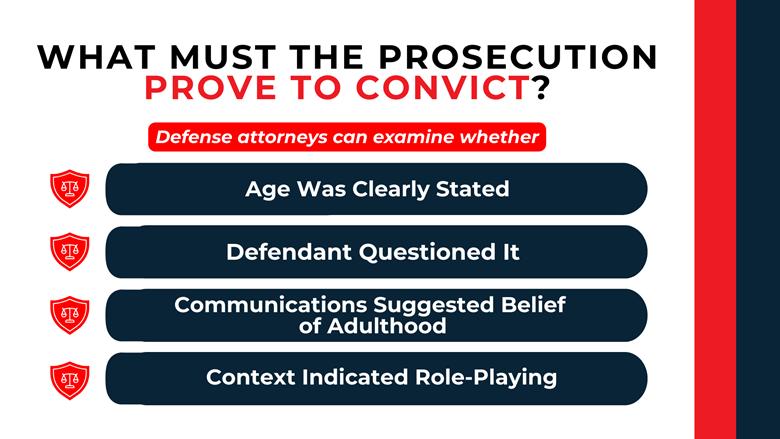
However, defense attorneys can examine whether:
- The stated age was clear and unambiguous
- The defendant expressed skepticism about the stated age
- Subsequent communications suggested the defendant believed the person was actually an adult
- The context suggested role-playing rather than genuine belief
The timing of when age was disclosed matters. Communications occurring before any age disclosure may not support the charge if the defendant had no reason to believe the person was underage.
Does the Age Difference Between the Defendant and Alleged Minor Matter?
Yes. N.C.G.S. § 14-202.3 requires that the defendant be at least 16 years old and at least 5 years older than the person believed to be a minor. This age differential requirement creates a limited close-in-age protection.
If the defendant is 19 and believed the other person was 15, the five-year differential is not met, and the charge should not apply under this statute. Defense attorneys should verify that the charging documents accurately reflect ages and that the statutory requirements are actually satisfied.
Is Entrapment a Defense to Computer Solicitation Charges?
Entrapment is the most significant defense available in solicitation cases arising from sting operations. However, the defense has specific legal requirements that defendants must understand. Simply feeling “tricked” by law enforcement is not sufficient.
What Are the Two Requirements for an Entrapment Defense?
Under North Carolina law, entrapment requires proof of two elements: government inducement and lack of predisposition. Both must be established for the defense to succeed.
Government inducement means law enforcement originated the criminal design they planted the idea and persuaded the defendant to commit an offense they would not have otherwise committed. Lack of predisposition means the defendant was not already willing and ready to commit such an offense before government contact.
In State v. Morse, 194 N.C. App. 685, 671 S.E.2d 538 (N.C. App. 2009), the Court of Appeals held that active participation in sexual conversations and meeting planning demonstrates predisposition, defeating the entrapment defense even if law enforcement initiated contact.
What Evidence Shows “Predisposition” to Commit the Offense?
Courts examine the totality of circumstances to determine whether the defendant was predisposed to commit the offense. In State v. Keller, 265 N.C. App. 526, 828 S.E.2d 578 (N.C. App. 2019), the court analyzed predisposition factors in detail.
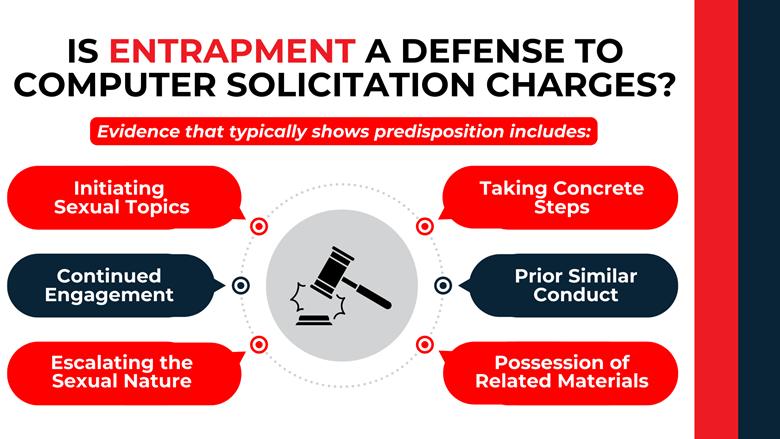
Evidence that typically shows predisposition includes:
- Initiating sexual topics in the conversation rather than the officer
- Continued engagement after learning the purported minor’s age
- Escalating the sexual nature of communications over time
- Taking concrete steps toward meeting (suggesting locations, times, activities)
- Prior similar conduct or communications with other individuals
- Possession of related materials suggesting ongoing interest
Evidence supporting lack of predisposition includes documented reluctance, statements declining sexual contact with minors, expressions of doubt about the situation, and evidence of government pressure or persistence.
How Do I Properly Raise an Entrapment Defense in North Carolina?
Entrapment is an affirmative defense with specific procedural requirements. Under N.C.G.S. § 15A-905(c), written notice of an entrapment defense must be provided within 20 working days of the trial setting date.
Failing to provide timely notice can result in the defense being excluded. Your attorney must carefully review all communications to build the factual foundation for this defense and ensure proper notice is filed within the required timeframe.
What Are Your Constitutional Rights in These Cases?
The Fourth and Fifth Amendments provide important protections that may affect the admissibility of evidence in your case. Constitutional violations during the investigation can result in suppression of key evidence.
Can Police Search Your Phone or Computer Without a Warrant?
Generally, no. Following Riley v. California, 573 U.S. 373 (2014), police cannot search cell phones or digital devices incident to arrest without a warrant. The Supreme Court recognized that digital devices contain vast amounts of personal information deserving heightened protection.
This means police must typically obtain a warrant before conducting forensic examination of your phone, computer, or other devices. However, exceptions exist for exigent circumstances such as reasonable belief that evidence may be remotely wiped. Officers may secure devices to preserve evidence while obtaining a warrant.
Under N.C.G.S. § 15A-248, search warrants must be executed within 48 hours of issuance. Defense attorneys should examine whether warrants were properly obtained and executed within required timeframes.
What Protections Apply During Interrogation?
Miranda warnings are required before custodial interrogation. Additionally, North Carolina has mandatory recording requirements under N.C.G.S. § 15A-211 for interrogations in Class A, B1, B2 felonies and Class C sex offenses. While Class H and G solicitation charges may not trigger this requirement directly, any statements obtained through improper procedures may be challenged.
Importantly, North Carolina is a one-party consent state for recordings under N.C.G.S. § 15A-287. This means pretext phone calls where a person calls the defendant while police listen and record are legally permissible. Anything you say during such calls can be used against you.
Can Chat Logs Be Suppressed as Evidence?
Chat logs may be challenged on several grounds. If law enforcement obtained communications through improper legal process, without valid warrant or court order, or through methods violating the federal Stored Communications Act, suppression motions may be appropriate.
Under State v. Stitt, 201 N.C. App. 233, 689 S.E.2d 539 (N.C. App. 2009), federal Stored Communications Act violations do not automatically provide a suppression remedy in state court. However, other constitutional violations may still support exclusion of evidence.
What Penalties and Consequences Come with a Conviction?
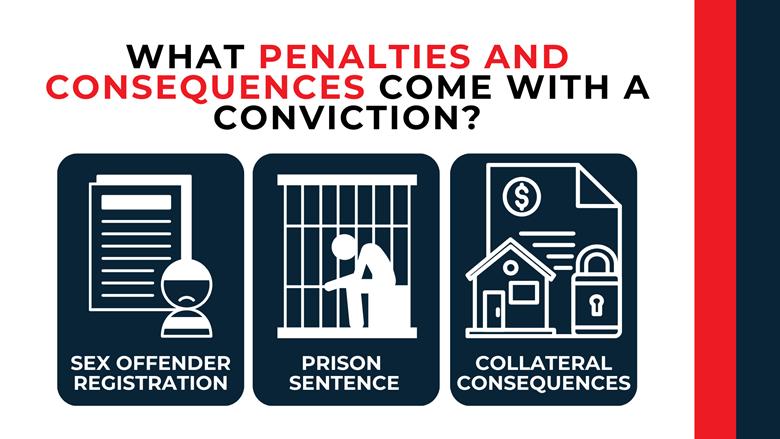
A conviction for solicitation of a child by computer carries severe penalties extending far beyond any prison sentence. Understanding the full scope of consequences is essential for making informed decisions about your case.
What Prison Sentence Does a Conviction Carry?
North Carolina uses Structured Sentencing, which calculates sentences based on offense class and prior record level. Solicitation of a child by computer is a Class H felony (or Class G if either party appeared at the meeting location).
For defendants with no prior record (Prior Record Level I):
- Class H felony: Presumptive range of 4-6 months, with community or intermediate punishment possible
- Class G felony: Presumptive range of 8-10 months, with intermediate punishment possible
Prior criminal history significantly increases these ranges. Defendants with extensive records face substantially longer sentences. Additionally, the NC Sentencing Commission FY 2024 Report shows that person offenses (which include sex crimes) receive active imprisonment 62% of the time, the highest rate of any offense category.
How Does Sex Offender Registration Work in North Carolina?
A conviction requires mandatory registration on the North Carolina Sex Offender Registry for 30 years under N.C.G.S. § 14-208.7. According to the NC State Bureau of Investigation Registry Statistics (2026), Wake County currently has 839 registered sex offenders and a conviction would add you to that public database.
Registration requirements include:
- Providing current address and verifying it periodically
- Reporting any address changes within specified timeframes
- Complying with residential restrictions (distance from schools, daycares, etc.)
- Appearing for in-person verification as required
- Having information publicly accessible online
Statewide, approximately 25,000+ individuals are registered sex offenders in North Carolina according to NC SBI Registry data (2021-2024). Petition for termination of registration is possible after 10 years for standard registrants who are not classified as recidivists, sexually violent predators, or aggravated offenders.
What other consequences affect employment, housing, and immigration?
Collateral consequences extend into virtually every area of life:
- Employment: Many employers conduct background checks and exclude applicants with sex offense convictions, particularly positions involving children, vulnerable populations, or positions of trust
- Professional licensing: Convictions may bar entry to or result in revocation of licenses for teaching, healthcare, law, and numerous other professions
- Housing: Residential restrictions limit where registrants can live, and many landlords refuse to rent to registered sex offenders
- Education: Colleges and universities may deny admission or housing to registered offenders
- Immigration: For non-citizens, sexual abuse of a minor qualifies as an aggravated felony under federal immigration law, resulting in mandatory deportation. Under Padilla v. Kentucky, 559 U.S. 356 (2010), defense counsel must advise of immigration consequences before any plea
- Custody and family relationships: Convictions affect custody determinations and may restrict contact with minor children
- Travel: International travel becomes significantly more complicated, with many countries denying entry to registered sex offenders
What Should You Do If You’re Under Investigation or Charged?
The actions you take immediately after learning of an investigation or arrest significantly impact your defense options. Protecting your rights requires careful steps from the very beginning.
Should You Speak to the Police Without an Attorney Present?
No. You have the absolute right to remain silent and the right to an attorney before any questioning. Invoking these rights cannot be used against you. Speaking to police without counsel even to “explain” or “clear things up” almost never helps and frequently harms your defense.
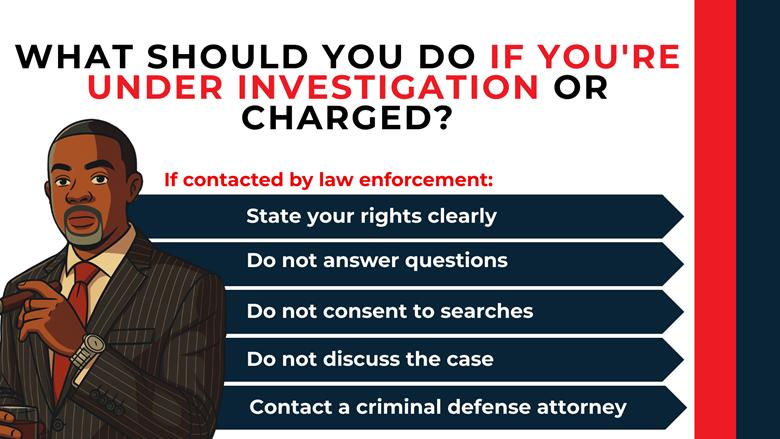
If contacted by law enforcement:
- State clearly: “I am invoking my right to remain silent and my right to an attorney”
- Do not answer questions about the allegations, your online activities, or your communications
- Do not consent to searches of your devices, home, or vehicle
- Do not discuss the case with anyone other than your attorney including family, friends, or cellmates if arrested
- Contact a criminal defense attorney immediately
Remember that North Carolina permits one-party consent recordings. If someone calls you about the allegations, even someone you trust, assume the conversation may be recorded and used against you.
What Happens During the Pretrial Process in Wake County?
After arrest, you’ll have an initial appearance before a magistrate, followed by a first appearance in district court. Felony charges are handled in Wake County Superior Court in Raleigh. The pretrial process involves discovery (exchange of evidence), potential motions to suppress evidence or dismiss charges, and plea negotiations.
According to the NC Sentencing Commission FY 2024 Report, 93% of person offense convictions received credit for time served, reflecting that many defendants spend time in pretrial detention. For serious felonies, the median time from charge to sentencing is approximately 30 months though Class H and G offenses typically resolve faster than the most serious felony classes.
Bond conditions in these cases often include GPS monitoring, no internet access, and no contact with minors. Violating pretrial conditions can result in bond revocation and additional charges.
Frequently Asked Questions
Can I be convicted if the “minor” was actually an undercover officer?
Yes. North Carolina law explicitly allows prosecution when the defendant believed the person was underage, even if no actual minor existed. The statute covers persons the defendant “believes to be” under 16 years old, making sting operations with fictitious minors legally valid.
What if the undercover officer initiated the sexual conversation?
Government initiation alone does not establish entrapment. Courts will examine whether you were “predisposed” to commit the offense before contact. If you readily engaged in sexual discussions and took steps toward meeting, courts may find predisposition regardless of who initiated contact.
Will I have to register as a sex offender if convicted?
Yes. A conviction under N.C.G.S. § 14-202.3 requires mandatory sex offender registration for 30 years under North Carolina law. This registration is public and includes address verification, residential restrictions, and notification requirements.
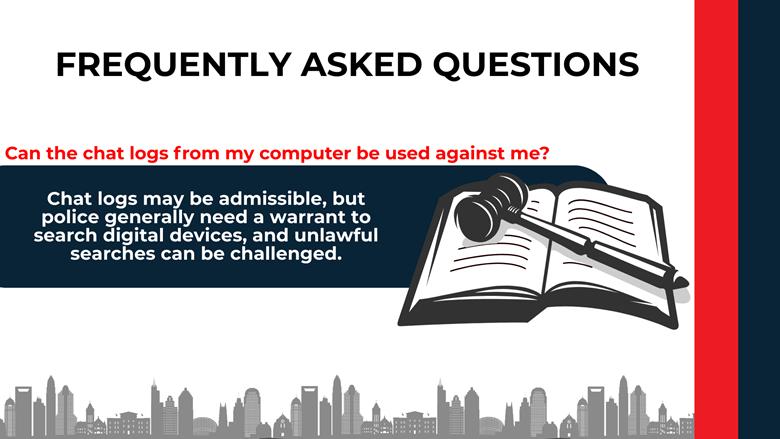
Can the chat logs from my computer be used against me?
Chat logs may be admissible, but constitutional protections apply. Under Riley v. California, police generally need a warrant to search your phone or computer. Your attorney can challenge evidence obtained through warrantless searches or improper seizure procedures.
Is showing up to meet the “minor” a separate offense?
Appearing at the meeting location elevates the charge from a Class H felony to a Class G felony under N.C.G.S. § 14-202.3, which carries increased sentencing ranges. Even if no meeting occurs, the solicitation itself is sufficient for prosecution.
How long do these cases typically take to resolve in Wake County?
Felony cases in North Carolina take significantly longer than misdemeanors. The median time from charge to sentencing for serious felonies is approximately 30 months, though solicitation cases (typically Class H or G) may resolve somewhat faster depending on case complexity and whether the case proceeds to trial.
Trial-Ready Advocacy Through Intensive Training
Successfully navigating these statistics requires a defense built on a foundation of refined courtroom skills. Attorney Patrick Roberts approaches every case with the technical discipline developed through the National Criminal Defense College (NCDC), the country’s premier institution for trial advocacy.
His commitment to his creative defense techniques is backed by rigorous, hands-on training:
- 2025 Cross-Examination Intensive: Completed a 3-day, hands-on program with NCDC focused exclusively on the art of cross-examination, an essential tool for challenging the State’s witnesses.
- Trial Practice Institute Graduate: A 2011 graduate of the NCDC’s flagship two-week program, which provides intensive training on every aspect of defending individuals accused of criminal offenses, from jury selection to closing arguments.
By applying these advanced trial techniques to the prosecution’s burden, Mr. Roberts ensures that every part of the State’s case* is carefully reviewed. This approach helps turn a difficult situation into a conversation about the actual facts and the law.
*Disclaimer: Each case is unique, and prior results do not guarantee a similar outcome in any future matter.
Protecting Your Future Starts Now
A solicitation of a child by computer charge threatens your freedom, your reputation, and your future in profound ways. The stakes are simply too high to navigate alone. From challenging digital evidence to asserting constitutional protections and evaluating entrapment defenses, every decision in your case carries weight.
If you are facing solicitation charges in Garner or Wake County, don’t leave your future to chance. Contact Patrick Roberts Law to discuss your defense options and begin building a strategy rooted in rigorous trial training.

Disclaimer: The information on this website is for general information purposes only. Nothing on this site should be taken as legal advice for any individual case or situation. Case results depend upon a variety of factors unique to each case. Prior results do not guarantee a similar outcome.
Former assistant district attorney
Contact Patrick Roberts
Facing criminal charges in North Carolina demands seasoned representation. Trust in the experience and dual perspective of Patrick Roberts. Reach out today for a confidential consultation.
-
Call Our Team
Calls answered 24/7






For more information on the selection criteria, go to www.martindale.com
*Each case is different and must be evaluated separately. Prior results achieved do not guarantee similar results can be achieved in future cases.