

When Cary police or federal agents show up asking about text messages, images on your phone, or online conversations with someone who turned out to be younger than you thought, you’re facing some of the most serious charges North Carolina law imposes. What many people think of as “sexting”—exchanging explicit images or messages electronically—triggers sexual exploitation statutes when a minor is involved, carrying felony classifications that can follow you for the rest of your life.
For professionals working in the Research Triangle—the software engineers at SAS Institute, the defense contractors at Lockheed Martin, the financial services employees at MetLife—these accusations threaten more than freedom. They threaten the security clearances, professional licenses, and career trajectories that Cary families have spent decades building. In a community where nearly 70% of adults hold bachelor’s degrees and median household incomes exceed $129,000, the stakes extend far beyond the courtroom.
North Carolina doesn’t use the word “sexting” in its criminal code. Instead, prosecutors charge these cases under a tiered system of sexual exploitation statutes that can mean anything from a Class 1 misdemeanor to a Class C felony—depending on exactly what you’re accused of doing.
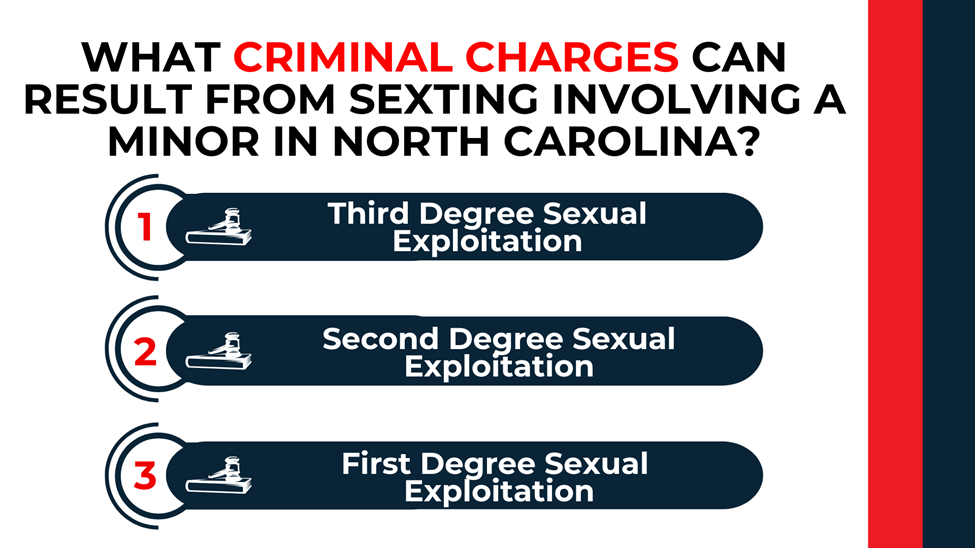
What Criminal Charges Can Result From Sexting Involving a Minor in North Carolina?
The term “sexting” covers a range of conduct that North Carolina law treats very differently depending on the specific allegations. Understanding which statute applies to your situation is the first step toward building an effective defense.
What Is the Difference Between Sending Sexual Content TO a Minor Versus Content Depicting a Minor?
This distinction drives everything in these cases. Under N.C. Gen. Stat. § 14-190.15, an adult who sends sexual material to a minor—meaning content that is “harmful to minors” but depicts adults—faces a Class 1 misdemeanor for disseminating harmful material. This is serious, but it’s fundamentally different from charges involving images of minors themselves.
When the images or videos depict an actual minor engaged in sexual activity, North Carolina’s sexual exploitation statutes apply. These are felonies, and the Wake County District Attorney’s office prosecutes them aggressively. Having previously served as a prosecutor handling sex offense cases, Attorney Patrick Roberts understands exactly how the State approaches these charges—and where the evidence may be more vulnerable than it first appears.
How Does North Carolina Classify the Different Degrees of Sexual Exploitation?
North Carolina uses a three-tiered system for sexual exploitation charges, with severity based on the defendant’s alleged conduct.
The framework breaks down as follows:
- Third Degree Sexual Exploitation (N.C. Gen. Stat. § 14-190.17A): Possession of material depicting a minor engaged in sexual activity. This is a Class H felony—the lowest classification among exploitation charges, but still a felony with significant consequences.
- Second Degree Sexual Exploitation (N.C. Gen. Stat. § 14-190.17): Distributing, receiving, selling, purchasing, exchanging, or soliciting material depicting a minor engaged in sexual activity. This is a Class E felony, reflecting the legislature’s view that distribution causes greater harm than possession alone.
- First Degree Sexual Exploitation (N.C. Gen. Stat. § 14-190.16): Producing, inducing, or facilitating the creation of material depicting a minor engaged in sexual activity. This is a Class C felony—one of the most serious non-homicide charges in North Carolina’s criminal code.
Wake County prosecutors have specialized attorneys who handle sex crime cases, and they understand how to present these tiered charges to maximize pressure on defendants.
What Makes First Degree Sexual Exploitation Different From Second or Third Degree?
First degree charges under § 14-190.16 target the creation of exploitative material. If prosecutors allege you used, employed, induced, coerced, or encouraged a minor to engage in sexual activity for the purpose of producing visual material, you’re facing Class C felony charges. The statute also covers transporting a minor for this purpose or financing such transportation.
The distinction matters enormously for sentencing. A Class C felony carries substantially greater prison exposure than the Class E or Class H felonies associated with second and third degree charges. When Cary residents contact defense counsel, understanding which tier of charges applies—and whether the prosecution’s classification is legally supportable—becomes the foundation for every strategic decision that follows.
How Do Cary Police Investigate Sexting Cases Involving Minors?
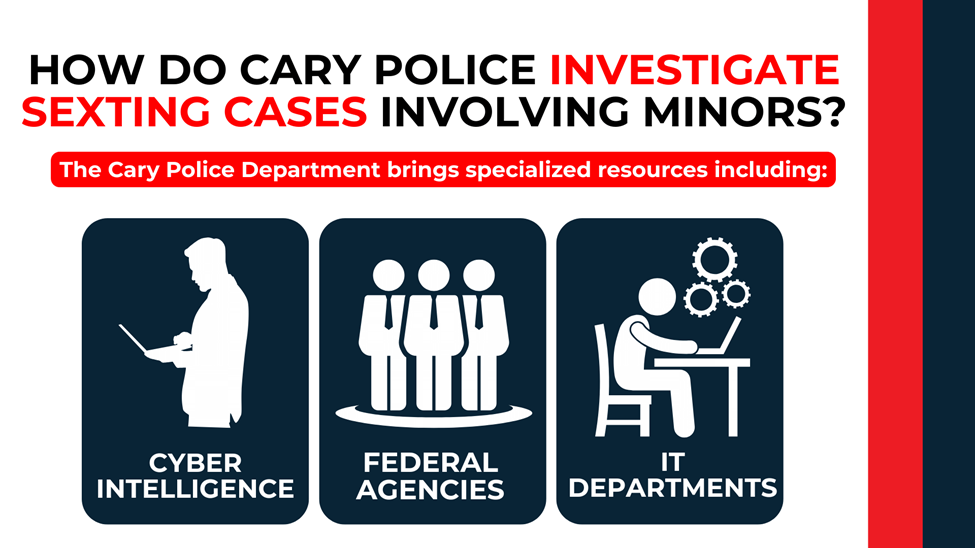
Investigations involving sexual exploitation and digital evidence follow patterns that Cary defendants need to understand. The Cary Police Department brings specialized resources to these cases that most departments in the Triangle cannot match.
What Role Does Cary’s Cyber Intelligence Unit Play in These Investigations?
The Cary Police Department operates the only dedicated cyber intelligence unit among the Triangle’s four major police departments. While Raleigh, Durham, and Chapel Hill lack equivalent specialized capabilities, CPD’s cyber unit focuses specifically on identifying and investigating online offenders, with particular emphasis on child exploitation cases.
This means sexting investigations originating in Cary often involve detectives with specific training in digital forensics, online behavior analysis, and the technical aspects of tracing electronic communications. For defendants, this cuts both ways—while investigations may be more thorough, specialized units are also more likely to make technical errors that create defense opportunities for attorneys trained to identify them.
Graduate training from the National Criminal Defense College gives Attorney Patrick Roberts the advanced cross-examination techniques necessary to challenge the methodologies these specialized units employ.
When Do Federal Agencies Get Involved in Sexting Investigations?
Cary PD’s Special Victims Unit regularly coordinates with federal agencies and task forces. The Internet Crimes Against Children (ICAC) task force, the SBI Cyber Crimes Unit, and federal agencies all participate in investigations that cross jurisdictional lines—which electronic communications frequently do.
If images crossed state lines electronically, if the investigation originated from a federal tip, or if prosecutors believe federal charges carry strategic advantages, your case may involve both state and federal exposure. Multi-agency investigations like Operation Southern Impact bring resources that local departments alone couldn’t muster.
How Does Digital Evidence From Work Devices Affect These Cases?
In Cary’s tech-driven environment, many investigations involve employer-provided devices, corporate networks, or cloud storage accounts subject to company policies. IT departments sometimes discover suspected contraband and report it directly to law enforcement.
For employees at companies like SAS Institute, Epic Games, or defense contractors throughout Research Triangle Park, this creates immediate complications beyond criminal exposure. The company learns of the investigation simultaneously with law enforcement, employment consequences begin before charges are even filed, and security clearance review processes start immediately.
Why Doesn’t “I Didn’t Know Their Age” Work as a Defense?
One of the most common questions defendants ask—and one of the most important statutory provisions to understand—involves mistake of age.
What Does the Law Say About Mistake of Age in Exploitation Cases?
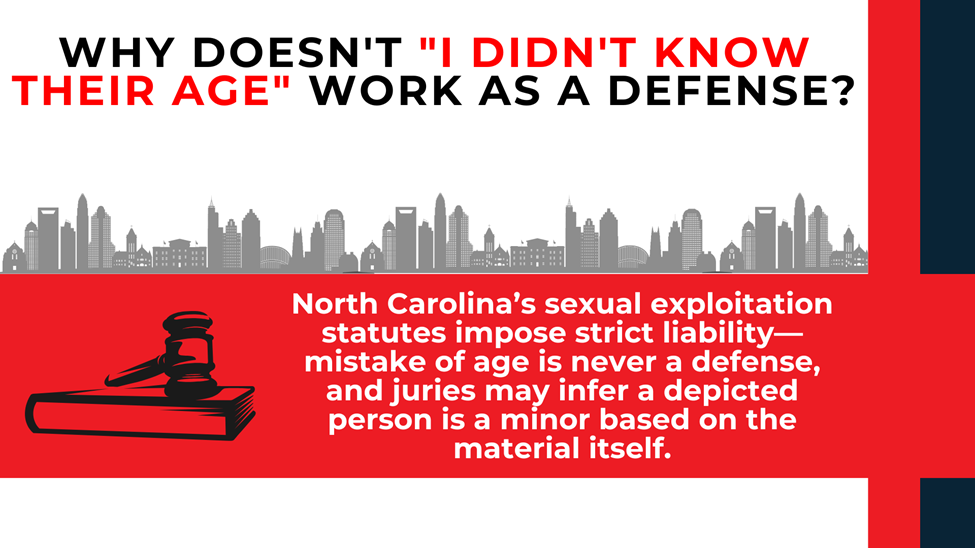
The North Carolina statutes are unambiguous. For first degree sexual exploitation under § 14-190.16, the law states explicitly: “Mistake of age is not a defense to a prosecution under this section.” The same language appears in § 14-190.17 for second degree charges and § 14-190.17A for third degree charges.
This means that even if you genuinely believed you were communicating with an adult, even if someone lied about their age, and even if their appearance suggested they were over 18, the prosecution does not have to prove you knew the person’s actual age. This is a strict liability element that catches many defendants off guard.
Patrick Roberts’ lifetime membership in the National Association of Criminal Defense Lawyers includes completion of specialized sex-crimes defense seminars that address exactly these statutory frameworks and the defense strategies that remain available despite them.
How Can Prosecutors Prove the Person in Images Was a Minor?
Under each exploitation statute, the law permits an inference that makes prosecution easier. The trier of fact—judge or jury—”may infer that a participant in sexual activity whom material through its title, text, visual representations, or otherwise represents or depicts as a minor is a minor.”
Wake County prosecutors use this inference provision to proceed with charges even when definitive proof of age is difficult. If the material itself suggests the subject is a minor—through context, labeling, or visual appearance—that can be sufficient for the jury to find the minor element proven.
What Defense Strategies Apply to Sexting Charges in North Carolina?
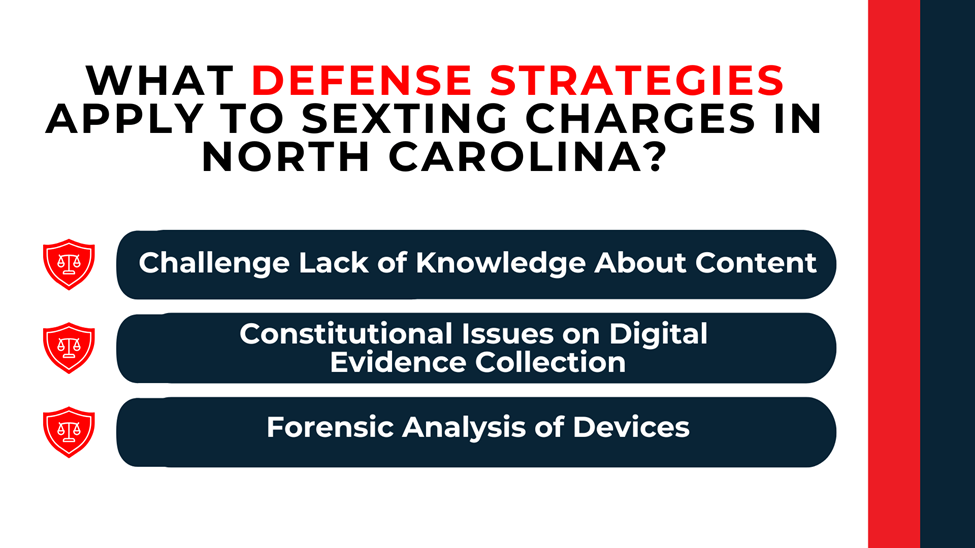
While mistake of age isn’t a defense, these cases are far from indefensible. Effective defense strategies focus on elements prosecutors must still prove and constitutional protections that apply to digital evidence collection.
How Can Lack of Knowledge About Content Be Challenged?
Every exploitation statute requires proof that the defendant acted “knowing the character or content of the material.” This knowledge element distinguishes criminal conduct from innocent behavior.
If material was downloaded automatically, stored in cached files without your awareness, or placed on your device by malware or another person, the knowledge element may be absent. Digital forensics can sometimes reveal whether files were actively accessed versus passively stored, whether they were viewed deliberately or appeared through automated processes, and whether device usage patterns support or undermine the prosecution’s theory.
Attorney Patrick Roberts’ prosecutorial background provides insight into how the State attempts to establish knowledge—and where gaps in that proof often exist. As the only attorney in North Carolina listed on the NCADRC website at falseallegation.org as of December 2025, his training focuses specifically on cases where accusations may not match reality.
What Constitutional Issues Arise in Digital Evidence Collection?
Search and seizure protections under the Fourth Amendment apply fully to electronic devices. Questions about warrant validity, scope limitations, and whether evidence was obtained through unconstitutional means arise frequently in sexting prosecutions.
Effective defense investigation examines how law enforcement learned of the suspected activity, whether proper authorization was obtained before accessing devices or accounts, and whether the scope of searches exceeded constitutional bounds.
When Does Forensic Analysis of Devices Reveal Defense Opportunities?
Independent forensic examination of devices often reveals information the prosecution’s analysis missed or failed to consider.
Defense-focused forensic analysis may address:
- Timestamp discrepancies that undermine the prosecution’s timeline
- Evidence of device access by persons other than the defendant
- File metadata inconsistent with the State’s theory of intentional possession or distribution
- Network evidence suggesting unauthorized access or hacking
- Deleted file recovery that provides exculpatory context
For Cary defendants working in technology sectors, sophisticated understanding of digital systems can actually support defense strategies when properly analyzed by qualified forensic professionals.
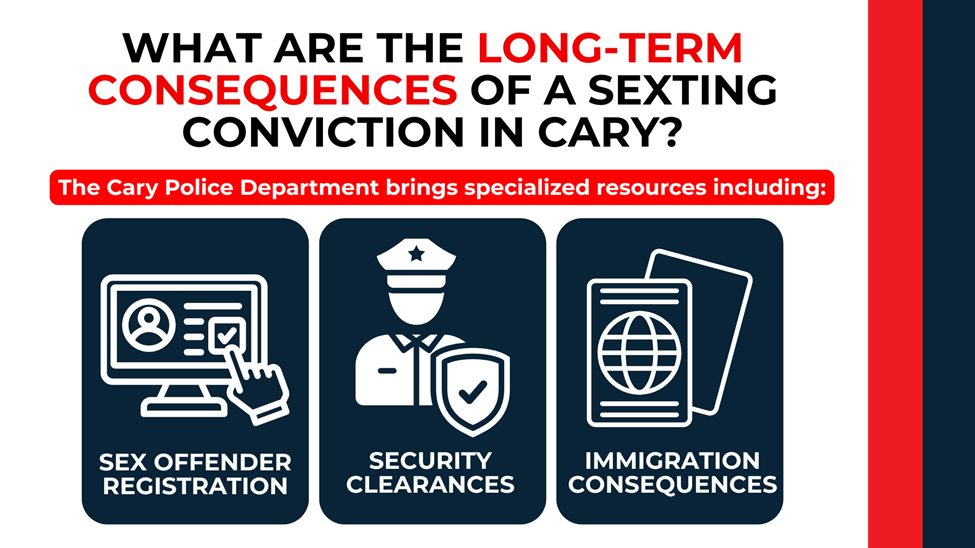
What Are the Long-Term Consequences of a Sexting Conviction in Cary?
Even beyond imprisonment, sexual exploitation convictions carry consequences that reshape every aspect of life in a community like Cary.
How Does Sex Offender Registration Affect Cary Residents?
Sexual exploitation convictions trigger sex offender registration requirements in North Carolina. Registration affects where you can live, where you can work, and how you interact with your own community.
In Cary’s family-oriented neighborhoods—where strong public schools draw families and community events bring residents together—registration creates barriers that extend indefinitely. Attorney Patrick Roberts’ training at Gerry Spence’s Trial Lawyers College, where he was trained directly by one of America’s most accomplished trial attorneys, emphasizes humanizing clients before juries and presenting the full picture of who they are beyond the charges they face.
What Happens to Security Clearances and Professional Licenses?
The professional consequences for Research Triangle employees can be career-ending.
Security clearances: Defense industry employees at Lockheed Martin and throughout RTP face immediate security clearance review upon accusation—often resulting in suspension or revocation before trial.
Professional licenses: Financial services professionals at MetLife, healthcare workers, attorneys, and other licensed professionals face disciplinary proceedings that operate independently of criminal court outcomes.
Employment: Even positions that don’t require clearances or licenses may be lost. Most employer background check policies treat sexual exploitation convictions as automatic disqualifiers.
What Immigration Consequences Do Non-Citizens Face?
Cary’s substantial immigrant population—approximately 22% of residents are foreign-born, many working in the tech sector on employment visas—faces additional exposure. Sexual exploitation convictions are deportable offenses that can result in removal from the United States regardless of how long you’ve lived here, your family ties, or your employment status.
For non-citizens, the intersection of criminal defense and immigration law requires attorneys who understand both systems and how decisions in one affect outcomes in the other.
Why Does Experience on Both Sides Matter When Defending Sexting Charges?
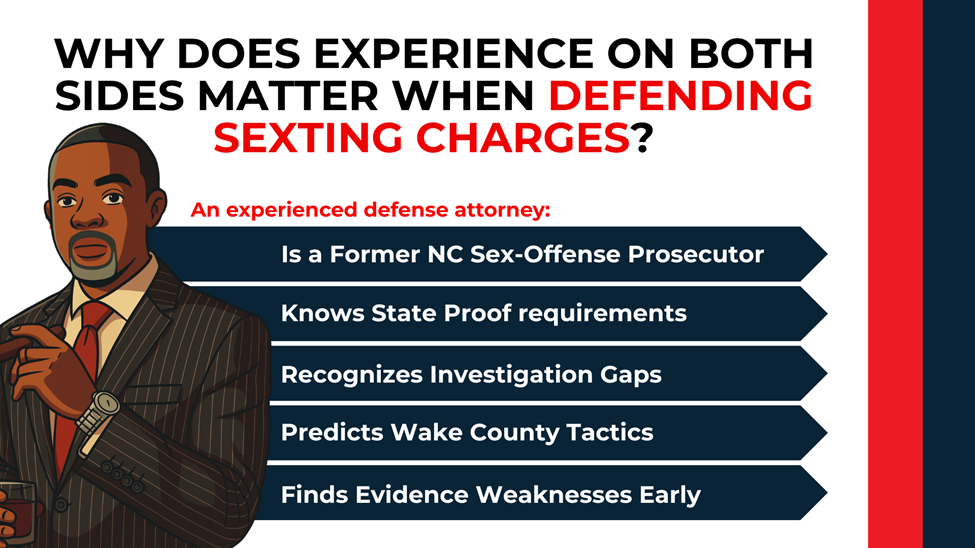
Defending sexual exploitation charges requires more than general criminal defense experience. These cases demand specific knowledge of how prosecutors build these cases, where evidence vulnerabilities exist, and how to present effective defense strategies in Wake County courts.
How Does Prosecutorial Background Help Build a Defense Strategy?
Attorney Patrick Roberts’ years prosecuting sex offense cases in North Carolina provides perspective few defense attorneys can offer. Having sat at the prosecution table, he understands the evidence standards that must be met, the investigation techniques that produce—and sometimes fail to produce—reliable evidence, and the strategic decisions prosecutors make when presenting these cases.
This experience translates directly to defense work. Understanding how the Wake County District Attorney’s office approaches sexual exploitation cases helps anticipate prosecution tactics and identify weaknesses in the State’s evidence from day one.
What Training Prepares an Attorney for Sex Offense Defense?
Beyond prosecutorial experience, effective sex crimes defense requires ongoing training. Attorney Patrick Roberts has invested extensively in this training through multiple pathways.
Mr. Roberts’ lifetime NACDL membership includes completion of specialized sex-crimes defense seminars covering current defense strategies and evolving legal standards. His NCADRC training—which makes him the only attorney in North Carolina listed on falseallegation.org’s registry—focuses specifically on defending against allegations involving children, including forensic interview analysis and challenging unreliable accusations.
Advanced trial skills training at the National Criminal Defense College provides the cross-examination techniques essential for challenging investigators and expert witnesses. And training at Gerry Spence’s Trial Lawyers College shapes his approach to jury selection, witness examination, and connecting with juries at a human level.
Frequently Asked Questions
Can I be charged if the minor initiated the sexting conversation?
Yes. North Carolina’s sexual exploitation statutes do not include an exception for who initiated contact. If you possessed, distributed, or produced material depicting a minor engaged in sexual activity, the charges apply regardless of how the interaction began. However, the circumstances surrounding the interaction can be relevant to defense strategy and may affect how prosecutors approach the case.
What if I deleted the images before police seized my device?
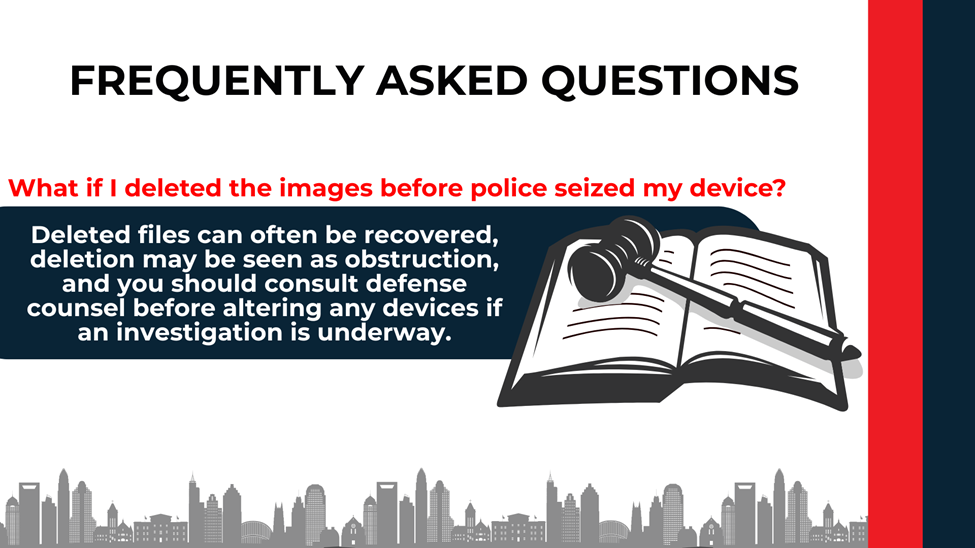
Deletion does not necessarily prevent prosecution. Digital forensics can often recover deleted files, and the act of deletion itself may be characterized as consciousness of guilt or obstruction. If you’re aware of an investigation, speak with defense counsel before taking any action regarding electronic devices.
How are sexting cases prosecuted when they cross state lines?
Electronic transmissions that cross state lines can trigger federal jurisdiction in addition to state charges. Federal prosecutors may pursue these cases under separate statutes with different sentencing frameworks. Multi-agency task forces that operate in the Cary area regularly coordinate state and federal prosecution decisions.
Will I have to register as a sex offender if convicted?
Convictions for sexual exploitation of a minor under N.C. Gen. Stat. § 14-190.16, § 14-190.17, or § 14-190.17A trigger sex offender registration requirements. Registration duration and restrictions depend on the specific offense and classification.
How long do these cases typically take in Wake County courts?
Sexual exploitation cases prosecuted in Wake County Superior Court vary significantly in duration depending on the complexity of digital evidence, whether federal agencies are involved, and whether the case proceeds to trial. Cases involving extensive forensic analysis may take considerably longer than the typical felony timeline.
Protecting Your Future When Everything Is at Stake
Experienced Defense Representation in Cary and Wake County
When you’re facing sexual exploitation charges in Cary or anywhere in Wake County, you need defense counsel who understands these cases from every angle—someone who has prosecuted them, studied them through intensive training programs, and defended them in local courts.
Attorney Patrick Roberts brings a combination that few attorneys can match: prosecutorial experience handling sex offense cases, lifetime NACDL membership with specialized sex-crimes defense training, and the distinction of being the only attorney in North Carolina (as of December 2025) listed on the NCADRC registry at falseallegation.org. His advanced training through the National Criminal Defense College and Gerry Spence’s Trial Lawyers College provides the trial skills these serious cases demand.
Professional Standing & 2026 Credentials
Mr. Roberts’ effective and fearless advocacy is further distinguished by his admission to practice at the highest levels of the American judiciary:
- Admitted to Practice Before the U.S. Supreme Court: This prestigious credential signifies a level of legal standing recognized at the highest possible level of the American judiciary.
- Federal Court Advocacy: He is admitted to practice before the Fourth Circuit Court of Appeals and in all federal district courts in North Carolina, ensuring that whether your case is in state or federal court, you have a respected voice in your corner.
Professional Endorsement & 2026 Credentials*
“Patrick is an extremely talented lawyer who has the highest ethical standards. He works extremely hard for his clients and is a very skilled adversary in court.”* – Verified Peer Review via Martindale-Hubbell (October 29, 2018)
- AV Preeminent® Peer Rated (2026): Highest level of professional excellence for more than 5 straight years.
- Client Champion Platinum (2026): Recognized for elite client service for more than 5 straight years.
- 10/10 “Superb” AVVO Rating: Maintained for over 15 years.
Disclaimer: The awards and ratings mentioned above are based on third-party evaluations and peer/client reviews. They do not guarantee a similar outcome in your case. Each legal matter is unique and must be evaluated on its own merits.
*Testimonials and peer endorsements found on this website are actual comments.
If you’re under investigation or facing charges related to sexting allegations involving a minor in Cary, Wake County, or the surrounding areas, contact Patrick Roberts Law to discuss your situation and understand your options.
Disclaimer: The information on this website is for general information purposes only. Nothing on this site should be taken as legal advice for any individual case or situation. Case results depend upon a variety of factors unique to each case. Prior results do not guarantee a similar outcome.
Frequently Asked Questions
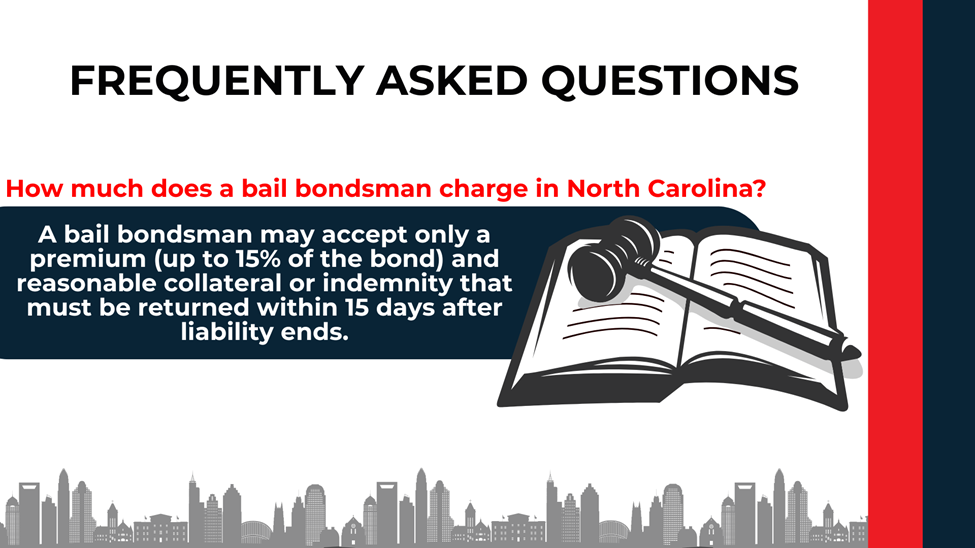
How much does a bail bondsman charge in North Carolina?
Under N.C. Gen. Stat. § 58-71-95, a bail bondsman cannot accept anything of value from a principal except the premium, which cannot exceed fifteen percent of the face amount of the bond. The bondsman may also accept collateral security or other indemnity, which must be reasonable in relation to the bond amount and must be returned within 15 days after final termination of liability on the bond.
Can bond conditions be changed after they are set?
Yes. North Carolina law allows judicial officials to modify pretrial release orders at various stages of the proceedings. A magistrate or clerk may modify orders before the first appearance, and judges may modify conditions thereafter. For good cause shown, any judge may revoke an order of pretrial release entirely and set new conditions.
What is the difference between a secured and unsecured bond?
An unsecured bond requires the defendant to sign a promise to pay a specified amount if they fail to appear, but no money or property is required upfront. A secured bond requires actual financial backing before release, either through a cash deposit of the full amount, a mortgage on property, or a surety such as a bail bondsman.
Does posting bond mean the charges are dropped?
No. Posting bond only secures release from custody while the case is pending. The defendant remains obligated to appear at all court dates, and the criminal charges proceed through the court system. The bond remains in effect until judgment is entered or the obligation is otherwise terminated under the statute.
What happens to collateral if the defendant appears at all court dates?
Under N.C. Gen. Stat. § 58-71-95, collateral security provided to a bondsman must be returned within 15 days after final termination of liability on the bond. The collateral must be returned in the same condition as it was received. Knowing and willful failure to return collateral valued at more than $1,500 is a Class I felony.
What is Iryna’s Law and how does it affect bond decisions?
Iryna’s Law (Session Law 2025-93), effective December 1, 2025, created new restrictions on pretrial release for defendants charged with violent offenses. The law establishes a rebuttable presumption against release for violent offenses, requires secured bonds or electronic monitoring for defendants who are released, mandates criminal history review for all defendants, and requires written findings of fact explaining release conditions in certain cases. Defendants with three or more prior convictions for Class 1 misdemeanors or higher offenses within the previous ten years must also post a secured bond regardless of the current charge.
Disclaimer: The information on this website is for general information purposes only. Nothing on this site should be taken as legal advice for any individual case or situation. Case results depend upon a variety of factors unique to each case. Prior results do not guarantee a similar outcome.
Former assistant district attorney
Contact Patrick Roberts
Facing criminal charges in North Carolina demands seasoned representation. Trust in the experience and dual perspective of Patrick Roberts. Reach out today for a confidential consultation.
-
Call Our Team
Calls answered 24/7







For more information on the selection criteria, go to www.martindale.com
*Each case is different and must be evaluated separately. Prior results achieved do not guarantee similar results can be achieved in future cases.