
A statutory sexual offense charge in North Carolina represents one of the most serious accusations a person can face. For Cary residents—many of whom hold advanced degrees and work in Research Triangle Park’s demanding professional environment—these allegations threaten to unravel careers, families, and futures built over decades. The consequences extend far beyond potential prison time to include mandatory sex offender registration, satellite-based monitoring, and the permanent destruction of professional credentials.
North Carolina law defines multiple forms of statutory sexual offense, each carrying different elements and penalties depending on the ages of the individuals involved. Understanding these distinctions matters because Wake County prosecutors make strategic charging decisions that can dramatically affect your case outcome. Attorney Patrick Roberts brings a perspective few defense attorneys can offer: years of prosecutorial experience handling sex crimes cases in North Carolina. That background means he understands not just the law, but how prosecutors build these cases and where weaknesses in the evidence may exist.
What Exactly Is a Statutory Sexual Offense Under North Carolina Law?
How Does North Carolina Define “Sexual Act” in These Cases?
Statutory sexual offense charges in North Carolina involve what the law terms a “sexual act”—which is distinct from sexual intercourse. While the statutes reference sexual acts, the precise legal definition encompasses specific conduct beyond intercourse. Wake County prosecutors pursuing these charges must prove the occurrence of a qualifying sexual act as an element of the offense.
What Age Requirements Trigger These Charges?
North Carolina’s statutory sexual offense laws focus primarily on the ages of both the defendant and the alleged victim. The age combinations determine which specific statute applies and, consequently, the severity of the charges. For Cary residents facing accusations, understanding these age thresholds is essential because they dictate whether a charge is even legally valid.
How Do the Three Different Statutory Sexual Offense Laws Differ?
North Carolina has three distinct statutory sexual offense statutes, each addressing different circumstances. When Wake County prosecutors review a case originating from Cary, they select the appropriate charge based on these criteria:
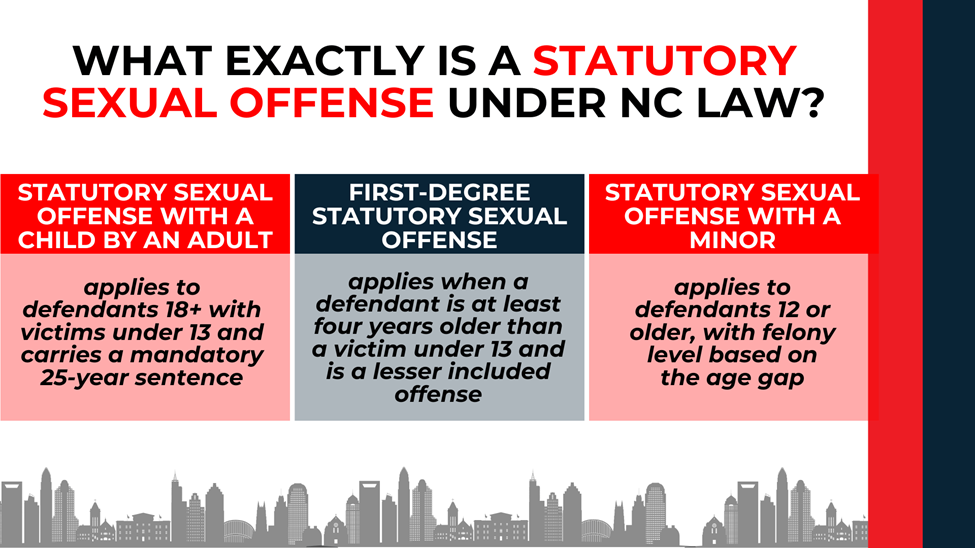
- N.C. Gen. Stat. § 14-27.28 (Statutory Sexual Offense with a Child by an Adult): Applies when the defendant is at least 18 years old and the victim is under 13 years of age. This is a Class B1 felony carrying a mandatory minimum of 300 months (25 years) of active punishment.
- N.C. Gen. Stat. § 14-27.29 (First-Degree Statutory Sexual Offense): Applies when the defendant is at least 12 years old, at least four years older than the victim, and the victim is under 13 years of age. This is a Class B1 felony. Notably, this offense is a lesser included offense of § 14-27.28.
- N.C. Gen. Stat. § 14-27.30 (Statutory Sexual Offense with a Person 15 or Younger): Applies when the defendant is at least 12 years old and the victim is 15 or younger. If the defendant is at least six years older, it is a Class B1 felony. If the defendant is more than four but less than six years older, it is a Class C felony. A marriage exception exists under this statute.
Attorney Patrick Roberts’ experience prosecuting sex crimes cases means he understands how district attorneys evaluate evidence and select charges. That insight proves invaluable when developing defense strategy.
What Are the Felony Classifications and Potential Consequences?
What Makes a Class B1 Felony So Serious?
Class B1 felonies represent the second-most-serious felony classification in North Carolina’s structured sentencing system. For professionals working at companies like SAS Institute or defense contractors such as Lockheed Martin—employers prevalent throughout the Research Triangle—a Class B1 felony conviction destroys careers instantly. Security clearances are revoked. Professional licenses are suspended or permanently lost. The median household income of $129,399 that supports a Cary family disappears.
When Does the Mandatory 300-Month Minimum Apply?
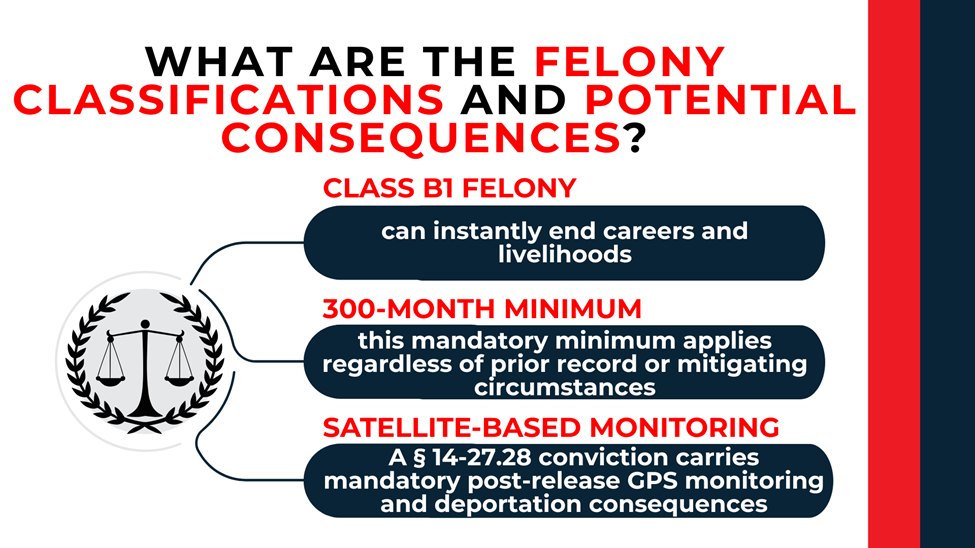
Under N.C. Gen. Stat. § 14-27.28, when an adult defendant (18 or older) is convicted of statutory sexual offense with a child under 13, the court must impose a minimum of 300 months—25 years—of active punishment. This mandatory minimum exists regardless of a defendant’s prior record or other mitigating circumstances. The statute further authorizes enhanced sentencing up to and including life imprisonment without parole when the court finds the offense involved extraordinary brutality, duration, severity, or scope.
What Is Satellite-Based Monitoring and When Is It Required?
Following the termination of active punishment for a conviction under § 14-27.28, defendants are subject to enrollment in satellite-based monitoring as provided under Part 5 of Article 27A of Chapter 14 of the General Statutes. This GPS tracking requirement extends supervision well beyond prison release. For Cary’s substantial immigrant population—approximately 22% of residents are foreign-born, many working in the tech sector on employment visas—conviction also triggers deportation consequences that compound these penalties.
Patrick Roberts’ ongoing sex-crimes defense training through NACDL, where he holds lifetime membership, ensures he stays current on the evolving legal landscape surrounding these serious charges.
How Do Cary Police and Wake County Prosecutors Handle These Investigations?
What Role Does Cary PD’s Special Victims Unit Play?
When allegations of statutory sexual offense arise in Cary, the Cary Police Department’s Special Victims Unit typically handles the investigation. This dedicated unit within CPD’s Investigations Division focuses specifically on sexual assault, child exploitation, and related sensitive crimes. SVU detectives receive specialized training in interviewing alleged victims and gathering evidence in these cases. For allegations involving digital evidence, CPD’s Cyber Intelligence Unit—the only dedicated unit of its kind among the Triangle’s four major police departments—may also become involved.
How Does the Wake County District Attorney’s Office Approach These Cases?
All Cary criminal cases are prosecuted through the Wake County District Attorney’s office, which maintains specialized prosecutors who focus specifically on sex crime cases. These prosecutors coordinate closely with Cary PD throughout case development, from investigation through trial. Having handled these cases as a prosecutor, Patrick Roberts understands how the Wake County DA’s office evaluates evidence, makes charging decisions, and prepares for trial.
What Evidence Do Investigators Typically Gather?
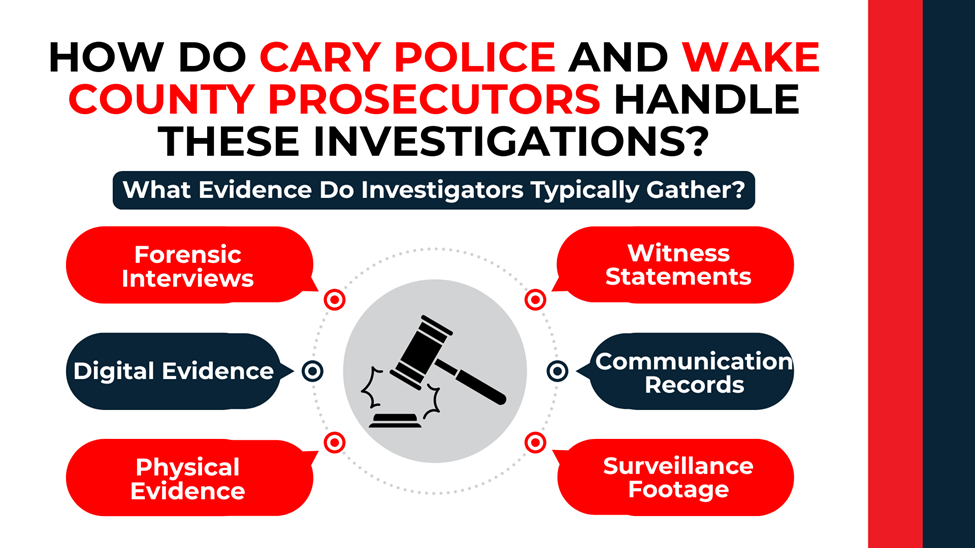
Investigations into statutory sexual offense allegations are thorough and multifaceted. Cary’s high-tech community environment means digital evidence often plays a central role. Investigators commonly pursue several categories of evidence:
- Forensic interviews with the alleged victim, often conducted by trained child forensic interviewers
- Digital evidence from phones, computers, and cloud storage accounts
- Physical evidence and forensic examinations
- Witness statements from family members, teachers, or other individuals
- Communication records including text messages, social media, and email
- Any available surveillance footage or photographic evidence
Understanding what evidence exists—and what evidence may be missing or unreliable—is central to building an effective defense.
What Defense Strategies Apply to Statutory Sexual Offense Charges?
Can Age Mistake Ever Be a Defense in North Carolina?
In statutory sexual offense cases, the defendant’s knowledge of or mistake about the alleged victim’s age is generally not a defense under North Carolina law. These are strict liability offenses with respect to age. However, the prosecution must still prove the alleged victim’s actual age beyond a reasonable doubt as an element of the offense. Cases sometimes involve disputes about age documentation or evidence.
How Can False Allegations Be Challenged?
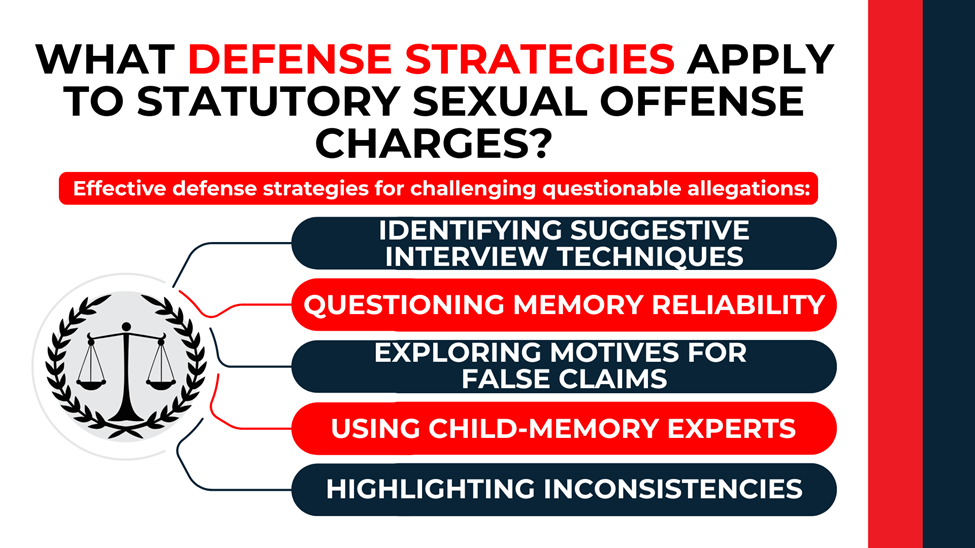
False allegations occur in sex offense cases for various reasons: custody disputes, family conflicts, misunderstandings, or suggestive interviewing techniques. In a family-oriented community like Cary, where accusations carry enormous social weight even before any conviction, wrongful allegations can devastate innocent people. Patrick Roberts holds specialized training from the National Child Abuse Defense and Resource Center (NCADRC) focused specifically on defending against false accusations. He is the only attorney in North Carolina listed on the NCADRC website at falseallegation.org—a distinction reflecting his commitment to this specialized area. Effective defense strategies for challenging questionable allegations include:
- Analyzing forensic interview recordings for suggestive or leading questioning techniques
- Examining the alleged victim’s memory and any factors affecting reliability
- Investigating potential motives for false reporting
- Consulting with experts on child suggestibility and memory
- Challenging inconsistencies in the allegation over time
The trial advocacy methods Patrick Roberts learned at Gerry Spence’s Trial Lawyers College—where he trained directly with the legendary attorney who never lost a criminal trial—emphasize connecting with juries and humanizing clients facing serious accusations.
What Happens After an Arrest for Statutory Sexual Offense in Wake County?
What Should You Expect at the Initial Court Appearance?
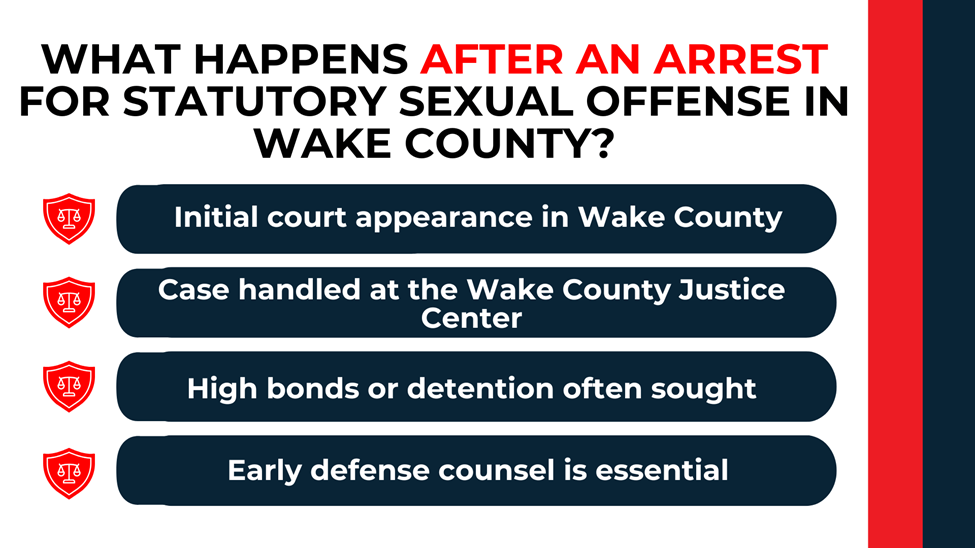
Following an arrest for statutory sexual offense, defendants appear before a magistrate and then in Wake County District Court for initial proceedings. Cases are processed through the Wake County Justice Center in Raleigh. Bond is typically set, though prosecutors often request substantial bonds or pretrial detention in these cases. Having defense counsel present as early as possible helps protect your rights during these critical initial stages.
How Long Does the Court Process Typically Take?
Felony cases in Wake County’s 10th Judicial District, particularly Class B1 felonies like statutory sexual offense, often take many months or longer to resolve. The timeline depends on factors including the complexity of the evidence, whether forensic testing is required, and whether the case proceeds to trial or resolves through negotiation. Defense counsel who understands Wake County procedures can navigate the system efficiently while protecting the client’s interests throughout.
What Pretrial Conditions Might Be Imposed?
Courts commonly impose restrictive pretrial conditions in statutory sexual offense cases. These may include GPS monitoring, no-contact orders with the alleged victim, residence restrictions, employment limitations, and internet usage prohibitions. For Cary professionals whose work requires technology access or security clearances, these conditions can be professionally devastating even before any conviction. The cross-examination and trial preparation techniques Patrick Roberts developed through the National Criminal Defense College help ensure clients are prepared to challenge the prosecution’s case.
Why Does Your Choice of Defense Attorney Matter in These Cases?
What Advantages Does Former Prosecution Experience Provide?
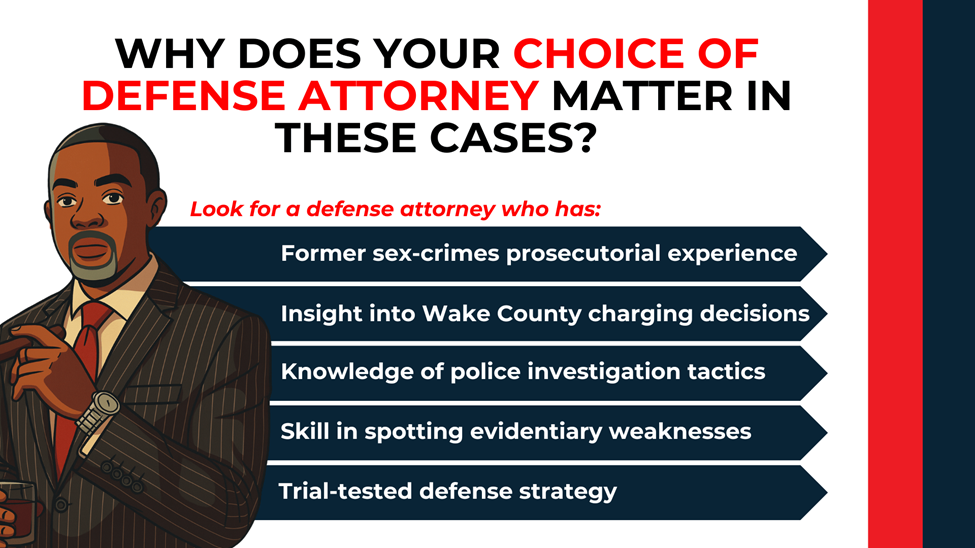
Statutory sexual offense cases require defense counsel who understands both sides of the courtroom. Patrick Roberts’ years as a prosecutor handling sex crimes cases provide insight that defense-only attorneys simply cannot match. He knows how Wake County prosecutors evaluate evidence, make charging decisions, and prepare for trial. He understands the investigation techniques law enforcement uses and where weaknesses in the State’s case may exist. That prosecutorial perspective shapes every aspect of defense strategy.
Why Is Specialized Sex-Crimes Training Important?
Beyond courtroom experience, defending against sex offense charges requires specialized knowledge that general criminal defense attorneys may lack. Patrick Roberts has invested heavily in ongoing professional development focused specifically on these cases. His credentials include lifetime NACDL membership with extensive sex-crimes defense training at recent national seminars. His NCADRC training addresses the specific challenges of false allegation defense—and his listing as the only North Carolina attorney on falseallegation.org reflects that commitment. The advanced cross-examination techniques he continues to develop through NCDC training, combined with the jury connection methods from the Gerry Spence Trial Lawyers College, provide a comprehensive skill set tailored to these complex cases
Frequently Asked Questions
Where will my statutory sexual offense case be heard?
Cases arising from Cary are prosecuted in Wake County Superior Court, located at the Wake County Justice Center in Raleigh. Having defense counsel familiar with Wake County procedures and prosecutors provides a meaningful advantage.
What is the difference between statutory sexual offense and statutory rape?
Statutory rape involves sexual intercourse, while statutory sexual offense involves other sexual acts as defined by North Carolina law. Both carry severe penalties, and the specific charge depends on the conduct alleged.
Can these charges be reduced or dismissed?
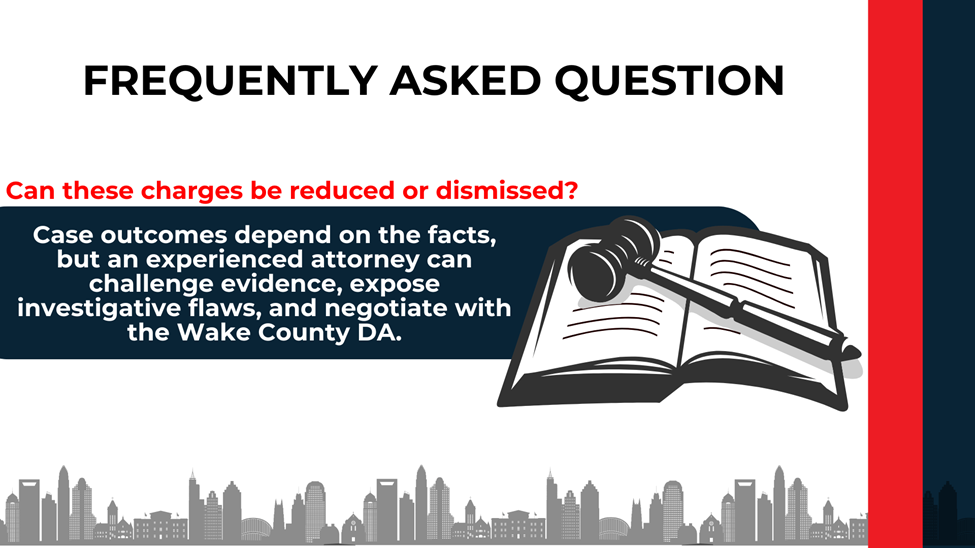
Every case is different, and outcomes depend on the specific facts and evidence. Potential strategies include challenging the sufficiency of evidence, exposing problems with the investigation, demonstrating false allegations, or negotiating with prosecutors. An attorney who understands how the Wake County District Attorney’s office approaches these cases can evaluate the options realistically.
Will I have to register as a sex offender if convicted?
Yes. Conviction for statutory sexual offense requires sex offender registration in North Carolina. For convictions under § 14-27.28 specifically, satellite-based monitoring is also mandated following release from active punishment.
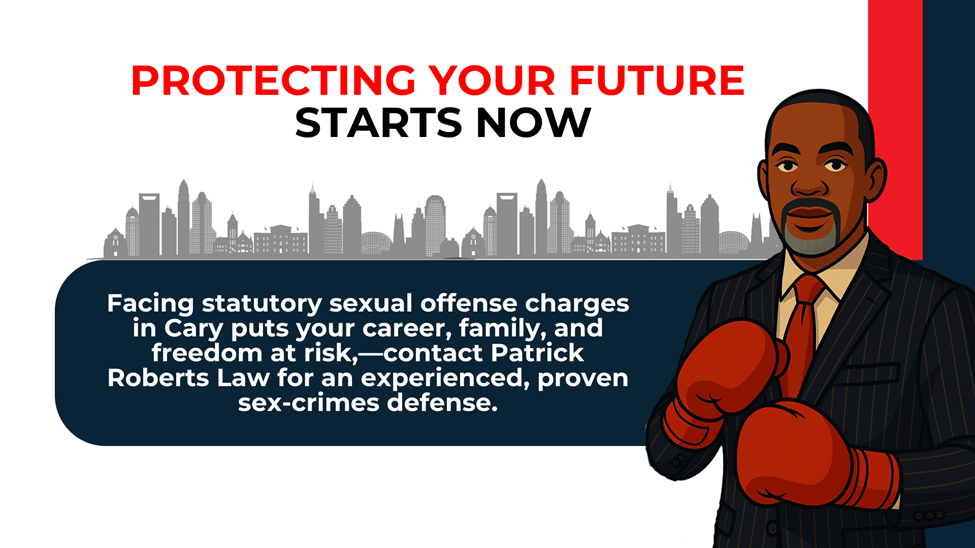
Protecting Your Future Starts Now
Facing statutory sexual offense charges in Cary threatens everything you have built—your career in the Research Triangle’s competitive professional environment, your family relationships, and your freedom. These allegations demand defense counsel who combines prosecutorial insight with specialized training in sex-crimes defense.
Mr. Patrick Roberts brings experience that few North Carolina attorneys can match. His background prosecuting these cases means he understands how the Wake County District Attorney’s office builds its case against you. His distinction as the only North Carolina attorney listed on the National Child Abuse Defense and Resource Center’s falseallegation.org registry as of December 2025 reflects his commitment to defending the wrongly accused.
If you or someone you love faces statutory sexual offense charges in Cary, Wake County, or anywhere in the Research Triangle area, contact Patrick Roberts Law to discuss your case and your defense options.
Disclaimer: The information on this website is for general information purposes only. Nothing on this site should be taken as legal advice for any individual case or situation. Case results depend upon a variety of factors unique to each case. Prior results do not guarantee a similar outcome.
Former assistant district attorney
Contact Patrick Roberts
Facing criminal charges in North Carolina demands seasoned representation. Trust in the experience and dual perspective of Patrick Roberts. Reach out today for a confidential consultation.
-
Call Our Team
Calls answered 24/7






For more information on the selection criteria, go to www.martindale.com
*Each case is different and must be evaluated separately. Prior results achieved do not guarantee similar results can be achieved in future cases.