
Being accused of second-degree sexual exploitation of a minor in Cary, North Carolina puts everything at risk—your career in the Research Triangle, your professional licenses, your family’s stability, and your future. This is a Class E felony under North Carolina law, and Wake County prosecutors take these cases seriously. Understanding exactly what you face is the first step toward building an effective defense. North Carolina’s exploitation statutes target the creation, distribution, and possession of visual material depicting minors engaged in sexual activity. Second-degree sexual exploitation occupies the middle tier of these offenses, focusing primarily on distribution, receipt, and non-commercial recording of such material. For Cary residents—many of whom work in technology, defense, or other fields requiring security clearances—the consequences extend far beyond the courtroom.
What Is Second-Degree Sexual Exploitation of a Minor Under North Carolina Law?
What Specific Conduct Does This Statute Prohibit?
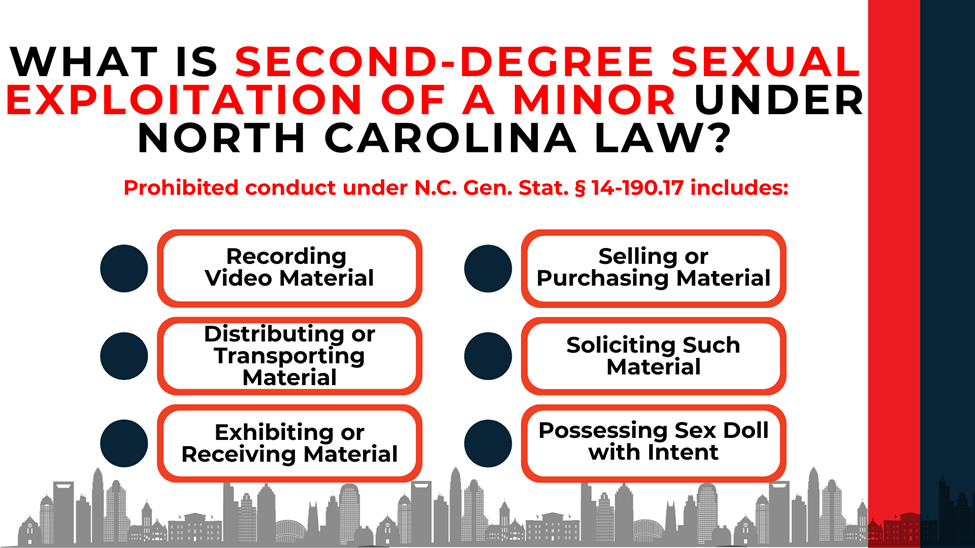
N.C. Gen. Stat. § 14-190.17 defines second-degree sexual exploitation of a minor. The statute prohibits several distinct types of conduct when a person knows the character or content of the material involved.
Prohibited conduct under this statute includes:
- Recording, photographing, filming, developing, or duplicating material containing a visual representation of a minor engaged in sexual activity
- Distributing or transporting such material
- Exhibiting such material
- Receiving such material
- Selling, purchasing, or exchanging such material
- Soliciting such material
- Distributing, transporting, exhibiting, receiving, selling, purchasing, exchanging, or soliciting a child sex doll
Each of these acts constitutes a separate violation. In Cary’s digital environment—where cloud storage, work devices, and electronic communications are ubiquitous—investigators often examine multiple platforms and accounts when building these cases.
How Does Second-Degree Differ From First-Degree and Third-Degree Charges?
North Carolina divides sexual exploitation offenses into three degrees based on the nature of the conduct involved.
- First-degree sexual exploitation under N.C. Gen. Stat. § 14-190.16 is a Class C felony that targets those who use, employ, or coerce minors to engage in sexual activity for live performances or material production—or who produce such material for sale or pecuniary gain. This is the production-focused offense.
- Third-degree sexual exploitation under N.C. Gen. Stat. § 14-190.17A is a Class H felony that covers knowing possession of such material without the distribution or commercial elements.
Second-degree falls between these extremes. It addresses the distribution chain—those who spread, receive, or solicit the material—without requiring proof of commercial motive or direct involvement in production. Wake County prosecutors frequently charge second-degree offenses when digital evidence shows material was shared, downloaded, or requested.
Why Does North Carolina Treat These Offenses So Seriously?
North Carolina’s General Assembly has classified these offenses as serious felonies because of the ongoing harm to the minors depicted in such material. Every time material is distributed or received, it perpetuates the exploitation of the child involved. This policy rationale shapes how aggressively these cases are investigated and prosecuted throughout the state, including in Wake County.
What Must the Prosecution Prove to Convict You?
The Wake County District Attorney’s office must prove every element of second-degree sexual exploitation beyond a reasonable doubt. Understanding these elements is essential for identifying where the prosecution’s case may be vulnerable.
Attorney Patrick Roberts handled sex crimes cases as a prosecutor earlier in his career, giving him direct insight into how the state constructs these cases and what evidence they prioritize. That dual-perspective now fundamentally informs his defense strategy: he knows precisely where to look for procedural errors and evidentiary weaknesses because he once had the burden of proving those very elements himself.
What Does “Knowing the Character or Content” Mean?
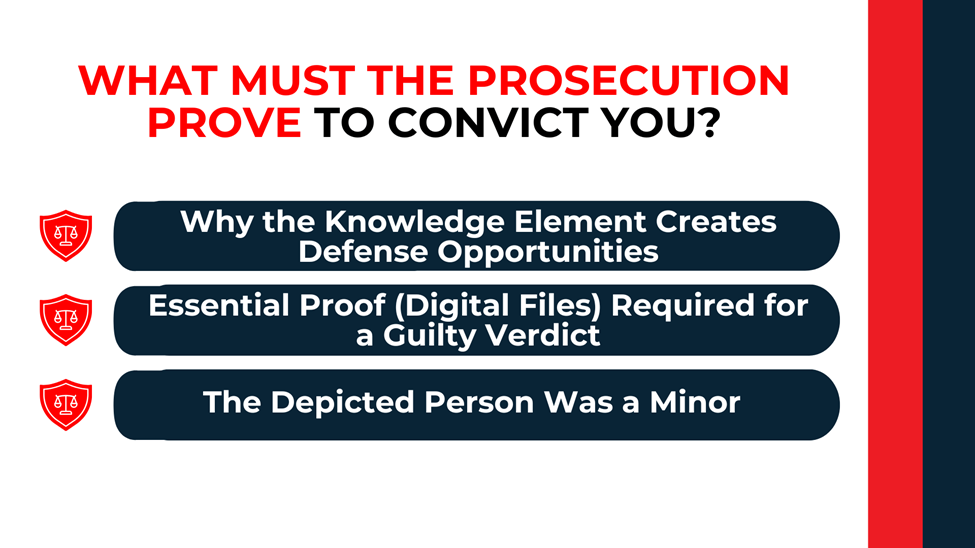
The statute requires that the defendant acted “knowing the character or content of the material.” This knowledge element is critical. The prosecution must prove you actually knew what the material depicted—not merely that you should have known or were negligent in failing to discover it.
The elements the prosecution must establish include:
- The defendant engaged in one of the prohibited acts (distributing, receiving, soliciting, recording, etc.)
- The material contained a visual representation of a minor engaged in sexual activity
- The defendant knew the character or content of the material
This knowledge requirement creates important defense opportunities. Malware, unauthorized access to devices, file-sharing programs that download content automatically, and shared network environments can all complicate the prosecution’s ability to prove knowing conduct.
What Qualifies as “Material Containing a Visual Representation”?
Under North Carolina law, the material must contain a “visual representation” of a minor engaged in “sexual activity.” The statute also covers material that has been “created, adapted, or modified to appear that an identifiable minor is engaged in sexual activity.”
Sexual activity, as defined in the broader sex offense statutes, includes various forms of sexual conduct. The visual representation can be photographs, videos, digital images, or other visual media. In Wake County prosecutions, digital files—recovered from computers, phones, cloud storage, and external drives—constitute the most common form of evidence.
Can Mistake of Age Be Raised as a Defense?
No. The statute explicitly states that “mistake of age is not a defense to a prosecution under this section.” Even if you genuinely believed the person depicted was an adult, this belief provides no legal defense.
However, the prosecution still bears the burden of proving the person depicted was actually a minor. The statute allows the trier of fact to “infer” that a participant is a minor based on how the material represents or depicts them—but this inference can be challenged. Defense strategies may focus on the actual age of the person depicted or the reliability of age determinations based on visual assessment alone.
How Do Cary Police and Federal Agencies Investigate These Cases?
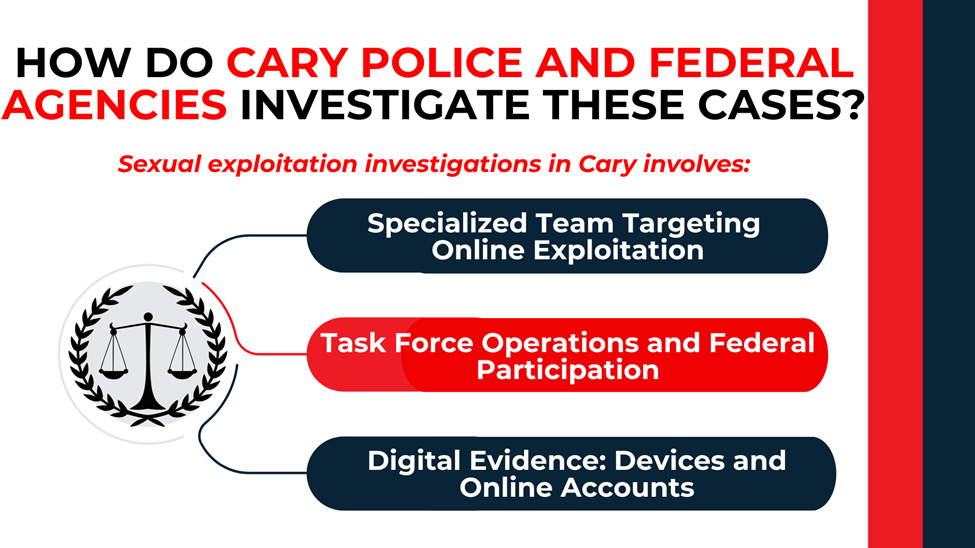
Sexual exploitation investigations in Cary involve specialized law enforcement units with significant resources and technical capabilities. Understanding how these investigations unfold helps defendants recognize both the evidence they may face and the potential vulnerabilities in the investigation process.
Attorney Patrick Roberts has completed rigorous training through the National Child Abuse Defense and Resource Center. As of December 2025, he is the only attorney in North Carolina listed on the NCADRC’s website at falseallegation.org—a reflection of his focused preparation for defending these sensitive cases. This specialized training emphasizes understanding investigation methods and identifying where procedures may have compromised evidence reliability.
What Role Does Cary’s Cyber Intelligence Unit Play?
Cary Police Department operates the only dedicated cyber intelligence unit among the Triangle’s four major police departments. Unlike Raleigh, Durham, or Chapel Hill, Cary maintains specialized personnel focused specifically on identifying online offenders and investigating digital exploitation cases.
This unit employs proactive identification techniques—they don’t simply wait for reports. They actively monitor for potential offenders, coordinate with internet service providers, and participate in multi-jurisdictional operations. For defendants, this means investigations may have begun long before any arrest or search warrant.
How Do Multi-Agency Task Forces Coordinate These Investigations?
Exploitation investigations in Wake County rarely involve just one agency. Cary’s Special Victims Unit and Cyber Intelligence Unit frequently coordinate with the North Carolina State Bureau of Investigation’s Cyber Crimes Unit, federal agencies including the FBI and Homeland Security Investigations, and the Internet Crimes Against Children (ICAC) task force.
This multi-agency approach means investigations often have federal involvement from the outset. Task force participation—including operations like Operation Southern Impact and the Invictus Project—brings additional resources and investigative techniques to bear. Defendants may face evidence gathered through multiple agencies with different procedures and oversight requirements.
What Types of Digital Evidence Will Investigators Examine?
In Cary’s technology-driven community, digital evidence plays a central role in these prosecutions. Investigators typically examine computers, laptops, tablets, and smartphones; cloud storage accounts; email and messaging applications; file-sharing program logs and histories; internet browsing history and cached files; external storage devices; and work computers and employer-provided devices.
For professionals working at companies like SAS Institute, Epic Games, or other Research Triangle employers, work devices present particular concerns. IT departments sometimes discover and report suspected material, triggering investigations that extend into personal devices and accounts. The interconnected nature of modern digital life means a search warrant for one device often leads to examination of linked accounts and cloud-synced content.
If you’re under investigation for second-degree exploitation charges in Wake County, the decisions you make now will shape your defense options going forward. Contact Patrick Roberts Law to discuss your situation before speaking with investigators.
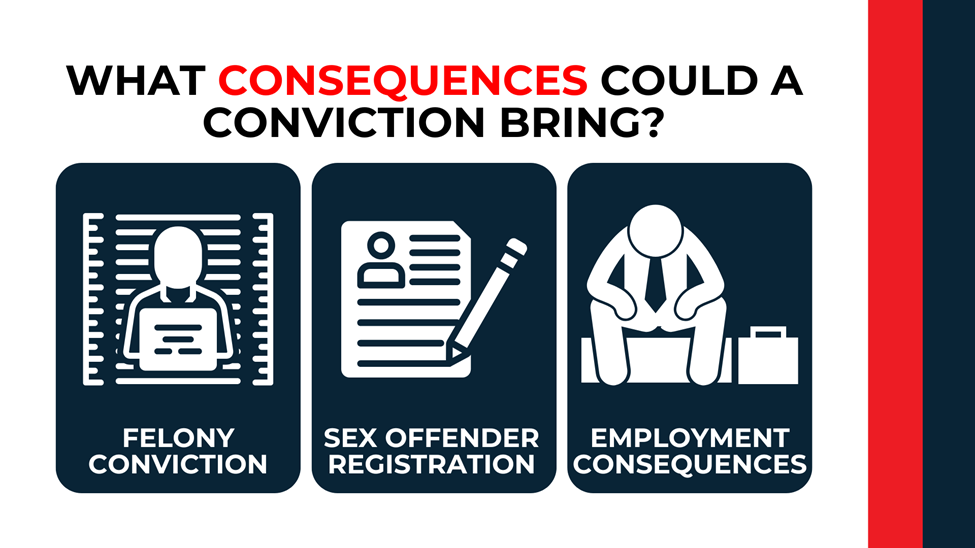
What Consequences Could a Conviction Bring?
A conviction for second-degree sexual exploitation of a minor carries consequences that extend far beyond the criminal sentence itself. For Cary residents—with careers built in the Research Triangle’s professional economy—these collateral consequences can be devastating.
What Is the Felony Classification for This Offense?
Second-degree sexual exploitation of a minor is a Class E felony under North Carolina law. The specific sentence in any case depends on factors including prior record level and the circumstances of the offense. What matters for most defendants is understanding that this is a serious felony conviction that will follow them permanently.
Will You Be Required to Register as a Sex Offender?
Convictions for sexual exploitation of a minor trigger sex offender registration requirements under North Carolina law. Registration creates a public record that affects where you can live, where you can work, and how your community perceives you. In a community like Cary—where 68% of adults hold bachelor’s degrees and professional reputation matters enormously—registration creates social consequences that compound the legal ones.
How Could a Conviction Affect Your Career in the Research Triangle?
For professionals working in Research Triangle Park and the surrounding area, a sexual exploitation conviction effectively ends careers that took decades to build. The collateral consequences for Cary residents are particularly severe.
Employment and professional consequences include:
- Immediate termination from most professional positions
- Revocation of security clearances required for defense contractors like Lockheed Martin
- Loss of professional licenses in fields including law, medicine, education, and finance
- Disqualification from positions involving minors or vulnerable populations
- Background check failures blocking future employment in most professional fields
- Exclusion from employer-provided housing, relocation assistance, and other benefits
For Cary’s substantial immigrant population—many working in the technology sector on employment visas or holding green cards—a conviction triggers immigration consequences including potential deportation. With 22% of Cary residents born outside the United States, this consequence affects a significant portion of those who may face these charges.
The $129,000 median household income that supports a Cary family depends on continued professional employment. A conviction doesn’t just threaten freedom—it threatens the entire financial foundation of a defendant’s family.
What Defense Strategies Apply to These Charges?
Effective defense in second-degree exploitation cases requires understanding both the technical complexity of digital evidence and the specific elements the prosecution must prove. Through ongoing training with the National Association of Criminal Defense Lawyers—including sex-crimes defense seminars held as recently as late 2025—Mr. Roberts stays current on evolving defense strategies and forensic interview analysis techniques.
How Can the “Knowledge” Requirement Be Challenged?
The prosecution must prove the defendant knew the character or content of the material. This knowledge element creates significant defense opportunities in certain cases.
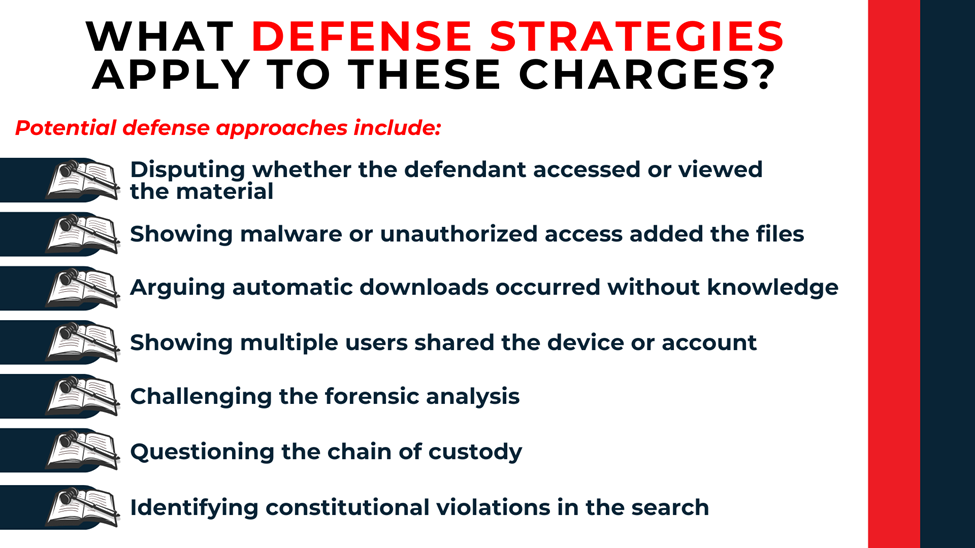
Potential defense approaches include:
- Challenging whether the defendant actually accessed or viewed the material
- Demonstrating that malware, viruses, or unauthorized access placed material on the device
- Showing that automatic download features in file-sharing programs operated without user knowledge
- Establishing that multiple users had access to the device or account
- Questioning the reliability of forensic analysis methods or conclusions
- Challenging chain of custody for digital evidence
- Identifying constitutional violations in how evidence was obtained
Every case presents different facts, and not every defense applies in every situation. An attorney who understands how Wake County prosecutors approach these cases can evaluate which strategies offer the best path forward.
What Constitutional Issues Might Apply to Your Case?
The Fourth Amendment protects against unreasonable searches and seizures. In digital exploitation cases, constitutional challenges may arise regarding the validity of search warrants, the scope of searches conducted, and whether law enforcement exceeded the authority granted by warrants.
Challenges to how internet service provider data was obtained, whether consent to search was truly voluntary, and whether search warrant applications contained material misrepresentations can all affect the admissibility of evidence. Suppressing key evidence may fundamentally change the prosecution’s ability to proceed.
When Might Negotiation Be the Right Approach?
Not every case should go to trial. When the evidence is strong, skilled negotiation may achieve outcomes—including reduced charges or alternative sentencing—that serve the defendant’s interests better than trial would.
Understanding the Wake County District Attorney’s approach to these cases matters enormously in negotiation. Prosecutors have discretion in how they charge cases and what resolutions they’ll accept. An attorney who has worked with these prosecutors, who understands their priorities, and who can present mitigating factors effectively positions clients for the best possible outcomes when negotiation is appropriate.
The stakes in second-degree exploitation cases demand experienced representation from the earliest stages. Contact Patrick Roberts Law to discuss defense strategies specific to your situation.
Why Does Your Choice of Defense Attorney Matter in These Cases?
Sexual exploitation charges combine legal complexity, technical evidence challenges, and life-altering consequences. The attorney you choose shapes how your case unfolds from investigation through resolution.
What Should You Look for in a Defense Attorney for Exploitation Charges?
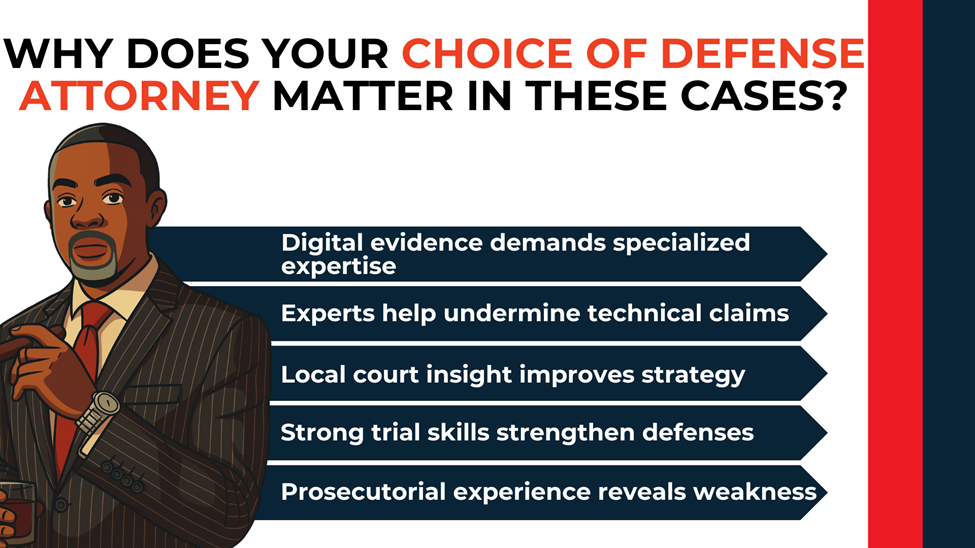
These cases demand specific knowledge and preparation. Understanding digital forensics, knowing how to challenge technical evidence, and having relationships with expert witnesses who can evaluate prosecution claims all matter. Familiarity with Wake County courts—knowing how local judges handle these matters and how prosecutors in this jurisdiction approach case evaluation—provides advantages that general criminal defense experience cannot match.
As a graduate of the National Criminal Defense College, with recent participation in their advanced cross-examination program, Patrick Roberts brings intensive trial preparation skills to every case. That training translates directly to the courtroom—knowing how to examine forensic analysts, challenge investigation methods, and present technical defenses clearly to judges and juries.
How Does Prosecutorial Experience Benefit Your Defense?
An attorney who has prosecuted these cases understands how the state thinks. He knows what evidence prosecutors consider essential, where they expect defense challenges, and how they evaluate case strength. That perspective—seeing the case from the prosecution’s viewpoint—reveals opportunities that might otherwise remain hidden.
Attorney Patrick Roberts brings that dual perspective to every exploitation case. His years handling these matters as a prosecutor inform his defense strategy at every stage.
Frequently Asked Questions
What is the difference between second-degree and third-degree sexual exploitation?
Second-degree sexual exploitation under N.C. Gen. Stat. § 14-190.17 focuses on distribution, receipt, and solicitation of material depicting minors engaged in sexual activity—the spreading of such material. Third-degree exploitation under § 14-190.17A covers knowing possession without the distribution element. Second-degree is a Class E felony while third-degree is a Class H felony, reflecting the more serious nature of distribution conduct.
Can I be charged if I didn’t know the person in the images was a minor?
Mistake of age is explicitly not a defense under this statute. However, the prosecution still must prove the person depicted was actually a minor. The statute allows juries to infer someone is a minor based on how the material depicts them, but this inference can be challenged through defense evidence and expert testimony regarding age determination.
Where will my case be prosecuted if I’m arrested in Cary?
Cary is located in Wake County, which is part of North Carolina’s 10th Judicial District. Your case will be prosecuted by the Wake County District Attorney’s office and tried in Wake County Superior Court at the Justice Center in Raleigh. Having defense counsel familiar with Wake County procedures and prosecutors provides important advantages in these proceedings.
Will I have to register as a sex offender if convicted?
Yes. A conviction for second-degree sexual exploitation of a minor requires sex offender registration under North Carolina law. Registration creates ongoing obligations and restrictions that affect housing, employment, and community presence for years after the criminal case concludes.
How do police typically discover these cases in the Cary area?
Investigations may begin through multiple channels. Cary Police Department’s Cyber Intelligence Unit—the only dedicated unit of its kind among the Triangle’s four major police departments—conducts proactive investigations. Cases also originate from reports by internet service providers, tips to the National Center for Missing and Exploited Children’s CyberTipline, multi-agency task force operations, and sometimes through discoveries by employers or family members who encounter material on shared devices.
Should I talk to investigators before hiring an attorney?
No. You have an absolute right to remain silent and to have an attorney present during questioning. Statements made to investigators—even statements you believe are exculpatory—can be used against you and may limit defense options later. Contact an attorney before speaking with law enforcement about any aspect of an exploitation investigation.
Protect Your Future
A second-degree sexual exploitation charge in Wake County threatens everything you’ve built—your career in the Research Triangle, your professional standing, your family’s security. These cases are complex, the consequences are severe, and the prosecution has significant resources.
Patrick Roberts is a graduate of the Gerry Spence Trial Lawyers College, where he trained directly with one of America’s most accomplished trial attorneys. That training emphasized a client-centered philosophy that treats every case as the most important one. Combined with his prosecutorial background, sex-crimes defense training, and familiarity with Wake County courts, he brings the preparation these serious charges demand.
If you face second-degree exploitation charges in Cary or anywhere in Wake County, contact Patrick Roberts Law to discuss your defense.

Disclaimer: The information on this website is for general information purposes only. Nothing on this site should be taken as legal advice for any individual case or situation. Case results depend upon a variety of factors unique to each case. Prior results do not guarantee a similar outcome.
Former assistant district attorney
Contact Patrick Roberts
Facing criminal charges in North Carolina demands seasoned representation. Trust in the experience and dual perspective of Patrick Roberts. Reach out today for a confidential consultation.
-
Call Our Team
Calls answered 24/7






For more information on the selection criteria, go to www.martindale.com
*Each case is different and must be evaluated separately. Prior results achieved do not guarantee similar results can be achieved in future cases.