

Second degree murder is one of the most serious criminal charges in North Carolina. In Cary, where the community values safety and the violent crime rate remains well below national averages, facing such an accusation can devastate your reputation and future. The charge carries severe penalties that can result in decades behind bars.
Understanding what constitutes second degree murder—and how it differs from other homicide charges—is critical if you or someone you know faces these allegations in Wake County courts.
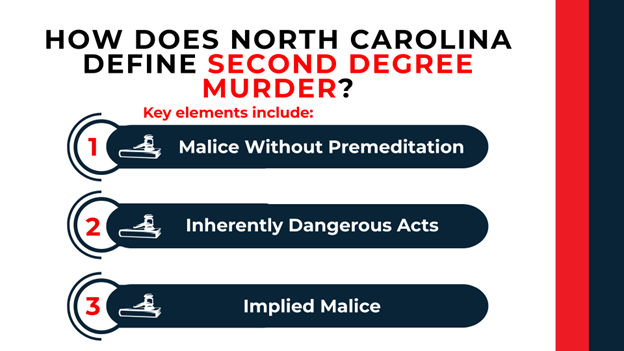
How Does North Carolina Define Second Degree Murder?
Under N.C. Gen. Stat. § 14-17(b), second degree murder encompasses any murder that doesn’t qualify as first degree murder or fall under other specific homicide statutes. The prosecution must prove you killed another person with malice—meaning with wickedness of disposition, hardness of heart, cruelty, recklessness of consequences, and a mind regardless of social duty.
Unlike first degree murder, second degree murder doesn’t require premeditation or deliberation. The killing happens without advance planning but still involves malice.
Key elements that distinguish second degree murder include:
- Malice without premeditation – The intent to kill forms in the moment rather than through advance planning
- Inherently dangerous acts – Actions so reckless they show complete disregard for human life
- Implied malice – Conduct demonstrating an abandoned and malignant heart
For residents near Research Triangle Park or downtown Cary, understanding these distinctions becomes crucial when facing charges in Wake County Superior Court.
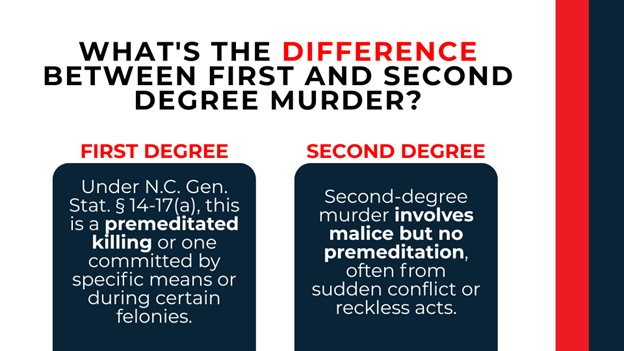
What’s the Difference Between First and Second Degree Murder?
First degree murder requires specific circumstances that elevate it above second degree murder. According to N.C. Gen. Stat. § 14-17(a), first degree murder involves:
- Willful, deliberate, and premeditated killing
- Murder by poison, lying in wait, imprisonment, starving, or torture
- Killing during certain felonies (arson, rape, robbery, kidnapping, burglary with a deadly weapon)
Second degree murder lacks these aggravating factors. While both charges involve malice, second degree murder typically happens during sudden confrontations or through extremely reckless behavior.
Consider this scenario: Two patrons at a restaurant near Crossroads Plaza get into an argument. If one pulls out a gun and shoots the other during the heated exchange, prosecutors would likely pursue second degree murder charges. The shooter acted with malice but without premeditation.
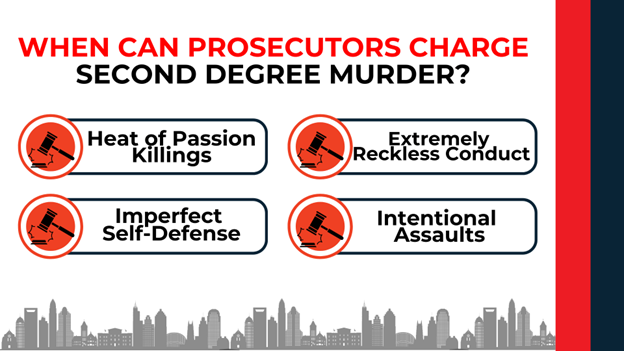
When Can Prosecutors Charge Second Degree Murder?
Wake County prosecutors often file second degree murder charges in situations involving:
- Heat of passion killings that don’t qualify for voluntary manslaughter because sufficient cooling time passed
- Imperfect self-defense cases where the defendant used excessive force or initiated the confrontation
- Extremely reckless conduct showing utter disregard for human life
- Intentional assaults that unexpectedly result in death
The Cary Police Department’s detective units investigate these cases thoroughly. Their Special Victims Unit handles sensitive cases, while general detectives work other homicides. With Cary’s low crime rates—just 1.07 violent crimes per 1,000 residents—these investigations receive significant resources and attention.
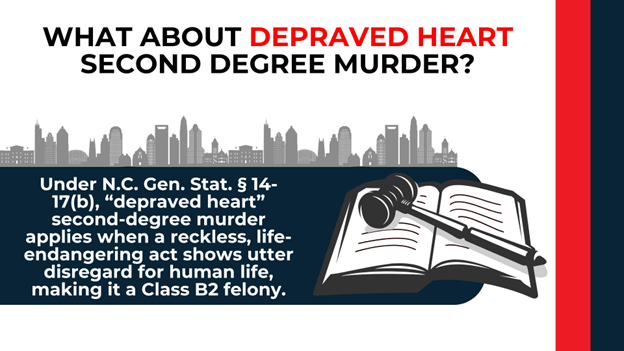
What About Depraved Heart Second Degree Murder?
North Carolina recognizes a specific type of second degree murder based on “depraved heart” theory. Under N.C. Gen. Stat. § 14-17(b), if malice stems from an inherently dangerous act or omission done so recklessly it manifests a mind utterly without regard for human life, the charge becomes a Class B2 felony instead of B1.
Examples of depraved heart second degree murder might include:
- Firing a gun into an occupied vehicle on NC-55
- Driving the wrong way on I-40 while extremely intoxicated
- Engaging in Russian roulette
- Leaving a child in a hot car for hours
These acts show such callous indifference to human life that the law treats them as malicious even without specific intent to kill.
How Does Second Degree Murder Differ From Manslaughter?
The distinction between second degree murder and manslaughter centers on malice. Voluntary manslaughter involves an unlawful killing without malice, often in sudden anger or heat of passion. Involuntary manslaughter lacks both malice and intent to kill or inflict serious injury.
Second degree murder requires prosecutors to prove malice—that abandoned and malignant heart showing utter disregard for human life. This separates it from lesser homicide charges.
For professionals in Cary’s technology sector or residents of family-oriented neighborhoods like Preston, understanding these distinctions helps clarify the severity of second degree murder accusations.

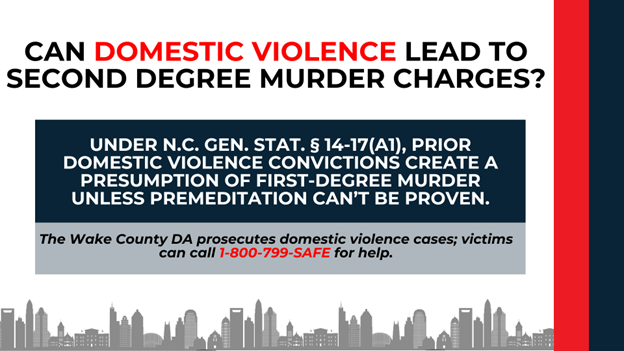
Can Domestic Violence Lead to Second Degree Murder Charges?
Yes. N.C. Gen. Stat. § 14-17(a1) creates a rebuttable presumption of first degree murder when someone with prior domestic violence convictions kills their intimate partner. However, if prosecutors cannot establish premeditation, the charge may reduce to second degree murder.
Prior convictions that trigger enhanced scrutiny include:
- Domestic violence protective order violations
- Communicating threats
- Stalking or cyberstalking
- Domestic criminal trespass
The Wake County District Attorney’s Office aggressively prosecutes domestic violence cases. With resources like the National Domestic Violence Hotline (1-800-799-SAFE) available to victims, these cases often involve extensive evidence and witness testimony.
What Defenses Apply to Second Degree Murder Charges?
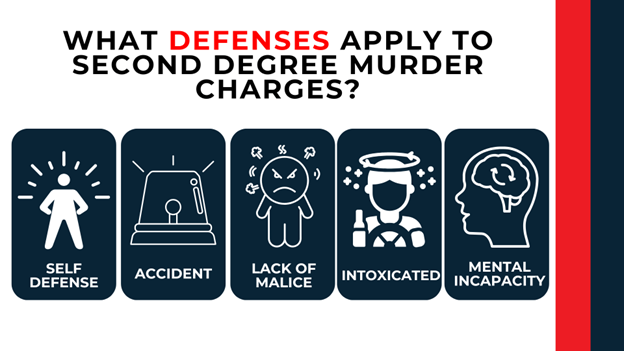
Several defenses may challenge second degree murder accusations:
- Perfect self-defense – You reasonably believed deadly force was necessary to prevent death or serious injury
- Accident – The death resulted from lawful conduct without criminal intent
- Lack of malice – The killing occurred without the requisite mental state
- Intoxication – Voluntary intoxication might negate specific intent (though rarely successful)
- Mental incapacity – Severe mental illness prevented forming criminal intent
Building an effective defense requires thorough investigation. Evidence from locations throughout Cary—from WakeMed Cary Hospital medical records to surveillance footage from Fenton’s mixed-use development—can prove crucial.
What Penalties Does Second Degree Murder Carry?
Second degree murder is typically a Class B1 felony in North Carolina. However, depraved heart second degree murder drops to Class B2. These classifications carry substantial prison sentences, though the statute doesn’t specify exact terms.
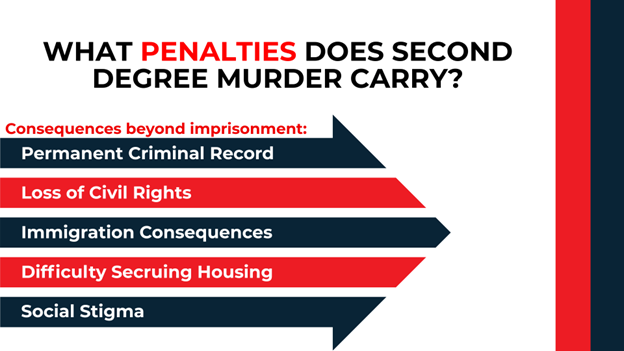
The consequences extend beyond imprisonment:
- Permanent criminal record affecting employment opportunities at major Cary employers like SAS Institute or MetLife
- Loss of civil rights including voting and firearm possession
- Immigration consequences for Cary’s significant foreign-born population
- Difficulty securing housing in competitive markets
- Social stigma in close-knit communities
Why Does Second Degree Murder Require Experienced Legal Representation?
Second degree murder cases involve complex legal issues and severe consequences. The prosecution must prove every element beyond a reasonable doubt, creating opportunities for skilled defense attorneys to challenge their case.
Attorney Patrick Roberts brings unique advantages to these cases. His experience as a former prosecutor provides insider knowledge of how the state builds murder cases. He understands the tactics prosecutors use and can anticipate their strategies.
Whether you face accusations stemming from an incident in downtown Cary, near Bond Park, or anywhere else in Wake County, securing representation immediately protects your rights. Early intervention allows your attorney to preserve evidence, interview witnesses while memories remain fresh, and potentially influence charging decisions.
Don’t face second degree murder charges alone. Contact Patrick Roberts Law today to discuss your case* and begin building your defense. With so much at stake—your freedom, reputation, and future—you need an advocate who understands both sides of North Carolina’s criminal justice system.
*Disclaimer: Each case is different and must be evaluated separately. Prior results achieved do not guarantee similar results can be achieved in future cases.
Former assistant district attorney
Contact Patrick Roberts
Facing criminal charges in North Carolina demands seasoned representation. Trust in the experience and dual perspective of Patrick Roberts. Reach out today for a confidential consultation.
-
Call Our Team
Calls answered 24/7








For more information on the selection criteria, go to www.martindale.com
*Each case is different and must be evaluated separately. Prior results achieved do not guarantee similar results can be achieved in future cases.