Blog

All Criminal Defense Criminal Defense Lawyer Sex Defense Felony Charges Lawyer Drug Charges Sex Defense Lawyer Murder Charges Rape Case Statutory Rape Charges Drug Crimes & Violations Drug Trafficking Violent Crime Domestic Violence Child Exploitation Charges Indecent Liberties North Carolina Criminal Law Sexual Assault North Carolina Law Fentanyl Crimes indecent liberties with a minor Sex Crimes Sex Crimes Defense Sex Offender Registry Sexual exploitantion of minors Meth Trafficking Age of Consent Aggravated Sexual Assault Artificial Intelligence Child Enticement Charges child grooming Child Rape Constitutional Rights & Warrants Criminal Defense & Travel Law Criminal Justice Criminal Law Cybercrime Defense Data Privacy Digital Evidence Entrapment defense False Accusations Family Law Federal Offenses Indecent Exposure Legal Defense Strategies Legal Resources Legal Updates Possession with intent to sell Sex Crimes & Registry Sex Crimes Defense Strategies Sex Offender Registration Requirements Sex Offender Registry Compliance Sex Offense Defense Sexting Laws solicitation of a child by computer Solicitation of a Minor Charge State vs. Federal Laws Statute of Limitations Statutory Sex Offense
Attorney reviewing documents beside courtroom scene introduces North Carolina sex offender registration penalties.

What Happens If You Don't Register as a Sex Offender in North Carolina?

Failure to register as a sex offender in North Carolina is a criminal offense under the state's Sex Offender Registry statute (Article 27A, N.C.G.S. § 14-208 et seq.). It carries the possibility of active prison time, and it is prosecuted regardless of whether the underlying conviction was years or even decades ago. This page covers what the state considers a registration violation, what the sentencing range looks like, what defenses may apply, and what to do if you are facing this charge in Wake County or anywhere in North Carolina. more What Counts as a "Failure to Register" Under North Carolina Law? North Carolina's sex offender registration system imposes several ongoing obligations, and a violation of any one of them can result in a separate criminal charge. The registration system under N.C.G.S. § 14-208 et seq. requires compliance across multiple categories — not just the initial registration after conviction or release. The obligations that most commonly lead to charges include failing to complete initial registration with the county sheriff's office. You can also be charged for failing to report an address change within the required timeframe, failing to appear for mandatory in-person verification, or failing to notify authorities of changes to employment or enrollment status. North Carolina requires registration for 30 years under the standard period. Lifetime registration applies if you are classified as a recidivist, aggravated offender, or sexually violent predator. Location restrictions under N.C.G.S. § 14-208.18 create additional compliance requirements that, if violated, can generate separate charges. With approximately 25,000 registered sex offenders in North Carolina — including 839 in Wake County alone — the registry system leads to a large number of charges. Many of the people charged with a registration violation did not commit a new sex offense. They missed a deadline, moved without updating paperwork, or misunderstood what their specific obligations required. What Are the Penalties for Failing to Register as a Sex Offender in NC? North Carolina sentences felony offenses under the Structured Sentencing Act (N.C.G.S. § 15A-1340.10 et seq.). The Act calculates a sentencing range based on two variables: the offense class and your prior record level. That means the penalty for a registration violation is not a single fixed number — it shifts depending on your criminal history. The sentencing grid determines whether a judge can impose active imprisonment, intermediate punishment (such as supervised probation with conditions), or community punishment. If you have minimal prior criminal history, you may fall in a range where intermediate or community punishment is available. If you have a longer record, you may face a presumptive range that requires active time. The punishment for a failure to register charge can range from structured probation to years in prison. The difference often comes down to prior record level, the circumstances of the violation, and the quality of the defense presented. Can You Be Charged If You Didn't Know You Had to Register? This is the question at the center of most failure-to-register defenses. The registration obligations under Article 27A are complex. They vary by classification and depend on information the state is supposed to provide to you. That complexity creates room for a criminal defense attorney to examine how the charge was built. When defending registration cases under § 14-208 et seq., attorneys focus on the following areas: Challenging the accuracy of the initial classification. You may not have been correctly classified when you were placed on the registry. If your underlying conviction did not legally require registration, or if you were assigned a more restrictive tier than the offense warranted, the classification itself can be challenged. A charge built on obligations that should never have applied is a charge with a built-in problem. Challenging location restriction and verification requirements. The registration system imposes location restrictions under N.C.G.S. § 14-208.18 and periodic verification obligations that vary depending on your classification. An experienced defense attorney will examine whether the specific requirements the state claims were violated actually applied to your situation. The attorney will also examine whether those requirements were communicated to you accurately. Petition for termination of registration. Under N.C.G.S. § 14-208.12A, a person who is not classified as a recidivist, sexually violent predator, or aggravated offender may petition for removal from the registry after 10 years. If you have been charged with a registration violation, you may also have grounds to argue that you are eligible for removal. That fact can change your defense strategy and plea negotiations. None of these defenses are automatic. They require investigation, documentation, and an attorney who understands how the registration system works from the inside — including how classification and enforcement decisions are made in practice. What Should You Do If You've Been Charged With Failure to Register? If you are facing a failure to register charge in North Carolina, two things are true at the same time: the charge is serious, and defenses may be available. Prosecutors do not treat these cases casually. But a registration violation is not the same as being charged with a new sex offense, and the defenses available are specific, practical, and based on how the registration system actually functions. What matters now is how quickly the defense gets started. The circumstances of the alleged violation need to be documented while records are fresh — what your understanding was, whether the classification was correct, and whether the specific obligations the state says were violated actually applied. The structured sentencing calculation needs to be run accurately so the actual sentencing range is clear, not assumed. Hire an Experienced Sex Crime Lawyer Attorney Patrick Roberts in Raleigh has handled criminal defense cases across Wake, Durham, and the surrounding North Carolina counties for over two decades. Patrick Roberts is a former assistant district attorney in Wake, Johnston, and New Hanover counties — experience that means he understands how the state builds and evaluates cases from the inside, including how registration enforcement decisions are made at the prosecutorial level. He has co-authored a book on defending internet sex crimes and has handled thousands of criminal cases across the state. Education & Trial Advocacy Mr. Roberts holds a bachelor’s degree from Johns Hopkins University ( ranked #7 nationally) and a Juris Doctor from Duke University School of Law, which ranks #7 overall and #9 for its criminal law program. His commitment to courtroom excellence is evidenced by his completion of the industry's rigorous trial programs, including Gerry Spence’s Trial Lawyers College, the National Criminal Defense College (NCDC) Trial Practice Institute, and the 2025 NCDC Cross-Examination Intensive. Professional Recognition & Memberships With a career spanning decades, Mr. Roberts has maintained the highest possible peer and client ratings. He has held an AV Preeminent Peer Rating and the Client Champion Platinum award from Martindale-Hubbell for over five consecutive years. Additionally, he has sustained a perfect 10/10 "Superb" rating on AVVO for more than 15 years and is recognized as a Top 100 Trial Lawyer by The National Trial Lawyers. A lifetime member of the National Association of Criminal Defense Lawyers, he has also co-authored two legal texts, including a specialized guide on defending internet sex crimes. Admissions & National Listings He is admitted to practice before the U.S. Supreme Court, the Fourth Circuit Court of Appeals, and every federal district court in North Carolina. Furthermore, he is currently the only North Carolina attorney listed on the National Child Abuse Defense & Resource Center for 2026. Client Review “I highly recommend this attorney to anyone needing experienced and knowledgeable legal representation. From the beginning, he clearly explained the steps necessary to address my situation and made sure I understood the process along the way. He kept me informed as progress was being made and was always professional, responsive, and prepared. Although the legal process can move slowly at times, I always felt confident that my case was being handled properly. When my court date finally arrived, he was exceptionally well prepared and navigated the courtroom procedures with confidence and skill. His experience and attention to detail ultimately helped lead to a very positive outcome in my case. I truly appreciated his guidance and representation throughout the entire process.” - Verified client review via Avvo.com Peer Endorsement “I have known Patrick for years and have always been struck by his knowledge and dedication. I endorse him without hesitation or qualification.” - Verified peer endorsement via Avvo.com Disclaimer: Testimonials and peer reviews are for informational purposes only and do not guarantee or predict the outcome of your legal matter. Every case is unique and must be evaluated on its own merits. All endorsements featured on this site are actual comments from clients and peers. If you have been charged with failing to register or believe a charge may be coming, contact Patrick Roberts Law for a case evaluation. The earlier the defense investigation begins, the more options remain available. The firm maintains a selective intake process to ensure that each client receives the focused professional attention their case requires. Disclaimer: The information on this website is for general informational purposes only. Nothing herein should be taken as legal advice for any individual case or situation. Contacting us via this website, email, or contact form does not create an attorney-client relationship. Case results depend on a variety of factors unique to each case; prior results do not guarantee a similar outcome.

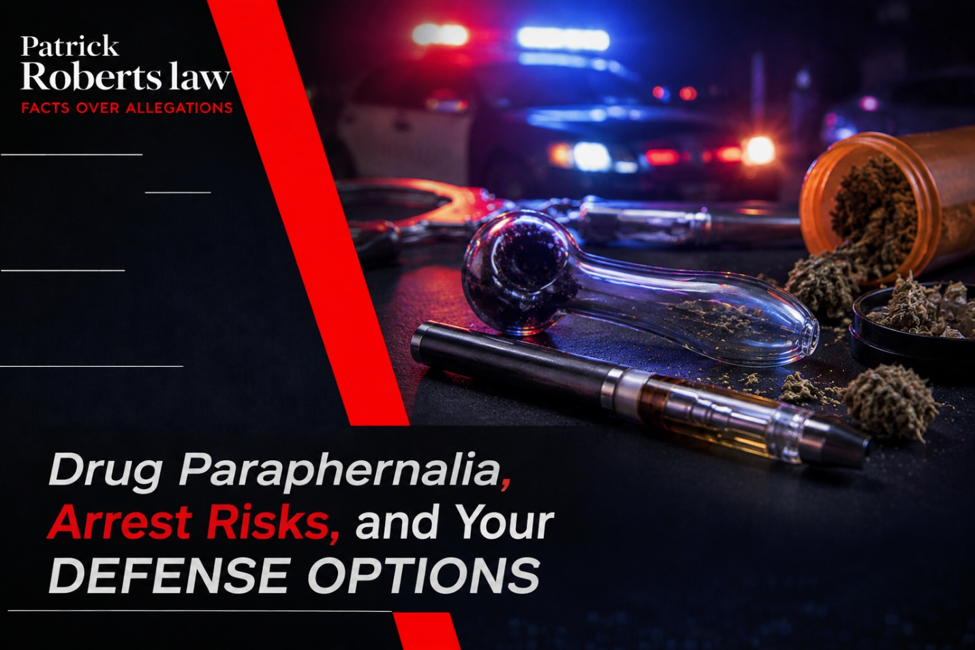
Cover Image: Defending Drug Charges Involving K-9 Searches in North Carolina

Defending Drug Charges Involving K-9 Searches in North Carolina

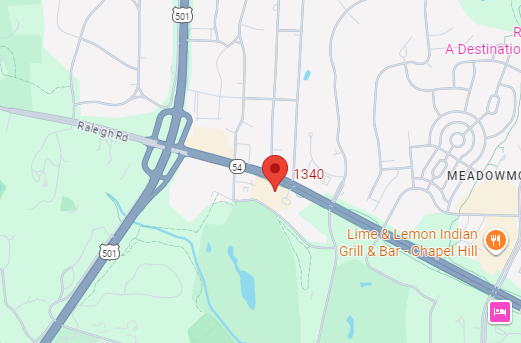
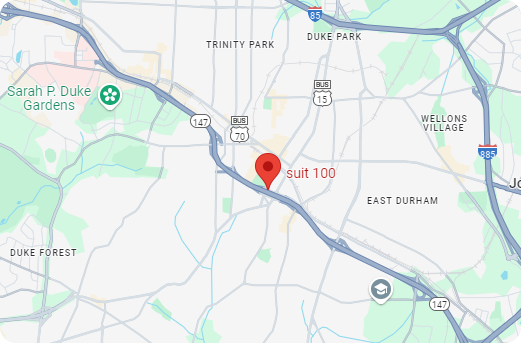
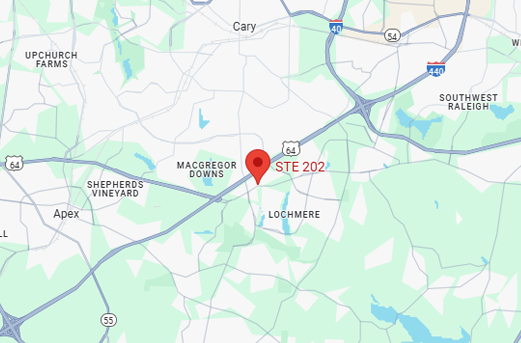
The use of narcotics-detection dogs, commonly referred to as K-9 units, is a staple of law enforcement activity across North Carolina. From the I-95 corridor to local traffic stops in Wake or Mecklenburg County, K-9 searches often serve as the bridge between a routine roadside interaction and a felony drug indictment. However, the presence of a K-9 does not grant law enforcement unfettered authority. The intersection of the Fourth Amendment and K-9 sniffs is governed by a complex web of United States Supreme Court precedents and North Carolina appellate rulings. For individuals facing drug charges stemming from a K-9 alert, understanding the constitutional limits placed on police is the first step toward a successful defense. This guide examines the legal framework, the common pitfalls of K-9 deployments, and the strategic avenues available for challenging the evidence in court. more Is a K-9 Sniff Considered a "Search" Under the Fourth Amendment? One of the most frequent misconceptions regarding K-9 units is what legally constitutes a "search." Under current Fourth Amendment jurisprudence, the answer depends heavily on the location of the sniff. Public Airspace and Traffic Stops ​The North Carolina Supreme Court ruled in State v. Bullock (2017) that an officer does not unlawfully violate the Fourth Amendment during a traffic stop by completing routine tasks—such as checking a driver's license, running warrant checks, and ordering the driver out of the vehicle—before deploying a narcotics-detection dog. The legal framework aligns with federal precedent establishing that a dog sniff of the exterior of a vehicle in public airspace during a lawful stop does not constitute a "search." However, the boundaries are strict: the North Carolina Court of Appeals clarified in State v. Miller (2019) and State v. Bedient (2016) that if an officer stalls, pauses routine paperwork, or prolongs the detention even briefly after the initial purpose of the stop is completed, the sniff becomes unlawful unless independent reasonable suspicion exists. ​The Curtilage of the Home ​The rules change drastically when a K-9 is brought to a private residence within North Carolina. Following federal standards, state courts maintain that the area immediately surrounding and associated with the home—known as the "curtilage"—enjoys the highest level of Fourth Amendment protection. Operating a drug-sniffing dog on the front porch or within the curtilage of a home to investigate its contents constitutes a search. Because this space is treated with the same privacy expectations as the home itself, law enforcement officers in North Carolina must secure a valid search warrant or demonstrate a recognized emergency exception before deploying a K-9 unit on a suspect's private residential property. How Long Can Police Detain You for a K-9 Unit to Arrive? The most significant legal battleground in North Carolina K-9 cases is the duration of the stop. This is governed by the landmark case Rodriguez v. United States (2015). The "Rodriguez Rule" states that a police officer may not extend a completed traffic stop for any amount of time to conduct a K-9 sniff, absent reasonable suspicion of criminal activity beyond the initial traffic violation. The "Mission" of the Traffic Stop When an officer pulls a vehicle over for a speeding violation or a broken taillight, the "mission" of the stop is limited to: Checking the driver’s license. Checking the vehicle registration and proof of insurance. Determining if there are outstanding warrants for the driver. Issuing a warning or a citation. Once these tasks are completed, or should have been completed with "reasonable diligence," the authority for the stop ends. If an officer finishes writing a ticket but makes the driver wait five minutes for a K-9 unit to arrive without a specific reason to suspect drug trafficking, any evidence found during that search may be suppressed. What Constitutes "Unlawful Prolongation"? North Carolina courts scrutinize the timeline of a stop second-by-second. Factors that defense attorneys look for include: Stalling tactics: Did the officer ask repetitive questions unrelated to the traffic stop to buy time? Delaying the computer check:  Did the officer wait to run the driver's license until the K-9 unit was nearby? The "De Facto" arrest: Was the driver told they were free to leave, or were they ordered to stand by the patrol car while waiting for the dog? Establishing Probable Cause: When Does the Alert Justify a Search? If a K-9 performs a "hit" or "alert" on a vehicle, law enforcement claims this provides the "probable cause" necessary to search the interior of the vehicle without a warrant under the "automobile exception." However, an alert is only as reliable as the dog and the handler. The "Reliability" Standard Following the foundational principles applied in North Carolina courts, the state must prove a K-9 is reliable for its alert to constitute probable cause. Reliability within North Carolina’s legal framework is typically evaluated through a totality-of-the-circumstances approach focusing on: ​Training records and certifications. ​The dog's performance in controlled testing environments. ​The handler's ability to accurately interpret the dog's signals. False Positives and Residual Odors Drug dogs are trained to detect the odor of narcotics, not the physical presence of the drugs themselves. This distinction is vital. A dog may alert to "residual odor"—the scent left behind by a person who previously smoked marijuana in the car or handled cash that was once near narcotics. In North Carolina, the defense often argues that a "hit" without the recovery of drugs proves the dog’s unreliability or the presence of a false positive, which can weaken the prosecution's case. Challenging the K-9 Search: A Step-by-Step Defense Strategy Defending against drug charges involving a K-9 requires a methodical deconstruction of the police encounter. A defense attorney will typically follow these steps to identify constitutional violations: Step 1: Analyze the Initial Stop The search is only legal if the initial stop was legal. If the officer did not have "reasonable suspicion" that a traffic violation or crime occurred, the entire interaction is "fruit of the poisonous tree." We examine dashcam and bodycam footage to verify if the alleged speeding or swerving actually happened. Step 2: Calculate the "Rodriguez" Timeline We create a minute-by-minute chronology of the stop. 0:00: Vehicle pulled over. 2:00: Officer requests ID. 8:00: Officer finishes the citation. 12:00: K-9 unit arrives and begins the sniff. In this scenario, if the officer had no other reason to suspect drugs at the 8-minute mark, the 4-minute delay is unconstitutional. Step 3: Evaluate the Dog’s Behavior Not every movement a dog makes is a legal "alert." A dog might scratch at a door because it wants a toy or because the handler gave a subconscious physical cue (known as "cueing"). The video is reviewed to see if the handler led the dog or signaled it to sit or bark at a specific spot. Step 4: Review K-9 Training and Field Logs We subpoena the "longitudinal" records of the dog. If the dog has a high rate of "false alerts" (signaling drugs when none are found) in the field, we argue that the dog is not a reliable "neutral mobile magistrate" and its alert did not provide probable cause. Step 5: File a Motion to Suppress If any of the above steps reveal a violation of rights, the defense files a Motion to Suppress. If the judge grants this motion, the evidence (the drugs found) cannot be used against the defendant. Without the drugs, the prosecution's case usually collapses, leading to a dismissal of charges. The Impact of Marijuana Legalization and Decriminalization Trends The legal landscape regarding K-9s is currently shifting due to the changing status of marijuana and hemp. The "Hemp vs. Marijuana" Dilemma In North Carolina, industrial hemp is legal, while marijuana remains illegal. The problem? Most K-9s currently in service are trained to alert to THC, and they cannot distinguish between the scent of legal hemp and illegal marijuana. Furthermore, as other states move toward legalization, North Carolina courts are beginning to grapple with whether the "odor of marijuana" alone still provides probable cause for a full vehicle search. While North Carolina appellate courts have been slow to strip police of this power, a skilled defense attorney can use the "indistinguishable odor" argument to challenge the validity of a K-9 alert. Common Questions Regarding K-9 Searches in North Carolina Can I refuse a K-9 sniff? You cannot physically interfere with a K-9 sniff of the exterior of your car during a valid stop. However, you should never give consent to a search. If the officer asks, "Do you mind if I run the dog around the car?" or "Can we search the vehicle?", the answer should always be a polite but firm: "I do not consent to any searches." This preserves your right to challenge the search in court later. What if the dog jumped inside my car? If the K-9 enters the interior of the vehicle through an open window or door before it has officially alerted on the outside, this may constitute an illegal search. The dog is considered an "instrument of the state," and its entry into the private interior of the car without prior probable cause is a Fourth Amendment violation. Do police have to show me the dog's certification? Not at the scene of the stop. However, your attorney has the right to demand those certifications during the discovery phase of your legal proceedings. What happens if the K-9 was wrong? If the K-9 alerts and the police search your car but find nothing, your rights may still have been violated, but there is no "evidence" to suppress because nothing was found. If they did find something else (like a firearm you aren't supposed to have), the fact that the dog was "wrong" about the drugs can be used to challenge the legality of the search that uncovered the firearm. Why Technical Knowledge Matters in K-9 Cases Narcotics cases involving K-9s are rarely about whether the drugs were there; they are about whether the police followed the rules of the Constitution to find them. These cases are won or lost on technicalities—the timing of a radio call, the angle of a dog’s tail, or the specific wording of a training manual. The state has significant resources, including specialized K-9 units and expert handlers. To level the playing field, a defense must be rooted in a deep understanding of: The Science of Olfaction: Understanding how scent "cones" move and how environmental factors like wind or heat affect a dog's performance. The Law of Seizure: Knowing exactly when a "stop" becomes a "detention." Data Analysis: Scrutinizing K-9 records for patterns of bias or inaccuracy. Potential Outcomes of Challenging a K-9 Search When a defense attorney successfully challenges a K-9 search, several outcomes are possible: Evidence Suppression: The most common goal. The judge rules the search was illegal and the drugs cannot be mentioned at trial. Charge Reduction: The prosecution may realize their case is weak and offer a plea to a much lesser offense (e.g., from Trafficking to Simple Possession). Dismissal: If the suppressed evidence was the entirety of the state's case, the District Attorney will be forced to dismiss all charges. Protecting Your Rights in North Carolina A drug charge can carry life-altering consequences, including mandatory minimum prison sentences and a permanent criminal record. In North Carolina, the "Automobile Exception" gives police significant power, but that power is not absolute. The K-9 unit is a tool, but it is a tool that must be used within the strict confines of the law. If you were arrested following a K-9 alert, the focus must shift immediately to the conduct of the officers and the history of the dog. By examining the legality of the stop, the duration of the detention, and the reliability of the K-9’s alert, it is possible to build a robust defense that protects your future and upholds your constitutional protections. Every second of the police encounter matters, and every detail of the dog’s training counts. Navigating the complexities of North Carolina drug laws and Fourth Amendment jurisprudence requires a meticulous approach to evidence and a commitment to holding law enforcement accountable to the standards set by the highest courts in the land. Hire an Experienced Criminal Lawyer Near You Attorney Patrick Roberts is a Raleigh criminal defense attorney who has handled thousands of cases across North Carolina, with offices in Raleigh, Durham, Chapel Hill, and Cary. He provides a deep level of authority and experience to the defense of complex drug interdiction and K-9 search cases. As a former prosecutor in Wake and Johnston Counties, he worked directly with drug interdiction teams to build conspiracy-level prosecutions. This background gives him firsthand knowledge of how the government constructs its cases, allowing him to identify vulnerabilities in the prosecution's evidence to better defend his clients. Selected to Super Lawyers for his professional achievement, Mr. Roberts has tried drug trafficking cases in state court and has managed the defense of multi-defendant drug conspiracy cases in Federal court that have lasted for weeks. His legal credentials include admission to practice before the 4th Circuit Federal Court of Appeals and the United States Supreme Court, ensuring his clients receive qualified representation throughout the entire legal process. Education & Trial Advocacy Mr. Roberts earned his bachelor’s degree from Johns Hopkins University, which is ranked #7 among National Universities. He is a graduate of Duke University School of Law, currently ranked #7 for best law schools and #9 for its criminal law program. In addition to his academic background, he has completed several of the nation's most rigorous trial advocacy programs: Gerry Spence’s Trial Lawyers College National Criminal Defense College (NCDC) Trial Practice Institute 2025 NCDC Cross-Examination Intensive Professional Recognition & Memberships For his work in the legal field, Mr. Roberts has earned several long-standing distinctions: AV Preeminent Peer Rating (Martindale-Hubbell): Held for over 5 consecutive years. Client Champion Platinum (Martindale-Hubbell): Maintained for over 5 consecutive years. AVVO "Superb" Rating (10/10): Maintained for more than 15 years. Top 100 Trial Lawyers: Recognized by The National Trial Lawyers. He is a lifetime member of the National Association of Criminal Defense Lawyers and has co-authored two legal books, including a guide focused on defending internet sex crimes. Professional Perspective Mr. Roberts brings a dual perspective to complex legal matters. He served as an Assistant District Attorney in Wake, Johnston, and New Hanover counties, providing him with a firsthand understanding of how prosecutors build and evaluate sex crime cases. Admissions & National Listings He is admitted to practice before the U.S. Supreme Court, the Fourth Circuit Court of Appeals, and all federal district courts in North Carolina. As of 2026, he is the only North Carolina lawyer listed on the National Child Abuse Defense & Resource Center. Client Testimonial “I highly recommend this attorney to anyone needing experienced and knowledgeable legal representation. From the beginning, he clearly explained the steps necessary to address my situation and made sure I understood the process along the way. He kept me informed as progress was being made and was always professional, responsive, and prepared. Although the legal process can move slowly at times, I always felt confident that my case was being handled properly. When my court date finally arrived, he was exceptionally well prepared and navigated the courtroom procedures with confidence and skill.” - Verified client review via Avvo.com Peer Endorsement "I endorse this lawyer. Patrick is a fantastic attorney who is dedicated to his clients' interests and truly cares for his clients. He has the experience and trial skills necessary to achieve the results his clients need. I recommend anybody in need of a criminal defense attorney use him." - Verified peer review via Avvo.com Disclaimer: Testimonials and peer reviews are for informational purposes only and do not guarantee or predict the outcome of your legal matter. Every case is unique and must be evaluated on its own merits. All endorsements featured on this site are actual comments from clients and peers. If you are facing drug charges resulting from a K-9 search in North Carolina, securing experienced legal counsel is a critical step in protecting your rights. Attorney Patrick Roberts utilizes his background as a former prosecutor and his comprehensive understanding of state and federal search and seizure laws to evaluate the legality of your arrest. The firm focuses on identifying constitutional violations to build a rigorous defense for clients facing drug trafficking or conspiracy allegations. Contact Patrick Roberts Law today to schedule a confidential consultation and review the legal options available for your case. To maintain a high standard of service and thorough oversight for each client, the firm manages a restricted caseload. Disclaimer: The information on this website is for general informational purposes only. Nothing herein should be taken as legal advice for any individual case or situation. Contacting us via this website, email, or contact form does not create an attorney-client relationship. Case results depend on a variety of factors unique to each case; prior results do not guarantee a similar outcome.
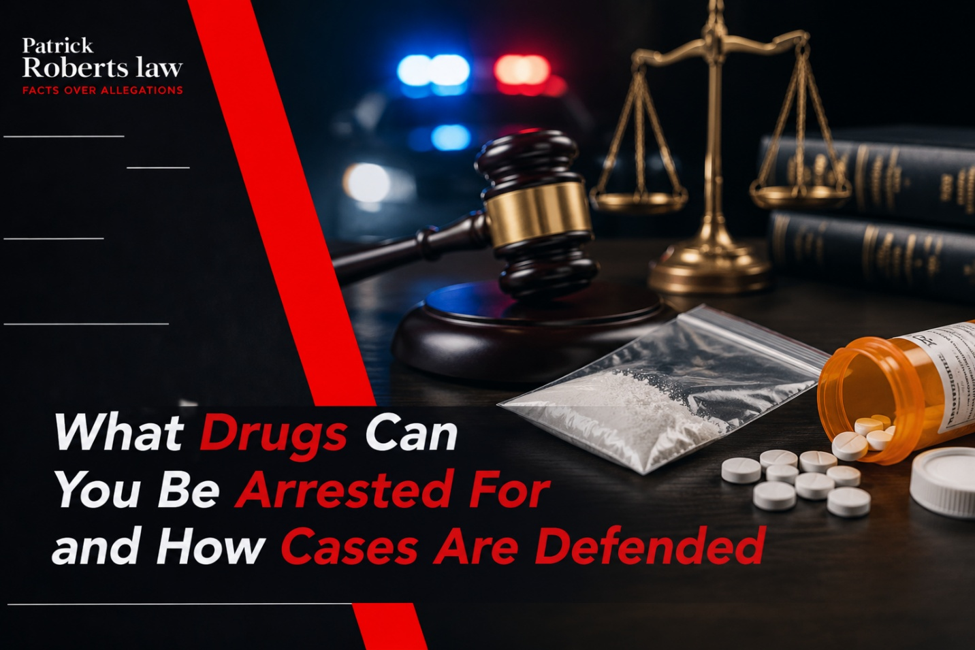
Cover Image: The Impact of Franks v. Delaware on North Carolina Sex Offense Allegations: Challenging Search Warrants Based on Falsehoods

The Impact of Franks v. Delaware on North Carolina Sex Offense Allegations: Challenging Search Warrants Based on Falsehoods

In the American legal system, the Fourth Amendment serves as the primary bulwark against government overreach, specifically protecting citizens against unreasonable searches and seizures. In North Carolina, when an individual is accused of a sex crime—such as possession of child exploitation material, sexual assault, or statutory offenses—the state’s primary evidence often originates from a search warrant. However, a warrant is only as valid as the information used to obtain it. The United States Supreme Court case Franks v. Delaware*, 438 U.S. 154 (1978), established a critical mechanism for defendants to challenge the veracity of sworn statements made by law enforcement to secure these warrants. For those facing the life-altering consequences of a sex crime conviction, understanding the Franks doctrine is essential. If a detective or investigator provided false information or omitted material facts in their affidavit to the magistrate, the resulting evidence may be suppressed, often leading to a dismissal of all charges. more What is a Franks Hearing? A Franks hearing is a specialized evidentiary hearing where a defendant challenges the truthfulness of the factual assertions made in a search warrant affidavit. While warrants are generally presumed valid, this hearing allows a defense attorney to "pierce the veil" of the warrant if there is evidence that the affiant (the officer who signed the affidavit) acted with reckless disregard for the truth or deliberate falsehood. In North Carolina sex crime investigations, this often applies to digital forensics, witness statements, or "controlled" communications. If the court finds that the officer lied or omitted facts that would have defeated probable cause, the warrant is voided, and the evidence seized—whether it be a computer, smartphone, or physical forensic evidence—is excluded under the "fruit of the poisonous tree" doctrine. Why is Franks v. Delaware Critical in Sex Crime Cases? Sex crime investigations differ significantly from drug or violent crime investigations. They are often built on digital footprints (IP addresses), sensitive victim testimony, and complex forensic timelines. Because the stakes are so high, law enforcement officers may feel immense pressure to secure a warrant quickly. This pressure can lead to several issues: 1.  Confirmation Bias: Investigators may interpret ambiguous online activity as definitive proof of a crime. 2.  Omission of Exculpatory Evidence: Officers may leave out facts that suggest the defendant’s innocence to ensure the magistrate signs the warrant. 3.  Misrepresentation of Technical Data: In cases involving online solicitation or pornography, officers may misstate how IP addresses work or ignore the possibility of "spoofing" or shared Wi-Fi networks. How Does the Franks Standard Apply to North Carolina Law? North Carolina courts follow the federal standard set in Franks v. Delaware*. To successfully challenge a warrant, the defense must meet a rigorous two-pronged test. It is not enough to show that the warrant contained a mistake; the defense must prove intent or extreme negligence. 1. The Preliminary Showing The defendant must make a substantial preliminary showing that a false statement was included in the warrant affidavit by the affiant. This must be supported by more than mere denials. It requires affidavits or reliable statements from witnesses that point to specific parts of the warrant that are false. 2. Materiality Even if a statement is proven false, the challenge will fail if the warrant still supports probable cause without that statement. The court will mentally "strip away" the false information. If the remaining "clean" information is insufficient to establish probable cause, the warrant is invalidated. What Constitutes a "Reckless Disregard for the Truth" in Sex Offense Investigations? In the context of sex crimes, "reckless disregard" often manifests in the way investigators handle digital evidence or victim interviews. Digital Misidentification If an officer claims that a specific file was downloaded by a specific person at a specific time, but ignores technical logs showing that multiple people had access to that device or that the IP address was assigned to a different location, this may constitute reckless disregard. Misrepresenting Witness Credibility If a warrant relies heavily on the statement of an accuser, but the officer knowingly omits the fact that the accuser has a documented history of making false reports or had a clear motive to lie (such as a heated custody battle), a Franks challenge is appropriate. The "Context" Omission In solicitation cases, officers often use undercover "decoy" accounts. If the affidavit includes the defendant’s incriminating responses but omits the officer’s highly coercive or leading prompts that fundamentally changed the context of the conversation, the defense can argue that the magistrate was misled. Step-by-Step: Challenging a Search Warrant in North Carolina The process of litigating a Franks issue is technical and requires a deep dive into the "discovery" (the evidence held by the prosecution). Step 1: Forensic Analysis of the Affidavit The defense attorney meticulously reviews the "Statement of Probable Cause" in the warrant. This involves comparing the officer's claims against the actual police reports, digital logs, and witness statements. Step 2: Identifying Omissions and Falsehoods We look for what is *not* there. In sex crime cases, the absence of context is often more damaging than a direct lie. For example, did the officer fail to mention that the "victim" sent the first message? Did they fail to mention that the IP address was linked to an unsecured public hotspot? Step 3: Filing the Motion to Suppress A formal motion is filed with the court requesting a Franks hearing. This motion must be accompanied by evidence (affidavits, expert reports) that proves the officer’s statement was a deliberate lie or made with reckless disregard for the truth. Step 4: The Evidentiary Hearing If the judge grants the hearing, the defense has the opportunity to cross-examine the officer under oath. This is where the defense demonstrates that the officer knew the information was false or should have known it was misleading. Step 5: The Judge’s Ruling The judge determines if the defendant met the burden of proof. If the judge finds the officer violated the Franks standard, the evidence is suppressed. In many sex crime cases, if the digital evidence or the physical evidence from a home search is suppressed, the State is forced to dismiss the case. Common Scenarios Where Franks Applies to Sex Crimes Case Study: The Shared Household Imagine a scenario where a warrant is issued for a home because an IP address associated with that home was flagged for downloading illegal material. The officer’s affidavit states that "the defendant is the sole subscriber of the internet and therefore the sole user." However, the officer knows—based on previous interviews—that four other adults live in the house and use the same Wi-Fi. By omitting the existence of other users, the officer misled the magistrate into believing there was a 1-to-1 link between the defendant and the illegal activity. This is a classic Franks violation. Case Study: The Pre-Textual Interview During an investigation into an alleged assault, a detective interviews a suspect. The suspect provides an alibi and digital photos proving they were elsewhere. The detective then applies for a warrant to seize the suspect's phone but omits any mention of the alibi or the photos provided. By presenting only the accuser’s side and omitting the evidence that contradicts it, the detective has created a "false sense of probable cause." The Importance of Digital Forensics in Franks Challenges In modern sex crime defense, the battle is often won or lost in the metadata. North Carolina law enforcement frequently relies on "CyberTips" from the National Center for Missing & Exploited Children (NCMEC). While these tips provide a starting point, they are not infallible. A skilled defense team will employ digital forensic experts to analyze the same data the police used. If the expert finds that the police misinterpreted "hash values" or "time stamps," and that the officer *knew* or *should have known* their interpretation was technically impossible, this forms the basis of a Franks challenge. Are Omissions Treated Differently Than False Statements? Yes and no. Under North Carolina law, material omissions are treated with the same weight as affirmative lies. However, the burden on the defense is slightly different. For an omission, the defense must show that the officer omitted the facts with the intent to mislead or with reckless disregard for whether the omission would make the affidavit misleading. In sex crimes, omissions are actually more common than outright lies. Officers may "sanitize" an affidavit to make a weak case look strong, hoping the magistrate won’t ask difficult questions about the source of the information or the reliability of the technology used. The Role of the Magistrate in North Carolina Magistrates in North Carolina are the "gatekeepers" of the Fourth Amendment. They are supposed to be neutral and detached. However, a magistrate can only make a fair decision based on the information provided to them. If the information is skewed, the magistrate's "probable cause" determination is tainted. The Franks hearing is the only way to correct this after the fact. What Happens if the Motion is Successful? The consequences of a successful Franks challenge are profound: Suppression of Evidence: The specific evidence seized under the warrant cannot be used at trial. Suppression of Derivative Evidence: Any further evidence found because of the initial illegal search (e.g., statements made during the search) is also suppressed. Dismissal of Charges: In sex offense cases, if the state loses the digital evidence or the forensic evidence, they often lack the "corpus delicti" (body of the crime) necessary to proceed to trial. Frequently Asked Questions Regarding Franks Hearings Can I file a Franks motion if the officer was just mistaken? Generally, no. Simple negligence or an "innocent mistake" is not enough to trigger suppression under Franks. There must be a showing of a high degree of culpability—either a conscious intent to deceive or a "reckless disregard" for whether the statement was true. How do we prove what the officer was thinking? We prove "reckless disregard" through circumstantial evidence. If a fact was so obvious that any reasonable officer would have included it, or if the officer had documents in their possession that directly contradicted what they wrote in the affidavit, the court can infer recklessness. Does a Franks hearing happen in every case? No. It is an extraordinary remedy. The defense must first pass the "preliminary showing" threshold. This is why it is critical to have an attorney who knows how to draft a persuasive, evidence-backed motion. What if the false information came from a confidential informant, not the officer? Franks specifically targets the truthfulness of the *officer* (the affiant). If a witness lied to the officer, but the officer reasonably believed the witness, Franks may not apply. However, if the officer knew the witness was unreliable or had a history of lying and failed to disclose that to the magistrate, a challenge may still be viable. The Standard of Proof at the Hearing During the actual Franks hearing, the burden of proof shifts to the defendant. The defendant must prove by a "preponderance of the evidence" (meaning it is more likely than not) that the officer's statements were deliberately false or made with reckless disregard for the truth. This is a high bar, but it is one that is met frequently in cases involving complex technology or highly motivated accusers where the police failed to perform due diligence before seeking a warrant. Strategic Considerations for the Defense In North Carolina sex crime cases, the decision to pursue a Franks Hearing is a strategic one. It requires: 1.  Early Intervention: Obtaining the search warrant and the "Return and Inventory" immediately. 2.  Expert Consultation: Hiring forensic experts to find the technical gaps in the officer’s affidavit. 3.  Aggressive Discovery: Using motions to compel the state to turn over all communications between the investigators and the accuser. Navigating Sex Crimes Investigations with an Experienced Defense Attorney Sex crime allegations in North Carolina carry devastating penalties, including mandatory active prison time and lifetime registration on the sex offender registry. Because so much of these cases rely on search warrants for phones, computers, and homes, the ability to challenge those warrants is often the most important part of the defense. A general criminal defense attorney may understand the basics of a motion to suppress, but a Franks challenge in a sex crime case requires a specific understanding of: NCMEC reporting processes IP address allocation and NATing The psychology of false allegations in sexual assault cases North Carolina’s specific appellate rulings on warrant veracity The ruling in Franks v. Delaware* stands as a vital protection for the accused. It ensures that the police cannot use deception or willful ignorance to bypass the constitutional requirement of probable cause. In North Carolina sex crime cases, where the mere accusation can destroy a reputation, the integrity of the evidence is paramount. If a search warrant was built on a foundation of lies or significant omissions, the law provides a way to fight back. By meticulously analyzing the warrant and holding law enforcement accountable for the truthfulness of their sworn statements, the defense can protect the rights of the accused and ensure that the legal system operates with the fairness and transparency the Constitution demands. To navigate a high-stakes Franks challenge in North Carolina state or federal courts, a defendant requires a legal advocate with deep institutional perspective and an extensive understanding of how narcotics and sex crimes investigations are constructed. Attorney Patrick Roberts brings over two decades of dedicated criminal law experience to the defense of the accused. His background provides a critical advantage when auditing defective law enforcement search warrants: before establishing his defense practice, Mr. Roberts served as an Assistant District Attorney across three North Carolina jurisdictions, including Wake County, New Hanover County, and Johnston County. This foundational experience as a former prosecutor gives him firsthand insight into how state and federal task forces evaluate evidence, where police investigations structurally break down, and how affidavits can cross the line into material misrepresentation. Professional Credentials & Honors Juris Doctor (J.D.): Duke University School of Law Ranked #7 Nationally (overall) by U.S. News & World Report Ranked #9 Nationally in Criminal Law by U.S. News & World Report Bachelor of Arts (B.A.): The Johns Hopkins University (Major: Engineering) Ranked #7 Nationally among National Universities by U.S. News & World Report Professional Memberships & Distinctions: Lifetime Member of the National Association of Criminal Defense Lawyers (NACDL) Nation's Top 1 Percent, National Association of Distinguished Counsel, 2026 Trial Advocacy & Forensic Training: Alumnus of Gerry Spence’s Trial Lawyers College (2010) National Criminal Defense College (NCDC) Trial Practice Institute (2011) Advanced Cross-Examination Training at NCDC (2025) Forensic Cross-Examination Training at NCDC (2026) Bar Admissions: Supreme Court of the United States; U.S. Court of Appeals for the Fourth Circuit; North Carolina State Bar; and the U.S. District Courts for the Eastern, Middle, and Western Districts of North Carolina Peer Ratings: Maintained an AV Preeminent® rating from Martindale-Hubbell (from 2018-present), a peer-voted recognition indicating the highest levels of legal ability and ethical standards Public Appointments: Former Commissioner on the North Carolina State Ethics Commission and past member of the North Carolina Juvenile Justice Planning Committee Features: Featured in Super Lawyers Magazine, selected for the cover of Attorney-at-Law Magazine, and has handled thousands of state and federal criminal matters across North Carolina Reviews from Clients and Peers The effectiveness of a statutory defense is ultimately reflected in the case outcomes and assessments provided by clients and fellow attorneys who have observed his work in the courtroom. Client Review “I highly recommend this attorney to anyone needing experienced and knowledgeable legal representation. From the beginning, he clearly explained the steps necessary to address my situation and made sure I understood the process along the way. He kept me informed as progress was being made and was always professional, responsive, and prepared. Although the legal process can move slowly at times, I always felt confident that my case was being handled properly. When my court date finally arrived, he was exceptionally well prepared and navigated the courtroom procedures with confidence and skill. His experience and attention to detail ultimately helped lead to a very positive outcome in my case. I truly appreciated his guidance and representation throughout the entire process.” - Verified Client Review via Avvo.com Peer Endorsement “I endorse this lawyer without reservation. Patrick is plain outstanding. The highest remark I can give a lawyer is that I would ask him to represent me were I charged with a crime. I would ask Patrick and know that I would be in the very best of hands.” - verified Disclaimer: Testimonials and peer reviews are for informational purposes only and do not guarantee or predict the outcome of your legal matter. Every case is unique and must be evaluated on its own merits. All endorsements featured on this site are actual comments from clients and peers. Case Review Charge: First-Degree Forcible Rape (N.C.G.S. § 14-27.2(a)(2)) First-Degree Sexual Offense — 2 Counts (N.C.G.S. § 14-27.4(a)(2)) First-Degree Kidnapping (N.C.G.S. § 14-39) Facing: A mandatory active prison sentence of 20 to 33 years minimum per first-degree felony count, up to life imprisonment without parole, along with lifetime sex offender registration. Result: All Charges Dismissed.* Case Summary The State pursued severe felony prosecutions against a defendant represented by Attorney Patrick Roberts. The indictment involved multiple counts of first-degree forcible rape, kidnapping, and first-degree sexual offense, arising from allegations that the complainant had been assaulted by multiple individuals. Given the gravity of the accusations, law enforcement utilized electronic and physical search warrants to secure corroborating evidence from personal property and digital devices. Faced with a prosecution narrative that carried the potential for life imprisonment, Mr. Roberts initiated an exhaustive, independent review of the state's investigative files and the evidentiary foundation supporting the search warrants. The defense strategy focused on a meticulous evaluation of the statement histories and physical evidence records. Mr. Roberts successfully* identified and highlighted critical material inconsistencies within the claims and the structural timeline presented by the prosecution. By demonstrating substantial legal deficiencies and factual contradictions in the state's core evidence before trial, the defense showed that the prosecution's case could not withstand rigorous constitutional scrutiny. In light of the evidentiary gaps and inconsistencies presented by Mr. Roberts, the Assistant District Attorney entered a complete dismissal of all charges, entirely clearing the client. *Disclaimer: Each case is different and must be evaluated separately. Prior results achieved do not guarantee similar results can be achieved in future cases. View more case results Protecting Your Constitutional Rights in North Carolina A flawed or misleading search warrant affidavit does not have to be the final word in a sex offense investigation. If law enforcement agents overreached or relied on reckless misrepresentations to secure a warrant for your property, digital devices, or home, immediate legal intervention is critical to challenging the state's evidence before trial. Patrick Roberts Law PLLC maintains law offices across the Research Triangle to serve clients throughout North Carolina: Raleigh, Durham, Chapel Hill, Cary. If you are from Wake County, namely Raleigh, Cary, Apex, Holly Springs, Garner, and Fuquay Varina, contact experienced sex crime lawyer, Attorney Patrick Roberts. If you or a loved one are facing serious allegations and suspect that a search warrant was issued under false pretenses, contact Patrick Roberts Law PLLC today to schedule a confidential consultation. To maintain the highest level of legal advocacy and ensure that every client receives meticulous, individualized attention, the firm handles a limited number of active cases at any given time. This selective approach ensures that the deep technical analysis required for complex constitutional challenges and digital forensics reviews is fully dedicated to your defense. Disclaimer: The information on this website is for general informational purposes only. Nothing herein should be taken as legal advice for any individual case or situation. Contacting us via this website, email, or contact form does not create an attorney-client relationship. Case results depend on a variety of factors unique to each case; prior results do not guarantee a similar outcome.
Cover Image: Evaluating Franks Challenges in NC Narcotics Investigations

Evaluating Franks Challenges in NC Narcotics Investigations

In North Carolina narcotics operations, law enforcement officers heavily rely on search warrants to seize evidence from vehicles, storage units, and private residences. These warrants are granted based on an officer’s sworn affidavit. Under the Fourth Amendment, a search warrant is valid only if it establishes probable cause within its "four corners." However, when an officer includes deliberate falsehoods or omits critical facts to secure a warrant, the defense can challenge its validity using the framework established in the landmark U.S. Supreme Court case Franks v. Delaware, 438 U.S. 154 (1778). Applying Franks to drug trafficking cases in North Carolina requires navigating complex statutory rules and distinct federal and state court precedents. This analysis details the legal standards, the evidentiary hurdles, and the strategic mechanisms used to litigate these issues. more What Is the Legal Standard for a Franks Challenge in an NC Narcotics Case? A Franks challenge is a constitutional mechanism used to attack the truthfulness of factual assertions made in a search warrant affidavit. In North Carolina, this process is governed by federal Fourth Amendment jurisprudence and state-level statutory procedures under N.C. General Statutes § 15A-978. To successfully contest a search warrant, the defense must meet specific criteria established by appellate courts. How the Fourth Circuit Court of Appeals Defines Material Omissions The Fourth Circuit Court of Appeals recognizes that a Franks violation can occur through two distinct actions in an affidavit: Commission: The inclusion of affirmative false statements. Omission: The deliberate or reckless exclusion of material facts. In drug trafficking investigations, material omissions occur when an officer leaves out information that would directly undermine a magistrate's finding of probable cause. The Fourth Circuit evaluates an omission by determining if the excluded facts were "material." To establish materiality, the defense must demonstrate that if the omitted facts had been included in the affidavit, the updated text would no longer contain sufficient information to guide a reasonable magistrate to find probable cause. Why the Defendant Bears a High Burden of Proof When Challenging Omitted Facts Appellate courts, including the Fourth Circuit and the North Carolina Court of Appeals, place a heavy burden on the defendant to secure an evidentiary hearing. There is a strong legal presumption that an officer’s search warrant affidavit is valid. Phase of Challenge Legal Threshold Required Evidentiary Showing Initial Request (Motion) Substantial Preliminary Showing Specific allegations of falsehood or reckless omission, supported by detailed offers of proof (e.g., cell logs, track records, third-party affidavits). Evidentiary Hearing ( Franks Hearing) Preponderance of the Evidence Direct or strong circumstantial proof that the affiant acted intentionally or with reckless disregard for the truth, and that the remaining content lacks probable cause. Challenging an omission is significantly more difficult than challenging an affirmative lie. The defense must prove that the investigator omitted the facts with the specific intent to mislead, or with a reckless disregard for whether the omission made the affidavit misleading. Simple inadvertence, administrative oversight, or negligent record-keeping by the officer does not satisfy this constitutional standard. How a Court Reviews an Affidavit Under the Totality of the Circumstances Framework When a North Carolina court reviews a challenged affidavit, it does not isolate individual statements. Instead, it applies the "totality of the circumstances" framework outlined in Illinois v. Gates, 462 U.S. 213 (1983) and adopted by the North Carolina Supreme Court in State v. Arrington, 311 N.C. 633 (1984). The reviewing judge must perform a specific two-step subtraction or addition test: For False Assertions: The court strikes the falsified sections from the affidavit. If the remaining text still provides a substantial basis for probable cause, the warrant remains valid, and the motion to suppress is denied. For Material Omissions: The court inserts the hidden, unstated facts back into the affidavit. If the newly revised text no longer supports a finding of probable cause to search that location for narcotics, the warrant is invalidated. How Do Omissions About Confidential Informants Invalidate a Drug Search Warrant? Narcotics investigators frequently rely on confidential informants (CIs) to establish probable cause. Affiants often present these sources as highly reliable individuals who have provided dependable tips in the past. However, when an officer conceals negative information regarding a CI's background, credibility, or motivation, the affidavit may become vulnerable to a Franks challenge. Is an Officer Required to Disclose a Confidential Informant's Criminal History to a Magistrate? As a general rule, an officer is not required to disclose every detail of an informant’s criminal past in a search warrant application. Magistrates understand that individuals operating within the drug trade often have criminal records. However, a constitutional issue arises if the officer intentionally conceals severe credibility defects that directly impact the truthfulness of the specific tip provided. For example, if a CI has an active conviction for a crime of dishonesty, such as perjury, filing a false police report, or forgery, omitting this information can be viewed as a reckless attempt to artificially inflate the informant's credibility. What Happens if Law Enforcement Conceals Financial Payments or Plea Deals Made to a Narcotics Source? Financial incentives and leniency regarding pending criminal charges are powerful motivators for informants to fabricate or exaggerate claims. If an affidavit states that a CI "honestly and reliably observed trafficking quantities of cocaine inside the target residence," but conceals that the CI was paid several thousand dollars or promised the dismissal of a pending active felony charge in exchange for the tip, the defense can argue that the magistrate was misled. Under the Franks framework, if the omission of a significant financial payment or a formal non-prosecution agreement is deemed reckless, a court must evaluate the affidavit as if those facts were fully disclosed. If the unmasked bias of the informant neutralizes the reliability of the tip, and no independent corroboration exists within the affidavit, probable cause fails. How Defense Teams Expose an Informant's Documented Track Record of Providing Unreliable Tips A common phrase found in North Carolina narcotics affidavits is: "This applicant has worked with this confidential source in the past, and this source has provided reliable information that has led to multiple arrests and seizures." To mount an effective Franks challenge, the defense must scrutinize this boilerplate assertion. Defense attorneys look for instances where: The informant previously provided false tips to the same task force. The informant failed multiple polygraph examinations. Controlled buys failed to yield the targeted substances. By cross-referencing state and federal discovery materials, a defense team can demonstrate that the officer deliberately omitted a history of unreliability to create a false impression of consistency. If the defense can show the informant’s prior tips routinely resulted in dead ends, the assertion of reliability becomes a reckless misrepresentation. Can "Boilerplate" Training and Experience Statements Meet the Probable Cause Bar? Most narcotics warrants include several paragraphs detailing the affiant’s professional background, specialized training, and years of service. Officers often use this section to justify searching a suspect’s residence, arguing that based on their "training and experience," drug traffickers routinely store drugs, financial ledgers, weapons, and currency at their homes. The Legal Definition of the Constitutional Nexus Requirement for an NC Residence Search Under the Fourth Amendment and North Carolina law, there must be a clear "nexus"—a direct, logical connection—between the illegal items sought and the specific place to be searched. Simply stating that an individual is suspected of trafficking drugs somewhere in a city is insufficient to search their private home. The affidavit must contain timely, concrete facts indicating that drugs or related contraband are currently located inside that specific structure. When Using Copied-and-Pasted Template Language Constitutes a Reckless Disregard for Facts The use of pre-drafted, boilerplate language is a common practice in law enforcement. However, when an officer relies entirely on copied-and-pasted template paragraphs while ignoring contradictory facts unique to the case, the practice can cross the line into a reckless disregard for the truth. If an investigator uses standard language claiming that "traffickers maintain records at their primary residence," while possessing explicit surveillance or GPS tracking data showing the suspect has not visited that location in months, the generalized template contradicts the known facts of the ongoing investigation. How a Defense Lawyer Can Challenge Generic Assertions That Drug Traffickers Store Records at Home North Carolina appellate courts have ruled that an officer's generic "training and experience" statement cannot serve as a substitute for specific, independent facts connecting a crime to a residence. In cases like State v. Severn, 130 N.C. App. 319 (1998), the court emphasized that an officer's background cannot bridge a complete lack of factual support within the affidavit. Defense lawyers challenge these assertions by isolating the boilerplate paragraphs during an analysis of the warrant: Isolate the Experience Claims: Identify and temporarily remove all generalized claims regarding what drug traffickers typically do as a class. Examine Case-Specific Facts: Review the remaining portions of the affidavit for actual, observed behavior connecting the home to illegal narcotics (e.g., controlled buys at the door, high volume of short-term traffic, odors, or direct observations by witnesses). Argue the Deficiency: If the case-specific section lacks substantive observations, the defense argues that the warrant relies entirely on a generic profile, which fails to establish the necessary constitutional nexus. How Is Reckless Disregard for the Truth Distinguished from Negligence in NC Drug Cases? The legal boundary between negligence and reckless disregard for the truth is the central battleground in a North Carolina narcotics Franks hearing. While an officer’s careless reporting or administrative errors will not invalidate a search warrant, a showing that the investigator intentionally ignored contradictory evidence or fabricated facts will trigger the total exclusion of the seized drugs under the Fourth Amendment. Under the standard established in Franks v. Delaware, simple negligence, typographical mistakes, or an honest misinterpretation of facts by an officer do not violate the United States Constitution. To pierce the presumption of validity that attaches to a signed search warrant, the defense must establish a higher level of culpability. The defense must prove that the affiant officer either explicitly knew a statement was false when they swore to it, or acted with reckless disregard—meaning they entertained serious doubts about the truth of the allegations but chose to present them to the magistrate anyway. In drug trafficking investigations, where officers deal with fast-moving surveillance, multiple targets, and chaotic environments, separating a bad-faith distortion from an innocent oversight requires a precise evaluation of what the officer knew versus what they wrote. What constitutes an honest or negligent mistake by an investigating officer? An honest or negligent mistake occurs when an officer makes an error due to poor record-keeping, a misunderstanding of a technical report, or an incorrect observation that was still made in good faith under the circumstances. North Carolina courts recognize that criminal investigations are frequently fluid and imperfect. Examples of negligent or innocent mistakes that generally will not result in the suppression of narcotics evidence include: Minor Typographical Errors: Writing an incorrect license plate number or misspelling a street name in one paragraph of the affidavit, provided the rest of the document clearly identifies the correct target. Good-Faith Misidentification during Surveillance: Stating that a suspect drove a black sedan to a suspected stash house when video footage later reveals the vehicle was actually dark blue, as long as the officer reasonably believed the color under prevailing lighting conditions. Passing Along an Informant’s Lie: Including false statements provided by a confidential source, provided the officer had a reasonable basis to trust the source at that time and did not know the information was fabricated. As clarified by the North Carolina Supreme Court in State v. Fernandez, 346 N.C. 1, 484 S.E.2d 350 (1997), the Franks inquiry is strictly confined to the truthfulness of the law enforcement affiant, not the truthfulness of the civilian source. If the officer was merely negligent in verifying an informant's claim, the warrant remains legally intact. How does the defense prove an officer entertained serious doubts about the truth of their surveillance assertions? To prove that an officer acted with reckless disregard, the defense must present an objective baseline of facts showing that the investigator was in possession of data that directly contradicted the claims written into the search warrant affidavit. Because it is rarely possible to get an officer to admit on the witness stand that they had internal doubts, the defense must rely on a data-driven cross-examination. This involves contrasting the polished final affidavit against the raw records generated during the active investigation: Assertion in Search Warrant Affidavit Reality Exposed by Raw Investigative Logs "The target vehicle was observed arriving at the stash house at 2:00 PM, and the suspect carried a heavy duffel bag inside." GPS Tracker Data & Radio Logs: Show the suspect's vehicle was miles away at a grocery store at 2:00 PM, and a completely different individual entered the home. "Through physical surveillance, this applicant personally verified that high-volume short-term foot traffic was occurring at the front door." Body-Worn Camera / Pole Camera Footage: Reveals the street was entirely empty during the hours the officer claimed to be conducting active surveillance. When a defense attorney exposes a clear gap between the officer’s actual observations and their sworn text, the defense establishes that the officer could not have reasonably believed the accuracy of their statements. This satisfies the reckless disregard standard. Can circumstantial evidence prove an officer deliberately closed their eyes to facts that defeated probable cause? Yes, circumstantial evidence can prove reckless disregard when the defense establishes a pattern of selective reporting where an officer systematically gathered data but purposefully excluded every fact that weakened their theory of the case. This concept, known as "deliberate ignorance" or "willful blindness," occurs when an investigator realizes that a fact completely undermines their ability to get a search warrant, so they intentionally omit it from the narrative to present a sanitized, artificial version of events to the magistrate. The North Carolina Court of Appeals addressed this type of selective filtering in State v. Severn, 130 N.C. App. 319, 502 S.E.2d 882 (1998). The court affirmed that the deliberate or reckless omission of material, exculpatory information is legally identical to making an affirmative false statement. If an officer receives an analytical laboratory report indicating that a package intercepted in the mail does not contain illegal narcotics, but they proceed to write a search warrant affidavit for the recipient's home based entirely on an earlier, unverified field-test result while concealing the formal lab denial, they have deliberately closed their eyes to the truth. Circumstantial proof of the existence of that lab report in the officer’s case file is sufficient to prove a Franks violation. Anticipatory Search Warrants & Promptness An anticipatory search warrant is valid under the Fourth Amendment if there is a fair probability that the triggering condition will occur and that evidence will be found at the targeted location once it does ( Groh v. Ramirez, 540 U.S. 551). In North Carolina, the execution of any search warrant is governed by a strict statutory timeline designed to ensure that the probable cause supporting the warrant has not grown stale before officers act. Under N.C. Gen. Stat. § 15A-248, a search warrant must be executed within 48 hours from the time it is issued. If a warrant is not served within this 48-hour window, it automatically becomes void and must be returned to the clerk of court. Key Precedents on Warrant Veracity and Timing When challenging the validity of a search warrant based on the truthfulness of the supporting affidavit or the timing of the search, North Carolina courts rely on several foundational cases: State v. Severn, 130 N.C. App. 319, 502 S.E.2d 882 (1998): This case reinforces that a factual showing sufficient to support probable cause requires a truthful showing of facts. Under the standard established in Franks v. Delaware, if a defendant makes a substantial preliminary showing that an affiant knowingly, intentionally, or with reckless disregard for the truth included a false statement in the warrant affidavit, the false information must be set aside. Severn notes that probable cause may be founded upon hearsay, provided the reporting of the circumstances is done in good faith. State v. Louchheim, 296 N.C. 314, 250 S.E.2d 630 (1979): The North Carolina Supreme Court established that if an affidavit contains exaggerated or false information, the court must examine whether the remaining, untainted content on the face of the affidavit is sufficient to establish probable cause. If the remaining facts support a finding of probable cause after the false statements are disregarded, the warrant remains valid. Additionally, Louchheim emphasizes that the facts must be closely related to the time of the issuance of the warrant to justify a finding of probable cause at that specific moment, noting that the likelihood that evidence is still in place depends heavily on the character of the crime and the nature of the items sought. Statutory Voidance Rule: A warrant that exceeds the 48-hour execution window specified in N.C. Gen. Stat. § 15A-248 is legally dead. Any evidence seized during a search conducted after this window has closed is subject to suppression as a warrantless search, regardless of whether the triggering event for an anticipatory warrant occurred. What Is the Procedural Standard for a Franks Hearing Based on Material Omissions? In North Carolina, a defendant's right to challenge the truthfulness of a search warrant affidavit is governed by the United States Supreme Court's decision in Franks v. Delaware, 438 U.S. 154 (1978), as adopted and interpreted by the North Carolina Supreme Court in cases such as State v. Fernandez, 346 N.C. 1, 484 S.E.2d 350 (1997). While Franks originally addressed affirmative misrepresentations, North Carolina courts extend this framework to material omissions. To secure an evidentiary Franks hearing based on an omission, a defendant faces a rigorous burden divided into clear procedural, state-of-mind, and materiality requirements. 1. The Pleading and Evidentiary Threshold A defendant cannot simply allege that information was left out. Under N.C.G.S. § 15A-977 and Franks, the motion to suppress must be accompanied by a detailed affidavit or specific offer of proof. Specificity Requirement: The motion must point out the exact information that was omitted from the warrant affidavit. Supporting Documentation: Allegations of omissions must be accompanied by reliable statements from witnesses, affidavits, or otherwise explained absences. Conclusory assertions or a simple "fishing expedition" will result in a summary denial of the motion without a hearing. 2. The Two-Prong Analysis for Material Omissions To overcome the presumption of validity attaching to an affidavit, the defendant’s preliminary showing must satisfy a two-pronged test demonstrating both a culpable intent by the affiant and the legal impact of the omitted information. Prong I: The Intentional or Reckless Mental State The defendant must make a substantial preliminary showing that the law enforcement affiant omitted the facts knowingly and intentionally, or with reckless disregard for the truth. Negligence Is Insufficient: Innocent omissions, oversight, or simple negligence by the officer do not satisfy this prong. Deliberate Omission: In omission cases, the defendant must show that the affiant omitted facts with the intent to make the affidavit misleading, or with reckless disregard for whether the omission made the affidavit materially misleading. Prong II: The Materiality Test (The "Insert-Back" Approach) The standard for materiality differs structurally between affirmative misstatements and omissions. For an omission, North Carolina courts apply an "insert-back" or "inclusionary" analysis rather than the "strike-out" method used for false statements. The Rewritten Affidavit: The reviewing court will mentally take the omitted exculpatory or clarifying information and insert it back into the original search warrant affidavit. The Probable Cause Assessment: The court then evaluates the newly revised affidavit under a totality-of-the-circumstances review. The Threshold for a Hearing: If the affidavit—with the omitted information included— would no longer support a finding of probable cause, the omission is deemed material, and the defendant is entitled to a Franks hearing. If probable cause still exists despite the new information, the hearing is denied. 3. Legal Consequences and the Evidentiary Hearing If the defendant successfully makes this substantial preliminary showing, the trial court will schedule an evidentiary Franks hearing. Burden of Proof at the Hearing: At the actual hearing, the burden remains on the defendant to establish the intentional or reckless omission, as well as its materiality, by a preponderance of the evidence. The Remedy: If the defendant meets this burden at the hearing, the search warrant is voided, and any evidence obtained as a direct result of the executed warrant is suppressed under the exclusionary rule as a violation of the Fourth and Fourteenth Amendments. Key Distinction: The initial showing required to secure a hearing is a substantial preliminary showing. The final standard required to win suppression at the hearing itself is a preponderance of the evidence. Substantial Preliminary Showing vs. Preponderance of the Evidence: The Two-Tiered Burden of Proof Here is the breakdown of the two standards as established by the U.S. Supreme Court: 1. The Initial Showing: Substantial Preliminary Showing To overcome the presumption of validity that attaches to a search warrant affidavit and successfully secure an evidentiary hearing, the defense must make a substantial preliminary showing. Requirements: This requires more than a simple denial or conclusory allegations. The defendant must point specifically to the parts of the affidavit alleged to be false, accompanied by a detailed offer of proof. This includes affidavits, sworn statements, or reliable witness accounts (or a reliable explanation for their absence). The Threshold: The preliminary showing must demonstrate that the affiant (the officer) included a false statement knowingly and intentionally, or with reckless disregard for the truth, and that the allegedly false statement was necessary to the finding of probable cause. 2. The Final Standard: Preponderance of the Evidence If the court grants the Franks hearing, the burden remains on the defendant to prove the allegations at the hearing itself. The legal standard required to win suppression is a preponderance of the evidence. Requirements: The defense must prove by a preponderance of the evidence (meaning it is more likely true than not) that the misstatements or material omissions were made intentionally or with reckless disregard for the truth. The Outcome: If the defendant meets this burden, the reviewing court will strip the false information from the affidavit (or insert the missing facts if it is an omission case) and re-evaluate the remainder. If the remaining content is insufficient to establish probable cause, the search warrant is voided, and the resulting evidence is suppressed under the exclusionary rule. Note on Burden Shifting: While the defendant bears the burden of proof for the Franks violation itself (the intentional or reckless falsehood), once a warrant is successfully invalidated or if a warrantless search is challenged, the procedural burden typically shifts to the prosecution to establish that the evidence is otherwise admissible. Navigating a Franks Challenge with a Skilled North Carolina Defense Attorney To navigate a high-stakes Franks challenge in North Carolina state or federal courts, a defendant requires a legal advocate with deep institutional perspective and an extensive understanding of how drug trafficking and sex crimes investigations are constructed. Attorney Patrick Roberts brings over two decades of dedicated criminal law experience to the defense of the accused. His background provides a critical advantage when auditing defective law enforcement search warrants. Mr. Roberts served as an Assistant District Attorney across three North Carolina jurisdictions, including Wake County, New Hanover County, and Johnston County. This foundational experience as a former prosecutor gives him firsthand insight into how state and federal task forces evaluate evidence, where police investigations structurally break down, and how affidavits can cross the line into material misrepresentation. Having worked with interdiction teams to build complex conspiracy cases, he understands exactly how the government constructs its evidence, allowing him to strategically dismantle the prosecution's case. His extensive trial experience includes multi-week federal conspiracy litigation across the Eastern, Middle, and Western Districts of North Carolina. Admitted to practice before the 4th Circuit Court of Appeals and the United States Supreme Court, Mr. Roberts provides a dominant defense in Wake County—including Raleigh, Cary, Apex, Holly Springs, Garner, and Fuquay-Varina—and handles "bet the house" matters in all North Carolina counties. Professional Credentials & Honors Juris Doctor (J.D.): Duke University School of Law Ranked #7 Nationally (overall) by U.S. News & World Report Ranked #9 Nationally in Criminal Law by U.S. News & World Report Bachelor of Arts (B.A.): The Johns Hopkins University (Major: Engineering) Ranked #7 Nationally among National Universities by U.S. News & World Report Professional Memberships & Distinctions: Lifetime Member of the National Association of Criminal Defense Lawyers (NACDL) Nation's Top 1 Percent, National Association of Distinguished Counsel, 2026 Trial Advocacy & Forensic Training: Alumnus of Gerry Spence’s Trial Lawyers College (2010) National Criminal Defense College (NCDC) Trial Practice Institute (2011) Advanced Cross-Examination Training at NCDC (2025) Forensic Evidence Training at NCDC (2026) Bar Admissions: Supreme Court of the United States; U.S. Court of Appeals for the Fourth Circuit; North Carolina State Bar; and the U.S. District Courts for the Eastern, Middle, and Western Districts of North Carolina Peer Ratings: Maintained an AV Preeminent® rating from Martindale-Hubbell (from 2018-present), a peer-voted recognition indicating the highest levels of legal ability and ethical standards Public Appointments: Former Commissioner on the North Carolina State Ethics Commission and past member of the North Carolina Juvenile Justice Planning Committee Features: Featured in Super Lawyers Magazine, selected for the cover of Attorney-at-Law Magazine, and has handled thousands of state and federal criminal matters across North Carolina Reviews from Clients and Peers The practical execution of a statutory defense is best demonstrated by the case resolutions and assessments provided by clients and fellow members of the North Carolina bar. Client Review “Mr. Roberts was amazing! Had a very difficult case & the outcome didn’t look bright at all. I was looking at some serious time. But he was able to get me probation (which wasn’t on the table at all before he got involved) He was honest, to the point & laid out everything that could be a possibility. Never gave false hope, just the facts & logically what we could do to possibly get this in my favor. I would recommend Mr. Roberts to anyone seeking REAL guidance, honest & qualifications to back it up.”  - Verified Client Review via Avvo.com Peer Endorsement “His experience as a former prosecutor is invaluable to any client seeking an attorney who knows the ropes. His honesty, integrity, and straightforwardness are qualities every client should seek in an attorney. I would, without hesitation, strongly recommend Mr. Roberts to anyone seeking an outstanding criminal defense lawyer.” -V erified Peer Endorsement via Avvo.com Disclaimer: Testimonials and peer reviews are for informational purposes only and do not guarantee or predict the outcome of your legal matter. Every case is unique and must be evaluated on its own merits. All endorsements featured on this site are actual comments from clients and peers. Case Review Charges: Trafficking in Opium or Heroin (N.C.G.S. § 90-95(h)(4)) Possession with Intent to Manufacture, Sell, or Deliver (PWIMSD) Heroin (N.C.G.S. § 90-95(a)(1)) Possession of Heroin (N.C.G.S. § 90-95(d)(1)) Possession of a Firearm by a Felon (N.C.G.S. § 14-415.1) Possessing a Stolen Firearm (N.C.G.S. § 14-71.1) Maintaining a Vehicle, Dwelling, or Place for Controlled Substances (N.C.G.S. § 90-108(a)(7)) Misdemeanor Possession of Marijuana up to 1/2 oz (N.C.G.S. § 90-95(d)(4)) Misdemeanor Possession of Marijuana Paraphernalia (N.C.G.S. § 90-113.22A) Facing: A mandatory active prison sentence of 70 to 93 months for the trafficking offense alone, plus up to an additional 126 months in prison for the remaining felony and misdemeanor charges. Result: All Charges Dismissed following a successful Motion to Suppress.* Case Summary The State initiated a high-stakes prosecution against a defendant represented by Attorney Patrick Roberts. The case centered on allegations of structured narcotics distribution, with law enforcement relying on information gathered from confidential informants to secure a search warrant for an alleged "stash house." Upon executing the warrant, officers seized heroin, firearms, and related contraband. After conducting a meticulous technical review of the search warrant affidavit, Mr. Roberts identified critical legal insufficiencies and filed a comprehensive motion to suppress the seized evidence. On behalf of his client, he demonstrated that the affidavit failed to establish the reliability or veracity of the confidential informants. Furthermore, Mr. Roberts argued that while the police investigation referenced a series of controlled buys, the affidavit provided insufficient summaries and lacked the temporal and factual details necessary to link those transactions to the target residence. Following arguments, the Court agreed with the defense position, ruling that the search warrant lacked the requisite probable cause under the Fourth Amendment. Because the evidence obtained during the illegal search was suppressed, the State subsequently dismissed all pending charges against Mr. Roberts' client. Disclaimer: Each case is different and must be evaluated separately. Prior results achieved do not guarantee similar results can be achieved in future cases. View more case results Defending Your Constitutional Rights Against Illegal Narcotics Searches A search warrant based on unreliable confidential informants, flawed surveillance, or reckless omissions does not have to dictate the outcome of a drug trafficking case. When state or federal task forces cross constitutional boundaries to secure a warrant, prompt and meticulous legal analysis is required to challenge the admissibility of the seized evidence. Patrick Roberts Law PLLC maintains strategically located offices across the Research Triangle to provide accessible defense advocacy throughout North Carolina. You may contact any of the offices near you, namely law offices in Raleigh, Durham, Chapel Hill, and Cary. Because dismantling complex multi-agency narcotics investigations requires deep technical review and exhaustive case auditing, the firm limits the number of active cases it accepts. This operational policy ensures that your defense receives the rigorous focus, strict quality control, and individualized strategic planning necessary to challenge high-stakes state and federal drug charges. If you are facing drug trafficking allegations and believe law enforcement relied on false pretenses or misrepresentations to search your property, contact Patrick Roberts Law PLLC to arrange a confidential case evaluation. We limit the volume of active cases to ensure that our staff can provide consistent, comprehensive attention to every matter we handle. Disclaimer: The information on this website is for general informational purposes only. Nothing herein should be taken as legal advice for any individual case or situation. Contacting us via this website, email, or contact form does not create an attorney-client relationship. Case results depend on a variety of factors unique to each case; prior results do not guarantee a similar outcome.
Cover Image: Is Your AI Chat the FBI’s Newest Witness?

Is Your AI Chat the FBI’s Newest Witness?

For those facing federal or state investigations, the "right to remain silent" has entered a complicated new era. While the integration of Artificial Intelligence into daily life has become seamless, a landmark 2026 ruling has turned these digital tools into a potential liability for the accused. In United States v. Heppner, the Southern District of New York addressed a "question of first impression" that is already sending ripples through the legal community: Is your private conversation with an AI chatbot protected by attorney-client privilege? The court’s answer was a resounding no. For defendants, this decision means that a casual query to a chatbot could become the prosecution's strongest piece of evidence—effectively making the AI a "witness" for the government. more The Case: Bradley Heppner’s "Digital Roadmap" The case involved Bradley Heppner, a financial executive who used Claude, a generative AI platform, to research the government’s potential case and outline his defenses before formally speaking with his legal team. When federal agents executed a search warrant, they seized his devices and discovered his AI-generated research. Despite claims from his defense team that these conversations were privileged "work product," the court granted the government’s motion to compel production. Why the Court Rejected the Privilege Claim Judge Jed Rakoff identified three primary reasons why these AI prompts failed to meet the standards of confidentiality: AI is Not an Attorney: Under the law, attorney-client privilege requires communication with a licensed human professional. An AI, no matter how sophisticated, cannot be a "confidant" in the eyes of the judiciary. The Privacy Policy Waiver: By using consumer AI tools, users agree to Terms of Service that explicitly permit the company to store and share data with authorities. This destroys the "reasonable expectation of privacy" required for legal protection. Lack of Attorney Agency: Because the AI was not acting as an "agent" of a law firm (like a paralegal or expert witness might), the interaction remained a strictly commercial, third-party transaction. Does AI usage waive my Fifth Amendment rights? The Fifth Amendment protects you from being compelled to be a witness against yourself. However, the Heppner ruling clarifies a devastating distinction: the Fifth Amendment protects your mind, but not necessarily your cloud storage. When you type a prompt into an AI, you are creating a record. Once that record exists on a third-party server, the government can subpoena that data without "compelling" you to speak. The "act of production" doctrine might protect you from having to hand over a password, but it rarely protects the data itself once the government obtains it from the service provider. By talking to an AI, you are essentially whispering your secrets to a digital stenographer who is legally obligated to hand their notes to the FBI upon request. How does the Third-Party Doctrine affect AI chats? The "Third-Party Doctrine" is a cornerstone of American privacy law that states people who voluntarily give information to third parties—such as banks, phone companies, or internet service providers—forfeit any "reasonable expectation of privacy" in that information. In United States v. Heppner, the court solidified the application of this doctrine to Large Language Models (LLMs). Because the user is sending data to a commercial entity to be processed, the Fourth Amendment’s protection against unreasonable searches is significantly weakened. The moment your packet of data hits a remote server, it loses its "private" status. What is the difference between "Consumer AI" and "Legal AI"? A common point of confusion is whether any use of AI in a legal case is dangerous. The answer lies in the architecture of the software. Consumer AI (ChatGPT, Claude, Gemini): These are built for the general public. Their business models often involve using your data to train their models, and their Terms of Service (ToS) are written to protect the company, not your legal rights. Enterprise/Legal AI: These are closed environments. When a law firm uses an Enterprise version of these tools, they often sign "Zero-Retention" agreements. In these cases, the AI can be considered an "agent of the attorney," similar to a private investigator or a forensic accountant. The Heppner ruling specifically targeted a defendant who used a consumer-grade tool on his own initiative. Had his attorney directed the research through a secure, firm-managed portal, the outcome might have been different. Sharing is Not Shielding A critical takeaway for defendants is the rejection of "retroactive privilege." Heppner’s defense argued that because he eventually shared the AI logs with his lawyers, they should be protected. The court dismissed this, stating that sharing non-privileged material with a lawyer does not change it into privileged communication. If a document is discoverable in your hands, it remains discoverable even after you give it to your attorney. This is known as the "pre-existing document" rule. You cannot hide digital evidence by handing it to a lawyer. Can the SBI or FBI subpoena my AI history? Yes. The State Bureau of Investigation and federal agencies like the FBI have become increasingly sophisticated in digital forensics. If they have probable cause to believe a crime was committed, a search warrant for your Google or OpenAI account is standard procedure. State prosecutors are already using search history and GPS data in high-profile felony cases. The Heppner case provides the blueprint for them to now include "Prompt History" as a primary source of evidence. Imagine a prosecutor reading your own words—where you asked an AI "how to hide assets" or "what are the penalties for wire fraud"—to a jury. Under North Carolina law, the state has broad authority to issue subpoenas for electronic service providers to obtain such records pursuant to N.C.G.S. § 15A-298. Is my AI chat history considered "Hearsay" in court? A major hurdle for any evidence is whether it is "hearsay"—an out-of-court statement offered to prove the truth of the matter asserted. However, your own prompts to an AI are classified as "Statements by a Party-Opponent" under the Rules of Evidence. In North Carolina, this falls under the hearsay exception found in N.C.G.S. § 8C-1, Rule 801(d), meaning they are fully admissible. Furthermore, the AI’s responses may be admitted to provide context for your questions or as "non-hearsay" to show your state of mind. In the Heppner case, the executive’s detailed questions about specific statutes showed "consciousness of guilt," a powerful tool for any prosecutor. The "Heppner Trap" for High-Tech Professionals Professionals in North Carolina’s technology and banking hubs are often early adopters of emerging tools. However, a "Heppner trap" can inadvertently ensnare white-collar defendants who are accustomed to solving complex problems through technology. While using AI to organize thoughts or research statutes may seem efficient, doing so on a consumer platform may create a digital trail that lacks legal protection. Moreover, the legal standards regarding "work product" are exacting. In North Carolina, the work-product doctrine—as outlined in N.C.G.S. § 1A-1, Rule 26(b)(3) —typically requires that materials be prepared "in anticipation of litigation" by or for a party’s representative. Most jurisdictions generally require that such research be conducted at the specific request of counsel to qualify for protection. If a defendant begins independent legal research via AI before retaining an attorney, they may unintentionally generate discoverable data. Under the current legal framework, information created outside the direction of counsel is often viewed as a voluntary disclosure to a third-party service provider, which can then be subpoenaed by the prosecution. What is "Prompt Engineering" as evidence? In the Heppner trial, the prosecution didn't just look at the answers the AI gave; they looked at how Heppner engineered his prompts. By analyzing his step-by-step questioning, the government was able to show a “pattern of intent.” For example, if a user starts with a broad question like "What is the law on taxes?" and narrows it down to "How to explain $50,000 in offshore transfers to the IRS," the progression itself becomes evidence of a specific criminal intent. The digital trail of a prompt history is often more revealing than a final document because it shows the evolution of a person's thoughts. Strategic Information: Protecting Your Rights in the Digital Age The Heppner ruling serves as a vital reminder that digital convenience can inadvertently compromise a legal defense. To help safeguard constitutional protections, consider the following principles: Avoid Independent AI Research: Using public chatbots to "brainstorm" defenses or summarize evidence can create a discoverable digital roadmap for the prosecution. Prioritize Secure Environments: If a legal team utilizes AI, it should ideally be within a secure, Enterprise-grade environment that offers "agent-of-counsel" status. These tools are designed to maintain the privacy necessary for the work-product doctrine. Consult Your Attorney on Past Use: If you have already utilized AI tools to research your situation, notify your legal counsel immediately. An attorney can assess potential "waiver" issues and determine the best path forward before the discovery process begins. Maintain Digital Mindfulness: In a connected era, it is safest to operate under the assumption that data transmitted to third-party servers may be subject to future legal recovery. Protecting your defense starts with a strategy of digital discretion. Can I delete my AI history to protect myself? Proceed with extreme caution. Once you are aware of a potential investigation, deleting your AI history could be considered obstruction of justice or spoliation of evidence. Destroying evidence can lead to separate criminal charges and a "jury instruction" that allows the jury to assume the deleted evidence was harmful to you. In North Carolina, the intentional destruction of evidence can also lead to criminal liability for Altering, Destroying, or Stealing Evidence as defined in N.C.G.S. § 14-221.1. Instead of deleting, you must stop using the platforms and consult with a lawyer who can handle the "preservation" of that data in a way that minimizes its impact. The Future: Will the Law Evolve? There is currently no legislation that would extend attorney-client privilege to AI. While some privacy advocates argue that the law needs to catch up to technology, the current legal climate favors the government's ability to access third-party data. Until a statute is passed or a supreme court rules otherwise, the Heppner precedent remains the most significant warning for residents. Why "Incognito Mode" doesn't help you Many users mistakenly believe that using "incognito" or "private" browsing modes, or "temporary chats" in AI interfaces, protects them. This is a dangerous misconception. These modes primarily prevent data from being saved on your local device, but the data is still transmitted to and stored on the company's servers. A federal subpoena goes to the company, and they will provide the logs regardless of whether you used a "private" tab. The North Carolina Electronic Surveillance Act, found in N.C.G.S. § 15A-286 et seq., provides the framework under which state law enforcement can access stored electronic communications. Summary of the "Heppner Ruling" Impact Feature Consumer AI (Post-Heppner) Attorney-Led AI Privilege Status None (Waived) Protected (Work Product) Searchable by Authorities? Yes, via Subpoena/Warrant No (Highly Protected) Admissible in Court? Yes, as Party Statement No Privacy Expectation Low (Commercial ToS) High (Legal Ethics) Frequently Asked Questions: AI and Your Defense 1. Is my conversation with an AI chatbot protected by attorney-client privilege? No. Following the United States v. Heppner ruling, courts have determined that attorney-client privilege only applies to communications with licensed human professionals. Because AI is a third-party commercial service and not a legal professional, your interactions are not protected. 2. Can the FBI or state police subpoena my AI chat history? Yes. Federal and state agencies can issue subpoenas or search warrants to AI service providers like OpenAI or Google. Under the Third-Party Doctrine, once you share information with these companies, you lose a "reasonable expectation of privacy," making that data accessible to law enforcement. 3. Does using a "Temporary Chat" or "Incognito Mode" protect my data from investigators? No. These features generally prevent data from being saved to your local device or browser history, but the information is still transmitted to and stored on the company’s servers. Law enforcement subpoenas are directed at the service provider, who can still produce the logs of those sessions. 4. Can my AI prompts be used as evidence of my intent in court? Yes. Your specific questions and "prompt engineering" can be used to show a "pattern of intent." For example, narrowing a search from general law to specific methods of bypassing regulations can be presented to a jury as evidence of "consciousness of guilt." 5. How does the Fifth Amendment "right to remain silent" apply to AI records? While the Fifth Amendment protects you from being forced to speak, it does not necessarily protect records already stored on a third-party server. Because you voluntarily typed the information into the AI, the government can obtain those existing records from the provider without "compelling" you to testify against yourself. 6. What is the difference between "Consumer AI" and "Legal AI" regarding privacy? Consumer AI (like the free or standard versions of ChatGPT or Claude) operates under terms of service that allow for data storage and sharing. Enterprise or "Legal AI" used by law firms often includes "Zero-Retention" agreements, where the AI acts as an "agent of the attorney," potentially qualifying the data for protection under the work-product doctrine. 7. If I share my AI chat logs with my lawyer, do they then become privileged? No. Under the "pre-existing document" rule, if a document was not privileged when it was created, you cannot make it privileged simply by handing it to an attorney. If the prosecution could have seized the logs from you or the AI company, they can still seize them from your lawyer. 8. Are my AI chats considered "hearsay" and therefore inadmissible in court? Generally, no. Your prompts are considered "Statements by a Party-Opponent," which is a specific exception to the hearsay rule. This means your own words can be admitted as direct evidence against you in both federal and North Carolina state courts. 9. Can I delete my AI history if I think I am under investigation? You should consult an attorney before deleting any data. If you are aware of a potential investigation, deleting records can be classified as obstruction of justice or "spoliation of evidence," which can lead to additional criminal charges or a jury instruction to assume the deleted data was incriminating. 10. How can I research my legal situation without creating a "digital roadmap" for prosecutors? You should cease all personal AI research regarding your case immediately. Instead, conduct all inquiries through your legal counsel. Your attorney can use secure, firm-sanctioned tools that ensure your research is conducted under the protection of the work-product doctrine and attorney-client privilege. Strategic Defense in a Digital Age Navigating the intersection of emerging technology and constitutional law requires a defender who understands the technical mechanics behind the software. Attorney Patrick Roberts provides a background that is uniquely suited to these modern challenges. Professional Background and Credentials Former Wake County Prosecutor: Before entering private practice, Patrick Roberts served the community as a prosecutor in Wake County, gaining an internal perspective on how the state builds its cases. Engineering Foundation: An alumnus of Johns Hopkins University, Patrick Roberts earned his degree in Engineering, providing him with the technical analytical framework to deconstruct how AI models process and store data. Legal Training: He earned his Juris Doctor (J.D.) from Duke University School of Law, which is currently ranked Number 9 in Criminal Law for the 2026-2027 period. Elite Trial Training: He is a graduate of the National Criminal Defense College (NCDC) and was trained at the Gerry Spence Trial Lawyers College, institutions dedicated to the highest levels of courtroom advocacy. Professional Affiliations: He is a Lifetime Member of the National Association of Criminal Defense Lawyers (NACDL). Technical Commitment: Patrick Roberts is continuously honing his skills and updating his knowledge of technological breakthroughs in the criminal defense space to ensure his clients receive the most current protections available. In 2025, he attended the NCDC Cross-Examination Intensive training. Protecting Constitutional Rights Patrick Roberts uses his technical engineering degree, rigorous legal education, and extensive trial training to provide a technical shield for his clients. He helps protect your rights by: Strategic Consultation: Advising clients on how to avoid inadvertently waiving their Fifth Amendment rights or attorney-client privilege when using digital tools. Technical Evidence Analysis: Scrutinizing the methods used by law enforcement to obtain digital data and challenging the validity of subpoenas targeting AI logs. Implementing Secure Protocols: By using secure, firm-sanctioned environments, Roberts ensures that research conducted under his direction is shielded by the Work-Product Doctrine, moving your data from "discoverable" to "privileged." What Others Are Saying Peer Review "Patrick Roberts is undoubtedly one of the best attorney advocates in the Triangle area. His experience as a former prosecutor is invaluable to any client seeking an attorney who knows the ropes. His honesty, integrity, and straightforwardness are qualities every client should seek in an attorney. I would, without hesitation, strongly recommend Mr. Roberts to anyone seeking an outstanding criminal defense lawyer." — Verified Peer Endorsement via Avvo Client Review "Mr. Roberts is kind, professional, and exceptionally competent. His dedication to restoring normalcy to our daughter’s life was evident in everything he did, and our family is deeply grateful for his guidance and advocacy. We would highly recommend Attorney Patrick Roberts to anyone in need of skilled, trustworthy, and compassionate legal representation. He is exactly the type of attorney you want standing beside you when everything feels uncertain." — Verified Client Review via Avvo Disclaimer: Testimonials and peer reviews are for informational purposes only and do not guarantee or predict the outcome of your legal matter. Every case is unique and must be evaluated on its own merits. All endorsements featured on this site are actual comments from clients and peers. The New Rule of Silence The adage "anything you say can and will be used against you" now extends to your keyboard. United States v. Heppner proves that the government doesn't need a wiretap when a defendant provides a written roadmap of their defense to a commercial server. The "Right to Remain Silent" must now include the "Right to Remain Offline" regarding legal matters. In the age of AI, the most effective defense strategy starts with digital silence. If you feel the urge to "just ask" a chatbot about your legal troubles, remember that your "digital assistant" may very well be the star witness for the prosecution. In this high-tech legal landscape, you need a lawyer who speaks the language of the code as fluently as the language of the law. Patrick Roberts Law combines the technical foundation of a Johns Hopkins engineer with the training of a Duke Law graduate and the experience of a former Wake County prosecutor to defend your case. If you are facing criminal charges in North Carolina, contact Patrick Roberts Law for a confidential consultation. All inquiries are handled with the highest level of professional discretion and strict confidentiality. *To maintain the high standard of advocacy required for high-stakes digital and constitutional defense, our firm accepts a limited number of cases. This ensures that every client receives the rigorous attention and deep technical analysis their situation demands. Disclaimer: The information on this website is for general informational purposes only. Nothing herein should be taken as legal advice for any individual case or situation. Contacting us via this website, email, or contact form does not create an attorney-client relationship. Case results depend on a variety of factors unique to each case; prior results do not guarantee a similar outcome.

Cover Image: Can You Get the Death Penalty for Child Rape in North Carolina in 2026?

Can You Get the Death Penalty for Child Rape in North Carolina in 2026?

Currently, North Carolina does not authorize the death penalty for child rape, as the 2008 Supreme Court ruling in Kennedy v. Louisiana remains the standing legal precedent. However, a recent wave of state-level legislation across the U.S. is actively challenging this boundary, creating a shifting legal landscape for those accused of high-level sex crimes. more The landscape of American capital punishment is undergoing its most significant seismic shift in nearly two decades. A coordinated wave of state-level legislation is currently challenging long-standing U.S. Supreme Court precedents, effectively setting the stage for a high-stakes constitutional showdown over the categorical limits of the death penalty. At the heart of this conflict is the tension between modern legislative intent and the judiciary’s interpretation of "evolving standards of decency." Let us explore the legal mechanics of these emerging laws, the historical context of the Eighth Amendment, the statutory framework of North Carolina’s current sentencing laws, and the specific implications for the state’s legal system as it nears a potential crossroads. Understanding the Eighth Amendment and Federalism The Eighth Amendment to the U.S. Constitution is the primary legal shield against government overreach in criminal sentencing. It explicitly states: "Excessive bail shall not be required, nor excessive fines imposed, nor cruel and unusual punishments inflicted." In the context of capital punishment, the Supreme Court has historically interpreted "cruel and unusual" through a "proportionality" lens. This means the punishment must fit the severity of the crime. For decades, the Court has held that the death penalty is only a proportional response to crimes that result in the death of a victim. Punishments that are deemed "excessive" or "unnecessary" in their cruelty—or those that do not align with the "evolving standards of decency" —are considered unconstitutional. The concept of "evolving standards" was first articulated in Trop v. Dulles (1958), suggesting that the Constitution is not a static document but one that reflects the moral growth of the nation. In North Carolina, the application of capital punishment is governed by N.C. Gen. Stat. § 15A-2000, which outlines the narrow circumstances under which a jury may recommend death. Currently, this statute is restricted exclusively to first-degree murder cases involving specific aggravating factors. Is it Constitutional or a Violation of Fundamental Rights? The core of the current legal debate rests on a single question: Does the death penalty for non-homicide crimes violate the fundamental right to be free from "cruel and unusual punishment"? The Pro-Constitutionality Argument: Legislators pushing these new laws argue that the Eighth Amendment is not static. They suggest that as society’s awareness of the long-term trauma caused by child sexual abuse grows, the "standards of decency" have evolved to view capital punishment as a proportional response. They contend that the state has a compelling interest in providing the maximum possible deterrent for the most vulnerable victims. The Fundamental Right Violation Argument: Conversely, legal scholars and defense advocates argue that these laws violate the principle of proportionality. Under the Kennedy v. Louisiana framework, a fundamental distinction is drawn between crimes that take a life and those that do not. Expanding the death penalty to non-homicide offenses is seen as an unconstitutional escalation that risks arbitrary application and the execution of the innocent. The Foundation of Modern Precedent: Kennedy v. Louisiana (2008) The current legal friction centers on the 2008 ruling in Kennedy v. Louisiana. In a 5-4 decision, the Court held that the Eighth Amendment bars the death penalty for the rape of a child where the victim did not die. Justice Anthony Kennedy identified a "national consensus" against the practice and determined that capital punishment was an excessive penalty for non-homicide crimes. The Court reasoned that in cases where no life was taken, the state’s interest in retribution did not outweigh the need to prevent "grossly disproportionate" punishments. This ruling effectively restricted the death penalty to first-degree murder—creating a constitutional boundary that stood for fifteen years. However, the dissenting opinion suggested that the Court was improperly acting as a "super-legislature," a sentiment that current lawmakers are using to fuel new legislative pushes. The Legislative Surge: Expanding Capital Statutes Across the U.S. Since 2023, several states have moved to explicitly dismantle the Kennedy precedent. These jurisdictions are enacting statutes designed to serve as "test cases," inviting the current Supreme Court to revisit previous rulings. Florida (HB 1297): Effective late 2023, Florida became the first state since 2008 to authorize the death penalty for the sexual battery of a child under 12. Crucially, the law lowered the jury recommendation threshold to an 8-4 vote. Tennessee (HB 1454): Signed in May 2024, this law permits capital punishment for child rape even in non-homicide cases, representing a direct challenge to the "national consensus" cited in Kennedy. Idaho (HB 380): Enacted in March 2025, this legislation makes "aggravated lewd conduct" with a child under 12 a death-eligible offense. Oklahoma (SB 599/HB 1693): Effective November 1, 2025, this statute makes defendants convicted of forcible sodomy or rape of a child under 14 eligible for a death sentence. Arkansas (SB 375): Signed in April 2025, this bill created the offense of "capital rape" for sexual activity with a person 13 years or younger. Alabama (Child Predator Death Penalty Act): Signed in February 2026, this law makes first-degree rape, sodomy, and sexual torture of a child under 12 capital offenses punishable by death. South Carolina (H. 4043): Introduced as the "Child Rapist Death Penalty Act," this legislation seeks to enforce the death penalty for criminal sexual conduct with a minor despite prior restrictions. This multi-state momentum directly influences the legislative climate in Raleigh. Historically, North Carolina has often followed the lead of neighboring Southeastern states regarding criminal justice reform and capital punishment. As Florida, Tennessee, and South Carolina establish these "test cases," North Carolina lawmakers may view the shifting "national consensus" as a political and legal green light. The emergence of these statutes provides a blueprint for the North Carolina General Assembly to introduce similar measures, positioning the state to join the front lines of the constitutional battle to redefine the limits of the Eighth Amendment. The High Stakes for the Falsely Accused The expansion of the death penalty into non-homicide cases introduces a catastrophic risk: the irreversible execution of an innocent person. Unlike homicide investigations, which begin with objective physical evidence, sex crime allegations—particularly those involving minors—frequently rely almost exclusively on witness testimony. The risk to the falsely accused is amplified by: The Fallibility of Memory: Scientific research shows that suggested or "recovered" memories can be unreliable, yet they often form the core of a prosecution’s case. Lack of Physical Evidence: Many sex crime cases lack DNA evidence that could definitively exonerate a defendant. Without a biological "smoking gun," a jury is often left with a "he-said, she-said" scenario. The "Incentive to Kill": If the penalty for rape is the same as murder, a perpetrator may be perversely incentivized to kill the victim to eliminate the only witness. The North Carolina Context: Trends and Projections While North Carolina has not yet codified a "capital rape" statute, regional pushes signal a trend that could reach Raleigh. Currently, North Carolina handles the most serious sex offenses involving children under the N.C. Gen. Stat. § 14-27.23 (First-Degree Forcible Rape of a Child). Under existing law, this is a Class B1 felony, which carries a mandatory sentence of life imprisonment without parole for adults. Data highlights the magnitude of the caseload. If even a small fraction of high-level sexual offenses were elevated to capital punishment status, it would fundamentally overwhelm the state's legal infrastructure. The state's juvenile justice system and child protective services already handle tens of thousands of complaints annually, illustrating the potential volume of capital litigation. The Economic and Procedural Burden Transitioning these cases to capital status would have a staggering impact on North Carolina’s budget. Under N.C. Gen. Stat. § 7A-450, the state is obligated to provide indigent defendants with qualified counsel. In capital cases, this typically requires "learned counsel" —two attorneys with specialized training. Furthermore, the appellate process is exhaustive. Pursuant to N.C. Gen. Stat. § 15A-2000(d), there is an automatic right of appeal directly to the North Carolina Supreme Court. Introducing hundreds of new potential capital cases could create a bottleneck that might paralyze the Superior Court divisions in major counties like Wake, Mecklenburg, and Guilford. The Role of the North Carolina General Assembly The future of this issue lies with the General Assembly. In recent sessions, legislators have shown a willingness to increase penalties for sex offenders, as seen in amendments to the Sex Offender Registration programs under Article 27A of Chapter 14. If North Carolina were to follow other states, it would require a total overhaul of the "Sentencing of Capital Felonies" statutes found in Article 100 of the North Carolina Criminal Procedure Act. The Judicial Path Forward If North Carolina passes such a law, it will immediately face a challenge in state and federal courts. The North Carolina Constitution, Article I, Section 27, also prohibits "cruel or unusual punishments." The North Carolina Supreme Court has, at times, interpreted the state constitution as providing broader protections than the federal Eighth Amendment. However, the ultimate arbiter remains the U.S. Supreme Court. Legal analysts believe that the current 6-3 conservative majority may be willing to reconsider the "national consensus" analysis. If the Court determines that a sufficient number of states have enacted these laws, they could rule that "evolving standards of decency" now permit such a punishment. Will North Carolina Expand the Death Penalty to Include Child Rape in the Coming Years? As of 2026, North Carolina remains a state where the death penalty is reserved for those who take a life. Yet, the legal firewall established by Kennedy v. Louisiana is under the most aggressive assault in its history. For those working within the North Carolina legal system, the coming years will be defined by this constitutional tug-of-war. The debate is no longer just about the morality of the death penalty, but about the very definition of justice in the 21st century. Whether North Carolina maintains its current statutory boundaries or joins the "Legislative Surge" will depend on the political climate in Raleigh and the shifting winds of the highest court in the land. Comprehensive Defense in an Evolving Legal Landscape ​When the stakes reach the level of a capital punishment litigation, the quality of legal representation acts as an essential shield and safeguard for the accused. Attorney Patrick Roberts —a graduate of Johns Hopkins University (B.A. in Engineering) and Duke University School of Law ( ranked #9 nationally for its criminal law program) — operates in a legal tradition shaped by institutions like the Duke Law Innocence Project and the Center for Criminal Justice and Professional Responsibility. ​These organizations at Duke are world-renowned for identifying and remedying wrongful convictions through the rigorous investigation of an accused individual’s innocence. This academic and professional environment underscores the importance of a defense strategy centered on factual truth and the prevention of systemic errors. Attorney Patrick Roberts has successfully defended* individuals accused of sex crimes such as child molestation, sexual offense with a child, and felony child abuse. *Disclaimer: Prior results do not guarantee a similar outcome. Each case is unique and depends on a variety of factors, including the specific facts of the case and the applicable laws. Case Review The Legal Challenge Mr. Roberts’ client faced severe criminal allegations, including two counts of Felony Child Abuse – Sexual Act ($N.C.G.S. \text{ § } 14-318.4$) and two counts of Contributing to the Delinquency of a Juvenile ($N.C.G.S. \text{ § } 14-316.1$). The prosecution alleged that the client aided and abetted child sexual abuse by knowingly allowing her son to molest her daughters. Beyond the potential for significant prison time, the client’s professional standing was at risk; a felony conviction would have resulted in the immediate and permanent loss of her nursing license. The Strategy The defense centered on challenging the element of knowledge required for a conviction. Attorney Patrick Roberts asserted that the client was entirely unaware of her son’s actions, thereby nullifying the "aiding and abetting" theory of the prosecution. By focusing on the lack of evidence regarding the client’s intent or awareness, the defense shifted the narrative from criminal negligence to a lack of foreseeable knowledge. This strategic positioning was used to facilitate negotiations with the prosecution, seeking a resolution that addressed the legal allegations while protecting the client's career. The Result The legal strategy led to a negotiated plea and the dismissal of the most serious charges. The outcomes included: Dismissal of both counts of Felony Child Abuse – Sexual Act. Dismissal of one count of Contributing to the Delinquency of a Juvenile. Negotiated Plea to a single lesser charge of Contributing to the Delinquency of a Child. Prayer for Judgment Continued (PJC): The court granted a PJC, a specific legal disposition in North Carolina that prevented a formal judgment from being entered. As a direct result of this resolution, the client preserved her nursing license and avoided the life-altering consequences of a felony sexual abuse conviction. *Disclaimer: Prior results do not guarantee a similar outcome. Each case is unique and depends on a variety of factors, including the specific facts of the case and the applicable laws. Patrick Roberts’ Prosecutorial Experience and Federal Admission ​What distinguishes Mr. Roberts' practice is his extensive prosecutorial experience. Having served as an Assistant District Attorney in multiple North Carolina jurisdictions, he possesses an inside understanding of how the State constructs its case in high-level sex crimes, including: ​ First-Degree Forcible Sexual Offense ​ Statutory Rape of a Child ​ Indecent Liberties with a Minor ​ Sexual Exploitation of a Minor Attorney Patrick Roberts is prepared to defend clients in all North Carolina courts. He is admitted to the Fourth Circuit Court of Appeals and all Federal District Courts in North Carolina. He is also admitted to practice before the U.S. Supreme Court, the highest court in the land. His work as a sex crime attorney is bolstered by elite training from the Gerry Spence Trial Lawyers College, NCDC training, and a Lifetime Membership in the NACDL. He is the only member in North Carolina of the NCADRC (National Child Abuse Defense & Resource Center) as of 2026 and he has been recognized as a Martindale-Hubbell Client Champion Platinum and an Avvo Preeminent Lawyer for 5 consecutive years. What Do Clients and Peers Say About Attorney Patrick Roberts? "What truly set Mr. Roberts apart was how integral he became in helping us navigate the North Carolina legal system while ensuring every rule, requirement, and regulation was followed precisely. Managing a case from out of state is no small task, but he made sure we were informed, prepared, and supported at every turn. His communication was clear, timely, and compassionate, and he treated our daughter with dignity and respect throughout the entire process. Mr. Roberts is kind, professional, and exceptionally competent." — Review originally posted by a verified client on Avvo.com. "I endorse this lawyer without reservation. Patrick is plain outstanding. The highest remark I can give a lawyer is that I would ask him to represent me were I charged with a crime. I would ask Patrick and know that I would be in the very best of hands." — Avvo Peer Review Disclaimer: Testimonials and peer reviews are for informational purposes only and do not guarantee or predict the outcome of your legal matter. Every case is unique and must be evaluated on its own merits. All endorsements featured on this site are actual comments from clients and peers. The Role of Constitutional Protections in Strategic Defense A strategic defense is built on the rigorous application of constitutional safeguards. These are not merely procedural hurdles; they are the primary mechanisms used to challenge the government’s evidence and ensure the integrity of the judicial process. From Fourth Amendment protections against unlawful searches to the Sixth Amendment right to confront accusers, these principles dictate the boundaries of a fair trial. In high-stakes litigation, such as cases involving child-related allegations, the defense must identify where the prosecution’s case may have overstepped these constitutional limits. This involves a granular analysis of how evidence was obtained, how witnesses were interviewed, and whether the accused’s rights were upheld at every stage of the investigation. Protecting the Constitutional Rights of the Accused Patrick Roberts Law provides a rigorous defense centered on fundamental constitutional protections. By maintaining a selective caseload, the firm dedicates the intensive focus required for the exhaustive investigative work that complex sex crime cases demand. This meticulous approach ensures that every procedural detail is scrutinized to safeguard the client’s future, freedom, and professional standing. Individuals seeking a distinguished sex crimes attorney may contact the office to discuss their case. All inquiries are handled with the highest level of professional discretion and strict confidentiality. Disclaimer: The information on this website is for general informational purposes only. Nothing herein should be taken as legal advice for any individual case or situation. Contacting us via this website, email, or contact form does not create an attorney-client relationship. Case results depend on a variety of factors unique to each case; prior results do not guarantee a similar outcome.

Cover Image: North Carolina Fentanyl Laws: Mandatory Minimums, Death by Distribution, and Prosecution Trends

North Carolina Fentanyl Laws: Mandatory Minimums, Death by Distribution, and Prosecution Trends

In North Carolina, the law classifies fentanyl trafficking as a weight-based offense with non-negotiable mandatory minimum sentences. Possession of as little as 4 grams triggers a mandatory prison term of 70 to 93 months and a $50,000 fine, regardless of intent to sell. Under the STRONG Act, prosecutors have prioritized "Death by Distribution" filings, reclassifying fatal overdoses as high-level felonies (Class B1 or B2) with extended lookback periods for prior convictions. more The legal landscape has shifted from a public health focus to an aggressive criminal justice intervention. As synthetic opioids continue to saturate the illicit market, North Carolina’s legislative body has responded with some of the strictest sentencing guidelines in the United States. For individuals facing these charges, the distinction between a user and a trafficker has blurred, as the law now relies almost exclusively on the scientific weight of the substance seized rather than traditional evidence of commercial activity. How has the North Carolina fentanyl epidemic influenced drug trafficking case filings? The legal response to the fentanyl crisis has led to a documented surge in felony filings. North Carolina has seen a sharp increase in fentanyl and drug trafficking charges due to a systemic overhaul of how narcotics units and district attorneys approach synthetic opioid cases. The STRONG Act Expansion This landmark legislation lowered the evidentiary threshold for trafficking. Historically, "trafficking" implied a commercial enterprise. However, under N.C.G.S. § 90-95, the current statute allows prosecutors to elevate simple possession to trafficking based solely on the presence of fentanyl in a mixture. If a user possesses a pill press or even a small quantity of "cut" product that exceeds the 4-gram threshold, they are processed under the same statutes as international cartels. The Investigative "Pivot" State task forces now prioritize "Death by Distribution" inquiries above nearly all other narcotics-related crimes. According to the North Carolina Department of Justice, what was previously treated as an accidental overdose is now routinely investigated as a Class B1 or B2 felony. This shift means that every fatal overdose scene is treated as a potential homicide scene, with digital forensics and cell tower data used to trace the "chain of distribution" back to the source. Case Volume and Judicial Backlog Since the implementation of the STRONG Act, fentanyl trafficking filings in NC Superior Courts have reached record levels. This zero-tolerance stance has resulted in a "bottleneck" within the judicial system. Prosecutors are increasingly less likely to offer plea bargains that drop mandatory minimums, as the political and social pressure to maintain a "tough on fentanyl" stance remains at an all-time high. Fentanyl Prosecution Trends in Raleigh and Durham While the fentanyl crisis impacts all 100 counties in North Carolina, the "Triangle" region—specifically Wake and Durham counties —remains a primary focus for state and federal interdiction efforts due to its status as a logistics hub for the Southeast. Why Raleigh (Wake County) Leads in Case Filings As the state’s most populous county, Wake County consistently records the highest volume of fentanyl-related legal activity. Raleigh has seen a specific increase in Death by Distribution investigations. Specialized Task Forces: The Raleigh Police Department and Wake County Sheriff’s Office collaborate with federal agents to prioritize "overdose-to-arrest" pipelines, utilizing undercover operations in suburban and urban areas alike. Prosecutorial Intensity: The Wake County District Attorney’s office has dedicated units for high-level drug trafficking. These specialized prosecutors are trained specifically in the technicalities of the STRONG Act, ensuring that charging documents are insulated against common procedural challenges. The Enforcement Landscape in Durham County Durham County, while smaller in population than Wake, maintains a high per-capita rate of fentanyl trafficking charges. Urban Interdiction: Law enforcement in Durham focuses heavily on high-traffic transit corridors, including the I-85 and I-40 interchange, which are frequently cited in DEA reports as major arteries for synthetic opioid transport. Proximity to Federal Resources: Because Durham is a central hub for the AC HIDTA task force, cases initiated in Durham are statistically more likely to be reviewed for federal adoption than those in more rural neighboring counties. This often results in defendants facing "stacked" charges in both state and federal jurisdictions. Comparative Fentanyl Impact Data Municipality County Case Intensity Primary Legal Focus Raleigh Wake Very High Death by Distribution & Trafficking Durham Durham High Federal Task Force Adoptions Cary Wake Moderate Possession with Intent to Distribute Chapel Hill Orange Low Simple Possession & Misdemeanors What are the North Carolina fentanyl trafficking mandatory minimums? Under N.C.G.S. § 90-95(h)(4c), sentencing for fentanyl trafficking is governed by strict weight thresholds. If the state proves the weight, the judge is legally prohibited from considering mitigating factors like a clean prior record or personal addiction struggles. North Carolina Fentanyl Trafficking Thresholds The following table outlines the mandatory sentences that must be served in their entirety, as North Carolina does not offer traditional parole for these specific felony classes: Weight of Substance/Mixture Felony Class Mandatory Prison Sentence Mandatory Fine 4 grams to 13.9 grams Class G 70 – 93 Months $50,000 14 grams to 27.9 grams Class F 90 – 117 Months $100,000 28 grams or more Class D 225 – 279 Months $500,000 The "Mixture" Trap One of the most controversial aspects of the law is the "mixture" rule. If fentanyl is found in a mixture of other substances, the entire weight of the mixture is used to determine the trafficking threshold. This means a defendant carrying 28 grams of a substance that is only 1% fentanyl still faces the 225-month mandatory minimum sentence under the sentencing guidelines of N.C.G.S. § 15A-1340.17. How does the North Carolina Death by Distribution law apply to overdose cases? The Death by Distribution statute, codified under N.C.G.S. § 14-18.4, was created to bypass the traditional requirements of proving "malice" required for second-degree murder. This law is the primary tool used against both high-level dealers and "social sharers". Distribution Without Sale (Class C Felony): This applies if an individual unlawfully delivers a controlled substance (fentanyl) that approximately causes the death of the user. No money needs to change hands for this charge to be filed. Sale Resulting in Death (Class B2 Felony): If the delivery involved a commercial transaction, the charge is elevated to a Class B2 felony, carrying significantly higher active prison time. Aggravated Offenses (Class B1 Felony): This is filed if the defendant has a prior conviction for specific drug offenses within a 10-year lookback period. Class B1 felonies are among the most serious charges in the North Carolina criminal code, often resulting in life without parole for repeat offenders. The Malice Standard and Reckless Disregard Prosecutors have become increasingly adept at arguing "implied malice." They contend that because the lethal nature of fentanyl is common knowledge, the mere act of selling it constitutes a "reckless disregard for human life" equivalent to firing a gun into a crowd. This legal theory allows for Murder charges even when the Death by Distribution statute isn't the primary vehicle for prosecution. Why are North Carolina fentanyl cases being adopted for federal prosecution? Many high-weight or overdose cases are "adopted" by federal authorities through the AC HIDTA. When a case moves from Wake or Durham County Superior Court to the U.S. District Court, the stakes increase exponentially. No Parole: Unlike state sentences, the U.S. Federal Sentencing Guidelines do not provide for parole. Defendants typically serve at least 85% of their sentence. Interstate and Global Focus: Federal prosecution is prioritized if the fentanyl is linked to international sources or if the distribution network utilized encrypted apps (like Telegram or Signal) that cross state lines. Mandatory Minimums: Federal mandatory minimums for fentanyl often start at 10 years and can reach "Life" depending on the quantity and whether a death resulted from the use of the drug. What are the primary defense strategies for fentanyl trafficking charges in North Carolina? Defense requires a technical analysis of constitutional and forensic evidence. General criminal defense strategies are often insufficient to counter the specific scientific and procedural requirements of the STRONG Act. Fourth Amendment Challenges The most effective defense often involves challenging the legality of the search. Police often rely on "anticipatory warrants" or "ping orders" to track cell phones. If the initial stop or the search of a vehicle was obtained without sufficient probable cause as defined in N.C.G.S. § 15A-244, the evidence may be suppressed. Challenging Constructive Possession "Constructive possession" is a legal fiction where the state argues you had "dominion and control" over drugs even if they weren't in your pocket. Defense teams frequently challenge cases where fentanyl was found in shared spaces —such as a common area of an apartment or a vehicle with multiple passengers. Forensic & Lab Verification Field tests used by North Carolina law enforcement are notoriously prone to "false positives." A rigorous defense includes demanding independent lab analysis to verify the exact chemical composition and, most importantly, the precise weight. Since a difference of 0.1 grams can mean the difference between 70 months and 225 months in prison, lab calibration is always a point of contention. Entrapment and Informant Reliability Many fentanyl arrests in Raleigh and Durham are the result of "Controlled Buys" using Confidential Informants (CIs). These informants often have significant criminal records and are working for "consideration" (reduced sentences). Attacking the credibility of the informant remains a viable, albeit complex, strategy. Strategic Defense with Patrick Roberts Law Navigating the current prosecutorial climate requires a defense team with specific credentials and courtroom experience. Attorney Patrick Roberts provides a technical and comprehensive approach to drug trafficking defense. Academic Credentials: A graduate of Duke University School of Law and Johns Hopkins University, Mr. Roberts utilizes a detailed, evidence-driven approach to discovery. Prosecutorial Background: Mr. Roberts served as a prosecutor in three North Carolina counties. This background provides him with a detailed understanding of how state agencies build cases and identify potential procedural gaps. Dual-Court Proficiency: Admitted to practice in both North Carolina state courts and the U.S. District Courts for the Eastern, Middle, and Western Districts, he offers continuity for cases that move to the federal level. What Peers and Clients Say About Attorney Patrick Roberts Client Review: "Calm and Professional Assurance" "From the moment we met Mr. Roberts, he brought a sense of steadiness and reassurance that made an overwhelming situation feel manageable... His confidence was never arrogant—just the calm, professional assurance of someone who knows the law, knows the system, and knows how to protect the people who depend on him." — Verified Client Review via Avvo Peer Review: "A Skilled Adversary in Court" "Patrick is an extremely talented lawyer who has the highest ethical standards. He works extremely hard for his clients and is a very skilled adversary in court." — Peer Endorsement via Avvo Disclaimer: Testimonials and peer reviews are for informational purposes only and do not guarantee or predict the outcome of your legal matter. Every case is unique and must be evaluated on its own merits. All endorsements featured on this site are actual comments from clients and peers. Case Consultation Defending drug trafficking charges involves complex statutory requirements. Patrick Roberts Law manages high-stakes criminal cases in Raleigh, Durham, Chapel Hill, and Cary, and maintains a limited caseload to ensure the depth of investigation required for every matter. Individuals facing these charges should recognize that the timeline for defense is critical, as state and federal investigators often begin building their case weeks before an arrest is even made. Contact Patrick Roberts Law for a private case consultation. Disclaimer: The information on this website is for general information purposes only and does not constitute legal advice. Case results depend on a variety of factors unique to each case, and prior results do not guarantee a similar outcome.

image

Sexting Laws in North Carolina: What You Need to Know Before It Becomes a Felony

In North Carolina, "sexting" is not a specific legal term found in the criminal code. Instead, the state relies on aggressive felony sexual exploitation of a minor statutes—the same laws used to prosecute high-level child pornography cases. This means that a single digital image involving anyone under the age of 18 can instantly transition from a "teen mistake" into a Class C, E, or H felony. Understanding this distinction is critical for parents, teenagers, and adults alike. Under N.C.G.S. § 14-190.16 and § 14-190.17, prosecutors do not distinguish between "consensual sexting" and exploitation. If a minor is depicted, the law treats the creation, possession, or distribution of that image as a serious sex offense. more What Charges Can Sexting Lead To in North Carolina? Because North Carolina has no standalone "sexting" statute, law enforcement utilizes the state's three-tiered sexual exploitation of a minor system. These charges are governed by N.C.G.S. § 14-190.16 through § 14-190.17A. All three tiers are classified as felonies, and the specific charge depends on whether the material was produced, distributed, or simply possessed. The Three-Tiered Felony System for Digital Images 1. First-Degree Sexual Exploitation (Production) Statute: N.C.G.S. § 14-190.16 Conduct: Producing or facilitating sexually explicit material involving a minor. This includes taking a photo of a minor or convincing a minor to take one. Classification: Class C or D Felony. Sentence: 38 to 182 months in state prison. 2. Second-Degree Sexual Exploitation (Distribution) Statute: N.C.G.S. § 14-190.17 Conduct: Distributing, sending, or receiving sexually explicit digital images of a minor. Classification: Class E Felony. Sentence: 15 to 63+ months in state prison. 3. Third-Degree Sexual Exploitation (Possession) Statute: N.C.G.S. § 14-190.17A Conduct: Simply possessing an image of a minor on a phone, cloud account, or device. Classification: Class H Felony. Sentence: 5 to 29 months in state prison. Critical Sentencing and Legal Facts Fact Category Data & Consequences Incarceration Rate 100% of defendants convicted of Class B1 through D felony sex offenses in FY 2024 received active prison time (per the NC Sentencing Commission). Case Duration High-level sex offense cases carry a median timeline of 30 months from charge to sentencing. "Mistake of Age" Legally not a defense. The state only needs to prove you knew the content of the image, not the age of the person in it. The "Knowing" Requirement Under North Carolina law, the "knowing" element refers to the defendant's knowledge of the character or content of the material. This creates a high burden for the defense, as prosecutors do not have to prove that the defendant intended to exploit a child—only that they knowingly possessed or sent the digital file. Can a Teenager Be Charged With a Felony for Sexting? Yes. North Carolina law permits minors to be prosecuted under these same sexual exploitation statutes — including for images they created of themselves. A 16- or 17-year-old who takes a sexually explicit selfie and sends it to a boyfriend or girlfriend can be charged with both producing and distributing sexually explicit material involving a minor. The minor in the image and the person facing charges are the same person. The recipient — even if they are the same age and in a consensual relationship — can be charged with possession. North Carolina has limited close-in-age protections for certain sexual contact offenses. For example, N.C.G.S. § 14-202.2 creates a separate Class 1 misdemeanor for indecent liberties when the defendant is under 16 and the child is at least three years younger. But no equivalent protection exists for sexting. There is no Romeo-and-Juliet exception, no diversion program written into the exploitation statutes, and no reduced charge category for consensual image-sharing between teenagers. Whether a teenager is actually charged as an adult, handled in the juvenile system, or diverted depends heavily on prosecutorial discretion. That discretion varies by county, by district attorney, and by the specific facts of the case. It is exactly why early legal intervention matters. The difference between a juvenile petition and an adult felony prosecution is not automatic. It is negotiated. What About Adults Involved in Sexting With Someone Under 18? When an adult sends or receives sexually explicit images involving a minor, the risk is greater and the charging options multiply. Beyond the sexual exploitation charges described above, an adult who uses a phone, computer, or any electronic device to solicit a minor for sexual purposes can also face charges under N.C.G.S. § 14-202.3 — solicitation of a child by computer or electronic device. This is a Class H felony, increasing to a Class G felony if either party appears at a proposed meeting location. Several features of this statute make it particularly aggressive. The offense is complete upon solicitation — no meeting has to occur, no sexual act has to take place, and there does not have to be an actual minor on the other end of the conversation. If the defendant believed the person was underage, that belief alone is enough for a conviction. NC appellate courts have applied broad interpretation to the terms "entice," "advise," "coerce," "order," and "command." Law enforcement sting operations using fictional minors are specifically allowed under the statute. The defendant must be at least 16 years old and at least five years older than the believed minor for this statute to apply. But when it does apply, it stacks on top of any exploitation charges — meaning a single sexting exchange can produce multiple felony counts. North Carolina's enforcement resources reflect how seriously the state treats these cases. The NC SBI Computer Crimes Unit coordinates a task force of more than 200 law enforcement agencies across the state. The unit has 17 full-time special agents stationed across eight field districts dedicated exclusively to investigating internet crimes against children. Nationally, the CyberTipline operated by the National Center for Missing & Exploited Children received 20.5 million reports of suspected child sexual exploitation in 2024 alone. These reports routinely generate referrals to state and local agencies, including North Carolina law enforcement. How Does North Carolina Compare to Other States? Many states have enacted laws that specifically address teen sexting — reducing charges to misdemeanors, creating diversion programs, or distinguishing consensual image-sharing between peers from exploitative conduct involving adults. North Carolina has not. The lack of a teen sexting statute means North Carolina prosecutors have only two options when a sexting case involving minors crosses their desk: charge it as a felony under the exploitation statutes or decline to prosecute entirely. There is no middle-ground charging option built into the law. This gap places enormous weight on how a case is handled before formal charges are filed. In states with dedicated sexting laws, the statute itself provides a pathway to appropriate outcomes. In North Carolina, that pathway has to be built by the defense attorney and the prosecutor on a case-by-case basis. That makes the quality of legal representation one of the most important factors in how a sexting case ends. How Can a Defense Attorney Fight Sexting Charges? Sexting cases prosecuted under North Carolina's exploitation statutes carry severe penalties. However, these cases present specific technical and procedural pressure points that a defense attorney can challenge to protect a client’s rights. 1. Challenging "Knowing" Possession The prosecution must prove you knowingly possessed the material. In the digital age, images are frequently: Automatically downloaded by messaging apps (e.g., WhatsApp or Telegram). Cached by web browsers without direct user action. Stored in cloud backups (i.e., iCloud or Google Photos) that a user may never have opened. Placed on a shared device by another individual. A forensic analysis of metadata, timestamps, and file access logs can often establish that a user never intentionally saved, viewed, or interacted with the material in question. 2. Challenging the Search of Digital Devices Law enforcement generally cannot search a cell phone incident to arrest without a warrant. Particularity: The warrant must specifically authorize a forensic examination. Scope: If police exceeded the scope of the warrant or accessed cloud data without separate authorization, the evidence may be subject to suppression (exclusion from trial). 3. Reviewing Investigative Conduct and Entrapment In digital sting operations conducted under N.C.G.S. § 14-202.3, the defense may look for evidence of entrapment. This requires showing government inducement and a lack of predisposition by the defendant. Under N.C.G.S. § 15A-905(c), written notice of an entrapment defense must be filed within 20 working days of the trial setting date, making early legal intervention vital. 4. Negotiating Charge Reductions or Diversion For cases involving teenagers or first-time offenders, counsel may negotiate for: Reduced Charges: Moving a felony down to a misdemeanor level. Juvenile Handling: Keeping the case in the juvenile system to avoid adult criminal records. Alternative Outcomes: Seeking paths that avoid mandatory Sex Offender Registration. Strategic Defense Data North Carolina Legal Reality Plea Rate 98% of felony convictions in NC result from guilty pleas. The strength of the defense determines the terms of that plea. Trial Rate The jury trial rate for serious sex offenses is 15% —the highest of any felony class, reflecting how aggressively these cases are contested. Critical Window Pre-charge negotiation options often disappear once a case is formally indicted or moved to adult court. Why Families Choose Patrick Roberts for Sex Offense Cases in North Carolina When facing charges that carry mandatory prison time and registration, the quality of legal representation is the most significant factor in the trajectory of a case. Attorney Patrick Roberts has defended clients against sex offense allegations across North Carolina for more than two decades. The Value of Prosecutorial Perspective Patrick Roberts served as an Assistant District Attorney in Wake, Johnston, and New Hanover counties. This background provides an inside look at how the state: Evaluates the credibility of digital evidence. Determines whether to elevate a charge to a higher felony tier. Approaches plea negotiations in sensitive sex offense matters. This experience allows for an informed anticipation of the prosecution's strategy throughout the investigative and trial phases. Credentials and Professional Standing Attorney Roberts’ credentials reflect a commitment to rigorous trial advocacy and ethical practice: Legal Education: Graduate of Duke University School of Law ( Top 9 best criminal law program) and The Johns Hopkins University ( Top 7 rank in National Universities). Advanced Advocacy Training: Alumnus of the Gerry Spence Trial Lawyers College and the NCDC Trial Practice Institute, including the 2025 Cross-Examination Intensive. Lifetime member of the National Association of Criminal Defense Lawyers ( NACDL) Highest Peer Ratings: Holds the AV Preeminent® rating from Martindale-Hubbell (2026)—the highest possible peer-reviewed honor for legal ability and ethics. National Recognition: The only North Carolina attorney listed on the National Child Abuse Defense & Resource Center (as of 2026). Federal Authority: Admitted to practice before the United States Supreme Court and the Fourth Circuit Court of Appeals. Recent Cases Attorney Patrick Roberts has successfully* resolved high-stakes allegations, preventing formal charges from being filed in complex criminal investigations: 2025 | Allegation of Sexual Assault: Investigated claim of molestation by a stepfather against a child under 13. Result: No Charges Filed.* 2025 | Allegation of Sexual Assault: Investigated claim of sexual touching by a 15-year-old teenager. Result: No Charges Filed.* 2026 | Allegation of Rape: Investigated claim of rape following a meeting at a bar. Result: No Charges Filed.* *Disclaimer: Each case is different and must be evaluated separately. Prior results achieved do not guarantee similar results can be achieved in future cases. Peer Endorsement "Patrick is an experienced and knowledgeable criminal attorney. I highly recommend him if you're seeking competent and professional representation in a state or federal criminal matter." — Martindale-Hubbell Verified Peer Endorsement Client Review "Patrick was professional, honest, and the best lawyer I could have asked for during a very tough situation. Throughout the process, he remained a constant calm and reassuring presence during a challenging time in my life. His guidance and dedication made a difficult experience much more manageable. " — Verified Avvo Client Review Disclaimer: The testimonials are actual comments. Every case is different and depends on its own unique facts and legal circumstances. These results are illustrative of the matters the firm handles but do not guarantee, warrant, or predict a similar outcome in your legal matter. Talk to a North Carolina Sexting Defense Attorney Now Allegations involving digital media or physical contact move rapidly through the North Carolina justice system. The strategy implemented in the first few days of an investigation often determines whether a case ends in a felony conviction or is dismissed before reaching a courtroom. Contact Patrick Roberts Law for a private case evaluation in Raleigh, Durham, Chapel Hill, or Cary. The firm limits the number of active cases it accepts. This ensures that every client receives the exhaustive forensic and procedural review necessary to challenge the state's technical proof. Disclaimer: The information on this website is for general informational purposes only and does not constitute legal advice for any individual case or situation. Contacting us via this website, email, or contact form does not create an attorney-client relationship. Each case is different and must be evaluated separately; prior results do not guarantee a similar outcome.

image

Sexual Assault vs. Rape in North Carolina: What's the Legal Difference?

If you searched "sexual assault vs. rape," you're probably trying to figure out whether these are two different crimes, how the law draws the line between them, and what the consequences look like for each. The short answer is that North Carolina doesn't actually have a crime called "sexual assault." The state uses a different set of terms — and the distinctions between them carry significant differences in charges, felony classifications, and sentencing ranges. This page explains how North Carolina's sex offense statutes actually categorize the conduct that most people refer to as "sexual assault" or "rape." It covers why the legal label attached to a case matters as much as the facts themselves — and what to do if you or someone close to you is facing charges. more Does North Carolina Law Use the Term "Sexual Assault"? "Sexual assault" is not a formal criminal charge in North Carolina. While the term is used in everyday conversation, news coverage, and the laws of other states, you will not find an offense titled "sexual assault" in the North Carolina criminal code. Instead, the state utilizes a specific set of statutes that categorize offenses based on the conduct involved, the use of force, and the age or capacity of the individuals. These categories determine the severity of the legal consequences. What Are the Primary Categories for Sex Offenses in NC? What the public casually calls "sexual assault" typically falls into one of three distinct legal categories under North Carolina law: Forcible Rape: Defined under N.C.G.S. § 14-27.21 and N.C.G.S. § 14-27.22. Forcible Sexual Offense: Defined under N.C.G.S. § 14-27.26 and N.C.G.S. § 14-27.27. Sexual Battery: Defined under N.C.G.S. § 14-27.33. The legal label assigned to an act is critical. It determines whether a defendant faces a Class B1 felony with a mandatory prison sentence measured in decades or a Class A1 misdemeanor. How Are Rape and Sexual Offenses Classified? Both forcible rape and forcible sexual offense are divided into two degrees. The distinction between the two degrees generally depends on the presence of aggravating factors rather than the nature of the underlying act. First-Degree: Classified as Class B1 felonies. These are the most serious felony classifications in North Carolina and carry mandatory active prison sentences. Second-Degree: Classified as Class C felonies. While less severe than Class B1, these still require active imprisonment under North Carolina sentencing guidelines. In contrast, Sexual Battery is a Class A1 misdemeanor. This charge is often what the public imagines when using the term "sexual assault," as it covers non-consensual sexual contact that does not involve the penetration or specific sexual acts required for felony-level charges. What Are the Long-Term Consequences Beyond Sentencing? The specific charge also dictates the intensity of supervision and registration requirements following a sentence: Post-Release Supervision: Felony sex offense convictions carry an enhanced supervision period of 60 months, significantly longer than the 9 to 12 months standard for other felonies. Sex Offender Registration: All convictions in these categories—both felony and misdemeanor—trigger North Carolina Sex Offender Registry requirements, which can last for 30 years or even a lifetime. Because North Carolina defines these legal lines so precisely, two cases described by the media as "sexual assault" can result in vastly different outcomes based on which statutory elements the prosecution can prove. Comparison of Offense Classifications Legal Charge Statute Classification Primary Requirement 1st Degree Rape/Sex Offense § 14-27.21 / .26 Class B1 Felony Force + Aggravating Factor (e.g., weapon) 2nd Degree Rape/Sex Offense § 14-27.22 / .27 Class C Felony Force or victim incapacity Sexual Battery § 14-27.33 Class A1 Misdemeanor Non-consensual sexual contact What Can a Defense Lawyer Do if You're Facing a Sex Offense Charge? Because North Carolina's sex offense system is built on these precise legal distinctions — the type of conduct, the degree classification, the specific elements attached to each charge — the facts of every case determine which charges the evidence can actually support. A defense attorney's job is to examine those details against the law. That means looking at whether the conduct alleged matches the charge filed, whether the evidence meets every element the prosecution must prove, and whether constitutional protections were respected during the investigation. It also means identifying whether the case as charged reflects what actually happened — or an overcharging that the facts don't support. Decades of Experience in Criminal Defense in North Carolina Attorney Patrick Roberts has defended clients facing the full range of sex offense charges for more than two decades. A graduate of Duke University School of Law ( Top 9 best criminal law program) and The Johns Hopkins University ( Top 7 rank in National Universities), he has completed Gerry Spence’s Trial Lawyers College, a selective and intensive training program. He is also a graduate of the National Criminal Defense College (NCDC) Trial Practice Institute and the 2025 NCDC Cross-Examination Intensive, which provide advanced training in high-stakes witness questioning. Peer-Reviewed Legal Standing and Client Service Recognition Mr. Roberts holds the highest possible peer rating from Martindale-Hubbell — AV Preeminent (2026) — and has been recognized among the Top 100 Trial Lawyers by The National Trial Lawyers. He has maintained a 10/10 "Superb" rating on Avvo for more than 15 years. We utilize a selective intake process to ensure that we can fully commit the necessary time and resources to the complex legal challenges our clients face. Defense Strategy Informed by Former Prosecution Experience Before founding Patrick Roberts Law PLLC, he served as an Assistant District Attorney in Wake, Johnston, and New Hanover counties. This background provides direct insight into how prosecutors build and evaluate sex offense cases from the inside. This perspective is vital when navigating the North Carolina Court System to identify weaknesses in the state's evidence. Admissions to the U.S. Supreme Court and National Defense Resources Mr. Roberts is admitted to practice before the United States Supreme Court, the Fourth Circuit Court of Appeals, and all federal district courts in North Carolina. He is currently the only North Carolina attorney listed on the National Child Abuse Defense & Resource Center as of 2026. Case Review Charges Second Degree Sexual Offense ($N.C.G.S. \S 14-27.5(a)$). Description In this North Carolina case, a client represented by Attorney Patrick Roberts was accused of coercive sexual activity involving oral sex. The prosecution's case relied on the testimony of an accuser regarding an alleged non-consensual encounter. Strategy The defense strategy was built on an intensive investigative process. Attorney Roberts conducted thorough interviews with multiple witnesses who were present during the alleged incident to establish a clear timeline and context. The defense gathered and presented evidence regarding the accuser's substance abuse history and explored potential ulterior motives for the allegations. By highlighting these credibility issues and factual inconsistencies to the Assistant District Attorney, the defense illustrated the significant evidentiary hurdles the state would face at trial. Outcome The prosecution's review of the evidence presented by the defense led to a complete dismissal of the Second Degree Sexual Offense charge. Client Review "Patrick and his team are truly top notch. They are professional and committed to understanding you and your case and doing everything possible to reach the best outcome. My son was charged with 3 felonies and the outcome was 1 misdemeanor charge… He always took the time to explain to us what was going on which I appreciated. Patrick is able to see many different angles for a case and determine the best argument." — Verified Client Review on Avvo Peer Endorsement "I have always found Patrick to be well prepared and effective. He is intelligent, proactive, and thinks outside the box. He has a lot of experience in many different areas and this enables him to be particularly effective for his clients." — Martindale-Hubbell verified Peer Endorsement Disclaimer: The testimonials are actual comments from clients. Every case is different and depends on its own unique facts and legal circumstances. These results are illustrative of the matters the firm handles but do not guarantee, warrant, or predict a similar outcome in your legal matter. If you or someone you care about is facing sexual assault, rape, or any sex offense charge in North Carolina, the legal distinctions explained on this page aren't abstract. They're the rules that will shape what happens next. Patrick Roberts Law represents clients throughout Wake County and across North Carolina from offices in Raleigh, Durham, Chapel Hill, and Cary. Contact the firm to discuss your case. To maintain the quality of its defense and provide each client with individualized attention, the firm limits the number of cases it accepts at any given time. Disclaimer: The information on this website is for general informational purposes only and does not constitute legal advice for any individual case or situation. Contacting us via this website, email, or contact form does not create an attorney-client relationship. Each case is different and must be evaluated separately; prior results do not guarantee a similar outcome.

image

What Does a Solicitation of a Minor Charge Mean in North Carolina?

Under North Carolina law, solicitation of a minor is a felony charge that does not require contact with an actual child. N.C.G.S. § 14-202.3 makes it a crime to use a computer or electronic device to solicit a person the defendant believes to be underage to commit an unlawful sex act. The offense requires that the defendant be at least 16 years old and at least 5 years older than the person the defendant believes to be a minor. The charge is complete the moment the solicitation occurs. No meeting needs to take place. No sexual act needs to happen. The person on the other end of the conversation does not need to be a real minor. That last point is the one most people miss. It changes everything about how these cases work, how they are defended, and what is actually at stake. This article covers the specific elements North Carolina prosecutors must prove, the penalties a conviction carries, and the defense strategies that apply to these cases. more How Do Most Solicitation of a Minor Cases Start? The majority of solicitation cases in North Carolina do not begin with a report from an actual child. They begin with a law enforcement sting operation — an undercover officer or agent posing as a minor in an online chat room, dating app, or social media platform. North Carolina dedicates significant resources to these operations. The NC SBI Computer Crimes Unit coordinates over 200 law enforcement agencies through the Internet Crimes Against Children (ICAC) Task Force. 17 full-time SBI special agents are stationed across eight field districts investigating internet crimes against children. These are not informal efforts. They are structured, well-funded operations designed to generate prosecutable cases. Here is what that means practically: the "minor" a defendant believed they were communicating with was, in many cases, a trained law enforcement officer following a script and preserving every message as evidence. NC courts have clearly approved this approach. The statute covers any person the defendant "believes to be" underage. The North Carolina Court of Appeals has confirmed that law enforcement sting operations using fake minors are legally valid. The absence of an actual child victim does not weaken the prosecution's case under this statute — it is built into the law's design. Understanding this background matters because it shapes every strategic decision that follows, from how the evidence is analyzed to which defenses are available. What Are the Penalties for Solicitation of a Minor in North Carolina? Solicitation of a minor under § 14-202.3 is charged as a Class H felony. If either the defendant or the other party appears at the proposed meeting location, the charge increases to a Class G felony. Sentencing is determined by North Carolina's Structured Sentencing Act under N.C.G.S. § 15A-1340.10. The law calculates punishment ranges based on two variables: the offense classification and your prior record level. If you have no criminal history, you face a different sentencing grid than someone with prior convictions, and the difference can be substantial. Beyond the prison sentence itself, sex offense convictions carry enhanced post-release supervision of 60 months — five years of supervised release after time in prison. The standard post-release period for other felony classes is just 9 to 12 months. This means the reach of a solicitation conviction extends years beyond whatever active sentence is imposed. North Carolina also treats sex offenses differently at the pretrial stage. Under N.C.G.S. § 15A-533(b), if you are charged with a sex offense, you cannot get pretrial release from a magistrate. Only a district or superior court judge has the authority to set bond conditions. In practice, that often means longer initial detention and more restrictive release terms. What Defenses Work in Solicitation of a Minor Cases? Solicitation charges are defensible. The specific defense strategy depends on the facts, but several established legal approaches apply to these cases in North Carolina. Entrapment. Because so many solicitation cases arise from law enforcement sting operations, entrapment is one of the most frequently raised defenses. Under North Carolina law, entrapment requires the defendant to prove two things: first, that the government induced the defendant to commit the offense, and second, that the defendant was not predisposed to commit it. Predisposition is where most entrapment cases are won or lost. In State v. Keller, 265 N.C. App. 526 (2019), the North Carolina Court of Appeals analyzed predisposition by examining whether the defendant continued engaging in sexual conversations after learning the supposed "child's" age. In State v. Morse, 194 N.C. App. 685 (2009), the court found that a defendant's active participation in sexual conversations and meeting planning demonstrated predisposition sufficient to defeat an entrapment claim. The critical question in every sting case is: who moved the conversation toward sexual content? Chat logs, which law enforcement preserves in their entirety, are the primary battlefield. Defense analysis focuses on three things: whether the defendant or the undercover officer initiated sexual topics, whether the defendant expressed reluctance or hesitation, and whether law enforcement applied pressure or escalation to keep the conversation going. The statute also includes an age-differential element — the defendant must be at least 16 and at least 5 years older than the believed minor. Because of this, precise analysis of the ages represented in the conversation can also be relevant to the defense. One procedural requirement creates real urgency: under N.C.G.S. § 15A-905(c), written notice of an entrapment defense must be filed within 20 working days of the trial setting date. Missing this deadline can lose the defense entirely. Challenging the digital evidence. Solicitation cases are built almost entirely on electronic evidence — chat logs, device contents, IP records, and location data. Every piece of that evidence is subject to constitutional scrutiny. The U.S. Supreme Court held in Riley v. California, 573 U.S. 373 (2014), that police generally cannot search a cell phone without a warrant, even incident to arrest. North Carolina courts require particularized warrants for electronic device searches, and under N.C.G.S. § 15A-248, search warrants must be executed within 48 hours of issuance. If law enforcement searched a phone, computer, or account without proper authorization — or exceeded the scope of the warrant they obtained — the evidence may be suppressed. Cloud storage searches present additional weak points. No controlling North Carolina authority has resolved whether a warrant to search a physical device automatically extends to connected cloud services. Consent to search a home does not automatically include consent to search digital devices found inside it. Each of these gaps represents a potential challenge to the prosecution's evidence. Interrogation and Miranda violations. If you made statements to law enforcement, the circumstances of that interrogation matter. Miranda warnings are required before custodial interrogation. North Carolina's mandatory recording statute, N.C.G.S. § 15A-211, requires electronic recording of custodial interrogations for certain serious felony classes — specifically Class A, B1, B2 felonies and Class C sex offenses. A standalone solicitation charge may not fall within those listed classes. However, the recording requirement may apply if you face additional higher-class charges arising from the same investigation. Where the statute does apply, failure to record is admissible evidence supporting a claim that a confession was involuntary. Regardless of the recording requirement, any statements obtained in violation of Miranda protections may be challenged through a suppression motion. What Should You Do Right Now? Solicitation charges move quickly. Evidence exists in digital form that can be preserved, challenged, or lost depending on how soon a defense begins. The entrapment notice deadline under § 15A-905(c) starts a clock that does not pause. Statements made to law enforcement before consulting an attorney can permanently shape the direction of a case. If you or someone in your family is facing a solicitation of a minor charge in North Carolina, the single most important step is to speak with a criminal defense attorney who handles these cases. Do that before speaking with anyone else — including law enforcement, regardless of what they tell you about cooperation. Why Your Choice of Attorney Matters in a Solicitation Case Solicitation of a minor charges carry consequences that extend far beyond the courtroom — sex offender registration, enhanced post-release supervision, and a permanent record that reshapes every part of your life. The defense strategy that applies, and the window to execute it, depends on how quickly experienced counsel gets involved. Attorney Patrick Roberts has defended clients facing sexual assault charges for more than two decades. A graduate of Duke University School of Law (ranked Top 9 for criminal law) and Johns Hopkins University (ranked Top 7 among National Universities), he has completed training at Gerry Spence’s Trial Lawyers College, a selective and intensive advocacy program. He also completed the National Criminal Defense College (NCDC) Trial Practice Institute and the 2025 NCDC Cross-Examination Intensive, which provide advanced, hands-on training in high-stakes witness examination. Before founding Patrick Roberts Law, Mr. Roberts served as an Assistant District Attorney in Wake, Johnston, and New Hanover counties. That prosecutorial experience gives him direct insight into how the State structures sting operations, preserves digital evidence, and builds solicitation cases from investigation through trial. He has tried hundreds of bench and jury trials in state and federal courts since 2007. Mr. Roberts holds an AV Preeminent peer rating from Martindale-Hubbell — the highest possible rating for legal ability and ethical standards — maintained for over five consecutive years. He carries a 10/10 "Superb" rating on Avvo for more than 15 years, has been recognized as a Client Champion Platinum by Martindale-Hubbell for over five consecutive years, and has been named among the Top 100 Trial Lawyers by The National Trial Lawyers. He is admitted to practice before the U.S. Supreme Court, the Fourth Circuit Court of Appeals, and all federal district courts in North Carolina. He is a lifetime member of the National Association of Criminal Defense Lawyers and the only North Carolina attorney listed on the National Child Abuse Defense & Resource Center as of 2026. He is the co-author of two legal books, including one on defending internet sex crimes. Case Review A client represented by Attorney Patrick Roberts faced multiple felony charges following an investigation by the State Bureau of Investigation (SBI) and local law enforcement. The investigation linked illegal online activity to the client's IP address, resulting in a search warrant for the client's residence. During the execution of the warrant, law enforcement seized digital evidence and obtained a confession from the client. Strategy Faced with digital evidence and a recorded confession, the defense focused on a mitigation-heavy strategy. Attorney Roberts conducted a comprehensive review of the client's background and the specific circumstances of the case to identify mitigating factors. He presented these findings to the District Attorney’s office, engaging in extensive negotiations to demonstrate that a non-custodial resolution was appropriate. The defense focused on highlighting the client's cooperation and potential for rehabilitation to secure a resolution that avoided active incarceration. Outcome The prosecution agreed to a plea arrangement that resulted in a strictly probationary sentence. The court imposed no jail or prison time, and the client was granted the opportunity to transfer their probation to their new state of residency. Disclaimer: The case reviews provided are for informational purposes only and represent actual case results handled by Attorney Patrick Roberts. However, every legal matter is unique, and these outcomes do not guarantee or predict a similar result in any future case. Client Review "We couldn't have asked for better representation! Attorney Roberts is well-versed in the law and the Wake County Court System. He's candid and doesn't sugarcoat things — which was exactly what we needed. His years of experience exuded a strong sense of confidence. From day one, it was clear that he's deeply committed to advocating for his clients, no matter how tough the situation. He's a man of his word and asked us to trust his process. We did and it worked! Due to his strong advocacy, our child now has a second chance to pursue their endless dreams and future aspirations." — Verified client review on Avvo.com Peer Endorsement "I have known Patrick Roberts my entire legal career. He is a great representation of how a lawyer should be an advocate for justice and truth." — Martindale-Hubbell Verified Peer Review Disclaimer: Testimonials and peer reviews are for informational purposes only and do not guarantee or predict the outcome of your legal matter. Every case is unique and must be evaluated on its own merits. All endorsements featured on this site are actual comments from clients and peers. Patrick Roberts Law represents clients charged with solicitation and internet sex offenses from offices in Raleigh, Durham, Chapel Hill, and Cary. Contact the firm to discuss your case. The firm maintains a selective intake process to ensure that each client receives the focused professional attention their case requires. Disclaimer: The information on this website is for general informational purposes only and does not constitute legal advice for any individual case or situation. Contacting us via this website, email, or contact form does not create an attorney-client relationship. Each case is different and must be evaluated separately; prior results do not guarantee a similar outcome.

image

What Does Child Enticement Mean? North Carolina Criminal Defense Lawyer Explains the Law

Child enticement, under North Carolina law, refers to using a computer or electronic device to solicit a minor — or someone believed to be a minor — to commit an unlawful sex act. The charge is set out in N.C.G.S. § 14-202.3, and it carries consequences that most people do not fully understand until they or someone they care about is facing them. The legal definition is far broader than the everyday meaning of the word "enticement" suggests. The gap between what people assume and what the statute actually criminalizes is where serious mistakes happen. This article breaks down exactly what the charge means in North Carolina, what prosecutors must prove, how law enforcement sting operations factor in, and what defenses may apply. more What Elements Must the State Prove for a Child Enticement Conviction? To secure a conviction under N.C.G.S. § 14-202.3, the prosecution must establish four specific elements beyond a reasonable doubt. Failure to prove any single component typically necessitates a dismissal of the charges: Age Requirement: The defendant must be at least 16 years old and at least five years older than the individual they are alleged to have contacted. Use of Technology: The defendant must have utilized a computer or a specific electronic device (such as a phone, tablet, or gaming console) to facilitate the communication. Subjective Belief: The communication must have been directed at a person the defendant believed to be under the age of 16. Specific Intent: The purpose of the message must be to solicit, entice, advise, coerce, order, or command that person to engage in an unlawful sex act. Does the Statute Require the Involvement of an Actual Minor? No. A critical aspect of N.C.G.S. § 14-202.3 is that it focuses on the defendant’s intent and belief rather than the actual identity of the recipient. The law applies if the defendant believes the person is underage, which allows for prosecution in cases involving undercover law enforcement officers or "decoy" operations. Is a Physical Meeting Necessary for a Conviction? A physical meeting or a completed sexual act is not required for a conviction. Under North Carolina law, the offense is considered legally "complete" at the moment of solicitation. The prosecution does not need to show that the defendant was close to meeting the individual or that their efforts were successful. How Have North Carolina Courts Interpreted "Enticement"? Judicial precedent, specifically State v. Fraley, 202 N.C. App. 457 (2010), establishes a broad interpretation of what constitutes enticement. The North Carolina Court of Appeals ruled that any digital effort to arrange a sexual encounter with someone believed to be a minor falls under the scope of the statute. This broad reading means the legal line between casual online conversation and criminal conduct is defined by the underlying intent to solicit an unlawful act. Which Agencies Investigate Child Enticement in North Carolina? These cases are frequently the result of coordinated state and federal efforts. The primary investigative body is the North Carolina Internet Crimes Against Children (ICAC) Task Force. Coordination: Managed by the NC SBI Computer Crimes Unit. Scope: Includes over 200 law enforcement agencies. Resources: Employs 17 full-time SBI special agents across eight field districts who specialize in forensic digital investigations. Legal Standards Summary Table Element Requirement under N.C.G.S. § 14-202.3 Defendant Age 16+ years old Age Gap 5+ years older than the alleged victim Medium Computer or electronic device Intent Solicitation of an unlawful sex act Evidence Does not require an actual minor or physical meeting Can I Be Charged If I Was Talking to an Undercover Officer, Not a Real Child? Yes. This is the single most important thing to understand about how child enticement cases are built in North Carolina. The statute does not require that an actual child be on the other end of the conversation. N.C.G.S. § 14-202.3 applies to communications with any person you "believe to be" underage. Law enforcement sting operations — in which an officer poses as a minor online — are the primary investigative method for these cases. North Carolina courts have consistently upheld them. Many people who find themselves charged genuinely believed they were speaking with an adult or felt uncertain about what was happening in a conversation. Others were pulled into conversations they did not initiate. Regardless of how reasonable those explanations may feel, the legal question is narrow: did you believe — at the time of the solicitation — that the person was under 16? If chat logs, text messages, or other electronic evidence show you were told the person's supposed age and you continued the conversation toward a sexual purpose, prosecutors will argue that element is met. In State v. Keller, 265 N.C. App. 526, 828 S.E.2d 578 (N.C. App. 2019), the Court of Appeals examined this exact issue. The court found that the defendant's continued engagement after learning the supposed "child's" age showed predisposition, which weakened an entrapment defense. The ruling illustrates how courts evaluate what a defendant knew and when they knew it. It also shows why the content and sequence of electronic communications become the central evidence in nearly every enticement prosecution. How Can You Challenge a Child Enticement Charge in North Carolina? A charge under N.C.G.S. § 14-202.3 is significant, but several legal defenses may be applicable depending on the specific facts of the case. An effective defense strategy often involves evaluating the methods used by law enforcement and the clarity of the evidence presented. What Constitutes a Valid Entrapment Defense? Entrapment is a frequent defense in cases involving undercover "sting" operations. Under North Carolina law, establishing entrapment requires proving two specific criteria: Government Inducement: Law enforcement or their agents must have persuaded or induced the individual to commit the offense. Lack of Predisposition: The defendant must show they were not already inclined to commit the crime regardless of the government's intervention. The courts typically examine who initiated the sexual nature of the dialogue and whether law enforcement applied undue pressure or persistent persuasion. In State v. Morse, 194 N.C. App. 685 (2009), the court determined that active participation in sexual conversations and planning a meeting demonstrated a predisposition, which defeated the entrapment claim. Conversely, documented reluctance or statements declining sexual contact can strengthen this defense. Procedural Note: Under N.C.G.S. § 15A-905(c), North Carolina law requires a defendant to provide written notice of an entrapment defense within 20 working days of the trial setting date. Can the Prosecution Prove the Element of Intent? A successful conviction requires proof that the communication was made specifically for the purpose of soliciting an unlawful sex act. If the language used in digital communications is ambiguous, non-sexual, or lacks a clear objective, there may be grounds to argue that the prosecution has not met its burden of proof. While judicial interpretations of "enticement" are broad, the State must still prove this specific purpose beyond a reasonable doubt. Challenging the interpretation of digital slang, context, or intent is a standard defensive measure. Are There Constitutional Protections for Digital Evidence? The Fourth Amendment provides critical protections against unlawful searches of digital devices. Following the landmark U.S. Supreme Court decision in Riley v. California, 573 U.S. 373 (2014), law enforcement generally must obtain a warrant to search a cell phone or computer. In North Carolina, defense strategies often focus on: Warrant Scope: Warrants must be "particularized." If a forensic examination exceeds the specific scope authorized by a judge, the resulting evidence may be suppressed. Consent Issues: Granting law enforcement consent to search a residence does not automatically grant them the right to search digital devices or password-protected hardware found within that residence. Cloud Data Access: There is currently no controlling North Carolina authority regarding whether a warrant for a physical device automatically extends to connected cloud services (e.g., iCloud, Google Drive). Accessing cloud data without a specific authorization may provide grounds for a motion to suppress. Why Families Across North Carolina Trust Patrick Roberts with Child Enticement Defense Attorney Patrick Roberts is a Raleigh criminal defense attorney who has handled thousands of cases across North Carolina, with offices in Raleigh, Durham, Chapel Hill, and Cary. Education & Trial Advocacy Mr. Roberts earned his bachelor’s degree from Johns Hopkins University, which is ranked #7 among National Universities. He is a graduate of Duke University School of Law, currently ranked #7 for best law schools and #9 for its criminal law program. In addition to his academic background, he has completed several of the nation's most rigorous trial advocacy programs: Gerry Spence’s Trial Lawyers College National Criminal Defense College (NCDC) Trial Practice Institute 2025 NCDC Cross-Examination Intensive Professional Recognition & Memberships For his work in the legal field, Mr. Roberts has earned several long-standing distinctions: AV Preeminent Peer Rating (Martindale-Hubbell): Held for over 5 consecutive years. Client Champion Platinum (Martindale-Hubbell): Maintained for over 5 consecutive years. AVVO "Superb" Rating (10/10): Maintained for more than 15 years. Top 100 Trial Lawyers: Recognized by The National Trial Lawyers. He is a lifetime member of the National Association of Criminal Defense Lawyers and has co-authored two legal books, including a guide focused on defending internet sex crimes. Professional Perspective Mr. Roberts brings a dual perspective to complex legal matters. He served as an Assistant District Attorney in Wake, Johnston, and New Hanover counties, providing him with a firsthand understanding of how prosecutors build and evaluate sex crime cases. Admissions & National Listings He is admitted to practice before the U.S. Supreme Court, the Fourth Circuit Court of Appeals, and all federal district courts in North Carolina. As of 2026, he is the only North Carolina lawyer listed on the National Child Abuse Defense & Resource Center. Client Review "Our family turned to Attorney Patrick Roberts during an incredibly difficult chapter in our lives. Although our daughter lived in Raleigh, we are based in Central New Jersey, which meant countless hours on the road and a constant struggle to stay on top of the legal process from several states away. From the moment we met Mr. Roberts, he brought a sense of steadiness and reassurance that made an overwhelming situation feel manageable. He took the time to explain his credentials, his experience, and the steps he would take to defend our daughter. His confidence was never arrogant — just the calm, professional assurance of someone who knows the law, knows the system, and knows how to protect the people who depend on him. His communication was clear, timely, and compassionate, and he treated our daughter with dignity and respect throughout the entire process. He is exactly the type of attorney you want standing beside you when everything feels uncertain." — Verified client review on Avvo.com Peer Endorsement "Mr. Roberts demonstrates a high level of expertise, competence and professionalism. He is well prepared for trial and represents all clients well. Mr. Roberts is dependable and he represents the legal profession well. I am confident in his ability to represent his clients." — Martindale-Hubbell verified Peer endorsement Disclaimer: Testimonials and peer reviews are for informational purposes only and do not guarantee or predict the outcome of your legal matter. Every case is unique and must be evaluated on its own merits. All endorsements featured on this site are actual comments from clients and peers. If you or someone in your family is facing a child enticement investigation or charge in North Carolina, contact Patrick Roberts Law at https://www.patrickroberts.law/ to schedule a confidential consultation. By maintaining a strictly controlled volume of active cases, the firm ensures that staff can dedicate the thorough and consistent attention each client deserves. Disclaimer: The information on this website is for general informational purposes only and does not constitute legal advice for any individual case or situation. Contacting us via this website, email, or contact form does not create an attorney-client relationship. Each case is different and must be evaluated separately; prior results do not guarantee a similar outcome.

image

How to Beat an Indecent Exposure Charge in North Carolina

An indecent exposure charge can be beaten by attacking the specific elements the prosecution is required to prove — willfulness, public setting, presence of another person, and in some cases, sexual intent. If any one of those elements falls apart, the charge does not hold. Below, we break down exactly what the state must prove under North Carolina law, the defense strategies that challenge each element, and what is realistically at stake if you are convicted. more What Does North Carolina Have to Prove to Convict You of Indecent Exposure? North Carolina's indecent exposure law, N.C.G.S. § 14-190.9, is a tiered statute. Because it contains multiple subsections, the specific elements the prosecution must prove depend entirely on which version of the offense is charged. The common thread across all levels of this offense is the requirement that the act was done willfully, drawing a sharp legal line between intentional conduct and accidental exposure. What Are the Elements of a Standard Indecent Exposure Charge? Under subsection (a), which is the most common charge, the state must prove three specific elements beyond a reasonable doubt: Willful Exposure: You intentionally exposed the "private parts" of your person. Public Place: The exposure occurred in a location accessible to the public. Presence of Others: The act occurred in the presence of at least one other person. This is classified as a Class 2 misdemeanor. Notably, for this specific subsection, the state does not have to prove sexual intent—only that the act itself was willful and not accidental. When Does Indecent Exposure Become a Felony? The charge becomes significantly more severe under subsection (a1). The state can elevate the offense to a Class H felony if they can prove: The defendant is at least 18 years old. The exposure occurred in a public place in the presence of a minor under 16. The act was committed for the purpose of sexual arousal or gratification. This additional element of sexual purpose is a critical legal distinction. Furthermore, the statute specifies that this is not a "lesser included offense" of N.C.G.S. § 14-202.1 (Indecent Liberties). This means a defendant could potentially face both charges for the same underlying conduct. Other Specific Scenarios Under the Statute The law also covers exposure in non-public settings, typically classified as Class 2 misdemeanors: Private Premises (a2): Exposure on someone else's private property in the presence of a non-consenting adult for a sexual purpose. Non-Resident in a Private Home (a4): Exposure by an adult (18+) in a private residence where they do not live, while a minor resident is present. Intent to be Seen (a5): Exposure from a private place (such as a window) with the knowing intent to be seen by someone in a public place. What Defenses Actually Work Against an Indecent Exposure Charge? The "Willful" Defense Across every subsection, the prosecution's heaviest burden is proving that the act was willful. Because the statute excludes accidental exposure, the defense often centers on the lack of intent, which is a foundational element required for any conviction under N.C.G.S. § 14-190.9. The right strategy depends on the facts of your case, but these are the legal arguments that a skilled sex crime defense attorney evaluates first. The exposure was not willful. This is the most common and often the strongest defense. If the exposure was accidental — a clothing malfunction, a medical episode, being caught mid-change in a situation where privacy was reasonably expected — the willfulness element may not be met. The statute requires that the act be willful, and an attorney can present evidence that the exposure was unintentional to challenge that element directly. The location was not public. The statute requires that the exposure occur in a "public place" for most subsections. If the incident happened in a private home, a locked vehicle, a bathroom, or another location where you had a reasonable expectation of privacy, the prosecution may not be able to satisfy this element. The line between public and private is not always obvious, and challenging the state's description of the location is a recognized defense. No one was actually present. The statute requires exposure "in the presence of" another person. If the state cannot prove that another person was present at the time of the alleged exposure — or that the exposure was visible to anyone — this element fails. Witness testimony is often the only evidence in indecent exposure cases. If that testimony is inconsistent, unreliable, or unsupported, the prosecution's case has a serious gap. The act lacked sexual purpose. For the felony charge under subsection (a1) and the private-premises misdemeanor under (a2), the state must prove the exposure was done "for the purpose of arousing or gratifying sexual desire." This is a state of mind that prosecutors must prove beyond a reasonable doubt. If there is no evidence of sexual motivation — no sexually suggestive conduct, no statements indicating sexual intent — the prosecution may be unable to establish this element. Nudity alone, without evidence of sexual purpose, may not satisfy the felony standard. Mistaken identity. In cases based on witness reports rather than physical evidence, identification errors occur. Lighting conditions, distance, brief observation, and the stress of the situation can all contribute to misidentification. If you were not the person involved, your attorney can challenge the reliability of the identification through cross-examination and, where applicable, independent evidence of your whereabouts. The statutory exception applies. The statute itself carves out an explicit exception: exposure in places "designated for a public purpose where the same sex exposure is incidental to a permitted activity." Locker rooms, shared changing areas, and similar facilities fall under this exception. North Carolina law also explicitly protects breastfeeding under subsection (b), providing that a woman may breastfeed in any public or private location where she is otherwise authorized to be. What Are You Facing if Convicted? Will You Have to Register as a Sex Offender? This is the question behind most searches for how to beat an indecent exposure charge. The answer depends entirely on which subsection you are charged and convicted under. Misdemeanor indecent exposure under subsection (a) is a Class 2 misdemeanor. Penalties are determined under North Carolina's Structured Sentencing Act and depend on your prior record level. Even without a lengthy sentence, a misdemeanor conviction still creates a permanent criminal record, which can affect employment, housing, professional licensing, and personal relationships. Felony indecent exposure under subsection (a1) is a Class H felony. This carries potential prison time and much more severe long-term consequences. Subsection (a1) involves exposure to a minor for the purpose of sexual gratification. Because of that, it may be classified as a sexually violent offense under N.C.G.S. § 14-208.6, which can trigger mandatory sex offender registration. Under the NC Sex Offender Registry (Article 27A), standard registration lasts 30 years. You may be able to petition for termination after 10 years if you are not classified as a repeat offender, aggravated offender, or sexually violent predator. North Carolina currently has approximately 25,000 or more registered sex offenders. The consequences of being on the registry are severe: your address becomes publicly searchable, you face restrictions on where you can live and work, and you must comply with ongoing verification requirements. Whether registration applies to your specific charge depends on the subsection, the circumstances, and the date of the offense. This is one of the most important questions to discuss with your attorney early in the process. The additional consequences of any sex offense conviction extend further. As documented in the research, sex offense convictions can trigger immigration deportation — often mandatory for non-citizens. Padilla v. Kentucky, 559 U.S. 356 (2010), requires defense counsel to advise clients of immigration consequences before any guilty plea. Professional licensing boards may revoke or deny licenses based on a conviction. Housing and employment restrictions can follow a conviction for years. The gap between a misdemeanor and a felony conviction in an indecent exposure case is not just a matter of degree — it is the difference between a criminal record and a permanently altered life. That gap is exactly why the quality of your defense matters. Why Does Who You Hire Matter for These Charges? Indecent exposure cases in North Carolina depend on statutory elements that are far more technical than most realize. A conviction or a dismissal often hinges on an attorney’s ability to systematically dismantle the state's proof regarding willfulness, the legal definition of a "public place," and the specific presence requirements. In felony cases, the challenge is even greater, as the prosecution must prove a specific sexual purpose. Furthermore, the long-term consequences—including potential Sex Offender Registry requirements—vary drastically depending on which specific subsection is charged. The Advantage of Prosecutor-Side Experience Attorney Patrick Roberts has defended clients facing sex offense allegations at every level, from misdemeanors to high-level felonies. As a former Assistant District Attorney in Wake, Johnston, and New Hanover counties, he understands the internal mechanics of how these cases are built. Prosecutorial Insight: He knows which evidence prosecutors prioritize and where the structural gaps in their arguments typically lie. Trial Record: Since 2007, he has tried hundreds of bench and jury trials in both state and federal courts. National Credentials and Local Knowledge Attorney Roberts' credentials reflect a career dedicated to trial advocacy and ethical practice: Academic Background: Graduate of Duke University School of Law ( Top 9 best criminal law program) and The Johns Hopkins University ( Top 7 rank in National Universities). Advanced Training: Completed intensive training programs, including Gerry Spence’s Trial Lawyers College and the NCDC Cross-Examination Intensive (2025). Peer-Recognized: AV Preeminent Peer Rated by Martindale-Hubbell (2026)—the highest rating for legal ability and ethics, held for over five consecutive years. Client Commitment: Client Champion Platinum (2026) award recipient and maintains a 10/10 "Superb" Avvo rating for over 15 years. Targeted Resources: He is the only North Carolina lawyer listed on the National Child Abuse Defense & Resource Center (as of 2026). Attorney Roberts is admitted to practice before the United States Supreme Court, the Fourth Circuit Court of Appeals, and all Federal District Courts in North Carolina. Client Review "Mr. Roberts was a great attorney to work with. From the start he was confident and transparent with us. He told us he had other strategies as back up in case his main one didn't go as planned. That showed us that he was prepared for any obstacle that was coming his way. We went to the first court hearing and waited, we then saw Mr. Roberts walk in with confidence and his head up high. He looked fearless and ready. That day we were the first ones out, we were in there for probably 10 minutes. The one thing that stuck with me that he said was 'don't be scared because I'm not scared.' He was good at communicating with us and keeping us informed with what was going on and when the next court dates would be. Overall he dedicates and puts his time into your case and will work on it for however long he needs to." — Verified client review on Avvo.com Peer Endorsement "Very talented and intuitive criminal lawyer." — Martindale-Hubbell verified Peer Endorsement Disclaimer: The testimonials are actual comments. Every case is different and depends on its own unique facts and legal circumstances. These results are illustrative of the matters the firm handles but do not guarantee, warrant, or predict a similar outcome in your legal matter. Indecent Exposure Defense in North Carolina Those facing an indecent exposure charge in Raleigh, Durham, Chapel Hill, or Cary can receive a strictly confidential consultation at Patrick Roberts Law. The firm provides a professional, judgment-free environment centered on a technical analysis of the elements the state must prove under N.C.G.S. § 14-190.9. Attorney Patrick Roberts offers a clear-eyed assessment of the defenses available and the specific legal consequences involved in both misdemeanor and felony-level accusations. Targeted Case Management To maintain a rigorous focus on evidence review and complex litigation, the firm limits the number of active cases the firm handles. This selective approach ensures that each defense receives the comprehensive preparation required to challenge the state’s narrative effectively. Schedule a Private Case Evaluation Navigating the tiered nature of North Carolina sex offense statutes requires a precise understanding of Structured Sentencing and the specific criteria for the NC Sex Offender Registry. Contact Patrick Roberts Law today to request a private evaluation. Disclaimer: The information on this website is for general informational purposes only and does not constitute legal advice for any individual case or situation. Contacting us via this website, email, or contact form does not create an attorney-client relationship. Each case is different and must be evaluated separately; prior results do not guarantee a similar outcome.

Contact Us

Fill out this form below and we'll contact you shortly
*Required Fields