

In North Carolina, sex crimes against minors come with serious consequences. Many people search for information about “statutory rape statute of limitations” in North Carolina to understand how long authorities have to bring charges. This guide explains these laws in plain language.
Is There a Time Limit for Statutory Rape Charges in North Carolina?
The most important fact to understand is straightforward: North Carolina has no statute of limitations for felony crimes, including all statutory rape charges. This differs from many other states.
What “No Time Limit” Means for You
When there’s no statute of limitations:
- Prosecutors can bring statutory rape charges no matter how many years have passed
- An allegation of statutory rape from 20 years ago can be prosecuted today
- The risk of being charged never expires
- Old allegations can lead to current criminal charges
This creates a permanent legal risk that never diminishes with time.

How Do North Carolina’s Statutory Rape Laws Work?
North Carolina law defines several types of statutory rape based on the ages of those involved.
Statutory Rape of Person 15 or Younger (§ 14-27.25)
Two levels of this offense exist:
- More Serious (Class B1 Felony): When the defendant is at least 12 years old and at least six years older than the victim who is 15 or younger.
- Less Serious (Class C Felony): When the defendant is at least 12 years old and more than four but less than six years older than the victim who is 15 or younger.
The law makes an exception for lawfully married couples.
Sexual Offense with a Child by an Adult (§ 14-27.28)
This serious crime occurs when:
- A person 18 or older engages in a sexual act with a child under 13. This is a Class B1 felony with substantial prison term required. In the worst cases, life imprisonment without parole is possible.
First-Degree Statutory Sexual Offense (§ 14-27.29)
This happens when:
- A person engages in a sexual act with a child under 13 when the defendant is at least 12 years old and at least four years older than the victim. This is also a Class B1 felony.
Sexual Offense with Person 15 or Younger (§ 14-27.30)
Like statutory rape, but covering sexual acts other than intercourse:
- More Serious (Class B1 Felony): When the defendant is at least 12 years old and at least six years older than the victim who is 15 or younger.
- Less Serious (Class C Felony): When the defendant is at least 12 years old and more than four but less than six years older than the victim who is 15 or younger.

What’s the Difference Between Felony and Misdemeanor Sex Crimes in North Carolina?
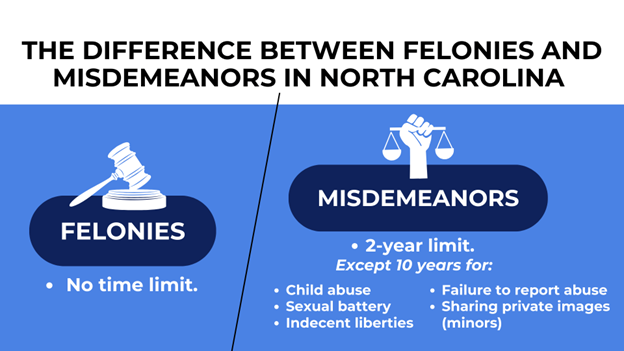
While felony sex crimes have no time limit for prosecution, misdemeanors work differently.
Time Limits for Misdemeanors
According to North Carolina law:
- Most misdemeanors must be charged within 2 years of when they happened. However, certain misdemeanors related to child abuse or sexual conduct have a 10-year time limit.
These include:
- Failure to report suspected child abuse
- Sexual battery
- Indecent liberties between children
- Child abuse
- Sharing private images without consent by a person under 18
How Severe Are the Penalties for Statutory Rape in North Carolina?
Convictions for statutory rape carry some of the harshest penalties in North Carolina’s legal system.
Class B1 Felony Penalties
The most serious statutory rape charges can result in:
- Potentially decades—or even life—in prison. For sexual offense with a child by an adult, the sentence can include lengthy incarceration (§ 14-27.28).
Class C Felony Penalties
Less severe statutory rape charges can result in:
- A number of years behind bars, depending on criminal history and other factors.
Beyond Prison Time
A statutory rape conviction also means:
- Sex offender registration, often for life
- Limits on where you can live and work
- Criminal record affecting jobs and housing
- Loss of voting rights while in prison and gun ownership rights

How Can You Defend Against Statutory Rape Charges?
With no time limit on prosecution and severe penalties, a strong legal defense is crucial.
Why You Need a Lawyer Immediately
Because charges can come years after an alleged incident:
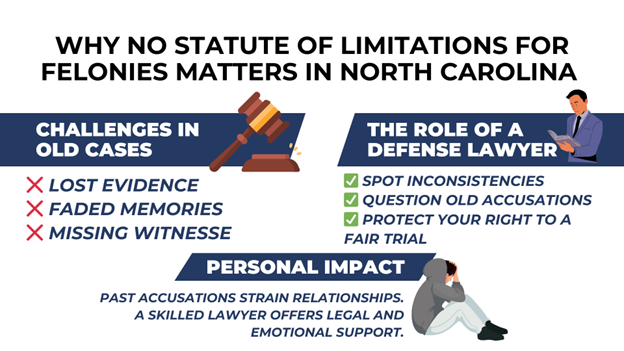
- Evidence may be lost
- Memories fade
- Witnesses move away or die
A skilled North Carolina sex crimes defense lawyer can:
- Gather evidence while it’s still available
- Identify witnesses who support your case
- Challenge the prosecution’s timeline and evidence
- Find the best defense strategy for your situation
Possible Defense Strategies
Defense options may include:
- Wrong person identified: This is common when allegations surface years later.
- Marriage exception: North Carolina law doesn’t apply these laws to lawfully married couples.
- It never happened: Proving the alleged acts didn’t occur.
- Rights violations: Challenging improperly obtained evidence.
Remember that consent isn’t a defense. Minors legally cannot consent to sexual activity with adults.
Why Does the Absence of a Statute of Limitations Matter in North Carolina?
The unlimited time for prosecution creates special challenges in these cases.
Evidence Problems in Old Cases
When cases come up years or decades later:
- Physical evidence is often gone
- Memories have changed or faded
- Witnesses may be unavailable
A good defense lawyer becomes even more important in these cases. They can spot inconsistencies in testimony, question the reliability of old accusations, and protect your right to a fair trial.
The Personal Impact
Facing accusations from the distant past can be emotionally devastating and impact existing relationships with your spouse and loved ones. A caring and skilled defense lawyer helps navigate both the legal challenges and the emotional toll of such accusations.
Why Should You Get Help for Statutory Rape Allegations?
If you or someone you know faces statutory rape allegations in North Carolina, understanding there’s no time limit for charges highlights the urgent need for legal help.
Finding the Right Lawyer
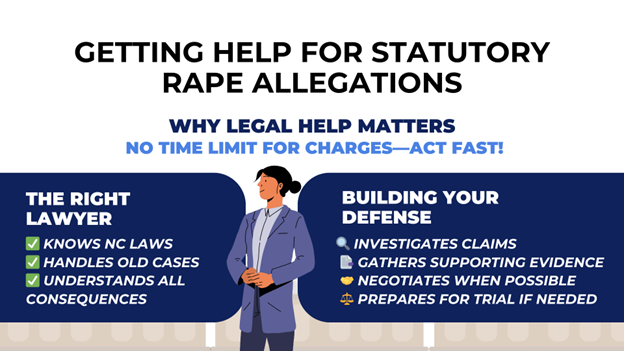
A North Carolina defense lawyer with experience in sex offense cases will know:
- The details of North Carolina’s sex crime laws
- How to defend cases where allegations are years old
- How to navigate these sensitive cases
- All the possible consequences beyond just prison time
Building Your Defense
An experienced lawyer will:
- Investigate the allegations thoroughly
- Gather evidence supporting your version of events
- Work with experts when needed
- Negotiate with prosecutors when possible
- Prepare fully for trial when necessary
Key Takeaways: Statutory Rape Charges in North Carolina
North Carolina’s approach creates a lifelong risk of prosecution for statutory rape. Anyone facing these allegations should understand:
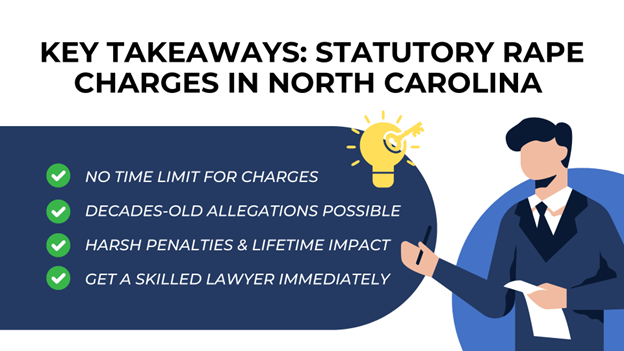
- There is no time limit or statute of limitations for statutory rape charges in North Carolina
- Charges can come decades after an alleged incident
- Penalties include lengthy prison sentences and lifetime consequences
- Getting a skilled lawyer immediately is essential
The combination of no time limit and harsh penalties makes statutory rape allegations extremely serious in North Carolina. Working with an experienced defense lawyer gives you the best chance at protecting your rights and future.
If you or a loved one are facing statutory rape charges, you deserve a legal advocate with the experience and dedication to secure the best possible outcome. Attorney Patrick Roberts of Patrick Roberts Law has successfully defended numerous clients facing statutory rape charges. Contact our firm today for a confidential consultation.
Former assistant district attorney
Contact Patrick Roberts
Facing criminal charges in North Carolina demands seasoned representation. Trust in the experience and dual perspective of Patrick Roberts. Reach out today for a confidential consultation.
-
Call Our Team
Calls answered 24/7








For more information on the selection criteria, go to www.martindale.com
*Each case is different and must be evaluated separately. Prior results achieved do not guarantee similar results can be achieved in future cases.