
What Are North Carolina’s Statutory Rape Laws?
In North Carolina, statutory rape is classified as a felony. This means it’s a serious crime that comes with harsh punishments. North Carolina takes sexual offenses involving minors very seriously, and the law reflects this by making all statutory rape charges felonies, not misdemeanors.
How serious your charge will be mostly depends on the age difference between you and the alleged victim. Understanding these differences is important for anyone facing such charges or looking for information about these laws in North Carolina.

How Does North Carolina Define Statutory Rape?
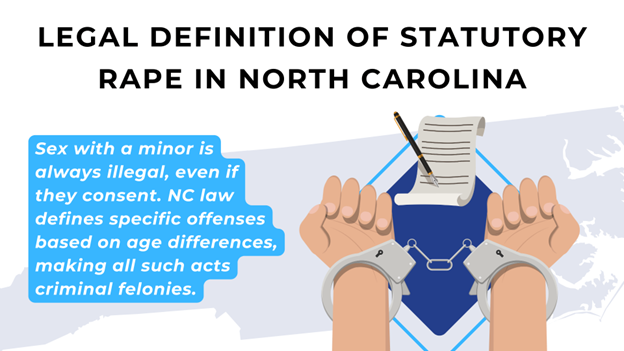
Statutory rape in North Carolina means having sexual intercourse with someone who is too young to legally consent, even if they seemed willing. The law says that young people below certain ages cannot legally agree to sexual activity, which makes such encounters criminal.
North Carolina’s laws (Article 7B) outline several specific statutory rape offenses. Each offense has different elements based mainly on the ages of the people involved.
Types of Statutory Rape Felonies in North Carolina
Statutory Rape of a Child by an Adult (§ 14-27.23)
This is one of the most serious sex crimes in North Carolina. Under this law, a person commits this offense when they are:
- At least 18 years old
- And have vaginal intercourse with a child under 13 years old
This offense is a Class B1 felony, which is the second most serious felony in North Carolina. It carries a mandatory and lengthy prison sentence. In especially bad cases, a judge might even give a life sentence without parole. These worse cases might involve very young victims, extreme harm to the victim, or unusual cruelty.
After prison, people convicted of this crime must register as sex offenders.
First-Degree Statutory Rape (§ 14-27.24)
This charge applies when:
- A person has vaginal intercourse with someone under 13 years old
- The person charged is at least 12 years old
- And at least four years older than the victim
Like the offense above, this is also a Class B1 felony. While it doesn’t have the same 25-year minimum sentence, punishments are still very long.
Statutory Rape of Person 15 Years or Younger (§ 14-27.25)
North Carolina has two levels of charges for cases involving victims who are 15 or younger:
- Class B1 Felony: When someone at least 12 years old has vaginal intercourse with a person 15 or younger, and they are at least six years older than the victim. This serious felony can mean decades in prison.
- Class C Felony: When someone at least 12 years old has vaginal intercourse with a person 15 or younger, and they are more than four but less than six years older than the victim. While still serious, this carries somewhat lighter penalties.
Both charges don’t apply if the two people are legally married. North Carolina does allow some marriages involving minors, though these are becoming less common.

What Are the Penalties for Statutory Rape in North Carolina?
The consequences of being convicted of statutory rape in North Carolina are severe and long-lasting. Penalties vary based on the specific charge and your criminal history.
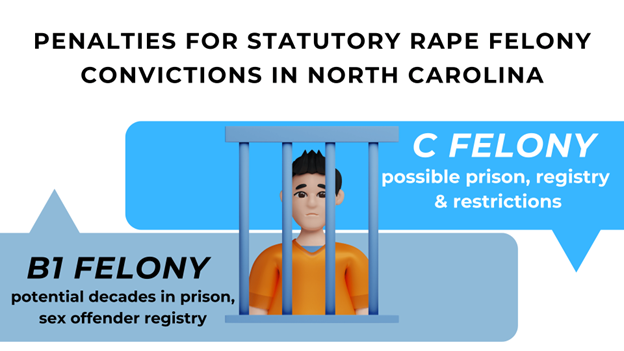
Class B1 Felony Penalties
Class B1 felonies are among the most serious crimes in North Carolina. Consequences include:
- Potentially many years in prison
- For statutory rape of a child by an adult, a substantial prison term
- Possible life imprisonment without parole in the worst cases
- Required sex offender registration after release, possibly for life
- Strict limits on where you can live, work, and go
Class C Felony Penalties
While not as severe as Class B1 felonies, Class C felonies still bring serious penalties:
- Might result in several years behind bars
- Required sex offender registration after release
- Restrictions on where you can live and work
- Possible supervision after release
What Other Consequences Come With Statutory Rape Convictions?
Beyond prison and sex offender registration, North Carolina law creates other consequences for those convicted of statutory rape:
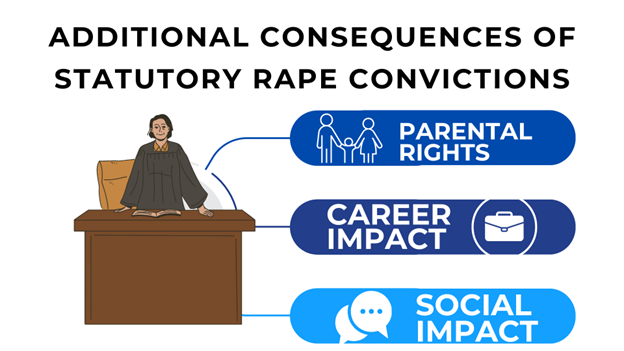
Parental Rights Impact
If a child is conceived because of the offense, North Carolina law says the convicted person:
- Cannot get custody of that child
- Cannot inherit from that child
- Has no say in adoption proceedings for that child
- Has no parental rights in juvenile court cases
Other Life Impacts
Beyond legal penalties, a statutory rape conviction typically leads to:
- Loss of professional licenses
- Trouble finding jobs
- Housing limitations
- Social stigma
- Damaged relationships
- Cannot volunteer with children
- Barriers to education opportunities
What Legal Points Should You Know About Statutory Rape Cases?
Here are key things to understand about statutory rape charges in North Carolina:
Consent Is Not a Defense
For statutory rape charges based on age, it doesn’t matter if the minor seemed willing or even started the encounter. The law says young people below certain ages cannot legally consent to sexual activity.
Marriage Exception
Some parts of North Carolina’s statutory rape laws don’t apply to legally married couples. However, this only works in limited situations where the marriage is legal under North Carolina law.
No Spousal Defense for Force or Incapacity
While marriage might provide an exception in some cases, North Carolina law (§ 14-27.34) clearly states that a person can be prosecuted even if the victim was their legal spouse when the alleged crime happened.
Proof Requirements
Under § 14-27.36, prosecutors don’t need to prove the emission of semen to establish statutory rape. The offense is complete with proof of penetration, however slight.
Defending Against Statutory Rape Charges in North Carolina
If you’re facing statutory rape charges in North Carolina, the stakes are extremely high. A conviction will change your life forever, potentially resulting in decades in prison and lifetime registration as a sex offender. Because of these serious consequences, getting an experienced lawyer is absolutely necessary.
An North Carolina criminal defense attorney who has experience in sex crimes can:
- Thoroughly investigate the claims
- Find potential weaknesses in the prosecution’s case
- Check if any procedural errors occurred during the investigation
- Determine if any evidence was improperly obtained
- Build the strongest possible defense based on your specific situation
- Handle complex pre-trial motions and negotiations
- Represent you effectively at trial if needed
What Are Some Common Defense Strategies in Statutory Rape Cases?
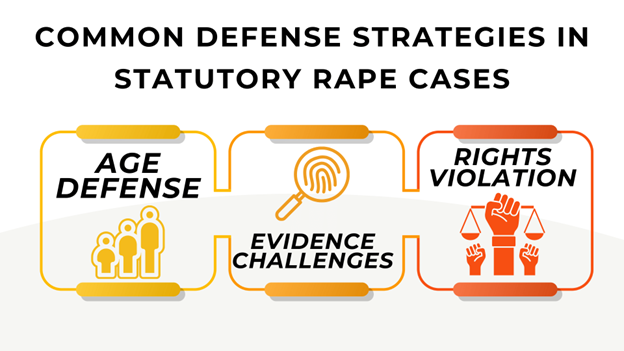
While consent is not a defense to statutory rape charges in North Carolina, other potential defenses may include:
Age-Based Defenses
In some cases, a person may have honestly believed the minor was old enough to consent. However, in North Carolina, being mistaken about the victim’s age is not a defense, making these cases particularly difficult.
Evidence Challenges
Defense attorneys may challenge the evidence presented, including:
- DNA evidence
- Witness statements
- Medical exams
- Digital evidence
- The timeline of events
Constitutional Violations
If police violated your constitutional rights during the investigation or arrest, your attorney might file motions to throw out evidence or even seek dismissal of the charges.
Conclusion: Why Are Statutory Rape Charges So Serious in North Carolina?
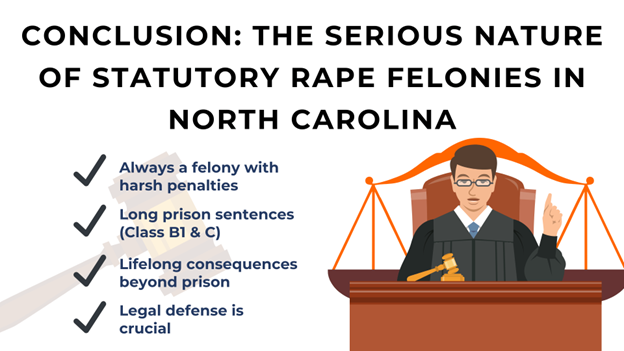
In North Carolina, statutory rape is definitely a felony offense with severe penalties. Depending on the specific circumstances and ages involved, statutory rape can be charged as either a Class B1 or Class C felony, both carrying substantial prison sentences and additional consequences that extend far beyond time in prison.
Given how life-changing a statutory rape conviction in North Carolina can be, anyone facing such charges should immediately talk to a criminal defense attorney with experience in sex crimes. With proper legal representation, defendants can ensure their rights are protected throughout the legal process and work toward achieving the best possible outcome in their case.
If you or a loved one are facing a statutory rape charge, you deserve a legal advocate with the experience and dedication to secure the best possible outcome. Attorney Patrick Roberts of Patrick Roberts Law has successfully defended numerous clients facing the most serious sex crime charges. Contact our firm today for a confidential consultation.
Former assistant district attorney
Contact Patrick Roberts
Facing criminal charges in North Carolina demands seasoned representation. Trust in the experience and dual perspective of Patrick Roberts. Reach out today for a confidential consultation.
-
Call Our Team
Calls answered 24/7









For more information on the selection criteria, go to www.martindale.com
*Each case is different and must be evaluated separately. Prior results achieved do not guarantee similar results can be achieved in future cases.