
Drug transportation charges in North Carolina can lead to serious legal consequences. The penalties vary widely based on several key factors. Understanding these potential penalties is important for anyone facing such charges.
How Does North Carolina Classify Drugs in Its Laws?
North Carolina groups drugs into six categories (called “schedules”) based on how dangerous they are and whether they have medical uses (N.C.G.S. § 90-89 through § 90-94):
- Schedule I drugs (heroin, LSD, ecstasy) – Most dangerous drugs with no accepted medical use
- Schedule II drugs (cocaine, meth, fentanyl, oxycodone) – Dangerous drugs with very limited medical uses
- Schedule III drugs (ketamine, anabolic steroids) – Less dangerous with accepted medical uses
- Schedule IV drugs (Xanax, Valium, Ambien) – Lower risk with accepted medical uses
- Schedule V drugs (some cough medicines with codeine) – Limited risk with accepted medical uses
- Schedule VI drugs (marijuana) – Lowest risk category in North Carolina law
The type of drug involved greatly affects how serious the charges will be. Schedule I and II drugs lead to the most serious penalties.

What Factors Determine the Severity of Drug Transportation Charges?
When Do Drug Amounts Trigger Trafficking Charges?
The amount of drugs involved is often the most important factor:
- Small amounts typically result in possession charges
- Moderate amounts with evidence of intent to sell lead to felony charges
- Larger amounts trigger trafficking charges with mandatory prison time
North Carolina law sets specific amounts that automatically lead to trafficking charges (N.C.G.S. § 90-95(h)):
- Marijuana: Trafficking starts at more than 10 pounds
- Cocaine: Trafficking starts at 28 grams (about 1 ounce)
- Meth: Trafficking starts at 28 grams
- Heroin/Opioids: Trafficking starts at just 4 grams
- Ecstasy: Trafficking starts at 100 pills or 28 grams
- LSD: Trafficking starts at 100 doses
Crossing these limits dramatically increases penalties and requires judges to impose mandatory minimum sentences.
How Does the Law Distinguish Between Personal Use and Intent to Sell?
Law enforcement looks for signs that distinguish between transportation for personal use versus intent to sell:
- Personal use cases may be charged as simple possession
- Evidence of intent to sell significantly increases penalties
Signs that suggest intent to sell include:
- Drugs divided into multiple packages
- Possession of scales, baggies, or packaging materials
- Large amounts of cash, especially in small bills
- Text messages or contact lists related to drug sales
- No drug use equipment when transporting drugs typically used with special equipment
How and Where Drugs Are Transported
How and where drugs are transported can affect charges:
- Hidden compartments or special hiding spots suggest organized drug selling
- Transportation near schools or parks increases penalties (N.C.G.S. § 90-95(e)(8) and (10))
- Crossing county or state lines may trigger additional charges or federal involvement
- Using commercial vehicles may lead to additional violations
What Are the Specific Penalties for Drug Transportation?
Possession with Intent to Deliver or Sell
For transporting drugs with intent to deliver (N.C.G.S. § 90-95(a)(1)):
- Schedule I or II drugs: Class H felony with time in prison a possibility
- Sale of Schedule I or II drugs: Class G felony with time in prison a possibility
- Schedule III, IV, V, or VI drugs: Class I felony with time in prison a possibility
- Sale of Schedule III, IV, V, or VI drugs: Class H felony with time in prison a possibility
Drug Trafficking Penalties
For larger amounts that reach trafficking levels, North Carolina requires mandatory minimum sentences (N.C.G.S. § 90-95(h)):
Marijuana Trafficking (N.C.G.S. § 90-95(h)(1)):
- 10-50 pounds: Class H felony, time in prison a possibility, $5,000 fine
- 50-2,000 pounds: Class G felony, time in prison a possibility, $25,000 fine
- 2,000-10,000 pounds: Class F felony, time in prison a possibility, $50,000 fine
- 10,000+ pounds: Class D felony, time in prison a possibility, $200,000 fine
Cocaine Trafficking (N.C.G.S. § 90-95(h)(3)):
- 28-200 grams: Class G felony, time in prison a possibility, $50,000 fine
- 200-400 grams: Class F felony, time in prison a possibility, $100,000 fine
- 400+ grams: Class D felony, time in prison a possibility, $250,000 fine
Heroin/Opioid Trafficking (N.C.G.S. § 90-95(h)(4)):
- 4-14 grams: Class F felony, time in prison a possibility, $50,000 fine
- For heroin, fentanyl, or carfentanil: $500,000 fine
- 14-28 grams: Class E felony, time in prison a possibility, $100,000 fine
- 28+ grams: Class C felony, time in prison a possibility, $500,000 fine
Meth Trafficking (N.C.G.S. § 90-95(h)(3b)):
- 28-200 grams: Class F felony, time in prison a possibility, $50,000 fine
- 200-400 grams: Class E felony, time in prison a possibility, $100,000 fine
- 400+ grams: Class C felony, time in prison a possibility, $250,000 fine
These mandatory minimums apply regardless of criminal history, and judges have limited ability to reduce these sentences except in special cases.

Which Circumstances Can Increase Drug Transportation Penalties?
Several circumstances can increase penalties for drug transportation offenses:
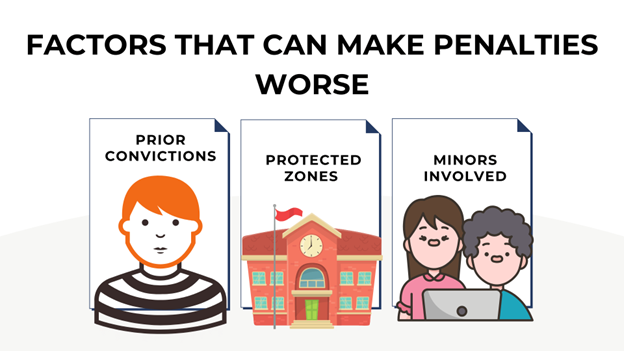
Prior Criminal History
Previous drug convictions make penalties worse (N.C.G.S. § 90-95(e)(3)):
- Prior drug convictions can turn a misdemeanor possession charge into a felony
- Multiple prior convictions can increase the felony class
- Three or more prior felonies can dramatically increase prison time
Protected Zones
Transporting drugs in certain locations carries harsher penalties:
- Near schools: Within 1,000 feet of schools or daycare centers results in Class E felony charges (N.C.G.S. § 90-95(e)(8))
- Near parks: Within 1,000 feet of parks results in Class E felony charges (N.C.G.S. § 90-95(e)(10))
- In jails or prisons: Possession in correctional facilities is a Class H felony (N.C.G.S. § 90-95(e)(9))
Involving Minors
Using people under 18 in drug transportation leads to much more serious charges (N.C.G.S. § 90-95.4):
- Adults who involve minors face felony charges several classes higher than the base offense
- If the minor is under 13, penalties increase even more dramatically
- Selling to minors or pregnant women also carries increased penalties (N.C.G.S. § 90-95(e)(5))
When Do Drug Transportation Cases Become Federal Instead of State Charges?
When Federal Charges Apply
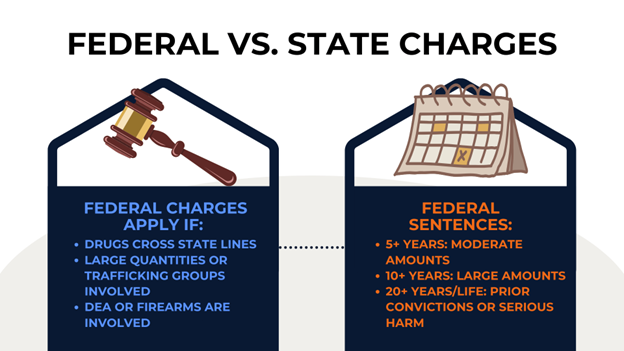
Federal prosecution becomes more likely when:
- Drugs cross state lines
- Large quantities are involved
- Evidence suggests organized drug trafficking operations
- Federal agencies like the DEA participated in the investigation
- Guns were involved in the offense
Federal Mandatory Minimum Sentences
Federal trafficking charges often impose even harsher mandatory minimums:
- 5-year mandatory minimum for moderate quantities
- 10-year mandatory minimum for larger quantities
- 20-year or life sentences for cases involving death, serious injury, or prior convictions
What Legal Defenses Can Be Used in Drug Transportation Cases?
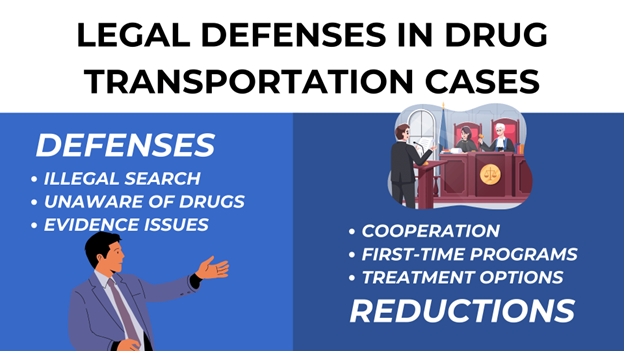
Several possible defenses may apply depending on the situation:
Constitutional Challenges
- Illegal searches: Challenging searches of vehicles, luggage, or property that violated your rights
- No probable cause: Questioning whether police had a legal reason to stop you
- Rights violations: Challenging statements obtained without proper Miranda warnings
Factual Defenses
- Lack of knowledge: Proving you didn’t know drugs were present
- Not your drugs: Showing you didn’t have control over the drugs
- Mistaken identity: Proving you weren’t the person who transported the drugs
Procedural Defenses
- Evidence handling issues: Questioning how evidence was handled and tested
- Testing challenges: Disputing the reliability of drug analysis
- Entrapment: Showing police induced you to commit a crime you wouldn’t otherwise have committed
Ways to Reduce Sentences
- Helping prosecutors: Cooperation with law enforcement may reduce penalties below mandatory minimums (N.C.G.S. § 90-95(h)(5))
- First-time offender programs: Special programs provide alternatives for certain first-time offenders (N.C.G.S. § 90-96)
Treatment alternatives: Drug courts and diversion programs may be available for less serious offenses
Other Consequences Beyond Criminal Penalties
Beyond prison time and fines, drug transportation convictions cause many other problems:
- Property seizure: Vehicles, cash, and property connected to drug crimes may be taken by the government (N.C.G.S. § 90-112)
- Professional license problems: Many professions won’t allow people with drug convictions
- Employment difficulties: Background checks often screen out applicants with drug convictions
- Housing problems: Public and private housing providers may deny housing based on drug records
- Immigration issues: Non-citizens face potential deportation for drug convictions
- Education impacts: Loss of financial aid eligibility for college
Why You Need a Lawyer
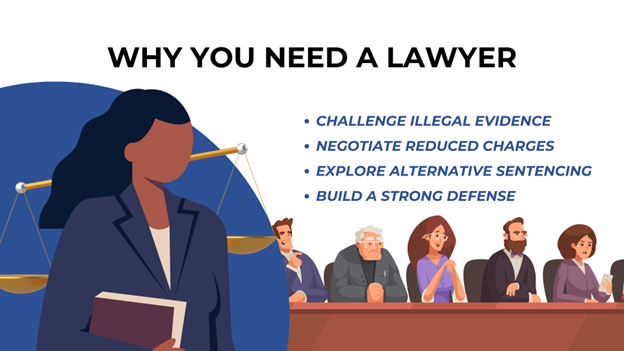
Given the serious consequences of drug transportation charges, having an experienced lawyer is essential. A good defense attorney can:
- Evaluate the evidence against you and identify rights violations
- Challenge evidence that was illegally obtained
- Negotiate with prosecutors for reduced charges or alternative sentencing
- Develop defense strategies tailored to your specific situation
- Identify eligibility for diversion programs or treatment alternatives
- Advocate for sentence reductions based on mitigating factors
Conclusion
Drug transportation charges in North Carolina can have life-changing consequences that vary dramatically based on drug type, amount, intent, and surrounding circumstances. From misdemeanors to serious felonies with decades of mandatory prison time, understanding the potential penalties and available defenses is critical. Early consultation with a qualified lawyer offers the best chance to fight these serious charges and protect your rights throughout the criminal justice process.
If you or a loved one are facing a charge for transporting drugs in North Carolina, you deserve a legal advocate with the experience and dedication to secure the best possible outcome. Attorney Patrick Roberts of Patrick Roberts Law has successfully defended numerous clients facing serious drug crimes. Contact our firm today for a confidential consultation.
Former assistant district attorney
Contact Patrick Roberts
Facing criminal charges in North Carolina demands seasoned representation. Trust in the experience and dual perspective of Patrick Roberts. Reach out today for a confidential consultation.
-
Call Our Team
Calls answered 24/7






For more information on the selection criteria, go to www.martindale.com
*Each case is different and must be evaluated separately. Prior results achieved do not guarantee similar results can be achieved in future cases.