
Few accusations carry the devastating weight of a rape allegation. In Cary and throughout the Research Triangle—where careers at companies like SAS Institute, Epic Games, and Lockheed Martin depend on spotless reputations—a false accusation can destroy everything you’ve built before you ever set foot in a courtroom. Relationships fracture. Security clearances evaporate. Professional licenses face immediate jeopardy. The court of public opinion often renders its verdict long before the legal system has its say.
False rape accusations do happen. They arise from relationship conflicts, custody disputes, regret, mental health issues, and sometimes outright malice. Defending against them requires an attorney who understands both how prosecutors build these cases and how to systematically dismantle accusations that lack foundation in truth.
Attorney Patrick Roberts brings unique qualifications to false accusation defense. As the only attorney in North Carolina listed on the National Child Abuse Defense and Resource Center’s registry at falseallegation.org (as of December 2025), he has invested extensively in specialized training focused specifically on defending against false allegations. His background as a former prosecutor who handled sex offense cases provides critical insight into the tactics the state will employ—and the weaknesses that aggressive defense can expose.
What Must Prosecutors Prove in a North Carolina Rape Case?
Understanding what the state must prove is essential to effectively challenging an accusation. Wake County prosecutors bear the burden of proving every element beyond a reasonable doubt. Mr. Roberts’ years as a prosecutor provide him with a powerful perspective on the weaknesses and high standards of proof required in these cases.
What Are the Elements of Forcible Rape Under North Carolina Law?
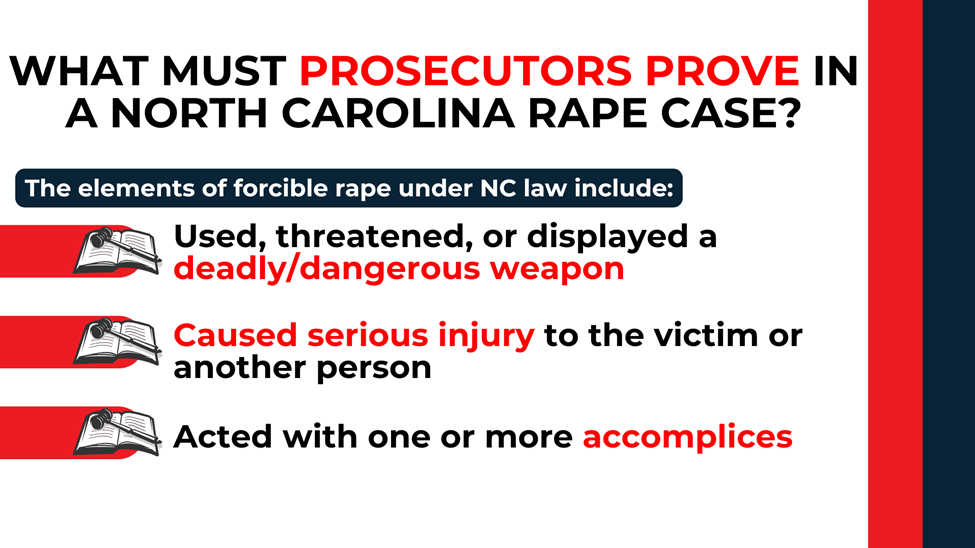
North Carolina law distinguishes between degrees of forcible rape based on the circumstances involved. Under N.C. Gen. Stat. § 14-27.21, first-degree forcible rape requires proof that the defendant engaged in vaginal intercourse with another person by force and against the will of that person, plus at least one aggravating factor:
- The defendant used, threatened to use, or displayed a dangerous or deadly weapon
- The defendant inflicted serious personal injury upon the victim or another person
- The offense was committed with the aid of one or more accomplices
Second-degree forcible rape under N.C. Gen. Stat. § 14-27.22 applies when vaginal intercourse occurs either by force and against the will of the other person, or when the alleged victim has a mental disability, is mentally incapacitated, or is physically helpless—and the defendant knows or should reasonably know of that condition.
How Does the Law Define “Force and Against the Will”?
The phrase “by force and against the will” is central to every forcible rape prosecution. This element requires the prosecution to prove both that force was used and that the alleged victim did not consent to the sexual activity. This dual requirement creates opportunities for defense in cases where the encounter was consensual or where the accuser’s account of force does not align with the evidence.
Wake County prosecutors must present evidence establishing both components. When an accusation is false, this element often becomes the prosecution’s greatest vulnerability—because no genuine force occurred and no genuine resistance existed.
What Is the Difference Between First-Degree and Second-Degree Charges?
The distinction between degrees carries significant consequences. First-degree forcible rape is a Class B1 felony, among the most serious charges in North Carolina’s criminal code. Second-degree forcible rape is classified as a Class C felony. Similar gradations exist for forcible sexual offenses under N.C. Gen. Stat. § 14-27.26 and § 14-27.27, which apply to sexual acts other than vaginal intercourse.
The severity of potential consequences makes early intervention by experienced defense counsel critical. The difference between these charges can mean the difference between decades in prison and a sentence that, while still serious, allows for eventual return to normal life.
Why Do False Rape Accusations Happen?
Understanding the motivations behind false accusations helps build effective defense strategies. The specialized training Attorney Patrick Roberts completed through the National Child Abuse Defense and Resource Center examines the psychology and circumstances that lead to false allegations—knowledge that proves invaluable when defending Cary residents facing these devastating accusations.
What Motivations Lead to False Allegations?
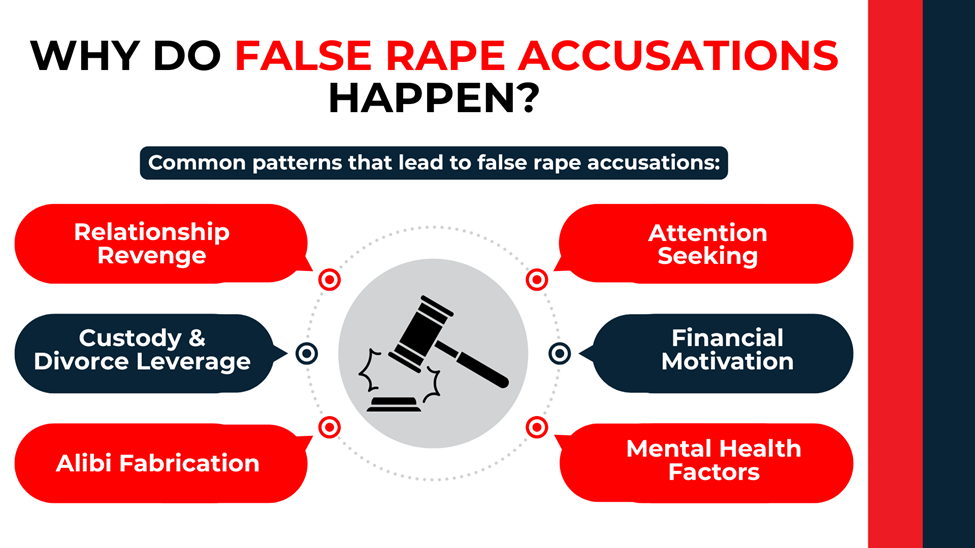
Research and case experience reveal several common patterns that lead to false rape accusations:
- Relationship revenge: Accusations made after a breakup, rejection, or discovery of infidelity
- Custody and divorce leverage: Allegations timed to gain advantage in family court proceedings
- Alibi fabrication: Accusations made to explain behavior to a spouse, partner, or parent
- Attention-seeking: Allegations designed to garner sympathy or concern from others
- Financial motivation: Accusations connected to civil litigation or settlement expectations
- Mental health factors: Allegations arising from psychological conditions affecting perception or memory
In Cary’s professional community—where high-income divorces involve substantial assets and custody of children attending excellent Wake County schools—false accusations sometimes become weapons in family disputes. Recognizing these patterns early helps defense counsel focus investigation on the accuser’s true motivations.
How Do Relationship Dynamics Contribute to False Accusations?
Many false accusations emerge from intimate relationships where consent was present but later regretted or recharacterized. The dynamics of these relationships often leave the accused genuinely bewildered—unable to understand how a consensual encounter became a criminal allegation.
Dating relationships, workplace romances, and even long-term marriages can generate false accusations when relationships sour. The accuser may genuinely believe a false narrative they have constructed, or they may understand the accusation is false but use it as a tool for revenge or control. Either scenario requires careful investigation and strategic defense.
Can Mistaken Identification Lead to False Accusations?
While less common in acquaintance situations, mistaken identification remains a source of false accusations. Cases involving alcohol consumption, dim lighting, or brief encounters can lead to misidentification. DNA evidence has exonerated numerous individuals convicted based on eyewitness identification that later proved incorrect.
Even when the accuser genuinely believes their identification is accurate, memory research demonstrates that human recall is far less reliable than most people assume—particularly for traumatic or stressful events. Cross-examination training through the National Criminal Defense College prepares Patrick Roberts to effectively challenge such identifications in Wake County courtrooms.
How Does the Investigation Process Work in Wake County?
When someone reports a rape allegation in Cary, a structured investigation process begins—one that Patrick Roberts understands intimately from his years prosecuting these cases. Knowing how investigations unfold helps defendants protect their rights from the earliest stages.
What Happens When Someone Reports a Rape Allegation in Cary?
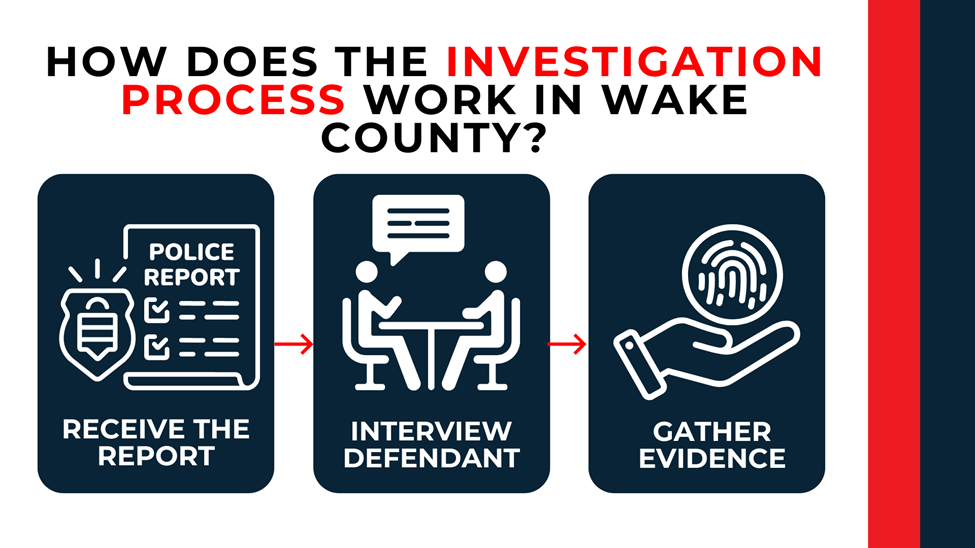
Cary Police Department’s Special Victims Unit handles rape allegations with dedicated detectives trained in these sensitive investigations. Upon receiving a complaint, SVU detectives interview the accuser, often using techniques designed to build rapport and elicit detailed accounts. They collect any available physical evidence, identify potential witnesses, and coordinate with the Wake County District Attorney’s office on case development.
What many accused individuals fail to realize is that investigation often continues for weeks or months before any arrest occurs. During this period, critical opportunities to preserve exculpatory evidence may be lost if defense counsel is not involved.
How Do Police Interview Techniques Affect the Evidence?
Law enforcement interview techniques can significantly shape the evidence that eventually reaches court. Detectives are trained to obtain detailed statements—but those techniques can also reinforce false memories or elicit details that did not actually occur. Understanding how these interviews work helps defense counsel challenge the reliability of the accuser’s account.
When police contact you about a rape allegation, they are not seeking your side of the story to help you—they are gathering evidence to support an arrest. Anything you say, even statements you believe are exculpatory, can be used against you. This reality makes early attorney involvement essential.
What Evidence Does the Prosecution Typically Rely On?
Wake County prosecutors in rape cases typically rely on the accuser’s testimony, any physical or forensic evidence, witness statements, communications between the parties, and the defendant’s own statements if any were made. In many false accusation cases, physical evidence is absent or inconclusive—leaving the accuser’s word as the primary evidence.
Attorney Patrick Roberts’ prosecutorial background means he knows exactly what evidence the state will seek and how they will attempt to present it. That knowledge allows him to anticipate prosecution strategies and prepare effective responses before trial.
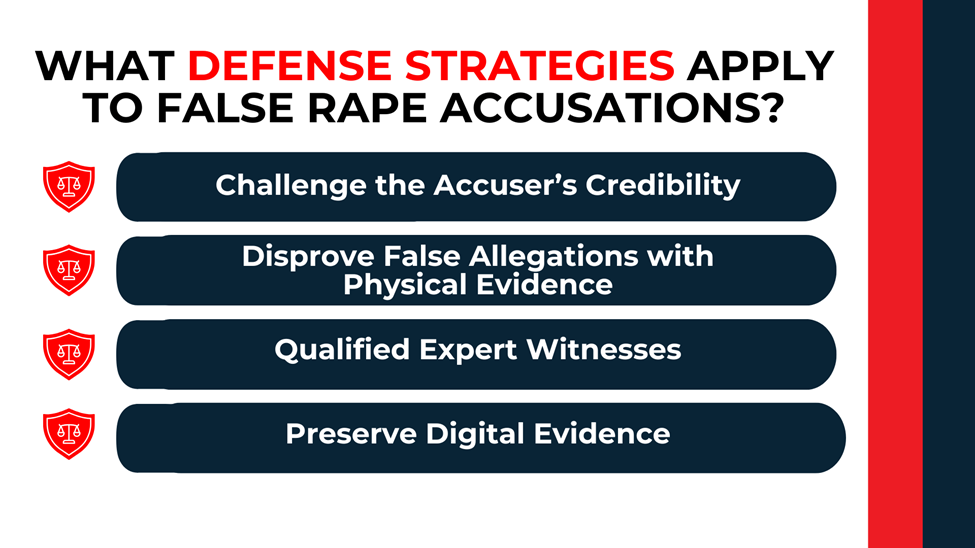
What Defense Strategies Apply to False Rape Accusations?
Defending against false rape accusations requires a comprehensive, fearless approach that scrutinizes every detail of the prosecution’s case—from the accuser’s credibility to the physical evidence and the circumstances surrounding the allegation.
To provide the most robust defense possible for Cary residents, Attorney Patrick Roberts leverages two decades of criminal defense experience, having tried hundreds of bench and jury trials in state and federal courts in North Carolina. This deep courtroom history allows him to implement unique defense strategies tailored to the high stakes of these sensitive cases.
A Powerful, Multi-Faceted Defense
Attorney Patrick Roberts’ approach is fueled by creative defense techniques and elite training designed to dismantle the State’s arguments:
- Specialized Training: His specialized training through the National Association of Criminal Defense Lawyers (NACDL) in sex-crimes defense, combined with his experience in challenging false allegations, allows him to identify the subtle flaws in a case that others might miss.
- A Respected Advocate: As a graduate of the National Criminal Defense College and the Gerry Spence Trial Lawyers College, Attorney Patrick Roberts uses powerful courtroom skills to humanize his clients and tell their stories in a way that truly connects with a jury.
- Effective Results-Driven Strategy: Whether it is mastering cross-examination through his 2025 NCDC Mastery training or utilizing his strong legal standing as a former N.C. State Ethics Commissioner, Mr. Roberts builds a defense that is as ethical as it is aggressive.
How Can You Challenge the Accuser’s Credibility?
In cases built primarily on the accuser’s word, credibility becomes the central battlefield. Defense investigation focuses on the accuser’s history, motivations, prior false statements, and any inconsistencies between their account and other evidence. Text messages, social media posts, and witness observations often reveal information that contradicts the accusation.
The cross-examination skills Mr. Roberts developed at the National Criminal Defense College and through ongoing training prove essential when challenging an accuser’s account before a Wake County jury. Effective cross-examination exposes inconsistencies without appearing to attack a witness—allowing jurors to reach their own conclusions about truthfulness.
What Role Does Physical Evidence Play in Disproving False Allegations?
Physical evidence—or the lack thereof—often plays a decisive role in false accusation cases. Medical examinations may reveal no injuries consistent with force. DNA evidence may be absent or inconclusive. The physical scene may show no signs of struggle. Each gap between the accuser’s account and the physical evidence creates reasonable doubt.
In Cary’s technology-driven environment, digital evidence often proves equally important. Location data from phones, timestamps on photographs, and security camera footage can establish that events could not have occurred as alleged or that the defendant was elsewhere entirely.
How Do Expert Witnesses Help in False Accusation Cases?
Expert testimony can address memory reliability, the psychology of false allegations, forensic evidence interpretation, and other technical matters beyond typical juror knowledge. These experts help juries understand that false accusations occur, that memory is reconstructive rather than recorded, and that certain patterns suggest fabrication.
Patrick Roberts maintains relationships with qualified experts in fields relevant to sexual assault defense—professionals familiar with Wake County courts who can present complex concepts in accessible terms for juries.
What Is the Importance of Preserving Digital Evidence?
Modern false accusation cases often turn on digital evidence—text messages, emails, social media communications, photographs, and location data. This evidence can establish the nature of the relationship, demonstrate consent, reveal the accuser’s motivations, or contradict specific allegations.
Digital evidence is fragile. Messages can be deleted. Accounts can be deactivated. Phone data can be overwritten. Preservation must begin immediately upon learning of an accusation. Experienced defense counsel can guide this process and ensure that exculpatory evidence remains available for trial.
How Do You Protect Your Rights During a False Accusation Investigation?
The actions you take—or fail to take—during the investigation phase can determine whether you face charges at all and how effectively those charges can be defended. NCDC training emphasizes protecting client rights from the earliest stages, and understanding the Wake County legal process helps defendants make informed decisions.
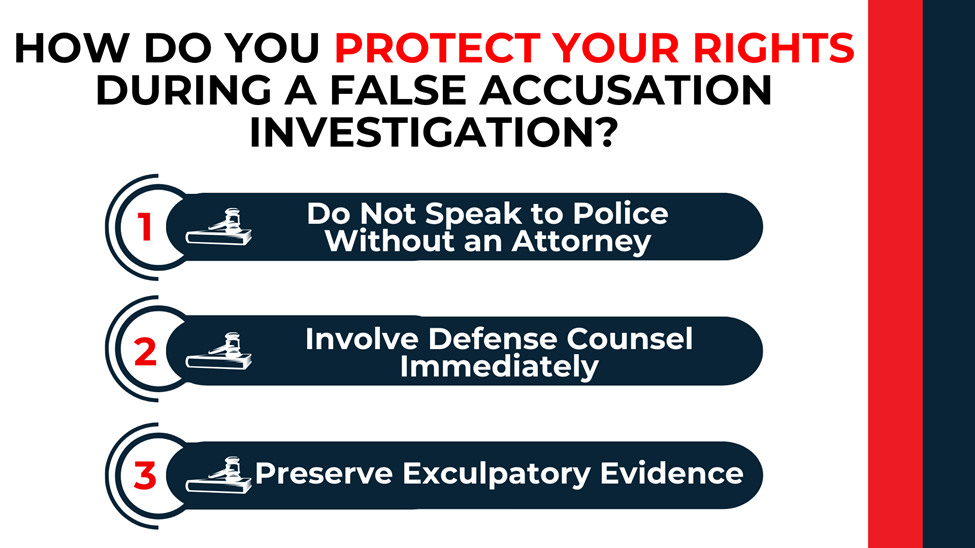
Should You Speak to Police Without an Attorney?
No. If police want to question you about a rape allegation, you have the constitutional right to remain silent and the right to have an attorney present. Exercise both rights. Politely decline to answer questions and request to speak with an attorney.
Even if you are innocent—especially if you are innocent—speaking to police without counsel present is dangerous. Investigators are trained to elicit statements that can later be used against you. Innocent people have been convicted based on their own statements made during police interviews. Do not assume that cooperation will clear your name.
How Early Should You Involve Defense Counsel?
Immediately. The moment you learn you are under investigation for rape—whether through police contact, a protective order, or word from others—contact experienced defense counsel. Early involvement allows your attorney to advise you on protecting your rights, guide evidence preservation, and potentially influence whether charges are ever filed.
In some cases, effective pre-charge investigation and communication with prosecutors can result in charges never being filed. Once charges are filed, the process becomes far more difficult and damaging—even if eventual acquittal occurs.
What Steps Can You Take to Preserve Exculpatory Evidence?
Work with your attorney to identify and preserve all evidence that might support your defense. This includes communications with the accuser, photographs and videos, location data, witness contact information, and any physical evidence. Do not communicate with the accuser—all contact should cease immediately and any necessary communication should go through attorneys.
Document your own recollection of events in writing for your attorney. Identify witnesses who can corroborate your account or provide character testimony. These steps should be taken promptly, before memories fade and evidence disappears.
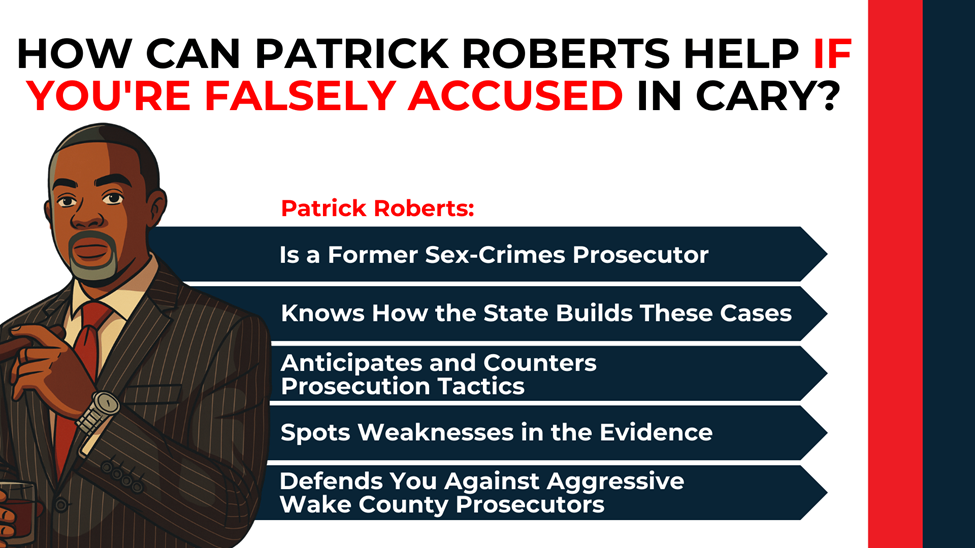
How Can Patrick Roberts Help If You’re Falsely Accused in Cary?
Facing a false rape accusation requires an attorney who is not only respected in the legal community but also fearless when challenging the State’s narrative. Attorney Patrick Roberts brings credentials specifically suited to false allegation defense for clients throughout Cary, Wake County, and the greater Research Triangle area.
With two decades of criminal defense experience, having tried hundreds of bench and jury trials in state and federal courts in North Carolina, Mr. Roberts understands the unique challenges these cases present. He uses this deep courtroom background to craft effective and unique defense strategies that aim to dismantle accusations before they can destroy a life.
Why Patrick Roberts is the Right Choice for Your Defense
Attorney Patrick Roberts utilizes creative defense techniques backed by a career of proven excellence and high-level recognition:
- Powerful Courtroom Advocacy: As a fearless litigator, Mr. Roberts has been rated 10/10 “Superb” by AVVO for more than 15 years. This rating reflects his long-standing commitment to legal ability and professional ethics.
- Top-Tier Peer Recognition: He has been recognized as an AV Preeminent Peer Rated Attorney for more than 5 straight years (2026) by Martindale-Hubbell. This is the highest possible peer rating, given only to lawyers who are widely respected for their legal knowledge and ethical standards.
- Commitment to Client Success: Patrick is a Client Champion* Platinum 2026 award recipient, an honor he has held for more than 5 straight years. This award, given by Martindale-Hubbell, is based exclusively on the quantity and quality of stellar reviews from the people he has represented.
- Elite Standing: Being both an AV Preeminent Rated Attorney and a Client Platinum Champion by Martindale-Hubbell signifies a rare combination of peer respect and client satisfaction that makes him an effective choice for those facing life-altering charges.
*Disclaimer: The awards and testimonials mentioned do not guarantee a similar outcome in your case. Each case is unique and must be evaluated on its own merits.”
Strategic Defense from Day One
Whether through his specialized training in sex-crimes defense or his strong legal standing as a former N.C. State Ethics Commissioner, Mr. Roberts brings a powerful perspective to every case. He knows how to build a defense that is both strategic and aggressive, ensuring that Cary residents have a respected voice fighting for them at every stage of the process.
Proven Standing in the Legal Community
Attorney Patrick Roberts’ commitment to excellence is recognized at the highest levels. He is admitted to practice before the U.S. Supreme Court and all federal district courts in North Carolina, ensuring his fearless advocacy can follow a client from the local magistrate’s office to a federal appeal.
“Patrick Roberts is my #1 referral… his experience in the courtroom and professionalism are the reasons he is my top recommendation. He is trustworthy, reliable, and highly esteemed by his peers.”
— Counsel via Martindale-Hubbell, Oct 29, 2018*
Disclaimer: The testimonials and peer reviews on this site are for informational purposes. They do not constitute a guarantee, warranty, or prediction regarding the outcome of your legal matter. Every case is different and must be evaluated on its own merits.
*Testimonials and peer endorsements found on this website are actual comments.
What Makes Specialized False Accusation Defense Essential?
Not every criminal defense attorney has training specific to false accusation cases. Attorney Patrick Roberts’ status as the only North Carolina attorney listed on the National Child Abuse Defense and Resource Center’s registry at falseallegation.org* reflects intensive specialized training in defending against allegations that lack foundation in truth.
This training covers the psychology of false accusations, the forensic analysis of allegations, the examination of interview techniques that can produce false claims, and the cross-examination strategies that expose fabricated accounts. Combined with his NACDL sex-crimes defense training and the trial advocacy skills developed at Gerry Spence’s Trial Lawyers College, this background provides the foundation for aggressive, effective defense.
*as of December 2025
How Does Prosecutorial Experience Benefit Your Defense?
Attorney Patrick Roberts spent years as a prosecutor handling sex offense cases. That perspective allows him to anticipate prosecution strategies and identify weaknesses. He knows how these cases are built, what evidence prosecutors prioritize, and where their cases are vulnerable. This unique insight makes him an effective advocate for those facing the most serious charges.
When you face false accusations in Wake County, you are up against prosecutors who are experienced, well-resourced, and motivated to obtain convictions. To level the playing field, you need a fearless attorney who understands their playbook and knows how to counter every move.
Frequently Asked Questions
What should I do immediately if I’m falsely accused of rape?
Stop all contact with the accuser immediately. Do not speak to police without an attorney present. Contact experienced criminal defense counsel right away—before making any statements or taking any actions that could affect your case. Begin preserving any evidence that could support your defense, including communications, photographs, and witness contact information.
Can I be convicted based solely on the accuser’s word?
Legally, yes. North Carolina law does not require physical evidence or independent corroboration for a rape conviction. The accuser’s testimony, if believed by a jury, can be sufficient. This reality makes aggressive defense essential—challenging the accuser’s credibility and presenting evidence that creates reasonable doubt becomes critical when physical evidence is absent.
How does consent factor into rape charges in North Carolina?
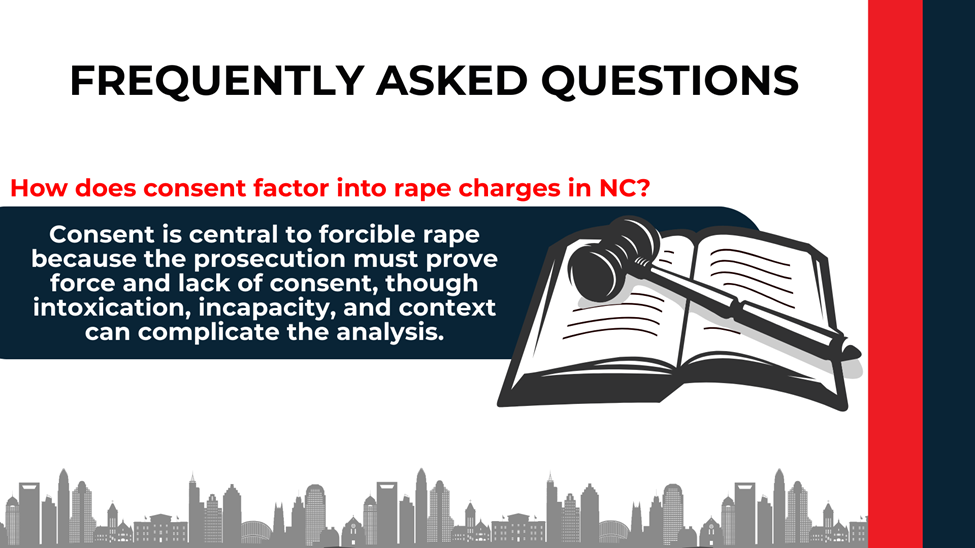
Consent is central to forcible rape cases. The prosecution must prove that sexual contact occurred “by force and against the will” of the alleged victim—meaning without consent. If consent existed, the essential element of the crime is absent. However, issues of intoxication, incapacity, and the circumstances of consent can create complex factual and legal questions that require careful analysis.
Where will my case be prosecuted if the alleged incident occurred in Cary?
Cases arising in Cary are prosecuted through the Wake County court system. Initial appearances occur in Wake County District Court, while felony trials proceed in Wake County Superior Court at the Justice Center in Raleigh. Having defense counsel familiar with Wake County procedures, prosecutors, and judges provides a meaningful advantage.
What are the penalties if convicted of rape in North Carolina?
First-degree forcible rape is a Class B1 felony, carrying substantial prison terms. Second-degree forcible rape is a Class C felony. Both convictions result in sex offender registration requirements that continue for life. Beyond incarceration, convictions bring collateral consequences including loss of professional licenses, inability to obtain security clearances, immigration consequences for non-citizens, and permanent damage to personal and professional reputation.
Disclaimer: Each case is different and must be evaluated separately. Prior results achieved do not guarantee similar results can be achieved in future cases.
Disclaimer: The information on this website is for general information purposes only. Nothing on this site should be taken as legal advice for any individual case or situation. Case results depend upon a variety of factors unique to each case. Prior results do not guarantee a similar outcome.
Former assistant district attorney
Contact Patrick Roberts
Facing criminal charges in North Carolina demands seasoned representation. Trust in the experience and dual perspective of Patrick Roberts. Reach out today for a confidential consultation.
-
Call Our Team
Calls answered 24/7








For more information on the selection criteria, go to www.martindale.com
*Each case is different and must be evaluated separately. Prior results achieved do not guarantee similar results can be achieved in future cases.