
Being accused of first-degree sexual exploitation of a minor in Cary is among the most serious allegations anyone can face. This charge—prosecuted as a Class C or D felony in Wake County Superior Court—carries consequences that extend far beyond potential incarceration. For residents of Cary’s highly educated, professionally accomplished community, an accusation threatens careers built over decades, security clearances that enable work at Research Triangle Park employers, and standing in a family-oriented community known for its safety and quality of life.
Cary Police Department maintains the only dedicated Cyber Intelligence Unit among the Triangle’s four major police departments, giving these investigations specialized attention from the outset. Understanding what prosecutors must prove, how investigations unfold, and what defense options exist is essential for anyone facing these allegations or who has learned they are under investigation.
What Is First-Degree Sexual Exploitation of a Minor Under North Carolina Law?
North Carolina law treats first-degree sexual exploitation of a minor as one of the most serious offenses in the state’s criminal code. Patrick Roberts prosecuted sex crime cases earlier in his career, giving him direct insight into how the Wake County District Attorney’s office constructs these complex prosecutions—and where potential weaknesses may exist.
What Specific Conduct Does This Statute Prohibit?
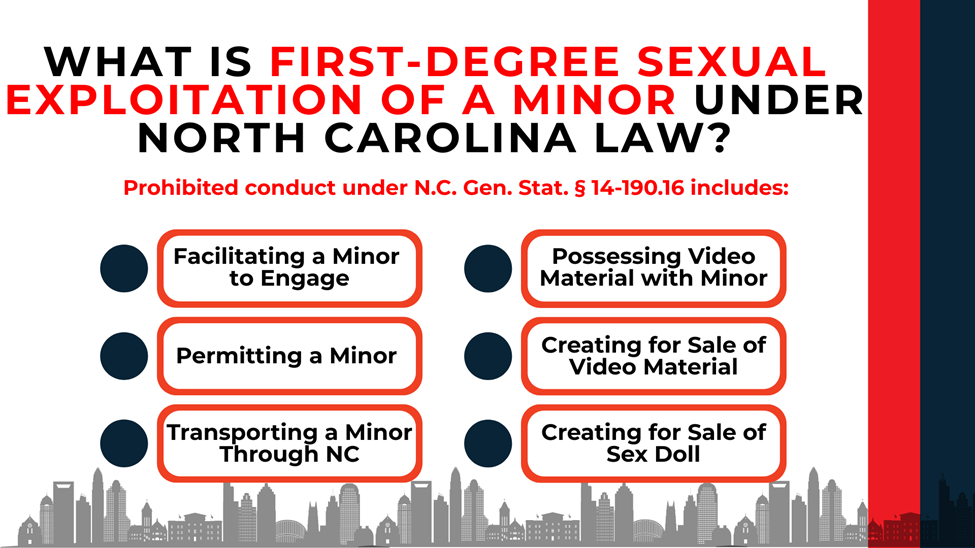
Under N.C. Gen. Stat. § 14-190.16, a person commits first-degree sexual exploitation if, knowing the character or content of the material or performance, they engage in any of the following conduct:
- Using, employing, inducing, coercing, encouraging, or facilitating a minor to engage in sexual activity for a live performance or to produce visual material depicting such activity
- Permitting a minor under their custody or control to engage in such activity for a live performance or material production
- Transporting or financing the transportation of a minor through North Carolina with intent that the minor engage in sexual activity for a performance or material production
- Recording, photographing, filming, developing, or duplicating for sale or pecuniary gain material depicting a minor engaged in sexual activity
- Creating for sale or pecuniary gain material adapted or modified to appear that an identifiable minor is engaged in sexual activity
- Creating for sale or pecuniary gain a child sex doll of an identifiable minor
Wake County prosecutors must prove that the defendant acted “knowing the character or content” of the material or performance. This knowledge requirement is a critical element that distinguishes criminal conduct from innocent behavior—and represents a potential avenue for defense.
How Does First-Degree Differ from Second or Third-Degree Charges?
North Carolina’s sexual exploitation statutes create a hierarchy based on the defendant’s role and conduct. First-degree charges target those who produce, facilitate, or profit from creating exploitative material. Second-degree charges under N.C. Gen. Stat. § 14-190.17 address distribution, receipt, and non-profit recording. Third-degree charges under N.C. Gen. Stat. § 14-190.17A covers simple possession.
This distinction matters significantly. First-degree sexual exploitation is a Class C felony for most violations, while second-degree is a Class E felony and third-degree is a Class H felony. The penalties, collateral consequences, and prosecution approach differ substantially across these categories.
Is Mistake of Age a Valid Defense in These Cases?
No. North Carolina law explicitly states that mistake of age is not a defense to first-degree sexual exploitation charges. Under N.C. Gen. Stat. § 14-190.16(c), a defendant cannot claim they believed the minor was actually an adult. This strict liability approach regarding the victim’s age means defense strategies must focus on other elements of the offense—particularly the knowledge requirement and identification of the defendant.
How Do Cary Police and Federal Agencies Investigate These Allegations?
Sexual exploitation investigations in Cary involve specialized law enforcement units with significant resources devoted to these cases. Understanding how these investigations work helps defendants and their families prepare for what lies ahead.
What Role Does Cary’s Cyber Intelligence Unit Play?
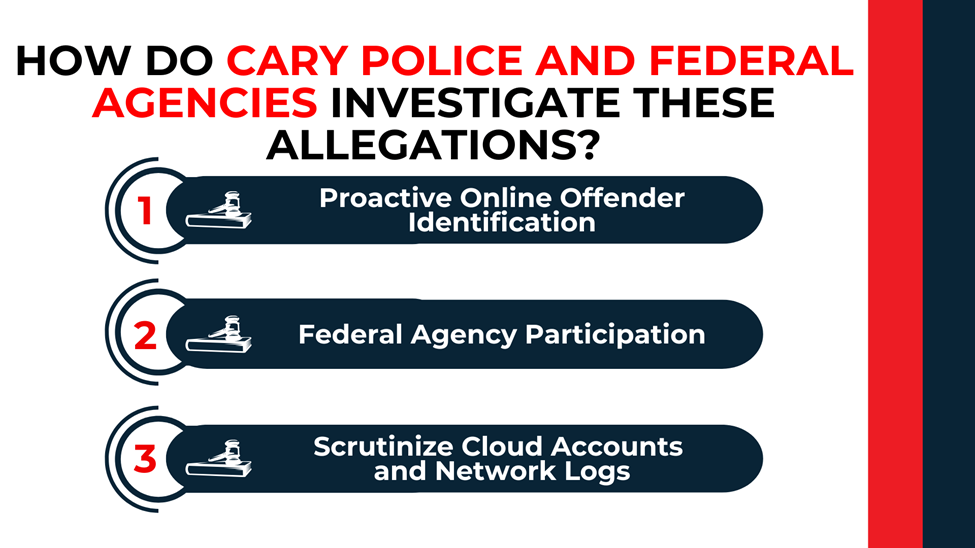
Cary Police Department operates the only dedicated Cyber Intelligence Unit among the Triangle’s four major police departments—Raleigh, Durham, and Chapel Hill do not maintain equivalent specialized units. This team focuses specifically on identifying online offenders and investigating child exploitation cases, including child sexual abuse material (CSAM) offenses.
Unlike purely reactive investigation, Cary’s Cyber Intelligence Unit engages in proactive identification of potential offenders. This means investigations may begin before any complaint is filed and before the target knows they are under scrutiny. The unit’s particular expertise in digital forensics and online investigation techniques makes these cases highly technical from the outset.
Which State and Federal Agencies Might Be Involved?
Investigations in Cary may involve coordination among multiple agencies with overlapping jurisdiction:
- Cary Police Department’s Special Victims Unit and Cyber Intelligence Unit
- North Carolina State Bureau of Investigation (SBI) Cyber Crimes Unit
- Internet Crimes Against Children (ICAC) task force
- Federal agencies for cross-jurisdictional matters
- Task force operations including Operation Southern Impact and the Invictus Project
This multi-agency coordination means defendants may face investigation by entities with vast resources and technical capabilities. The involvement of federal agencies can also raise the specter of federal charges, which carry different penalties and procedures than state prosecutions.
What Digital Evidence Do Investigators Typically Pursue?
In Cary’s technology-driven community, digital evidence forms the backbone of most exploitation cases. Investigators typically pursue computers, smartphones, tablets, and any other devices capable of storing or transmitting images. Cloud storage accounts receive particular scrutiny, as do network logs that may establish IP addresses and access patterns.
Work computers and employer-provided devices frequently become relevant in these investigations. IT departments at Cary’s major employers—including SAS Institute, Epic Games, and defense contractors—sometimes discover and report suspected contraband, triggering investigations that can upend careers and lives before any charges are filed.
If you are under investigation or have been contacted by law enforcement regarding sexual exploitation allegations, contact Patrick Roberts Law immediately. Early intervention can significantly impact how your case develops.
What Must the Prosecution Prove to Convict in Wake County?
Every criminal conviction requires proof beyond a reasonable doubt. In first-degree sexual exploitation cases prosecuted in Wake County Superior Court, the District Attorney’s office must establish each element of the offense through admissible evidence.
Through a lifetime membership in the National Association of Criminal Defense Lawyers and the completion of rigorous advanced seminars in sex-crimes defense—including training as recently as late 2025—Mr. Roberts stays current on evolving defense strategies and the latest approaches to challenging prosecution evidence.
How Does the “Knowledge” Element Work?
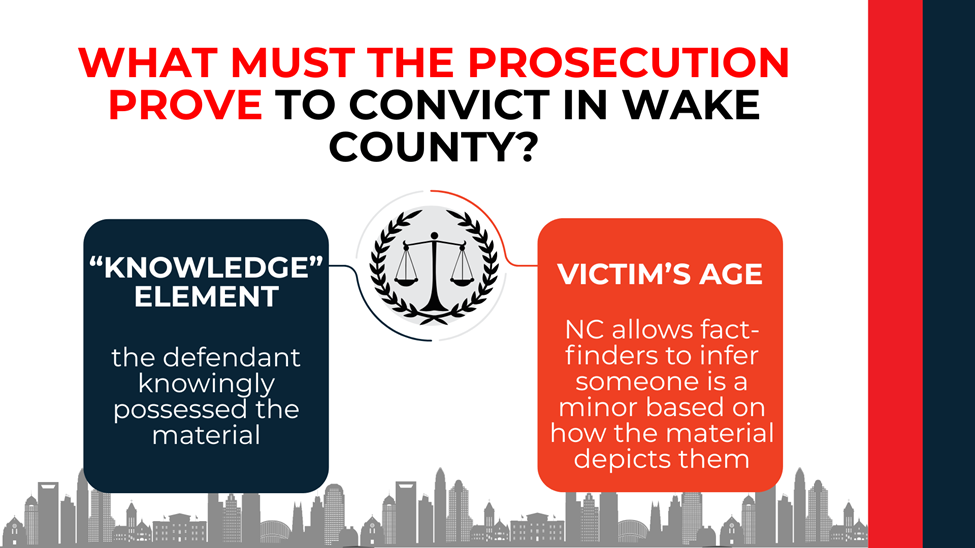
The prosecution must prove the defendant knew the character or content of the material or performance. This is not strict liability—the state must establish actual awareness, not merely that the defendant should have known. In cases involving shared devices, compromised networks, or complex digital environments, this element may be genuinely contested.
Wake County prosecutors typically attempt to establish knowledge through circumstantial evidence: file organization, search history, communication records, and the volume and nature of discovered material. Each of these approaches has potential weaknesses that experienced defense counsel can identify and challenge.
Can the Prosecution Use Inferences About the Victim’s Age?
Yes. Under N.C. Gen. Stat. § 14-190.16(b), the trier of fact—whether judge or jury—may infer that a participant in sexual activity is a minor if the material through its title, text, visual representations, or otherwise represents or depicts that person as a minor. This statutory inference can work against defendants even when the actual age of depicted individuals cannot be conclusively established.
Defense counsel may challenge these inferences through expert testimony regarding the difficulty of age determination from images, the reliability of the prosecution’s analysis, and the specific characteristics of the material at issue.
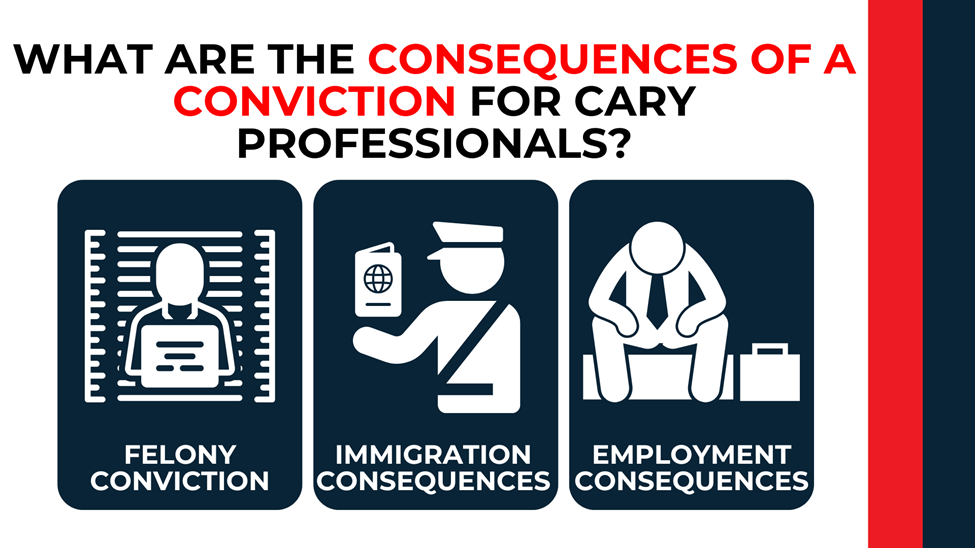
What Are the Consequences of a Conviction for Cary Professionals?
The consequences of a first-degree sexual exploitation conviction reach into virtually every aspect of a defendant’s life. For Cary residents—where nearly 70% of adults hold bachelor’s degrees and median household income exceeds $129,000—the professional and social devastation compounds already severe criminal penalties.
Attorney Patrick Roberts has completed extensive training through the National Child Abuse Defense and Resource Center (NCADRC), which focuses on defending against allegations involving children and understanding the full scope of collateral consequences. As of December 2025, he is the only attorney in North Carolina listed on the NCADRC website at falseallegation.org.
What Criminal Penalties Apply to First-Degree Charges?
Most violations of N.C. Gen. Stat. § 14-190.16 constitute Class C felonies—among the most serious felony classifications in North Carolina. Violations involving the creation of digitally altered images or child sex dolls of identifiable minors (subsections (a)(5) and (a)(6)) are Class D felonies.
Beyond incarceration, convicted individuals face mandatory sex offender registration, which creates ongoing obligations that affect where you can live, work, and travel for years after completing any sentence.
How Would a Conviction Affect Your Career in Research Triangle Park?
While every employer maintains distinct internal policies, a conviction in the Research Triangle area often triggers the following professional challenges:
- Security clearances required for defense contractors like Lockheed Martin are immediately jeopardized and typically revoked upon conviction
- Professional licenses in healthcare, finance, law, education, and other regulated fields face suspension or revocation proceedings
- Employment at major Cary employers—including SAS Institute, Epic Games, MetLife, and government positions with the Town of Cary—becomes effectively impossible
- Background check failures foreclose future employment opportunities across most professional sectors
- Reputational damage in Cary’s close-knit professional community extends beyond the individual defendant to affect family members
For engineers, software developers, financial professionals, and others whose careers depend on trust and credentialing, a conviction represents not just the loss of a current job but the permanent destruction of professional identity.
What Immigration Consequences Could Apply?
Cary’s substantial immigrant population—approximately 22% of residents are foreign-born, many working in the tech sector on employment visas or holding green cards—faces additional devastating consequences. Sex offenses involving minors typically qualify as aggravated felonies under federal immigration law, triggering deportation proceedings regardless of how long someone has lived in the United States or their ties to the community.
For non-citizens, a conviction can mean permanent separation from family, career, and community—consequences that often exceed even the criminal penalties imposed by Wake County courts.
The stakes in a first-degree sexual exploitation case demand immediate action. Contact Patrick Roberts Law to discuss your situation and begin building your defense.
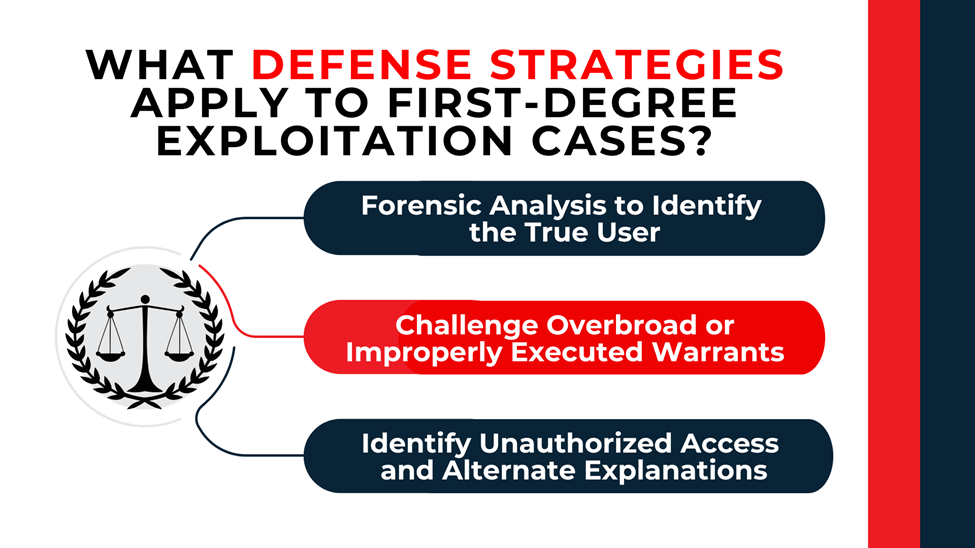
What Defense Strategies Apply to First-Degree Exploitation Cases?
Effective defense in exploitation cases requires both legal acumen and technical sophistication. As a graduate of the National Criminal Defense College with ongoing participation in advanced cross-examination programs, Mr. Roberts brings rigorous preparation to challenging the prosecution’s evidence in Wake County Superior Court.
How Can the Knowledge Requirement Be Challenged?
Because the prosecution must prove the defendant knew the character or content of the material, defense strategies often focus on establishing reasonable doubt about awareness. In cases involving shared computers, family devices, or work networks, determining who actually accessed or downloaded material can be genuinely unclear.
Malware, unauthorized remote access, and compromised networks can place material on devices without the owner’s knowledge. Expert forensic analysis may reveal that someone other than the defendant was responsible for the presence of contraband material.
What Constitutional Issues Might Arise in These Cases?
Fourth Amendment protections against unreasonable search and seizure apply with full force to digital evidence. Law enforcement must typically obtain warrants to search computers, phones, and cloud storage accounts. Challenges to the scope of warrants, the execution of searches, and the handling of evidence can potentially exclude critical prosecution evidence.
Wake County courts apply well-established constitutional standards, but the application of these principles to rapidly evolving digital technologies creates opportunities for defense challenges that experienced counsel can identify and pursue.
When Are Expert Witnesses Critical to the Defense?
Digital forensics experts play essential roles in exploitation defense. These specialists can analyze metadata, access logs, and device histories to establish timelines that may contradict prosecution theories. They can identify signs of unauthorized access, evaluate whether material could have been placed without the defendant’s knowledge, and challenge the prosecution’s technical conclusions.
In Wake County Superior Court, expert testimony that creates reasonable doubt about any element of the offense can make the difference between conviction and acquittal.
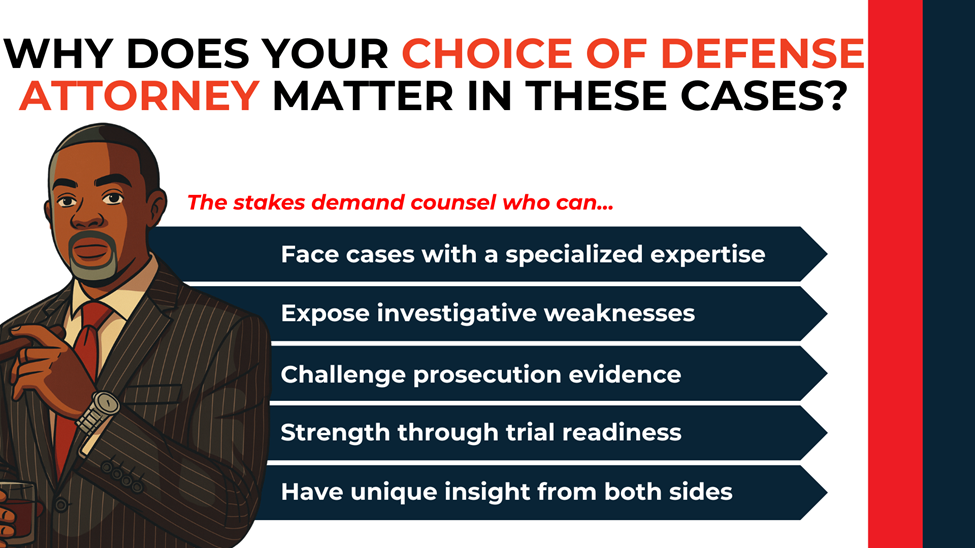
Why Does Your Choice of Defense Attorney Matter in These Cases?
First-degree sexual exploitation cases demand defense counsel with specific experience, training, and trial readiness. The combination of technical complexity, severe consequences, and multi-agency prosecution makes attorney selection among the most important decisions a defendant will make.
What Experience Should You Look for in Defense Counsel?
Defending exploitation cases requires understanding both sides of the courtroom. An attorney who has prosecuted these cases understands how investigations develop, what evidence prosecutors prioritize, and where weaknesses in the state’s case may exist. Training in sex-crimes defense ensures counsel knows current strategies, evolving legal standards, and best practices for challenging these allegations.
Trial experience matters because prosecutors know which defense attorneys will actually take cases to verdict if necessary. An attorney who prepares every case as though it will go to trial—and has the skills to try it effectively—operates from a position of strength in every negotiation.
How Does Patrick Roberts’ Background Apply to These Cases?
Attorney Patrick Roberts trained directly with legendary trial attorney Gerry Spence at the Trial Lawyers College, learning a client-centered philosophy that treats every case as though it were going to trial. This approach—combined with his prosecutorial background, NACDL and NCADRC specialized training, and ongoing National Criminal Defense College education—positions him to effectively handle the most serious sexual exploitation allegations in Wake County.
Mr. Roberts’ experience on both sides of sex crime prosecutions provides a tactical perspective few defense attorneys can offer. He understands how the Wake County District Attorney’s office approaches these cases, what evidence they consider essential, and where their legal theories may be challenged effectively.
Frequently Asked Questions
How is first-degree sexual exploitation different from possession charges?
First-degree involves producing, facilitating, or profiting from the creation of material depicting minors. Third-degree covers simple possession. The distinction significantly affects both the charges and potential penalties, with first-degree carrying more severe consequences as a Class C felony. Wake County prosecutors make charging decisions based on the specific conduct alleged, and understanding these distinctions helps defendants and their families grasp what they are actually facing.
Will I be held in custody if arrested for this charge in Wake County?
These charges typically involve significant bond amounts, and prosecutors may argue for pretrial detention given the seriousness of the allegations. An experienced defense attorney can advocate for reasonable bond conditions at your initial appearance in Wake County court, presenting factors that support release while your case proceeds.
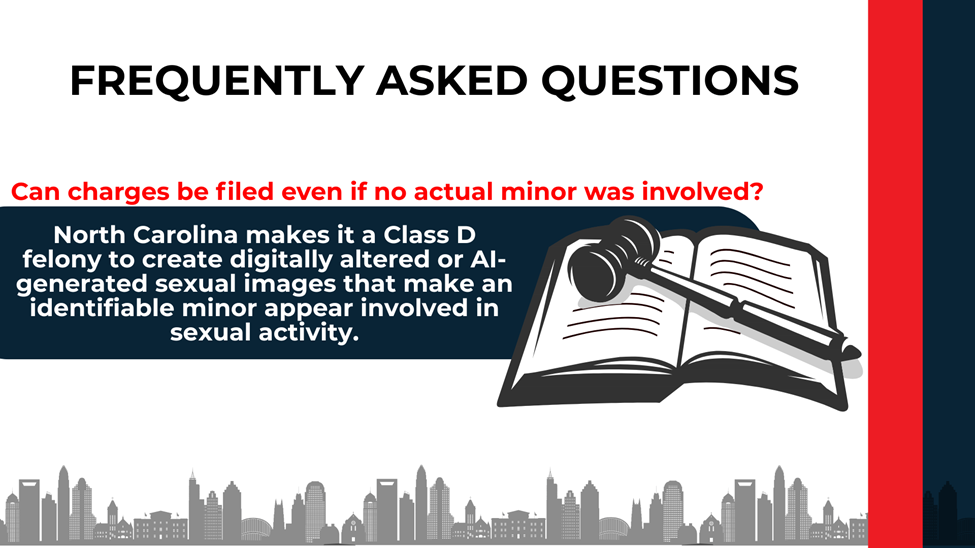
Can charges be filed even if no actual minor was involved?
Yes. Under N.C. Gen. Stat. § 14-190.16(a)(5), creating material that has been adapted or modified to appear that an identifiable minor is engaged in sexual activity is a Class D felony—even if the images do not depict an actual minor. This provision addresses digitally altered or artificially generated images that use the likeness of real children.
How do Cary police typically become aware of these allegations?
Cary Police Department’s Cyber Intelligence Unit—the only dedicated unit of its kind among the Triangle’s four major police departments—proactively investigates these cases. Investigations may also begin through tips from the National Center for Missing and Exploited Children, IT departments at local employers like SAS or Epic Games, federal task force referrals, or reports from internet service providers.
What happens to my professional licenses if I’m convicted?
Professional licensing boards in North Carolina typically have provisions for revocation or suspension following felony convictions, particularly for offenses involving minors. For Cary residents working in regulated professions—including healthcare, finance, law, and education—a conviction can permanently end your career and foreclose opportunities across the entire field.
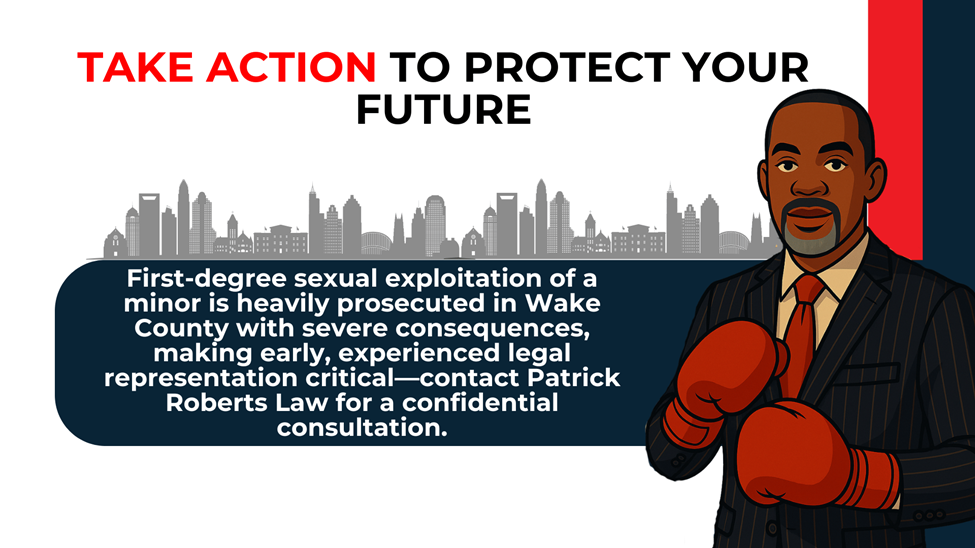
Take Action to Protect Your Future
First-degree sexual exploitation of a minor is among the most aggressively prosecuted offenses in Wake County. The investigation and prosecution resources devoted to these cases, combined with the severe criminal penalties and life-altering collateral consequences, make experienced defense representation essential from the earliest possible moment.
If you or someone you know faces first-degree sexual exploitation charges in Cary or anywhere in Wake County, call Patrick Roberts Law today for a confidential consultation about your defense options.
Disclaimer: Each case is different and must be evaluated separately. Prior results achieved do not guarantee similar results can be achieved in future cases.
Disclaimer: The information on this website is for general information purposes only. Nothing on this site should be taken as legal advice for any individual case or situation. Case results depend upon a variety of factors unique to each case. Prior results do not guarantee a similar outcome.
Former assistant district attorney
Contact Patrick Roberts
Facing criminal charges in North Carolina demands seasoned representation. Trust in the experience and dual perspective of Patrick Roberts. Reach out today for a confidential consultation.
-
Call Our Team
Calls answered 24/7






For more information on the selection criteria, go to www.martindale.com
*Each case is different and must be evaluated separately. Prior results achieved do not guarantee similar results can be achieved in future cases.