
In North Carolina, what people call “possession of meth with intent to distribute” is charged as possession with intent to sell or deliver methamphetamine — PWISD for short. It falls under N.C. Gen. Stat. § 90-95(a)(1), and it’s a Class H felony. But the single fact that changes everything is weight. At 28 grams, the same meth stops being a PWISD case and becomes trafficking. Trafficking carries mandatory prison time, no matter who you are.
This article breaks down what the state actually has to prove, how “intent” gets established when nothing was ever sold, the line between simple possession, intent to sell, and trafficking, how much prison time is really on the table, and the specific ways these cases get dismissed, suppressed, or knocked down to something smaller.
Is “possession of meth with intent to distribute” the same as what I’m charged with in North Carolina?
Almost certainly, yes — “intent to distribute” is federal and everyday language for what North Carolina calls possession with intent to sell or deliver a controlled substance. The charge lives in § 90-95(a)(1), and under § 90-95(b)(1), PWISD meth is a Class H felony.
Here’s the first thing worth holding onto: a charge is an accusation, not a conviction. The label on the paperwork is the prosecutor’s opening position, not the final answer. Drug cases are also not rare or exotic in this state. Non-trafficking drug offenses were the single largest category of felony convictions in North Carolina in FY2024, about 30% of all of them. Prosecutors handle these constantly, which means there are well-worn paths to reducing and beating them, too. What decides your outcome is the machinery underneath the charge — the proof, the weight, and the search — not the scary phrase at the top of the page.
How do prosecutors establish “Intent to Sell or Deliver” without a completed sale
Under North Carolina law (N.C. Gen. Stat. § 90-95(a)(1)), a person can be charged with Possession with Intent to Sell or Deliver (PWISD) even if no actual transaction occurred. Because direct evidence of intent is rarely available, prosecutors rely on circumstantial evidence to convince a jury that the drugs were meant for distribution rather than personal use.
Circumstantial Factors Used to Infer Intent
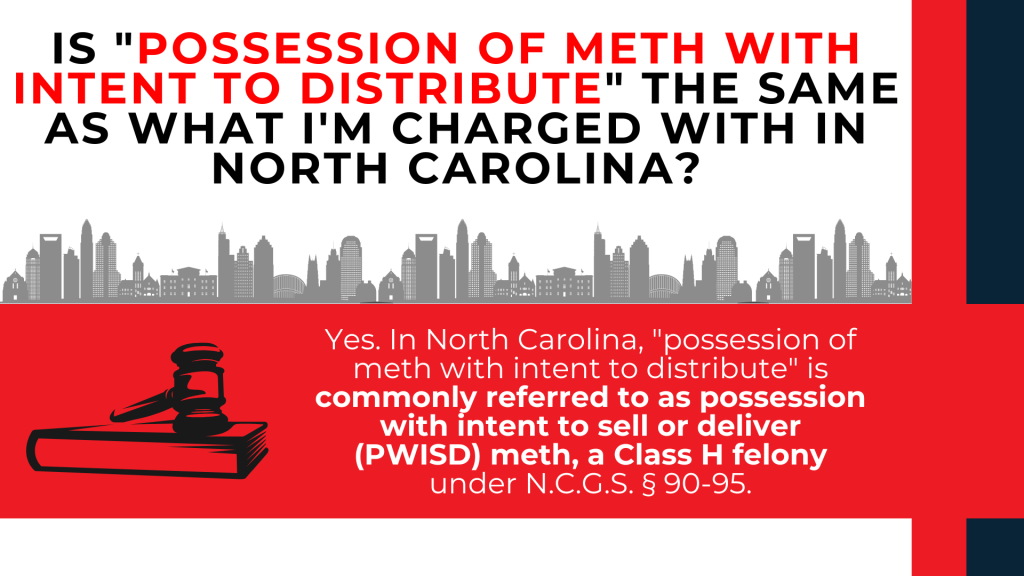
Prosecutors typically present a combination of surrounding facts to infer distribution intent, including:
- Quantity: Possessing an amount exceeding what a typical user retains for personal consumption.
- Packaging: Drugs divided into multiple individual baggies or uniform units rather than kept in a single bulk container.
- Paraphernalia Associated with Distribution: The presence of digital scales, measuring spoons, cutting agents, or unused packaging materials.
- Currency: Carrying large amounts of cash, particularly in small, organized denominations.
- Electronic Communications: Text messages, call logs, or social media records that reference prices, meeting locations, or transaction terms.
- Absence of Personal-Use Paraphernalia: The lack of pipes, syringes, or other consumption items, which prosecutors argue indicates the substance was not intended for personal consumption.
Challenging Circumstantial Evidence of Intent
Because an intent charge relies on inferences rather than direct proof, every piece of circumstantial evidence can be challenged, reinterpreted, or subjected to evidentiary objections.
Common defense strategies include establishing alternative, non-distribution explanations for the state’s evidence:
- Cash: Demonstrating that currency originated from legitimate sources, such as employment wages, bank withdrawals, or rental payments.
- Packaging: Showing that drugs were purchased in pre-packaged quantities from a seller rather than packaged by the defendant for resale.
- Quantity: Presenting evidence consistent with bulk purchasing for personal use to reduce costs or minimize trips.
Dismantling even one or two of the state’s primary circumstantial factors can significantly weaken a PWISD charge, creating leverage to seek a charge reduction to simple possession or a dismissal of the intent element prior to trial.
What’s the difference between simple possession, intent to sell, and trafficking meth?
These are three separate charges with three very different consequences. Which one you actually face turns on the evidence and the weight — not just on what the officer wrote down. Getting moved from one tier to the next is often the whole ballgame.
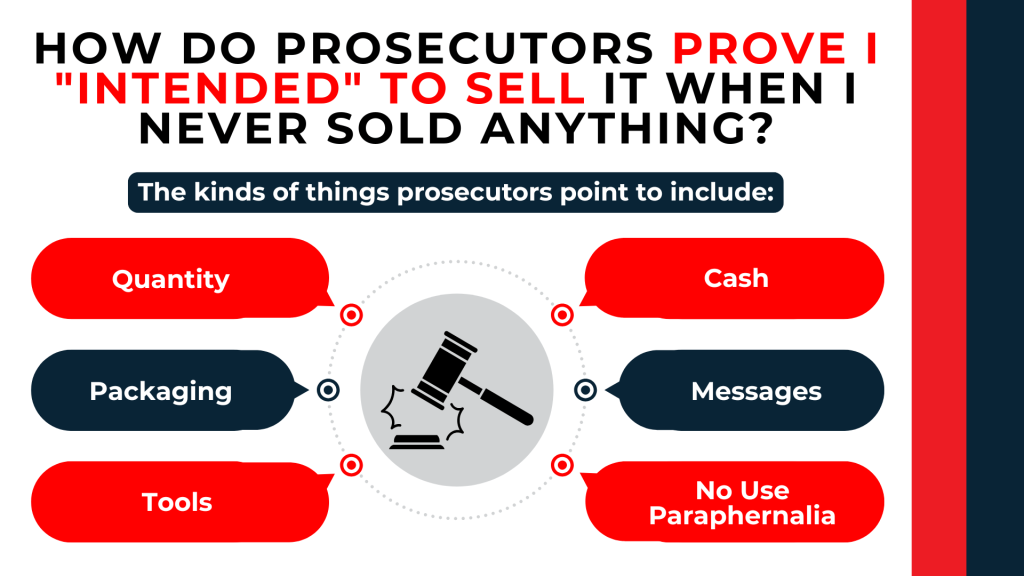
- Simple possession of meth — having it for personal use, with no evidence of intent to sell. Under § 90-95(d)(2), possession of methamphetamine is a Class I felony.
- Possession with intent to sell or deliver (PWISD) — possession plus the circumstantial intent evidence described above. Under § 90-95(b)(1), this is a Class H felony — one step up.
- Trafficking meth — triggered purely by weight, 28 grams or more, regardless of whether you ever intended to sell anything. This is where the penalties jump dramatically.
Notice the fork. The gap between simple possession (Class I) and PWISD (Class H) is fought over intent — the softer, more contestable evidence. The gap between PWISD and trafficking is fought over weight — a number on a lab report. That difference in what has to be proven is exactly what a defense strategy is organized around.
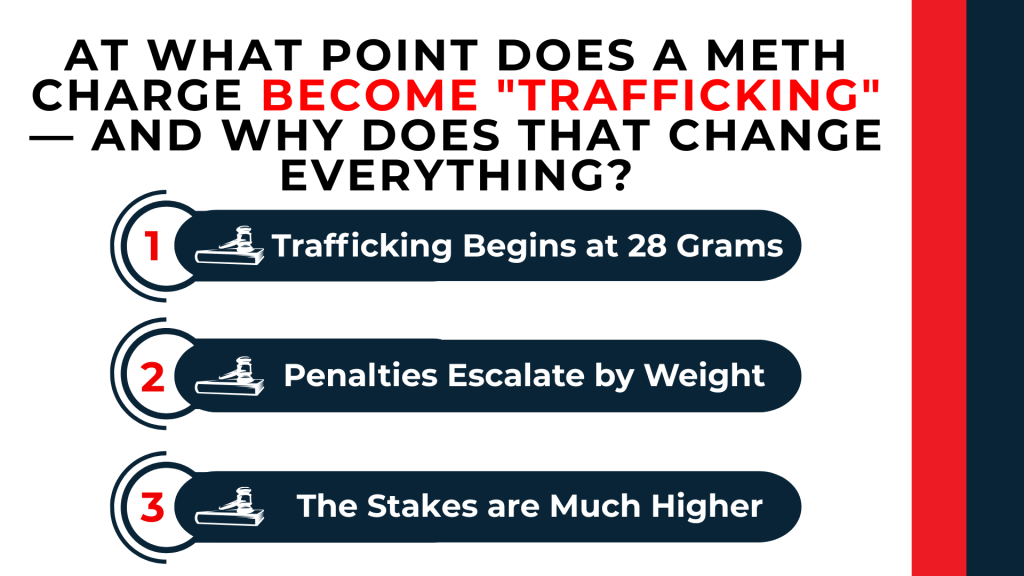
At what point does a meth charge become “trafficking” — and why does that change everything?
The moment the alleged amount hits 28 grams, meth becomes trafficking under § 90-95(h)(3b). At that point intent stops mattering, because trafficking is measured by weight alone. This is the most important threshold in the entire statute. It’s why the number on the state’s scale can matter more than anything you said or did.
The meth trafficking tiers run like this:
- 28 grams to under 200 grams — Class F felony, mandatory 70 to 93 months and a fine of at least $50,000
- 200 grams to under 400 grams — Class E felony, mandatory 90 to 120 months and a fine of at least $100,000
- 400 grams or more — Class C felony, mandatory 225 to 282 months and a fine of at least $250,000
What makes trafficking far worse than PWISD is the word mandatory. North Carolina’s trafficking tiers are fixed by drug weight and apply regardless of your prior record level. A first-time offender and someone with a long history draw the same minimum. There’s generally no probation and no suspended sentence at these levels. Trafficking is also common enough in this state to be taken seriously: North Carolina courts recorded 638 drug-trafficking convictions in FY2024. All of which is why fighting the weight — the reliability of the measurement, what got included in it, the lab’s methods — is often the single highest-value thing a defense can do.
How much prison time am I actually facing?
It depends entirely on which of the three charges sticks and, for the non-trafficking charges, on your prior record. So the honest answer is that the range is wide and heavily influenceable. That’s good news, because it means the sentence is not fixed the day you’re charged.
For PWISD meth as a Class H felony and simple possession as a Class I felony, North Carolina uses structured sentencing. That system sets the punishment according to the offense class and your prior record level. Someone with no record is in a very different position from someone with a long one. These classes also carry real room for outcomes short of lengthy active prison time. Because prior record drives the number, mitigating and negotiating around it is a core part of the work.
For trafficking, the math flips. The mandatory minimums above are locked to weight and ignore your record entirely. That’s exactly why keeping a case below the trafficking line, or below a higher trafficking tier, can be worth years of someone’s life. The difference between 27 grams and 28 grams is the difference between a contestable Class H felony and a mandatory 70-month sentence.
Can a meth intent-to-sell charge be beaten or reduced?
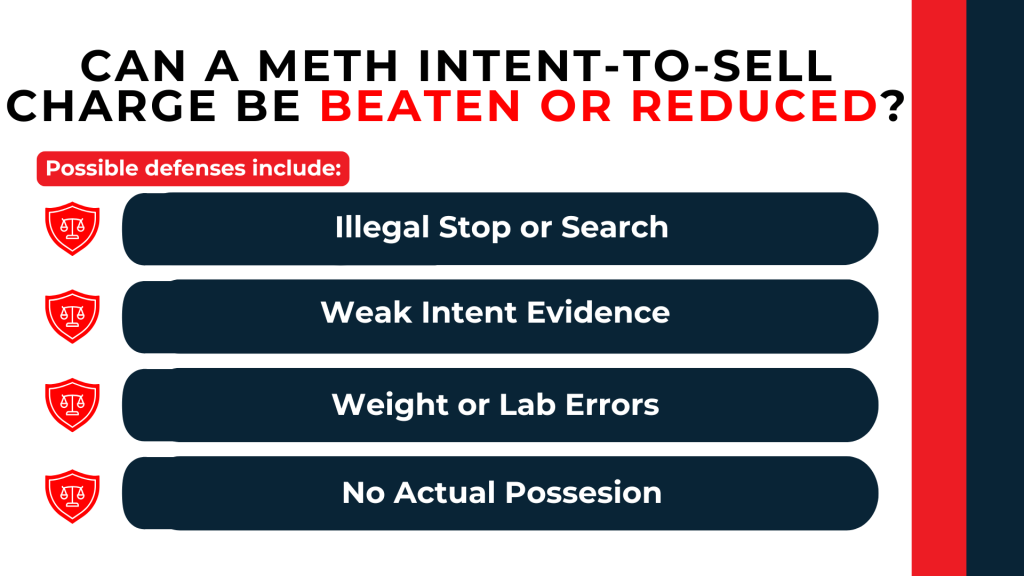
Yes — these cases are dismissed, suppressed, and reduced regularly. They depend on evidence that is often gathered in legally vulnerable ways, or built on inferences that don’t hold up. No lawyer can promise a result, but there are real, recurring levers.
The stop or search was illegal
Most drug evidence comes from a traffic stop, a search of a car, a home, or a person. If the stop wasn’t lawful, the search exceeded its bounds, or the warrant was defective, your attorney may move to suppress that evidence. If the drugs are kept out, the case can collapse with them. This is often the highest-impact challenge in a meth case.
What if the intent evidence is weak?
Because intent is circumstantial, it’s contestable. If the state’s “dealer” story rests on ambiguous packaging, a debatable quantity, or cash with an innocent explanation, that supports knocking PWISD down to simple possession. That drops the charge from a Class H to a Class I felony.
Can the weight or lab work be challenged?
The 28-gram trafficking line makes measurement everything. The composition of what was weighed, the accuracy and calibration of the testing, and the State Crime Laboratory’s chain of custody and analysis can all be contested. Pulling a case below a weight threshold can move it out of trafficking entirely.
The drugs weren’t really “yours”
Sometimes meth is found in a shared car, a shared home, or a space others had access to — rather than physically on you. In those situations, whether the drugs were really yours to control can be genuinely contested. Being near drugs that others could access is not the same as possessing them, and these cases can turn on that distinction.
One piece of realism to plan around: the overwhelming majority of felony convictions in North Carolina — about 98% — come from guilty pleas, not trials. That’s not a reason to give up; it’s the reason skilled negotiation matters so much. Suppression motions, weaknesses in intent, and weight challenges are the leverage that turns a bad plea into a good one — or into a dismissal.
What should I do in the next few days — and how does a former prosecutor help?
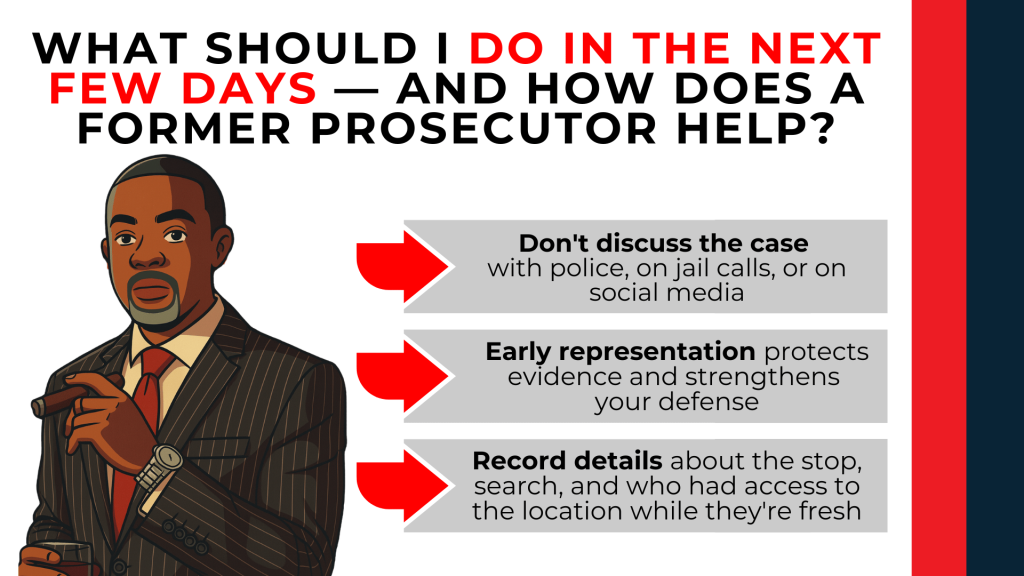
The early days shape the case, so the priorities are simple:
- Stop talking about the case — not to police, not over jail phones, not on social media. The state builds intent out of statements, and silence protects you.
- Get counsel involved immediately — early enough to preserve evidence, address custody and release, and open negotiations before an indictment locks the case in.
- Write down everything you remember about the stop, the search, and who had access to the location. The details that fuel suppression and possession defenses fade fast.
Moving quickly also matters because the process is long and often carries pretrial custody. Here’s the reality: in FY2019, superior court felonies took a median of about 259 days — roughly eight and a half months — to resolve. And as of 2015, 82% of the people in North Carolina jails were awaiting trial rather than serving a sentence. That’s a long time to be fighting from behind, and a reason to have an advocate working on release and strategy from day one.
Review Your Legal Options with Attorney Patrick Roberts
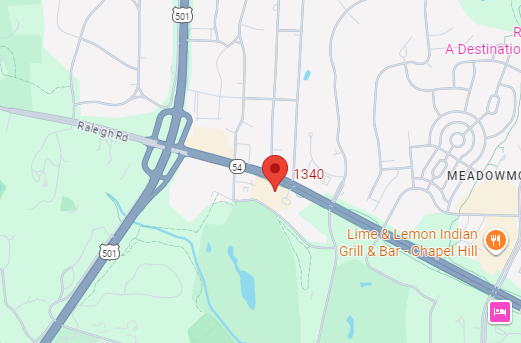
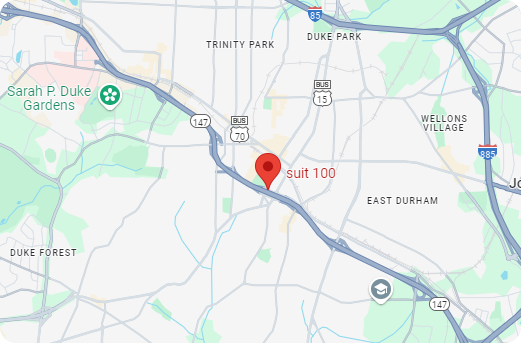
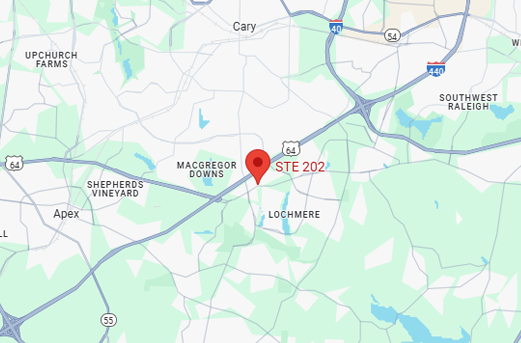
Patrick Roberts is a former Assistant District Attorney who prosecuted cases in Wake, Johnston, and New Hanover counties and has more than 24 years of experience in criminal law. That matters here specifically: he has built the exact intent-and-weight cases the state is now trying to build against you, so he knows how prosecutors decide a case is “dealing” rather than personal use, where their circumstantial theories are thinnest, and how lab weight and chain-of-custody get challenged from the inside. With offices in Raleigh, Durham, Chapel Hill, and Cary, the firm handles meth PWISD and trafficking cases across the Triangle and North Carolina.
Attorney Patrick Roberts delivers high-level expertise in North Carolina criminal law, offering strategic defense built on a foundation of more than 80 criminal jury trials taken to verdict and hundreds of bench trials.
Client Review
“I endorse this lawyer. Patrick is a great trial lawyer and a person who I go to for legal advice in my own practice. Patrick is dedicated to his clients and a master at criminal defense. I would not hesitate to hire him if I was in trouble and needed a lawyer.” – Verified Client Review via Avvo.com
Peer Endorsement
“I attended the Trial Lawyers College with Patrick. If I was facing serious criminal charges anywhere in North Carolina, he would be my first call.” – Verified Peer Endorsement via Avvo.com
Disclaimer: The client reviews and peer endorsements featured on this website reflect actual comments provided by clients and legal professionals. This information is intended for general informational purposes only and does not constitute a guarantee, warranty, or prediction regarding the outcome of any future legal matter. Every legal case presents unique facts and circumstances that must be evaluated independently on its own merits. The testimonials displayed here do not represent all reviews or endorsements received by the firm.
Evaluate Your State or Federal Meth Defense
Facing a PWISD or methamphetamine trafficking charge in North Carolina involves strict statutory penalties, but an arrest is not a final conviction. Defense outcomes depend heavily on identifying constitutional and procedural vulnerabilities early in the judicial process. Whether through challenging the legality of the initial traffic stop or search warrant, disputing circumstantial evidence of intent, or contesting crime lab weight measurements, the State bears the burden of proving every legal element beyond a reasonable doubt.
Because critical procedural deadlines—such as statutory windows to object to State Crime Laboratory reports—begin running shortly after formal charges are filed, early legal evaluation is essential to preserving your available defenses.
Consult with Criminal Defense Attorney Patrick Roberts
If you or a family member are facing methamphetamine charges in North Carolina, obtaining a direct, objective evaluation of your case facts is a critical first step. Patrick Roberts Law PLLC provides legal defense for high-exposure drug prosecutions across state and federal courts in North Carolina.
Schedule a confidential consultation with Attorney Patrick Roberts to review the evidence, evaluate constitutional search-and-seizure issues, and discuss your legal options.
Based in Wake County, Mr. Roberts serves clients in Raleigh, Cary, Apex, Holly Springs, Garner, and Fuquay-Varina, while also managing complex legal matters in every county across North Carolina.
To maintain the quality of its defense and provide each client with individualized attention, the firm limits the number of cases it accepts at any given time.
This article is general legal information about North Carolina law, not legal advice, and reading it does not create an attorney-client relationship. Every case turns on its own facts; for advice about your specific situation, consult a licensed North Carolina criminal defense attorney.
Former assistant district attorney
Contact Patrick Roberts
Facing criminal charges in North Carolina demands seasoned representation. Trust in the experience and dual perspective of Patrick Roberts. Reach out today for a confidential consultation.
-
Call Our Team
Calls answered 24/7






For more information on the selection criteria, go to www.martindale.com
*Each case is different and must be evaluated separately. Prior results achieved do not guarantee similar results can be achieved in future cases.