
If you or someone you care about faces heroin charges in North Carolina, understanding the state’s laws becomes crucial. North Carolina treats heroin offenses as serious felonies, with consequences that can change your life forever. This guide explains what the laws are for heroin in North Carolina, the charges you might face, and why securing legal representation matters for your future.
Is Heroin Illegal in North Carolina?
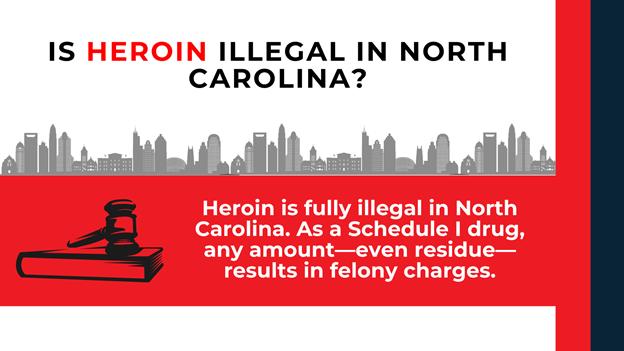
Yes, heroin is completely illegal throughout North Carolina. Under N.C. Gen. Stat. § 90-89, the state classifies heroin as a Schedule I controlled substance—the most restrictive category under state law. This classification means North Carolina recognizes heroin as having:
- A high potential for abuse
- No currently accepted medical use in the United States
- A lack of accepted safety for use, even under medical supervision
The law specifically lists heroin among opium derivatives, making any possession, sale, or manufacture illegal. Unlike some prescription medications containing controlled substances, there’s no legal way to possess heroin in North Carolina. Even possessing the smallest amount—residue in a bag or syringe—violates state law and results in felony charges.
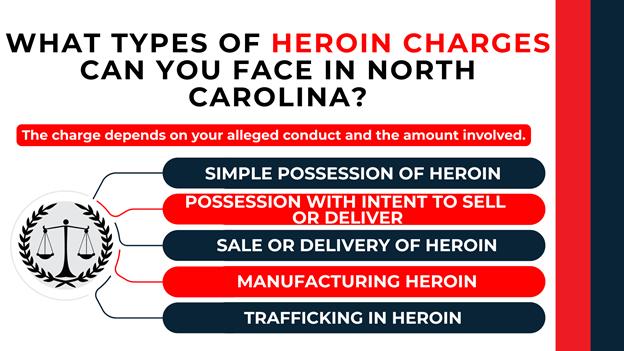
What Types of Heroin Charges Can You Face in North Carolina?
North Carolina law establishes several different heroin-related offenses under N.C. Gen. Stat. § 90-95. The specific charge depends on your alleged conduct and the amount of heroin involved.
Simple Possession of Heroin
Under N.C. Gen. Stat. § 90-95(a)(3), possessing any amount of heroin constitutes a felony. Simple possession typically means having heroin for personal use without evidence suggesting you planned to sell or distribute it. Police might discover heroin during a traffic stop, while serving a warrant, or during an arrest for another offense.
Possession with Intent to Sell or Deliver
When prosecutors believe you possessed heroin planning to distribute it, they charge you under N.C. Gen. Stat. § 90-95(a)(1). This more serious charge doesn’t require proof of actual sales. Instead, prosecutors use circumstantial evidence such as possessing multiple packages, having scales or baggies, carrying large amounts of cash, or having more heroin than someone would typically use personally. The challenge lies in distinguishing between personal use and distribution intent—something your attorney can help establish.
Sale or Delivery of Heroin
Actually transferring heroin to another person violates N.C. Gen. Stat. § 90-95(a)(1). This applies whether you sold heroin for money, traded it, or gave it away for free. Many of these cases involve undercover operations where law enforcement records transactions.
Manufacturing Heroin
Though less common, manufacturing heroin also violates N.C. Gen. Stat. § 90-95(a)(1). This might involve processing raw materials or converting other substances into heroin.
Trafficking in Heroin
Under N.C. Gen. Stat. § 90-95(h)(4), possessing certain amounts of heroin automatically constitutes trafficking—one of North Carolina’s most serious drug charges. You don’t need to sell anything; simply possessing the statutory amount triggers trafficking charges with mandatory minimum sentences.
How Does North Carolina Classify Heroin Offenses?
North Carolina uses a felony classification system that determines potential sentencing ranges. According to N.C. Gen. Stat. § 90-95:
Class I Felony: Simple possession falls under N.C. Gen. Stat. § 90-95(d)(1). While this is the lowest felony level, it still means potential prison time and a permanent criminal record affecting employment, housing, and other opportunities.
Class H Felony: Possession with intent to manufacture, sell, or deliver constitutes a Class H felony under N.C. Gen. Stat. § 90-95(b)(1).
Class G Felony: The actual sale or delivery of heroin is a Class G felony according to N.C. Gen. Stat. § 90-95(b)(1).
Trafficking Classifications: Heroin trafficking under N.C. Gen. Stat. § 90-95(h)(4) involves various felony classes based on the amount, with higher quantities resulting in more serious classifications and mandatory minimum sentences.
What Must the State Prove in a Heroin Case?
For any conviction, prosecutors must prove specific elements beyond a reasonable doubt. Understanding these requirements helps identify potential defenses.
For possession charges, the state must prove three things:
- Laboratory testing must confirm the substance was actually heroin.
- You must have knowingly possessed it—meaning you knew both that you had the item and that it contained heroin. If someone placed heroin in your car without your knowledge, or you reasonably believed the substance was something else, this element might be missing.
- You must have had control over the heroin, either actual (in your pocket) or constructive (in your home or car).
For possession with intent charges, prosecutors need all the possession elements plus evidence you planned to distribute the heroin. Without direct evidence like witnessed sales, they rely on circumstantial evidence.
However, your attorney can present alternative explanations—large quantities might reflect personal stockpiling, cash could come from legitimate work, or multiple packages might be personal use portions.
Trafficking charges require accurate weight measurements following proper procedures. Errors in weighing or testing can mean the difference between trafficking and lesser charges.
What Should You Do If You’re Charged with a Heroin Offense?
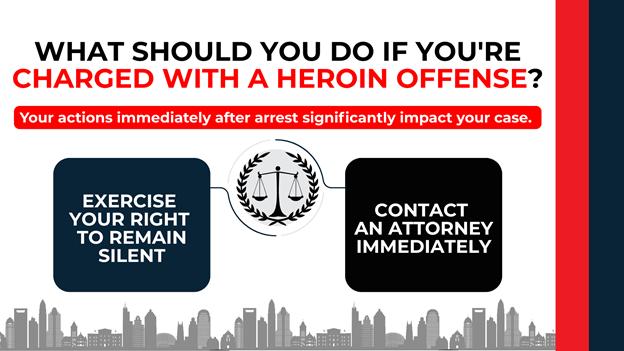
Your actions immediately after arrest significantly impact your case.
- Exercise your right to remain silent. Politely tell officers you’re invoking this right and want an attorney, then stop talking. Many people hurt their cases trying to explain or cooperate without legal counsel.
- Contact an attorney immediately. Early representation can preserve helpful evidence, prevent additional charges, begin negotiations with prosecutors, and ensure your rights are protected. The sooner your attorney gets involved, the more options remain available.
Avoid discussing your case with anyone except your attorney. This includes staying off social media, not talking to other inmates if you’re in custody, and avoiding contact with witnesses. Remember that jail phone calls are recorded and prosecutors review them for incriminating statements.
If you have information that might help your defense—like receipts, text messages, or witness names—save it for your attorney. Don’t try to investigate your own case or contact witnesses directly.
How Can Prior Convictions Affect Heroin Charges?
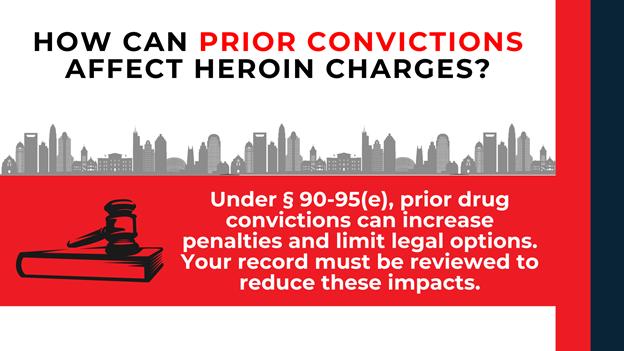
Under N.C. Gen. Stat. § 90-95(e), previous drug convictions enhance penalties for current charges. This applies whether prior convictions occurred in North Carolina, another state, or federal court. Prior convictions can increase your felony classification, limit eligibility for diversion programs, affect plea negotiations, and influence sentencing decisions. Your attorney should carefully review your criminal history to develop strategies minimizing these impacts.
Why You Need an Attorney for Heroin Charges in North Carolina
A heroin conviction in North Carolina impacts not only your freedom but also your employment, professional licenses, housing, and even immigration status. The stakes are high. Our experienced attorneys scrutinize every aspect of your case—from search and seizure to drug testing procedures—fighting for the best possible outcome.*
At Patrick Roberts Law, we defend clients throughout North Carolina against serious heroin charges. Contact us now for a confidential consultation. We’ll review your situation, explain your legal options, and act quickly to build your defense—because in drug cases, time is critical.

Attorney illustration with city skyline; warns that a heroin conviction can affect freedom, job, and housing, and promotes legal defense by Patrick Roberts.
*Each case is different and must be evaluated separately. Prior results achieved do not guarantee similar results can be achieved in future cases.
Former assistant district attorney
Contact Patrick Roberts
Facing criminal charges in North Carolina demands seasoned representation. Trust in the experience and dual perspective of Patrick Roberts. Reach out today for a confidential consultation.
-
Call Our Team
Calls answered 24/7







For more information on the selection criteria, go to www.martindale.com
*Each case is different and must be evaluated separately. Prior results achieved do not guarantee similar results can be achieved in future cases.