
If you or someone you know has been charged with having a gun as a felon in North Carolina, you’re facing serious legal trouble. As Patrick Roberts Law, we’ve helped many clients deal with these gun laws and protect their rights. This guide explains what you need to know about possession of firearm by felon in North Carolina, the possible punishments, and how you might defend against these charges.
What Is the North Carolina Felony Firearms Act?
North Carolina’s laws about felons and guns are found in Article 54A, called the Felony Firearms Act. The main part of this law is G.S. 14-415.1, which makes it illegal for people with felony convictions to have guns or weapons of mass destruction.
What Does the Law Say About Felons With Guns in NC?
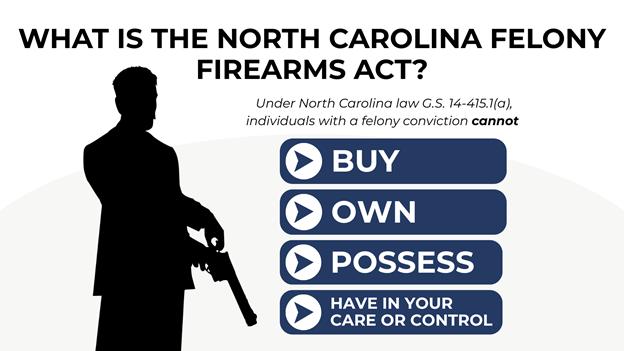
Under North Carolina law G.S. 14-415.1(a), if you have a felony conviction, you cannot:
- Buy
- Own
- Possess
- Have in your care or control
Any gun or weapon of mass destruction as defined in G.S. 14-288.8(c).
The law defines a gun as:
- Any weapon (including a starter gun) that shoots or can be changed to shoot a bullet using an explosive
- The frame or receiver of such a weapon
- Any gun silencer or muffler
It’s worth noting that antique firearms, as defined in G.S. 14-409.11, are not included in this ban.
What Are the Penalties for Possession of Firearm by Felon?
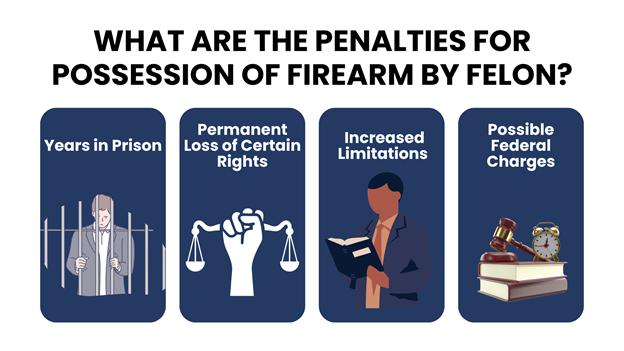
Breaking North Carolina’s laws against felons having guns comes with harsh penalties. Anyone who violates G.S. 14-415.1 will be punished as a Class G felon.
In North Carolina, a Class G felony can mean:
- Potentially years in prison, depending on your criminal history
- Permanent loss of certain rights
- More limits on jobs, housing, and other opportunities
- Possible federal charges with even tougher penalties
Which Prior Convictions Mean You Can’t Have a Gun?
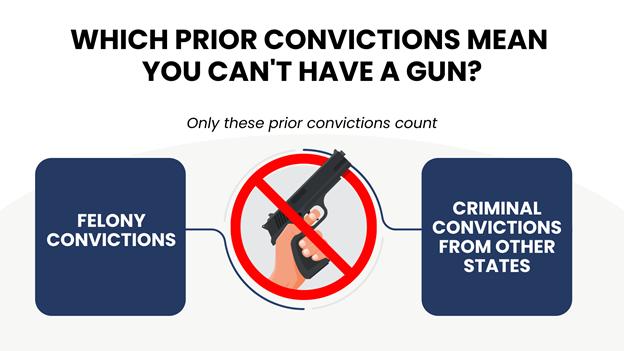
Not all prior convictions will stop you from having a gun in North Carolina. According to G.S. 14-415.1(b), only these prior convictions count:
- Felony convictions in North Carolina, no matter when they happened
- Criminal convictions from other states or the federal government that are similar to North Carolina felonies and can be punished by more than one year in prison
When you face charges under this law, records of prior convictions—from North Carolina courts, other states, or federal courts—can be used as evidence against you.
What Counts as a “Conviction” Under This Law?
For the Felony Firearms Act, a “conviction” means:
- A final judgment in any case where you could get felony punishment or more than one year in prison
- This applies no matter what plea you entered or what sentence you actually got
- An official record of a conviction or guilty plea from any state or federal court serves as strong evidence
How Are Felon with Firearm Cases Handled in Court?
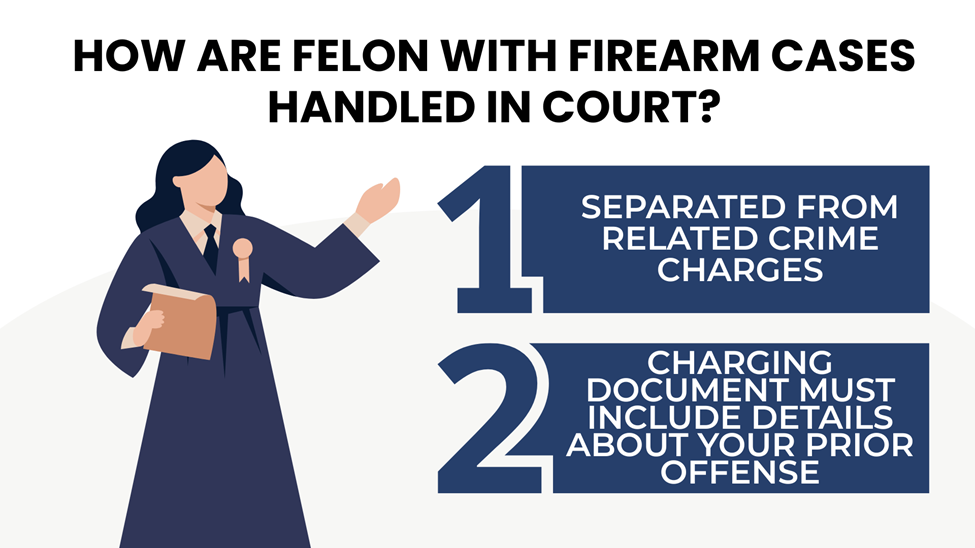
The North Carolina Felony Firearms Act has specific rules for how these cases must be prosecuted:
- The charge for having a gun as a felon must be separate from charges for any related crimes.
- The charging document must include specific details about your prior offense:
- When the prior offense happened
- What type of offense it was and its punishment
- When you were convicted or pled guilty
- Which court handled your case
- What verdict and judgment were given
What Are the Exceptions to North Carolina’s Ban on Felons Having Guns?
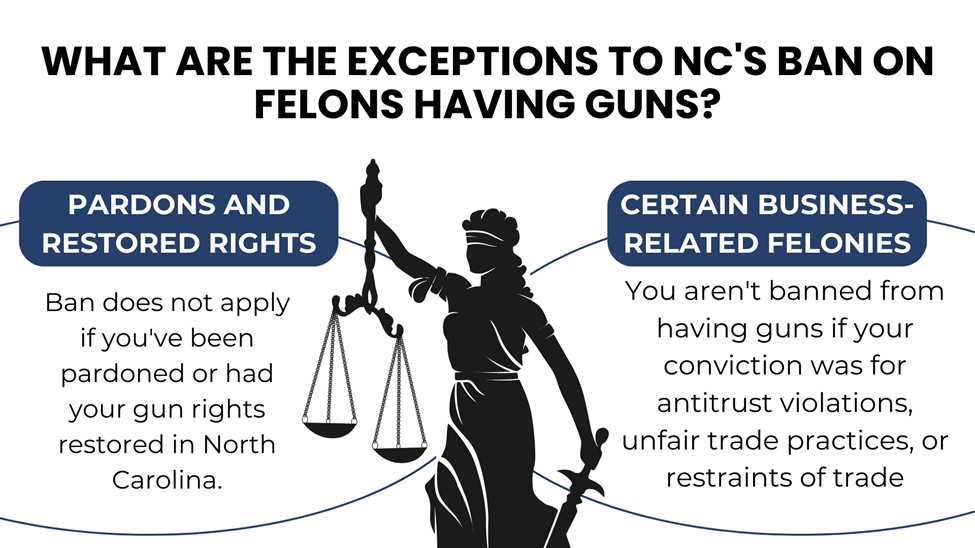
There are a few situations where a person with a felony conviction might still be allowed to have a gun in North Carolina:
Pardons and Restored Rights
Under G.S. 14-415.1(d), the ban doesn’t apply if you have:
- Been pardoned under the laws where you were convicted
- Had your gun rights restored under those laws, but only if North Carolina law would also allow such restoration
Certain Business-Related Felonies
According to G.S. 14-415.1(e), you aren’t banned from having guns if your felony conviction was for:
- Antitrust violations
- Unfair trade practices
- Restraints of trade
To know if these exceptions apply to your case, you need help from an experienced North Carolina defense lawyer.
How Can You Defend Against Felon with Firearm Charges?
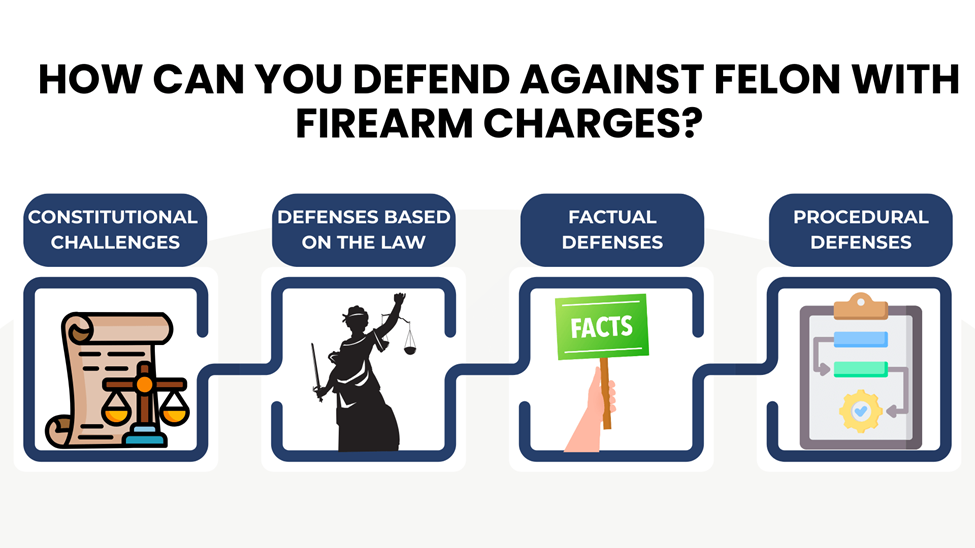
If you’re facing charges for having a gun as a felon in North Carolina, several possible defenses might help your case:
Constitutional Challenges
- Fourth Amendment violations about how the gun was found
- Second Amendment challenges (though these are hard to win)
Defenses Based on the Law
- Proving the gun qualifies as an antique
- Showing that your felony was a business-related one that’s exempt
- Proving your gun rights were legally restored
Factual Defenses
- Challenging whether you actually possessed or controlled the gun
- Arguing the gun didn’t work
- Questioning whether your prior conviction should count
Procedural Defenses
- Improper charging documents missing required information
- Time limit issues
- Challenges about which court has the right to hear your case
Why Do You Need a Skilled North Carolina Gun Defense Lawyer?
Felon with firearm charges in North Carolina can seriously impact the rest of your life. The laws about felons and guns are complicated, involving both state and federal laws, constitutional issues, and complex court procedures.
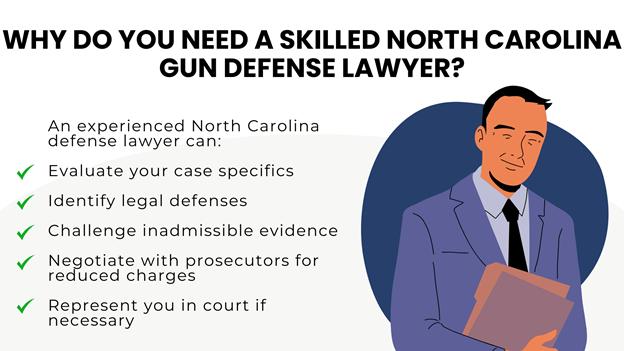
An experienced North Carolina defense lawyer who knows gun cases can:
- Look at the specific facts of your case
- Find potential legal defenses
- Challenge evidence that shouldn’t be used against you
- Talk with prosecutors about reducing your charges when possible
- Fight for you in court if needed
Contact Our North Carolina Gun Defense Team Today
If you’ve been charged with possession of a firearm by a felon in North Carolina, Patrick Roberts Law Firm is ready to help. Patrick and his team have deep experience navigating North Carolina’s firearm laws and have successfully* defended clients facing similar charges.
We offer confidential consultations to review your case, explain your legal options, and build a strong, personalized defense strategy.
Don’t face these charges alone—contact Patrick Roberts Law Firm today to start protecting your rights and your future.
*DISCLAIMER: Each case is different and must be evaluated on its individual facts. Attorney Roberts works hard to assess each case individually. Prior results do not guarantee any future outcome.
Former assistant district attorney
Contact Patrick Roberts
Facing criminal charges in North Carolina demands seasoned representation. Trust in the experience and dual perspective of Patrick Roberts. Reach out today for a confidential consultation.
-
Call Our Team
Calls answered 24/7






For more information on the selection criteria, go to www.martindale.com
*Each case is different and must be evaluated separately. Prior results achieved do not guarantee similar results can be achieved in future cases.