

Understanding Assault Charges in North Carolina
Many people facing assault charges in North Carolina ask: “Is assault a felony in North Carolina?” The answer isn’t simple, as assault can be either a misdemeanor or a felony depending on the details of what happened. Understanding these differences is important for anyone facing assault charges in the state.
North Carolina law (specifically sections § 14-33 through § 14-34.2) outlines different levels of assault charges and their penalties. This guide will explain when assault is treated as a misdemeanor and when it’s considered a more serious felony offense in North Carolina.
What Is Simple Assault in North Carolina?
What Counts as Simple Assault in North Carolina?
Under North Carolina law (§ 14-33(a)), simple assault is a Class 2 misdemeanor—not a felony. Simple assault happens when someone tries to cause physical harm to another person or makes someone reasonably fear they’re about to be harmed.
Simple assault includes:
- Basic assault (threatening or trying to cause physical harm)
- Simple assault and battery (actually touching someone in a harmful or offensive way)
- Taking part in a simple fight (mutual combat)
These basic charges have much lighter penalties than felony assault charges, usually resulting in probation or up to 60 days in jail for people with prior convictions.

How to Defend Against Simple Assault Charges
If you’re facing simple assault charges in North Carolina, several defense strategies might help your case:
- Arguing the contact was an accident, not intentional
- Showing you were defending yourself or others
- Proving the other person agreed to the contact (in situations where that’s legally valid)
- Pointing out that prosecutors don’t have enough evidence to prove all parts of the charge
A good defense often focuses on challenging whether you intended to cause harm, which prosecutors must prove. If they can’t prove you intended to cause fear of harmful contact, the charge may not hold up.

What Are the More Serious Types of Misdemeanor Assault?
Class 1 Misdemeanor Assault
Under § 14-33(b), assault can become a Class 1 misdemeanor in certain situations. The most common is assaulting a sports official during or right after a sporting event.
This higher charge recognizes the need to protect referees, umpires, coaches, and others who enforce rules at sports events, from youth games to professional matches.
When defending against such charges, showing you didn’t know the person was a sports official or that the incident happened well after the event can be good strategies to possibly lower the charges.
What Makes an Assault a Class A1 Misdemeanor?
North Carolina law creates the Class A1 misdemeanor as the most serious misdemeanor assault charge under § 14-33(c). This applies when the assault involves any of these factors:
- Causing serious injury (though not as severe as “serious bodily injury”)
- Using a weapon that could kill someone
- A man at least 18 years old assaulting a woman
- Assaulting a pregnant woman
- Assaulting a child under 12 years old
- Assaulting government workers performing their official duties
- Assaulting school employees or volunteers
- Assaulting public transit operators
- Assaulting certified company or campus police officers
- Assaulting rideshare drivers (like Uber or Lyft drivers)
These higher-level misdemeanor charges show that lawmakers want to provide more protection to vulnerable people and those performing important public services.

How Can You Defend Against Serious Misdemeanor Assault Charges?
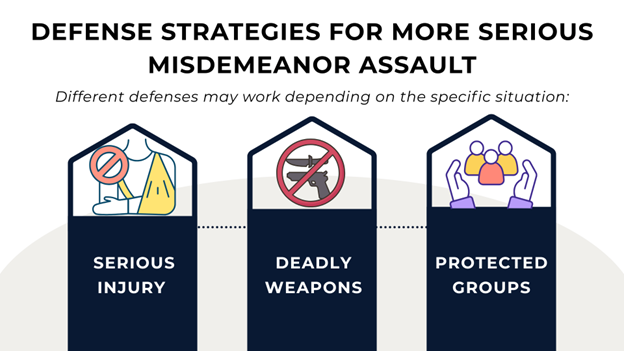
When facing Class A1 misdemeanor assault charges in North Carolina, different defenses may work depending on the specific situation:
For charges involving serious injury, your lawyer might challenge how severe the injuries really were, potentially reducing the charge to simple assault.
In cases involving deadly weapons, questioning whether the item truly counts as a “deadly weapon” under North Carolina law can be effective. Items not normally considered deadly might be classified that way based on how they were used.
For charges involving protected groups (government employees, school staff, etc.), showing you didn’t know the person’s status or that they weren’t actually doing their official duties at the time can be crucial to your defense.
When Does Assault Becomes a Felony in North Carolina?
North Carolina law specifically identifies several situations where assault rises to the level of a felony. Understanding these differences is important, as the consequences of felony convictions are much more severe than misdemeanor penalties.
When Does Assault Become a Class F Felony?
Under § 14-32.4(a), assault becomes a Class F felony when it causes “serious bodily injury” to another person. The law clearly defines serious bodily injury as harm that:
- Creates a substantial risk of death
- Causes serious permanent disfigurement
- Results in coma
- Causes a long-lasting condition resulting in extreme pain
- Causes permanent or long-term loss or impairment of any body part or organ
- Results in extended hospitalization
This higher charge recognizes the much greater harm caused by assaults resulting in these types of severe injuries.
How Do You Defend Against Serious Bodily Injury Charges?
When facing Class F felony assault charges for causing serious bodily injury, medical evidence becomes vital to your defense. Your lawyer may:
- Get independent medical evaluations to challenge how prosecutors describe the injuries
- Argue that the injuries, while serious, don’t meet the specific legal definition of “serious bodily injury”
- Present evidence that something else caused the injuries
- Challenge the connection between your alleged actions and the resulting injuries
Successfully challenging just one element of the “serious bodily injury” definition can potentially reduce charges from a felony to a misdemeanor, significantly lowering potential penalties.
Class H Felony: Assault by Strangulation
North Carolina law (§ 14-32.4(b)) specifically makes assault causing physical injury by strangulation a Class H felony. This special charge reflects lawmakers’ recognition that strangulation assaults are particularly dangerous and can cause serious injury or death even without leaving immediately visible marks.
Defending Against Strangulation Assault Charges
Defense strategies in strangulation cases often focus on:
- Challenging whether actual strangulation occurred (as opposed to other types of contact around the neck)
- Disputing evidence of physical injury from the alleged strangulation
- Presenting evidence of self-defense where applicable
- Questioning witness reliability or consistency in describing what happened
Expert testimony about the physical evidence (or lack thereof) consistent with strangulation can be crucial in these cases.
What Constitutes a Class E Felony Assault?
Several types of assault charges fall under the Class E felony category in North Carolina:
- Assault with a deadly weapon causing serious injury (§ 14-32(b))
- Assault with a deadly weapon with intent to kill (§ 14-32(c))
- Assault with a deadly weapon against government officials including officers, employees, company police, or campus police (§ 14-34.2)
These Class E felony charges cover situations where both the means of assault (deadly weapon) and either the result (serious injury) or intent (to kill) make the offense more serious.
Defense Strategies for Class E Felony Assault
Each of these Class E felony charges offers different defense possibilities:
For assault with a deadly weapon causing serious injury, your lawyer might:
- Challenge whether the object used truly counts as a “deadly weapon” under North Carolina law
- Contest how severe the injuries actually were
- Present evidence that it was an accident or you lacked intent
When facing assault with a deadly weapon with intent to kill charges, your defense may focus on:
- Disproving that you specifically intended to kill, which prosecutors must prove beyond a reasonable doubt
- Presenting evidence of self-defense or defense of others
- Showing that the object wasn’t used in a way that suggests an intent to kill
For assault charges involving government officials, potential defenses include:
- Showing you didn’t know about the victim’s official status
- Proving the official wasn’t performing official duties at the time
- Challenging whether the assault involved a deadly weapon as legally defined
How Does Assaulting Emergency Workers Affect Charges?
North Carolina law provides extra protection for emergency workers through two Class D felony assault provisions:
- Assault with a deadly weapon causing serious injury to an emergency worker (§ 14-32(d))
- Assault with a deadly weapon with intent to kill an emergency worker (§ 14-32(e))
The law defines “emergency worker” to include police officers, firefighters, EMTs, and medical responders. This increased penalty recognizes the vital public service these individuals provide and the heightened dangers they face in emergency situations.
Defending Against Class D Felony Assault Charges
Defense strategies for these serious charges might include:
- Showing you didn’t know the victim was an emergency worker
- Proving the emergency worker wasn’t performing official duties at the time
- Challenging whether the item used should be classified as a “deadly weapon”
- Contesting the severity of injuries or intent elements
- Presenting evidence of justification or necessity in emergency circumstances
The higher penalties for these offenses make strong legal representation particularly important.
What Is the Most Serious Assault Charge in North Carolina?
The most serious assault charge in North Carolina is the Class C felony of assault with a deadly weapon with intent to kill inflicting serious injury (§ 14-32(a)). This charge combines all three aggravating elements:
- Use of a deadly weapon
- Specific intent to kill
- Causing serious injury
This charge carries much harsher penalties than other assault offenses, with possible prison sentences up to 231 months (over 19 years) for offenders with the most serious prior record levels.
Defending Against Class C Felony Assault Charges
The complexity of this charge—with its multiple required elements—provides several defense options:
- Challenging any one of the three required elements can potentially reduce the charge to a lesser offense
- Contesting whether the item used should be classified as a “deadly weapon”
- Presenting evidence that undermines the claim you intended to kill
- Disputing whether the injuries meet the legal threshold for “serious injury”
- Establishing self-defense or defense of others as justification
Successfully challenging just one of these elements can significantly reduce the severity of charges and potential penalties.

What Factors Elevate Assault to a Felony?
Understanding what turns assault from a misdemeanor into a felony in North Carolina is crucial for anyone facing assault charges. These key elements include:
How Do Weapons Impact Assault Charges?
The use of a “deadly weapon” often transforms assault from a misdemeanor to a felony in North Carolina. State law defines deadly weapons broadly to include:
- Conventional weapons like guns and knives
- Ordinary objects used in a way that could cause death or serious injury
- Vehicles when used as weapons
- Even parts of the human body in some cases (such as feet when wearing heavy boots)
When defending against charges involving deadly weapons, challenging whether the item in question meets the legal definition of a “deadly weapon” in your specific case can be an effective strategy.
How Does Intent Affect Assault Classifications?
North Carolina law distinguishes between general intent to commit assault and the specific “intent to kill.” Proving intent to kill requires prosecutors to show that you acted with the specific purpose of causing death, not just injury. This higher standard of proof creates defense opportunities by:
- Presenting evidence of actions that don’t match an intent to kill
- Showing that you stopped the assault voluntarily
- Proving that you helped the person afterward
- Establishing that your actions were impulsive rather than planned
How Do Injuries Determine Assault Severity?
How severe the injuries are plays a key role in determining whether charges will be filed as a felony or misdemeanor. North Carolina law distinguishes between:
- Basic injury
- Serious injury (which can support Class A1 misdemeanor charges)
- Serious bodily injury (which raises charges to a Class F felony)
Medical evidence becomes crucial in these cases, and your lawyer may challenge how prosecutors characterize the injuries through independent medical evaluations and expert testimony.
Does the Victim’s Identity Affect Assault Charges?
Who the victim is can raise charges to a felony, particularly when the victim is:
- An emergency worker (police, firefighter, EMT, medical responder)
- A government official or employee performing official duties
- A company or campus police officer
When these protected groups are involved, showing you didn’t know about the victim’s status or that they weren’t doing their official duties at the time can be key defense strategies.

What Are the Other Consequences of Felony Assault Convictions in North Carolina
The penalties for felony assault convictions in North Carolina are much more severe than for misdemeanor assault and vary based on the specific felony class and the defendant’s prior criminal record. Prison time is a very real possibility for all felony assault charges, particularly when it rises to the level of a class C felony.
Beyond prison time, a felony assault conviction in North Carolina carries many other consequences that can affect your life long after completing your sentence:
- Permanent criminal record: Felony convictions stay on your record for life in North Carolina and must be disclosed on job applications
- Loss of civil rights: Including the right to own guns, vote (while incarcerated), and serve on a jury
- Employment problems: Many employers are reluctant to hire people with violent felony convictions
- Professional licensing issues: Certain professional licenses may be denied or taken away
- Housing restrictions: Many landlords do background checks and may deny housing
- Immigration consequences: Non-citizens may face deportation or other immigration problems
- Financial impacts: Including court costs, payments to victims, and difficulty getting loans
The far-reaching impact of these additional consequences makes building a strong defense against felony assault charges particularly important.

Conclusion: Why Experienced Legal Help Is Critical
The question “Is assault a felony in North Carolina?” has a complex answer that depends on multiple factors, including:
- How severe any injuries were
- Whether a deadly weapon was used
- What your specific intent was
- Who the victim was and their status
- How the assault was carried out
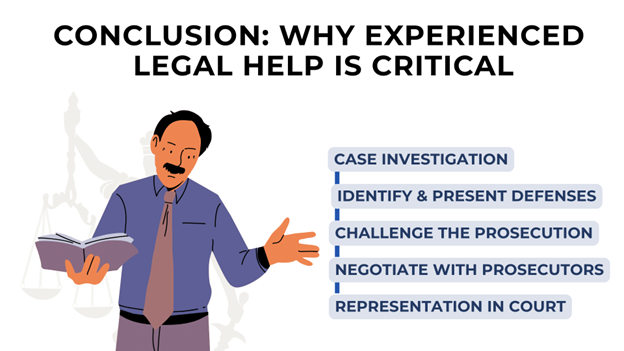
Given the big differences in penalties between misdemeanor and felony assault convictions, having knowledgeable legal representation is essential for anyone facing assault charges in North Carolina. An experienced criminal defense attorney can:
- Thoroughly investigate what happened in your case
- Identify and present applicable defenses
- Challenge the prosecution’s evidence and witness testimony
- Negotiate for reduced charges when possible
- Provide strong representation at trial when necessary
Understanding the differences between misdemeanor and felony assault in North Carolina is the first step toward building an effective defense. With detailed knowledge of North Carolina assault laws and experienced legal guidance, you can work toward achieving the best possible outcome in your case.
If you or a loved one are facing an assault charge, you deserve a legal advocate with the experience and dedication to secure the best possible outcome. Attorney Patrick Roberts of Patrick Roberts Law has successfully* defended numerous clients facing charges of assault and other violent crimes. Contact our firm today for a confidential consultation.
*DISCLAIMER: While Attorney Roberts works hard to secure results for his clients, every case is unique and must be evaluated on its individual facts. Past results do not guarantee future success. Each client’s case requires a unique strategy based on the facts of that case.
Former assistant district attorney
Contact Patrick Roberts
Facing criminal charges in North Carolina demands seasoned representation. Trust in the experience and dual perspective of Patrick Roberts. Reach out today for a confidential consultation.
-
Call Our Team
Calls answered 24/7






For more information on the selection criteria, go to www.martindale.com
*Each case is different and must be evaluated separately. Prior results achieved do not guarantee similar results can be achieved in future cases.