

It is important to know the difference between sexual battery and sexual assault, especially if you live in North Carolina and face accusations of sexual misconduct. Both crimes involve unwanted sexual acts. However, they are different in what they mean and how the law treats them. This guide explains each term, the key differences, the legal consequences, and some common defenses.
What Do These Terms Mean?
Sexual Assault
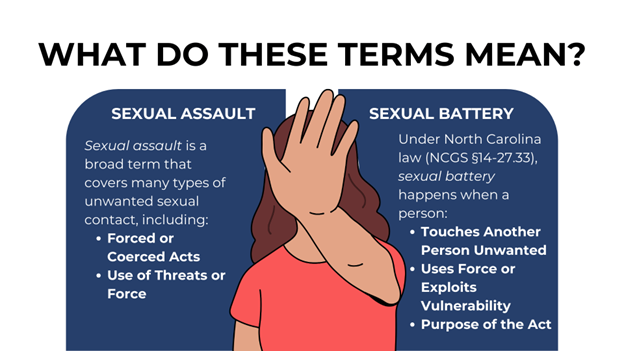
Sexual assault is a broad term that covers many types of unwanted sexual contact. In North Carolina, sexual assault may include:
- Forced or Coerced Acts: This can include unwanted kissing or touching, or forcing someone into oral, vaginal, or anal sex (N.C.G.S. § 14-27.21, § 14-27.22, § 14-27.26, § 14-27.27).
- Use of Threats or Force: The act may involve physical force or threats to make someone do something sexual (N.C.G.S. § 14-27.21(a)(1)).
When sexual assault involves penetration (like rape), it is usually treated as a felony. This means the crime is very serious and has harsh penalties.
Sexual Battery
Sexual battery is a more specific offense. Under North Carolina law (NCGS §14‑27.33), sexual battery happens when a person:
- Touches Another Person Unwanted: This means touching private parts (such as the genitals, breasts, groin, buttocks, or anus) without permission (N.C.G.S. § 14-27.20(5)).
- Uses Force or Exploits Vulnerability: The act happens by force or when the victim is mentally or physically unable to stop it (N.C.G.S. § 14-27.33(a)(1)-(2)).
- Purpose of the Act: The act is done for sexual arousal, sexual gratification, or abuse (N.C.G.S. § 14-27.33(a)).
Sexual battery is classified as a Class A1 misdemeanor in North Carolina. This is a serious misdemeanor but not as severe as a felony.
Key Differences Between Sexual Battery and Sexual Assault
Even though both crimes involve unwanted sexual actions, they are different in several ways.
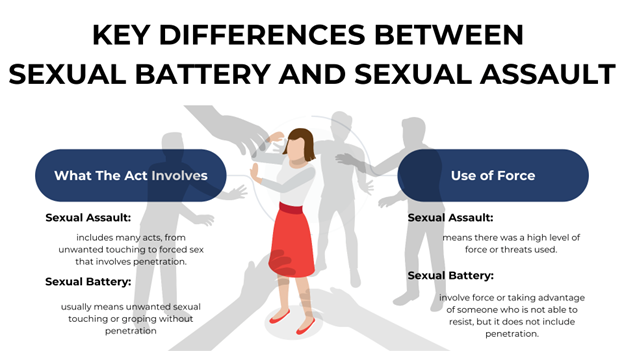
What the Act Involves
- Sexual Assault:
This term includes many acts, from unwanted touching to forced sex that involves penetration. - Sexual Battery:
This term usually means unwanted sexual touching or groping without penetration.
Use of Force
- Sexual Assault:
This often means there was a high level of force or threats used. - Sexual Battery:
This may involve force or taking advantage of someone who is not able to resist, but it does not include penetration.
How the Law Treats Them
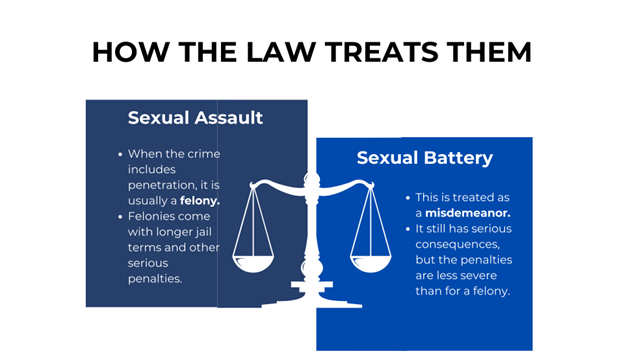
- Sexual Assault:
When the crime includes penetration, it is usually a felony. Felonies come with longer jail terms and other serious penalties. - Sexual Battery:
This is treated as a misdemeanor. It still has serious consequences, but the penalties are less severe than for a felony.
Legal Consequences in North Carolina
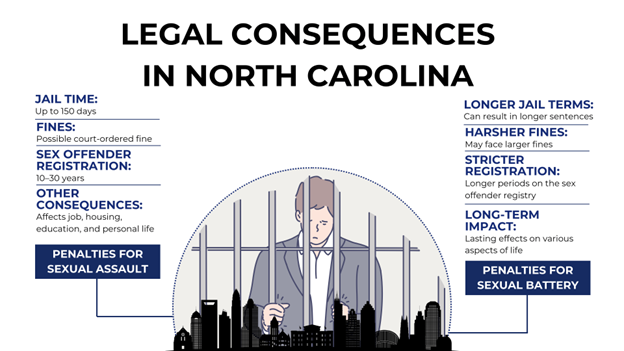
Penalties for Sexual Battery
If you are convicted of sexual battery in North Carolina, you may face:
- Jail Time: Up to 150 days in jail (N.C.G.S. § 14-27.33(b), § 15A-1340.23), though the exact time depends on your record and the case details.
- Fines: The court may order you to pay a fine (N.C.G.S. § 15A-1340.23).
- Sex Offender Registration: You will need to register on the North Carolina Sex Offender Registry for 10 to 30 years (N.C.G.S. § 14-208.7, § 14-208.12A).
- Other Consequences: A conviction can hurt your job, housing, education, and personal life because it stays on your record.
Penalties for Sexual Assault
If you are convicted of a sexual assault offense in North Carolina, you may face:
- Prison Time: Sentences range from 44 months to life imprisonment (N.C.G.S. § 15A-1340.17), depending on the specific offense, with mandatory minimums of 25 years for crimes against children (N.C.G.S. § 14-27.23(b), § 14-27.28(b)).
- Felony Record: Sexual assault offenses are classified as felonies (B1, C, E, or G) (N.C.G.S. § 14-27.21(b), § 14-27.22(b)), carrying more severe consequences than misdemeanors.
- Sex Offender Registration: You will need to register on the North Carolina Sex Offender Registry for 30 years or life (N.C.G.S. § 14-208.23, § 14-208.26), with satellite monitoring required for certain offenses (N.C.G.S. § 14-208.40).
- Fines: The court may impose fines up to $50,000 for felony offenses (N.C.G.S. § 15A-1340.17).
- Lifetime Consequences: A felony sexual assault conviction severely impacts employment, housing, parental rights (N.C.G.S. § 14-27.21(c), § 14-27.22(c)), and personal relationships.
Defense Strategies and Legal Help
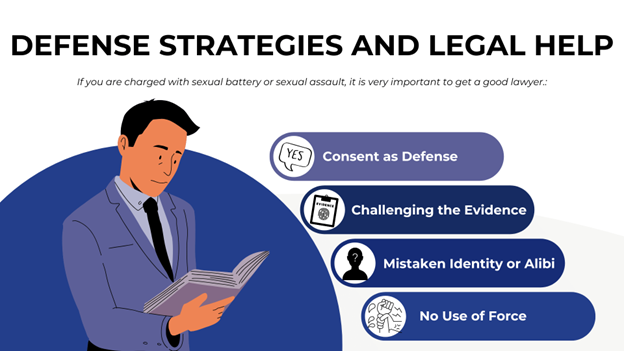
If you are charged with sexual battery or sexual assault, it is very important to get a good lawyer. Here are some common defense strategies:
Consent as a Defense
You may show that the other person agreed to the sexual contact. Consent must be clear, given freely, and from someone who understands what they are agreeing to. If the evidence shows that the person agreed, this defense can work. However, if the person was unable to agree because they were drunk, mentally impaired, or physically helpless, this defense may not work.
Challenging the Evidence
Your lawyer may be able to argue that the prosecution does not have enough proof. This can involve:
- Questioning the witness statements.
- Showing that the physical evidence is weak or inconsistent.
- Pointing out any mistakes in the investigation.
Mistaken Identity or Alibi
Another defense is to prove that you were not the person who committed the act. This may be supported by alibi evidence or video footage.
No Use of Force
Your lawyer might show that you did not use force or that the victim was not incapacitated at the time of the incident. Each case is different. It is important to work with a North Carolina criminal defense lawyer who understands these cases and can build the best defense for your situation.
Frequently Asked Questions
What Is the Main Difference?
Sexual battery means unwanted sexual touching or groping without penetration, usually treated as a misdemeanor. Sexual assault covers a wider range of acts, including forced penetration, and is often a felony.
Can Consent Be a Defense?
Yes, if it can be clearly shown that the victim agreed to the sexual contact. This defense will not work if the victim was unable to give consent due to intoxication, mental disability, or physical helplessness.
What Are the Penalties?
A sexual battery conviction can lead to up to 150 days in jail, fines, and mandatory sex offender registration for 10 to 30 years. Sexual assault charges, when they involve penetration, are felonies and carry much harsher penalties, such as longer prison sentences.
Why Do I Need a Lawyer?
A good lawyer helps you understand your rights, review the evidence, and develop a strong defense. This is crucial because the consequences of a conviction can affect your entire life.
What to Do If You Are Facing Charges
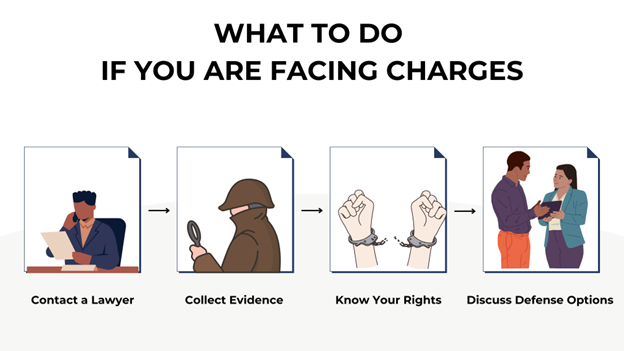
If you are charged with either sexual battery or sexual assault, follow these steps:
- Contact a Lawyer: Find an experienced criminal defense lawyer in North Carolina right away.
- Collect Evidence: Gather any text messages, emails, or witness statements that support your side of the story.
- Know Your Rights: Do not talk to the police without a lawyer present.
- Discuss Defense Options: Work with your lawyer to decide if you will try to fight the charges in court or negotiate a plea deal.
Conclusion: Sexual Assault vs Battery – What’s the Difference?
The difference between sexual battery vs sexual assault is important in North Carolina. Sexual battery involves unwanted touching without penetration and is treated as a misdemeanor. In contrast, sexual assault that involves penetration is a felony with much harsher penalties. Understanding these differences can help you know what to expect if you face charges.
If you or a loved one are facing a sexual battery or sexual assault charge, you deserve a legal advocate with the experience and dedication to secure the best possible outcome. Attorney Patrick Roberts of Patrick Roberts Law has successfully defended numerous clients facing allegations of sexual assault and battery. Contact our firm today for a confidential consultation.
Former assistant district attorney
Contact Patrick Roberts
Facing criminal charges in North Carolina demands seasoned representation. Trust in the experience and dual perspective of Patrick Roberts. Reach out today for a confidential consultation.
-
Call Our Team
Calls answered 24/7









For more information on the selection criteria, go to www.martindale.com
*Each case is different and must be evaluated separately. Prior results achieved do not guarantee similar results can be achieved in future cases.